How Does Base Curve Affect Prescription Lens Fitting in Kids’ Sunglasses from China?
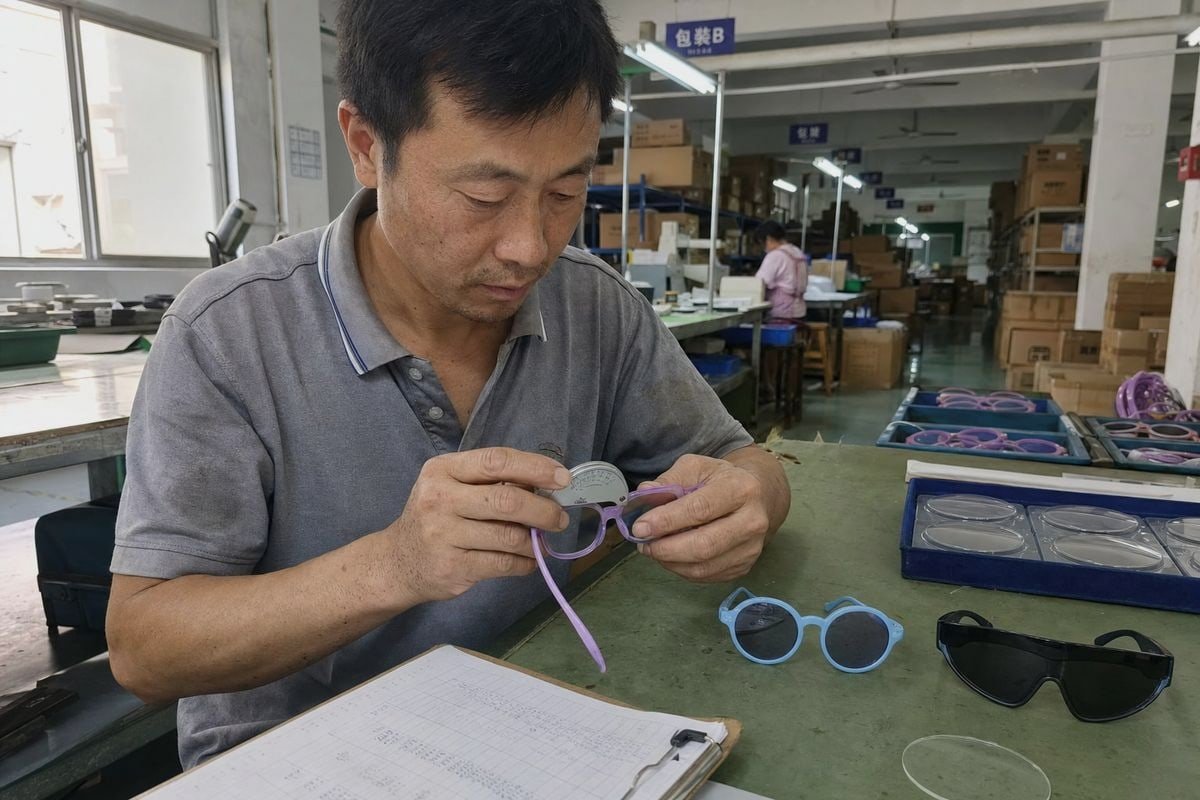
Base curve quietly decides whether prescription lens fitting in kids’ sunglasses succeeds or fails. On our production line in Taizhou, I see buyers overlook it constantly — until lenses pop out, kids complain of dizziness, and returns pile up. The fix starts with understanding one number.
Base curve determines how much a sunglass lens wraps around a child’s face. Flatter curves (base 4–6) accept most prescriptions accurately, while high-wrap 8-base frames restrict prescription range, increase optical distortion, and demand precise lens edging. Matching base curve to frame geometry is essential for safe, clear pediatric fitting.
Let me walk you through what base curve options exist, how to match them to frame designs, why they affect comfort and safety, and how to verify accuracy before you place an order.
What Base Curve Options Can I Request from a Kids' Sunglasses Manufacturer in China?
A buyer from Australia once asked me for "prescription-ready wraparound kids' sunglasses" and assumed every style in our catalog would work. We had to slow down and talk about base curve first.
Most Chinese kids' sunglasses factories offer base curves from 2 to 8. Base 4 suits optical-style frames and strong prescriptions, base 6 balances style and Rx compatibility, and base 8 serves sport wraparound designs. Buyers should request the base curve specification for each style before ordering.
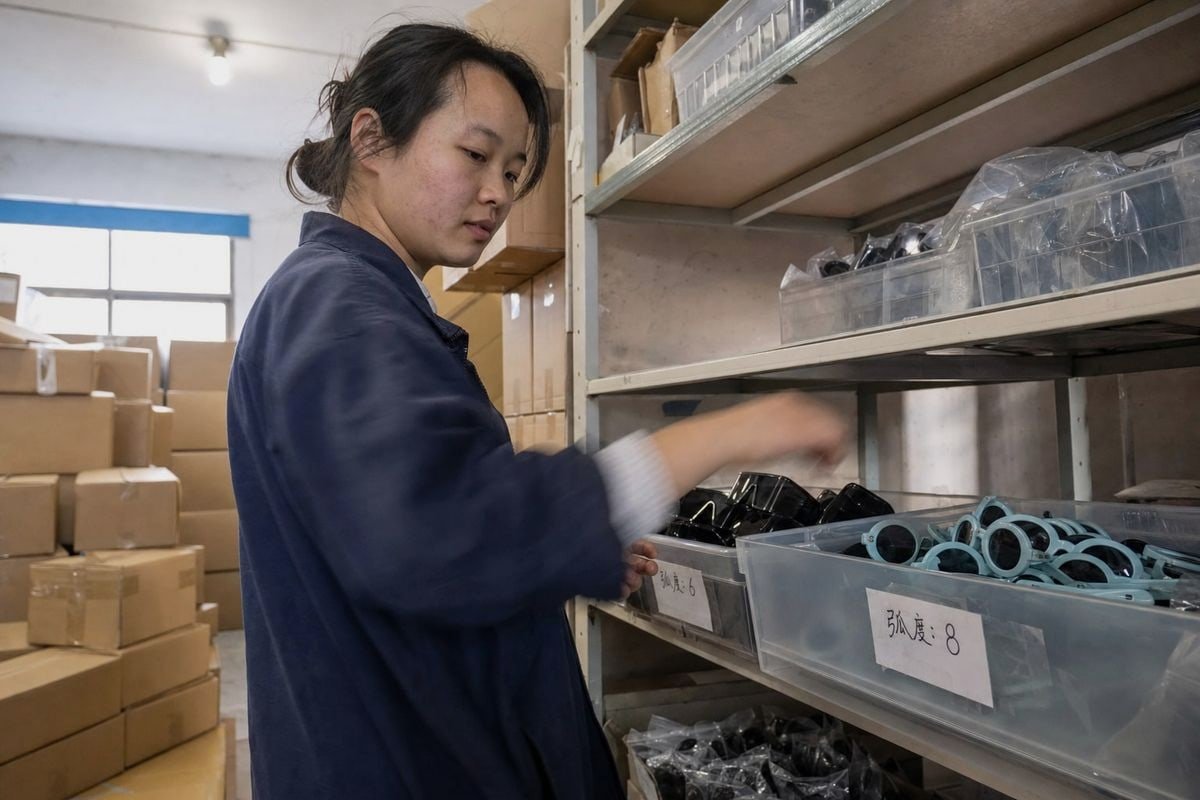
At our factory, most of the roughly 800 existing styles fall into three curvature families. Understanding them helps you shortlist frames that match your customers’ prescription needs instead of discovering problems after production.
The Standard Base Curve Range
Base curve describes the front-surface curvature of the lens, not the back. Lower numbers mean flatter lenses. Higher numbers mean more wrap. Here is how the common options break down for children's eyewear:
| Base Curve | Wrap Level | Typical Style | Rx Compatibility |
|---|---|---|---|
| Base 2–4 | Very flat | Classic optical, round frames | Excellent — widest prescription range |
| Base 6 | Moderate | Everyday casual sunglasses | Good — handles most kids' prescriptions |
| Base 8 | High wrap | Sport shields, cycling styles | Limited — needs compensated lens design |
| Base 8+ | Extreme wrap | Ski goggles, racing shields | Very limited — often plano only |
Take our round powder-blue kids' frame as an example. Its soft, compact shape sits on a base 4 to 6 front. That geometry accepts standard prescription lenses easily. Our white wraparound shield style, by contrast, uses a base 8 mold. It looks fantastic for skiing or cycling, but it is a much harder candidate for prescription conversion.
One practical note from our workshop: many Chinese factories run standardized base 6 and base 8 molds for mass production. If your market needs a specialized curve for complex pediatric prescriptions, ask early. Custom curvature usually requires mold discussion, minimum quantities, and lead-time planning. Also ask whether the factory offers a low bridge fit option. Those frames often carry a naturally flatter front curve, which quietly improves compatibility with higher-power lenses. We flag base curve on our spec sheets precisely because buyers who know the number upfront avoid painful surprises later.
How Do I Match Base Curve to Frame Design for Accurate Prescription Fitting?
During a sampling round last year, our engineers rejected a lens batch because the curve sat one diopter off the frame groove. That tiny mismatch would have stressed every hinge in the run.
Match the lens base curve to the frame's designed curvature within roughly one diopter. Flat optical frames pair with base 2–4 lenses, casual frames with base 6, and sport wraps with compensated base 8 lenses. Mismatches cause lens pop-out, frame warping, and peripheral distortion.
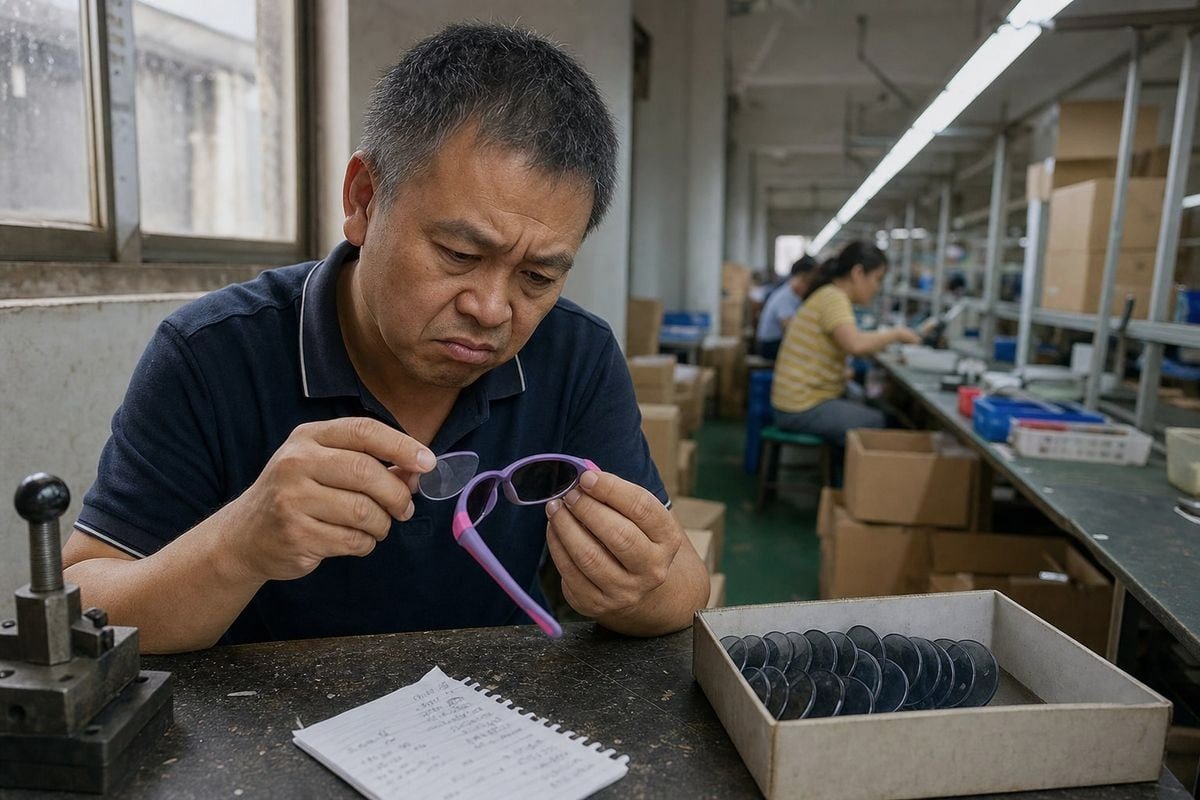
A frame is molded around an intended lens curvature. The bevel groove, the frame wrap angle, and the temple geometry all assume a specific curve. When the lens curve deviates too far, two problems appear at once: mechanical tension and optical error.
Mechanical Fit Comes First
Force a flat lens into a curved frame and the frame fights back. TR90 frame durability 1 gives some forgiveness here — the material flexes rather than cracks — but flexibility is not a license for sloppy matching. Significant deviation still compromises alignment. The lens can pop out during play, or the frame slowly warps and changes how it sits on the child's face.
Optical Alignment Comes Second
Even when the lens physically fits, the prescription must be recalculated for the new geometry. Steeper wrap tilts the lens relative to the eye. That tilt changes effective power and introduces oblique astigmatism 2 unless the lab applies diopter compensation. Vertex distance adjustment matters too: a wrapped lens often sits closer to or farther from the eye than the trial lens did during the eye exam, which shifts the effective correction.
| Frame Type | Recommended Lens Curve | Key Fitting Action |
|---|---|---|
| Flat kids' optical frame | Base 2–4 | Standard surfacing, verify vertex distance |
| Round casual sunglass | Base 4–6 | Match groove curve, standard edging |
| Moderate sport frame | Base 6 | Check frame wrap angle, minor compensation |
| Shield wraparound | Base 8 (compensated) | Digital surfacing 3 with tilt and wrap compensation |
Practical guidance from prescription ranges we see: powers within roughly -4.00 to +3.00 usually adapt to moderate wrap. Stronger powers, or cylinder beyond about ±2.00, generally belong in flatter frames. Some advanced labs now use mini-blank digital surfacing for small pediatric frames, optimizing the optical center and trimming edge thickness even in curved designs. Ask whether your supply chain supports it before committing to a wrap style.
Why Does Base Curve Matter for Comfort and Safety on Children's Faces?
The trade-off I weigh most often when advising kids' brands is coverage versus clarity. A steep wrap blocks more side light, but it also asks more of a young visual system.
Base curve affects how a lens sits against pediatric facial anatomy, how much peripheral distortion a child perceives, and how securely the frame stays on during play. The wrong curve causes headaches, fishbowl distortion, pressure points, and unstable fit — all safety concerns for active children.
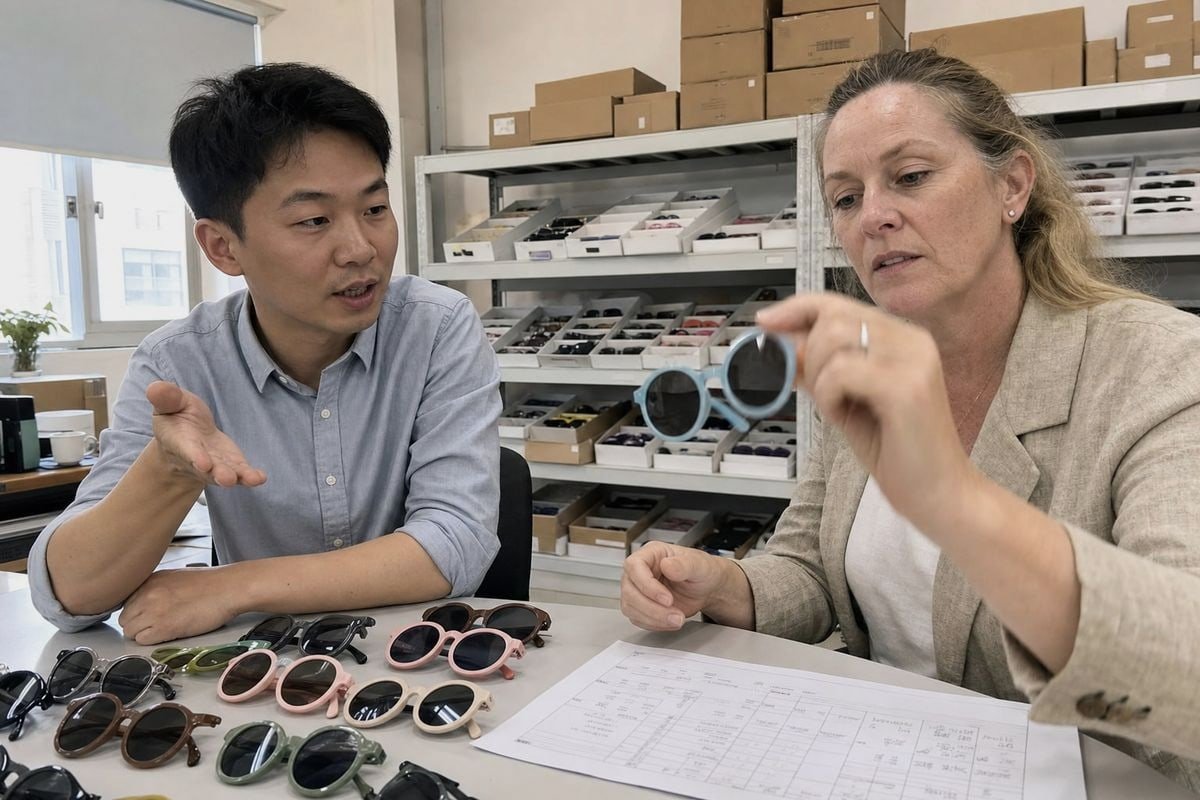
Children are not small adults. Pediatric facial anatomy 4 features a lower nasal bridge, softer cartilage, and proportions that change quickly year by year. Base curve interacts with all of it.
Comfort: What the Child Actually Sees
A high base curve in a strong prescription often produces the "fishbowl effect." Straight lines appear bent at the edges. Peripheral vision feels warped. Adults sometimes push through an adaptation period; children usually just refuse to wear the glasses, or they complain of headaches and dizziness. Steeper curves can also change apparent magnification. Even a one-diopter change in base curve can create noticeable perceptual differences, which is why consistency between a child's everyday glasses and their prescription sunglasses matters more than most buyers expect.
Safety: Fit, Stability, and Impact
Kids run, fall, and drop their glasses. That is exactly why we build with flexible TPEE temples and TR90 fronts in our Taizhou workshop — materials chosen for impact resistance and gentle contact with skin. Base curve joins that safety equation in three ways:
- A curve matched to the face keeps the frame stable during movement, so the optical center stays in front of the pupil.
- A well-seated lens resists pop-out on impact, which is critical when paired with polycarbonate lens material 5, the standard choice for shatter-resistant kids' lenses.
- Correct wrap avoids pressure points at the temples and cheeks, preventing red marks and the constant readjusting that distracts kids outdoors.
There is also a growth dimension. As a child's nasal bridge matures, the curve that fit at age four may sit wrong at age seven. This drives the trend toward adjustable and modular designs, and it means brands serving wide age ranges should stock more than one geometry. For buyers targeting markets with formal requirements, remember that ANSI safety standards and comparable regional norms address impact performance — a lens under mechanical stress from a mismatched curve is a lens more likely to fail when it matters.
How Can I Verify Base Curve Accuracy When Sourcing Prescription Sunglasses from a Chinese Factory?
A lesson we learned early in our fifteen years of eyewear work: a product photo tells you almost nothing about curvature. Verification needs numbers, tools, and process discipline.
Verify base curve by requesting the frame's documented curve and wrap-angle specification, measuring samples with a lens clock, confirming tolerance limits in the QC agreement, and running a trial prescription fitting before mass production. Reliable factories publish geometry data and hold consistent mold tolerances.
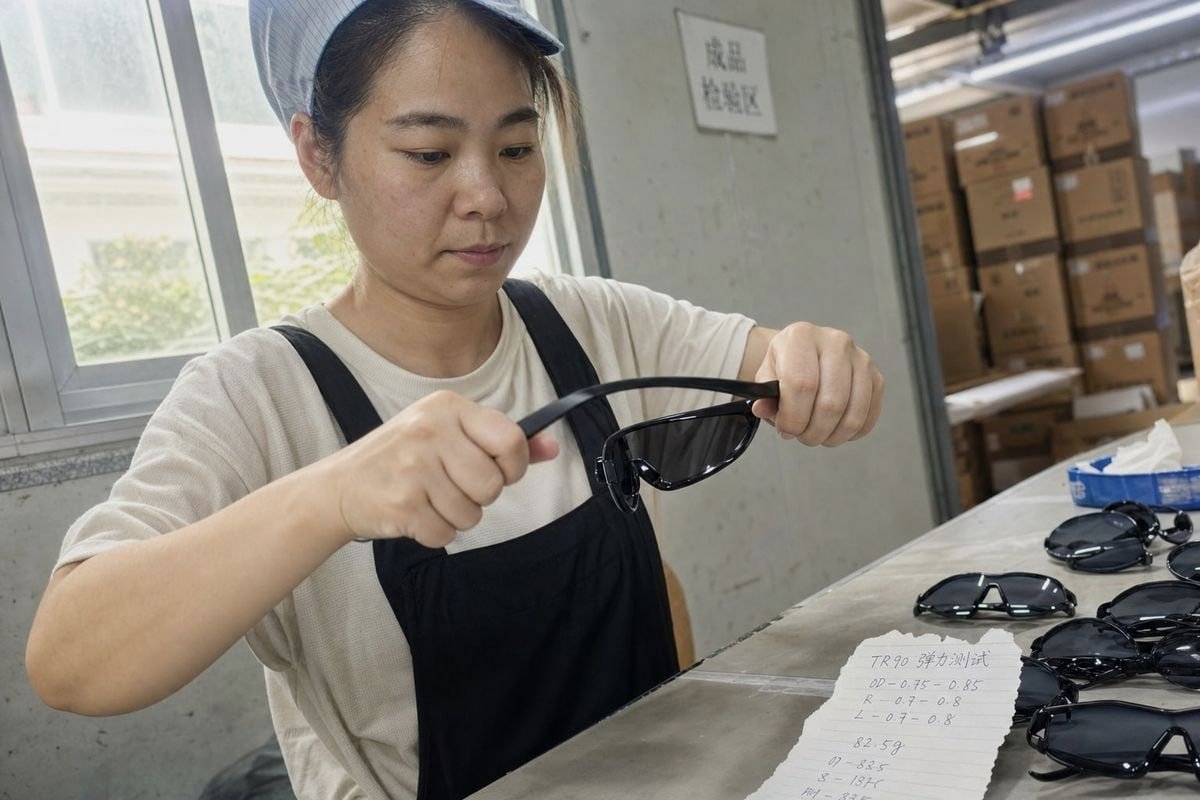
Optical labs cannot judge feasibility from a listing image. They need real frame data. Here is the verification process I recommend to every brand we work with, whether they source from us or elsewhere.
A Five-Step Verification Process
- Request the spec sheet. Ask for base curve, frame wrap angle, lens groove dimensions, and pantoscopic tilt for each style. If a factory cannot provide these, treat it as a warning sign.
- Measure physical samples. A lens clock (base curve gauge) costs little and reads the front curve in seconds. Check several units from the sample batch, not just one.
- Define tolerances in writing. Mold consistency matters. In our 5S-managed workshop 6, curvature checks are part of routine inspection because small mold drift compounds into fitting failures at scale.
- Run a trial Rx fitting. Send one sample frame to your optical lab with a representative prescription. Confirm lens edging precision, bevel seating, and retention before committing to volume.
- Audit consistency at pre-shipment. Include base curve measurement in your pre-shipment inspection checklist 7 alongside hinge torque and lens retention tests.
| Verification Item | Tool or Method | Acceptable Practice |
|---|---|---|
| Front curvature | Lens clock / spherometer | Within ±0.25 D of stated curve |
| Frame wrap angle | Protractor gauge or CAD data | Matches spec sheet value |
| Lens retention | Push-out test on edged lens | No pop-out under firm pressure |
| Batch consistency | Sample multiple units per carton | Uniform readings across batch |
Forward-looking exporters are adding a digital layer. Some now use AI-assisted predictive fitting tools that model wrap angle and vertex distance against a target prescription, flagging likely failures before manufacturing begins. You do not need that technology to source safely, but you do need a partner who treats base curve as a controlled specification rather than an accident of the mold. When we develop custom styles for children's brands, geometry documentation is part of the OEM package from the first sample onward — because it protects both the brand and the child wearing the finished product.
Conclusion
Base curve is the hidden specification behind successful prescription kids' sunglasses. Choose flatter curves for stronger prescriptions, demand geometry data, verify samples — and partner with a factory that documents everything.
Footnotes
1. Background on the nylon-based resin that gives eyewear frames flexibility and impact resistance. ↩︎
2. NIH resource explaining astigmatism, the optical distortion caused by mismatched lens curvature. ↩︎
3. Authoritative Wikipedia section explaining freeform technology, the industry standard for digital lens surfacing. ↩︎
4. Peer-reviewed NIH article detailing facial development and anatomical changes from infancy to adulthood. ↩︎
5. Explains the shatter-resistant plastic used for impact-safe children’s prescription lenses. ↩︎
6. Background on the lean manufacturing methodology referenced for workshop quality control. ↩︎
7. International Trade Centre guidance supports quality verification practices for export manufacturing. ↩︎
More Articles You Might Like


Looking for a Reliable Kids Eyewear Partner?
Explore 800+ ready styles and full OEM/ODM support tailored to your brand.
Get in Touch English
  Español de México
  Deutsch
  Français
  日本語
日本語  العربية
  Português do Brasil