How Can I Confirm Kids’ Sunglasses Frames Fit Prescription Lenses?
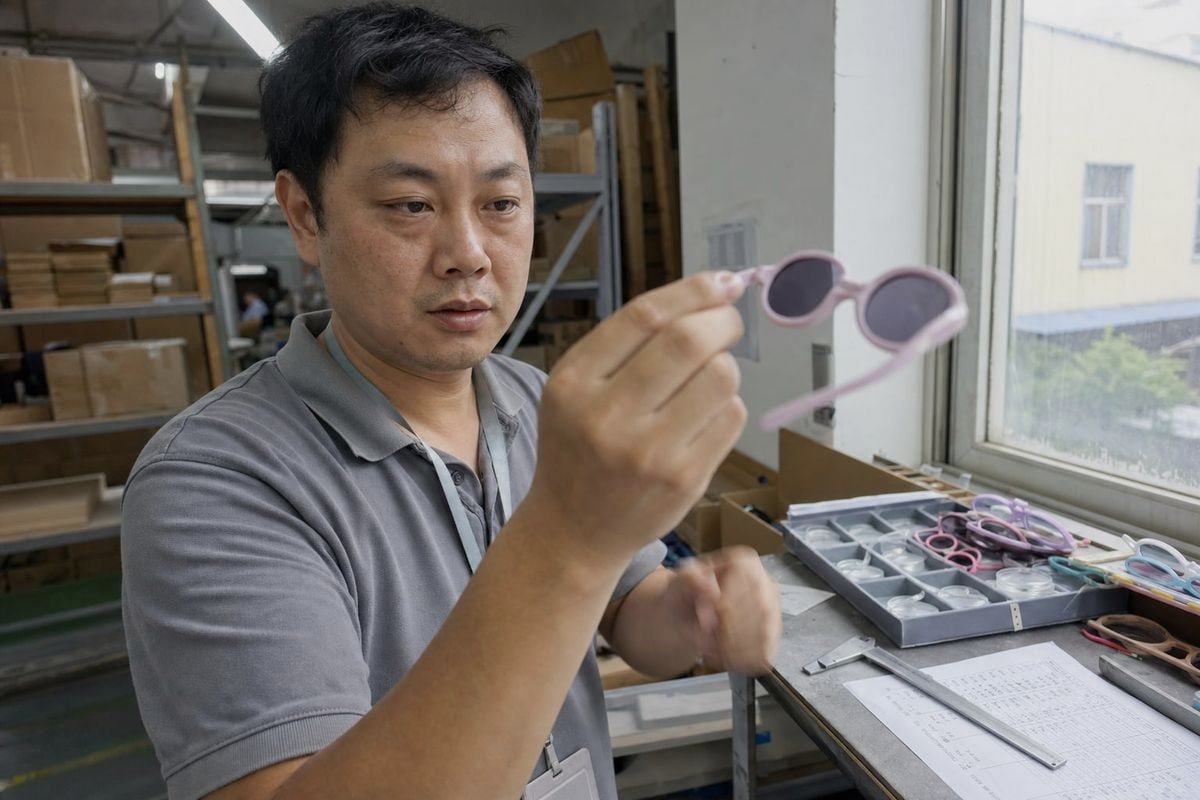
Confirming that kids’ sunglasses frames fit prescription lenses is a question our Taizhou factory hears weekly V-bevel lens groove 1. Guess wrong, and buyers face [returns, angry parents, and wasted inventory](https://okayeyewear.com/what-common-kids-sunglasses-complaints-avoid-them-sourcing/). Verification prevents all of it.
To confirm kids’ sunglasses frames fit prescription lenses, check the frame’s RX-able designation, lens groove depth, base curve, and lens opening size, verify the material is optical grade like TR90, request fitting samples from your manufacturer, and confirm centration against typical pediatric pupillary distance ranges.
That answer covers the essentials. But each check has details that matter. Below, I walk through the specifications, materials, sampling process, and quality control steps one by one.
What frame specifications do I need to check before ordering prescription-compatible kids' sunglasses?
A buyer from Australia once sent us a competitor's frame that looked perfect but had a flat lens shelf instead of a groove pediatric prescriptions 2. Our engineers spotted the problem in minutes. Specifications matter more than looks.
Before ordering, verify five specifications: an RX-able designation, a full-rim design with a proper V-bevel lens groove, a base curve of 6 or lower, printed frame measurements (lens width, bridge, temple length), and sufficient rim depth to hide thicker pediatric lens edges.
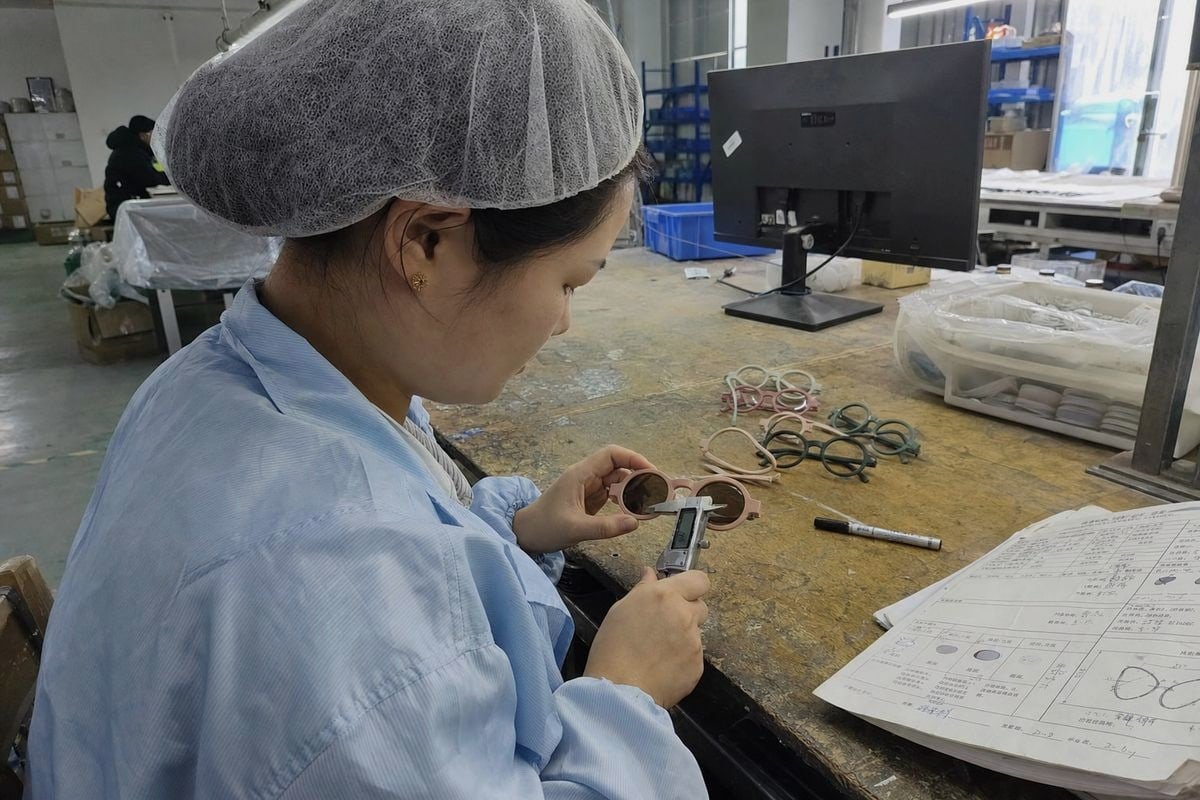
The difference between a fashion sunglass and an RX-able frame is mostly invisible to the eye. That is exactly why so many buyers get caught out. In our fifteen years of building children's eyewear, we have learned that the frames that fail prescription conversion usually fail on one of a handful of measurable points. So we always tell buyers to request the full spec sheet before anything else.
The core measurements to request
Every frame carries three numbers, usually printed inside the temple arm: lens width, bridge width, and temple length. For prescription use, these numbers must line up with a child's face and pupillary distance 3. If the eyes sit far off-center in the lens opening, the optical lab cannot place the optical center correctly, and the child gets distortion or eye strain.
| Specification | What to check | Why it matters for prescription lenses |
|---|---|---|
| Lens width & shape | Opening large enough for the edged lens | Keeps pupils centered horizontally |
| Bridge width | Snug fit without pinching | Prevents sliding, keeps centration stable |
| Temple length | Runs straight back to the ears | Stops the frame tilting off-level |
| Lens groove | V-bevel channel, not a flat shelf | Locks beveled ophthalmic lenses in place |
| Base curve | Base 6 or lower preferred | Avoids peripheral "fishbowl" distortion |
| Rim depth | Thick enough to hide edge thickness | Conceals high-minus or high-plus edges |
Shield lenses versus dual lenses
Wraparound sport styles with a single mirrored shield lens look striking, and we produce many of them. But a one-piece shield is generally incompatible with standard prescription surfacing. For prescription programs, the frame must hold two separate lenses. High-base wraparound frames above Base 8 also cause visual distortion once corrective power is added. If your line includes both shield sports styles and round dual-lens styles, mark clearly which SKUs are prescription-ready and which are plano-only.
How do I know if TR90 or TPEE frames can safely hold prescription lenses for children?
Material choice is the trade-off we weigh on every new mold. TPEE gives softness and safety for toddlers; TR90 gives rigidity and lens grip. The right answer depends on the prescription program you plan to run.
TR90 memory polymer holds prescription lenses reliably because it is an optical grade material with stable lens groove tension, cold-glaze compatibility, and strong impact resistance. TPEE is safe and flexible but softer, so it suits plano lenses or light prescriptions better than strong corrections.

When we developed our TR90 frames with TPEE temples, the goal was to combine both strengths: a rigid front that grips a lens, plus soft, bendable temples that will not hurt a child during rough play. That hybrid design has become one of our most requested constructions for optical companies, and it illustrates the material question well.
Why TR90 works for prescription programs
TR90 memory polymer is widely accepted by optical labs as an ophthalmic quality frame material. It resists heat during lens mounting, returns to shape after flexing, and maintains groove tension so the lens does not pop out when a child drops the glasses. It also pairs well with polycarbonate lenses 4, the standard choice for pediatric prescriptions because of their impact resistance 5. Many labs also prefer cold-glaze compatible frames, since cold mounting avoids the high heat that can damage anti-reflective coatings 6. TR90 handles both methods.
Where TPEE fits in
TPEE is even softer and more flexible than TR90. That flexibility is exactly what makes it wonderful for babies and toddlers, and exactly what makes it less ideal for holding a heavy high-minus lens. The frame can flex enough to loosen lens retention over time. Here is how we advise buyers to think about it:
| Material | Flexibility | Prescription suitability | Best use case |
|---|---|---|---|
| TR90 | Flexes and recovers | Excellent for most Rx ranges | Kids' optical frames, Rx sunglasses |
| TPEE | Extremely soft and bendable | Plano or very light Rx only | Baby and toddler sunglasses |
| TR90 front + TPEE temples | Rigid front, soft arms | Very good; safe temples for active kids | Rx-ready active kids' eyewear |
One more practical note: TR90 frames can accept wire-core temples, which let an optician adjust pantoscopic tilt and temple bend for a child's lower eye level. Ask your supplier whether the mold supports this. Some do, some do not, and it changes how well an optician can fine-tune the final fit.
Can I request lens fitting samples before placing a bulk order with my manufacturer?
A Japanese optical brand once asked us whether sampling was allowed before committing to a container order. My honest answer surprised them: not only allowed, but strongly encouraged. Skipping this step is the most expensive shortcut in eyewear sourcing.
Yes. Reputable kids' eyewear manufacturers provide pre-production samples so your optical lab can test-edge real prescription lenses into the frame. Request samples in your target colors, verify groove depth, lens retention, and centration, and approve them in writing before bulk production begins.
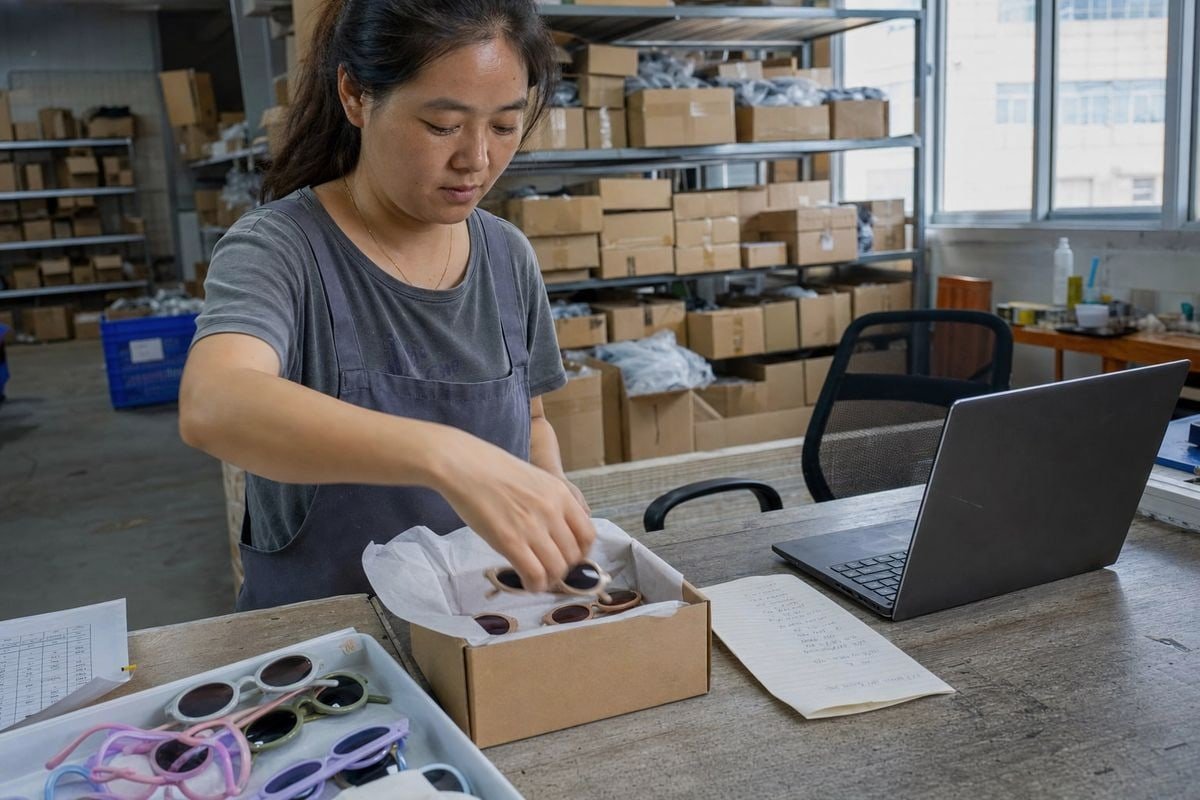
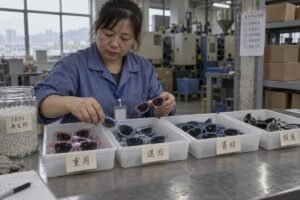
At our factory, sampling is built into every OEM and ODM project, and it is one reason we keep around 800 existing styles on hand. Buyers can pick a proven mold, receive samples within days, and run real-world lens fitting tests without investing in new tooling. That lowers risk dramatically for new brands testing the prescription-ready category.
How a proper sampling process runs
The process is straightforward, but each step exists for a reason. Here is how we structure it with our B2B buyers:
- Select candidate styles. Choose frames already flagged as RX-able, full-rim, with a Base 6 or lower curve.
- Receive physical samples. We ship samples in the actual production material and colorway, because pigments can subtly change material hardness.
- Send samples to your optical lab. Have the lab edge test lenses, ideally polycarbonate, across a realistic prescription range, including a high-minus and a high-plus test.
- Check retention and stress. The lab confirms the lens locks into the groove, shows no stress fractures, and stays seated when the frame is flexed.
- Verify centration. Compare the frame geometry against typical pediatric pupillary distance values for your target age band.
- Approve or revise. Sign off the sample, or request adjustments to groove depth or rim thickness before molds run.
What to ask your supplier during sampling
Ask whether the sample matches production tooling exactly. Ask which lens mounting method the frame is designed for, heat or cold-glaze. Ask for the frame's dimensional tolerances. And ask what happens if your lab rejects the sample. A serious factory will answer all four questions clearly. In my experience exporting to twenty-plus countries, the buyers who ask these questions early almost never face fitting problems at scale.
What quality control steps confirm my kids' frames will fit prescription lenses accurately at scale?
The hardest lesson from our early years was this: one perfect sample proves nothing about ten thousand units. Consistency is a manufacturing discipline, not a design feature. Our 5S-managed workshop was built around that lesson.
Scale confirmation requires dimensional QC on every batch: gauge checks of lens groove depth and opening size, base curve verification, torsion and flex tests on the rim, random test-edging of lenses into pulled units, and documented tolerances agreed between buyer and factory before production.
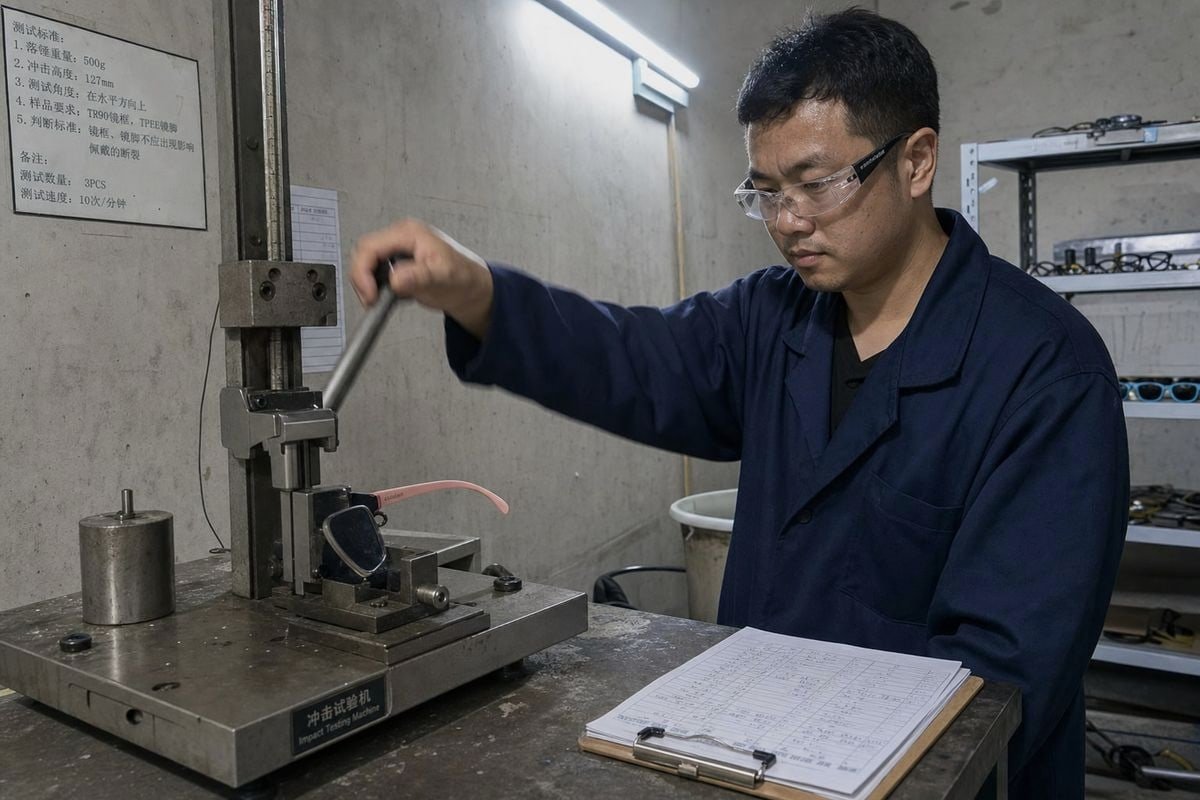
Injection molding 7 is repeatable, but it is not perfect. Mold wear, material batch variation, and cooling differences can shift a lens opening by fractions of a millimeter. That shift is invisible on a plano sunglass. On a prescription frame, it can mean a lens that pops out or a groove that no longer grips. So quality control for RX-able frames has to be tighter than for fashion shades.
The QC checkpoints that matter
Across fifteen years and roughly 120 workers on our line, we have settled on a checkpoint structure that catches fitting problems before they ship. The table below shows the checks we consider non-negotiable for prescription-ready kids' frames:
| QC checkpoint | Method | Acceptance focus |
|---|---|---|
| Groove depth & profile | Gauge measurement per batch | Consistent V-bevel channel dimensions |
| Lens opening size | Template or projector comparison | Within agreed tolerance of the master sample |
| Base curve | Curve gauge on frame front | Matches spec so labs can match lens curvature |
| Flex & torsion | Twist and bend test on pulled units | Rim recovers shape, no whitening or cracks |
| Test edging | Random units fitted with real lenses | Lens seats fully, no gaps, no pop-out |
| Fit geometry | Check bridge, temple splay, tilt | Frame sits level with stable centration |
Documentation closes the loop
Numbers only help if both sides agree on them. Before mass production, we lock a golden sample and a written tolerance sheet with the buyer. Every inspection then references those documents, not memory or opinion. Features like adjustable nose pads, where specified, get their own functional check, because a loose pad shifts the lens position on the child's face. For buyers running ongoing programs, we also recommend periodic re-validation, since molds wear gradually. A small quarterly test-edge run costs little and protects your brand's reputation with parents, opticians, and retailers alike.
Conclusion
Guessing whether kids' sunglasses frames fit prescription lenses invites returns and lost trust. Verify specifications, choose TR90 wisely, test samples, and enforce batch QC — then order with confidence.
Footnotes
1. ISO standard for spectacle frame dimensions supports groove and fit specifications discussed. ↩︎
2. CDC vision health resource relevant to children’s prescription eyewear needs. ↩︎
3. Defines the measurement critical for lens centration mentioned throughout the article. ↩︎
4. FDA guidance on sunglass lens materials supports claims about polycarbonate safety. ↩︎
5. NIH’s National Eye Institute explains refractive errors relevant to lens strength needs. ↩︎
6. Explains the coating technology referenced regarding cold-glaze lens mounting. ↩︎
7. Background on the manufacturing process used to produce the frames discussed. ↩︎
More Articles You Might Like


Looking for a Reliable Kids Eyewear Partner?
Explore 800+ ready styles and full OEM/ODM support tailored to your brand.
Get in Touch English
  Español de México
  Deutsch
  Français
  日本語
日本語  العربية
  Português do Brasil