What Are the EN ISO 12312-1 Requirements for Kids’ Sunglasses?
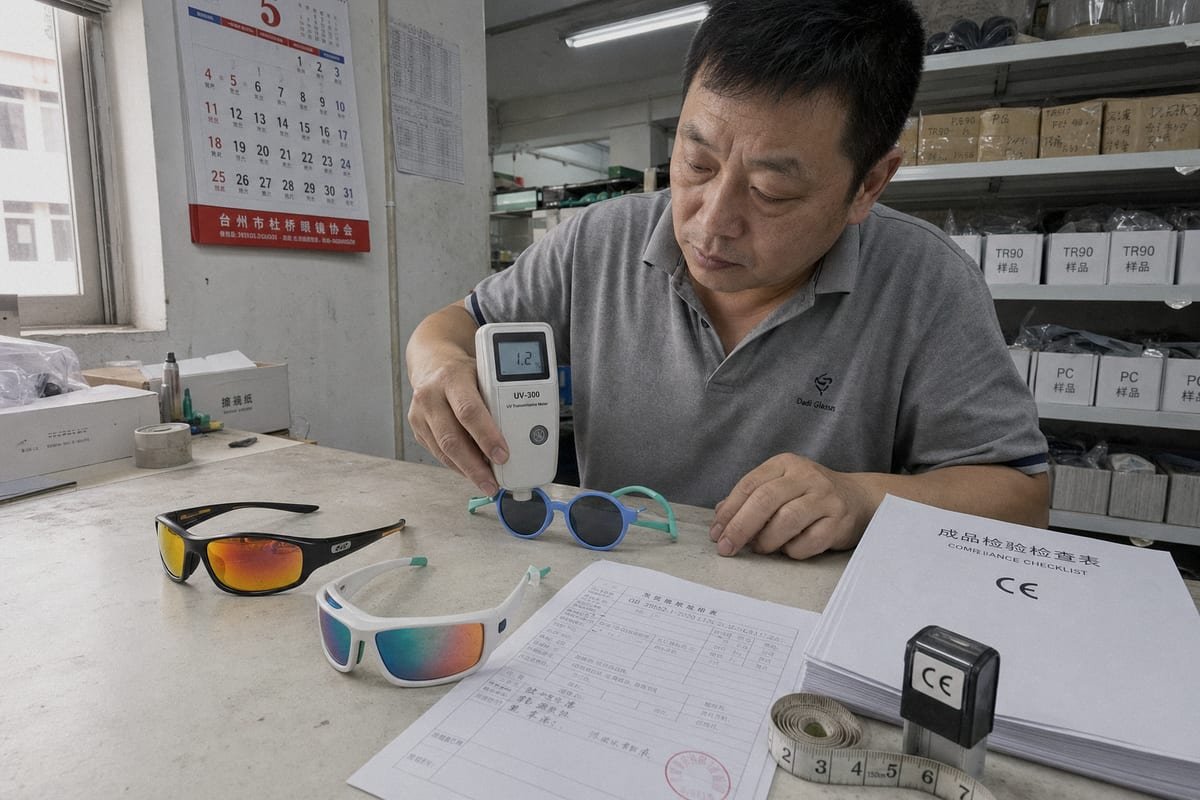
I still remember the first buyer who asked our Taizhou factory about EN ISO 12312-1 1 requirements for kids’ sunglasses. One missed test can block an entire shipment at European customs — and destroy a launch season.
EN ISO 12312-1 requires kids’ sunglasses to block UV radiation up to 380 nm, carry a labeled filter category (0–4), meet optical class 1 quality limits, pass mechanical and durability tests, have smooth edges, and be sold with CE marking plus proper documentation.
That short answer hides a lot of detail. Below, I break down how to verify a supplier, what the UV and lens rules actually say, which tests matter, and what paperwork you need.
How Do I Know If My Kids' Sunglasses Supplier Meets EN ISO 12312-1 Standards?
A procurement manager from Australia once sent me a competitor's "test report" that was three years old and covered a different frame model. Our team spots gaps like that every month.
Verify a supplier by requesting current third-party test reports referencing EN ISO 12312-1, a Declaration of Conformity under PPE Regulation 2016/425, evidence of child-specific testing, batch-level quality control records, and physical samples you can send for independent laboratory verification.
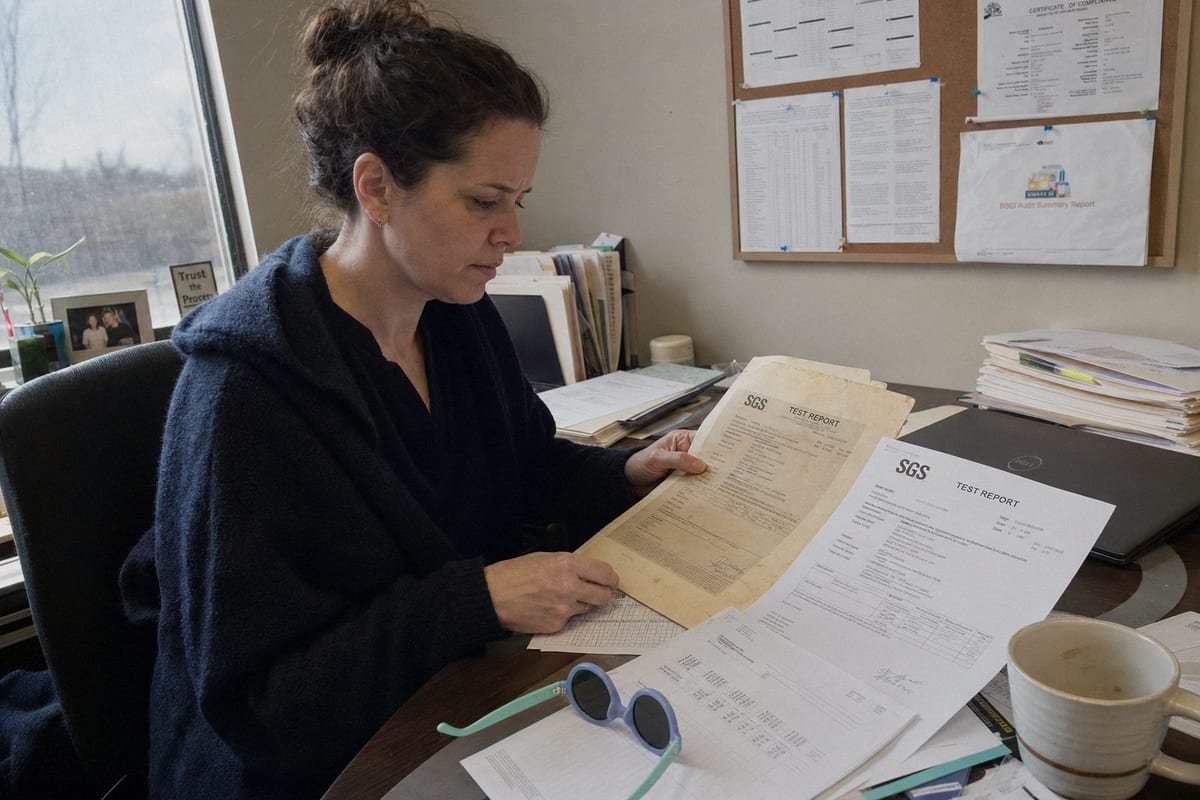
In our fifteen years of building children's eyewear for brands across 20+ countries, we have learned one thing. Claims are cheap. Evidence is not. A supplier who genuinely meets EN ISO 12312-1 can show you a paper trail without hesitation. A supplier who cannot will stall, send blurry PDFs, or offer a report for a product that looks nothing like yours.
The Documents a Real Supplier Can Show You
Start with the test report. It should come from an accredited third-party laboratory. It should name the exact model, lens type, and frame material you plan to buy. It should reference the current edition of the standard. In the EU, sunglasses fall under PPE Regulation 2016/425 2 as Category I personal protective equipment, so the supplier or importer must also support a Déclaration de conformité 3 Risque de haute saison Marquage CE. For the UK market, UKCA marking follows a parallel logic.
Red Flags Versus Green Flags
| Signal | Green Flag | Drapeau rouge |
|---|---|---|
| Test report | Current, model-specific, accredited lab | Old, generic, or unnamed lab |
| Standard cited | EN ISO 12312-1 (current edition) | Vague "CE quality" wording |
| Child-specific testing | As-worn testing on smaller headforms | Adult-only test data reused |
| QC records | Batch inspection logs available | "Trust us" answers |
| Samples | Freely provided for your own lab checks | Reluctance to send samples |
One more practical tip. Ask how the factory handles children's fit. The standard treats kids' eyewear as a distinct case, tested in the as-worn position with a smaller measurement setup than adult frames. A supplier who has never heard of that difference is probably shipping adult test data on children's products. That is a compliance risk you do not want attached to your brand.
What UV Protection and Lens Category Requirements Should I Check for Compliance?
Here is the trade-off we weigh on every new lens order: parents love very dark lenses because they "look protective," but darkness and UV protection are two completely separate performance properties.
Check that lenses block UV radiation up to 380 nm — commonly labeled UV400 protection — and that the filter category (0–4) matches intended use. Filter category 3 suits bright outdoor conditions, while category 4 is too dark for driving and needs side coverage on kids' frames.
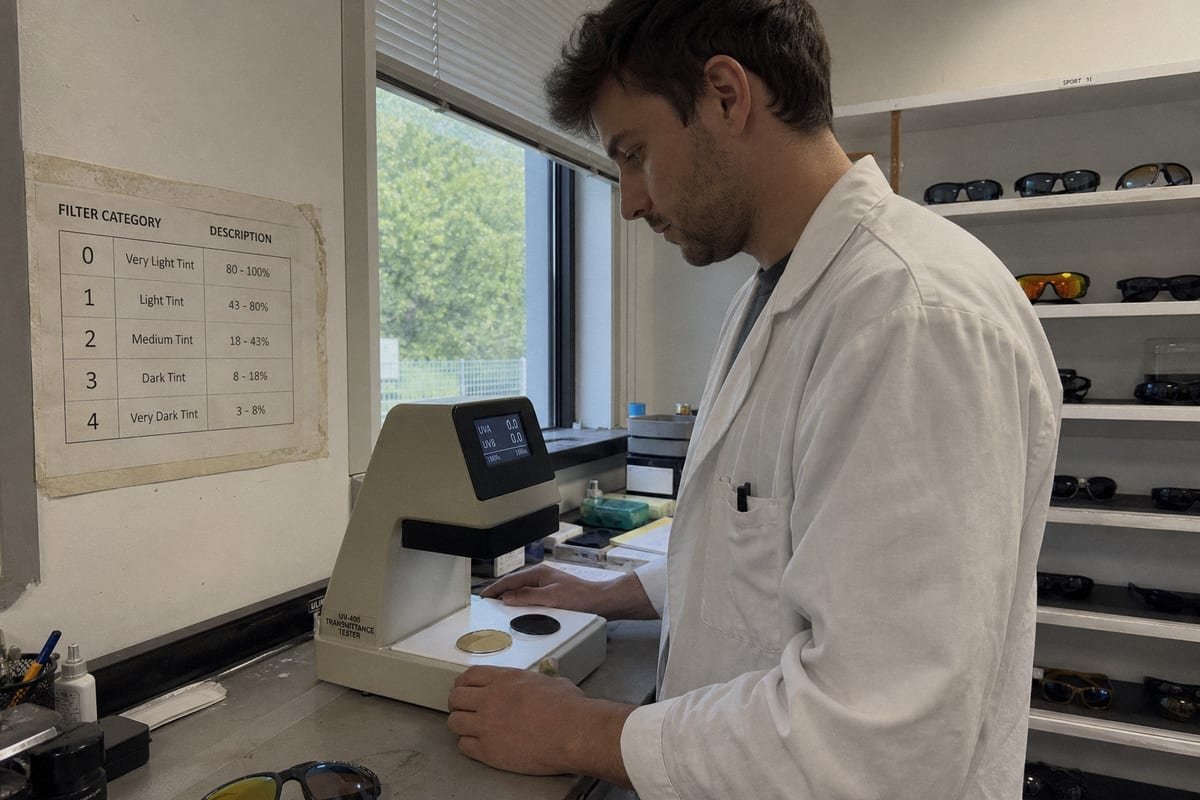
When we specify UV400 lenses for our TR90 and TPEE children's frames 4, we are addressing the single most important requirement in the whole standard. UV protection is defined by the lens material's ability to absorb ultraviolet light, not by how dark the tint looks. Under the standard, full UV protection means transmittance up to 380 nm stays below a tiny threshold — effectively zero. A pale amber lens can block all UV. A nearly black lens can fail. This is the biggest misconception we correct for new buyers.
Understanding the Five Filter Categories
Filter categories describe luminous transmittance — how much visible light passes through the lens. They are about glare and brightness, not UV. The current edition of the standard divides sunglare filters into five categories.
| Catégorie | Visible Light Transmitted | Typical Use for Kids | Driving Suitable? |
|---|---|---|---|
| 0 | 80–100% | Fashion, very low glare | Yes |
| 1 | 43–80% | Cloudy days, light shade | Yes |
| 2 | 18–43% | Average sunlight | Yes |
| 3 | 8–18% | Bright sun, beach, playground | Yes (daytime) |
| 4 | 3–8% | High mountains, glaciers | No |
For most children's daily outdoor wear, filter category 5 3 is the practical sweet spot. It cuts strong glare without leaving the child squinting in shade. Category 4 is a special case. The 2022 edition of the standard extended side protection requirements to children's sunglasses fitted with category 4 lenses, because a very dark lens with light leaking in from the sides can actually worsen exposure — the pupil dilates behind the dark lens while unfiltered light enters laterally.
Photochromic Lenses Need Extra Scrutiny
The 2022 edition also added optional reporting on photochromic activation at 5 °C and 35 °C. Photochromic kids' lenses are trendy, but their darkening behavior shifts with temperature. If you plan a photochromic line, ask for that temperature data before you commit.
Which Safety and Durability Tests Do Children's Sunglasses Need to Pass This Standard?
During a 5S audit of our workshop last spring, our QC lead pulled a frame off the line because one temple edge felt slightly sharp under a fingertip. That instinct comes straight from what this standard demands.
Children's sunglasses must pass optical quality checks for refractive power and defects, robustness and impact resistance tests, bridge deformation and temple durability tests, smooth-edge construction checks, nickel release limits on metal parts, and as-worn coverage testing using child-sized geometry.
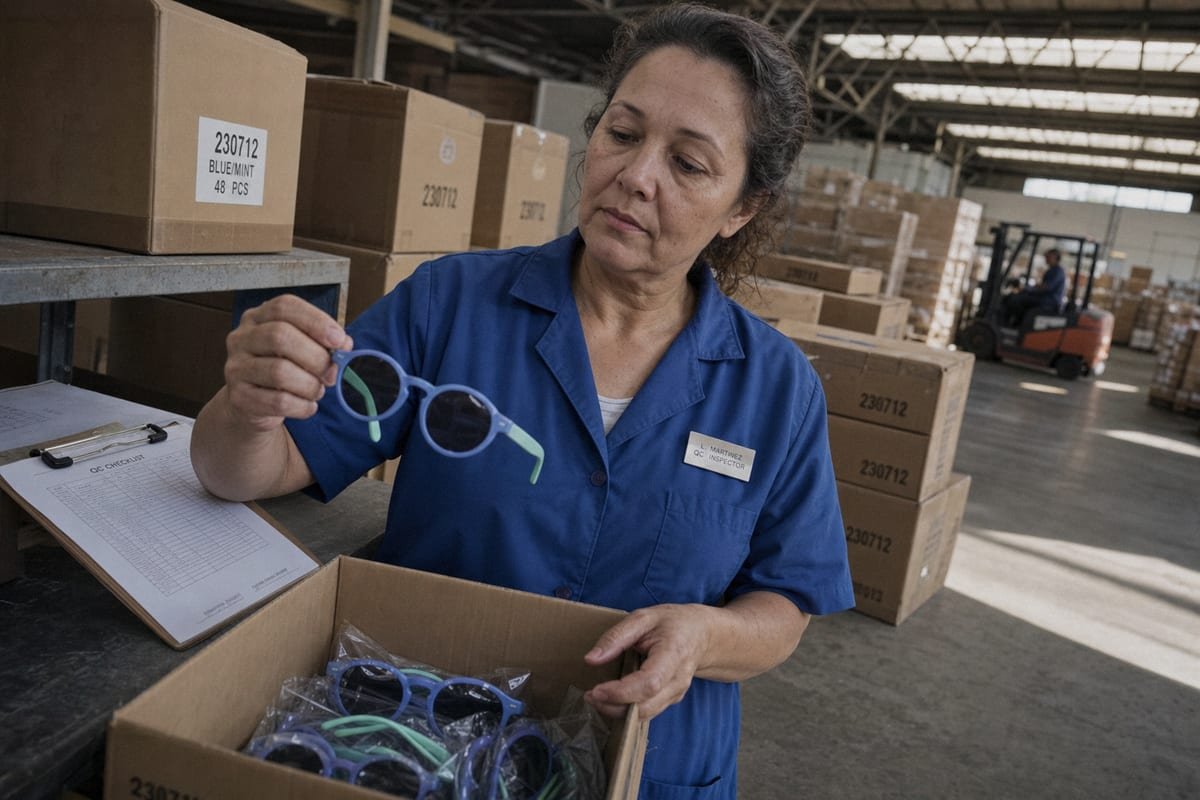
Our engineers build every children's frame around flexibility for a reason. Kids sit on their sunglasses. They chew the temples. They yank them off with one hand. The standard anticipates this reality with a battery of mechanical and optical tests, and materials like TPEE and TR90 make passing them far easier than brittle cheap plastics do.
Optical Quality Tests
Lenses must effectively behave as optical class 1 quality — free of significant refractive power errors 6 that could cause eye strain, headaches, or distorted vision. The standard also limits defects. Within a 30 mm diameter zone around the reference point (excluding a small marginal band), the lens must show no bubbles, scratches, or machining flaws that could impair vision. A separate requirement ensures the tint does not prevent recognition of traffic signal colors, which matters even for a child riding in a bike seat.
Mechanical and Material Tests
Here is a simplified view of the main physical checks:
- Robustness testing. The complete sunglasses must withstand a defined static load or impact without fragmenting into dangerous pieces. Basic impact resistance protects a child if the glasses take a knock during play.
- Bridge deformation testing. The frame is stressed across the bridge and must not permanently deform beyond limits. Flexible TR90 with TPEE temples performs well here; rigid budget plastics often crack.
- Edge and surface inspection. All surfaces, frames, and edges that contact the wearer must be smooth and free of sharp projections. No burrs, no sharp screw tips at the hinge.
- Nickel release testing. Metal parts in prolonged skin contact — hinges, decorative trims — must stay within nickel release limits to prevent allergic reactions on sensitive young skin.
- Resistance to ignition, perspiration, and radiation. Materials must not ignite easily, corrode from sweat, or degrade under solar exposure.
Why Child-Specific Testing Matters
Children's sunglasses are tested in the as-worn position using smaller test geometry than adult eyewear, reflecting pediatric headform dimensions. Coverage that works on an adult face can leave large lateral gaps on a toddler. This is why we prototype our children's styles — like our compact round pastel frames — on child-scale fit references before any lens spec is finalized.
How Can I Get Proper Documentation and Certification for My Kids' Sunglasses Brand?
The lesson that shaped our export process came early: a beautifully packed shipment is worthless if the paperwork behind it cannot survive a customs question or a retailer audit.
Obtain a model-specific EN ISO 12312-1 test report from an accredited lab, prepare a technical file, issue a Declaration of Conformity under PPE Regulation 2016/425, apply CE marking (or UKCA marking for the UK), and label products with the filter category and care instructions.
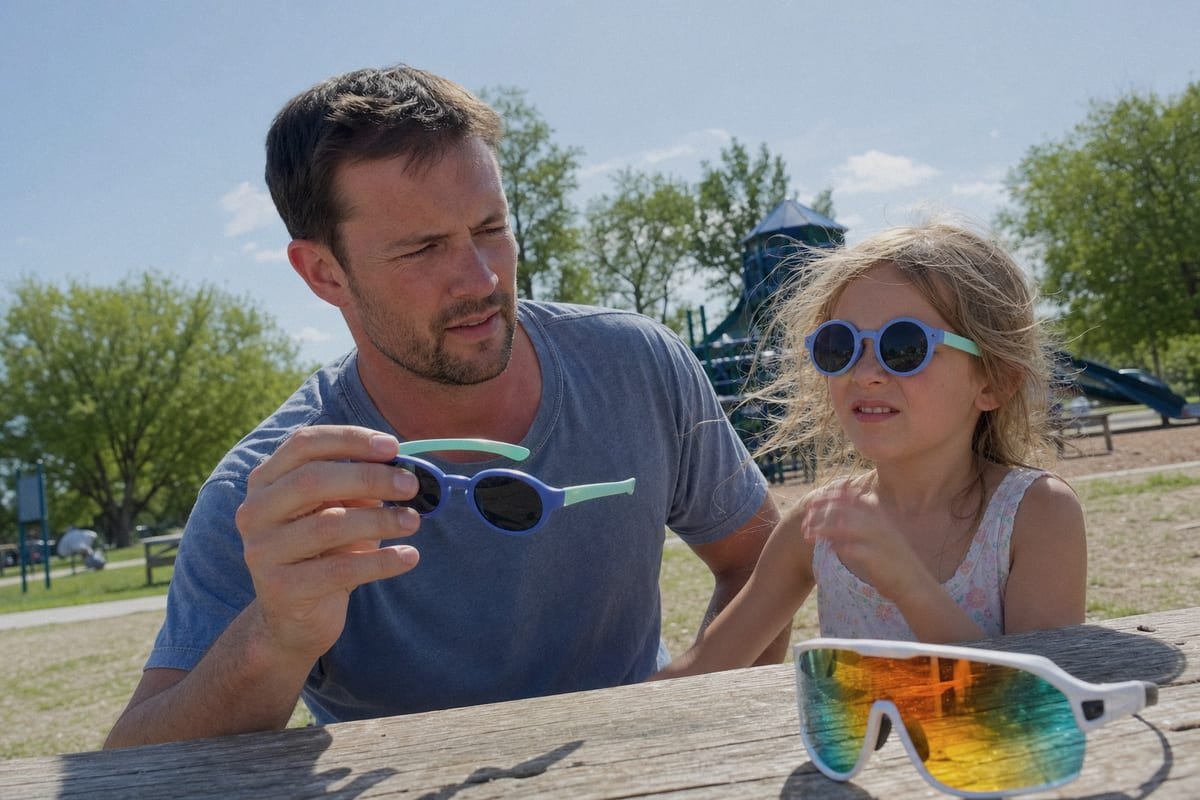
When we support OEM/ODM buyers launching their own children's eyewear brands, documentation is where we spend the most hand-holding time. The good news: because our roughly 800 existing styles have established material and construction baselines, new brands can often reach retail-ready compliance without heavy mold investment or starting testing from zero. Custom colors, logos, and packaging layer on top of a proven technical foundation.
The Documentation Stack, Step by Step
| Step | Document | Who Prepares It | Purpose |
|---|---|---|---|
| 1 | Lab test report | Accredited third-party lab | Proves the model meets EN ISO 12312-1 |
| 2 | Technical file | Factory + brand | Design specs, materials, test evidence, risk assessment |
| 3 | Déclaration de conformité | Brand (as the party placing on market) | Legal self-declaration under PPE Regulation 2016/425 |
| 4 | CE / UKCA marking | Applied to product or packaging | Market access signal for EU / UK |
| 5 | Consumer labeling | Factory per brand artwork | Filter category, UV claim, care and use instructions |
Labeling Your Retail Packaging Correctly
Your packaging and product information should state the filter category number, the UV protection claim 7 (such as UV400), the manufacturer or importer identity, and basic care instructions. If you sell category 4 styles, you must warn they are not suitable for driving. We build these elements into branded, retail-ready packaging during production, so our buyers' products arrive shelf-ready rather than needing relabeling in a local warehouse.
One caution from experience. Responsibility does not end at the factory gate. The brand placing the product on the EU or UK market holds the legal obligation for conformity. A reliable factory partner reduces that risk enormously — but you should still keep your own copies of every report and declaration, review them at each reorder, and retest when lens suppliers, tints, or frame materials change.
Conclusion
EN ISO 12312-1 turns kids’ sunglasses from a fashion gamble into verified protection. Our factory builds every children’s frame with that framework in mind — so your brand launches with confidence, not compliance anxiety.
Notes de bas de page
1. Official ISO Online Browsing Platform link for the current 2022 standard. ↩︎
2. Official European Union regulation regarding the design and manufacture of personal protective equipment. ↩︎
3. Official EU portal for business compliance and conformity documentation. ↩︎
4. Wikipedia entry describing the properties and applications of thermoplastic elastomers like TPEE. ↩︎
5. ISO Online Browsing Platform providing definitions for sunglare filter categories. ↩︎
6. Wikipedia explanation of optical power and its measurement in lenses. ↩︎
7. Wikipedia article detailing the history, types, and protective standards of sunglasses. ↩︎
Plus d'articles que vous pourriez aimer
1 août 2026
L'usine doit-elle gérer l'emballage et l'étiquetage des lunettes pour enfants, ou utiliser un fournisseur désigné ?
1 août 2026
Entrepôt propre vs. exécution directe par le fournisseur : lequel réduit les coûts de retour pour les marques de lunettes pour enfants ?
1 août 2026
Entrepôt direct au port ou staging outre-mer : lequel permet d'économiser le plus sur l'expédition des lunettes pour enfants ?
Vous recherchez un partenaire fiable en lunetterie pour enfants ?
Explorez plus de 800 styles prêts et un support OEM/ODM complet adapté à votre marque.
Contactez-nous English
  Español de México
  Deutsch
  Français
  日本語
日本語  العربية
  Português do Brasil