What Are GPSR Traceability, Labeling, and Risk Rules for Kids’ Sunglasses Sourcing?
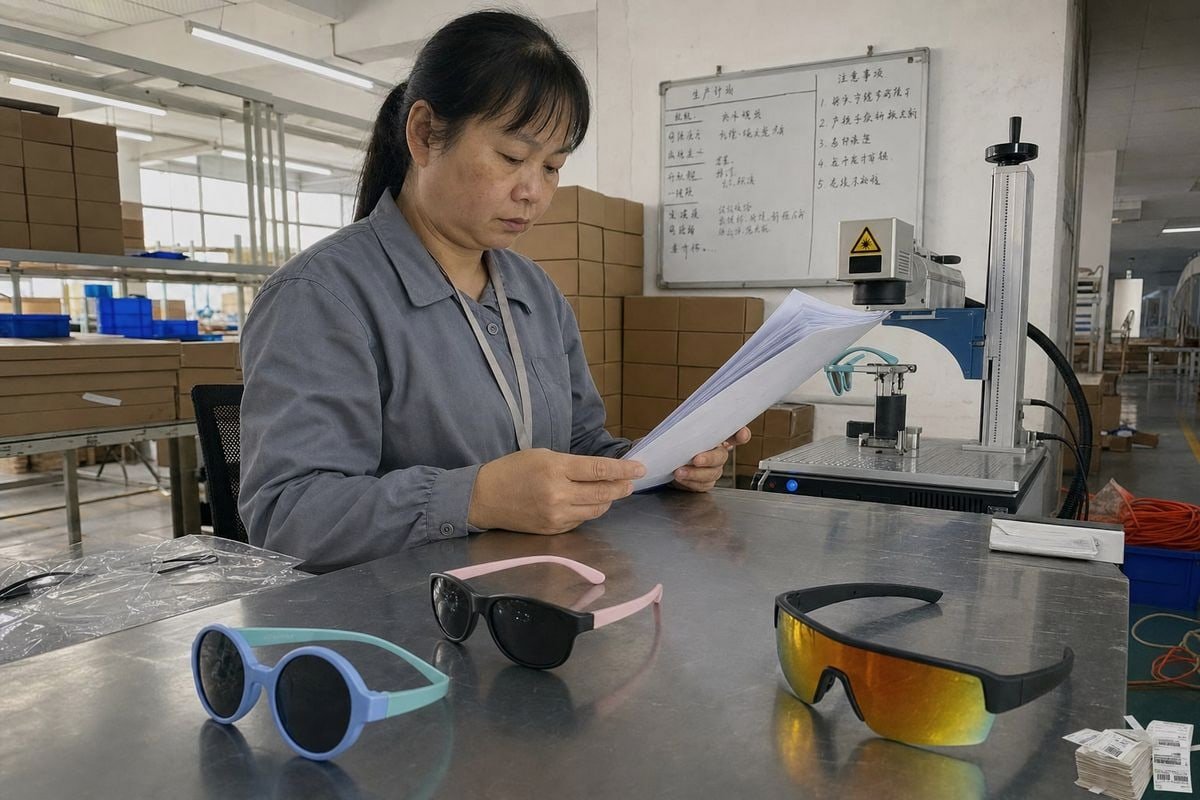
GPSR traceability, labeling, and risk rules for kids’ sunglasses catch many buyers off guard. On our production line in Taizhou, we see the same paperwork gaps derail launches again and again.
GPSR requires kids’ sunglasses to carry a type, batch, or serial number, the manufacturer’s name and addresses, an EU Responsible Person for non-EU brands, safety warnings in the local language, and a documented product risk assessment kept in a technical documentation file.
That is the short answer. But each of those pieces has practical details that affect how you source, label, and document your product. Let me walk through them one by one.
What Traceability Information Must I Include on Kids' Sunglasses Under GPSR?
A buyer from Germany once asked us to add batch codes mid-production because her customs broker flagged the shipment. We now build batch marking into every kids' order from day one.
Under GPSR, each pair of kids' sunglasses must be identifiable by a type, batch, or serial number, plus the manufacturer's name, registered trade name or trademark, postal address, and electronic address. If direct marking is impractical, this information moves to the packaging or accompanying documents.
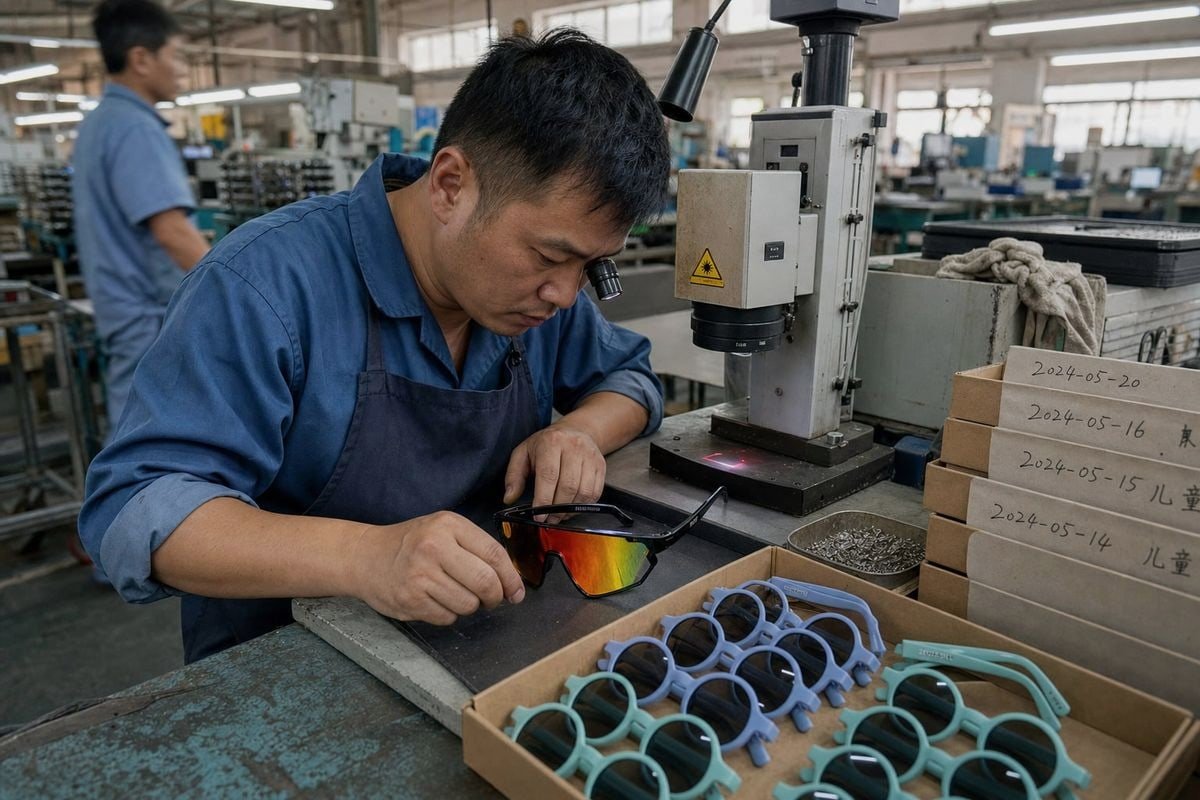
Traceability under EU 2023/988 1 compliance is bigger than a printed code. It is the ability to link one finished pair of sunglasses back to the factory, the production batch, the materials used, and every operator who handled it. Regulators want this so Marktüberwachungsbehörden 2 can isolate a problem batch quickly. You should want it for the same reason: recall speed.
Here is the practical difference. If a lens batch fails its UV claim, a brand with batch-level traceability recalls a few thousand units. A brand without it recalls the entire product line. We have watched buyers learn this the hard way, and it is expensive.
What the Identifier Must Do
The identifier must let anyone trace the product back through the chain. A model number alone is usually not enough for kids' products. We recommend a model number plus a batch or lot code tied to a production date. Batch and serial numbers should appear on the temple arm where space allows, or on the packaging when the frame is too small.
Records You Must Keep
Several sources describe a ten-year retention expectation for supplier and sales records. That matters at sourcing time, because your factory must be able to support it.
| Record Type | What It Should Contain | Warum es wichtig ist |
|---|---|---|
| Supplier records | Factory name, address, contacts, order history | Identifies who supplied each batch |
| Product identifiers | Model, batch, lot, production dates | Links units to production runs |
| Distribution records | Which batches went to which customers | Enables targeted recalls |
| Test reports | Batch-linked UV, optical, chemical tests | Proves safety per batch |
Ask your supplier before ordering whether they can map each shipment to a batch code and hold the manufacturing records. At our workshop, we keep production travelers for every kids' order so a buyer can request the paper trail years later. If a supplier cannot do this, no price advantage covers the risk.
How Should I Label My Children's Eyewear to Meet GPSR Requirements?
Label artwork is where we spend the most back-and-forth time with new European buyers. One missing email address on a sleeve card can hold an entire container at customs.
GPSR labeling for children's eyewear requires the product identifier, the manufacturer's name and postal plus electronic addresses, the EU importer or Responsible Person details, CE marking where applicable, and safety warnings and instructions written in the language of the country of sale.
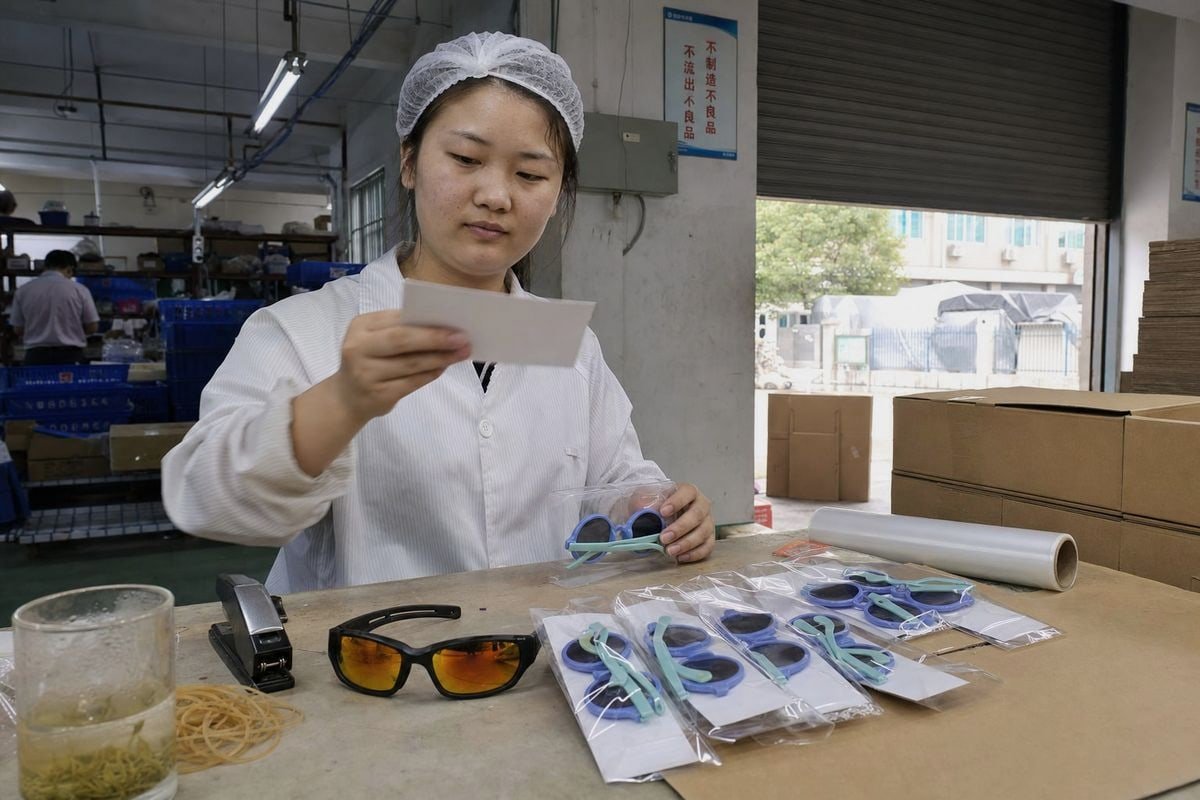
Labeling follows a hierarchy. Mark the product first. If the frame is too small, use the packaging. If packaging is impractical, use an accompanying document. For kids' sunglasses, a realistic split looks like this: batch code and CE marking on the inner temple, full operator details and warnings on the packaging or an insert card.
CE marking requirements 3 still apply because sunglasses are personal protective equipment under EU rules, and testing to the EN ISO 12312-1 standard 4 is the accepted way to demonstrate lens safety and UV performance. GPSR sits alongside this, not instead of it. Your label set must satisfy both.
Product vs. Packaging vs. Listing
| Location | What Goes There |
|---|---|
| On the frame | Batch code, model number, CE marking where space allows |
| On the packaging | Manufacturer name and addresses, importer or EU Responsible Person, warnings, age suitability, UV category |
| Accompanying insert | Instructions for safe use, care guidance, standard references |
| Online listing | Product identifier, operator details, warnings visible before purchase |
That last row surprises many buyers. If you sell online, GPSR-era rules push the key identification and warning information onto the product page itself, not just the physical item. Marketplaces increasingly ask for operator data and warnings in structured formats during onboarding. We prepare artwork files so the box, the insert, and the listing all say the same thing, because inconsistency between them is one of the fastest ways to draw a compliance query.
Language matters too. Warnings and instructions must appear in the official language of each Member State where you sell. For a brand covering five EU markets, that usually means a multilingual insert. Plan the space for it before you approve packaging dies, not after.
Emerging Practice: QR-Linked Compliance
A growing number of our buyers add a QR code linking to a digital Konformitätserklärung 5 and test reports. It is not mandatory, but it satisfies marketplace transparency requests and can smooth customs clearance. It costs almost nothing to add at the artwork stage.
What Risk Assessment Steps Do I Need Before Sourcing GPSR-Compliant Kids' Sunglasses?
There is a trade-off we weigh on every new kids' style: a stiffer frame holds its shape better, but a flexible TPEE frame is far safer when a toddler bends, chews, or sits on it. That trade-off is exactly what a risk assessment is supposed to capture on paper.
Before sourcing, you must complete a documented product risk assessment covering foreseeable hazards — UV failure, poor optical quality, breakage, small parts, sharp edges, and harmful chemicals — then record the design choices, standards, and test evidence that control each hazard in a technical documentation file.

Some sourcing teams still treat sunglasses as low-risk fashion. Regulators do not, and for children's eyewear they are right not to. A child's product faces intended use plus reasonably foreseeable misuse: mouthing the temple tips, pulling the hinges apart, falling while wearing them. Your risk file must consider both.
Here is the objection we hear most often: "Our supplier has certificates, so the risk work is done." It is not. A factory-wide certificate from last year does not prove your batch is safe. Compliance by paperwork alone helps you after a problem. Compliance by design prevents the problem. The risk assessment is where those two meet, and it must be tailored to your specific product, not copied from a template.
A Practical Five-Step Process
- Identify hazards. List everything that could go wrong: UV protection failure, optical distortion, frame breakage creating sharp edges, detachable small parts, restricted substances in plastics, and poor fit letting lenses slip.
- Assess severity and likelihood for children. A hinge screw is a minor issue on adult frames but a potential Erstickungsgefahr 6 on kids' frames, so small parts safety testing belongs in your plan.
- Define controls. Match each hazard to a design or material choice. Flexible TR90 frames with TPEE temples resist snapping; UV400 lenses address radiation; screwless or secured hinges reduce detachment risk. Newer assessments also review ergonomic pressure on a child's developing nasal bridge during long wear.
- Verify with testing. Test lenses to the EN ISO 12312-1 standard, verify REACH regulation 7 compliance for phthalates and heavy metals, and demand batch-specific chemical reports rather than annual factory-wide certificates — especially if recycled plastics are involved.
- Document everything. Compile the hazard analysis, drawings, material declarations, and test reports into a technical documentation file, and keep it available for authorities.
Hazard-to-Control Mapping
| Hazard | Typical Control | Evidence in the File |
|---|---|---|
| UV protection failure | UV400 lens specification | Batch lens test report |
| Frame breakage, sharp edges | Flexible TPEE/TR90 materials | Impact and flex test results |
| Choking on small parts | Secured hinges, minimal hardware | Small parts pull-force testing |
| Harmful substances | Compliant material sourcing | REACH chemical test reports |
| Poor fit and retention | Child-sized anthropometric design | Fit specifications, wear trials |
When we develop a new kids' style, our engineers run flex and pull tests on samples before the file goes to the buyer. That evidence becomes the backbone of the buyer's risk assessment. Ask your supplier for the same support upfront.
How Can I Choose a Manufacturing Partner Who Understands GPSR Compliance for Children's Eyewear?
Fifteen years of exporting children's eyewear to buyers in more than twenty countries has taught our team one blunt lesson: the cheapest quote almost never comes with a complete technical file.
Choose a partner who provides batch-level identification, batch-linked test reports, material declarations matching final goods, label artwork support, and documented quality control. Verify they understand economic operator responsibilities and can help you appoint an EU Responsible Person if your brand sits outside the EU.

The factory you choose determines how easy or painful your GPSR journey becomes. A brand cannot produce a credible technical documentation file if the factory cannot supply material declarations and test data that match the actual goods. So supplier evaluation is really compliance evaluation.
Start with materials. Rigid, brittle plastics create sharp-edge and breakage risks that no label can fix. Genuine flexible-material expertise matters here. In our workshop, TPEE und TR90 8 are not marketing terms; they are the reason a frame bends flat and returns to shape when a four-year-old abuses it. A supplier who only re-badges generic adult frames in small sizes has skipped the design controls your risk assessment depends on.
Next, check documentation discipline. Before you place an order, ask for a sample technical file from a previous kids' project: test reports, chemical declarations, product specs. A serious factory will show you the structure even with client names removed. Also confirm their workshop management. A 5S-managed floor with traceable production records supports the batch mapping GPSR expects; a chaotic one cannot.
Then consider commercial risk. Tooling for new molds is a heavy upfront cost for a brand still testing a market. Working from an existing library — we maintain roughly 800 styles buyers can customize with their own colors, logos, lenses, and packaging — lets you launch retail-ready product without that investment, while still getting full OEM/ODM support when you scale.
Finally, clarify economic operator responsibilities in writing. Who compiles the file? Who holds the Declaration of Conformity? Who acts as your EU Responsible Person, and whose details appear on the packaging? Settle these questions during onboarding, not when a market surveillance authority emails you. One more modern check: audit your own marketing so lifestyle photos never show children using the product in ways that contradict your printed warnings — regulators and marketplaces now notice.
Schlussfolgerung
GPSR turns kids' sunglasses sourcing into a traceability, labeling, and risk discipline. Get batch codes, operator details, language-correct labels, and a tested technical file right — with a factory partner who supports all of it.
Fußnoten
1. Official EU regulation text defining GPSR traceability obligations referenced directly in the article. ↩︎
2. EU Commission resource explaining the role of market surveillance authorities in product recalls. ↩︎
3. European Commission page detailing CE marking rules that apply alongside GPSR for sunglasses. ↩︎
4. Detailed summary of international sunglasses standards, including specific EN ISO 12312-1 requirements. ↩︎
5. Background explanation of the compliance document referenced for QR-linked verification practices. ↩︎
6. US Consumer Product Safety Commission oversees small parts and choking hazard regulations for children’s products. ↩︎
7. ECHA’s official REACH guidance explains chemical compliance testing mentioned for children’s eyewear materials. ↩︎
8. Wikipedia overview of thermoplastic elastomer materials used for flexible children’s frame construction. ↩︎
Weitere Artikel, die Ihnen gefallen könnten
August 2026
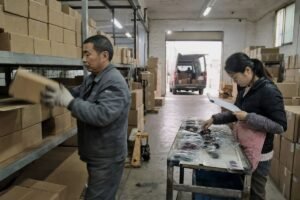
Sollte die Fabrik die Verpackung und Kennzeichnung von Kinder-Sonnenbrillen übernehmen oder einen bestimmten Lieferanten nutzen?
August 2026
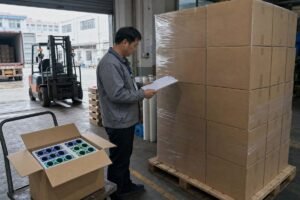
Eigenes Lager vs. Direktlieferung durch den Lieferanten: Was senkt die Retourenkosten für Marken von Kinder-Sonnenbrillen?
August 2026
Direkt zum Lagerhafen oder Lagerung in Übersee: Was spart mehr bei den Versandkosten für Kinder-Sonnenbrillen?
Auf der Suche nach einem zuverlässigen Partner für Kinderbrillen?
Entdecken Sie über 800 sofort verfügbare Modelle und umfassenden OEM/ODM-Support, der auf Ihre Marke zugeschnitten ist.
Kontakt aufnehmen English
  Español de México
  Deutsch
  Français
  日本語
日本語  العربية
  Português do Brasil