Photochromic vs Fixed-Tint Lenses: Which Is Better for Kids Sunglasses?
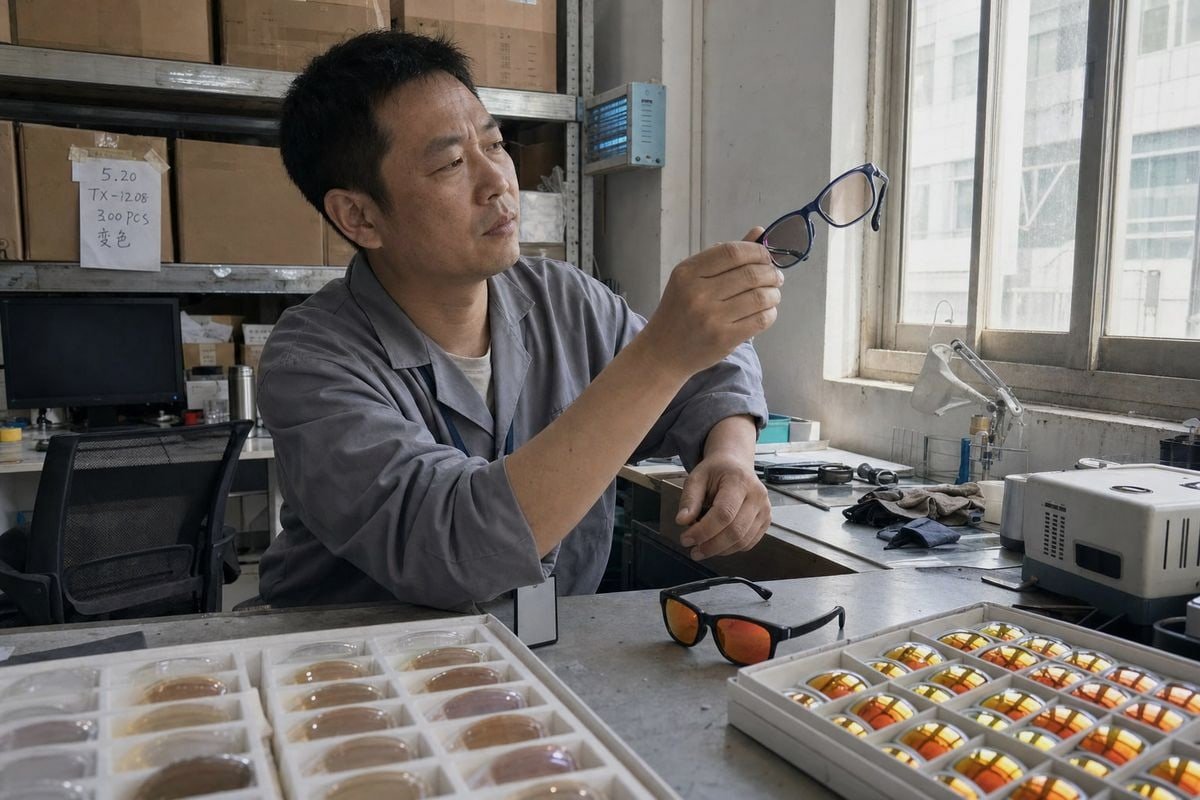
Choosing between photochromic vs fixed-tint lenses for kids sunglasses stalls many product launches. I see buyers freeze on this decision every season on our Taizhou production line.
Photochromic lenses suit kids who move between indoors and outdoors all day, while fixed-tint lenses are better for dedicated outdoor sunglasses. For most children’s sunglasses lines, fixed-tint UV400 lenses offer predictable protection and lower cost; photochromic works best as a premium add-on option.
Both lens types can protect young eyes well. The real question is which one fits your brand, your buyers, and your budget. Let me walk you through it.
How do I decide between photochromic and fixed-tint lenses for my kids' sunglasses line?
A buyer from Australia once asked me to quote both lens types for the same TR90-Rahmen 1. Comparing those two quotes side by side taught us more than any catalog ever could.
Decide based on your product's use case: fixed-tint lenses fit dedicated outdoor sunglasses with predictable darkness and lower unit cost, while photochromic lenses fit all-day eyewear for kids who transition frequently between classrooms, playgrounds, and home. Match the lens to the child's daily routine, not to technology prestige.
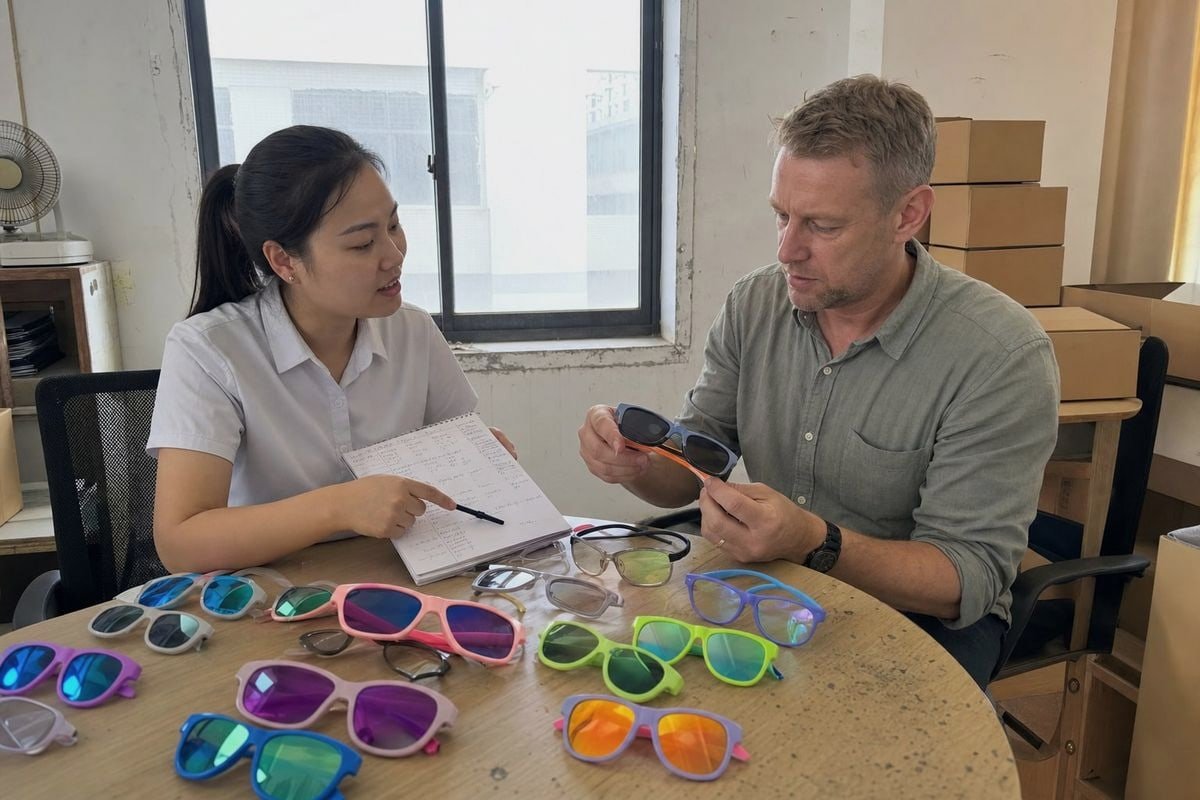
The decision is really about convenience versus predictability. Photochromic lenses 2 contain molecules that react to UV light. They darken outdoors and clear indoors. Fixed-tint lenses stay the same shade in every situation. Neither is universally better. Each wins in different scenarios.
Here is a quick comparison to frame your decision:
| Faktor | Photochromic Lenses | Fixed-Tint Lenses |
|---|---|---|
| Behavior | Darkens in UV light, clears indoors | Constant tint at all times |
| Best use case | All-day wear, school-to-playground | Dedicated outdoor sunglasses |
| Unit cost | Higher | Lower |
| Style and color range | Limited, mostly gray/brown | Wide, including mirrored gradients |
| Car performance | Weak (windshields block UV) | Strong and consistent |
| Transition speed | Minutes, not instant | No transition needed |
Think About Your End Customer First
Most of our B2B buyers sell to parents shopping for beach days, sports, and holidays. For that market, fixed-tint lenses make sense. Parents expect kids sunglasses to be dark, fun, and colorful. Our sport-style wraparound frames with mirrored gradient lenses sell well precisely because the tint is bold and constant.
Photochromic makes sense if your brand serves kids who wear glasses full time, or if you want a premium "one pair does everything" story. A study of children aged ten to fifteen found photochromic lenses were preferred outdoors and performed like clear lenses indoors. That evidence supports school-age wearers, though for toddlers it is a practical inference rather than a clinical finding.
Consider Your Price Positioning
Photochromic lenses raise your landed cost. If your retail price point is entry-level, fixed tint keeps margins healthy. If you sell premium children's eyewear, photochromic can justify a higher shelf price and differentiate you from cheap imports.
What safety and UV protection differences should I consider between these two lens types?
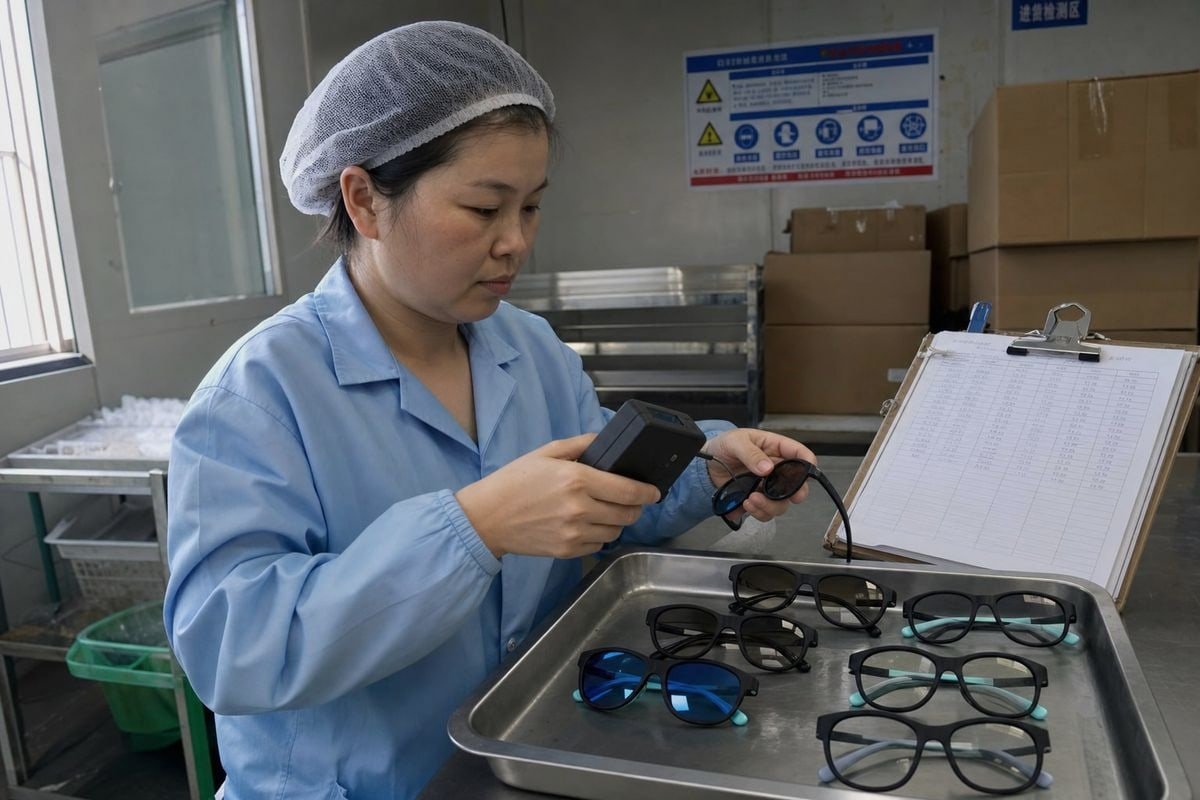
During incoming QC at our factory, we test every lens batch for UV blocking before assembly. That habit came from a hard lesson: tint darkness tells you nothing about actual protection.
Both lens types can deliver full UV400 protection when properly manufactured; safety depends on the lens material and coating, not the tint mechanism. Photochromic lenses protect passively even when clear, while fixed-tint lenses must be verified for UV blocking independent of how dark they look.
Pediatric eye health experts 3 emphasize that children absorb significant UV exposure over their early years. Kids are also unreliable about wearing sunglasses. So the protection question matters more for children than for adults.
UV Protection Works Differently Than Parents Think
A dark lens without UV blocking is actually dangerous. It relaxes the pupil, letting it open wider, while unfiltered UV streams through. That is why we specify UV400-Schutz 4 on every kids lens we produce, whether tinted or photochromic. Always ask your supplier for UV test documentation, not just a "UV400" sticker on the lens.
Photochromic lenses have one genuine safety advantage. They provide passive protection. When a child runs outside for recess without warning, the lens darkens automatically. There is no separate pair to forget in a locker. For families who cannot manage eyewear swapping, that automatic behavior closes a real protection gap.
Impact Resistance Matters Just as Much
For active children, outdoor eye safety includes physical protection. We recommend Polycarbonatgläser 5 for both lens types because their impact resistance far exceeds standard plastic. A ball to the face should never shatter a lens. Pair that with flexible TPEE or TR90 frames, and the whole product bends instead of breaking against a child's face.
One more nuance: photochromic lenses stay clear indoors, so the child's eyes receive normal indoor light. Some fixed-tint sunglasses get worn indoors as a fashion choice, which can interfere with healthy light exposure and circadian rhythms 6. Some photochromic materials also offer mild blue light filtering indoors, which brands can mention as a secondary benefit without overclaiming.
Which lens option offers better durability and value for active children who play outdoors?
One trade-off we weigh constantly in product development is upfront cost against lifetime value. A lens that fades or scratches in one summer costs your brand far more than the price difference at the factory gate.
Fixed-tint polycarbonate lenses offer the best durability-to-cost ratio for active kids, since the tint cannot wear out. Photochromic lenses cost more but replace two pairs with one, which can offset the price. In-mass photochromic technology resists scratches better than coated versions.
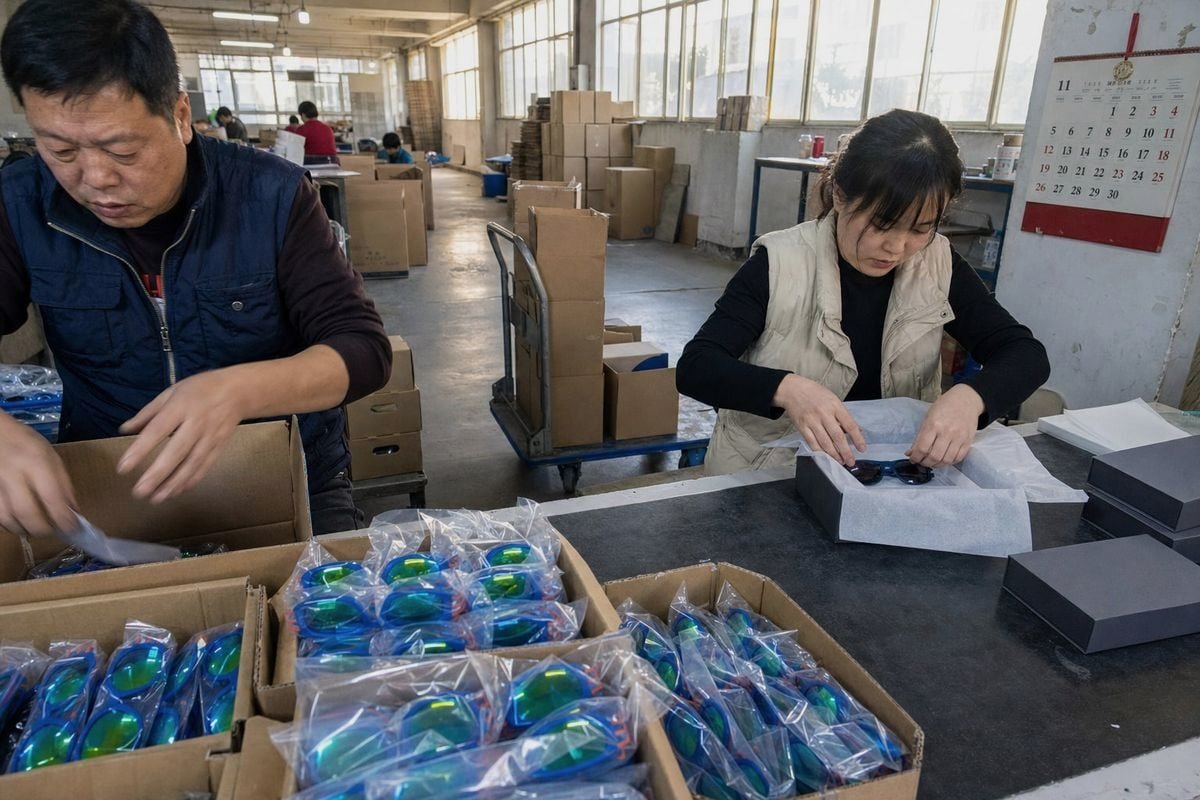
Durability for children's eyewear has three layers: the frame, the lens material, and the tint technology itself. Let us look at each.
Where Each Lens Type Can Fail
Fixed tint is essentially failure-proof as a technology. The color is dyed into or coated onto the lens, and it stays put. Photochromic performance, however, can degrade. Coating-based photochromic lenses lose reactivity when scratched, which matters because childhood play guarantees scratches. Modern in-mass photochromic lenses embed the reactive molecules throughout the lens, so surface wear affects them far less. If you offer photochromic, specify in-mass technology.
Temperature is another factor buyers often miss. Photochromic lenses darken more intensely in cold weather and clear more slowly in warm rooms. A child skiing gets excellent performance. A child at a tropical beach gets a lighter tint than expected. Fixed tint is immune to temperature.
| Value Factor | Photochromic | Fixed Tint |
|---|---|---|
| Tint longevity | Can fade over years; coatings vulnerable | Permanent |
| Scratch impact on function | High for coated, low for in-mass | Cosmetic only |
| Temperature sensitivity | Ja | Keine |
| Glare reduction option | Begrenzt | Can add polarisierte Gläser 7 |
| Replaces multiple pairs | Ja | Nein |
| Typical unit cost | Higher | Lower |
The Glare Question
For high-glare environments like beaches, snow, and water, fixed-tint polarized lenses deliver superior glare reduction. Polarization is a separate technology from photochromic, and combining the two in kids eyewear gets expensive fast. If your line targets water sports or snow, polarized fixed tint gives better visual comfort at a sensible price. Our wraparound sport styles with mirrored shield lenses follow exactly this logic: consistent darkness, strong glare control, and impact resistance for rough handling.
Can I offer both photochromic and fixed-tint options without complicating my sourcing and production?
Last year, a European kids' brand asked us this exact question during a video call. They worried that two lens programs meant two suppliers, two QC standards, and double the headaches. It does not have to.
Yes, you can offer both by using shared frame platforms with interchangeable lens options from one factory. Standardize on common frame molds, keep photochromic to a small premium range, and let fixed-tint UV400 and polarized lenses carry your core volume. One supplier managing both keeps QC consistent.
The key is platform thinking. A frame does not care what lens it holds. At our workshop, the same TR90 frame with TPEE temples can ship with clear optical lenses, fixed-tint UV400 lenses, polarized lenses, or photochromic lenses. The mold, the fit, and the safety testing stay identical. Only the lens spec changes on the order sheet.
A Practical Way to Structure a Two-Lens Line
- Choose two or three frame platforms from existing styles. With around 800 existing styles in our catalog, most brands can build a full line without any mold investment.
- Assign fixed-tint lenses to your volume SKUs. These are your playful, colorful everyday styles, like a round two-tone frame with opaque dark lenses.
- Reserve photochromic for one or two hero SKUs. Position them as premium all-day eyewear for kids with light sensitivity or full-time wear needs.
- Unify packaging and branding. Retail-ready boxes, custom logos, and matching cases make the two ranges feel like one coherent collection.
- Keep one QC standard. UV400 verification, impact testing, and fit checks apply to every lens type equally.
What This Means for MOQs and Lead Times
Photochromic lenses usually carry higher minimums per color and slightly longer lead times. Plan your photochromic SKUs earlier in your seasonal calendar. Fixed-tint options, especially from existing stock lenses, ship faster and allow smaller test orders. This mix lets a new brand test the market with lower risk while still telling a premium technology story.
| Line Planning Element | Fixed-Tint SKUs | Photochromic SKUs |
|---|---|---|
| Role in your range | Core volume, colorful styles | Premium hero products |
| Typical MOQ pressure | Lower | Higher |
| Lieferzeit | Shorter | Longer |
| Customization scope | Colors, mirrors, gradients, polarized | Mostly gray or brown reactive tints |
| Marketing story | Fun, protective, affordable | One pair for indoors and outdoors |
Schlussfolgerung
Fixed-tint lenses give predictable, affordable protection for dedicated kids sunglasses; photochromic adds all-day convenience at a premium. Match the lens to the child's routine, verify UV400, and build both on shared frames.
Fußnoten
1. Authoritative Wikipedia reference covering the materials and construction standards for modern eyeglass frames. ↩︎
2. Background on photochromic lens chemistry supporting the article’s technical lens comparison. ↩︎
3. NIH’s National Eye Institute provides authoritative guidance on children’s UV eye protection. ↩︎
4. WHO explains UV radiation risks that justify UV400 lens protection standards for children. ↩︎
5. Background on polycarbonate material properties supporting its use in impact-resistant kids lenses. ↩︎
6. Explains how light exposure regulates circadian rhythms, relevant to indoor lens tint effects. ↩︎
7. Authoritative medical source from the American Academy of Ophthalmology explaining polarized lens technology and benefits. ↩︎
Weitere Artikel, die Ihnen gefallen könnten
August 2026
Sollte die Fabrik die Verpackung und Kennzeichnung von Kinder-Sonnenbrillen übernehmen oder einen bestimmten Lieferanten nutzen?

August 2026
Eigenes Lager vs. Direktlieferung durch den Lieferanten: Was senkt die Retourenkosten für Marken von Kinder-Sonnenbrillen?

August 2026
Direkt zum Lagerhafen oder Lagerung in Übersee: Was spart mehr bei den Versandkosten für Kinder-Sonnenbrillen?
Auf der Suche nach einem zuverlässigen Partner für Kinderbrillen?
Entdecken Sie über 800 sofort verfügbare Modelle und umfassenden OEM/ODM-Support, der auf Ihre Marke zugeschnitten ist.
Kontakt aufnehmen English
  Español de México
  Deutsch
  Français
  日本語
日本語  العربية
  Português do Brasil