Can Kids’ Sunglasses Affect Traffic Light Color Recognition?
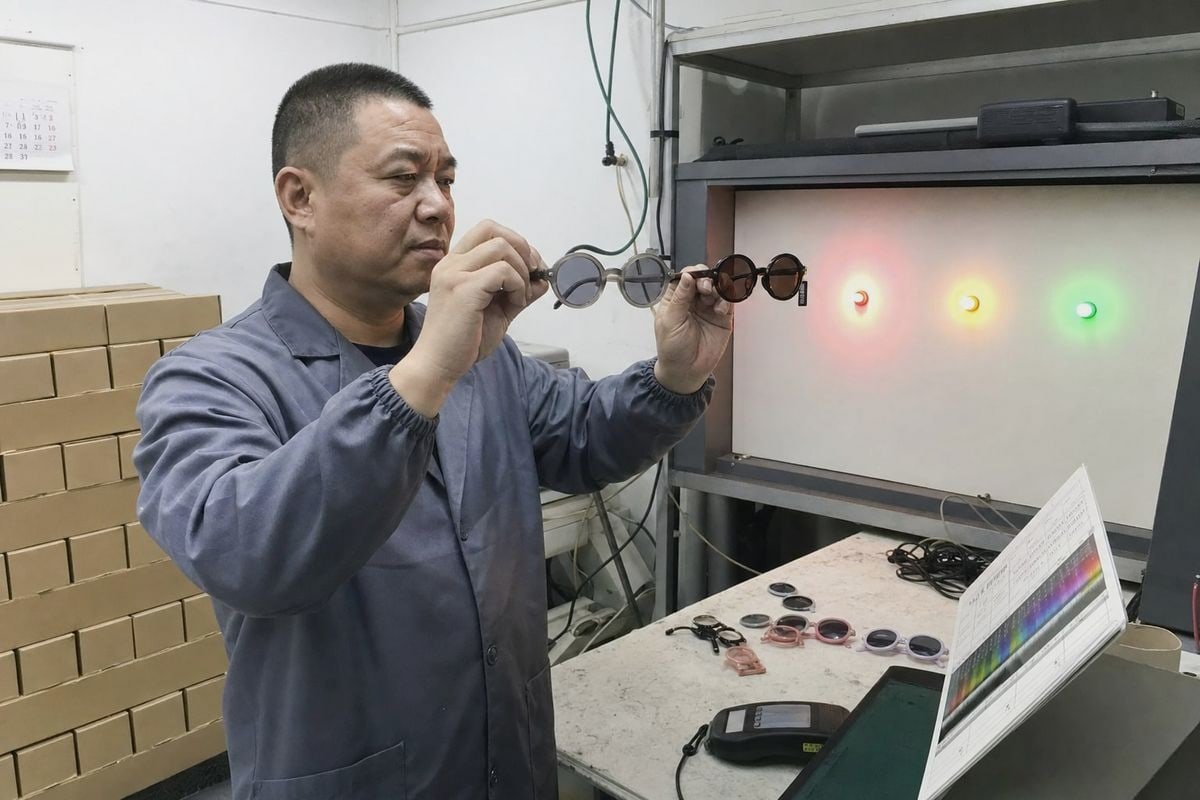
On our production line in Taizhou, I see how kids’ sunglasses can quietly change traffic light color recognition. A wrong tint delays a child’s read of a red signal. Lens choice fixes this.
Yes, kids’ sunglasses can affect traffic light color recognition. Strongly colored tints — especially green, yellow-green, red-brown, and yellow-brown — can slow signal light recognition and cause errors. Neutral gray lenses preserve color accuracy best, making them the safest choice for children near traffic.
This is not a scare story. It is a lens science question with a practical answer. Let me walk you through what tints do, which colors are safe, and how to verify quality before you buy.
How do tinted lenses distort my child's ability to see red and green signals?
During a lens calibration session at our factory last year, I compared a deep rose fashion lens against a neutral gray sample under a signal-simulation lamp. The difference in how red and green appeared genuinely surprised our own QC team.
Tinted lenses filter certain wavelengths of light. A colored tint that overlaps with a signal's hue can dull, shift, or mask that color, so a red or green light looks washed out or ambiguous. Research shows this measurably slows recognition and increases errors, especially with similar lens-signal color pairings.
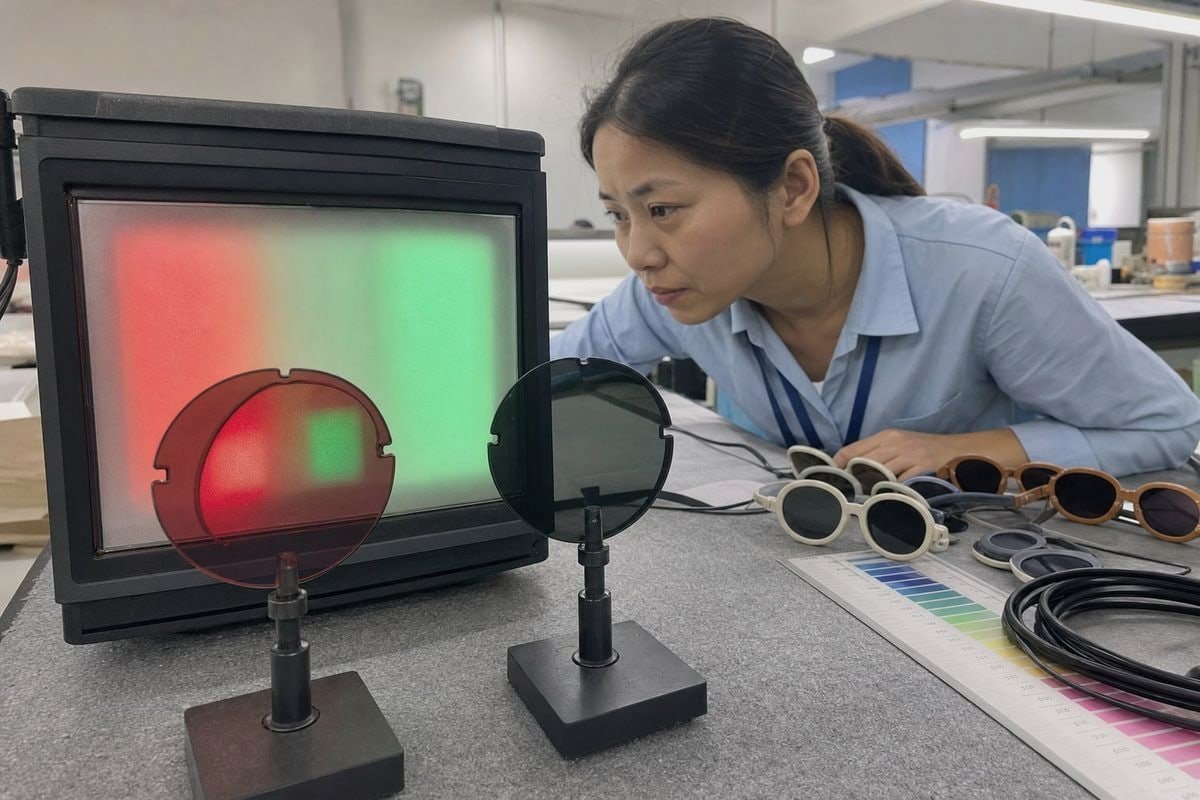
Every lens is a filter. A gray lens reduces all wavelengths fairly evenly, so colors stay balanced. A colored lens does not. It absorbs some wavelengths more than others. That selective absorption is exactly what creates color distortion.
Think about what happens when a child wears a green-tinted lens and looks at a yellow traffic signal. The lens suppresses part of the yellow light. The signal now appears closer to green, or simply duller. The child's brain needs extra time to decode it. A controlled study on sunglasses and traffic signals found exactly this pattern: signal color and lens tint both affected response times and error rates, and the worst results came when the lens color was similar to the signal color.
Why children are more vulnerable than adults
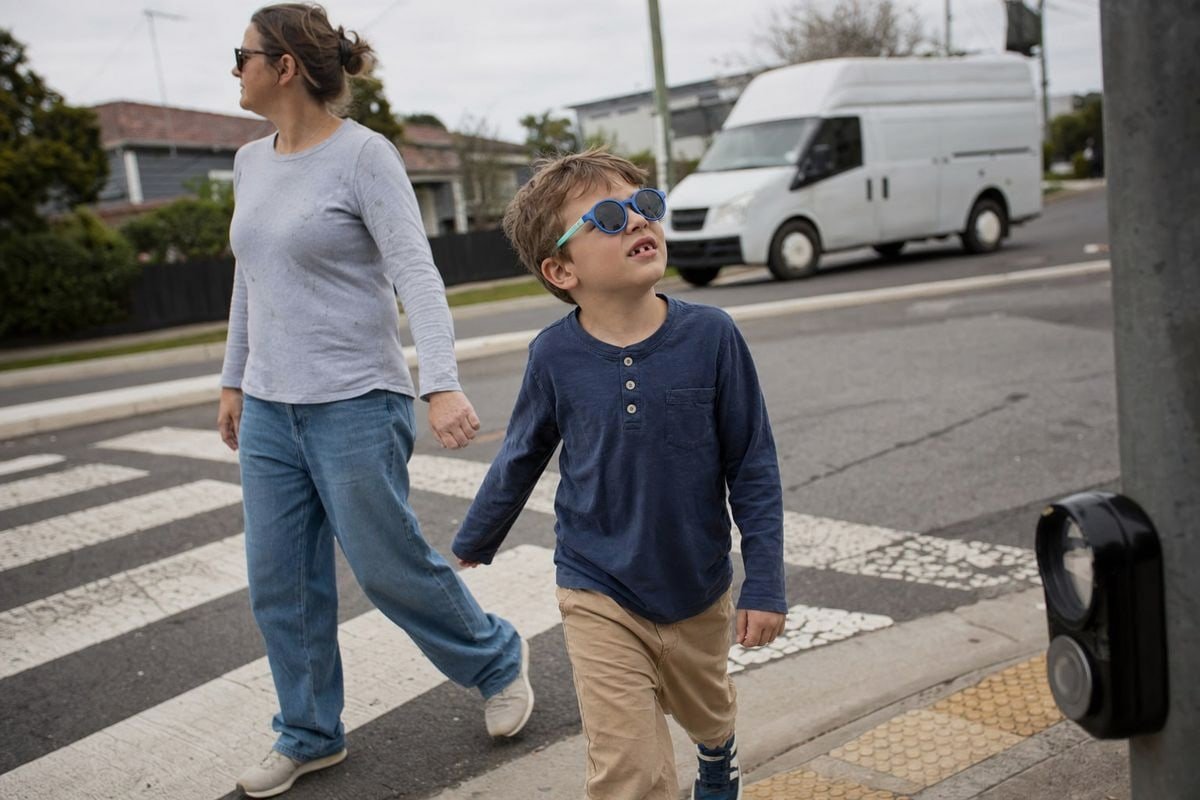
Children are still learning road cues. Adults lean on context — signal position, other pedestrians, traffic flow. A six-year-old relies far more on the raw color itself. So any color distortion hits children harder in practice, even if the optical effect is identical.
There is a second layer. Some children have undiagnosed red-green color vision deficiency 1. In the same study, color-deficient observers made significantly more recognition errors under yellow-green and green tints. A parent may never know their child has mild CVD, which makes conservative lens choices even more important.
The three ways a tint interferes
- Hue shift — the signal's apparent color moves toward another color.
- Brightness loss — high lens tint density makes the signal look dim or even extinguished.
- Contrast masking — the signal blends into its surroundings, delaying detection.
Any one of these can add a fraction of a second to a child's decision at a crossing. All three together can add more.
Which lens colors are safest for kids to wear while walking or riding near traffic?
A buyer from an Australian kids' brand once asked me to quote deep blue and purple fashion lenses for a toddler line. I sent back a comparison chart first, quote second. That conversation shaped how we advise every client now.
Neutral gray lenses are the safest for children near traffic because they reduce brightness evenly without shifting colors. Brown is an acceptable second choice with minor color shift. Avoid strongly colored fashion tints — deep blue, purple, pink, green, and yellow-green — for walking or riding near roads.
Here is the quick-reference table we share with brand buyers when they select lens colors for a children's collection:
| Lens Color | Color Fidelity | Traffic Safety Rating | Beste Verwendung für Kinder |
|---|---|---|---|
| Neutral gray | Excellent — even reduction across the spectrum | Safest | Everyday wear, walking, biking, school runs |
| Brown / amber | Good — slight warm shift, greens may look yellowish | Gut | Bright sun, variable light, sports |
| Green (G15) | Moderate — can interfere with yellow signals | Use with caution | Casual wear away from traffic |
| Yellow / yellow-green | Poor for signals — masks yellow, shifts green | Not recommended near roads | Low-light contrast activities only |
| Blue / purple / pink | Poor — distorts red and green perception | Not recommended near roads | Fashion, beach, poolside |
Darkness matters as much as color
Lens color is only half the equation. Visible light transmission (VLT) is the other half. A perfectly neutral lens that is too dark still makes signals look dim. Category 4 sun lenses 2 transmit under 8% of visible light. They are made for glaciers and open water, not sidewalks. Japanese road-use guidance even restricts very low-transmittance lenses at dusk and night because they cut visibility too far. For children's everyday sunglasses, we typically recommend Category 2 or Category 3 lenses, which balance glare reduction with adequate visual perception.
What we specify in production
When we develop kids' sunglasses for brands across 20+ countries, our default recommendation is a neutral gray Category 3 lens with UV400-Schutz 3. It handles bright playgrounds and beach days while keeping red, yellow, and green signals distinct. For a sportier line — say a cycling style for older kids — a brown lens adds contrast and depth perception without severe distortion. Vivid mirror coatings, like the orange-gold gradient shields in our sport range, sit over a base tint; the base tint is what determines color accuracy, so we keep those bases neutral.
Can polarized lenses cause more color distortion than standard UV400 lenses?
One trade-off we weigh constantly in product development is polarization versus simplicity. Polarized lenses cost more and sell well, but I always remind buyers what polarization actually does — and what it does not.
Polarization itself does not distort color; it filters horizontal glare. Color distortion comes from the tint dyed into the lens, whether polarized or not. However, polarized lenses can make some LED traffic signals or LCD screens appear dimmer or blotchy, so tint color still matters most.
There is a persistent myth in our industry that "polarized" automatically means "premium optics" and therefore "color-safe." That is a marketing shortcut, not physics. Let me break the comparison down honestly.
Polarization and tint are two separate layers
A polarized lens contains a filter film that blocks horizontally oriented light waves — the glare bouncing off wet roads, car hoods, and water. That film is essentially color-neutral. The tint you see is a separate dye layer. So a polarized lens with a neutral gray tint has excellent color fidelity, while a polarized lens with a deep green tint distorts signals just as much as a non-polarized green lens would.
| Merkmal | Standard UV400 Lens | Polarized UV400 Lens |
|---|---|---|
| UV-Schutz | Full, if UV400 rated | Full, if UV400 rated |
| Glare reduction | Only by darkness | Actively filters reflected glare |
| Color distortion source | Tint color and density | Tint color and density (same) |
| LED / LCD interaction | Keine | Some LED signals and screens may look dim or patchy |
| Optical clarity | Depends on lens grade | Depends on lens grade and film lamination quality |
| Typical cost | Lower | Higher |
Where polarized lens safety genuinely helps kids
For a child riding a bike beside wet pavement, polarization cuts glare that would otherwise force squinting. That is a real benefit. Our polarized kids' lens options pass the same tint and UV checks as our standard lenses, and we laminate the film carefully because a poorly bonded film creates waviness that hurts optical clarity — the kind of chromatic aberration 4 you see in cheap novelty lenses, where the edges of a traffic light look blurred or fringed with color.
The honest guidance I give buyers: choose polarized for glare-heavy use cases, but never let "polarized" replace the tint-color decision. A neutral gray polarized lens is excellent. A purple polarized lens is still a purple lens.
How do I choose a supplier who tests lens color accuracy before shipping?
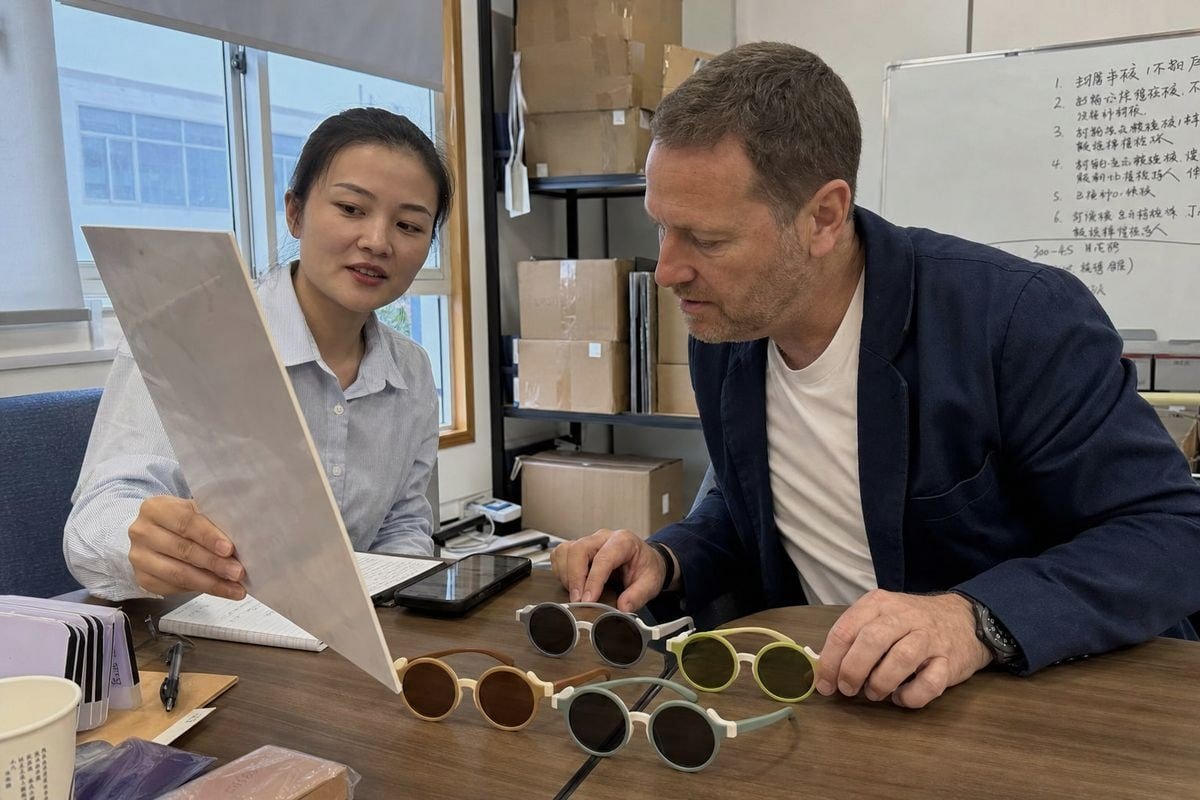
Fifteen years of exporting children's eyewear has taught me one blunt lesson: the spec sheet a supplier promises and the lens that arrives in the container are not always the same thing. Verification, not trust, protects your brand.
Choose a supplier who tests lenses against recognized standards like ANSI Z80.3, measures visible light transmission per batch, verifies UV400 with a spectrophotometer, and documents tint consistency. Ask for test reports, inspect their QC process, and request pre-shipment samples pulled from the actual production run.
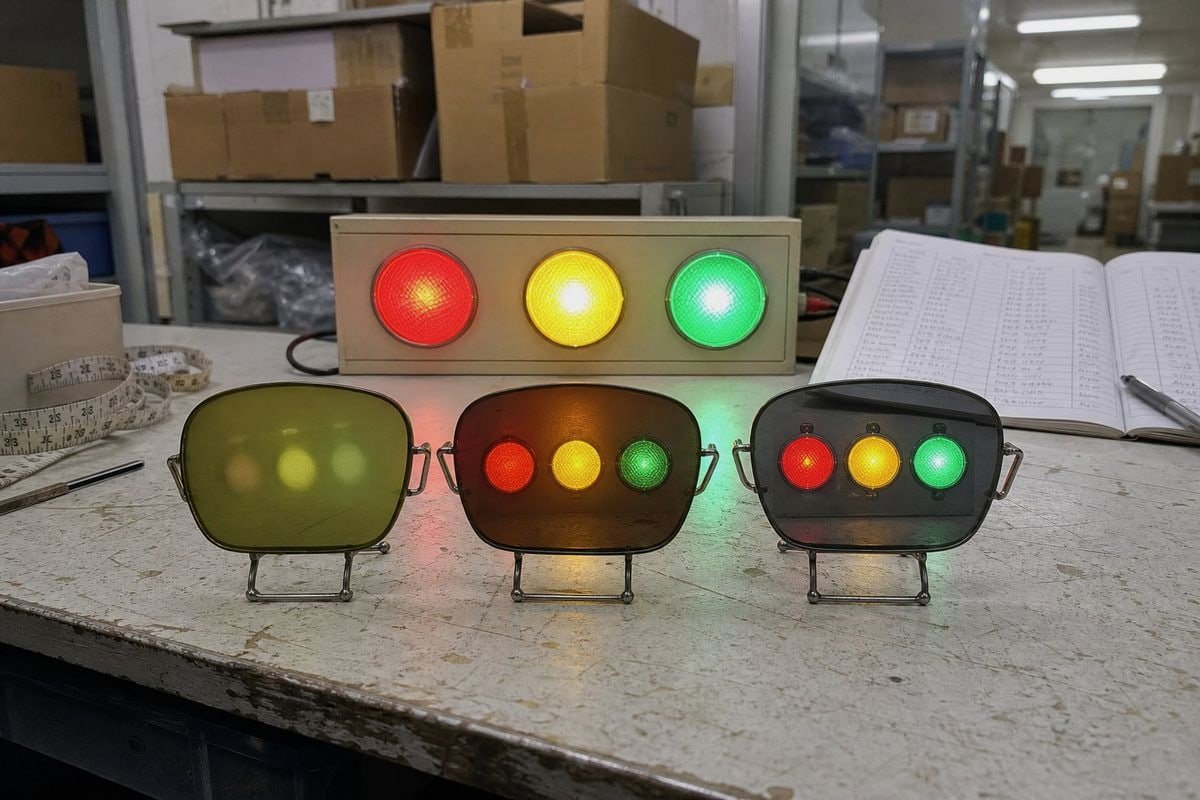
Lens color accuracy is testable. It should never be a matter of eyeballing a sample under office lighting. Here is the checklist I would use if I were sitting in your chair as a procurement manager.
Five checks a serious factory performs
- Traffic signal transmittance testing. Standards like ANSI Z80.3 5 und EN ISO 12312-1 6 include requirements for how much red, yellow, and green signal light a lens must transmit. Ask directly: does the lens meet the traffic signal recognition 7 clauses, not just the UV clause?
- VLT measurement per batch. Dye baths drift. Two production runs of "the same" gray can differ in lens tint density. A good factory measures visible light transmission on samples from every batch, not just the golden sample.
- UV400 spectrophotometer verification. UV protection cannot be seen. It must be measured. We run this check on incoming lens stock before assembly, because a dark lens without real UV filtering is the most dangerous combination for a child.
- Tint uniformity and optical inspection. Gradient and mirror lenses need consistent coating. We inspect under controlled light in our 5S-managed workshop for blotching, waviness, and distortion.
- Documented pre-shipment sampling. Insist on samples pulled randomly from the finished goods, photographed, and where needed re-tested — not showroom samples.
Questions that separate factories from traders
| Frage zu stellen | Strong Answer Signals |
|---|---|
| Which standard do your kids' lenses meet? | Named standards (ANSI Z80.3, EN ISO 12312-1), with reports available |
| How do you control tint consistency between orders? | Batch VLT measurement, retained reference samples |
| Can I customize the tint but keep color safety? | Yes, with guidance — e.g., neutral bases under fashion mirror coatings |
| Are you a factory or trading company? | Verifiable factory details, workshop photos, audit welcome |
| What materials are frames made of? | Child-safe flexible materials like TPEE and TR90, not brittle generic plastic |
At our facility, roughly 120 workers run these controls across about 800 existing styles. That existing-style library matters for buyers too: you can launch with proven, pre-tested lens and frame combinations instead of gambling on new molds and unverified tints. Full OEM/ODM-Unterstützung 8 — custom colors, logos, lenses, and retail-ready packaging — then builds on that tested foundation rather than replacing it.
Schlussfolgerung
Kids' sunglasses can affect traffic light color recognition — but only bad tint choices do. Pick neutral gray, verify UV400 and testing, and partner with a factory that proves color accuracy.
Fußnoten
1. Explains the condition referenced when discussing undiagnosed CVD risk in children. ↩︎
2. Background on sunglass lens categories and transmittance classifications discussed. ↩︎
3. Authoritative WHO fact sheet detailing the health effects of UV radiation. ↩︎
4. Defines the optical distortion phenomenon mentioned regarding poorly laminated lenses. ↩︎
Weitere Artikel, die Ihnen gefallen könnten
August 2026
Sollte die Fabrik die Verpackung und Kennzeichnung von Kinder-Sonnenbrillen übernehmen oder einen bestimmten Lieferanten nutzen?
August 2026
Eigenes Lager vs. Direktlieferung durch den Lieferanten: Was senkt die Retourenkosten für Marken von Kinder-Sonnenbrillen?
August 2026
Direkt zum Lagerhafen oder Lagerung in Übersee: Was spart mehr bei den Versandkosten für Kinder-Sonnenbrillen?
Auf der Suche nach einem zuverlässigen Partner für Kinderbrillen?
Entdecken Sie über 800 sofort verfügbare Modelle und umfassenden OEM/ODM-Support, der auf Ihre Marke zugeschnitten ist.
Kontakt aufnehmen English
  Español de México
  Deutsch
  Français
  日本語
日本語  العربية
  Português do Brasil