How to Verify a Supplier’s Delivery Timeline for Kids’ Optical Frames?
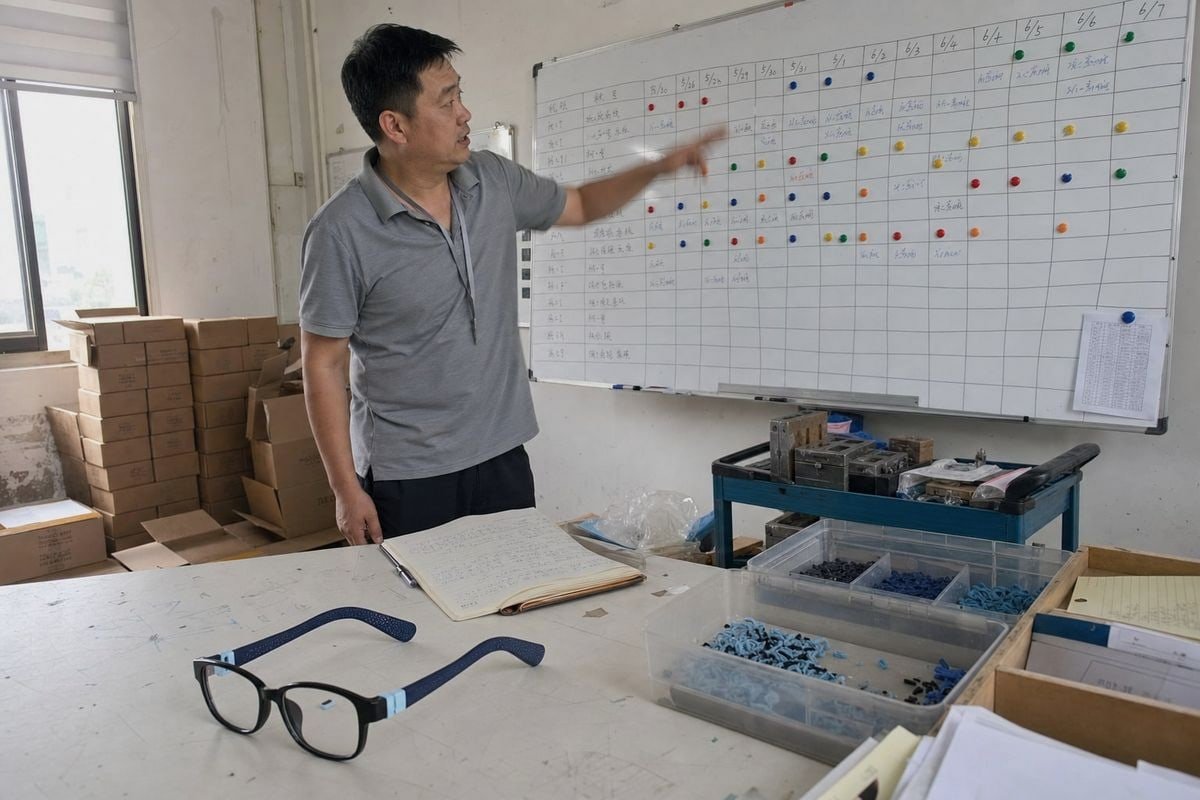
Verifying a supplier’s delivery timeline for kids’ optical frames saved one of our buyers an entire school-season launch. A missed date can quietly destroy a retail calendar. Here is how we prevent that on our own production line.
To verify a supplier’s delivery timeline for kids’ optical frames, define the exact start and end events, request a milestone-by-milestone schedule, check historical on-time delivery records, confirm material readiness and a real production slot, and get the full ETA with assumptions in writing.
A quoted date is not proof. A verified schedule is. The sections below show you exactly what to ask, what to check, and how to protect your launch.
What questions should I ask before trusting a supplier's quoted lead time?
Last spring, a European buyer asked us for "30 days delivery." We asked back: 30 days from what event, ending where? That single exchange exposed a two-week gap in her plan.
Before trusting a quoted lead time, ask what event starts the clock, what event ends it, how many sampling rounds are included, whether materials are in stock, whether a real production slot exists, and what the supplier's on-time record is for similar kids' frames.
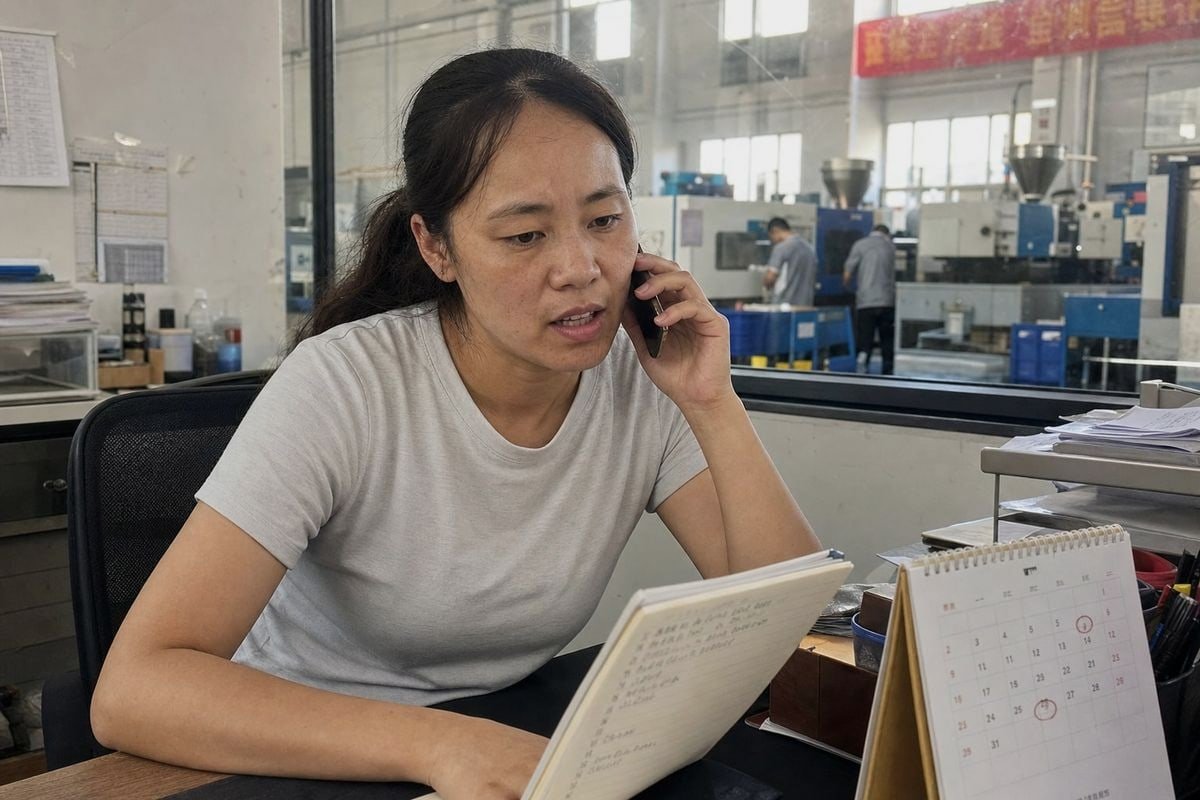
Most quoted lead times fail because the buyer and the supplier are measuring different things. The supplier may count from deposit receipt to factory completion. You may be counting from PO signature to warehouse arrival. Those two numbers can differ by four to six weeks once sampling, quality control inspection 1, and transit are added.
Pin down the T-zero start date
The most important question is the "T-zero" question. Does the timeline begin at deposit receipt, final sample approval, or technical drawing sign-off? In our order fulfillment process, we always confirm this in the PO. If artwork approval pauses the clock, the buyer must know that before ordering, not after.
The core question set
Use this table as your baseline checklist during wholesale eyewear procurement:
| Frage | Was zu vergleichen ist |
|---|---|
| What exact event starts production? | Prevents hidden approval delays before the clock even starts |
| What exact event ends the quoted time? | Factory completion is not warehouse arrival |
| How many sampling rounds are included? | Kids' frames often need fit and color revisions |
| Are acetate, TR90, hinges, and packaging in stock? | Material sourcing is the biggest hidden delay |
| Is there a confirmed production slot for my quantity? | Theoretical capacity is not a booked slot |
| What is your on-time record for similar kids' orders? | Past behavior predicts future lead time reliability |
| What transit method is assumed? | Sea, air, and rail change the promise entirely |
| What happens if QC or customs delays the order? | Reveals whether the supplier plans for risk |
A supplier who answers these quickly and specifically is showing you supply chain transparency. A supplier who dodges them is telling you the date was a sales estimate.
How can I confirm my supplier's production capacity actually matches my order volume?
One trade-off we discuss openly with buyers at our Taizhou factory: during back-to-school peaks, our roughly 120 workers cannot run every mold at once, so slot booking matters more than headline capacity.
Confirm capacity by requesting a current factory load assessment, cross-referencing claimed monthly output against machine count and staffing, asking for past production schedule examples, and verifying that your specific SKUs have a booked slot — not a theoretical estimate.
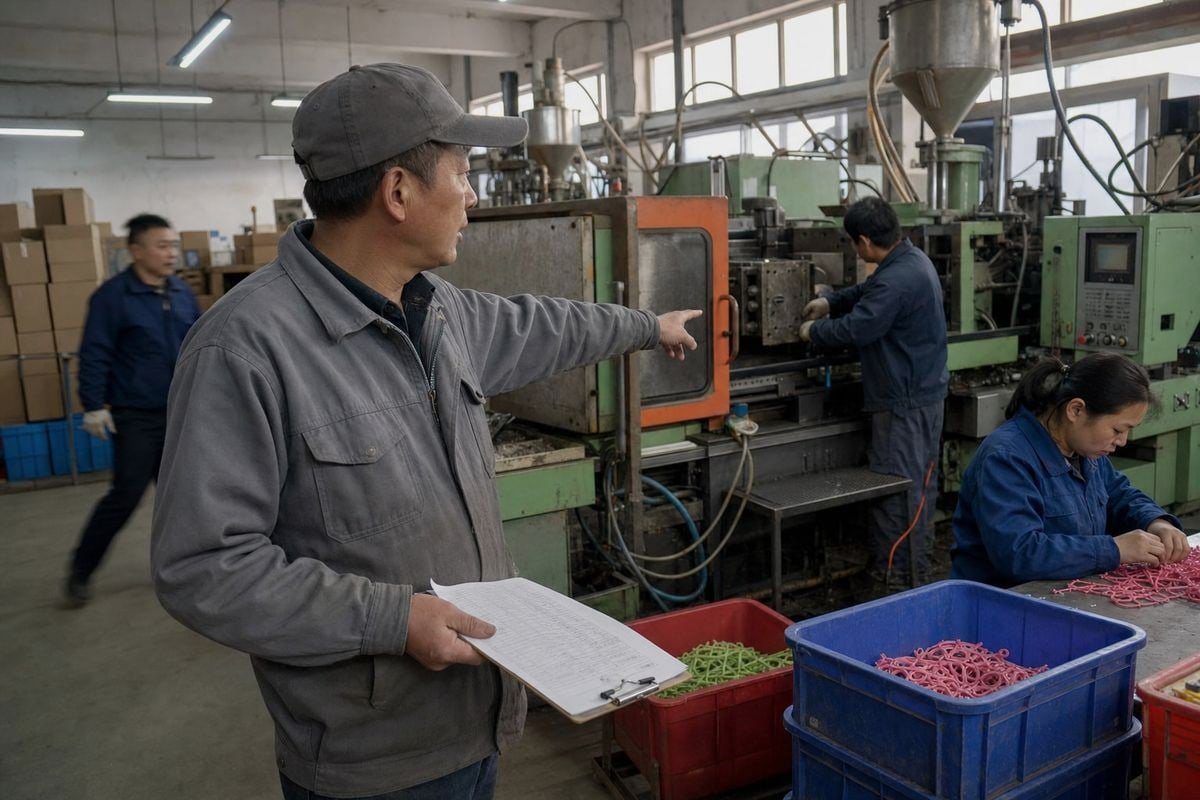
Capacity claims are easy to make and hard to keep. A proper production capacity audit 2 does not require a site visit, although a factory audit report helps. It requires connecting three numbers: machines, people, and current orders.
Cross-check the math
If a factory claims 100,000 frames per month, ask how many injection machines 3 run, how many shifts, and how many workers handle assembly and quality control inspection. If the math only works at 100% utilization with zero changeovers, the claim is theoretical. Real manufacturing cycle time includes machine changeovers, cleaning cycles, and rework loops.
Kids' frames complicate capacity
Children's eyewear orders are usually smaller runs across more colorways. That means more color-batch sequencing. Every color change on an injection machine requires purging and cleaning. In our experience running TR90 and TPEE lines, a ten-SKU kids' order consumes far more machine hours than one adult SKU at the same total quantity. Ask your supplier how they schedule color changeovers, and whether your order shares molds with other clients.
Material also changes the clock
| Rahmenmaterial | Typical production window | Capacity risk |
|---|---|---|
| Acetate | 75–90 days including curing | Curing time cannot be compressed |
| TR90 injection | 35–45 days | Mold availability and changeovers |
| TPEE flexible | 35–45 days | Color sequencing across small SKU runs |
Also ask about tooling redundancy. High-pressure injection wears molds. For high-volume kids' styles, a backup mold prevents weeks of downtime. This is one reason we maintain around 800 existing styles with proven tooling — buyers can launch without new mold risk and without joining a mold-making queue.
What red flags suggest a supplier's delivery timeline might slip?
A procurement manager from Australia once told us why she left her previous supplier: every question about progress got the same answer — "no problem, on time" — until the day it wasn't.
The biggest red flags are a single blended lead time with no milestones, vague answers about material stock, refusal to share past delivery records, no written ETA with assumptions, silence about factory holidays, and reassurance that replaces evidence.
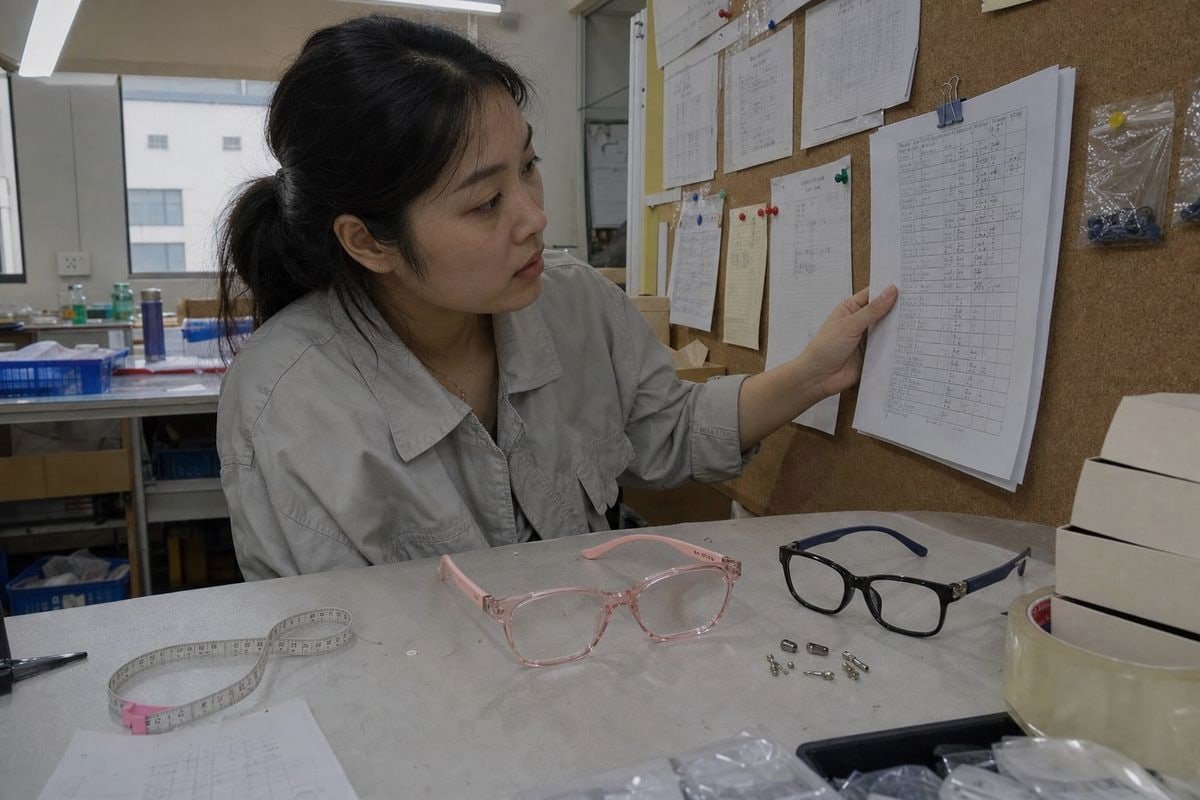
Some suppliers will argue that delivery dates are only estimates because shipping and approvals sit outside their control. There is some truth in that. But it is not an excuse to skip verification — it is the reason verification exists. If a supplier cannot define assumptions, capacity, and historical performance, the timeline is simply not actionable for your planning. The practical middle ground is converting the quote into a verified schedule with milestones and written revision rules.
Red flags ranked by severity
| Rote Fahne | Severity | Was es normalerweise bedeutet |
|---|---|---|
| One blended number, no milestone breakdown | Hoch | The supplier has not actually planned your order |
| "Materials are always available" | Hoch | Acetate, hinges, or plating inputs are not yet booked |
| No historical on-time delivery data shared | Hoch | Their lead time reliability is poor or untracked |
| Verbal promises only, nothing on the PO | Hoch | The date is not a commitment |
| No mention of Chinese New Year or peak season | Mittel | Holiday shutdowns will surprise you later |
| No quality-rework allowance in the schedule | Mittel | Kids' safety tolerances cause rejections and rework loops |
| No first-mile logistics buffer for export clearance | Mittel | Children's products face higher customs inspection 4 rates |
The quality-rework point deserves emphasis. Pediatric eyewear safety standards 5 impose stricter tolerances than adult frames — hinge pull strength, small-parts checks 6, surface finish on flexible temples. Higher rejection rates are normal and must be planned. On our lines, we build rework time into every kids' schedule rather than pretending zero defects. A supplier whose schedule shows no allowance for QC loops has written a best-case fantasy, not a plan.
The healthiest signal is the opposite behavior: a supplier who proactively tells you about a material delay or an upcoming holiday before you ask. That kind of communication predicts on-time delivery better than any quoted number.
How do I build in safeguards so late deliveries don't hurt my brand launch?
Early in our export history, we learned a lasting lesson: a shipment that arrives the week after a retail promotion is, commercially speaking, a shipment that never arrived. Buffers are not pessimism. They are planning.
Protect your launch by putting the ETA and its assumptions on the PO, requiring weekly time-stamped production reports, adding buffers for QC rework and customs, separating factory completion from arrival dates, and requesting any revised ETA in writing immediately.
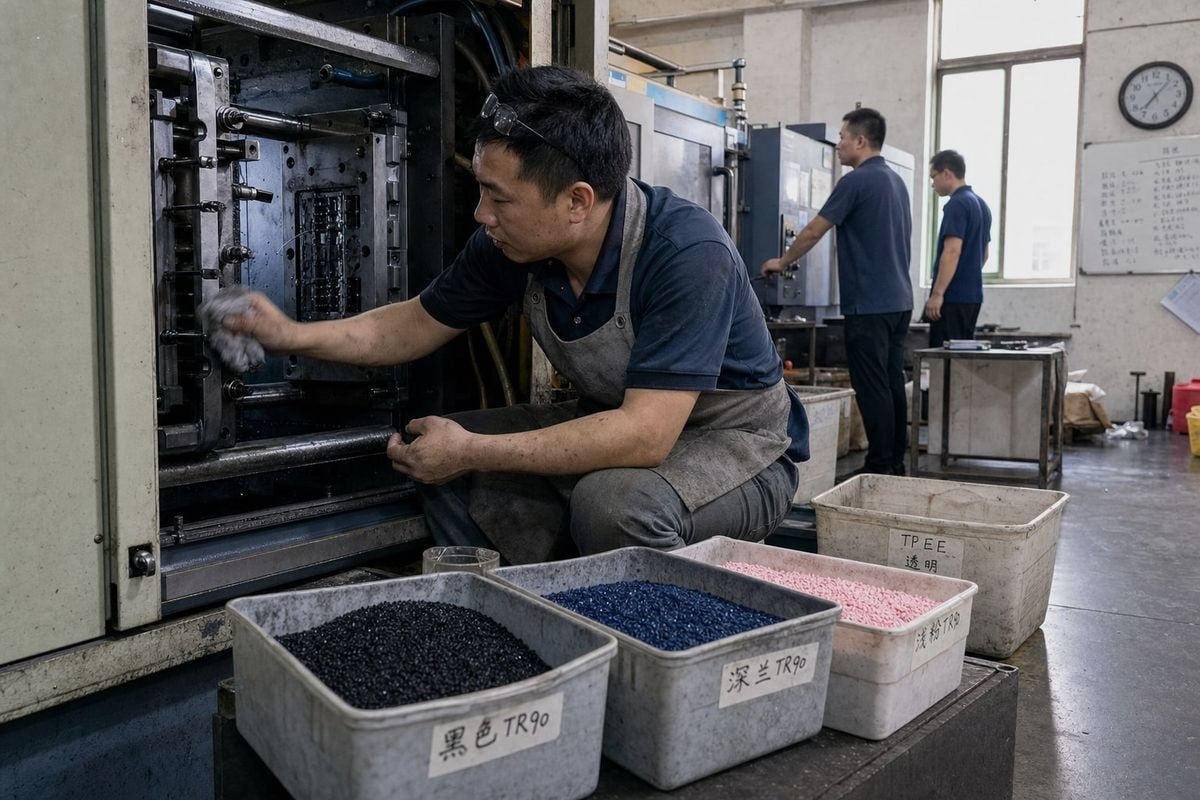
Safeguards work in layers. No single measure protects a launch, but a stacked system makes a fatal delay very unlikely. Here is the sequence we recommend to the brands we supply:
- Write everything into the PO confirmation. The confirmed ETA, the T-zero definition, the transit method, and the shipping and logistics terms (FOB, EXW, or DDP 7) must appear in writing. Verbal promises are weak evidence.
- Set a weekly reporting protocol. Require time-stamped photos or videos of your specific batch on the line. This is standard for us — it costs the factory little and gives you real supply chain transparency instead of reassurance.
- Track milestones, not one date. Watch sampling approval, material confirmation, bulk production start, final quality control inspection, packing, and shipment booking as separate checkpoints. A slip at any milestone gives you early warning, not a last-minute crisis.
- Add a first-mile logistics buffer. Children's products draw higher rates of customs inspection and documentation audits. Build in extra days for export clearance and confirm compliance paperwork before production ends, not after.
- Back-plan from your retail date, not forward from the PO. Anchor the schedule to school-season demand or your promo window, then subtract transit, clearance, QC, and production to find the true latest order date.
- Document every change. If the schedule moves, request a revised ETA in writing the same day. Then log promised dates against actual receipts. Over 12–24 months, that record shows deviation and variability — the real measure of lead time reliability, because a supplier that is fast sometimes is not reliable if it misses often.
One more structural safeguard: reduce the number of things that can go wrong. Choosing proven existing styles instead of new tooling removes mold-making risk entirely. That is precisely why many first-time kids' brands start from our catalog of ready styles, then add custom colors, logos, and retail-ready packaging through OEM/ODM work once the replenishment rhythm is proven.
Schlussfolgerung
A quoted date can sink a launch. Verified milestones, capacity proof, material confirmation, written ETAs, and layered buffers turn a supplier's promise into a schedule you can trust.
Fußnoten
1. Background on quality control processes referenced as a key production milestone. ↩︎
2. ISO 9001 is the global standard for auditing production capacity and quality management systems. ↩︎
3. Explains the manufacturing process behind frame production capacity claims. ↩︎
4. WTO trade facilitation resource explains customs procedures affecting delivery timelines. ↩︎
5. ANSI develops the eyewear safety standards referenced for children’s frame tolerances. ↩︎
6. Official federal regulation (16 CFR 1501) for testing small parts to prevent choking hazards. ↩︎
7. Defines the international trade shipping terms mentioned for PO documentation. ↩︎
Weitere Artikel, die Ihnen gefallen könnten
August 2026
Bio-Based vs Regular Cellulose Acetate: What's the Difference for Kids' Frames?

August 2026
How Recyclable Are Kids' Optical Frame Materials, and What Eco-Friendly Alternatives Exist?
August 2026
Bleichen Kinderbrillengestelle im Lager aus oder altern sie, und wie kontrolliert man die Lagerbedingungen?
Auf der Suche nach einem zuverlässigen Partner für Kinderbrillen?
Entdecken Sie über 800 sofort verfügbare Modelle und umfassenden OEM/ODM-Support, der auf Ihre Marke zugeschnitten ist.
Kontakt aufnehmen English
  Español de México
  Deutsch
  Français
  日本語
日本語  العربية
  Português do Brasil