How to Verify GTIN, Store Number & Carton Quantity on Kids Sunglasses Labels?
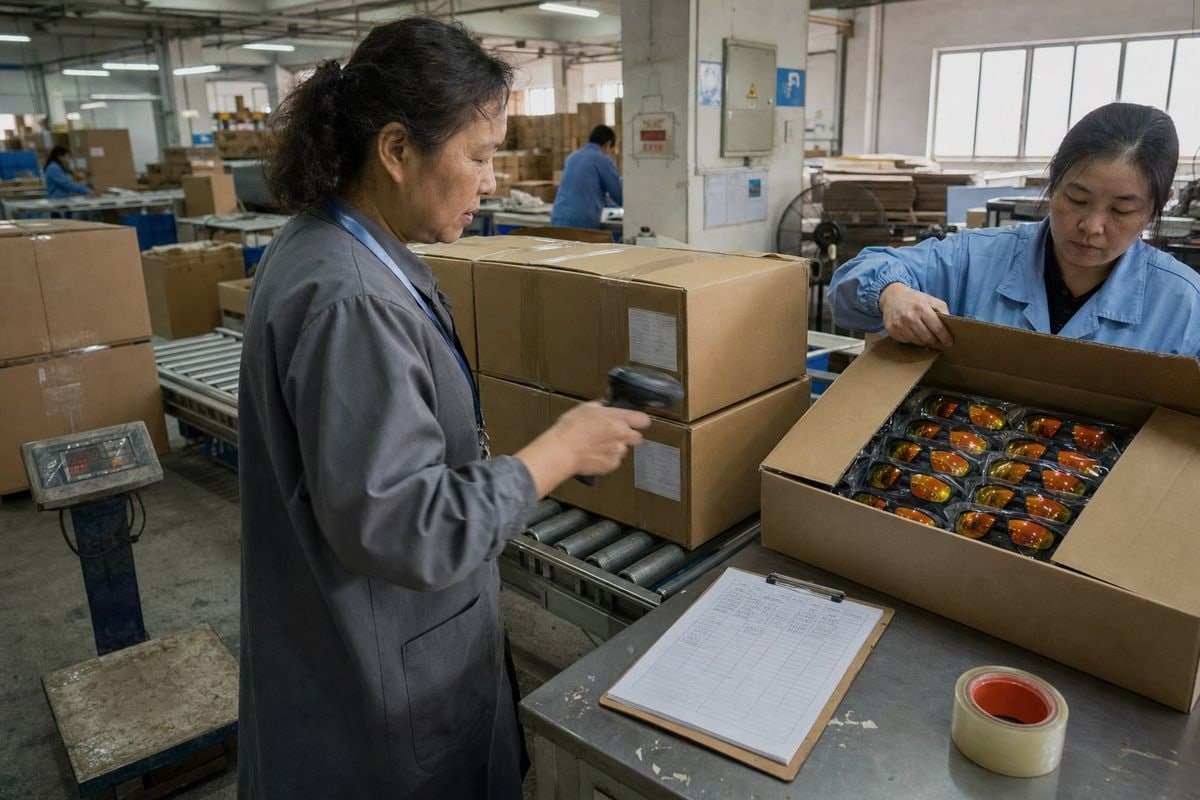
Verifying GTIN, store number, and carton quantity on kids sunglasses labels sounds simple — until one wrong digit triggers a rejected shipment. I’ve watched it happen on our own packing line.
To verify GTIN, store number, and carton quantity on kids sunglasses labels, check the GTIN against the GS1 registry and your purchase order, match the store number to the retailer’s PO, and confirm the printed carton quantity equals the packing list, invoice, and actual physical count.
Each of those three checks works differently. Below, I walk through them one at a time, in the order we run them at our factory before any carton is sealed.
What information should I check first on a kids sunglasses carton label to avoid compliance issues?
A few years ago, a buyer's distribution center in Europe held an entire container of our sunglasses for two days over one blurry barcode. Since then, our QC team checks label data before anything else.
Check the GTIN first, because every other field depends on it. Then verify the store number against the purchase order, confirm the carton quantity matches the packing list, and inspect barcode print quality, label placement, and any required safety compliance references.

The order of checks matters. A label can look clean and professional and still carry wrong data. So we always separate visual quality from data accuracy. They are two different inspections.
The priority sequence we use
Here is the exact sequence our packing team follows on every kids sunglasses order, whether it is a wraparound sport shield style or a pastel round frame for toddlers:
| Priority | Field to check | What it must match |
|---|---|---|
| 1 | GTIN / barcode number | GS1 registry 1 + buyer's item master + PO |
| 2 | Store number | Retailer's purchase order and routing guide |
| 3 | Carton quantity | Packing list, commercial invoice, physical count |
| 4 | Product description | Style number, color, lens type on the PO |
| 5 | Compliance references | Safety standard markings tied to the correct batch |
| 6 | Print quality | Retailer vendor manual (contrast, size, placement) |
Why GTIN first? Because if the product identity is wrong, a correct store number and a correct carton count just deliver the wrong item accurately. That is worse than a delay. The receiving system scans the GTIN, links it to a product record, and everything downstream trusts that link.
For children's eyewear specifically, we also cross-reference safety documentation. Kids sunglasses often need UV protection claims 2 and child-safety compliance tied to a specific production lot. If your label references a batch or lot number, confirm it corresponds to the actual production run inside the carton. A mismatch here is not just a logistics problem — it becomes a traceability problem if a recall ever happens.
Finally, we check the physical label itself. Retailer vendor manuals are strict about barcode height, quiet zones, and label position on the carton face. A perfect GTIN printed in the wrong spot can still be rejected at the distribution center.
How do I confirm my GTIN barcode matches the correct product before mass production?
When we run pre-production samples for a new kids sunglasses style, we print one test label and scan it against the buyer's item data before approving anything. That single habit has saved more orders than any other step.
Confirm a GTIN by checking the digit count, validating the check digit, searching the number in Verified by GS1, and confirming the registered company and product description match your actual sunglasses item. Then scan a printed proof label to verify it decodes to that exact number.
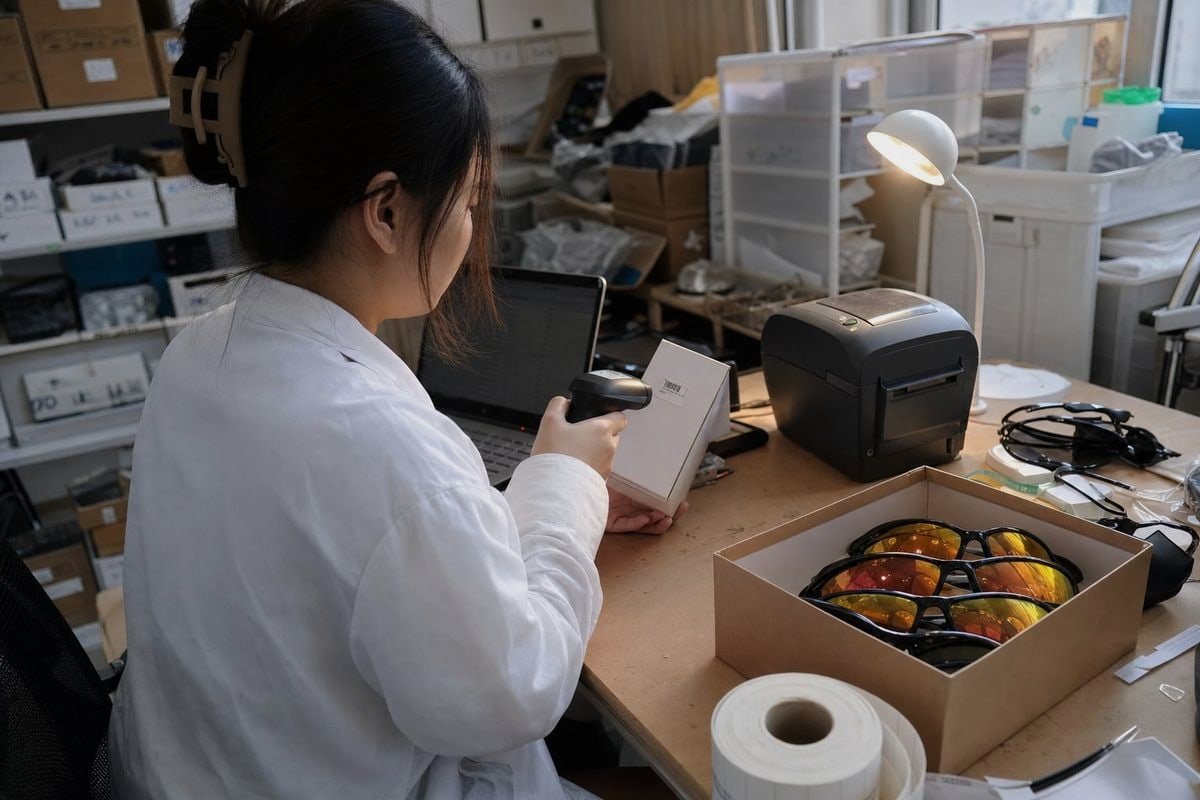
A GTIN can be real and still be wrong for your product. That distinction confuses a lot of new brands. So let me break the verification into two layers: structural checks and business checks.
Layer 1: structural checks
These prove the number is properly formed:
- Count the digits. Consumer-unit GTINs are typically 8, 12, 13, or 14 digits.
- Confirm the code contains numbers only. No letters, no spaces.
- Validate the check digit 3 using the standard GS1 calculation. Free calculators exist on GS1 websites.
- Confirm the format matches the packaging level — consumer unit versus outer case.
Layer 2: business checks
These prove the number belongs to your product:
- Search the GTIN in Verified by GS1 4. The registry tells you whether the number is issued and which company it is licensed to.
- Confirm the licensed company is the brand owner — not a random third party. This matters for imported kids products, where grey-market or recycled barcodes occasionally surface.
- Confirm the registry description matches your item: brand, product type, and variant.
- Match the GTIN to your own item master. Same style, same color, same lens option.
Why variants cause most GTIN mistakes
Kids sunglasses ship in many variants of one design. A single mold might produce a glossy black sport shield with an orange mirrored lens, a white frame with a red-to-blue gradient lens, and a periwinkle round frame with mint temples. Each color and lens combination usually needs its own GTIN. In our experience, most GTIN errors are not fake codes — they are correct codes applied to the wrong variant. So during pre-production approval, we always match the label to the physical sample sitting on the table, not to a spreadsheet alone.
Why does store number accuracy matter when shipping kids sunglasses to multiple retail locations?
One of our long-term importer clients splits a single container across dozens of retail doors. Their routing guide arrives with the PO, and every carton label carries a store number. One transposed digit sends a carton to the wrong region.
Store number accuracy matters because retailers route cartons to specific locations using that identifier. A wrong store number sends inventory to the wrong store, breaks the Advance Ship Notice match, delays receiving, and often triggers chargebacks or refused cartons at the distribution center.
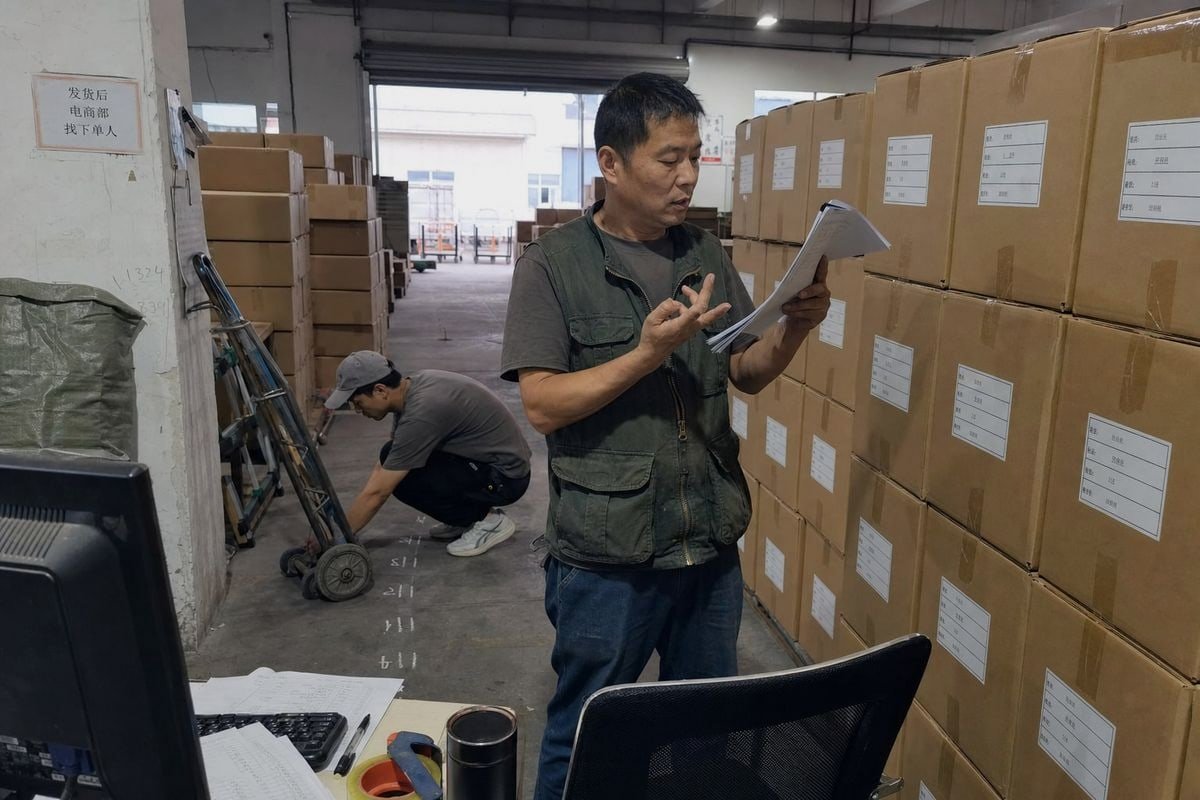
A store number is not a GS1 product identifier. It is usually a retailer-assigned internal code that says where the carton is going, not what is inside it. That is an important distinction. There is no universal public registry where you can look up store numbers the way you look up a GTIN. The only source of truth is the retailer's own purchase order, routing guide, or location master.
The three-way match
Before goods leave the factory, we recommend a three-way match on every store-numbered carton:
| Dokument | What the store number must agree with |
|---|---|
| Purchase Order (PO) | The store allocation the buyer originally ordered |
| Advance Ship Notice (ASN) | The electronic record the retailer's DC will scan against |
| Packing list | The physical paperwork traveling with the shipment |
If any one of these disagrees with the printed carton label, stop and resolve it before sealing cartons. Fixing it at the factory costs a relabel. Fixing it at a distribution center costs chargebacks, delays, and buyer trust.
Practical steps for multi-store shipments
First, get the store allocation in writing with the PO, not verbally. Second, generate carton labels directly from that allocation file rather than retyping numbers — manual re-entry is where transposition errors are born. Third, spot-check a sample of cartons per store number during final inspection. On our line, the packing supervisor scans the label, reads the store number aloud, and a second checker confirms it against the allocation sheet. It feels old-fashioned. It also works.
For kids products especially, seasonal timing is tight. Sunglasses allocated for a summer promotion at specific stores lose value fast if they land in the wrong region. Store number accuracy is really a protection of sell-through, not just logistics hygiene.
Can I request custom label formats to match my brand's carton quantity and packaging standards?
Custom labels are one of the most common OEM requests we receive at our Taizhou facility, right after custom colors and logo printing. Nearly every retail-ready program needs its own label format.
Yes. A capable OEM factory can print carton labels to your exact specification — your GTIN or GTIN-14, store number field, carton quantity, logo, layout, and size — and align inner pack counts and master carton quantities with your packaging standards and retailer vendor manual.

Carton quantity deserves special attention here, because it is verified differently from the GTIN. The GTIN identifies the product. The carton quantity describes the pack configuration. Both must be right, but they fail in different ways.
Understanding packaging levels
Kids sunglasses typically move through three packaging levels, and each can carry its own identifier:
| Packaging level | Typical contents | Common identifier |
|---|---|---|
| Consumer unit | 1 pair of sunglasses in a pouch or retail box | GTIN-12 / GTIN-13 barcode |
| Inner pack | 6–12 pairs, often one color or an assortment | Inner carton label or GTIN-14 5 |
| Master carton | Multiple inner packs, e.g., 144 or 288 pairs | Case label with GTIN-14 and quantity |
For wholesale and outer cases, GTIN-14 is commonly used to identify the carton-level trade item. If your retailer requires it, the case-level GTIN must be registered and must correspond to the specific pack configuration inside — not just the product in general.
How we verify carton quantity in practice
The printed quantity must match three things: the packing list, the commercial invoice, and the actual physical count. Automated packing lines are a known source of quantity errors, so we do not rely on final QC alone. Our packing supervisors count inner packs before the master carton is sealed, and we weigh finished cartons — a carton short by one inner pack shows up immediately on the scale.
When buyers send us their packaging standards, we build the label template into the order file from day one. That covers barcode symbology 6, label dimensions, placement, quantity fields, and any brand elements. Assortment cartons need extra care: a mixed carton of sport shields and round pastel frames must state the assortment breakdown clearly, or receiving staff will count it wrong even when it is right.
Schlussfolgerung
Label errors on kids sunglasses cost real money in chargebacks and delays. Verify the GTIN in the GS1 registry 7, match store numbers to the PO, and count cartons physically. Data, barcode, and documents must all agree before shipment.
Fußnoten
1. GS1 is the standards body issuing and validating GTIN barcodes globally. ↩︎
2. CDC guidance on UV exposure and protection relevant to sunglasses safety claims. ↩︎
3. Explains the mathematical validation method used to verify barcode integrity. ↩︎
4. Official GS1 tool referenced for confirming GTIN registration and ownership. ↩︎
5. GS1 standard defining case-level trade item identifiers for cartons. ↩︎
6. General reference explaining barcode formats and printing standards referenced in labeling. ↩︎
7. Authoritative source explaining GTIN structure and registry verification standards. ↩︎
Weitere Artikel, die Ihnen gefallen könnten

August 2026
Sollte die Fabrik die Verpackung und Kennzeichnung von Kinder-Sonnenbrillen übernehmen oder einen bestimmten Lieferanten nutzen?

August 2026
Eigenes Lager vs. Direktlieferung durch den Lieferanten: Was senkt die Retourenkosten für Marken von Kinder-Sonnenbrillen?

August 2026
Direkt zum Lagerhafen oder Lagerung in Übersee: Was spart mehr bei den Versandkosten für Kinder-Sonnenbrillen?
Auf der Suche nach einem zuverlässigen Partner für Kinderbrillen?
Entdecken Sie über 800 sofort verfügbare Modelle und umfassenden OEM/ODM-Support, der auf Ihre Marke zugeschnitten ist.
Kontakt aufnehmen English
  Español de México
  Deutsch
  Français
  日本語
日本語  العربية
  Português do Brasil