How to Stock Fragile Spare Parts for Kids Optical Frames Nationwide?
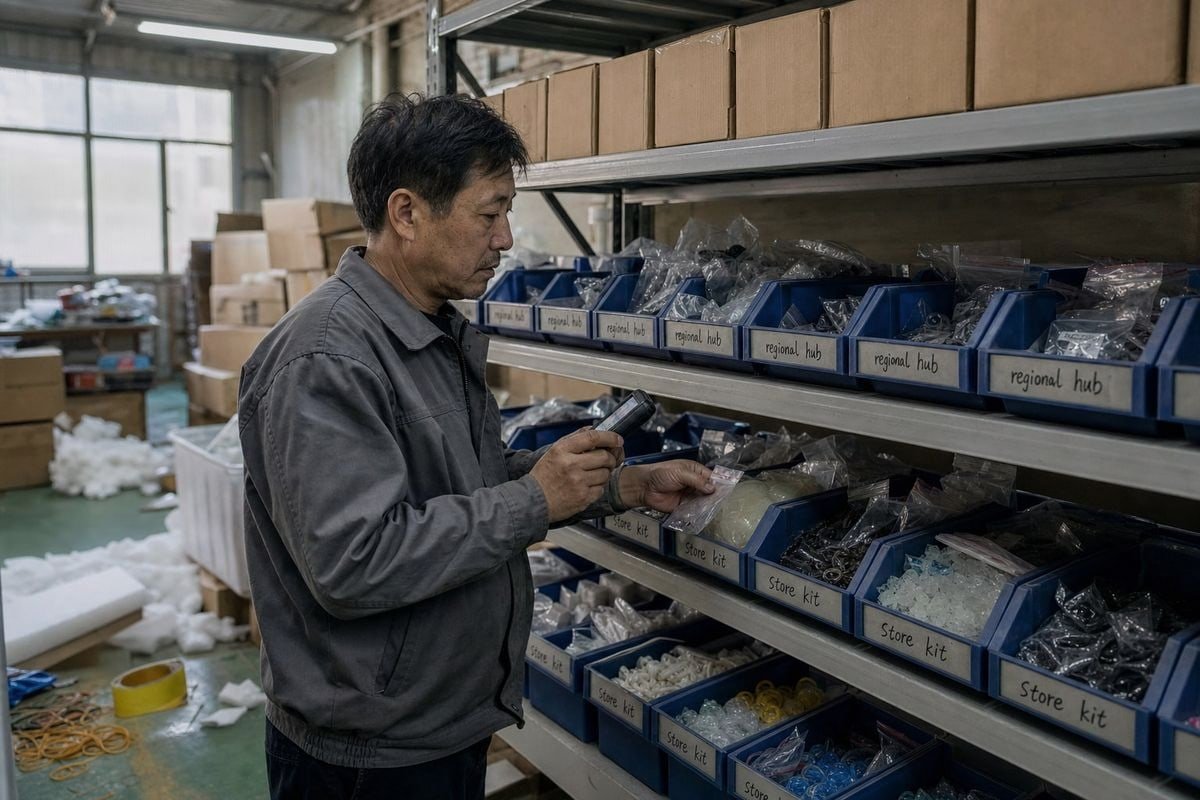
Stocking fragile spare parts for kids optical frames nationwide keeps breaking our buyers’ budgets. On our production line, we see why: tiny parts, high breakage, and scattered locations. That combination punishes guesswork. The fix is a tiered, data-driven system.
Stock fragile spare parts for kids optical frames using a three-tier model: store-level emergency kits for screws, nose pads, and temple tips; regional hubs for common TR90 and TPEE components; and one central warehouse for rare, model-specific parts, all tracked with barcode inventory software.
That answer sounds simple. Making it work across dozens of locations is harder. Below, I break down each piece of the system, based on what we ship to optical groups every week.
How can I keep a reliable stock of fragile spare parts without overinvesting in inventory?
A distributor in Australia once told me his back room held five years of dead hinge stock. At our Taizhou factory, we hear this story constantly. Overbuying feels safe. It rarely is.
Keep reliable stock without overinvesting by splitting parts into ABC categories, setting reorder points from actual repair history, running monthly cycle counts, and holding rare parts centrally instead of duplicating them at every location. Review sell-through quarterly to remove obsolete SKUs early.
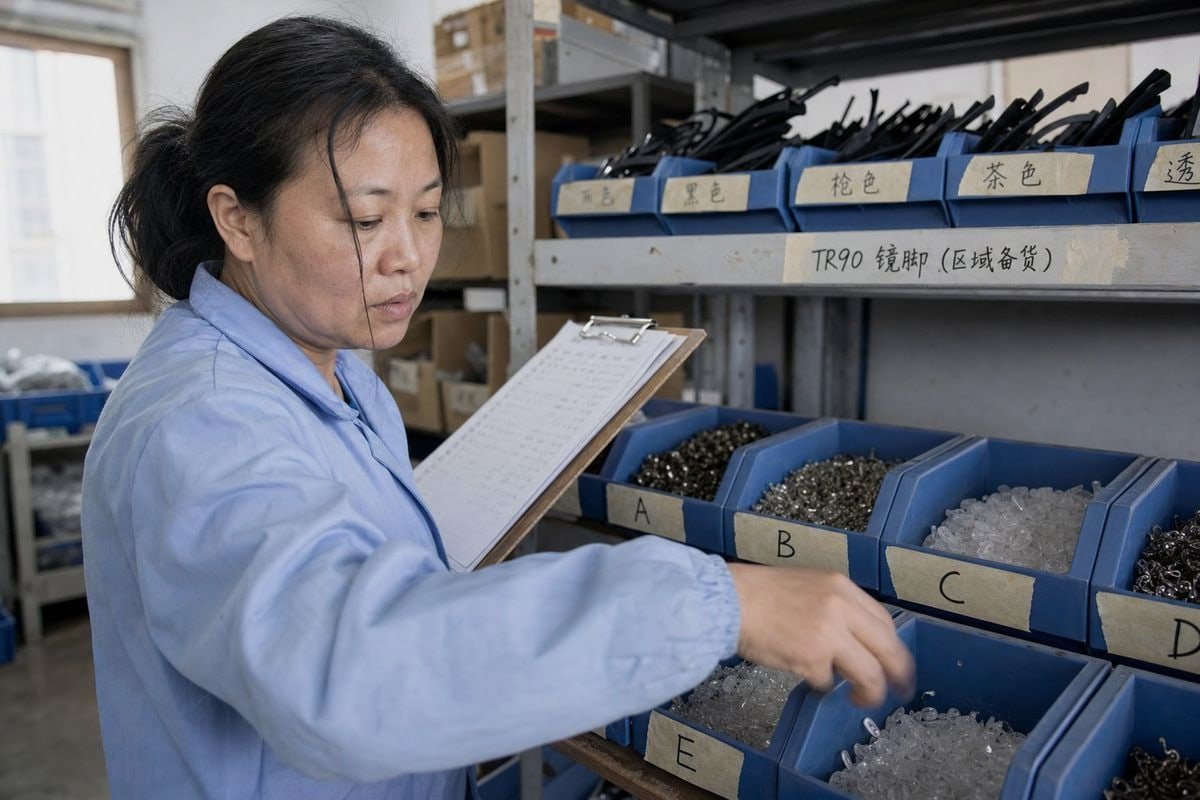
The core tension is service speed versus carrying cost. Too little stock means a child waits a week for glasses. Too much stock means cash trapped in parts nobody uses. Kids' frames make this worse. Frame lines change quickly, so proprietary parts go obsolete faster than adult equivalents.
Categorize before you count
Do not treat spare parts as one pile. Split them into groups, because each group needs its own replenishment rule.
| Kategorie | Beispiele | Stocking rule |
|---|---|---|
| A: High-turn universal | Screws, silicone nose pads, common temple tips | Stock everywhere, reorder weekly |
| B: Common brand parts | Standard TR90 temples, hinge sets | Stock at regional hubs |
| C: Rare model-specific | Discontinued hinges, decorative pieces | Central warehouse only |
This ABC discipline 1 means your tightest control goes to the few SKUs that drive most repairs. Your inventory turnover rate improves because slow movers stop clogging store shelves.
Set reorder points from data, not memory
Barcode inventory tracking every part. Then set a reorder point 2 for each SKU based on usage rate and supplier lead time. Our export customers who use optical inventory management software reorder in minutes. Those who rely on loose bins and memory usually discover stockouts only when a child is standing at the counter.
Kill dead stock quarterly
A bin full of old parts is not safety stock if the frames they fit are discontinued. Run cycle counts monthly and a full review quarterly. Cycle counting catches shrinkage and errors far earlier than one massive annual stocktake.
Which spare parts should I prioritize stocking for TR90 and TPEE kids' optical frames?
When we developed our TR90 frames with TPEE temples 3, we tracked which components failed first in drop and flex testing. That failure data should drive your stocking priorities, not catalog order.
Prioritize screws, silicone nose pads, replacement temple tips, hinge sets, and complete TPEE temple arms, because these parts absorb the most stress in active children's daily use. Stock TR90 frame fronts and bridge pieces in smaller quantities at hub level.
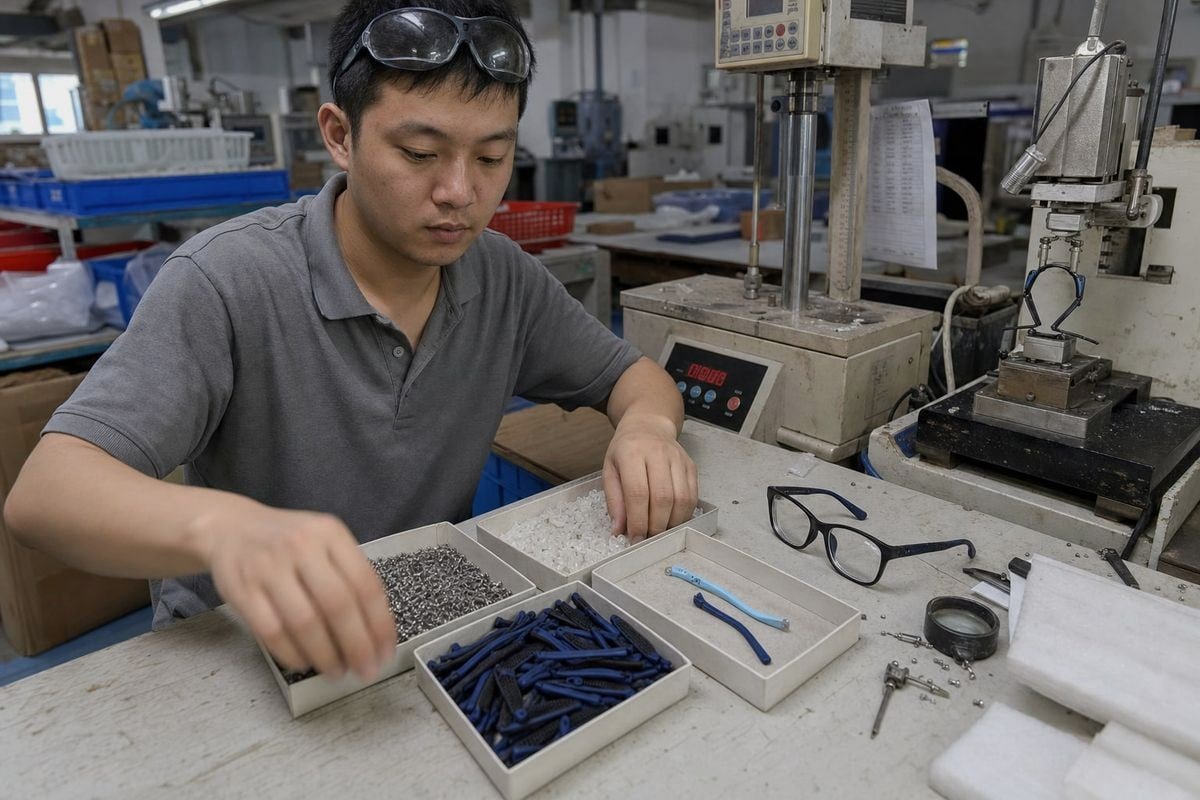
Kids' eyewear breaks differently than adult eyewear. Children pull glasses off with one hand. They sleep in them. They stuff them into school bags. The parts that take that abuse are predictable, and your stock should mirror that reality.
The priority list by failure frequency
| Priority | Part | Warum es fehlschlägt | Where to hold it |
|---|---|---|---|
| 1 | Hinge screws | Constant flexing loosens threads | Every store kit |
| 2 | Silicone nose pads | Sweat, rough handling, loss | Every store kit |
| 3 | Replacement temple tips | Chewing, ear-hook stress, growth adjustment | Every store kit |
| 4 | TPEE temple arms | Twisting and sitting on frames | Regional hubs |
| 5 | Hinge assemblies | Eyeglass hinge repair after over-extension | Regional hubs |
| 6 | Bridge and end pieces | Frontal impact during sport | Central warehouse |
Why material matters for compatibility
TR90 frame components are dimensionally stable, so a replacement front usually fits cleanly. TPEE temples are softer and more flexible, which is exactly why we use them for children's comfort and safety. But flexible parts must match the original geometry precisely. A temple that is one millimeter off at the hinge barrel will never sit right on a child's face. This is why we advise buyers to source spares from the original factory 4 rather than mixing generic parts. Universal screws and nose pads are fine. Universal temples on pediatric frames are a false economy.
One practical note from our own catalog work: because we offer around 800 existing styles, we encourage buyers launching a new market to standardize on a small set of shared hinge and temple platforms. Fewer unique parts means a shorter spares list and a healthier inventory turnover rate.
How do I ensure spare parts stay consistent in quality and fit across my nationwide network?
Quality drift is the silent killer here. Our QC team once caught a screw batch with slightly off threading before shipment; if it had reached fifty stores, every hinge repair would have failed differently in every city.
Ensure consistency by sourcing all spares from one manufacturer, requiring material certificates and test reports per batch, approving physical samples before scale orders, locking part specifications in a shared SKU database, and auditing fit tolerances on every inbound shipment.
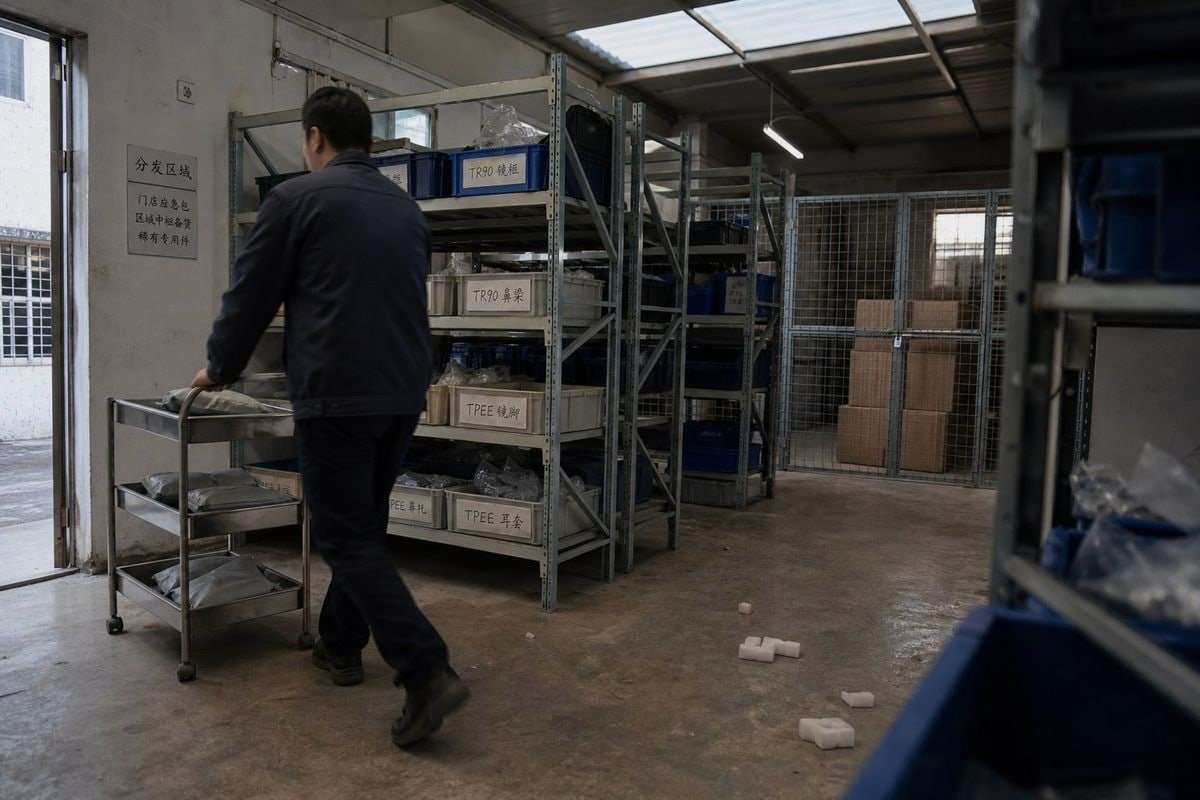
Nationwide networks fail when each region sources spares independently. One hub buys temples from a local trader. Another buys from the original factory. Six months later, the same SKU number covers two parts that fit differently. Children notice. Parents complain. Your brand takes the damage.
Lock the specification at the source
Every part needs a controlled specification: material grade, dimensions, hinge tension, screw thread pitch, and color code. In our 5S-managed workshop, we hold these specs for every component we produce, and we supply them to buyers as part of OEM documentation. Your network should reference one master spec sheet, stored inside your optical inventory management software, so every location orders against identical data.
Demand documentation for pediatric parts
Children's products carry compliance obligations 5 that adult eyewear does not. Before scaling any spare part purchase, require:
- Material certificates 6 for each component, confirming environmentally friendly, skin-safe materials.
- Third-party test reports 7 where your market requires them.
- Physical samples to verify fit, hinge tension, and threading on your actual frames.
- Batch traceability so a defective lot can be isolated without pulling all stock.
Give every location the same visibility
Multi-location stock visibility is not just about counting. It is about everyone seeing the same part, the same spec, and the same availability in real time. Cloud-based systems let a store in one city check hub stock in another, trigger a transfer, and promise the parent an honest repair date. RFID or high-density barcode tagging on component bags makes cycle counts fast and keeps error rates low, even for parts smaller than a fingernail.
What packaging and logistics solutions help me protect fragile spare parts during nationwide distribution?
A buyer in Japan once received a shipment where loose hinges had scratched an entire batch of acetate temple samples in transit. That lesson changed how we pack every spare-part order leaving our factory.
Protect fragile spare parts with individually bagged and labeled components, custom-molded foam or compartment inserts, double-boxing for transit, and a hub-and-spoke logistics model using forward stocking locations, so parts travel shorter final distances with fewer handling touchpoints.
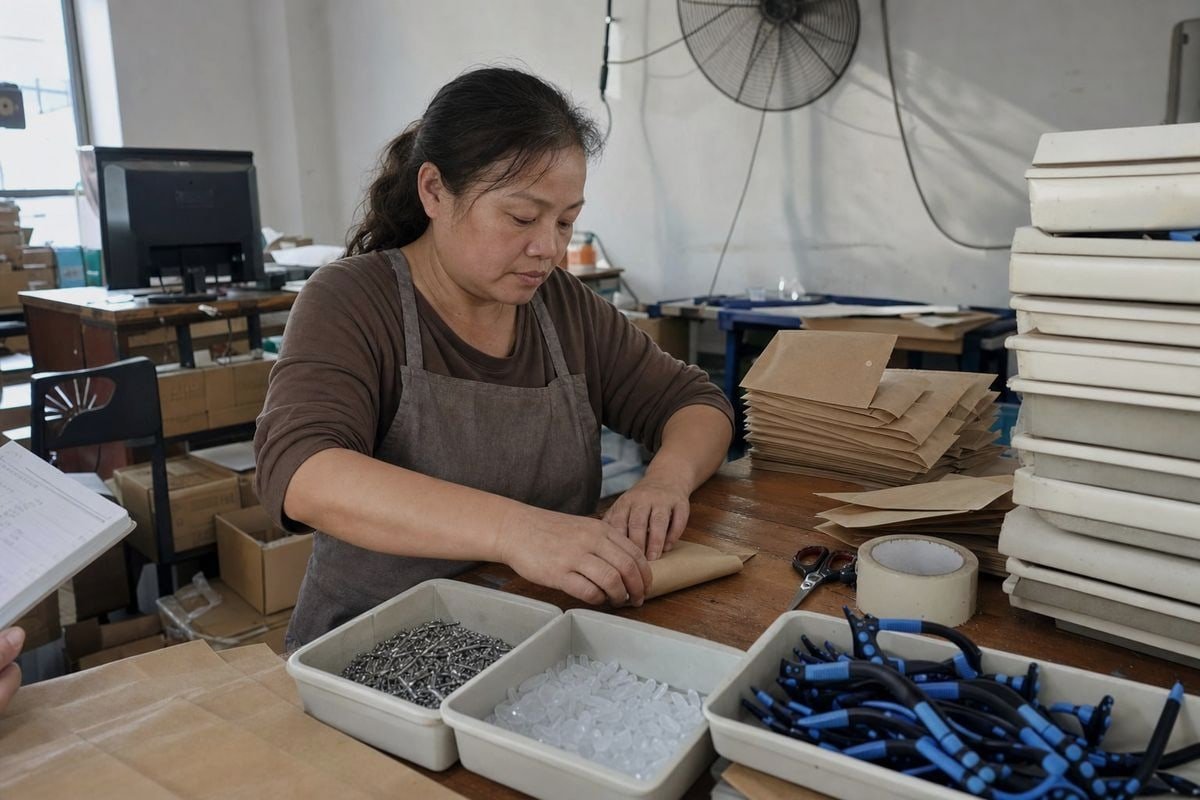
Fragile parts fail in transit for two reasons: vibration and impact. A screw survives anything. A slim TPEE temple, a translucent acetate rim, or a delicate silicone hinge connector does not. Your packaging and your network design must both work to reduce those forces.
Pack at three levels
| Level | Methode | What it prevents |
|---|---|---|
| Part level | Individual poly bags with barcode labels | Scratching, part mixing, miscounts |
| Inner box | Compartment trays or molded foam inserts | Vibration damage, parts rubbing together |
| Außenbox | Double-boxing with cushioning between boxes | Drop and crush impact during freight |
We apply this same logic to retail-ready packaging for our OEM customers. Spare parts deserve the same care as finished frames, because a broken spare part is a double loss: wasted freight plus a still-broken child's frame waiting somewhere.
Shorten the fragile journey
The best protection is fewer miles and fewer touches. That is why forward stocking locations matter. Hold common pediatric spares at regional hubs so the final delivery leg is one day, not five. Many optical groups use 3PL fulfillment for eyewear parts at the hub level, which adds professional handling, climate-controlled storage, and next-day coverage without building your own warehouses.
Set service-level targets by tier
Define what "fast" means before parents ask. A workable standard: same-day repair from the store kit for screws, nose pads, and temple tips; next-day from the regional hub for temples and hinge sets; two to five days from central stock for rare parts. If a part is proprietary and the frame line is discontinued, consider a last-time buy of high-wear components before production ends, or simply replace the frame. Sometimes replacement is the honest, faster answer for the child.
Schlussfolgerung
Fragile spare parts for kids optical frames reward systems, not stockpiles. Tier your inventory, track every SKU, verify quality at the source, and pack for the journey. Children get faster repairs; you keep your capital working.
Fußnoten
1. ABC analysis is a standard inventory classification method prioritizing high-value SKUs. ↩︎
2. Defines the reorder point concept for triggering replenishment based on usage and lead time. ↩︎
3. Explains the material properties of thermoplastic elastomers used in flexible children’s temples. ↩︎
4. Alibaba.com connects buyers directly with original manufacturers for verified OEM sourcing. ↩︎
5. CPSC regulates safety compliance requirements specific to children’s products like eyewear. ↩︎
6. Authoritative Wikipedia entry for ISO 9001, the standard governing quality and material certifications. ↩︎
7. Authoritative .gov source explaining the fundamentals of third-party testing and conformity assessment. ↩︎
Weitere Artikel, die Ihnen gefallen könnten
August 2026
Bio-Based vs Regular Cellulose Acetate: What's the Difference for Kids' Frames?
August 2026
How Recyclable Are Kids' Optical Frame Materials, and What Eco-Friendly Alternatives Exist?
August 2026
Bleichen Kinderbrillengestelle im Lager aus oder altern sie, und wie kontrolliert man die Lagerbedingungen?
Auf der Suche nach einem zuverlässigen Partner für Kinderbrillen?
Entdecken Sie über 800 sofort verfügbare Modelle und umfassenden OEM/ODM-Support, der auf Ihre Marke zugeschnitten ist.
Kontakt aufnehmen English
  Español de México
  Deutsch
  Français
  日本語
日本語  العربية
  Português do Brasil