How to Secure Long-Term Supply of Kids’ Sunglasses Styles?
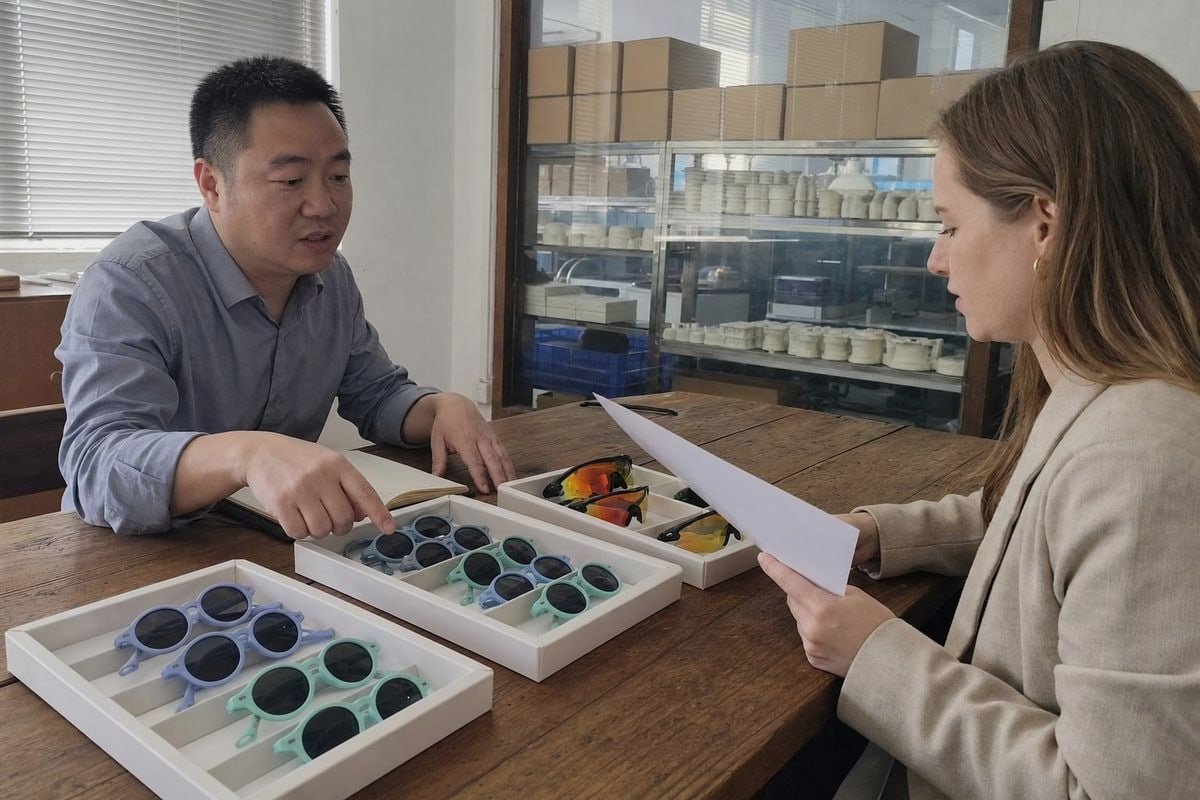
Securing long-term supply of kids’ sunglasses styles is a real headache. On our production line 1 in Taizhou, I hear the same worry from buyers every season: bestsellers vanish mid-summer. A stockout on a winning frame means lost revenue, frustrated parents, and shelf space handed to competitors. The fix is [choosing a factory built for continuity](https://okayeyewear.com/how-find-reliable-kids-sunglasses-suppliers-china-to/), not one-off lots.
To secure long-term supply of kids’ sunglasses styles, partner with an experienced OEM/ODM factory that offers a deep existing style library, verified UV400 protection standards, repeatable molds, reasonable MOQs, documented lead times, and contractual continuity terms covering reorders, color matching, and material specifications.
That answer sounds simple. In practice, it takes four decisions done right. Let me walk you through each one, based on what actually works for our long-term brand customers.
How can I find a manufacturer that consistently updates its kids' sunglasses styles?
A buyer from Australia once told me she had cycled through three suppliers in two years. Each one launched nice frames, then went quiet. Our team hears this story constantly.
Find a manufacturer with a large, actively maintained style library, in-house design capability, and a track record of seasonal releases. Ask for their catalog history, count how many kids-specific molds they own, and confirm new styles launch on a predictable schedule every year.
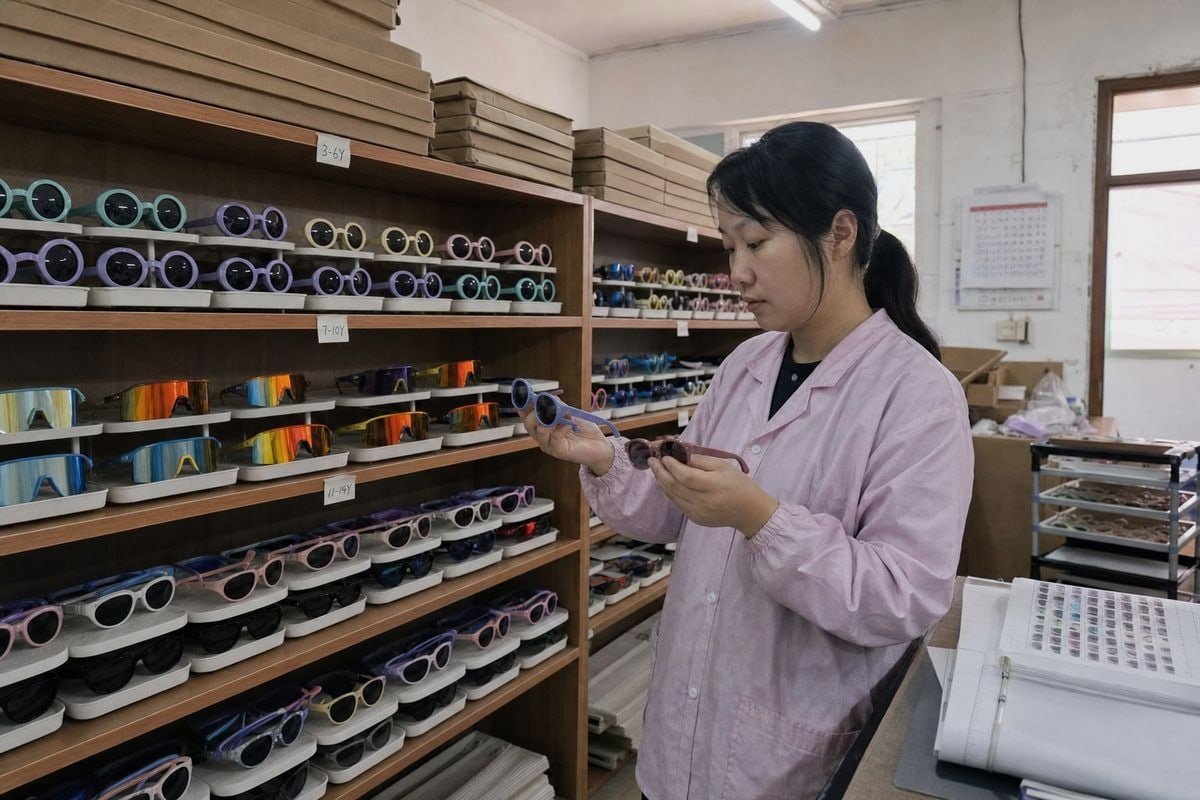
Style freshness is not luck. It is a business model. A factory that treats Brillen für Kinder 2 as a side line will update styles only when a big client pays for tooling. A factory focused on kids will keep investing on its own. At our workshop, we maintain roughly 800 existing styles, from round two-tone frames for toddlers to wraparound sport shields with gradient mirrored lenses for older kids. That depth exists because we add and retire designs every season as a deliberate process, not as a reaction.
Signals that a supplier keeps styles fresh
Here is what I would check before signing anything:
| Signal | What to ask | Was zu vergleichen ist |
|---|---|---|
| Style library depth | "How many kids' styles can I order today?" | A deep library lets you launch without heavy mold investment |
| Release cadence | "How many new styles did you add last year?" | Proves updating is systematic, not occasional |
| Kids-specific molds | "Are frames built on children's facial molds?" | Resized adult frames fit poorly and hurt repeat sales |
| Age segmentation | "Do you offer toddler, junior, and older-kid fits?" | Segmented sizing supports replenishment across age cohorts |
| Design team | "Who develops new silhouettes?" | In-house designers mean faster trend response |
One more point. A big library also lowers your risk. New brands can run a test-and-scale approach: order small trial assortments across several stock styles, watch sell-through, then commit bulk volume only to the proven winners. That is far safer than betting your whole budget on one custom mold before you know what children in your market actually want to wear.
What should I look for in a factory's production capacity to ensure long-term supply reliability?
Capacity questions used to feel awkward for buyers, until they experienced a July stockout. In our fifteen years of eyewear production, the busiest reorder calls always come at peak season.
Verify the factory's monthly output, worker count, machine capacity, quality control staffing, and documented bulk order lead times. Then confirm it can reproduce the exact same model repeatedly, with consistent color matching, retained samples, and current safety compliance certifications for every batch.
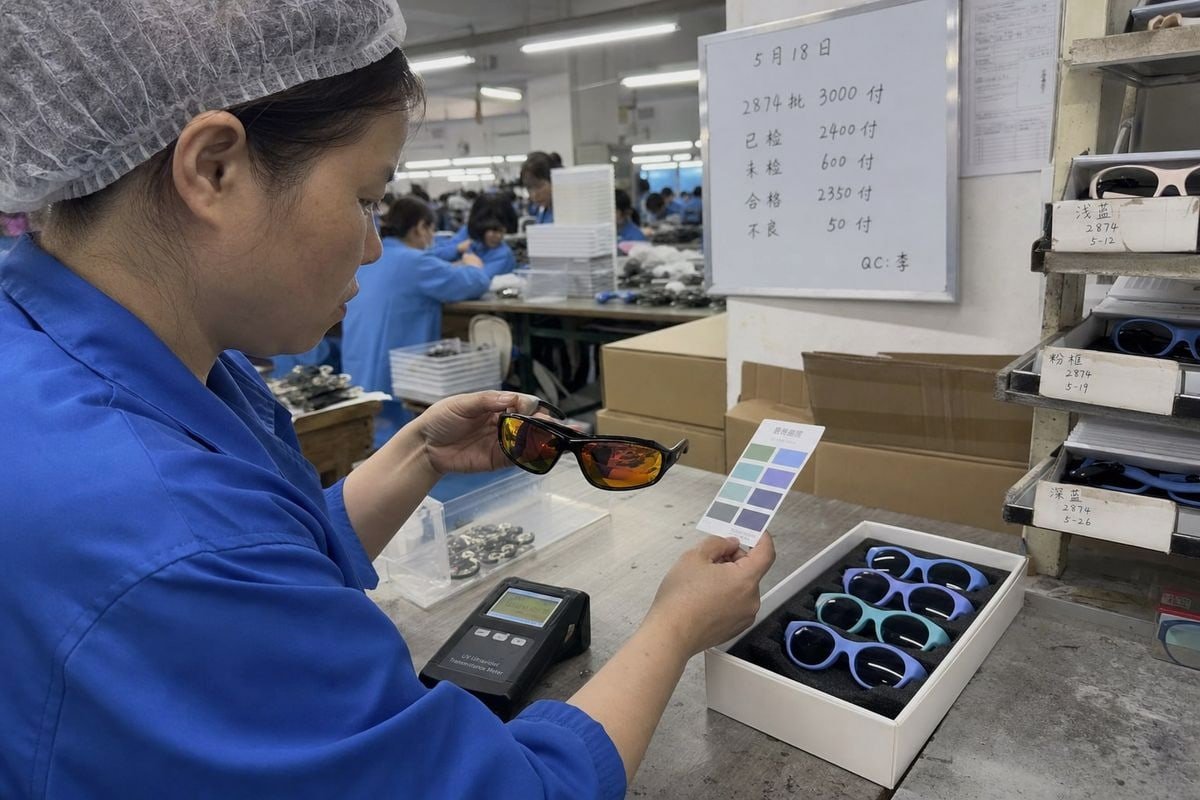
Raw capacity numbers only tell part of the story. A factory can quote a huge monthly output and still fail you, because long-term supply depends on repeatability, not just volume. When we set up a repeat program for a brand customer, we retain a golden sample, lock the color formula, and record the lens specification. Twelve months later, batch five should feel identical to batch one. Color drift between batches is one of the quietest killers of "the same style" — parents notice when the replacement pair looks slightly off.
Capacity questions worth asking
- What is your realistic monthly output for kids' frames, not your theoretical maximum?
- How many workers and QC inspectors do you employ? Our own facility runs about 120 workers under 5S workshop management, and I encourage buyers to audit that in person or by video.
- What are your bulk order lead times in peak season versus off-season?
- Do you own your molds, or do you subcontract injection?
- Can you show current test reports for UV400 protection standards and impact resistance, batch by batch, not just a certificate from three years ago?
Materials are a capacity issue too
Durability affects supply reliability more than most buyers expect. Kids drop, bend, and sit on sunglasses. If frames snap, returns spike and your "available" inventory quietly shrinks. That is why we specialize in flexible TPEE frames and TR90 construction 3 — including TR90 fronts with TPEE temples. Flexible, lightweight materials cut return rates, which keeps your real sellable stock stable across the season. Cheap brittle plastic looks fine on a quote sheet and terrible on your returns report.
| Material | Flexibilität | Gewicht | Suitability for kids |
|---|---|---|---|
| TPEE | Very high, bends without breaking | Sehr leicht | Excellent for toddlers and active kids |
| TR90 | High, strong memory | Leicht | Excellent for junior and older kids |
| Standard PC/injection plastic | Niedrig | Mittel | Acceptable for adults, risky for kids |
How do I build a stable partnership with a supplier to avoid stockouts or delays?
One lesson shaped how I run our sales team: the buyers who share forecasts early almost never face stockouts. The ones who order reactively almost always do.
Build stability by sharing sell-through forecasts, booking production slots for bestsellers in advance, negotiating flexible MOQ terms, agreeing on reorder lead times in writing, and adding continuity clauses that lock material specs and require notice before any mold or component change.
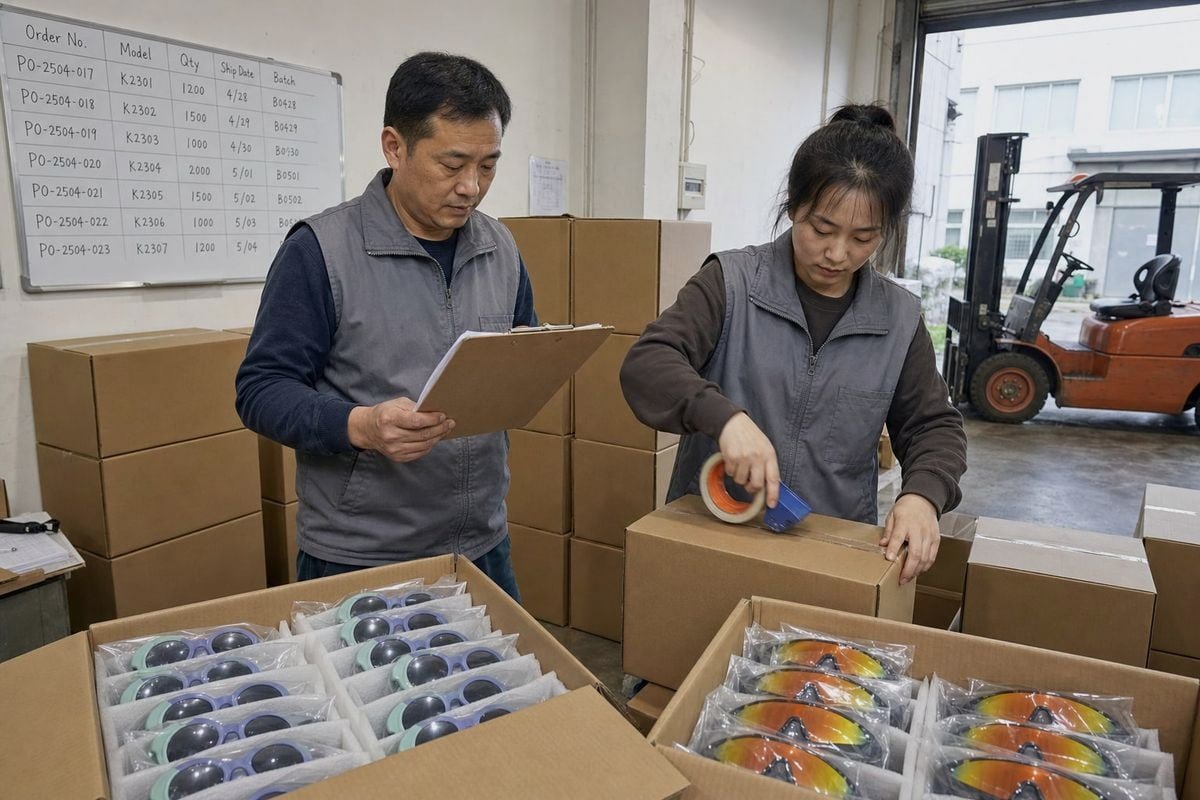
Stockouts rarely come from factory failure alone. They usually come from a communication gap. Kids' sunglasses have sharp seasonal spikes — summer, holidays, travel — plus a steady replacement market, because children lose and break pairs constantly. If your supplier only learns about a spike when your urgent purchase order lands, you are already late. Good inventory forecasting shared with the factory turns that around. When customers send us a rough twelve-month plan, we reserve material, pre-book injection capacity, and hold semi-finished stock 4 for their core styles. That single habit removes most delay risk.
A practical continuity framework
Here is the working structure I recommend to procurement managers:
| Partnership element | What to agree | Effect on supply |
|---|---|---|
| Forecast sharing | Quarterly rolling forecast, updated monthly | Factory reserves capacity and raw materials |
| Priority production slots | Reserved slots for top three SKUs before peak season | Bestsellers ship on time even in high season |
| Flexible MOQ | Minimum order quantity (MOQ) mixed across styles and colors in one master carton | Inventory diversity without overstock risk |
| Continuity clauses | Locked lens specs, frame dimensions, colorways; written notice before substitutions | The style stays the same style, season after season |
| Safety stock plan | Buffer stock on evergreen frames, agreed reorder trigger points | Absorbs demand spikes and replacement purchases |
Do not build on one lane
Supply chain diversification still matters even with a great partner. Discuss backup shipping routes and staggered deliveries rather than one giant seasonal shipment. And resist the temptation to chase the cheapest quote each season. A supplier chosen purely on price often cannot repeat a style reliably — and in this category, the cheapest supplier frequently becomes the most expensive one once stockouts and quality claims are counted. Wholesale children's eyewear rewards relationships measured in years, not purchase orders measured in cents.
Can working with an experienced OEM/ODM factory help me secure exclusive styles for my brand?
A European baby-brand customer once asked me whether exclusivity was realistic without owning a factory. Three years later, her signature frame is still produced only for her label.
Yes. An experienced OEM/ODM factory can develop exclusive molds, custom colorways, branded lenses, and packaging reserved for your brand, protected by tooling ownership terms and supply agreements. This secures differentiated styles competitors cannot copy while guaranteeing priority production for repeat orders.
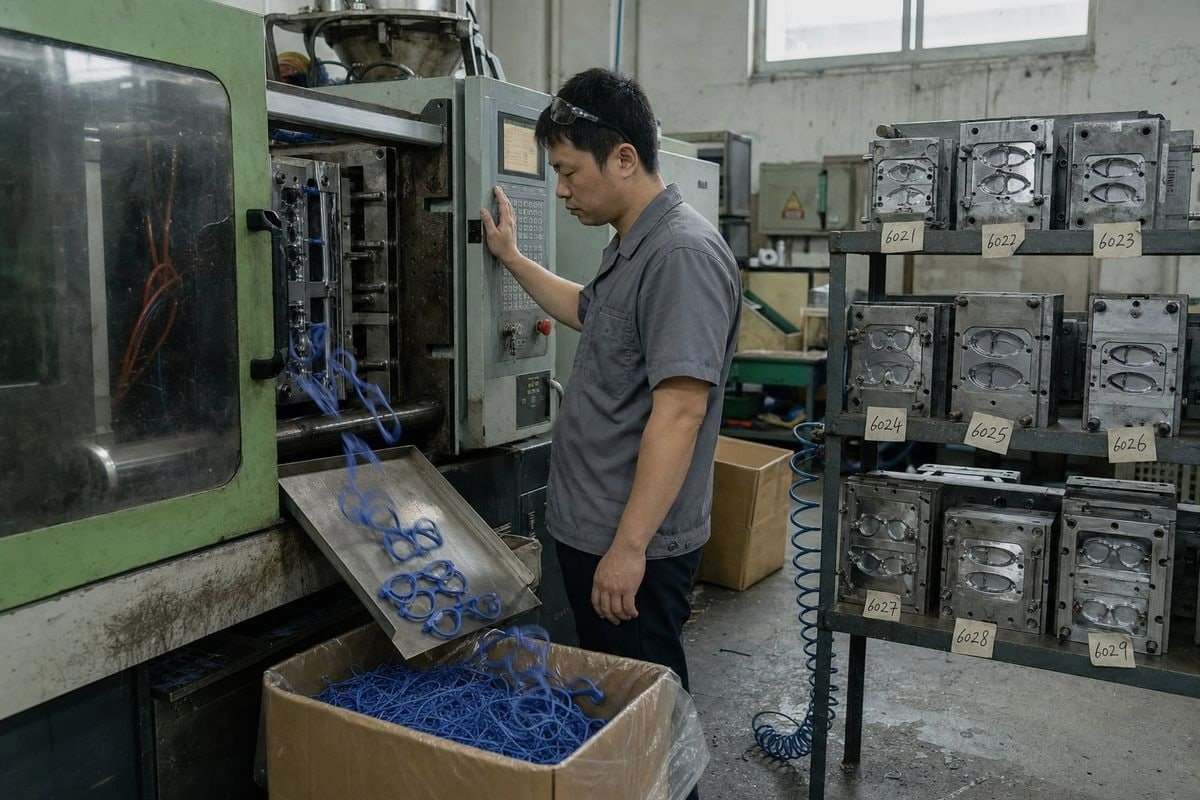
Exclusivity works on several levels, and you do not need to start at the most expensive one. As an OEM eyewear manufacturer, we run a ladder of customization. The lowest rung is private-label on stock frames: your logo, your custom colors, your packaging, on an existing silhouette. That gets you a branded, retail-ready product fast, with modest minimums. The middle rung is exclusive colorways or lens treatments — for example, a gradient mirrored shield lens or polarisierte Gläser 5 for children in a color story only your brand carries. The top rung is a fully custom mold, where you own or exclusively license the tooling, and the frame legally cannot be sold to anyone else.
How to protect what you develop
Exclusivity is only as strong as its paperwork. Agree in writing on mold ownership 6, the geographic or channel scope of exclusivity, and minimum annual volumes that keep the tooling active. A smart addition is modular thinking: design frames with interchangeable temples or bridge options, so you can refresh mid-season looks without retooling the whole frame. That extends SKU shelf life and keeps your exclusive style feeling current for several years.
There is a tension worth naming honestly. Some buyers fear custom means fragile supply — a one-off project the factory forgets. With the right partner, the opposite is true. Custom programs get priority slots during peak demand, documented specs, and locked safety compliance certifications 7, because both sides have invested in the style's future. In our experience exporting to brands in twenty-plus countries, exclusive programs are the most stable supply relationships we run, precisely because continuity is built into the contract from day one.
Schlussfolgerung
Long-term supply of kids' sunglasses styles is won through partner choice: deep style libraries, verified capacity, flexible safe materials, shared forecasts, continuity clauses, and OEM/ODM exclusivity that protects your bestsellers.
Fußnoten
1. Authoritative Wikipedia entry defining production lines and their role in manufacturing. ↩︎
2. The Vision Council is the leading trade association representing the global optical industry and eyewear standards. ↩︎
3. EMS-GRIVORY is the industry leader and original manufacturer of Grilamid TR-90 used in high-performance eyewear. ↩︎
4. Wikipedia explains the manufacturing concept of semi-finished goods and work-in-process inventory management. ↩︎
5. The American Academy of Ophthalmology provides medical expertise on the function and safety of polarized lenses. ↩︎
6. WIPO is the global forum for intellectual property, covering the protection of industrial designs and tooling ownership. ↩︎
7. The FDA provides the official regulatory requirements and safety compliance standards for sunglasses sold as medical devices. ↩︎
Weitere Artikel, die Ihnen gefallen könnten
August 2026
Sollte die Fabrik die Verpackung und Kennzeichnung von Kinder-Sonnenbrillen übernehmen oder einen bestimmten Lieferanten nutzen?
August 2026
Eigenes Lager vs. Direktlieferung durch den Lieferanten: Was senkt die Retourenkosten für Marken von Kinder-Sonnenbrillen?
August 2026
Direkt zum Lagerhafen oder Lagerung in Übersee: Was spart mehr bei den Versandkosten für Kinder-Sonnenbrillen?
Auf der Suche nach einem zuverlässigen Partner für Kinderbrillen?
Entdecken Sie über 800 sofort verfügbare Modelle und umfassenden OEM/ODM-Support, der auf Ihre Marke zugeschnitten ist.
Kontakt aufnehmen English
  Español de México
  Deutsch
  Français
  日本語
日本語  العربية
  Português do Brasil