子供用光学フレーム素材のリサイクル可能性と、環境に優しい代替品は存在するか?
バイヤーは、子供用光学フレーム素材が実際にどれだけリサイクル可能か私によく尋ねてきます 海洋プラスチック 1. サプライヤーからの曖昧な回答は、リスクのあるサステナビリティの主張を生み出します。太州の工場を15年間経営してきた私が、正直な状況をお伝えします。.
子供用光学フレーム素材は部分的にしかリサイクルできません。TR90、TPEE、アセテートは、家庭用ゴミ箱ではなく、専門的な産業リサイクルが必要です。最も環境に優しい代替品は、リサイクルナイロン、バイオアセテート、リサイクル金属、そして使用済み製品の回収を管理するテイクバックプログラムと組み合わせたモノマテリアルデザインです。.
その短い答えには多くのニュアンスが隠されています。リサイクル材、リサイクル可能性、生分解性はすべて異なるものです。ブランドが有効な主張をできるよう、それぞれを解説します。.
TR90およびTPEE素材が、ブランドのサステナビリティに関する主張のために真にリサイクル可能であることをどのように確認できますか?
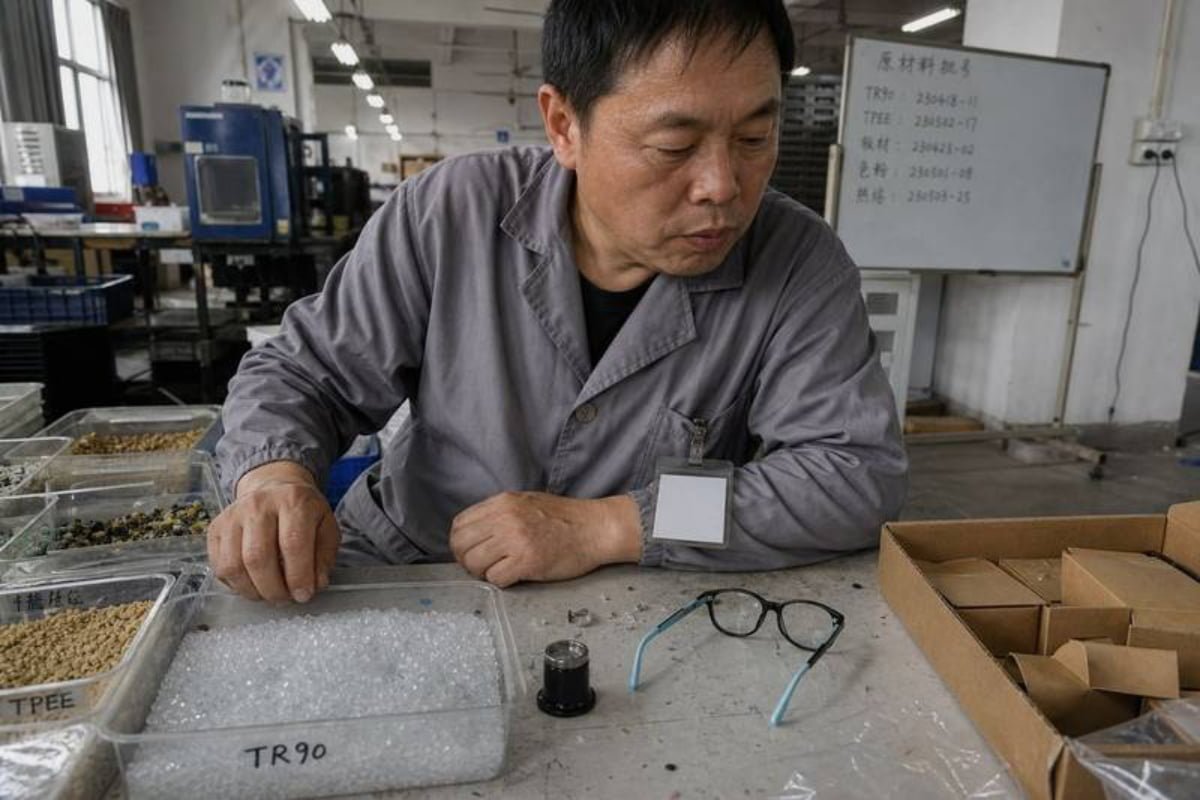
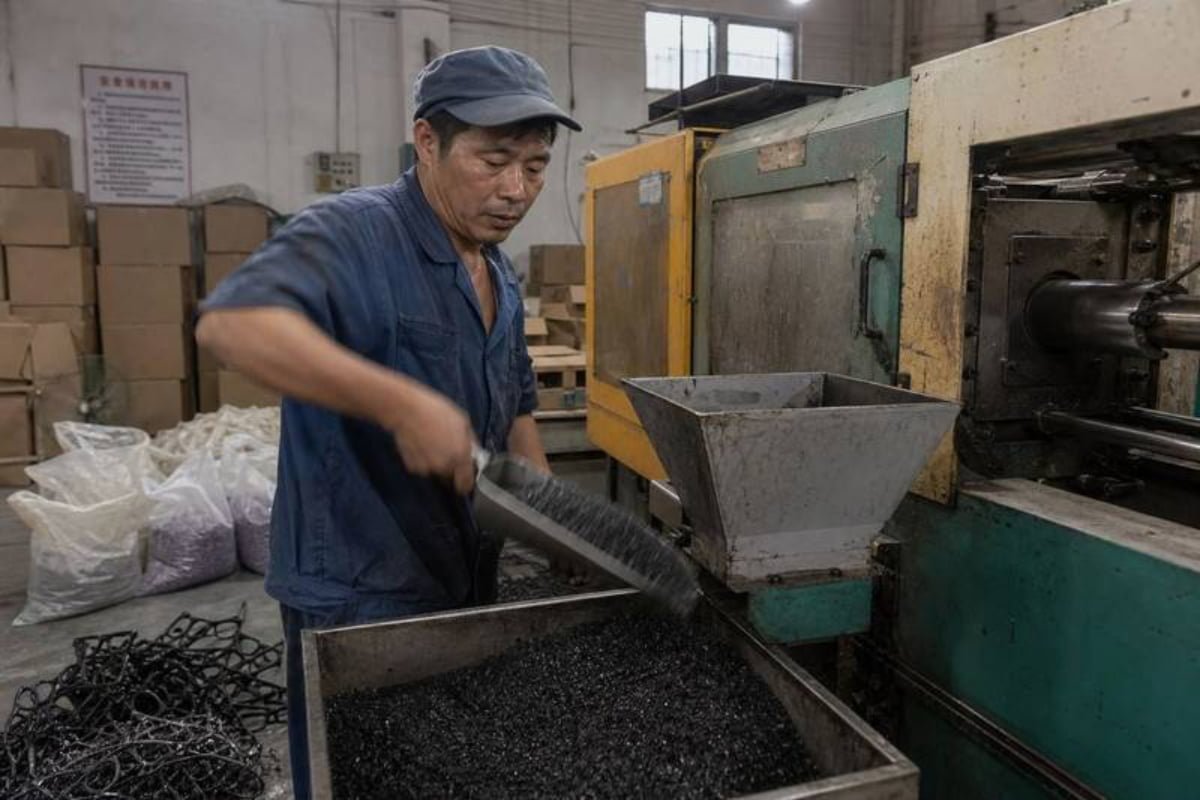
正直な技術的な状況をお伝えします。TR90は形状記憶ナイロンです。TPEEは柔軟な熱可塑性エラストマーです。どちらも熱可塑性プラスチックであり、理論的には溶かして再加工することができます。自社のワークショップでは、きれいなTR90の製造スクラップを粉砕し、管理された割合で射出成形に再投入しています。これは本物の工場内リサイクルであり、主張する価値のあるものです。.
TR90とTPEEは技術的にはリサイクル可能な熱可塑性プラスチックですが、専門的な産業リサイクルが必要であり、自治体のシステムではほとんど受け入れられていません。マテリアルデータシートを要求し、GRS 4.0のような認証を確認し、実際の回収経路が存在するかどうかを確認することで、主張を検証してください。.
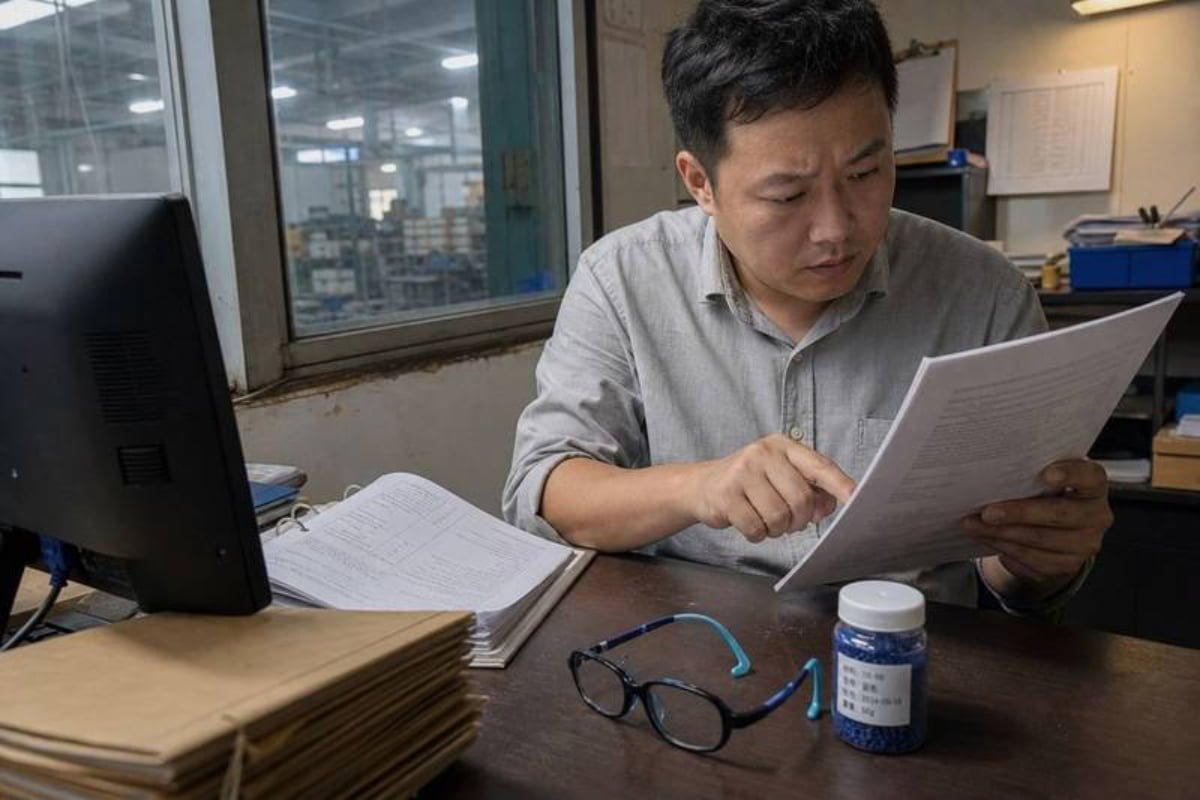
消費者後のリサイクルは別の話です。TR90は、ほぼ壊れない形状記憶プラスチック特性のために好まれますが、専門的な産業リサイクルが必要であり、地方自治体の廃棄物処理システムで処理されることはめったにありません。完成したフレームには、ヒンジ、コーティング、デモレンズ、そしてしばしば結合された2つのポリマーも含まれています。家庭用ゴミの分別ラインでは、それらを分離することはできません。.
Post-consumer recycling is a different story. TR90 is favored for its almost unbreakable memory-plastic properties, but it requires specialized industrial recycling and is rarely processed by municipal waste systems. A finished frame also carries hinges, coatings, demo lenses, and often two polymers bonded together. Curbside sorting lines cannot separate any of that.
ハングタグに何かを印刷する前に、実際に行っている主張がどれであるかを知ってください。
主張
| 意味 | 確認できますか? | リサイクル材 |
|---|---|---|
| フレームには再生された投入材料が含まれています | はい — GRS 4.0証明書とサプライヤー文書を通じて | リサイクル可能 |
| フレームは使用後に現実的にリサイクルできます | 収集および処理経路が存在する場合のみ | 生分解性 |
| 材料は自然に分解されます | TR90/TPEEではめったにありません。通常は産業条件が必要です | ある光学ブランドは、100%リサイクルされた使い捨てプラスチックをPCTGに変換したものを使用して、GRS 4.0( |
グローバルリサイクルスタンダード)の下でフレームを認証しています。これは、私たちを含むあらゆるサプライヤーから要求すべき文書のレベルです。 2樹脂のマテリアルデータシートと原産地文書を要求してください。.
実用的な検証チェックリスト
- リサイクル材が消費者後のものか産業後のものか尋ねてください。.
- GRS 4.0または同等の第三者認証を確認してください。.
- お住まいの市場でテイクバックまたは専門リサイクルルートが実際に存在するかどうかを確認してください。 機能性顔料に注意してください — 紫外線反応性または蓄光性の仕上げは、ベースポリマーの機械的リサイクルを妨げる汚染物質として機能します。.
- 最後の点は多くのバイヤーを驚かせます。子供向けのカラーエフェクトは人気がありますが、伝えたいリサイクルストーリーを静かに損なう可能性があります。.
- TR90は産業的に再加工できる熱可塑性プラスチックですが、地方自治体の家庭用リサイクルで受け入れられることはめったにありません。.
TR90は管理された産業環境で溶かして再成形できますが、完成したフレームには混合部品が含まれており、家庭用ゴミの分別システムでは処理できません。.
現在のフレーム素材ではリサイクル性が十分でない場合、どのような環境に優しい代替品を検討すべきでしょうか?
アイウェア業界は年間約10万トンの廃棄物を生成しており、従来の石油ベースのプラスチック(標準アセテートやナイロンなど)は生分解性ではありません。これは、素材の選択が答えなければならない問題です。主な代替品の比較は次のとおりです。.
環境へのメリット.
リサイクル/バイオ含有量の例
| 素材 | 子供に最適か? | リサイクルナイロン | 廃棄された漁網やリサイクルされた海洋プラスチックから調達 |
|---|---|---|---|
| 一部のラインでは少なくとも50%のリサイクル含有量 | 優れています — 柔軟で耐久性があります | バイオベースアセテート | 優れた – 柔軟性と耐久性 |
| バイオベースのアセテート | Plant-based plasticizers from wood pulp and cotton | 60%+ bio-content achievable | Good — stylish, needs quality control |
| Recycled acetate | Reuses cellulose acetate offcuts | Around 27% recycled content in some frames | Good for fashion styles |
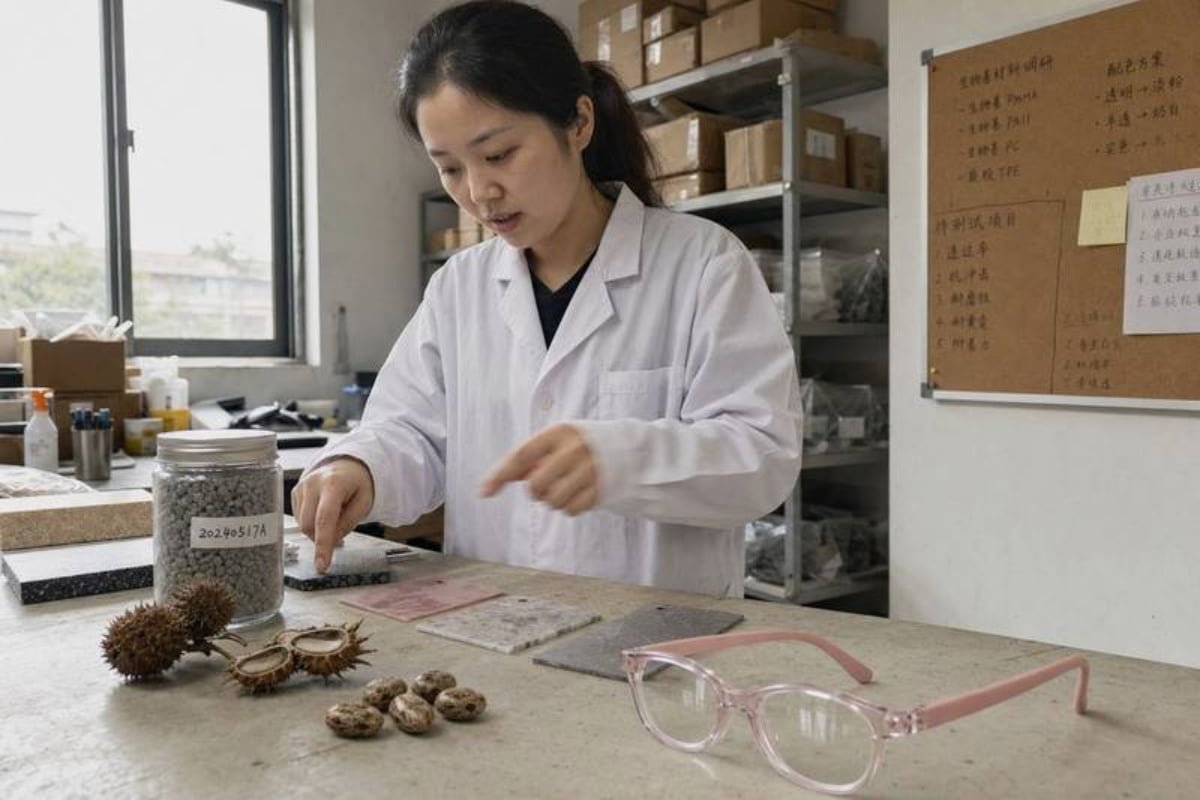
| Bio-nylon (PA11) | Made from castor seed oil frames feedstock | Renewable, non-food crop | Very good — tough and light |
| Recycled metals | Infinitely recyclable ステンレス鋼 3 or titanium | High recovery rates | Better for older children |
| Bamboo / wood / cork | Low-plastic, renewable | Natural material | Limited — less flexible for active kids |
The alternatives I recommend most for children
Recycled nylon leads my list. It keeps the flexibility and impact resistance that active children need, while diverting fishing nets from the ocean. Bio-based acetate comes second. It preserves the candy-colored translucent look — like the pale pink acetate style in our catalog — while replacing petroleum plasticizers with plant-based resins.
One caution I always share: bio-based does not mean home compostable. Most biodegradable eyewear materials require specific industrial temperatures and microbial conditions to degrade. Some sustainable lines reach 95% reclaimed and recycled materials, which is impressive, but the honest framing is lower-impact production, not zero-waste disposal.
Also worth watching: additive manufacturing. 3D printing with bio-resins like PA11 reduces raw material waste 4 by up to 80% compared to traditional subtractive acetate sheet cutting. We are following this closely for future development.
若いお客様が必要とする安全性と耐久性と、環境に配慮した素材選びのバランスをどのように取ればよいですか?
Our QC team runs a simple test on every new kids’ frame: twist the temples 180 degrees and release. Any eco material that fails that test never leaves our sample room.
持続可能性と安全性のバランスを、まず耐久性を優先することで取ります。アクティブな使用で3年間持続するフレームは、2回交換されるより環境に優しいフレームよりも優れています。リサイクルナイロンやTPEEのような、柔軟で低アレルギー性、BPAフリーの素材を選び、長寿命自体をエコなメリットとして捉えましょう。.
Here is the framing I share with every brand we work with: the greenest frame is often the one that lasts longest and can be repaired or passed on. Children outgrow, drop, sit on, and lose their glasses. If an eco material doubles the replacement rate, it may create more total waste than a durable conventional frame.
Safety requirements that cannot be compromised
Eco-friendly glasses for children still have to meet the same non-negotiables as any kids' frame. In our production line, these come before any sustainability feature:
- Flexibility. Frames must bend without snapping into sharp fragments. This is why we build most kids' styles in TR90 with TPEE temples — the combination flexes safely on impact.
- 肌への安全性。. Hypoallergenic frame materials matter because children wear glasses all day against sensitive skin. All our materials are BPA-free plastic formulations.
- Weight. Heavy frames slide down small noses and cause pressure marks. Bio-nylon and recycled nylon stay light.
- No small detachable parts. Nose pads and temple tips must stay firmly attached.
Ranking the trade-offs honestly
| 必須 | 一部のラインでは少なくとも50%のリサイクル含有量 | バイオアセテート | Recycled metal | Bamboo/wood |
|---|---|---|---|---|
| 可塑化された部品のフタル酸エステル含有量 | 素晴らしい | 接触点に集中 | 中程度 | 弱い |
| 柔軟性 | 素晴らしい | 中程度 | 低 | 低 |
| 中程度から重い | 非常に軽い | 軽い | 中程度 | 軽い |
| Longevity | 高い | 中程度 | 非常に高い | Variable |
| Eco story | 強力な | 強力な | 強力な | 強力な |
Natural materials look great in sustainability marketing, but wood and bamboo lack the flex that toddlers and school-age kids demand. Metals such as stainless steel and titanium are highly sustainable for older children because they are infinitely recyclable and outlast plastic, but I rarely recommend them under age eight. For that age group, recycled nylon or a TR90/TPEE combination remains the safest path — and durability quietly does most of the environmental work.
OKAY EYEWEARのようなOEMメーカーと協力する際に、リサイクル素材やバイオベース素材をリクエストできますか?
Last year a European baby-brand buyer emailed Alan on our sales team asking exactly this. Six weeks later she had bio-based samples in hand, molded from our existing tooling.
はい。有能なOEM/ODMパートナーは、リサイクルナイロン、バイオアセテート、またはバイオベース樹脂を調達し、既存の金型でそれらを使用することができます。標準的な開発概要の一部として、材料証明書、リサイクル含有量に関する文書、サンプル検証、および持続可能なパッケージオプションを要求してください。.
Sustainable eyewear manufacturing is not a separate factory — it is a set of decisions inside a normal OEM/ODM workflow. At our facility in Taizhou, with around 120 workers and a 5S-managed workshop, the process for an eco material request looks like this:
- Material sourcing and verification. We identify recycled or bio-based resin suppliers and collect documentation on recycled content and safety compliance. You should always ask for this paperwork — it is the foundation of any claim you print.
- Mold compatibility check. With roughly 800 existing styles, most buyers can test an eco material without investing in new tooling. This lowers the risk of trialing bio-based acetate or recycled nylon in your market.
- Sampling and safety testing. Eco resins can behave differently in injection molding. We validate flexibility, hinge strength, and finish quality before approving production.
- Design for recyclability. Where possible, we discuss mono-material design — engineering hinges and components from the same polymer as the frame. This eliminates manual disassembly and significantly increases automated recycling success rates. It supports a genuine circular economy in optics rather than a marketing slogan.
- Packaging alignment. Sustainability claims fall flat if frames arrive in virgin plastic. We offer recycled paper boxes and rPET pouch options so the whole retail presentation matches the story.
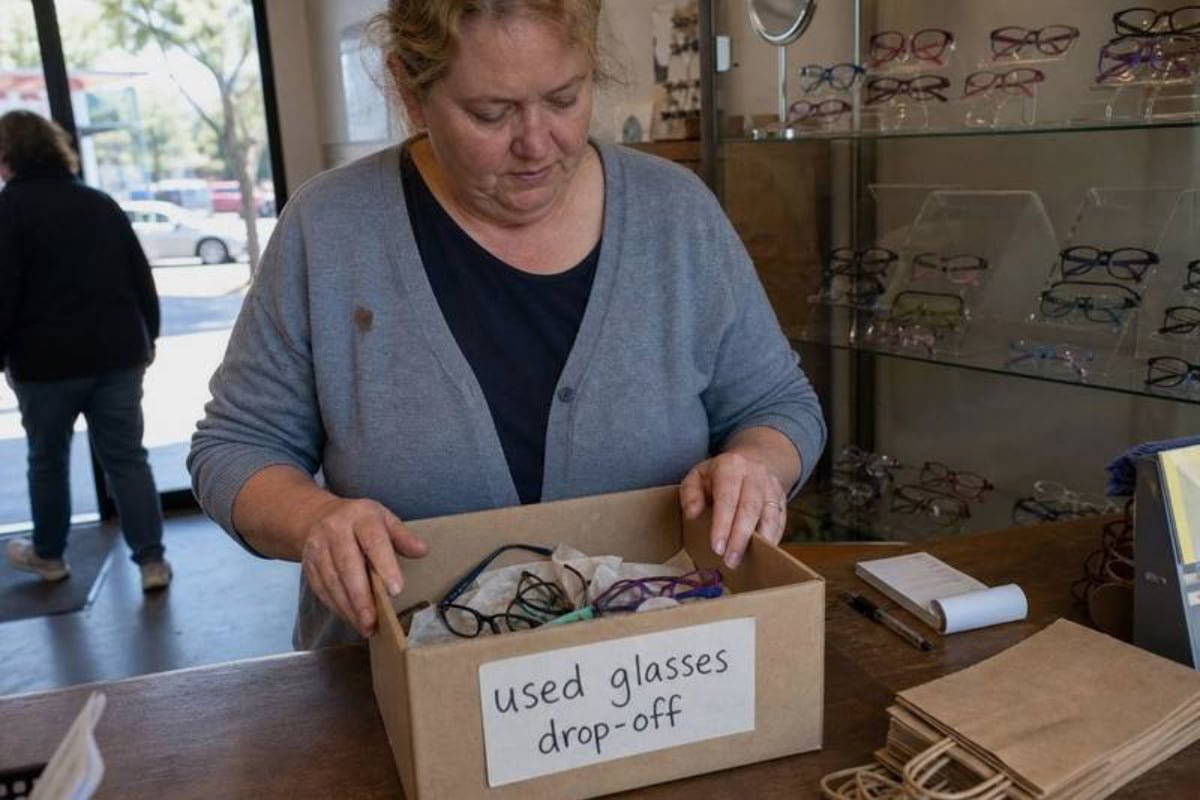
One more idea worth raising with your OEM partner: a Pediatric Growth Loop program. Because children outgrow frames quickly, a trade-in model — where outgrown frames return for refurbishment or professional recycling — directly addresses optical frame waste management at its weakest point: collection. We can design frames and packaging to support exactly that kind of program.
結論
Kids’ optical frame materials are only partly recyclable, so honest claims matter. Choose recycled nylon, bio-acetate, or metals wisely, prioritize durability, and partner with a factory that documents everything.
脚注
1. Government resource explaining the impact and management of plastic pollution in marine environments. ↩︎
2. Official certification body for verifying recycled content and environmental practices in manufacturing. ↩︎
3. International industry body providing technical data on the sustainability and recyclability of stainless steel. ↩︎
4. Federal agency guidelines on reducing waste at the source through improved manufacturing efficiency. ↩︎

 English
  Español de México
  Deutsch
  Français
  日本語
日本語  العربية
  Português do Brasil