How to Prevent Customers from Bypassing You to Order Directly from China Factories?
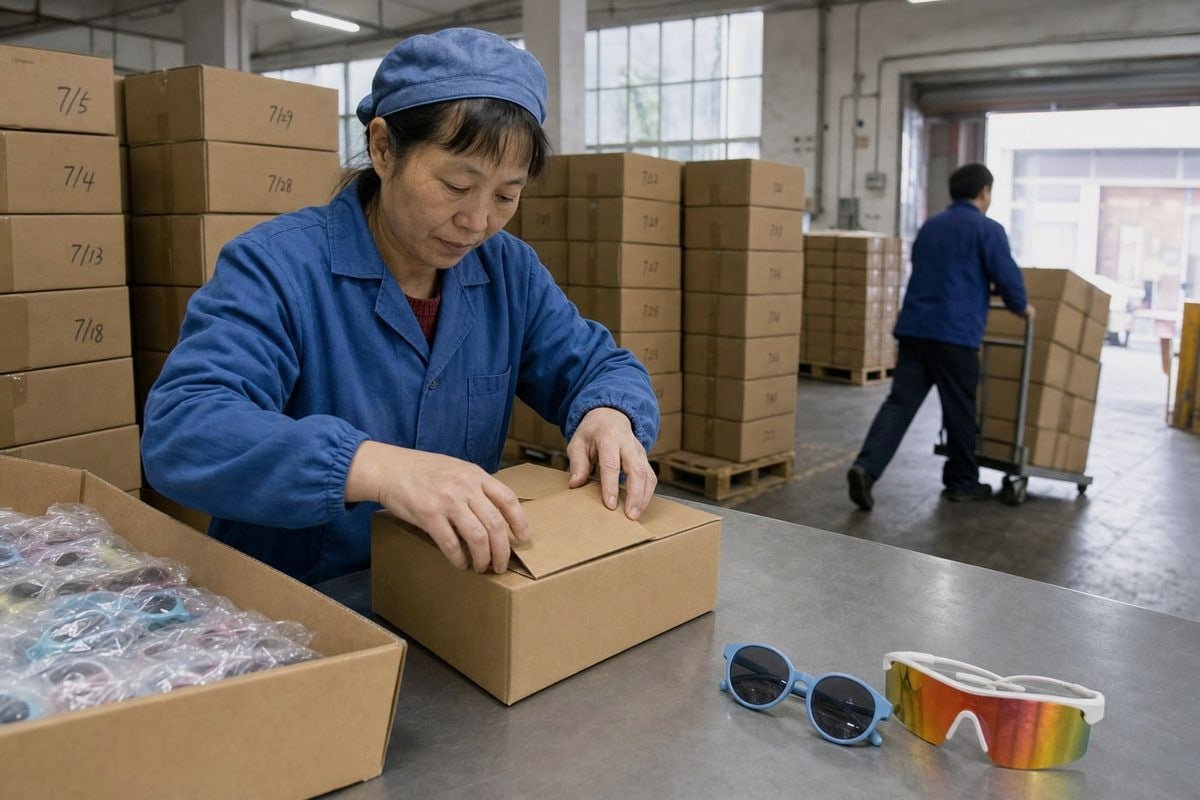
Learning how to prevent customers from bypassing you to order directly from China factories is a real worry I hear weekly on our Taizhou production line. It keeps good brand owners up at night. One leaked customer name, and your margin disappears. The fix? Layered protection, and a factory partner who values you.
To prevent customers from bypassing you to order directly from China factories, combine China-enforceable NNN agreements, registered trademarks, minimum-necessary information disclosure, blind shipping, custom branding, and a manufacturer whose business model depends on serving B2B partners — never end customers — so circumvention is both illegal and unprofitable.
No single tool works alone. In this article, I will walk you through each layer, based on what actually happens between factories, importers, and end customers.
How can I choose a manufacturer that respects my customer relationships?
A few years back, a distributor from Europe asked me a blunt question during a factory visit: "Alan, what stops you from selling to my retailers directly?" I appreciated the honesty. My answer shaped this section.
Choose a manufacturer whose entire business model is B2B production, verify its legal entity and export history, ask directly about its channel policy, and confirm it refuses retail orders. Factories built for OEM/ODM partnerships lose more by cheating one client than by serving hundreds loyally.
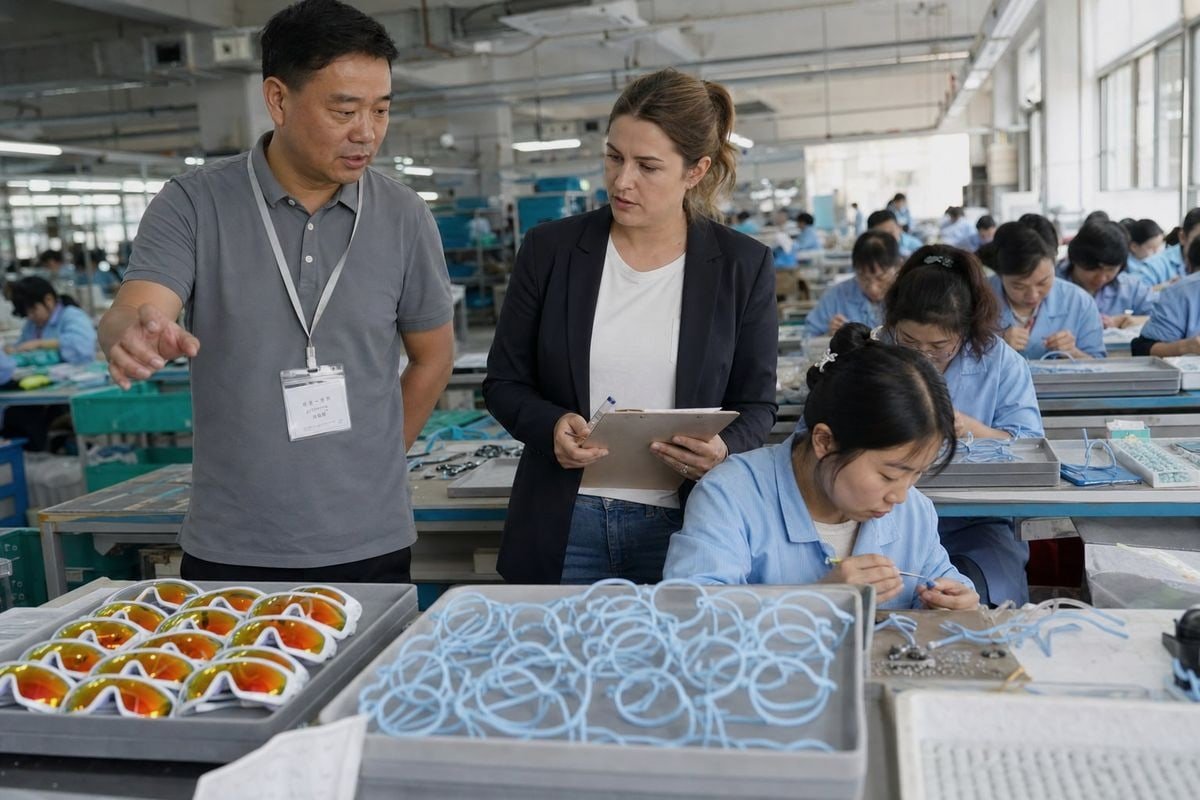
Disintermediation — the polite word for getting cut out — usually starts with the wrong factory choice, not the wrong contract. Contracts matter, and I will cover them next. But if a supplier is structurally tempted to sell around you, paperwork only slows the problem down. It does not remove it.
At our workshop in Taizhou, around 120 workers produce Sonnenbrillen für Kinder 1 and TR90 optical frames for brands in more than 20 countries. We have no retail store, no consumer website, and no interest in shipping five pairs to a parent in Melbourne. Our economics depend on repeat container orders from brands and importers 2. That structural alignment is the first thing you should look for in any supplier.
Signals a factory will protect your channel
Here is what I would check before placing a first order, based on fifteen years of watching this industry:
| Signal | What to verify | Was zu vergleichen ist |
|---|---|---|
| B2B-only model | No retail site, no consumer marketplace store | Factory has no channel to reach your customers |
| Real factory, not trader | Business license 3, workshop audit, bank account name matches | Traders can swap suppliers and leak your data |
| Export experience | Years exporting, references, country coverage | Mature exporters understand channel etiquette |
| Willingness to sign NNN | Signs before samples or files are shared | Refusal is a red flag in itself |
| Clear MOQ policy | Published Minimum Order Quantity for wholesale | Shows the factory filters out end-consumer inquiries |
| Openness to audits | Accepts third-party quality control inspections 4 | A monitored factory behaves like a monitored factory |
Ask the uncomfortable question early
Do what my European visitor did. Ask the supplier directly: "What is your policy if my customer contacts you?" A good factory has a rehearsed answer, because it happens. Ours is simple: we redirect the inquiry back to our partner and inform them the same day. A supplier who fumbles this question has never thought about it — or has thought about it too much.
Also match every detail. The company name on the quotation, the business license, the invoice, and the bank account should all align. If they do not, you may be dealing with a trading layer that can vanish or be replaced, taking your product files with it.
What contract terms should I use to protect against factory circumvention?
There is a trade-off I discuss with new buyers all the time: sharing detailed specs speeds up sampling, but every file you share is information the wrong supplier could misuse. Contracts are how you share safely.
Use a China-law NNN agreement covering non-use, non-disclosure, and non-circumvention, signed before sharing files; an OEM agreement banning independent sales of your designs; a mold ownership clause; and register your trademarks in China. Generic Western NDAs are largely unenforceable there.
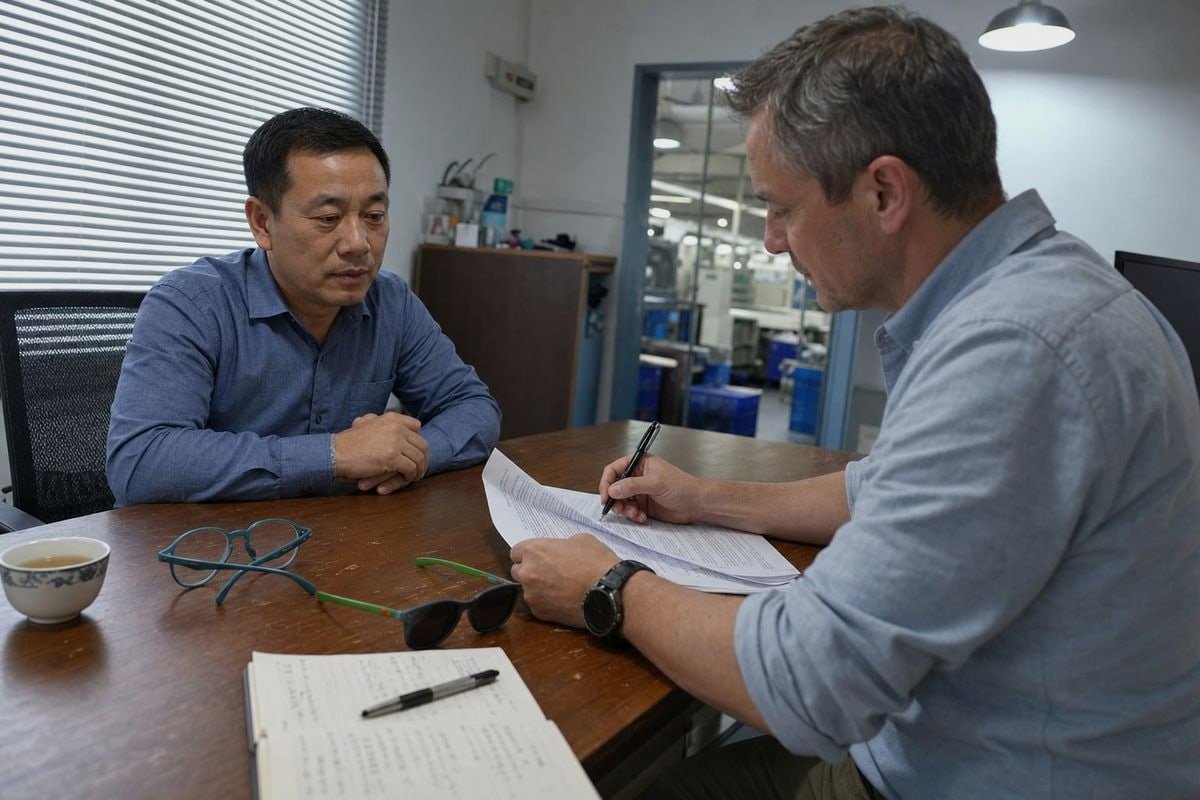
Let me be direct about something many sourcing guides gloss over: a standard English-language NDA written under US or EU law gives you very little leverage in a Chinese court. Intellectual property protection in China works when the documents are drafted for China — Chinese governing law, a Chinese court or arbitration venue, and ideally a Chinese-language version that controls.
The document stack that actually works
- NNN agreement first. Non-use means the factory cannot use your designs for its own products. Non-disclosure means it cannot share them. Non-circumvention means it cannot sell to your customers or approach your channel. Sign this before you send a single technical drawing or customer-facing spec.
- OEM/manufacturing agreement second. This governs the ongoing relationship: quality standards, tolerances, delivery terms, and an explicit ban on the factory selling your product independently or reusing your artwork, colorways, and packaging.
- Mold and tooling ownership clause. If you invest in custom molds — and many of our brand clients eventually do — the agreement must state that you own the tooling, the factory stores it on your behalf, and it cannot be used for any other buyer.
- Product development clauses. When our engineers contribute to a design, serious buyers add language assigning resulting IP to them. We sign it. That clarity protects both sides.
- China trademark registration. China is first-to-file. Register your brand name and logo 5 in China before your product circulates widely. If someone else files first, they can legally block your own goods at export.
Include real teeth
A contract without a penalty is a suggestion. Include contract damages — a pre-agreed penalty amount for breach — so enforcement is fast and the deterrent is concrete. In my experience, factories take a document far more seriously when the cost of breaking it is written in numbers, not adjectives.
How do custom branding and packaging help me stay irreplaceable to my customers?
One lesson our packaging team learned early: a plain sunglasses pouch gets compared on price; a branded, retail-ready box gets compared on brand. That difference decides who owns the customer relationship.
Custom branding and packaging make you irreplaceable because customers buy your brand experience — logo, colors, safety story, warranty, and retail presentation — not a generic product. A factory can copy hardware, but it cannot legally replicate your trademarked identity or your local service.
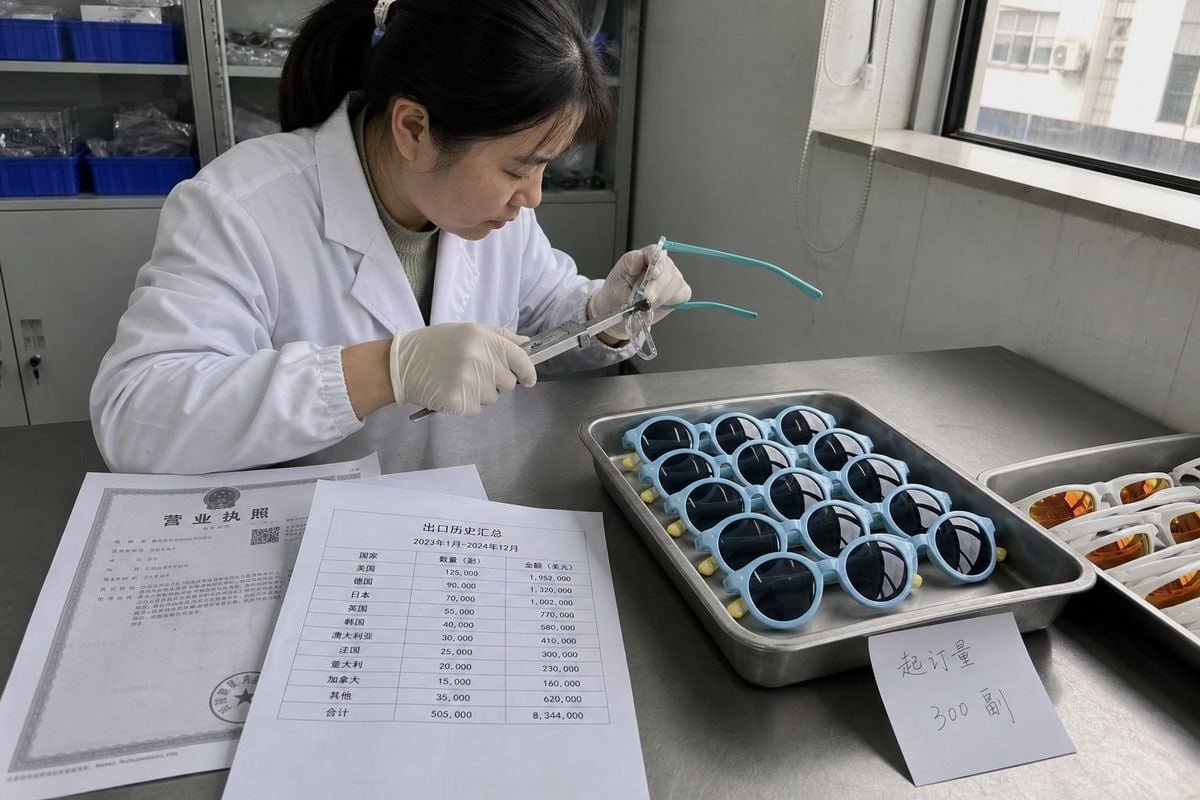
Think about what your customer can actually find if they go looking on a sourcing platform 6. They can find a wraparound sport shield with a mirrored orange-to-gold lens. They can find a soft two-tone kids' round frame in powder blue. What they cannot find is your version — your logo on the temple, your custom packaging, your hangtag with your safety messaging, your warranty card. Private labeling turns a commodity into a protected asset.
The branding layers that block direct sourcing
| Branding layer | Example on kids' eyewear | Why a factory-direct copy fails |
|---|---|---|
| Logo and trademark | Printed or molded logo on temple arm | Trademarked identity cannot be legally copied |
| Custom colorways | Exclusive Pantone-matched frame and lens combos | Generic catalog colors look and feel different |
| Retail packaging | Branded box, pouch, cleaning cloth, hangtag | Bulk factory bags are not shelf-ready |
| Safety and compliance story | UV400 claims, material safety messaging on pack | End buyers of kids' products trust brands, not anonymous imports |
| Accessories and inserts | Warranty cards, care guides, straps, cases | Adds perceived value a bare product cannot match |
| Value-added services | Local returns, sizing help, replacement parts | A factory across the ocean cannot service a parent |
Branding also disciplines the supply chain
There is a second, less obvious benefit. When your goods carry your custom packaging and artwork, the factory physically cannot ship "your" product to anyone else without committing an obvious, provable IP violation. Your branding becomes evidence. Combined with blind shipping — removing factory invoices, Chinese-language labels, and any factory-identifiable markings before dispatch — your customers never even see who made the goods.
For children's eyewear specifically, the trust factor multiplies this effect. Parents buying sunglasses for a toddler care about flexible, safe materials, lens quality, and a brand they can hold accountable. That accountability lives with you, in their market, in their language. No overseas factory can offer it. Add value-added services like fast local exchanges and sizing guidance, and direct sourcing stops making sense even at a lower unit price.
Why does working with an OEM/ODM partner reduce the risk of losing my clients to direct sourcing?
When we developed our TR90 frames with TPEE temples, a small Japanese kids' brand tested them for months before launch. That co-development depth is exactly what a bypass-hungry factory never offers — and it is the point of this section.
A true OEM/ODM partner reduces bypass risk because its revenue depends on brand clients succeeding, it offers ready style libraries that lower your investment, it signs NNN and tooling agreements as routine, and it embeds your branding so deeply the product only exists as yours.
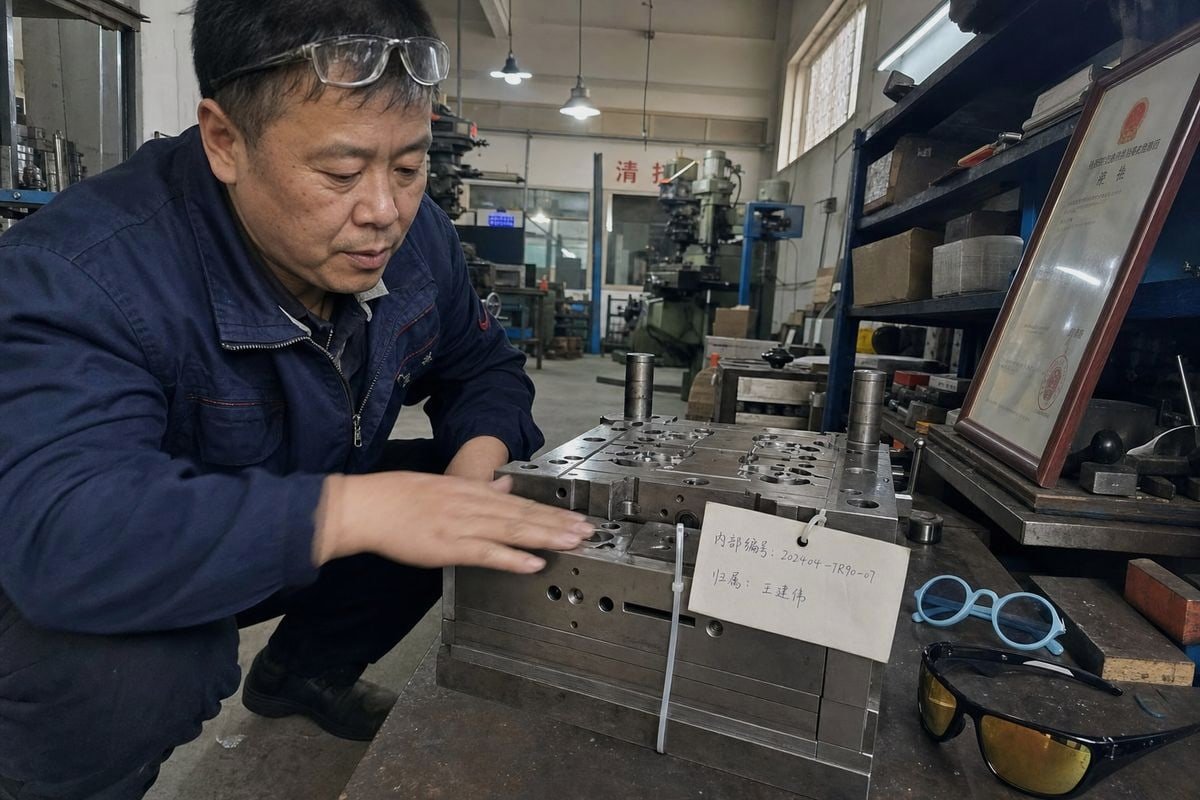
The distinction matters more than most buyers realize. A generic factory sells capacity. An OEM/ODM partner 7 sells outcomes — a finished, branded, retail-ready product line. Those are different businesses with different incentives, and the incentives are what protect you.
Aligned incentives, not just promises
Our factory holds roughly 800 existing styles. A new brand can pick designs, customize colors, logos, lenses, and packaging, and launch without heavy mold investment. That model only works if brands keep coming back. If we ever sold around a client, word would travel through 20+ countries of buyers within a season. The reputational cost dwarfs any single direct sale. Compare that with a factory whose export orders are shrinking — that factory hunts for any revenue, including yours.
How the OEM/ODM structure closes bypass gaps
| Bypass risk | How an OEM/ODM partnership closes it |
|---|---|
| Factory learns your customers | You control documents; the partner needs specs, not customer lists |
| Factory copies your product | Custom colors, logos, and packaging make the product legally yours |
| Factory undercuts your price | Partner pricing assumes your branding scope; a bare copy is a different product |
| Factory ships to your buyers | Blind shipping and neutral logistics and freight forwarding hide origin details |
| One-off transactional mindset | Milestone payments, forecasts, and repeat programs build mutual dependence |
Keep the operational discipline anyway
Trust the model, but verify the execution. Keep quality control inspections independent — third-party checks before shipment, documented samples, and approved batch records. Route shipments through a 3PL where possible, so end-customer addresses stay out of factory paperwork. Tie payments to milestones. Maintain good Lieferkettenmanagement 8 hygiene: minimum necessary disclosure, clean purchase orders, and periodic audits. A strong partner will welcome all of this. We do, because oversight protects the honest side of the table too. And keep investing in the relationship itself — regular visits, honest forecasts, and steady volume make you the client a factory protects, not the one it gambles with.
Schlussfolgerung
Bypass risk is real, and losing a customer hurts more than any defect. Layer NNN agreements, China IP registration, information control, custom branding, and a genuine OEM/ODM partner — and your channel stays yours.
Fußnoten
1. Authoritative Wikipedia overview of the U.S. agency regulating children’s product safety standards. ↩︎
2. World Trade Organization page describing the International Trade Centre’s role for global importers. ↩︎
3. Explains the legal registration document used to verify a supplier’s legitimacy ↩︎
4. Official NIST resource detailing ISO 9001 standards and quality management systems. ↩︎
5. WIPO explains trademark registration essential under China’s first-to-file system ↩︎
6. Alibaba is a leading B2B sourcing platform referenced when discussing generic supplier listings ↩︎
7. Defines the OEM/ODM manufacturing model central to the article’s partnership discussion ↩︎
8. Background concept covering procurement and logistics hygiene practices described in the article ↩︎
Weitere Artikel, die Ihnen gefallen könnten
August 2026
Sollte die Fabrik die Verpackung und Kennzeichnung von Kinder-Sonnenbrillen übernehmen oder einen bestimmten Lieferanten nutzen?
August 2026
Eigenes Lager vs. Direktlieferung durch den Lieferanten: Was senkt die Retourenkosten für Marken von Kinder-Sonnenbrillen?
August 2026
Direkt zum Lagerhafen oder Lagerung in Übersee: Was spart mehr bei den Versandkosten für Kinder-Sonnenbrillen?
Auf der Suche nach einem zuverlässigen Partner für Kinderbrillen?
Entdecken Sie über 800 sofort verfügbare Modelle und umfassenden OEM/ODM-Support, der auf Ihre Marke zugeschnitten ist.
Kontakt aufnehmen English
  Español de México
  Deutsch
  Français
  日本語
日本語  العربية
  Português do Brasil