How to Prepare a Supplier Quote Package for Kids Sunglasses for Annual Category Review?
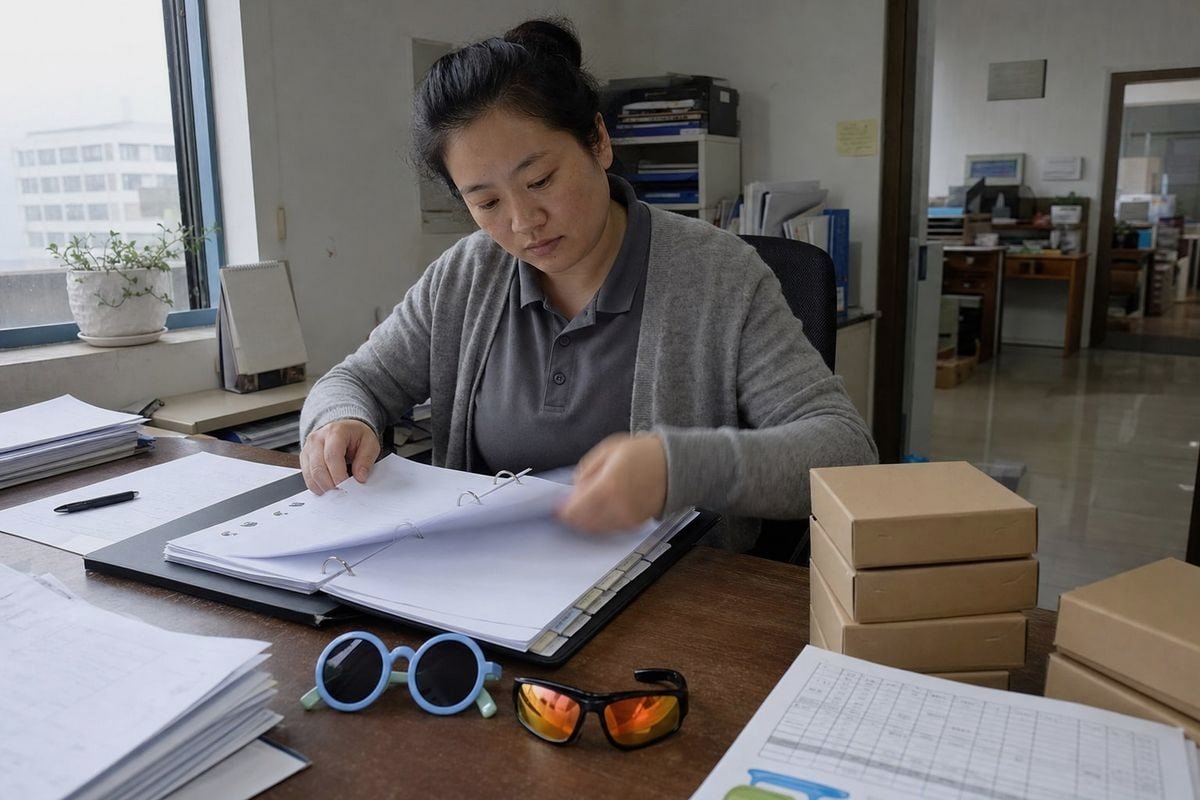
Every year, buyers ask our Taizhou factory to re-quote a supplier quote package for kids sunglasses — and every year, messy packages stall reviews, hide costs, and cost suppliers their category slot.
A supplier quote package for kids sunglasses annual category review should include itemized product specifications, safety and compliance documentation, a tiered pricing and MOQ table, packaging details, lead times, payment terms, and factory capability proof — all in one standardized, comparable format for category managers.
Below, I will walk through each part of the package step by step CE-Kennzeichnung 1. I will show you what documents to gather, how to prove safety, how to present pricing, and how to demonstrate factory strength.
What Documents Should I Include in My Supplier Quote Package for a Category Review?
A few seasons ago, one of our European buyers rejected an otherwise strong quotation from another vendor simply because the file pack was incomplete. Our team learned early that document structure wins reviews as often as price does.
A complete supplier quote package should include a cover note, product specification sheets per SKU, an itemized pricing template, compliance certificates, packaging and labeling details, lead time commitments, a commercial terms sheet, high-resolution product images, and a factory profile with audit history.
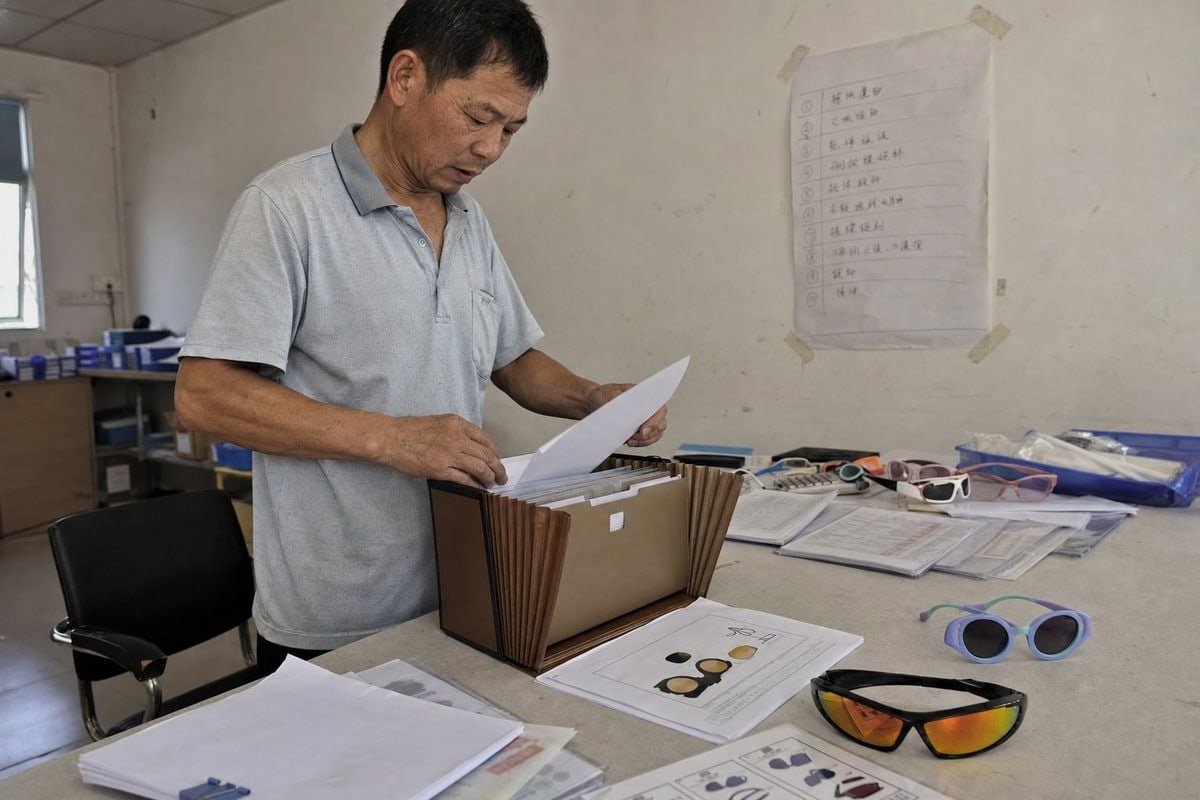
Category managers review dozens of vendors in a short window. If your package forces them to email you three times for missing information, you have already lost momentum. In our fifteen years supplying children's eyewear brands across 20+ countries, the packages that win renewals share one trait: everything the buyer needs sits in one organized folder, in a predictable order.
The Core Document Stack
Here is the document set we prepare for every annual review submission:
| Dokument | UV-Transmissionsbericht (akkreditiertes Labor) | Common Mistake |
|---|---|---|
| Cover note | States scope, validity period, contact person | Missing quote expiry date |
| Spec sheet per SKU | Frame material, lens type, UV rating, size range | Vague material names like "plastic" |
| Pricing template | Itemized unit prices, MOQs, tier breaks | Bundling logo and packaging into one line |
| Compliance file | Test reports and certificates for children's eyewear | Sending expired reports |
| Packaging sheet | Box type, inner/outer carton, barcode placement | No carton dimensions for freight costing |
| Lead time sheet | Sample, production, and peak-season timing | One generic lead time for all quantities |
| Factory profile | Workers, capacity, QC process, audit history | Overselling without evidence |
Match the Buyer's Format When One Exists
If the retailer sends an RFQ template 2, fill it exactly as structured. Do not attach your own format instead. Buyers compare vendors side by side, and a non-standard response makes your quote harder to score. When no template exists, we send our own standardized quotation sheet plus a proforma invoice draft, so the buyer can convert our quote into a purchase order with minimal rework.
Set a Validity Period
Always state how long the quote holds — typically 30 to 60 days. Resin, lens, and freight costs move. A validity window protects you and signals professionalism to the review team.
How Can I Show Buyers My Kids Sunglasses Are Safe and Compliant During Annual Review?
When we develop a new TPEE frame on our production line, safety review happens before any color or styling decision. Buyers of children's products think the same way — safety evidence comes first, price second.
Attach current third-party test reports covering UV400 protection, relevant children's product standards for your target market, material safety documentation, and small-parts assessments for detachable components. Label each report by SKU and expiry date so category managers can verify compliance instantly.
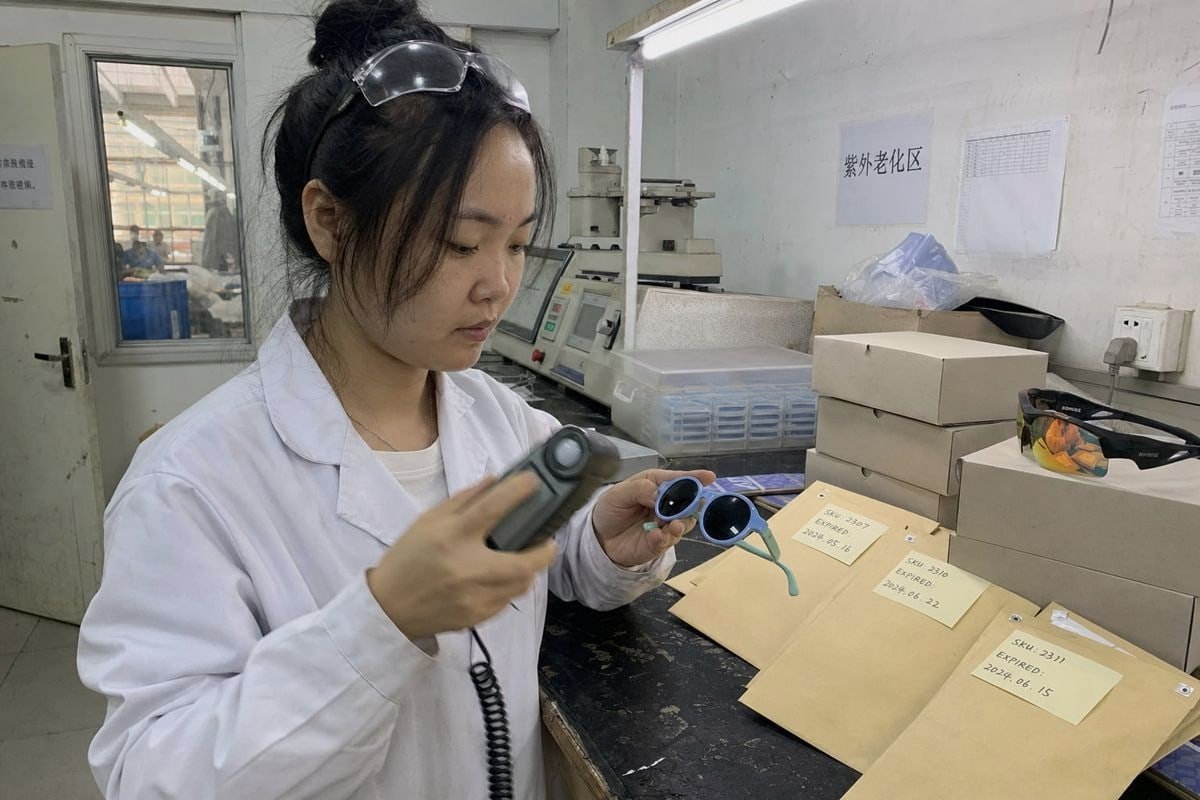
Children's eyewear faces stricter scrutiny than adult sunglasses, and rightly so. A category manager renewing a kids' line carries personal accountability for recalls. Your job in the quote package is to remove every doubt before it forms.
Map Compliance to the Destination Market
Different markets ask for different proof. Clarify with your buyer which standards apply, then organize reports accordingly. Common expectations include children's product safety requirements in the US, EU toy and eyewear directives with CE-Kennzeichnung 3 in Europe, and equivalent national standards elsewhere. If the buyer sells in multiple regions, structure your compliance folder by market so nothing gets missed.
Go Beyond the Lens
UV400 lens performance 4 is the headline claim, but reviewers look deeper:
- Material safety. State that frames use materials suitable for children. Our TPEE and TR90 materials are chosen specifically because they flex instead of snapping into sharp fragments — a genuine safety property, not a marketing line.
- Small parts and detachable components. Straps, charms, nose pads, and interchangeable lenses each carry choking-hazard risk 5. Include assessments for these parts specifically. Many general apparel quote packages skip this, and it is a red flag for experienced kids' buyers.
- Impact and durability behavior. Describe how the frame behaves under twisting and bending. Flexible frames that return to shape reduce breakage claims and warranty costs — a commercial argument as much as a safety one.
- Labeling and packaging compliance. Confirm warning labels, age grading, and required markings on both product and packaging.
Keep Reports Current and Traceable
Match every test report to a specific SKU and production material batch. An expired or mismatched report is worse than no report — it suggests weak quality control. We refresh testing before each annual review season for exactly this reason, and we tell buyers the renewal date up front.
What Pricing and MOQ Details Do I Need to Present Clearly to Category Managers?
There is a trade-off we weigh on every quotation: quote a lean headline price and risk surprise charges later, or itemize everything and look more expensive upfront. After fifteen years, we always choose itemization — buyers reward transparency at review time.
Present a standardized pricing table showing unit price by SKU and color, tiered price breaks at defined quantities, MOQ per style, and separate line items for logo decoration, packaging, samples, and tooling. State Incoterms, payment terms, and quote validity explicitly.
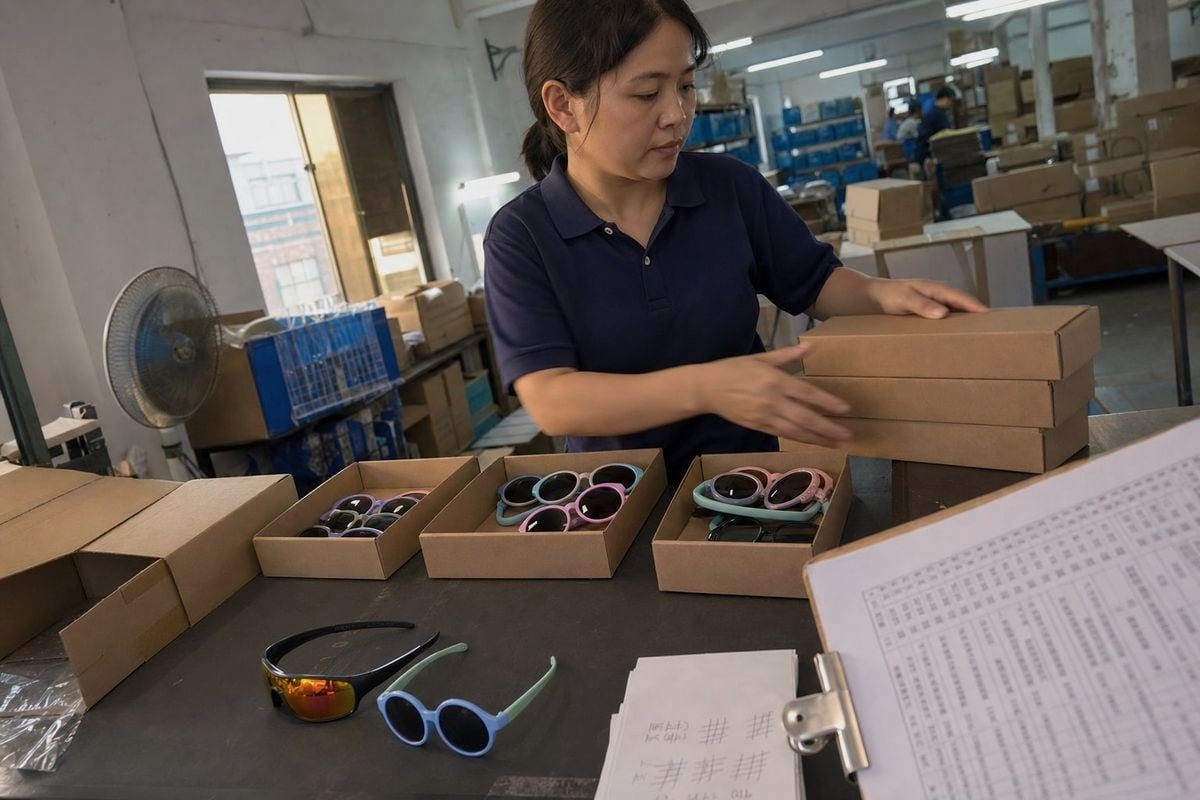
The lowest unit price rarely wins an annual review on its own. Category managers compare total landed cost — and they distrust quotes where costs might be hiding. Your pricing section should make hidden costs impossible.
Structure the Pricing Table
We use one consistent format across all SKUs so buyers never recalculate manually:
| Field | Example Entry |
|---|---|
| Style / SKU | Wraparound sport shield, glossy black |
| Colorway | Orange-gold mirrored lens |
| Material notes | TR90 frame, TPEE temple tips, UV400 lens |
| MOQ per color | 1,000 pcs |
| Unit price @ 1,000 | Base tier |
| Unit price @ 5,000 | Mid tier discount |
| Unit price @ 10,000 | Volume tier discount |
| Logo charge | Per-unit pad print or laser engraving fee |
| Packaging charge | Retail box, pouch, cleaning cloth — itemized |
| Sample cost | Stated, with refund policy on order |
| Lieferzeit | Per tier, plus peak-season note |
| Payment terms | 30 % Anzahlung, 70 % vor Versand |
| Remarks | Validity period, Incoterm basis |
Show Tiered Breaks, Not One Price
Tiered pricing at defined quantity breaks — for example 1,000, 5,000, and 10,000 units — gives category managers negotiation clarity and helps them model growth scenarios. Because we hold around 800 existing styles, buyers can often mix styles to reach volume tiers without heavy mold investment, which lowers their entry risk. Say this explicitly in the package if it applies to you.
Separate FOB From Landed Cost
Quote your base Incoterm clearly — Käufer mit einem starken, in China ansässigen Spediteur oder Agenten 6 is common — then help the buyer estimate landed cost. Include carton dimensions, units per carton, and gross weight so their freight team can calculate shipping, duties, and insurance accurately. A supplier who makes landed-cost math easy earns quiet goodwill during scoring.
Surface the Often-Missed Charges
Sample fees, logo setup, compliance testing contributions, barcode labeling, packaging upgrades, and defective-rate replacement policy all belong in the quote. If a charge is zero, write zero. Silence reads as risk.
How Do I Present My Factory's Capabilities to Win Long-Term Category Approval?
One Australian buyer once told me she chose our factory not for price, but because our capability section answered her boss's questions before he asked them. That conversation reshaped how we build every review package since.
Present verifiable capability evidence: factory size and workforce, years of eyewear experience, quality control process, production capacity by season, OEM/ODM customization scope, material expertise, audit history, and your existing style library. Frame everything as risk reduction for the buyer's category.
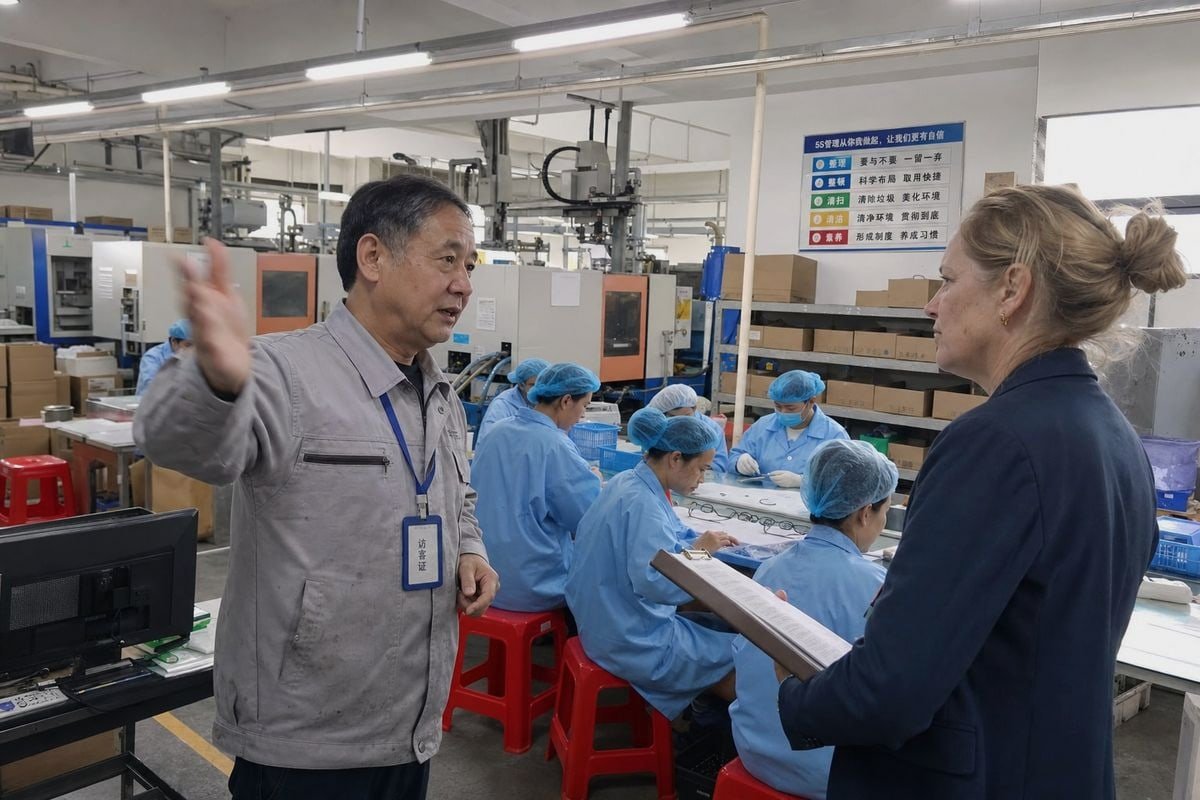
Annual category review is fundamentally a risk decision. The buyer asks: can this supplier deliver consistent, safe, on-time product for another year — and can they scale if the category grows? Your capability section must answer that with evidence, not adjectives.
What Reviewers Actually Score
Based on the review scorecards our buyers share with us, capability evaluation usually covers these dimensions:
| Review Criterion | What to Show in Your Package |
|---|---|
| Production consistency | QC process description, inspection stages, defect handling policy |
| Capacity and scalability | Monthly output, peak-season capacity for summer and back-to-school |
| Customization ability | Custom colors, logos, lenses, packaging, and accessory options |
| Material expertise | Why you use specific materials and what problems they solve |
| Communication reliability | Named contact, response-time commitment, sampling turnaround |
| Ethical and sustainable sourcing | Labor audit status, environmentally friendly material choices |
| Financial and operational stability | Years in operation, workforce size, workshop management system |
Tell the Story Behind the Numbers
Facts alone are forgettable. Connect each fact to a buyer benefit. Our workshop runs 5S-Management 7 — that means consistent assembly conditions and fewer cosmetic defects reaching inspection. We employ around 120 workers with 15 years of eyewear focus — that means the buyer is not betting a children's category on a trading company with no production control. Our library of roughly 800 existing styles — from bold wraparound sport shields with mirrored gradient lenses to pastel two-tone round frames — means a brand can test the market quickly, then invest in fully custom tooling once a style proves itself.
Address Seasonality Directly
Kids sunglasses are strongly seasonal. State your peak-season capacity plan, recommended order deadlines for summer delivery, and how you handle repeat orders mid-season. A supplier who plans the buyer's calendar for them looks like a partner, not a vendor. Close the capability section with a clear invitation: offer a factory visit, a video audit, or a sample run — whatever lets the reviewer verify your claims firsthand.
Schlussfolgerung
A winning supplier quote package for kids sunglasses is not the longest one. It makes every quote comparable, proves safety upfront, itemizes true costs, and demonstrates dependable factory capability.
Fußnoten
1. Background on the EU conformity marking referenced for European compliance requirements. ↩︎
2. Alibaba.com is a leading B2B sourcing platform where buyers issue standardized RFQ templates. ↩︎
3. Explains the EU conformity marking suppliers must reference for children’s eyewear exports. ↩︎
4. FDA consumer guidance on sunglasses UV protection supports the lens performance claim. ↩︎
5. Official guidance on small-parts choking hazards directly supports the safety documentation claim. ↩︎
6. Background on Incoterms clarifies the FOB shipping term used in pricing discussion. ↩︎
7. Explains the workplace organization methodology referenced for factory quality consistency. ↩︎
Weitere Artikel, die Ihnen gefallen könnten

August 2026
Sollte die Fabrik die Verpackung und Kennzeichnung von Kinder-Sonnenbrillen übernehmen oder einen bestimmten Lieferanten nutzen?
August 2026
Eigenes Lager vs. Direktlieferung durch den Lieferanten: Was senkt die Retourenkosten für Marken von Kinder-Sonnenbrillen?

August 2026
Direkt zum Lagerhafen oder Lagerung in Übersee: Was spart mehr bei den Versandkosten für Kinder-Sonnenbrillen?
Auf der Suche nach einem zuverlässigen Partner für Kinderbrillen?
Entdecken Sie über 800 sofort verfügbare Modelle und umfassenden OEM/ODM-Support, der auf Ihre Marke zugeschnitten ist.
Kontakt aufnehmen English
  Español de México
  Deutsch
  Français
  日本語
日本語  العربية
  Português do Brasil