How Does Own-Brand Vs Agency Kids’ Optical Frames Compare in Gross Margin?
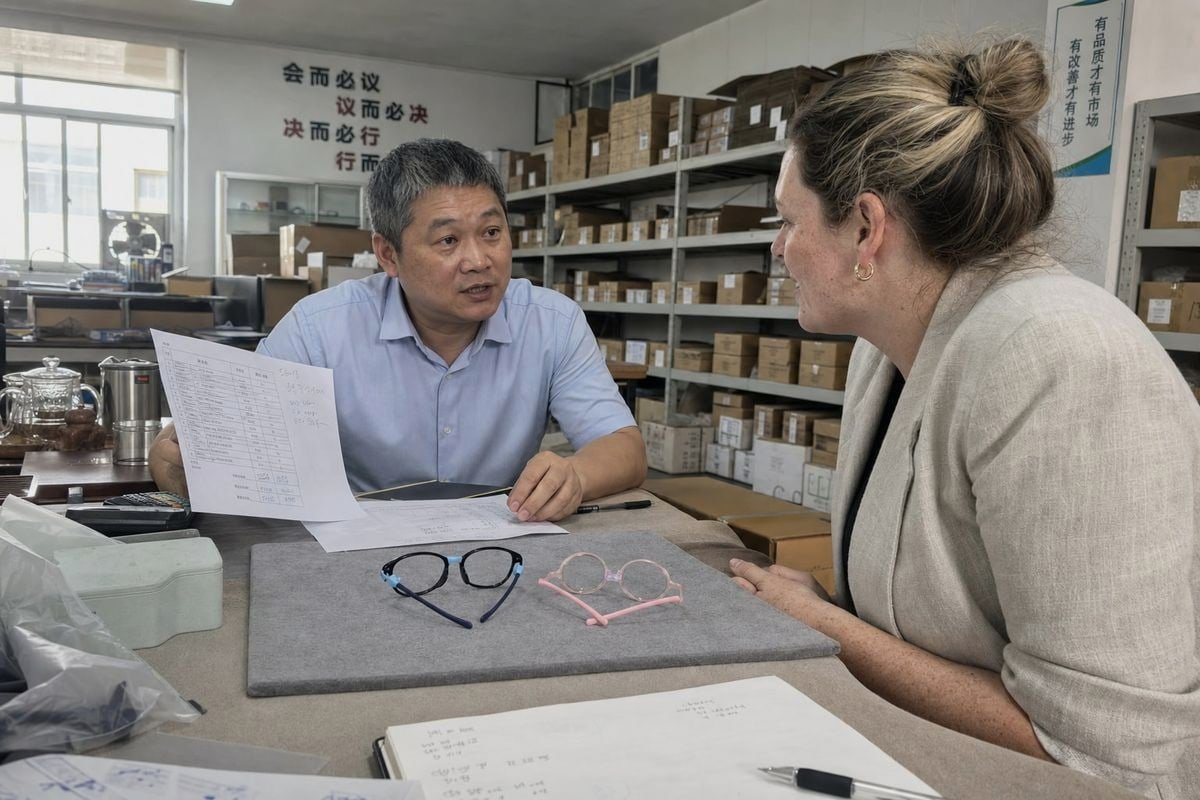
Comparing own-brand vs agency kids’ optical frames 1 is a question buyers bring to our Taizhou factory weekly. Choose wrong, and licensing fees quietly eat your profit for years.
Own-brand kids’ optical frames typically deliver 65%–80% gross margins because you buy at factory cost and control retail pricing. Agency or licensed frames usually land in the 45%–65% range after designer licensing royalties, distributor markups, and brand-imposed price ceilings erode your spread.
Those numbers are practical ranges, not guarantees. Below, I break down the real margin math, the hidden costs, and how to test an own-brand line with low risk.
How much more gross margin can I earn by launching my own kids' optical frame brand instead of using an agency model?
A distributor from Australia once showed me his invoice for a licensed children's frame. The wholesale acquisition cost was nearly four times what our factory charges for a comparable TR90 frame.
Launching your own kids' frame brand typically adds 15 to 30 percentage points of gross margin over an agency model. Direct-to-factory sourcing cuts unit costs by 60%–80% versus licensed equivalents, pushing margins from the 45%–60% agency zone into the 70%–85% own-brand zone.
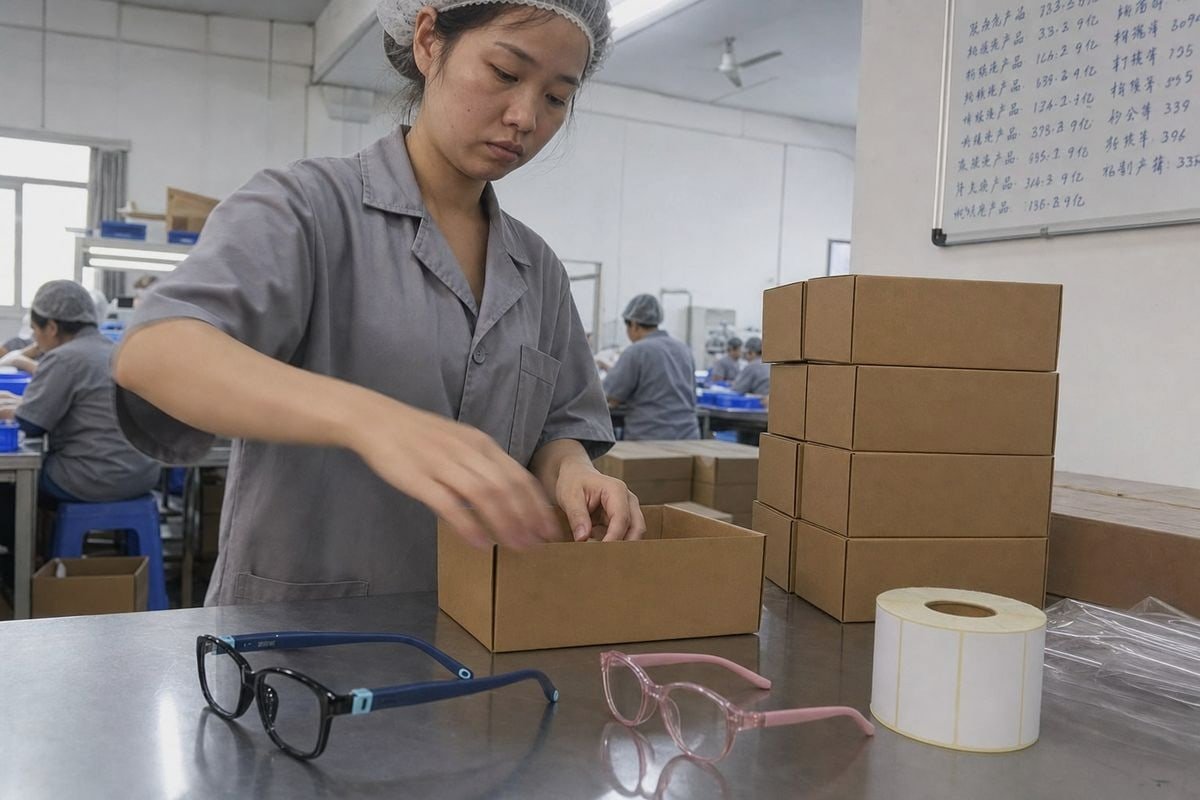
Let me show the math plainly, because many buyers confuse markup with gross margin. Gross margin is sales minus cost, divided by sales. A frame bought at $30 and sold at $100 gives a 70% gross margin. The same frame at a keystone 2x optical retail markup gives only 50%.
Ein durchgeführter Vergleich
| Faktor | Own-Brand (Private Label) | Agency / Licensed Frame |
|---|---|---|
| Landed cost per frame | $8–$25 | $30–$55 |
| Typical retail price | $75–$120 | $99–$149 |
| Licensing royalties | Keine | 10%–20% of wholesale |
| Gross margin range | 65%–80% | 45%–65% |
| Pricing control | Vollständig | Brand-imposed ceiling |
The gap comes from where value is captured. With private label eyewear sourced directly from a factory like ours, you keep the wholesale-to-retail spread that a brand owner and distributor would normally split. You can also run keystone-plus pricing — 4x to 6x landed cost — while still undercutting name brands on the shelf.
Why the percentage gap compounds
There is a second effect. Own-brand frames resist "showrooming." A parent cannot Google your exclusive style and find it cheaper online, so your price integrity holds. Agency frames face constant online price comparison, which forces discounting and compresses realized margin below the sticker calculation.
To be fair, I will raise the objection our clients raise: agency frames can sell faster because parents recognize the name. Industry surveys show branded and licensed frames hold roughly 30% of children's frame sales. A lower-margin frame that turns quickly can beat a high-margin frame 2 that sits. That is true — but it is an argument for a smart mix, not for surrendering your entire assortment to licensing fees.
Every quarter, our QC team logs breakage and remake data for clients, and one lesson repeats: the invoice price is never the whole story in children's eyewear economics.
Beyond unit price, factor in warranty replacements, freight and duties in your landed cost calculation, safety compliance testing, minimum order quantities, markdown leakage, and slow-mover risk. Agency lines add licensing royalties and locked pricing; own-brand lines add inventory ownership and quality-control responsibility.
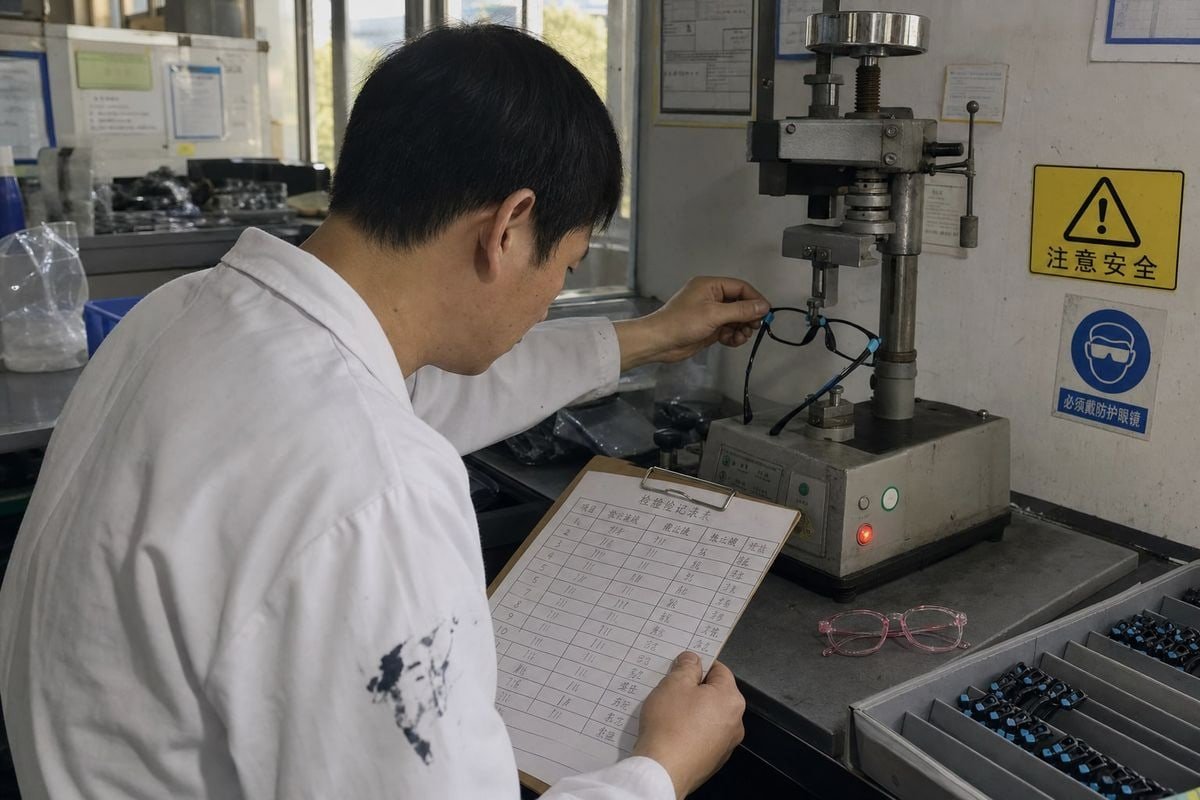
Kids break glasses. That is not a criticism of children — it is a design constraint. In our fifteen years building flexible TPEE and TR90 frames, the warranty-replacement cycle has proven to be the single most underestimated cost in this category.
The warranty math nobody shows you
With an agency brand, a broken frame means paying the manufacturer's replacement fee 3, often at full wholesale. With an own-brand line, you self-insure breakage at factory cost. If your landed cost is $12, replacing a frame free of charge costs you $12 plus shipping. If a licensed replacement costs $40, three replacements wipe out the profit on the original sale. Pediatric frame durability directly protects margin, which is why we build spring-free flexible hinges and bendable temples into our children's designs — fewer breaks means fewer claims.
Hidden cost checklist by model
| Hidden Cost | Own-Brand | Agency / Licensed |
|---|---|---|
| Warranty replacements | Low (factory cost) | High (brand replacement fees) |
| Safety compliance standards testing | Your responsibility (factory supports) | Usually covered by brand |
| MOQ and inventory risk | You own it | Often lower per order |
| Markdown leakage | You control timing | Brand pricing rules limit flexibility |
| Freight, duties, QC inspection | Include in landed cost | Bundled into wholesale price |
| Frame board management effort | Higher (you plan assortment) | Lower (rep-managed) |
Two more costs deserve honesty. First, safety compliance standards — kids' eyewear must pass impact and material safety testing 4 for your target market, and you must budget for it, though an experienced factory handles most documentation. Second, vision plan reimbursement dynamics: fixed insurance frame allowances actually favor own-brand frames, because a lower wholesale cost leaves more profit room under the same allowance. That hidden cost analysis often flips the comparison further toward own-brand than the sticker prices suggest.
Can I test my own-brand strategy without heavy mold investment by choosing from an existing style range?
When a Japanese kids' accessory brand approached us last year, their biggest fear was not margin — it was sinking five figures into custom molds before proving a single sale.
Yes. Selecting from an existing catalog — our factory offers around 800 ready styles — lets you launch a private label kids' line with no mold tooling cost. You customize colors, logos, lenses, and packaging on proven frames, cutting launch risk and lead time dramatically.
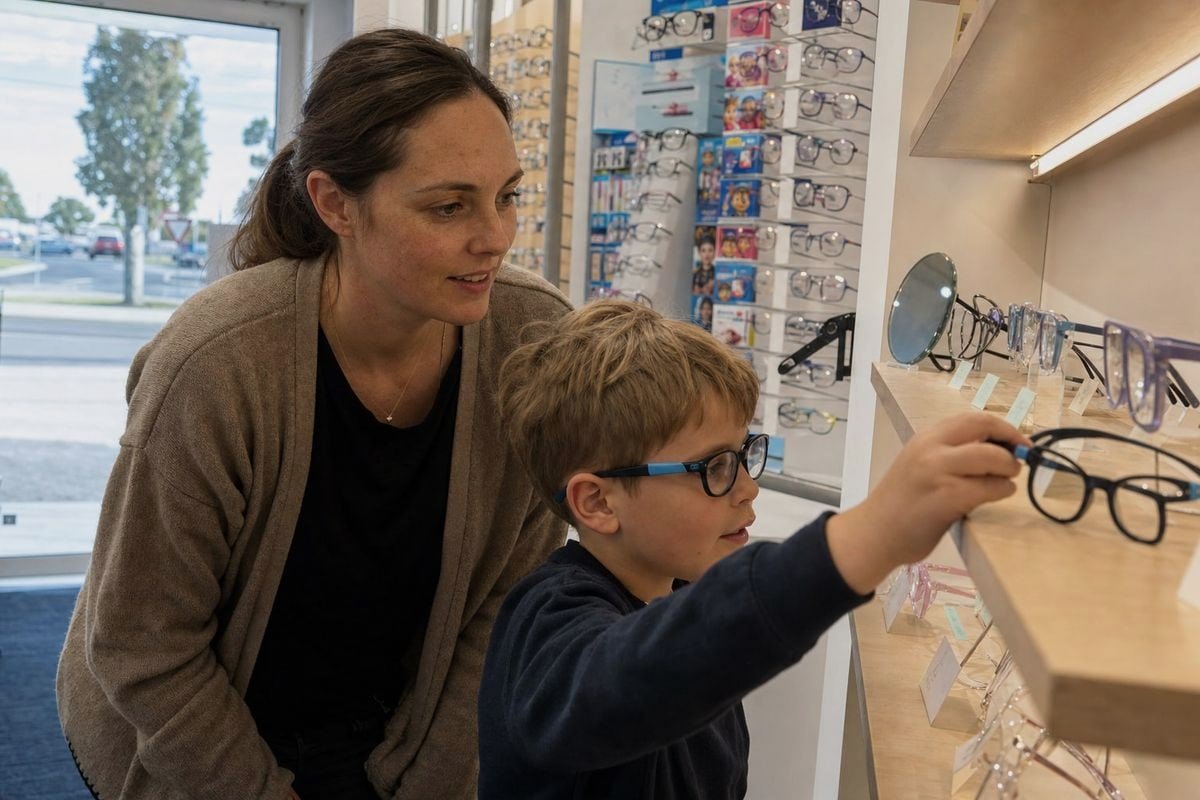
Custom molds are the traditional barrier to own-brand eyewear. A new frame tool can cost thousands of dollars per style, and a credible kids' collection needs eight to fifteen styles across sizes. That math scares off exactly the brands who would benefit most from own-brand margins.
An existing style range removes that barrier. Here is how the low-risk path typically works with us:
- Select styles. Choose from proven shapes — rounded rectangles, soft ovals — already sized for children's faces and tested for pediatric frame durability.
- Customize the look. Pick frame colors like translucent blush-pink acetate or glossy black with two-tone rubber temples, then add your logo and packaging.
- Order a test quantity. Reasonable MOQs let you validate two or three colorways per style instead of gambling on one big bet.
- Read the data. Track your inventory turnover rate and capture rate optimization by style and color over one season.
- Scale or pivot. Reorder winners, drop losers, and only then consider custom molds for a signature design.
This staged approach also protects frame board management for optical retailers. You can build a good-better-best pricing ladder — an entry own-brand style, a mid-tier flexible TPEE model, and a premium myopia-management bundle 5 — without carrying dead stock. Because the base frames already exist, sampling takes days rather than months, and your first sellable order can ship in weeks. You get own-brand margins with agency-level launch risk. That combination is the real answer to the "which model is better" debate.
How does OEM/ODM support help me protect my margins while building a trustworthy kids' eyewear brand?
The trade-off I weigh with every new client is speed versus differentiation: ship a stock frame fast, or invest a few extra weeks in details that let it command a premium.
Full OEM/ODM support protects margins by embedding differentiation — custom colors, logos, UV400 or polarized lenses, retail-ready packaging — at factory cost. It also safeguards revenue through consistent quality control and safety documentation, reducing returns, warranty claims, and the trust failures that force discounting.
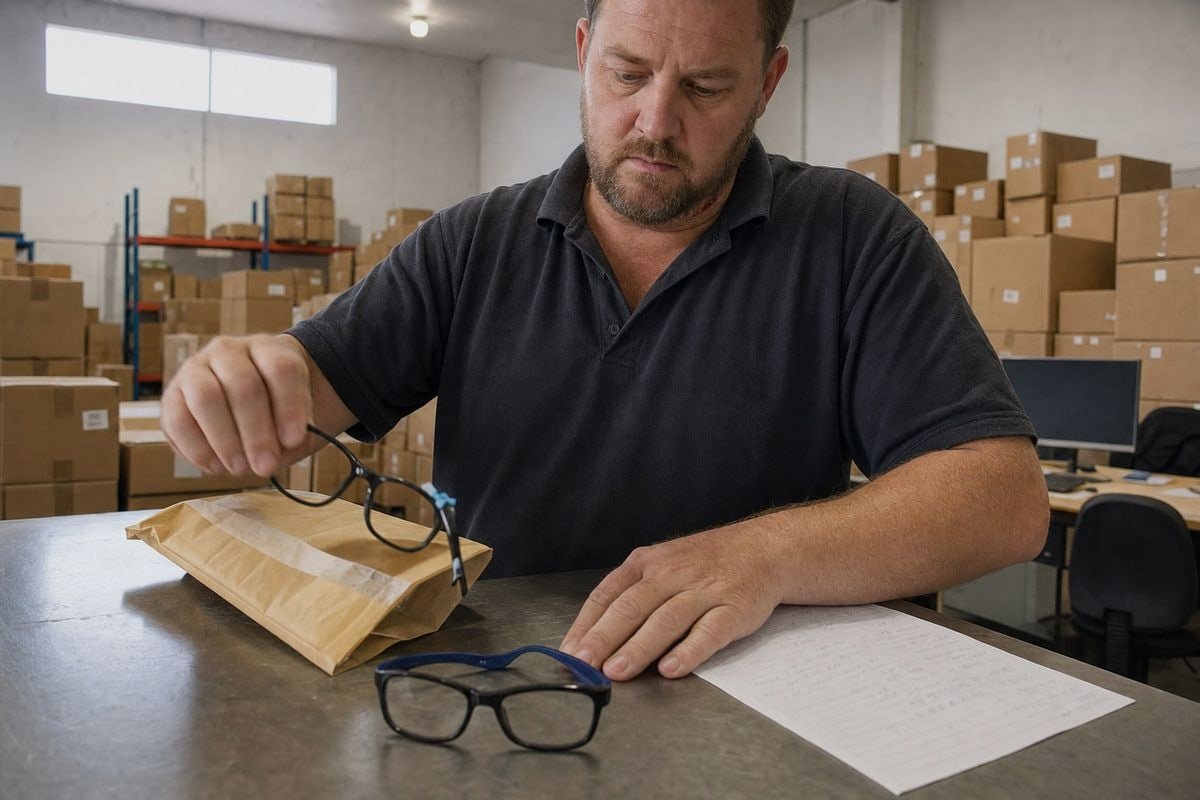
Gross margin is won at sourcing but lost at retail. A frame that arrives with inconsistent hinges, missing test reports 6, or flimsy packaging will bleed margin through returns, complaints, and markdowns no matter how cheap it was. This is where a genuine factory partner earns its keep over a trading company.
Where OEM/ODM work converts into margin
| OEM/ODM Service | How It Protects Your Margin |
|---|---|
| Custom colors and logo branding | Blocks price comparison, supports keystone-plus pricing |
| TPEE/TR90 flexible material engineering | Fewer breakages, lower warranty replacement cost |
| UV400 / polarized lens options | Justifies premium positioning versus generic frames |
| Retail-ready packaging and accessories | Higher perceived value, stronger conversion at shelf |
| 5S-managed QC and safety documentation | Fewer returns, smoother customs, protected reputation |
Trust is a margin strategy in kids' eyewear
Parents buying for children weigh safety over fashion. That changes the economics. A brand that can show environmentally friendly materials, flexible slip-resistant construction, and clean compliance documentation 7 earns willingness to pay that generic imports never reach. In our workshop, features like silicone hinge connectors and adjustable ear hooks are not decoration — they are the reasons a parent pays $95 instead of $29, and returns for a second pair.
OEM/ODM support also enables margin-friendly promotions. High own-brand margins make second-pair offers profitable: a deep discount on a backup frame can still net more profit than one agency frame sale. The same logic powers myopia management packages, where the frame's healthy margin sits comfortably inside a bundled clinical service fee. None of this works with agency lines, where pricing rules and thin margins leave no room to maneuver.
Schlussfolgerung
Agency frames rent recognition; own-brand frames build equity. If licensing fees are draining your kids' eyewear profits, an existing-style private label launch offers the higher-margin, lower-risk path forward.
Fußnoten
1. General overview of spectacle frame components and terminology. ↩︎
2. Defines the core financial metric used to compare own-brand and agency models. ↩︎
3. Overview of warranty terms and replacement costs in commercial contracts. ↩︎
4. Official FDA guidance on regulatory requirements for spectacle frames as medical devices. ↩︎
5. Professional resource on myopia management strategies and clinical service bundles. ↩︎
6. Information on quality inspection and testing reports for the eyewear industry. ↩︎
7. Details on regulatory compliance and certification services for eyewear products. ↩︎
Weitere Artikel, die Ihnen gefallen könnten
August 2026
Bio-Based vs Regular Cellulose Acetate: What's the Difference for Kids' Frames?
August 2026
How Recyclable Are Kids' Optical Frame Materials, and What Eco-Friendly Alternatives Exist?
August 2026
Bleichen Kinderbrillengestelle im Lager aus oder altern sie, und wie kontrolliert man die Lagerbedingungen?
Auf der Suche nach einem zuverlässigen Partner für Kinderbrillen?
Entdecken Sie über 800 sofort verfügbare Modelle und umfassenden OEM/ODM-Support, der auf Ihre Marke zugeschnitten ist.
Kontakt aufnehmen English
  Español de México
  Deutsch
  Français
  日本語
日本語  العربية
  Português do Brasil