How Much Can Increasing Order Quantity Reduce Unit Prices for Kids Optical Frames?
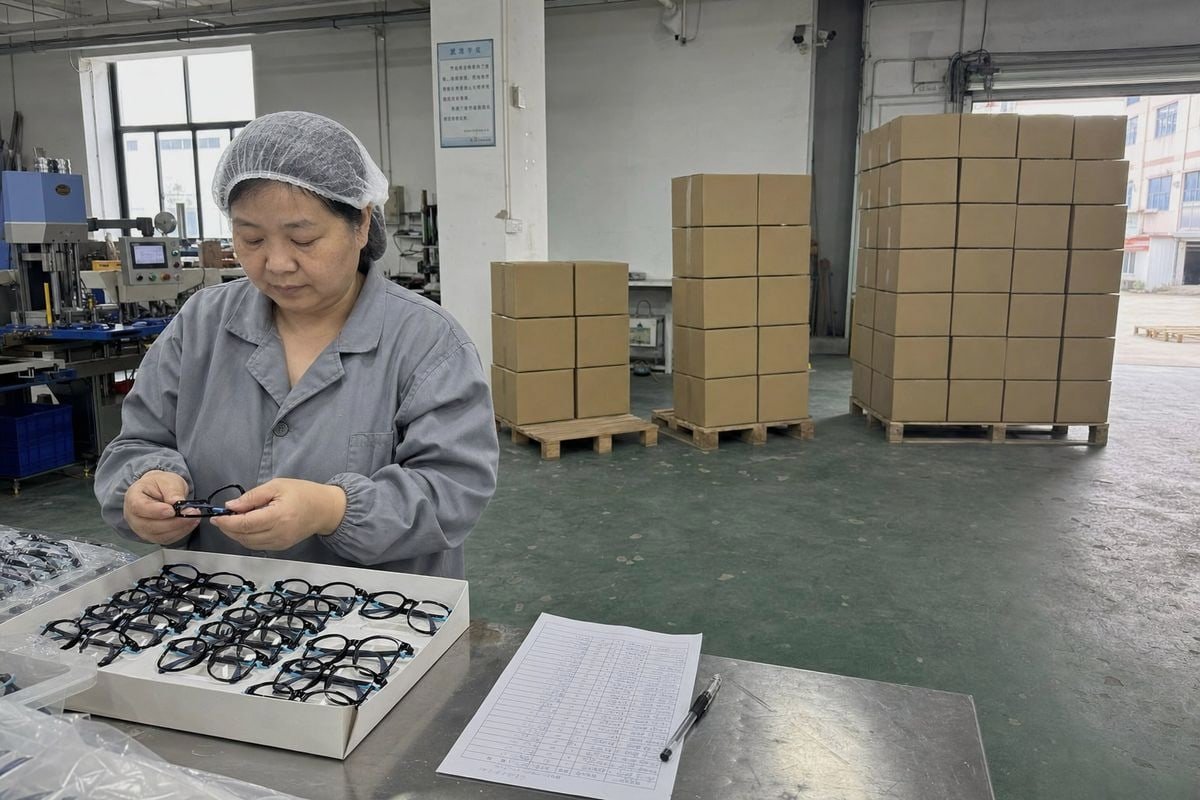
Buyers ask me weekly how order quantity affects unit prices for kids optical frames FDA compliance 1. Guess wrong, and you either overpay per piece or drown in unsold inventory on our production schedule.
Increasing order quantity typically reduces kids optical frame unit prices by 5–10% at 100+ units, 10–20% at 500+ units, and 15–30% at 1,000+ units. Savings come from spreading tooling, setup, and compliance costs, but the curve flattens sharply after early volume tiers.
Those percentages are averages, not promises. The real numbers depend on material, customization level, and MOQ policy Spritzgussverfahren 2. Let me break down each factor so you can order the smart quantity, not just the big one.
How much can I save on unit prices by increasing my order quantity for kids optical frames?
Last quarter, a Japanese buyer compared our quote at 300 pieces against 1,200 pieces and was surprised the bigger jump saved less per unit than the first one. That pattern is normal, and here is why.
Moving from a small trial run to 500 pieces usually cuts unit prices 10–20%, and reaching 1,000+ pieces adds another 5–15%. The steepest savings happen early, because fixed manufacturing overhead costs get diluted fastest across the first few hundred units.
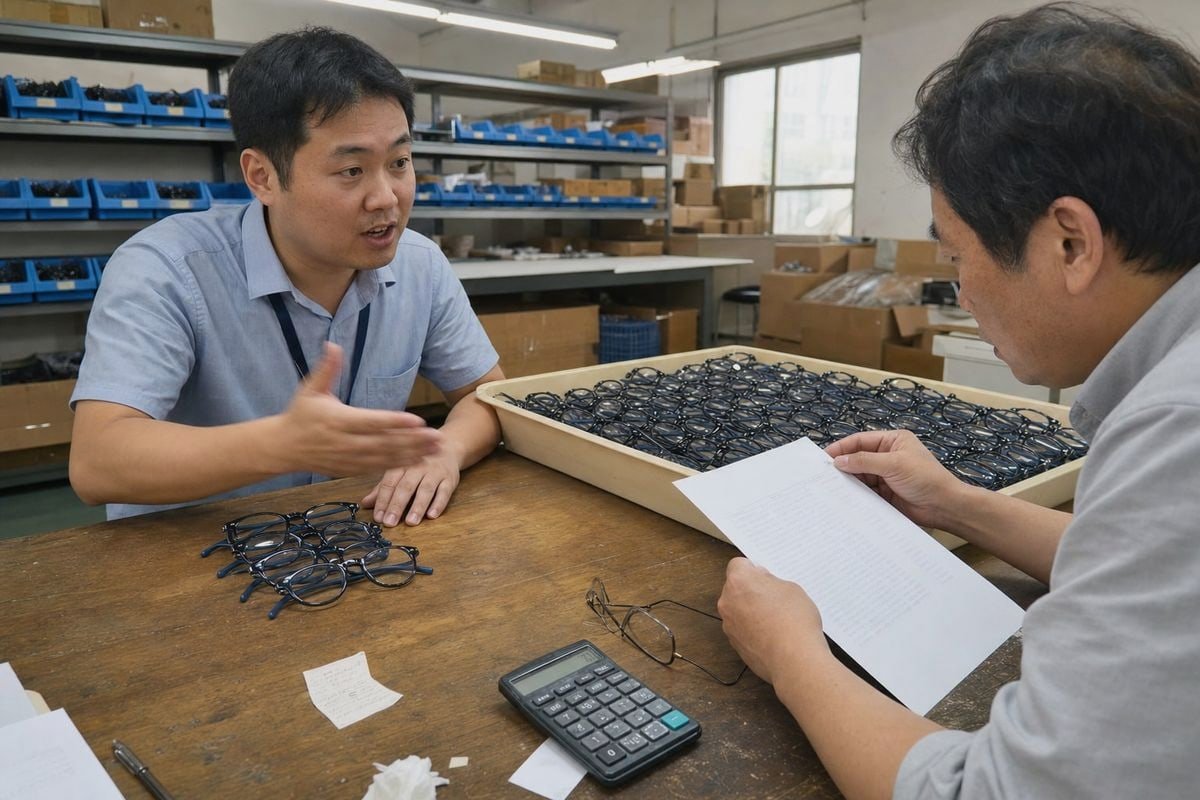
The math behind these savings is simple economies of scale. Every production run carries fixed costs: machine setup, color matching, quality inspection planning, and packaging preparation. At 100 units, each frame absorbs a big slice of those costs. At 1,000 units, each frame absorbs a tiny slice. That is why the unit price drops fast at first, then levels off as it approaches the raw variable cost of material and labor.
Typical Savings by Quantity Tier
Based on the tiered pricing structure we quote most often for our catalog styles, here is a realistic picture:
| Order Quantity | Typical Discount vs. Base Price | What Drives the Savings |
|---|---|---|
| 50–100 pieces | 0–5% | Stock styles only, minimal setup dilution |
| 100–300 pieces | 5–10% | Setup costs begin to spread |
| 300–600 pieces | 10–20% | Full production runs, efficient scheduling |
| 600–1,200 pieces | 15–25% | Material bulk buying, freight consolidation |
| 1,200–5,000 pieces | 20–30% | Near-variable-cost pricing, sea freight 3 rates |
Notice how doubling the order does not double the discount. Procurement research shows discounts commonly start at 5–10% when quantity doubles, then shrink with each doubling after that.
Why Price Breaks Work in Steps, Not Slopes
Suppliers use stepped quotations, not smooth curves. Once your order crosses a breakpoint, such as 300, 600, or 1,200 units, the lower price often applies to the entire order, not just the extra pieces. That means ordering 610 units instead of 580 can sometimes lower your total invoice, not just your unit price. Always ask where the next breakpoint sits before you finalize a purchase order.
What MOQ should I plan for if I want the best price breaks on TR90 kids frames?
When we quote TR90 kids optical frames, the trade-off I weigh most is color splits. A buyer wanting 500 pieces across five colors creates five small runs, not one efficient run.
Plan for 300–500 pieces per style for custom TR90 kids frames, ideally split across no more than two or three colors. Stock styles may allow 50–100 pieces per design, while the strongest price breaks typically unlock at 1,000+ pieces per style.
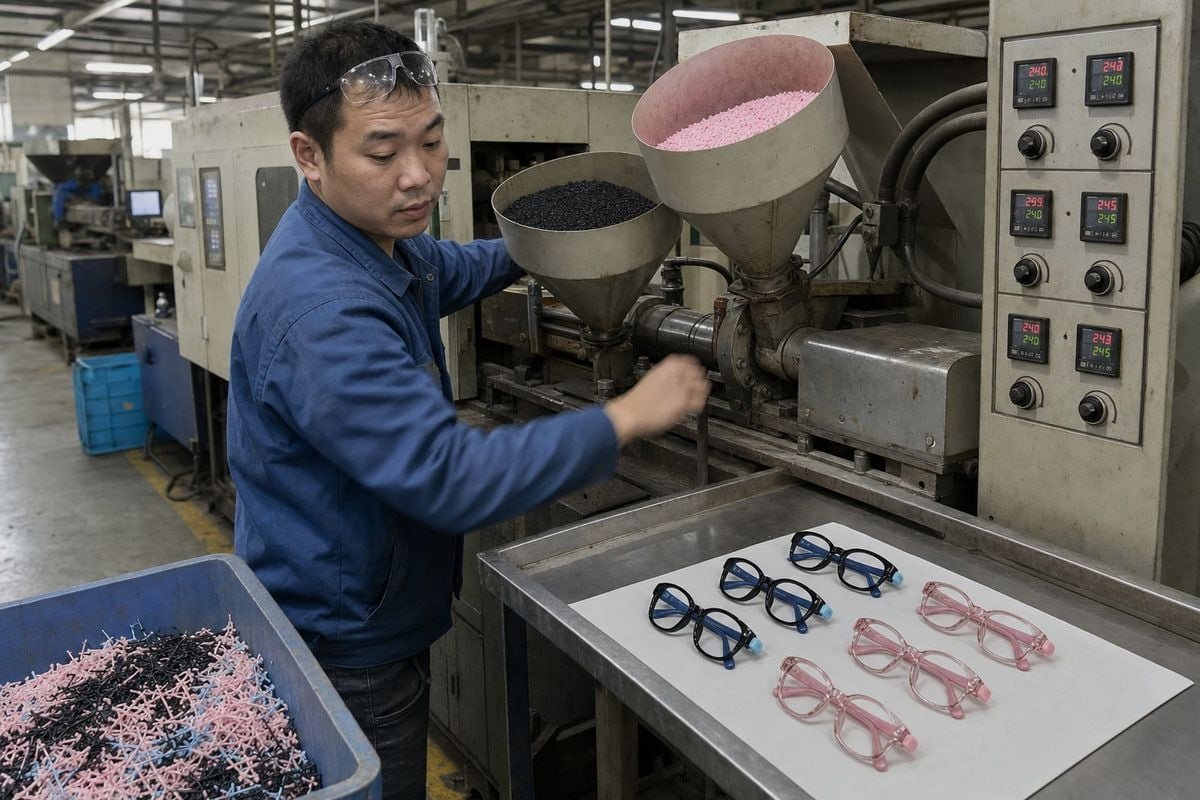
Das Minimum Order Quantity 4 (MOQ) exists because injection molding TR90 involves real setup work. Each color change means purging the machine, recalibrating, and running test shots. TR90 material durability is one of its biggest selling points for children's eyewear, but it also demands precise processing temperatures, so switchovers are not trivial.
Stock Frames vs. Custom OEM Production
Your MOQ planning should start with one question: stock or custom?
| Model | Typische Mindestbestellmenge | Price Level | Am besten geeignet für |
|---|---|---|---|
| Sample program | 10–20 pieces | Highest per unit | Fit testing, photography |
| Stock catalog styles | 50–100 pieces per design | Mäßig | Market testing, fast launch |
| Custom colors on stock molds | 300–500 pieces per style | Lower | Private label eyewear launches |
| Full custom OEM/ODM | 500–1,000+ pieces | Lowest at scale | Established brands scaling up |
Our library of roughly 800 existing styles matters here. Because the molds already exist, buyers can access bulk wholesale pricing behavior at much lower quantities than a fully custom project would require. A brand in Australia can order 100 pieces each of three stock styles and still get workable margins, then scale the winners.
Color Splits Fragment Your Volume
Kids frames are especially sensitive to fragmentation. Styles, sizes, and colorways divide your total volume into small buckets. One thousand pieces sounds like a strong order, but 1,000 pieces split across four styles, two sizes, and three colors becomes twenty-four runs of about forty pieces each. From the factory floor, that looks like twenty-four small orders. Concentrate volume where you can, and your price breaks will follow.
How do tooling and mold costs affect my per-unit price at different order volumes?
A European optical distributor once asked us why a fully custom frame quoted at 500 pieces cost so much more per unit than our catalog version. The answer sat in one line item: the mold.
A custom injection mold adds a fixed cost that must be recovered across production volume. At 500 units it can add several dollars per frame; at 5,000 units it shrinks to cents. Higher volumes amortize tooling, testing, and compliance costs dramatically.

Tooling is the clearest example of fixed-cost dilution in eyewear. The mold price stays the same whether you produce 300 frames or 30,000 frames. Only the denominator changes. This is why buyers chasing fully custom designs at small volumes get quotes that seem out of line with per-piece expectations.
A Simple Amortization Example
Assume a hypothetical custom mold and setup package. Watch what happens to the per-unit share as volume climbs:
| Production Volume | Fixed Tooling Share Per Frame | Effect on Quote |
|---|---|---|
| 300 units | Sehr hoch | Custom design rarely viable |
| 500 units | Hoch | Noticeable premium per frame |
| 1,000 units | Mäßig | Premium becomes manageable |
| 5,000 units | Niedrig | Tooling nearly disappears in price |
| 10,000+ units | Minimal | Pricing near pure variable cost |
Compliance costs behave the same way. Mandatory third-party safety testing for children's products, such as CPSIA and EN71 requirements Consumer Product Safety Improvement Act 5, plus FDA compliance for eyewear entering the US market, carries fixed testing fees. On a 200-piece run, those fees create a real compliance premium per frame. Spread across 1,000+ units, they cost pennies each.
Family Molds and Faster Cycle Materials
Two strategies soften the tooling burden. First, family molds let buyers combine multiple sizes, such as a 42mm and 44mm eye size, in one mold base. You reach higher discount tiers without overstocking a single SKU. Second, material choice shapes cycle time. Our TPEE 6 temples run on fast injection cycles, which means machines produce more parts per hour at scale. That is why injection-molded TR90 and TPEE frames offer more aggressive price breaks at 5,000+ units than labor-intensive, hand-polished acetate ever can. Acetate savings are capped by polishing labor, which does not scale down the way machine time does.
Can I start with a smaller trial order and still get competitive pricing before scaling up?
The lesson I keep repeating to first-time importers: the buyers who succeed with us long-term almost never started with their biggest order. They started small, validated sell-through, and then scaled deliberately.
Yes. Ordering 50–100 pieces per stock style gets you workable trial pricing without mold investment. Expect to pay 10–20% above bulk rates, then negotiate tiered pricing upfront so your repeat orders automatically earn the volume discounts.
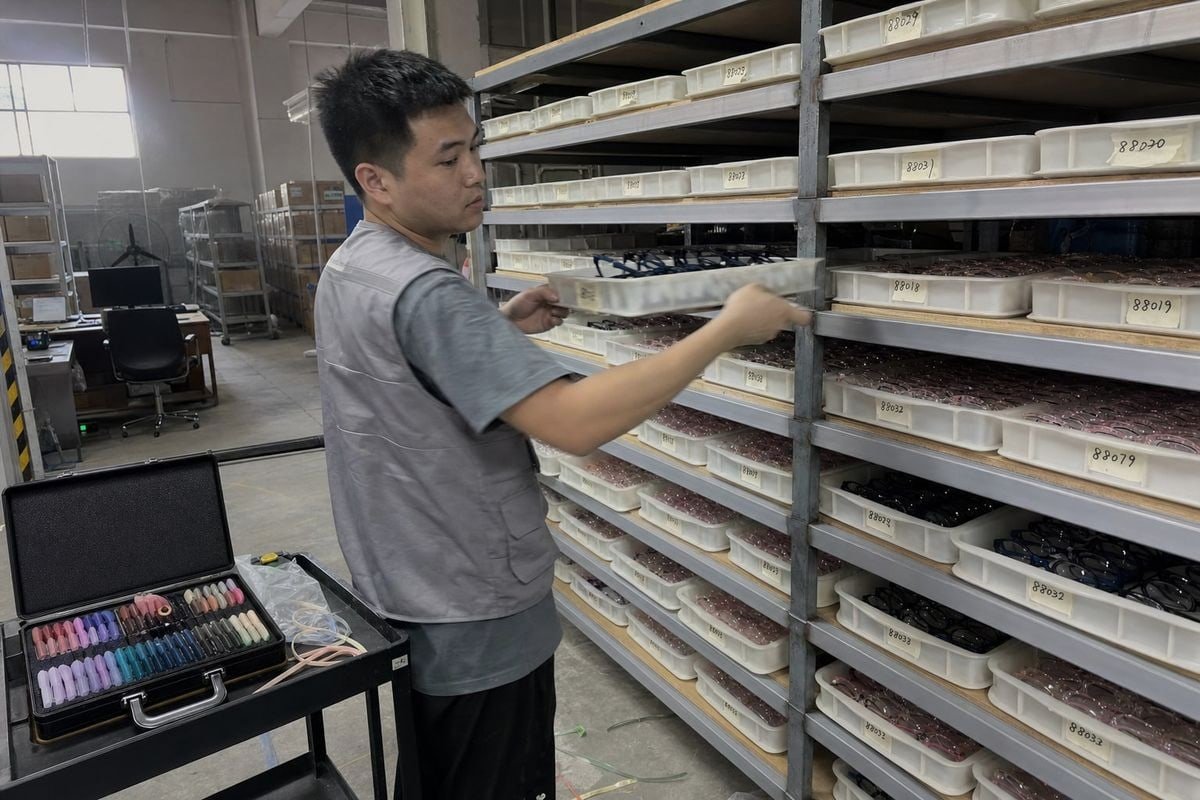
The lowest unit price is not always the best decision. Classic economic order quantity 7 logic proves this. Your true cost includes the purchase price, ordering costs, holding costs, and the risk of obsolete inventory. Kids eyewear styles rotate. Colors trend. A 5,000-piece buy at the best tier becomes expensive fast if 2,000 pieces never sell.
A Practical Path From Trial to Scale
Here is the sequence we recommend to new brands:
- Sample first. Order 10–20 pieces for fit testing, photography, and safety checks. Accept the high per-unit price; it buys certainty.
- Trial with stock styles. Order 50–100 pieces per design from an existing catalog. Our 800-style library exists precisely so buyers can test the market without heavy mold investment.
- Negotiate the tier ladder now. Agree on pricing bands, such as 500, 1,000, and 2,500 units, before your first reorder. Get the breakpoints in writing.
- Skalieren Sie die Gewinner. Concentrate reorder volume into your two or three best sellers instead of spreading it thin.
- Consider blank-stock finishing. Run a high volume of uncolored base frames at bulk pricing, then apply small-batch, trend-driven colors at a modest premium. You lock in scale economics without betting everything on one colorway.
Do Not Forget the Landed Cost
Compare total landed cost calculation, not just the piece price. Larger orders shift you from air-express to consolidated sea freight, which can cut per-unit shipping meaningfully. Bigger orders also often unlock better payment terms, such as reduced deposits, which lowers your cost of capital. Factor in OEM production lead times too; sea freight adds weeks, so trial orders by air and scale orders by sea is a common rhythm. In our experience exporting to buyers in 20+ countries, the brands that model landed cost per frame, rather than FOB price alone, make consistently better quantity decisions.
Schlussfolgerung
Bigger orders cut kids optical frame unit prices 10–30%, but savings flatten after early tiers. Order the smallest quantity that earns a meaningful break, then scale proven winners.
Fußnoten
1. FDA is the authoritative US regulator for eyewear compliance mentioned in the text. ↩︎
2. Background reference explaining the manufacturing process central to frame production costs. ↩︎
3. International Maritime Organization sets standards governing global sea freight shipping. ↩︎
4. Alibaba is a leading B2B sourcing platform where MOQ terms are standard practice. ↩︎
5. Authoritative Wikipedia entry providing a stable and accessible overview of the law. ↩︎
6. Background on the thermoplastic elastomer material used for frame temples. ↩︎
7. Wikipedia explains this classic inventory management model referenced directly in the text. ↩︎
Weitere Artikel, die Ihnen gefallen könnten
August 2026
Bio-Based vs Regular Cellulose Acetate: What's the Difference for Kids' Frames?
August 2026
How Recyclable Are Kids' Optical Frame Materials, and What Eco-Friendly Alternatives Exist?
August 2026
Bleichen Kinderbrillengestelle im Lager aus oder altern sie, und wie kontrolliert man die Lagerbedingungen?
Auf der Suche nach einem zuverlässigen Partner für Kinderbrillen?
Entdecken Sie über 800 sofort verfügbare Modelle und umfassenden OEM/ODM-Support, der auf Ihre Marke zugeschnitten ist.
Kontakt aufnehmen English
  Español de México
  Deutsch
  Français
  日本語
日本語  العربية
  Português do Brasil