How to Issue a CPSC-Compliant CPC for Kids’ Sunglasses from China?
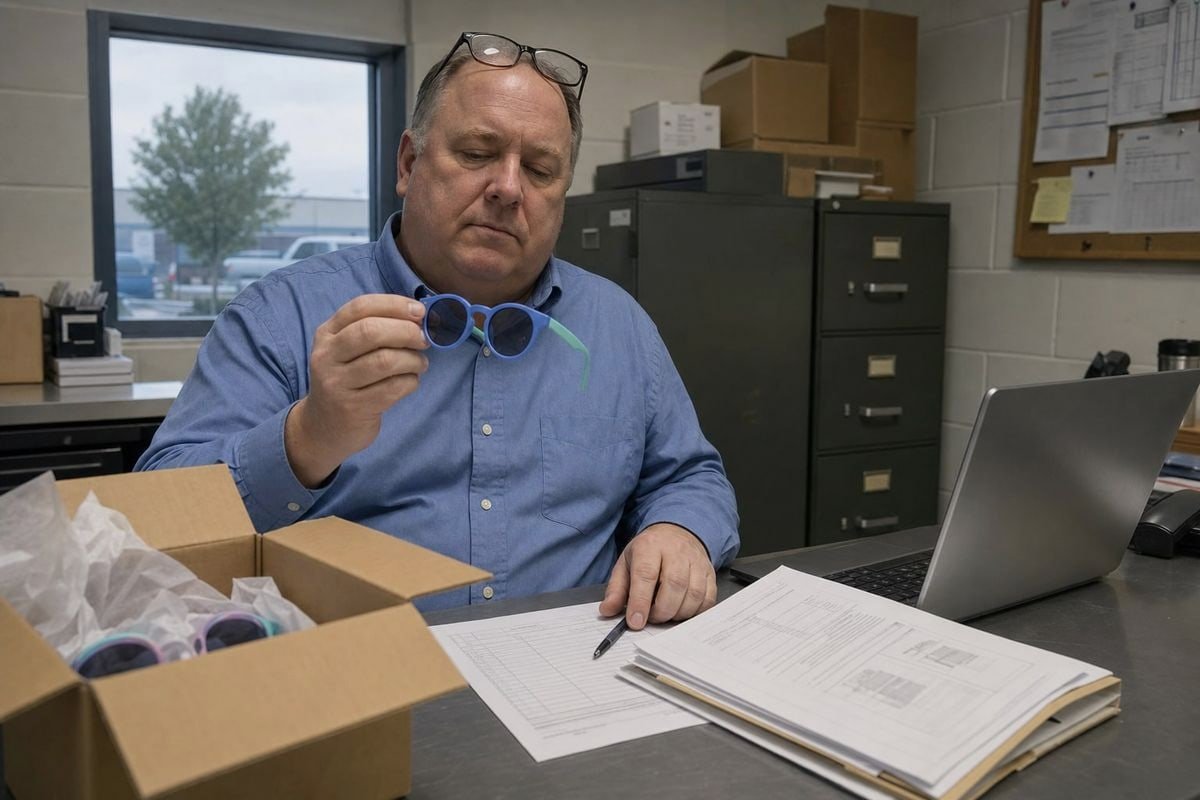
Issuing a CPSC-compliant CPC for kids’ sunglasses trips up many importers. I have watched buyers get shipments held at U.S. customs because our carefully made frames arrived without the right paperwork.
To issue a CPSC-compliant CPC for kids’ sunglasses from China, the U.S. importer must identify all applicable children’s product safety rules, test finished production samples at a CPSC-accepted laboratory, then draft and sign a Children’s Product Certificate containing all seven required data elements.
That short answer hides a lot of detail. Below, I walk through the documents, the standards, the testing workflow, and how to keep your records valid over time.
What documents and test reports do I need from my China supplier to issue a valid CPC?
A buyer from Australia once asked me to "just send the CPC with the sunglasses." I had to explain something important: our factory cannot legally issue that certificate for her.
You need a product safety test report from a CPSC-accepted laboratory, material and component specifications, the factory's name and address, production dates, and tracking label details. The supplier provides these inputs, but the U.S. importer of record must issue the actual CPC.
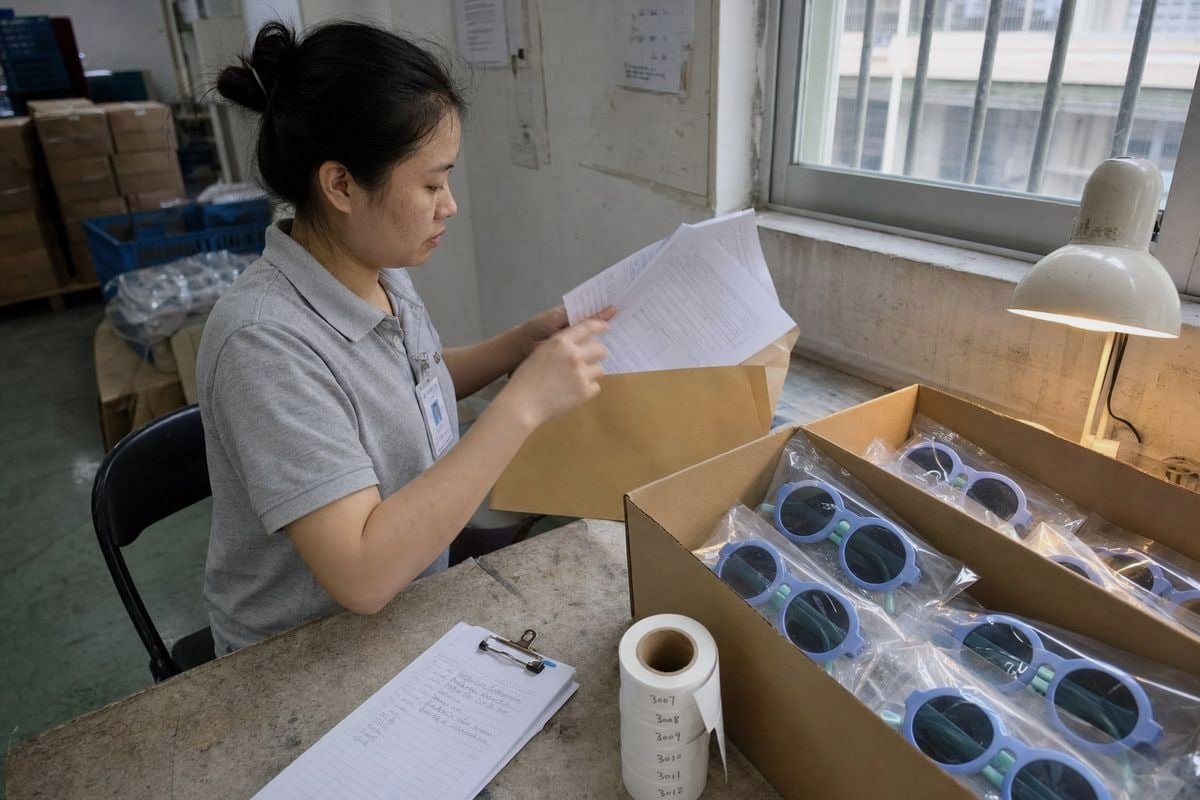
Let me be direct about the biggest misconception in this whole process. Many Chinese suppliers will say they can "provide a CPC." What they usually mean is that they hold an old test report, sometimes for a different color or a different production run. Under CPSIA compliance rules, the CPC is a legal statement issued by the Importeur 1 or the domestic manufacturer. It is never issued by the Chinese factory. Your supplier's job is to give you accurate, verifiable inputs so your certificate is truthful.
The document package to request before shipment
When our customers prepare their certificates, we assemble a standard package for them. Here is what a complete set looks like:
| Dokument | Who prepares it | Why the CPC needs it |
|---|---|---|
| Third-party product safety test report | CPSC-zugelassenes Labor | The legal basis of the certificate |
| Bill of materials and component specs | Factory | Confirms what was actually tested |
| Factory name, address, production dates | Factory | "Date and place of manufacture" field |
| Tracking label artwork and batch codes | Factory + importer | Proves traceability for recalls |
| Photos of sealed production samples | Factory or inspector | Defends against post-entry questions |
A few warnings from our fifteen years of exporting children's eyewear. First, a supplier's in-house lab report does not satisfy the CPC requirement, no matter how professional it looks. Second, a report from a lab with general ISO 17025 accreditation 2 is still not enough; the lab must appear on the CPSC's accepted laboratory list 3 for the specific rules being tested. Third, the test report must match the finished product you are importing — the same lens, the same frame material, the same paint, the same decorations. A report for a periwinkle-blue frame does not automatically cover a new neon-green colorway with a different coating.
We also encourage buyers to keep a sealed "golden sample" from the tested batch. If the CPSC later sends a Letter of Advice, that archived sample plus the matching report is your best defense.
Which CPSC safety standards apply to kids' sunglasses, and how do I confirm my products meet them?
In our Taizhou workshop, we weigh a constant trade-off: bright, playful coatings sell well, but every paint and surface finish adds one more layer that must pass lead limits.
Kids' sunglasses intended for children 12 and under are children's products under CPSIA. They typically require testing for lead in substrates, lead in surface coatings under 16 CFR Part 1303 limits, phthalates in plasticized parts, plus permanent tracking labels. Confirm exact rules for your specific construction.
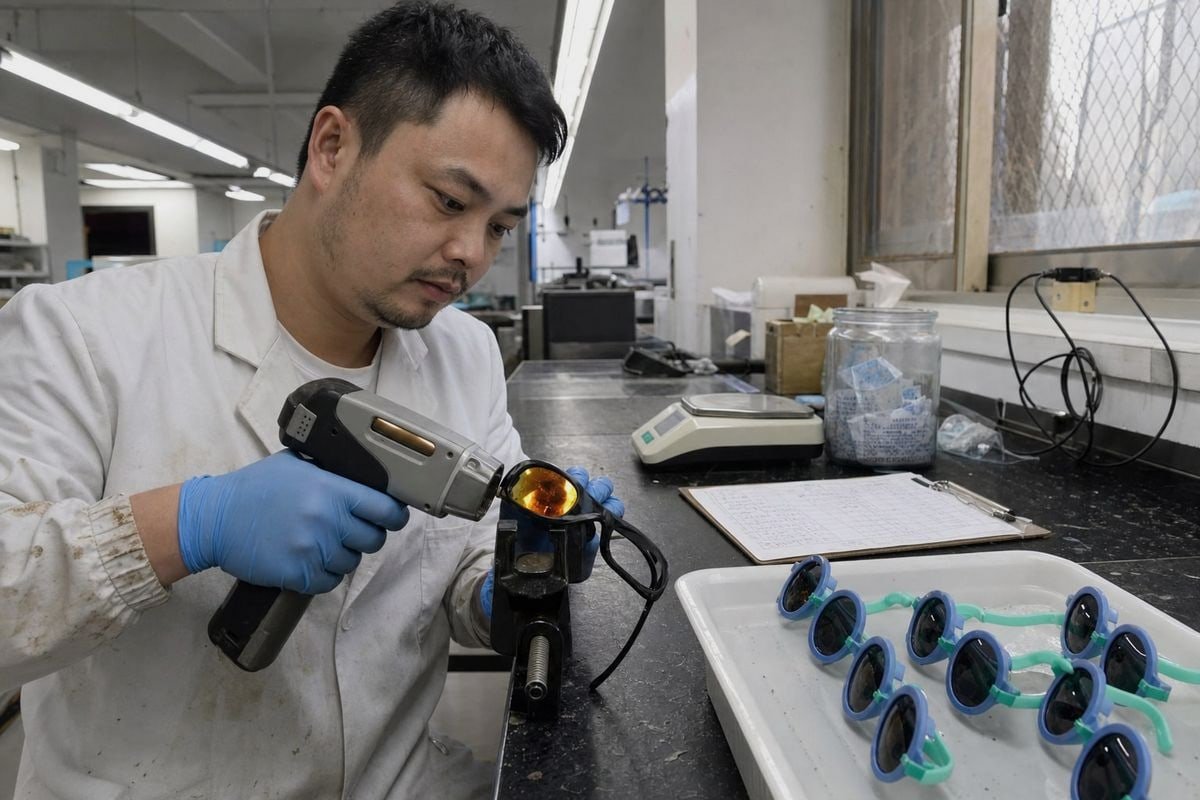
The first question to settle is scope. Sunglasses become a children's product 4 when they are designed or intended primarily for children 12 and under. Our round two-tone frames in soft periwinkle and mint — sized for small faces, made of flexible TPEE — clearly fall into that category. A sport wraparound shield style sold to adults does not trigger a CPC, even from the same factory. Intended audience, sizing, marketing, and packaging all shape that determination, so decide it honestly before you order.
The core children's product safety rules
There is no single "sunglasses rule" at the CPSC, and I always warn buyers against copying a rule list from a toy CPC. Instead, the importer must map each applicable rule to the actual product. For most kids' sunglasses, the commonly applicable children's product safety rules include:
| . Schlagfestigkeitsprüfungen sind eine separate Verpflichtung von CPSIA-Prüfungen. Viele Importeure müssen sich auch bei der FDA als Erstimporteur registrieren und das Produkt als medizinische Klasse-I-Gerät auflisten, um eine Beschlagnahmung der Sendung an der Grenze zu vermeiden. | Typical limit | What it covers on sunglasses |
|---|---|---|
| Lead in substrate materials | 100 ppm | Frame plastic, lens material, metal hinge screws |
| Lead in surface coatings (16 CFR Part 1303) | 90 ppm | Painted frames, printed logos, colored coatings |
| Phthalates (eight restricted types) | 0.1% each | Soft plasticized parts such as rubberized temples and nose pads |
| Tracking label requirements | Permanent marking | Batch data on the product and packaging |
Note that lead and phthalates testing applies to the finished product's accessible components. Our TPEE and TR90 materials are chosen partly because they pass these limits consistently, but the importer still needs the lab report to prove it.
What about optical performance?
ANSI Z80.3 standards cover nonprescription sunglasses 5 — UV transmittance, lens quality, and impact resistance. These are not CPSC children's product rules, so they do not go on your CPC as CPSIA citations. But serious kids' brands test to them anyway, because a UV400 claim 6 on the packaging must be truthful under general FTC rules. We supply UV400 and polarized lens options, and we recommend buyers include a UV transmittance test in the same lab booking to save cost.
Finally, if an exemption or CPSC determination means a specific test is not needed for a material, the rule citation still belongs on your certificate, with the exemption noted in your records.
Can my Chinese manufacturer help me prepare third-party lab testing before I issue the CPC?
Last year, a Japanese kids' brand asked us to coordinate their entire pre-shipment testing round. We pulled production samples straight off the line, sealed them, and couriered them to the lab of their choice within two days.
Yes. A capable Chinese manufacturer can pull true production samples, submit them to a CPSC-accepted laboratory in China, share component test reports under 16 CFR Part 1109, and hold shipment until the report passes. The importer still selects the lab and issues the certificate.
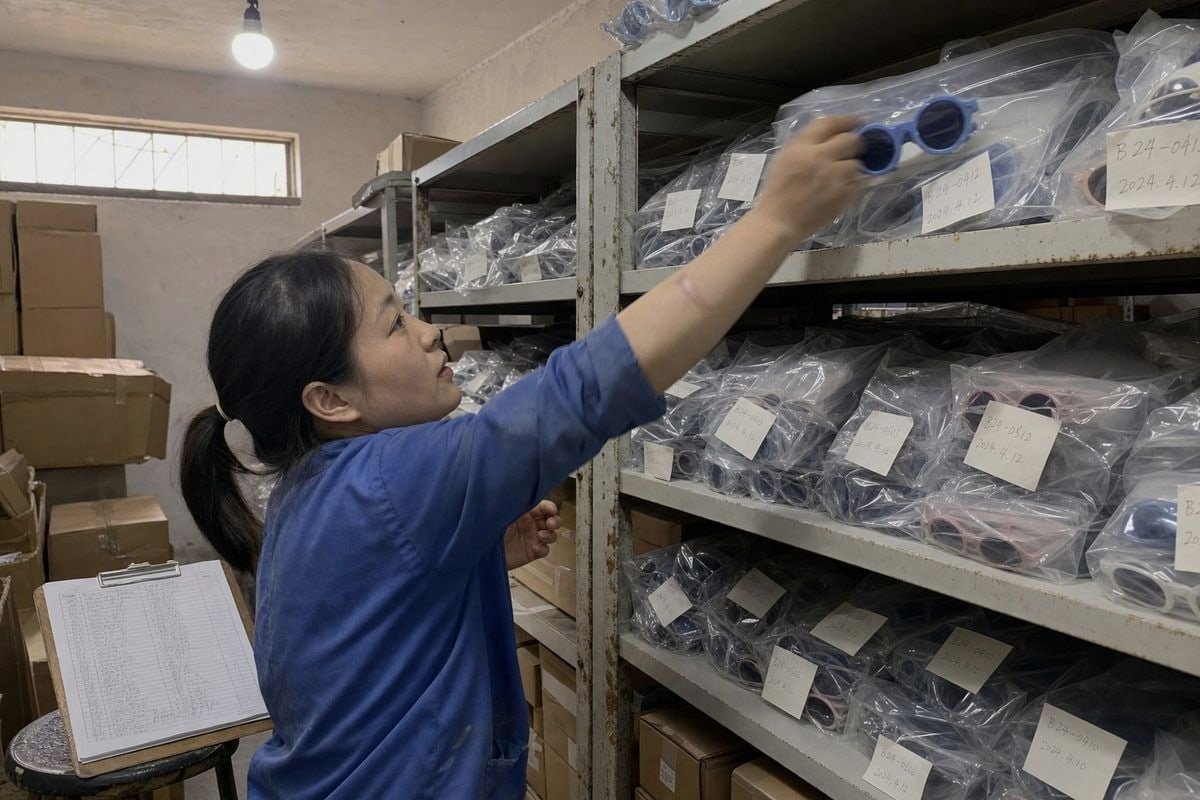
The good news for importers is that many CPSC-accepted laboratories operate branches in China — often in Shanghai, Shenzhen, or Hangzhou, close to eyewear production zones like ours. That means testing can happen before the goods ever leave the factory, which is exactly when you want a failure to surface. Discovering a phthalate problem after the container lands in Long Beach is a far more expensive lesson.
A practical pre-shipment testing workflow
Here is the sequence we run with buyers who are new to CPSIA compliance:
- Confirm the product is a children's product and freeze the final specification — materials, colors, coatings, decorations, packaging.
- The importer identifies every applicable children's product safety rule and selects a CPSC-accepted laboratory. Verify the lab's acceptance on the CPSC website; do not take anyone's word for it.
- We pull random samples from actual mass production, not golden prototypes. Testing a hand-finished prototype defeats the purpose.
- Samples go to the third-party testing lab with a clear test request listing each rule.
- The lab issues the product safety test report with test dates and location — you will need both for the certificate.
- The importer drafts the CPC based on that report, and we ship only after a pass result.
Cutting cost with component testing
One objection I hear often: "Testing every colorway is too expensive." There is a legitimate answer. Under 16 CFR Part 1109, an importer may rely on component-level test reports 7 — for example, certified test data on our TR90 resin or TPEE temple material from the raw material supplier — instead of retesting identical components in every finished style. This works well when a brand launches several models from our existing catalog of roughly 800 styles using shared materials. The importer must still exercise due care, keep the component reports on file, and test anything the component data does not cover, such as new surface paints.
One thing we never do is choose the lab on the buyer's behalf without written instruction. The certificate carries the importer's legal name, so the lab relationship and the test scope should be theirs.
How do I keep my CPC and compliance records up to date if I change materials, colors, or suppliers later?
A hard lesson shaped how we manage change requests today: a client once switched a lens coating mid-season to hit a trend color, assumed the old paperwork still applied, and only caught the gap during an internal audit.
Reissue the CPC whenever a material change occurs — new frame resin, lens coating, paint, decoration, factory, or production site. Retest affected components at a CPSC-accepted laboratory, update tracking labels with new batch data, and retain all reports and certificates for enforcement requests.
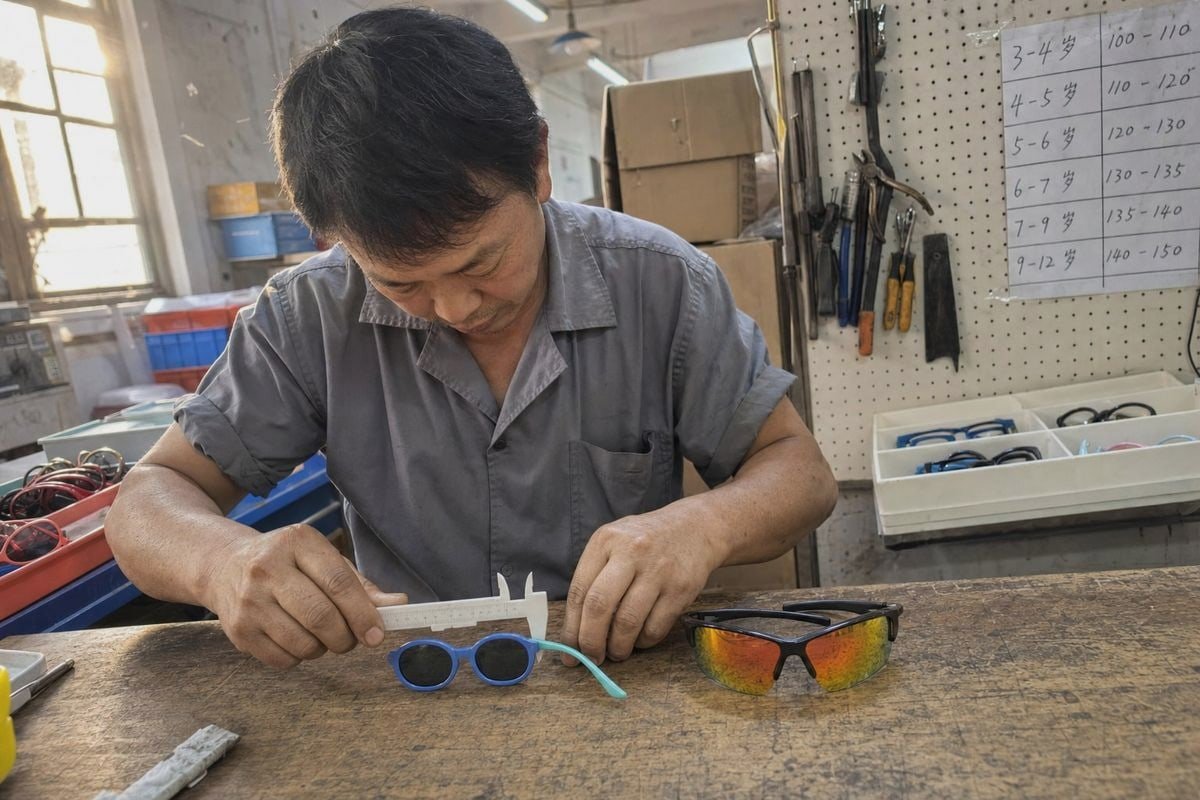
A CPC is not a one-time form. It sits on top of a reasonable testing program that must reflect what you are actually producing today. The CPSC treats a "material change" as any change that could affect the product's ability to comply with an applicable rule. In children's eyewear, changes happen constantly — brands refresh colors every season — so importers need a simple system for deciding when to retest.
Which changes trigger a new certificate?
| Change | New testing usually needed? | Notes |
|---|---|---|
| New surface paint or coating color | Ja | Lead in coatings must be re-verified per 16 CFR Part 1303 |
| New frame or temple material | Ja | Substrate lead and phthalates apply to the new material |
| New decoration, charm, or printed logo | Ja | Any added accessible component needs coverage |
| Switching factories or production sites | Ja | Place of manufacture changes; process differences can affect results |
| Same materials, new size run | Often no | Component test data may still cover it under Part 1109 |
| Packaging-only artwork change | Usually no | But update tracking label details if batch codes change |
Records that keep you safe
Beyond retesting, maintain a live compliance file per SKU: the current CPC, every underlying test report, component certifications, the bill of materials, and the tracking label records tied to each batch. The records contact named on your certificate must be able to produce these documents quickly if the CPSC asks. Some of our customers now embed QR codes on tracking labels, creating a digital product passport that gives retailers and customs officers instant access to the current certificate. That habit will matter even more as CBP moves toward electronic filing 8 of CPC data through its eFile program, expected to become mandatory in 2026. Importers who already keep clean digital records will barely feel the transition. It also pays to cross-verify the "place of manufacture" on every certificate — unauthorized subcontracting to an unvetted factory quietly invalidates your paperwork, which is why we welcome social audits and production photos from our floor.
Schlussfolgerung
Getting the paperwork wrong can strand your kids' sunglasses at port. Confirm the rules, test at a CPSC-accepted lab, issue the CPC yourself, and keep records current with every change.
Fußnoten
1. Official 16 CFR 1110 regulation confirming the importer’s legal responsibility to issue certificates. ↩︎
2. Wikipedia entry for the international standard for testing and calibration laboratories. ↩︎
3. Official CPSC search tool to verify laboratories authorized to perform required safety testing. ↩︎
4. Official 16 CFR 1200 regulation defining the legal scope of children’s products. ↩︎
5. Wikipedia overview of international standards for nonprescription eyewear and lens performance. ↩︎
6. FTC resource on advertising standards requiring that product performance claims must be substantiated and truthful. ↩︎
7. Official 16 CFR 1109 regulation detailing requirements for component part testing. ↩︎
8. Official CPSC page detailing the eFiling initiative for submitting certificate data electronically to U.S. Customs. ↩︎
Weitere Artikel, die Ihnen gefallen könnten
August 2026
Sollte die Fabrik die Verpackung und Kennzeichnung von Kinder-Sonnenbrillen übernehmen oder einen bestimmten Lieferanten nutzen?
August 2026
Eigenes Lager vs. Direktlieferung durch den Lieferanten: Was senkt die Retourenkosten für Marken von Kinder-Sonnenbrillen?
August 2026
Direkt zum Lagerhafen oder Lagerung in Übersee: Was spart mehr bei den Versandkosten für Kinder-Sonnenbrillen?
Auf der Suche nach einem zuverlässigen Partner für Kinderbrillen?
Entdecken Sie über 800 sofort verfügbare Modelle und umfassenden OEM/ODM-Support, der auf Ihre Marke zugeschnitten ist.
Kontakt aufnehmen English
  Español de México
  Deutsch
  Français
  日本語
日本語  العربية
  Português do Brasil