How to Handle Defective Kids’ Optical Frames Found During Inspection?
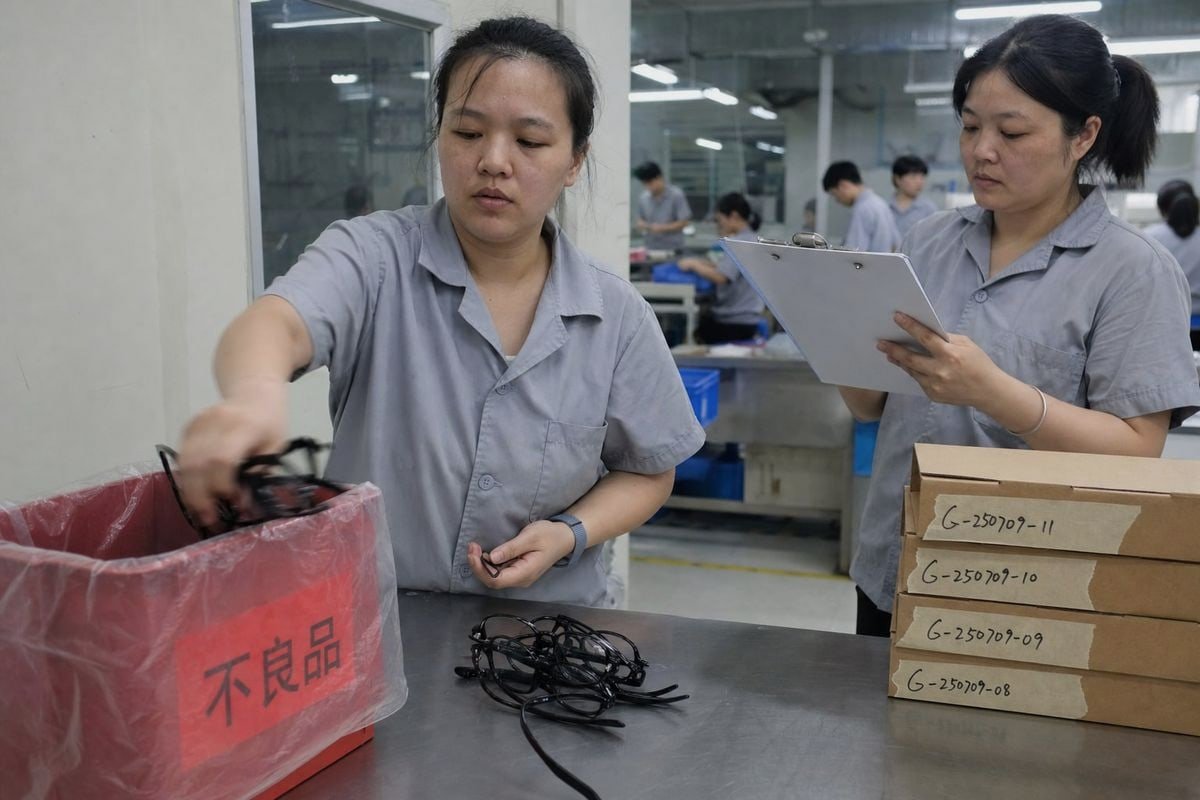
Defective kids’ optical frames slip through more often than buyers expect lead and phthalates 1. On our production line, we catch them daily — and a missed one can hurt a child, a brand, and a relationship.
When you find defective kids’ optical frames during inspection, quarantine the pieces immediately, document each defect with photos and batch data, classify severity against your AQL standard, then decide on rework, batch rejection, or replacement — and require a Corrective Action Plan from your supplier.
That is the short answer. But each of those steps hides real decisions. Let me walk you through how we handle this at our own factory, and what you should demand from any supplier.
What Should I Do If I Find Defective Frames During QC Inspection?
Last year, a QC inspector on our Taizhou floor pulled a carton of TR90 frames with hairline stress marks near the hinge. What happened in the next hour mattered more than the defect itself.
First, stop and isolate the affected units so they cannot mix back into good stock. Then photograph each defect next to its carton label, record batch numbers, count defect types against your AQL plan, and issue a formal defect report before deciding on rework, replacement, or rejection.
The biggest mistake I see new buyers make is treating a found defect as a negotiation moment instead of a process moment. Emotion comes later. Evidence comes first. In our 5S-verwalteten Werkstatt 2, every defective frame goes into a red-labeled quarantine bin within minutes of discovery. That single habit prevents the most expensive failure in eyewear QC: defective pieces flowing back into shipped cartons.
The Five-Step Response We Train Our Inspectors On
- Quarantine. Physically separate the defective frames. Never leave them on the inspection table.
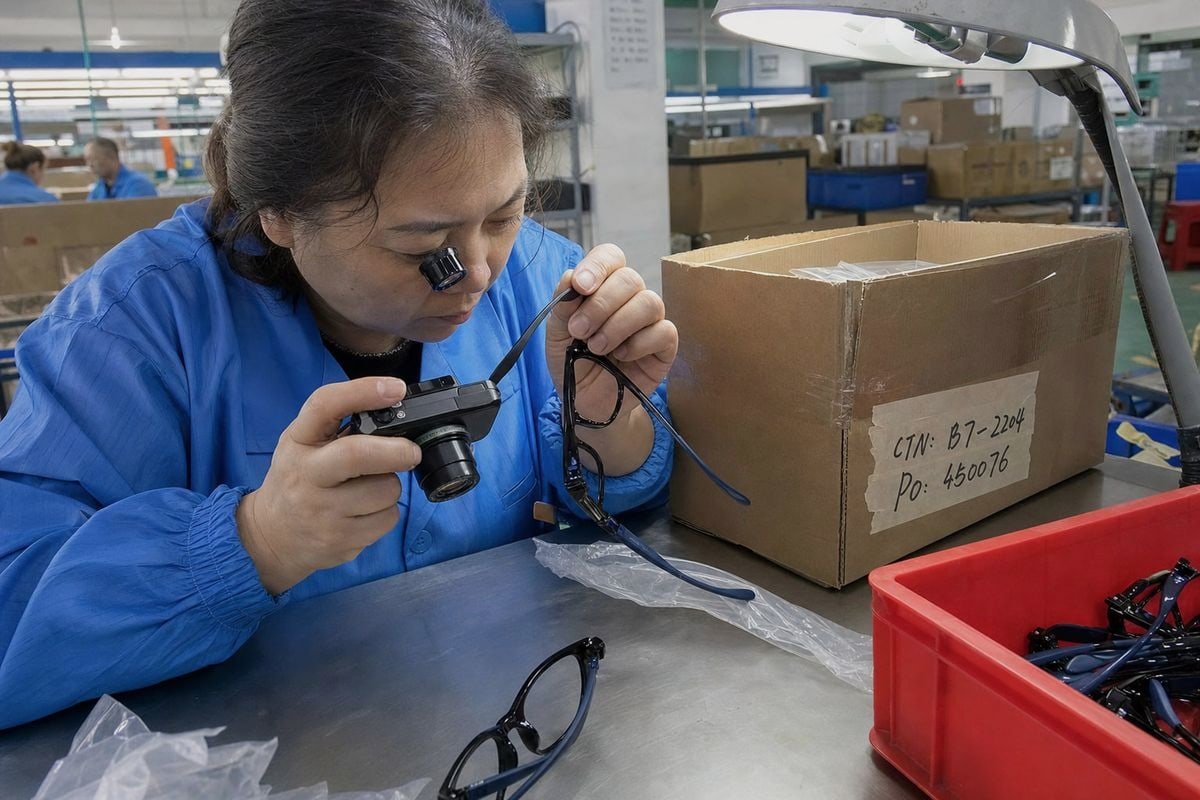
- Document. Take clear photos from front, side, and rear angles. Include the carton label, PO number, and batch code in at least one shot.
- Classify. Log each defect as critical, major, or minor. Count them against your sampling plan.
- Decide. Based on the count and severity, choose rework, sorting, replacement, or full batch rejection.
- Escalate. Send a formal defect report to the supplier within 24–48 hours, while the evidence trail is fresh.
Why Documentation Decides Everything Later
Warranty and accountability disputes almost always come down to evidence. Frame defects from manufacturing are handled very differently from damage caused by handling, drops, or misuse. If your photos show a cracked hinge inside sealed packaging with the batch label visible, no reasonable supplier can argue the defect happened in transit or at retail. We tell our own buyers to keep this evidence for the full warranty window, because a manufacturing defect claim without batch data is just an opinion.
One more practical point: inspect under standardized lighting and a fixed viewing distance. Place frames on a flat surface to check that temples touch evenly. A reproducible inspection method makes your defect report credible; an ad-hoc one makes it arguable.
How Can I Tell If a Defect Is Minor or a Serious Safety Risk?
A buyer from Australia once asked me why we rejected a batch over a "tiny" rough edge on a nose bridge. My answer was simple: tiny edges sit on a child's face for ten hours a day.
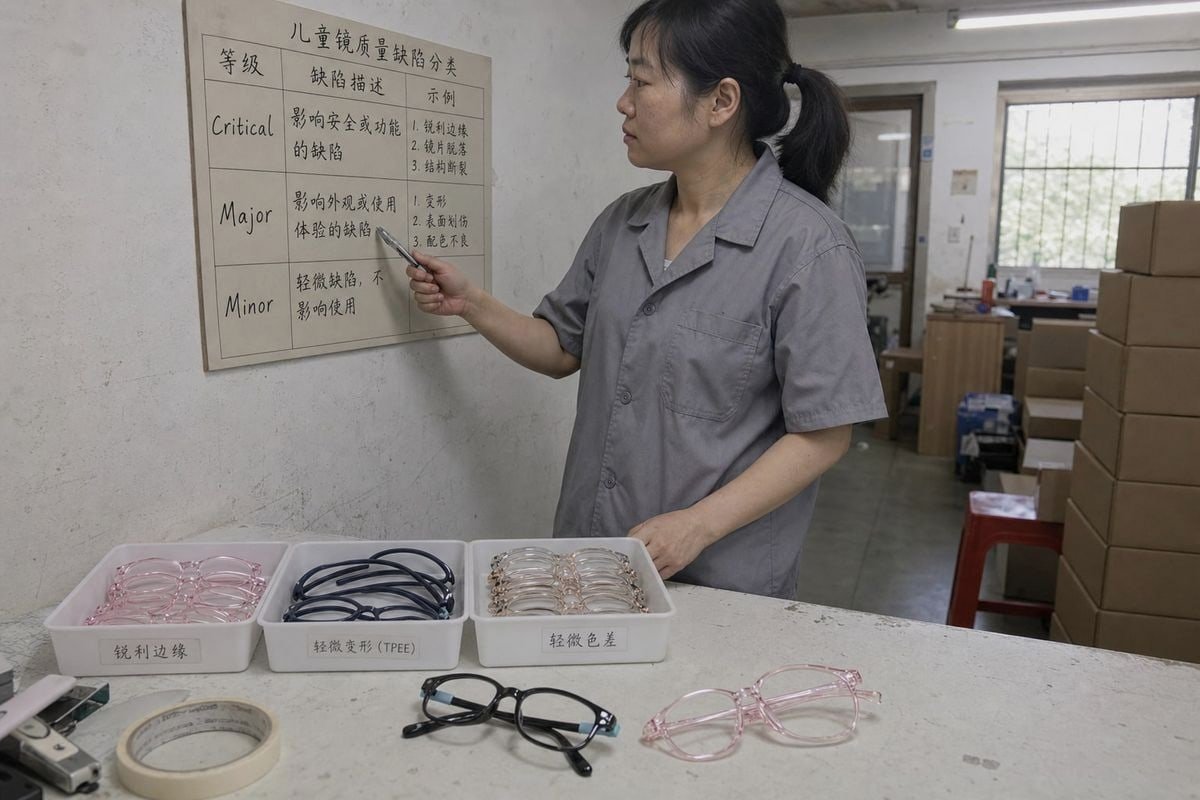
A defect is a serious safety risk if it can injure a child or cause structural failure: sharp edges, exposed metal, loose small parts, cracks, and hinge failures are critical with zero tolerance. Minor defects are cosmetic only — slight color variation or faint surface marks that never affect fit, stability, or safety.
The rule I give every buyer is this: not every flaw is a defect, but any flaw that affects fit, stability, or safety must be treated as one. Children are not gentle users. They run, sweat, pull glasses off with one hand, and sit on them. A flaw that would stay cosmetic on an adult frame can become a failure point on a kid's frame within weeks. That is exactly why we build our kids' optical frames in flexible TR90 with TPEE temples — the material itself removes many of the breakage modes rigid frames suffer.
A Practical Severity Classification Table
| Severity | Beispiele | AQL Tolerance | Aktion |
|---|---|---|---|
| . Kritisch | Sharp edges, loose small parts, exposed sharp metal, chemical non-compliance | Zero tolerance | Reject the unit; investigate the batch |
| . Hauptsächlich | Cracked frame front, broken or stiff hinge, warped temples, lens seating failure, frame asymmetry affecting fit | Typically AQL 2.5 | Reject if over threshold; require rework or replacement |
| . Kleinere | Faint scratches, slight color variation, small finish flaws away from skin contact | Typically AQL 4.0 | Accept within threshold; note in supplier scorecard |
Where Severity Gets Tricky for Children's Eyewear
Some defects sit between categories, and children push them upward. A slightly loose screw is minor on an adult frame; on a child's frame, repeated screw failures mean the lens can pop out during play. Frame asymmetry is another example. A twisted front looks cosmetic, but it shifts the optical center away from the child's pupillary distance 3, which undermines the prescription itself. That makes it a functional defect, not a visual one.
Safety compliance also raises the bar. Kids' frames must meet pediatric safety certification requirements 4 — CPSIA limits on lead and phthalates, nickel release limits on any metal parts, and impact resistance testing for lenses and structures. A frame that fails a chemical or impact requirement is critically defective even if it looks flawless. Appearance tells you almost nothing about compliance; only test reports do.
What Should I Expect From My Supplier's Corrective Action Process?
The trade-off we weigh after every internal defect finding is speed versus depth. A quick fix ships your order on time. A real root cause analysis 5 prevents the same failure next season. Good suppliers do both.
Expect a formal Corrective Action Plan within days, not weeks: written acknowledgment of the defect, root cause analysis, immediate containment of affected stock, a corrective fix with a timeline, a preventive change to the process, and verification evidence — ideally under a documented CAPA procedure.

In fifteen years of making children's eyewear, I have learned that how a factory responds to a defect tells you more than its showroom does. Anyone can promise quality. The CAPA process 6 is where you see whether quality control standards 7 actually exist inside the building.
What a Credible CAPA Response Looks Like
| Phase | What the Supplier Should Deliver | Reasonable Timeline |
|---|---|---|
| Acknowledgment | Written confirmation of the defect report, with the affected batch identified | 24–48 hours |
| Containment | Quarantine of all related stock and work-in-progress at the factory | 2–3 days |
| Root cause analysis | Evidence-based finding, e.g. mold temperature drift, humidity during cooling, or a bad material lot | 1–2 weeks |
| Corrective action | Rework, sorting, or replacement plan for the affected order | Agreed per order |
| Preventive action | A documented process change so the defect cannot recur | Before the next production run |
| Verifizierung | Inspection data from the next batch proving the fix worked | Next shipment |
Red Flags in a Supplier's Response
Watch for three warning signs. First, blame-shifting: if the first reply argues the defect came from shipping before any investigation, the supplier is negotiating, not solving. Second, discounts instead of answers: a price credit with no root cause analysis means the defect will return. Third, vague fixes: "we will pay more attention" is not a preventive action. A real one names a process change — a new incoming material check, a revised hinge assembly torque, an added in-process inspection point.
At our factory, batch-level tracking helps here. Because each run is logged with its material lot and production conditions, we can trace a hinge durability issue back to a specific cause instead of guessing. Ask your supplier whether they can do the same. If a factory cannot trace a defect to a batch, it cannot honestly claim to have fixed it.
How Can I Choose a Manufacturer That Minimizes These Defects From the Start?
The cheapest lesson I ever gave a new brand owner was this: the best defect handling is the inspection report you never have to write. Prevention is a sourcing decision, made months before the first carton ships.
Choose a manufacturer with documented quality control standards at every stage: golden-sample approval, incoming material checks, in-process inspection, hinge durability and flex testing, pediatric safety certification, AQL-based final inspection, and batch traceability. Flexible-material expertise in TR90 and TPEE further removes common breakage defects by design.
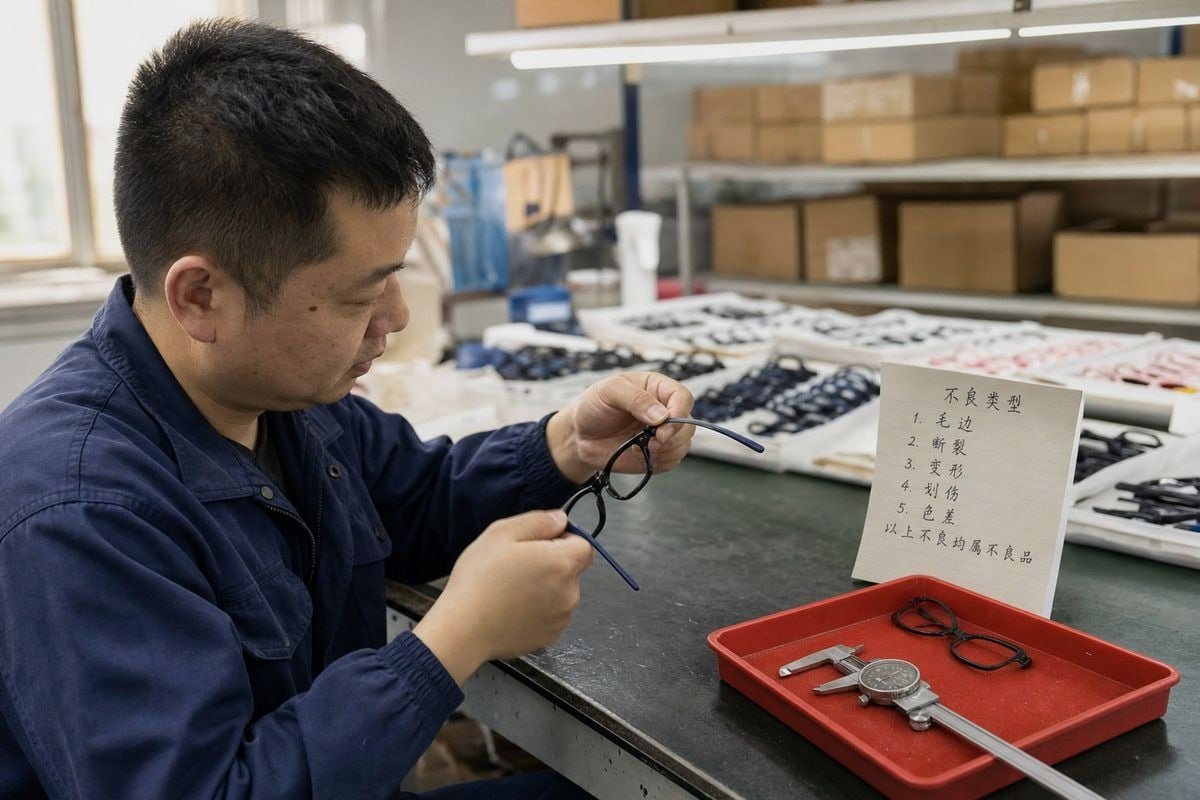
Most manufacturing defects in kids' frames are not random. They come from predictable weak points: rigid materials that crack, hinges that loosen, Spritzgussverfahren 8 stress, and factories that only inspect at the end. A prevention-minded factory attacks each one.
The Prevention Checklist to Audit Before You Order
| Prevention Layer | What to Ask For | Why It Matters for Kids' Frames |
|---|---|---|
| Golden sample | A signed physical benchmark before mass production | Prevents systemic design flaws from being replicated across the whole run |
| Material choice | TR90 fronts with flexible TPEE temples; BPA-free, skin-safe materials | Flexible materials bend instead of snapping and stay comfortable on sensitive skin |
| Incoming checks | Material lot inspection records | Bad resin or plating lots cause batch-wide defects, not single flaws |
| Durability testing | Hinge cycling, temple flex and over-extension tests, drop tests | Active children over-extend temples daily; static tests alone miss this |
| Compliance | CPSIA, impact resistance testing, nickel release test reports | Safety certification failures are critical defects you cannot see |
| Endkontrolle | AQL-based sampling with zero tolerance for critical defects | Catches escapes before they become your customer complaints |
| Traceability | Batch-level tracking of production conditions | Enables real root cause analysis when something does go wrong |
Why Design Choices Prevent Defects Better Than Inspection Does
Inspection finds defects; design removes them. When we developed our kids' optical range — TR90 fronts paired with soft TPEE temples, silicone hinge connectors, and adjustable ear hooks — we were designing out the failure modes we saw most in the field: snapped temples, loosened screws, and slipping fit. A frame that flexes when a child pulls it off one-handed never generates the broken-hinge defect in the first place.
There is also a practical business angle. Because we maintain around 800 existing styles, new brands can start with proven, already-debugged tooling instead of gambling on a fresh mold. Fewer new molds means fewer first-run injection defects, faster launches, and lower risk while you test your market. Full OEM/ODM support — custom colors, logos, lenses, and retail-ready packaging — then layers your brand on top of a stable quality base rather than an experiment.
Schlussfolgerung
Handle defects with process, not panic: quarantine, document, classify by severity, demand a real Corrective Action Plan — then choose a partner whose design and quality control standards prevent defects entirely.
Fußnoten
1. CDC fact sheet explains phthalate exposure risks relevant to children’s product chemical safety limits. ↩︎
2. 5S is a recognized lean manufacturing method for workplace organization that prevents defect mixing. ↩︎
3. Explains the optical concept determining correct lens-center alignment for accurate prescriptions. ↩︎
4. CPSC’s CPSIA statute defines the lead, phthalate, and safety limits referenced for children’s products. ↩︎
Weitere Artikel, die Ihnen gefallen könnten
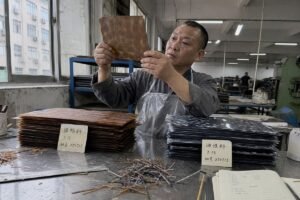
August 2026
Bio-Based vs Regular Cellulose Acetate: What's the Difference for Kids' Frames?
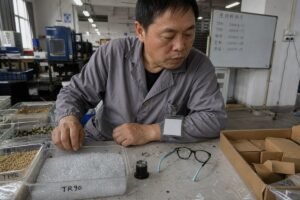
August 2026
How Recyclable Are Kids' Optical Frame Materials, and What Eco-Friendly Alternatives Exist?
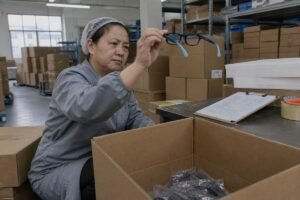
August 2026
Bleichen Kinderbrillengestelle im Lager aus oder altern sie, und wie kontrolliert man die Lagerbedingungen?
Auf der Suche nach einem zuverlässigen Partner für Kinderbrillen?
Entdecken Sie über 800 sofort verfügbare Modelle und umfassenden OEM/ODM-Support, der auf Ihre Marke zugeschnitten ist.
Kontakt aufnehmen English
  Español de México
  Deutsch
  Français
  日本語
日本語  العربية
  Português do Brasil