Wie wirksam sind Sonnenbrillen für Kinder beim Schutz vor Sonnenbrand am Auge?
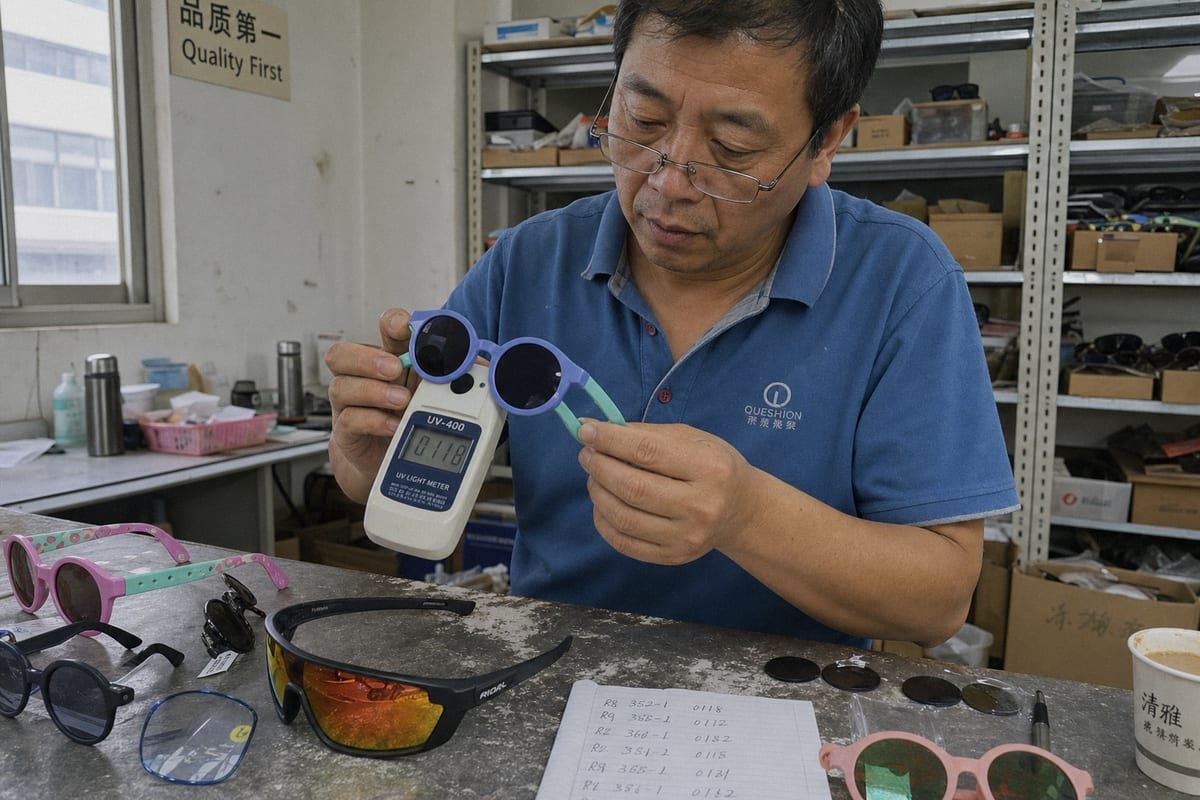
Sonnenbrillen für Kinder verhindern nur Augen-Sonnenbrand 1 wenn die Gläser tatsächlich UV-Strahlen blockieren. An unserer Produktionslinie in Taizhou habe ich unzählige Gläser getestet, die dunkel aussahen, aber fast nichts filterten.
Sonnenbrillen für Kinder sind sehr wirksam beim Schutz vor Sonnenbrand am Auge (Photokeratitis), wenn sie 100 % der UVA- und UVB-Strahlen blockieren, UV400-Schutz bieten und eng genug anliegen, um die seitliche Lichteinstrahlung zu begrenzen. Dunkle Tönung allein schützt nicht; verifizierte UV-blockierende Gläser und ausreichende Abdeckung tun dies.
Die eigentliche Frage ist also nicht, ob Sonnenbrillen funktionieren. Es ist, welche Sonnenbrillen funktionieren. Lassen Sie mich Ihnen zeigen, was wirklich wichtig ist, von den Glasstandards über die Rahmensicherheit bis hin zu den Zertifizierungen.
Welchen UV-Schutzgrad sollte ich bei Sonnenbrillen für Kinder beachten?
Ein Käufer aus Australien fragte mich einmal, warum zwei Gläser mit identischen Tönungen auf unserem UV-Messgerät so unterschiedlich getestet wurden. Dieser Moment fasst das gesamte Thema zusammen: Die Tönung sagt nichts über den Schutz aus.
Achten Sie auf Gläser mit der Kennzeichnung UV400 oder "blockiert 100 % der UVA- und UVB-Strahlen". UV400-Schutz filtert das gesamte ultraviolette Licht bis zu 400 Nanometern und deckt damit das gesamte UV-Spektrum ab, das Photokeratitis verursacht. Die Dunkelheit, Farbe und der Preis der Gläser geben keinerlei Aufschluss über den UV-Schutz.
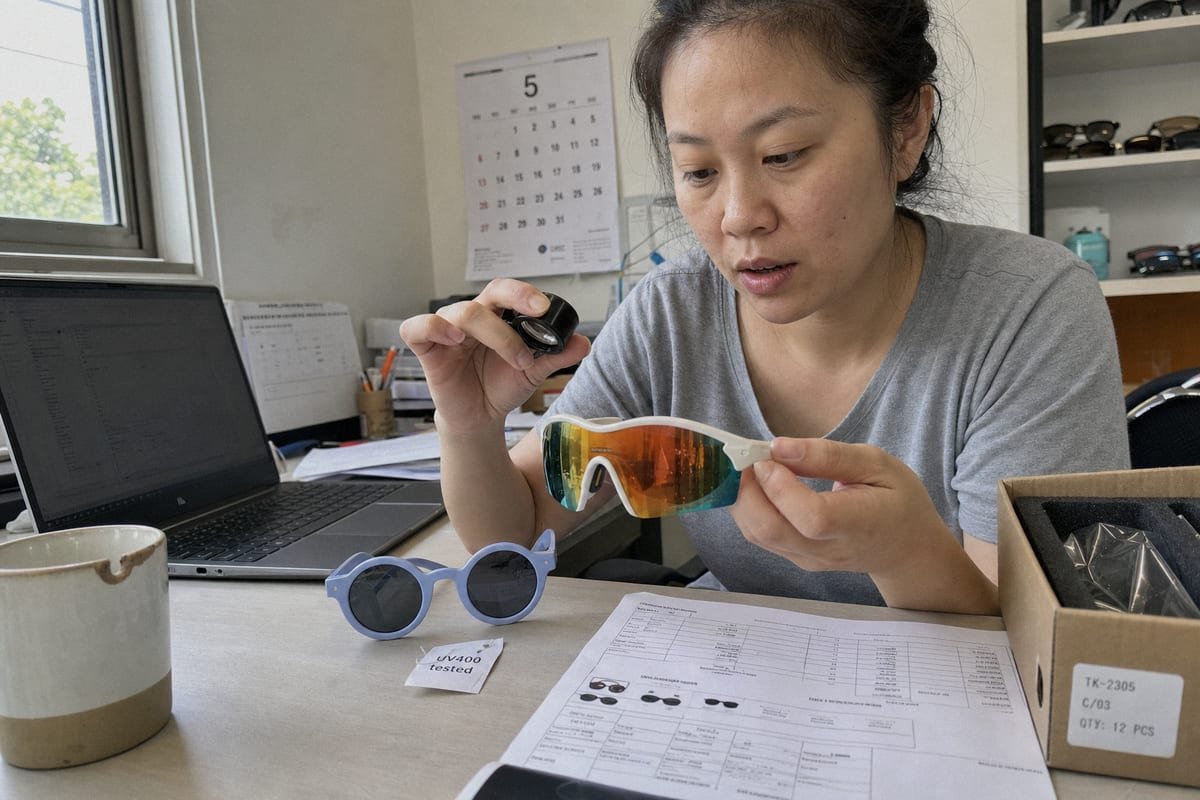
Kinderaugen benötigen einen stärkeren Schutz als Erwachsenenaugen, nicht schwächer. Die Linse eines Kindes ist klarer als die eines Erwachsenen, sodass im Kindesalter deutlich mehr UV-Strahlung auf die Netzhaut trifft. Okulare Sonnenschäden sind kumulativ – Katarakte, Pterygium und Netzhautveränderungen lassen sich auf lebenslange Exposition zurückführen, die in den frühesten Jahren beginnt. Deshalb verwenden wir standardmäßig UV400-Linsen für unser gesamtes Kindersortiment, auch für CE-konforme Bestellungen, bei denen 380 nm rechtlich ausreichen würden. 2 ist klarer als die eines Erwachsenen, daher filtert sie UV-Strahlen weniger effektiv. Mehr Strahlung erreicht die Netzhaut, weshalb die Netzhautgesundheit im Kindesalter ernsthafte Aufmerksamkeit verdient. Kinder verbringen auch mehr Zeit im Freien. Einige Schätzungen gehen davon aus, dass Kinder etwa dreimal so viel Sonneneinstrahlung pro Jahr erhalten wie Erwachsene, und ein großer Teil der lebenslangen UV-Exposition findet vor dem 18. Lebensjahr statt.
UV400 vs. UV380: Nicht alle Kennzeichnungen sind gleich
Hier ist eine Nuance, die viele Käufer übersehen. Einige Gläser schützen nur bis 380 Nanometer. Das klingt nah an 400, aber der Bereich von 380–400 nm trägt immer noch UV-Energie, die im Laufe der Zeit zu Augenschäden durch Sonneneinstrahlung beiträgt. Wenn wir Gläser in unserer Fabrik spezifizieren, verlangen wir UV400 als Basis für jedes Kindermodell, sei es ein pastellfarbener Kleinkindrahmen oder ein Sportvisier.
| Kennzeichnung | Schutzbereich | Gut genug für Kinder? |
|---|---|---|
| UV400 | Blockiert UV bis 400 nm | Ja — der empfohlene Standard |
| 100 % UVA/UVB | Vollständige UVA- und UVB-Blockierung | Ja — entspricht UV400 |
| UV380 | Blockiert UV bis 380 nm | Teilweise — hinterlässt eine Lücke |
| "UV-Schutz" (nicht spezifiziert) | Unbekannt | Nein — Testdaten anfordern |
| Getönt, keine UV-Angabe | Oft keine | Nein — potenziell schädlich |
Warum Polarisierung kein UV-Schutz ist
Polarisierte Gläser schneidet Blendung von Wasser, Sand und Straßen. Das verbessert Komfort und Sicht, und wir bieten polarisierte Optionen für viele unserer Modelle an. Aber Polarisierung ist eine separate Funktion. Ein polarisiertes Glas ohne UV400-Schutz lässt immer noch UVA- und UVB-Strahlen durch. Überprüfen Sie immer beide Angaben unabhängig voneinander.
Ein weiterer Punkt: UV-Schutz ist das ganze Jahr über wichtig. Schnee reflektiert bis zu 80 % der UV-Strahlen, und Wolken blockieren UV-Strahlen nicht effektiv. Hornhautentzündung 3 durch reflektiertes UV kann bei einem bewölkten Skiurlaub genauso leicht auftreten wie an einem Strand im Sommer.
Können günstige Sonnenbrillen die Augen meines Kindes tatsächlich schädigen, anstatt sie zu schützen?
Während eines Fabrikbesuchs vor einigen Jahren zeigte mir ein europäischer Importeur eine Spielzeugsonnenbrille eines Konkurrenten, die er auf einem Markt gekauft hatte. Wir legten sie unter unseren UV-Tester. Die Gläser blockierten fast nichts.
Ja. Billige dunkle Gläser ohne echten UV-Schutz lassen die Pupille hinter der Tönung erweitern, wodurch mehr UVA- und UVB-Strahlen die Netzhaut erreichen als beim Tragen von gar keiner Sonnenbrille. Spielzeugsonnenbrillen ohne verifizierten UV400-Schutz erzeugen eine falsche Sicherheit.
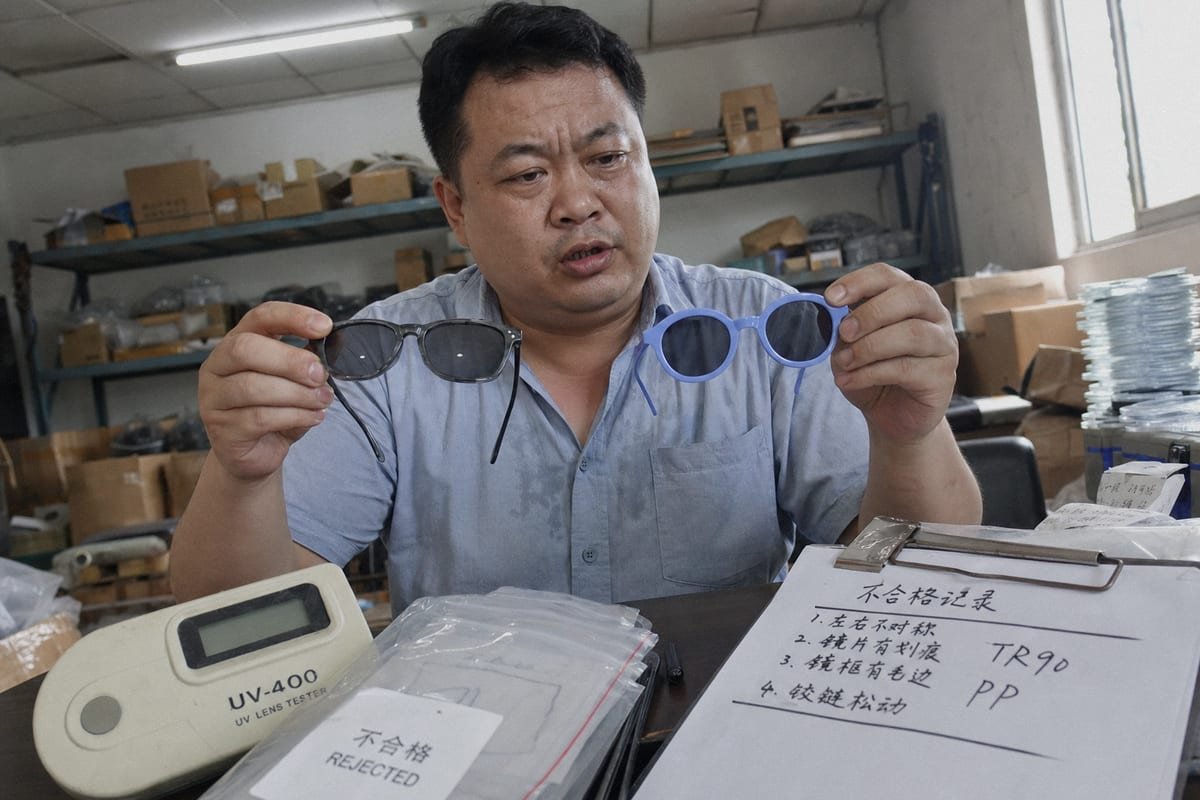
Dies ist der wichtigste Mythos, der in der gesamten Kategorie der Kinderbrillen entlarvt werden muss. Die Pupille ist die natürliche Abwehr des Auges. Bei hellem Licht verengt sie sich und begrenzt die einfallende Strahlung. Setzen Sie ein dunkles, nicht-UV-Glas vor das Auge eines Kindes, und die Pupille entspannt sich und öffnet sich weit. Wenn dieses Glas keine UV-Strahlen filtert, erhält das Auge nun eine größere Dosis genau der Strahlung, die Photokeratitis und langfristige Augenschäden durch Sonneneinstrahlung verursacht.
Die versteckten Risiken jenseits des Glases
Billige Sonnenbrillen versagen in mehrfacher Hinsicht als nur bei der UV-Leistung. In unseren fünfzehn Jahren der Herstellung von Kinderbrillen haben wir die gleichen wiederkehrenden Probleme bei kostengünstigen Importen gesehen:
- Keine Schlagfestigkeit. Spröde Gläser können bei einem Sturz des Kindes oder einem Balltreffer in scharfe Splitter zerbrechen. Polycarbonat-Gläser 4, im Gegensatz dazu, sind schlagfest und bieten einen inhärenten UV-Schutz.
- Unsichere Materialien. Einige minderwertige Kunststoffe enthalten eingeschränkte Substanzen, die niemals stundenlang mit der Haut eines Kindes in Berührung kommen sollten.
- Schlechte optische Qualität. Verzerrte, deformierte Gläser können bei Kindern Kopfschmerzen und Augenbelastung verursachen. ein sich entwickelndes visuelles System eines Kindes.
- Schwache Konstruktion. Lose Scharnierschrauben und scharfe Kanten werden zu Quetsch- und Kratzgefahren.
- Beschichtungsabbau. Billige UV-Beschichtungen können sich bei Hitze zersetzen, z. B. wenn Sonnenbrillen auf einem heißen Armaturenbrett im Auto liegen, und verlieren dabei leise ihre Wirksamkeit.
Kurzfristige Symptome, die Eltern erkennen sollten
Sonnenbrand der Augen ist eine echte, schmerzhafte akute Verletzung der Hornhaut. Typische Anzeichen sind Brennen, Rötung, Tränenfluss, Lichtempfindlichkeit und ein sandiges Gefühl, die normalerweise Stunden nach der Exposition auftreten. Die meisten Fälle klingen innerhalb weniger Tage ab, aber wiederholte Hornhautentzündungen in der Kindheit sind genau das, was eine hochwertige Brille verhindern sollte. Wenn die Symptome anhalten, sollte ein pädiatrischer Augenarzt das Kind untersuchen.
Für Marken, die Sonnenbrillen für Kinder beziehen, ist die Lektion einfach. Ein Produkt, das schützend aussieht, aber nicht schützt, ist eine Haftung, kein Schnäppchen.
Woran erkenne ich, ob ein Rahmenmaterial sicher und bequem genug für den ganztägigen Gebrauch ist?
Der Flexibilitätstest ist der Teil unseres Workshops, den ich Besuchern am liebsten zeige. Wir biegen TR90-Rahmen mit TPEE-Bügeln fast flach, und sie springen zurück. Diese Widerstandsfähigkeit ist das, was das Tragen über den ganzen Tag im Gesicht eines Kindes erfordert.
Ein sicherer Kinderrahmen sollte leicht, flexibel und aus hautfreundlichem, umweltgeprüftem Material wie TR90 oder TPEE gefertigt sein. Er sollte sich biegen lassen, ohne zu brechen, keine scharfen Kanten oder Quetschstellen aufweisen und auch nach stundenlangem Spielen bequem auf Nase und Ohren sitzen.
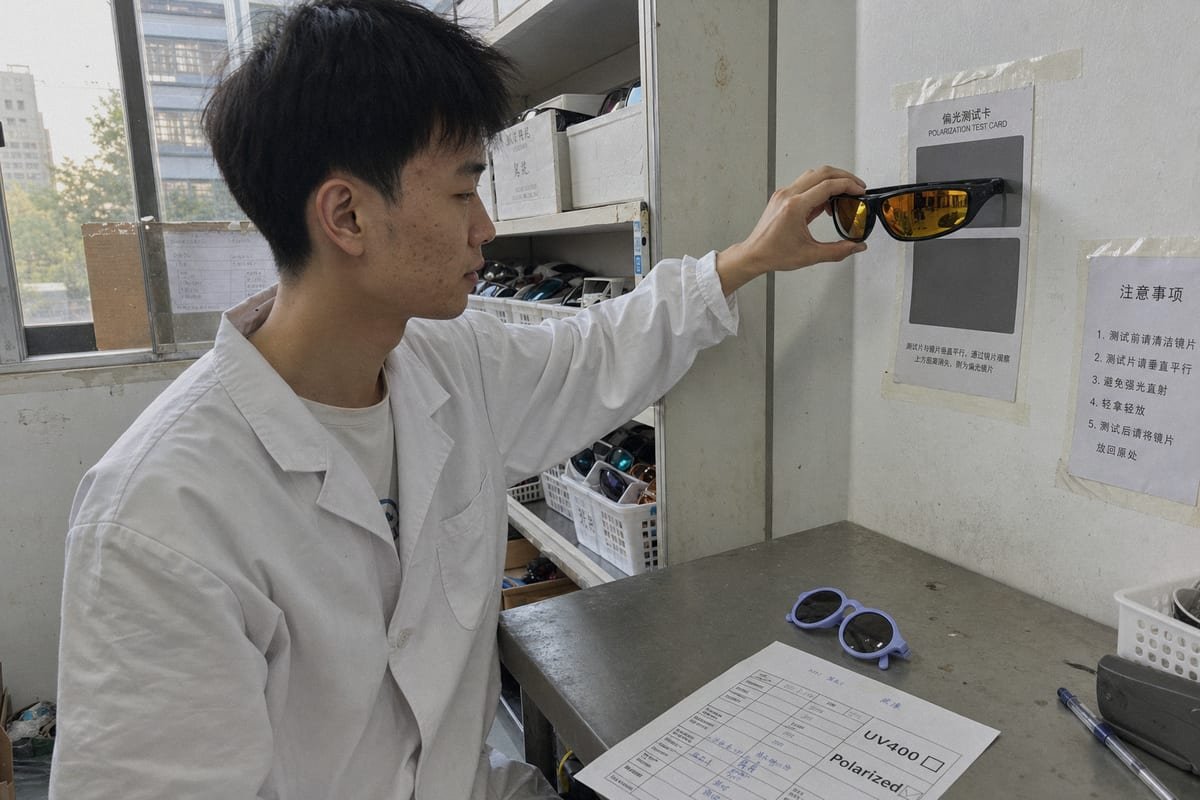
Komfort ist bei Kinderbrillen kein Luxusmerkmal. Es ist ein Schutzmerkmal. Wenn Sonnenbrillen kneifen, rutschen oder sich schwer anfühlen, nimmt ein Kind sie ab. Schutz, der im Rucksack liegt, verhindert nichts. Deshalb entwickeln wir fast ausschließlich flexible Materialien, und deshalb stehen Passform und Tragekomfort im Mittelpunkt jedes neuen Stils, den wir entwickeln.
Vergleich gängiger Rahmenmaterialien für Kinder
| Material | Flexibilität | Gewicht | Bruchgefahr | Komfort den ganzen Tag |
|---|---|---|---|---|
| TR90 | Hoch – biegt sich und erholt sich | Sehr leicht | Sehr niedrig | Ausgezeichnet |
| TPEE | Sehr hoch – gummiartige Flexibilität | Sehr leicht | Extrem niedrig | Hervorragend für Kleinkinder |
| Standard-PC/Kunststoff | Niedrig – steif | Leicht | Moderat, kann brechen | Mäßig |
| Metall | Niedrig, verstellbar | Schwerer | Niedrig, biegt sich aber aus der Form | Mäßig – Druckstellen |
| Billiger ABS/Spielzeugkunststoff | Sehr niedrig – spröde | Leicht | Hoch | Schlecht |
TR90 ist ein Thermoplast, der für seine formgebende Flexibilität und sein geringes Gewicht bekannt ist. TPEE geht noch weiter und bietet eine weiche, fast gummiartige Haptik, die Verdrehen, Sitzen und Treten übersteht – den alltäglichen Missbrauch des Kleinkindlebens. Unsere beliebteste Konstruktion kombiniert eine TR90-Front mit TPEE-Bügeln und vereint strukturelle Stabilität mit sanften, flexiblen Bügeln hinter den Ohren.
Passformmerkmale, die den Schutz verbessern
Die Rahmengeometrie beeinflusst die UV-Leistung direkt. Untersuchungen zeigen, dass Form, Größe und Passform stark beeinflussen, wie viel UV-Strahlung das Auge erreicht. Ungefähr 20% der UV-Strahlung können von der Seite eindringen, daher reduzieren Wraparound-Rahmen und eine größere Glasabdeckung die seitliche Exposition erheblich. Für Sportmodelle bietet ein Schildglas mit einer engen Krümmung eine fast brillenähnliche Abdeckung. Für Alltagsmodelle suchen Sie nach:
- Gläser, die groß genug sind, um den gesamten Orbitalbereich abzudecken
- Bügel, die sich krümmen, um den Rahmen nah am Gesicht zu halten
- Eine Nasenpassform, die den oberen Spalt klein hält
- Gummiert Bügelspitzen, die beim Spielen ein Verrutschen verhindern
Ein guter Rahmen hält UV-Strahlung von vorne fern und begrenzt, was von den Rändern eindringt.
Welche Zertifizierungen sollte ich vor dem Bezug von Kinder-Sonnenbrillen von einem Hersteller überprüfen?
Dokumentationsfragen sind normalerweise das Erste, was ernsthafte Käufer uns schicken, oft bevor sie nach dem Preis fragen. Nach unserer Erfahrung im Export in über zwanzig Länder verrät das Gespräch über die Papiere die Professionalität eines Lieferanten schneller als jedes Muster.
Überprüfen Sie UV400-Prüfberichte, regionale Sonnenbrillenstandards (ANSI Z80.3 für die USA, EN ISO 12312-1 mit CE-Kennzeichnung für Europa, AS/NZS 1067 für Australien) sowie die Einhaltung von Kindersicherheitsprodukten wie CPSIA oder EN 71, sofern zutreffend, einschließlich Schlagfestigkeits- und Schadstoffprüfungen.
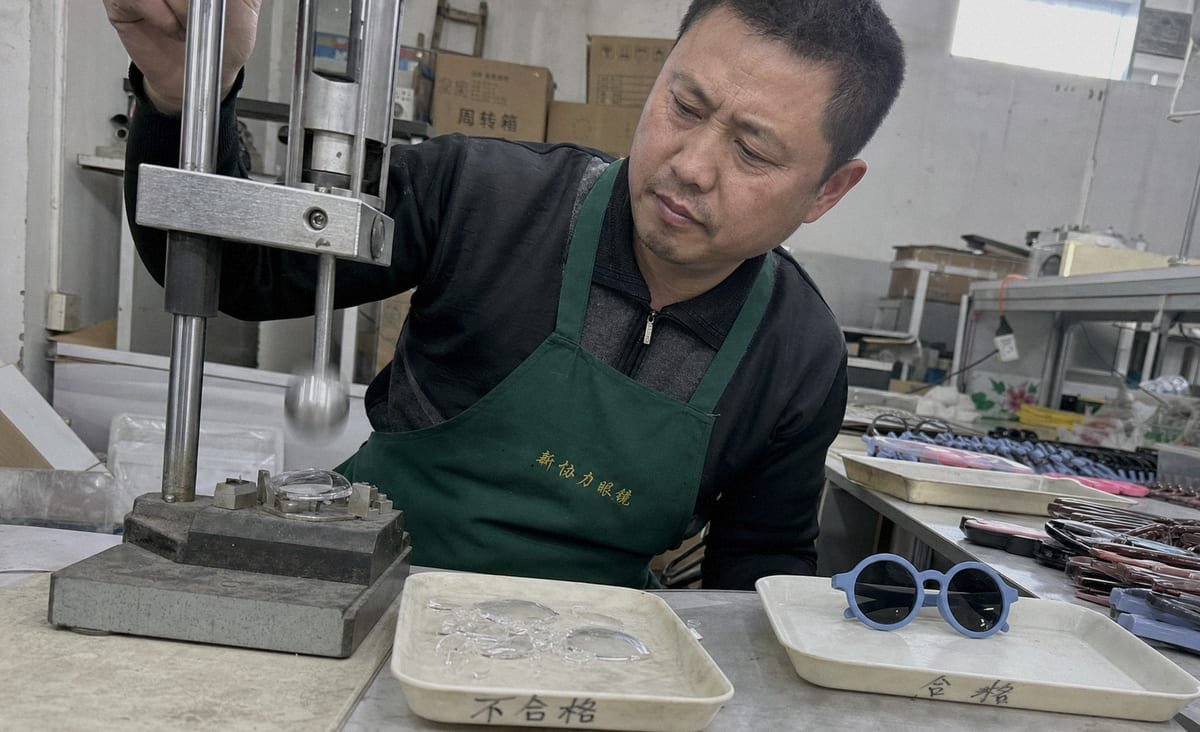
Zertifizierungen existieren, weil "UV-Schutz" auf einem Anhänger nur Tinte ist. Testberichte von akkreditierten Laboren machen aus einer Marketingaussage eine überprüfbare Tatsache. Wenn Marken zu uns kommen, um OEM- oder ODM-Stile zu entwickeln, erklären wir ihnen genau, welche Dokumente ihr Zielmarkt benötigt, denn eine Sendung, die im Zoll festhält, hilft niemandem.
Die Kernstandards nach Markt
| Markt | Schlüsselstandard | Was es abdeckt |
|---|---|---|
| Vereinigte Staaten | ANSI Z80.3 5 | UV-Durchlässigkeit, optische Qualität, Schlagfestigkeit |
| Vereinigte Staaten (Kinder) | Die erste Frage ist immer die Klassifizierung. Sind Ihre Sonnenbrillen wirklich ein Kinderprodukt? Betrachten Sie die Größe, das Marketing, die Verpackung und den beabsichtigten Benutzer. Unsere kompakten runden Rahmen in Periwinkle-Blau mit mint-türkisen Bügeln sind eindeutig für kleine Gesichter konzipiert. Niemand würde argumentieren, dass es sich um Produkte für den allgemeinen Gebrauch handelt. Diese Klassifizierung löst den gesamten Satz von | Blei, Phthalate, Produktsicherheit für Kinder |
| Europäische Union | EN ISO 12312-1 + CE | UV-Filterkategorien, mechanische Sicherheit |
| Australien / Neuseeland | AS/NZS 1067 | Glaskategorien, UV-Leistung (obligatorisch) |
| Japan | JIS T 7333 | Optische und UV-Anforderungen für Sonnenbrillen |
ANSI Z80.3-Standards sind auch für Freizeitmodelle, die in den USA verkauft werden, wichtig, da sie definieren, wie UV-Durchlässigkeit und Linsenqualität gemessen werden. In Europa werden Sonnenbrillen als persönliche Schutzausrüstung 6, reguliert, daher sind das CE-Zeichen und ein EN ISO 12312-1-Prüfbericht nicht verhandelbar. Australien betrachtet die Einhaltung von Sonnenbrillen als zwingendes Gesetz, nicht als freiwillige Richtlinie.
Fragen, die Sie jedem Lieferanten stellen sollten
- Können Sie einen aktuellen, von Dritten geprüften UV400-Prüfbericht für diese spezielle Linse vorlegen?
- Welches Labor hat Ihre ANSI Z80.3- oder EN ISO 12312-1-Berichte ausgestellt und wann?
- Verfügen Ihre Rahmenmaterialien über Daten zu eingeschränkten Substanzen für Produkte für Kinder?
- Wie überprüfen Sie Schlagfestigkeit 7 auf Polycarbonatgläsern?
- Führen Sie eine erneute Prüfung durch, wenn sich Linsenlieferanten oder Beschichtungsprozesse ändern?
Diese letzte Frage trennt Fabriken von Händlern. In unserer nach 5S verwalteten Werkstatt werden eingehende Linsenchargen vor der Montage auf Spezifikationen geprüft, da ein Zertifikat vom letzten Jahr nicht die Produktion dieses Monats garantiert. Ein zuverlässiger Partner behandelt die Einhaltung als Prozess, nicht als einmaliges Dokument.
Schlussfolgerung
Sonnenbrillen für Kinder verhindern effektiv Sonnenbrand der Augen – aber nur mit echten UV400-Gläsern in sicheren, gut sitzenden Fassungen. Überprüfen Sie Prüfberichte, wählen Sie flexible Materialien und arbeiten Sie mit einer Fabrik zusammen, die ihre Behauptungen beweist.
Fußnoten
Hintergrund zu Photokeratitis, dem medizinischen Begriff für UV-bedingten Sonnenbrand der Augen, der im gesamten Text besprochen wird. ↩︎
Erläutert die Augenanatomie, auf die sich beim Vergleich der UV-Filterfähigkeit von Kindern und Erwachsenen bezogen wird. ↩︎
Ersetzte den 403-Fehler durch eine sehr maßgebliche medizinische Anleitung zur Photokeratitis (Hornhautsonnenbrand) der American Academy of Ophthalmology. ↩︎
4.
Weitere Artikel, die Ihnen gefallen könnten

Auf der Suche nach einem zuverlässigen Partner für Kinderbrillen?
Entdecken Sie über 800 sofort verfügbare Modelle und umfassenden OEM/ODM-Support, der auf Ihre Marke zugeschnitten ist.
Kontakt aufnehmen English
  Español de México
  Deutsch
  Français
  日本語
日本語  العربية
  Português do Brasil