How Effective Are Kids’ Sunglasses at Preventing Eye Sunburn?
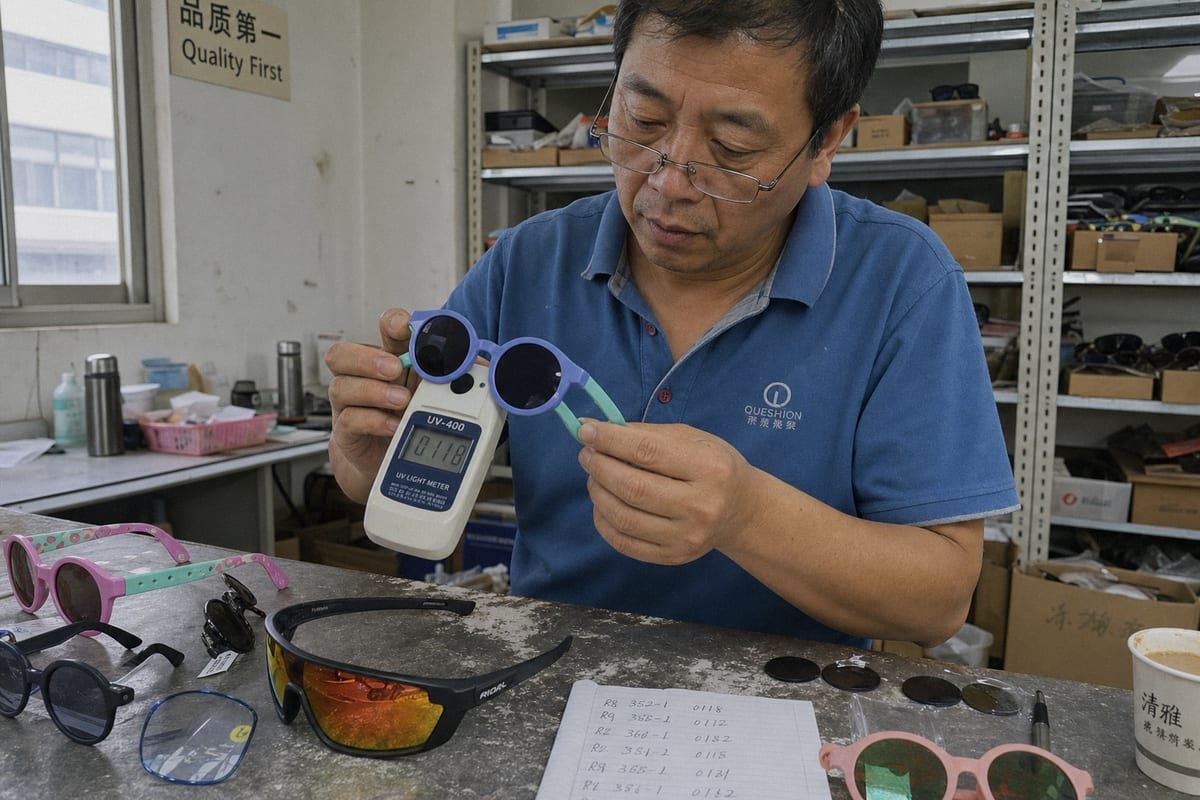
Kids’ sunglasses only prevent eye sunburn 1 when the lenses genuinely block UV. On our production line in Taizhou, I have tested countless lenses that looked dark but filtered almost nothing.
Kids’ sunglasses are highly effective at preventing eye sunburn (photokeratitis) when they block 100% of UVA and UVB rays, carry UV400 protection, and fit closely enough to limit side exposure. Dark tint alone does not protect; verified UV-blocking lenses and proper coverage do.
So the real question is not whether sunglasses work. It is which sunglasses work. Let me walk you through what actually matters, from lens standards to frame safety to certifications.
What UV Protection Level Should I Look for in Kids' Sunglasses?
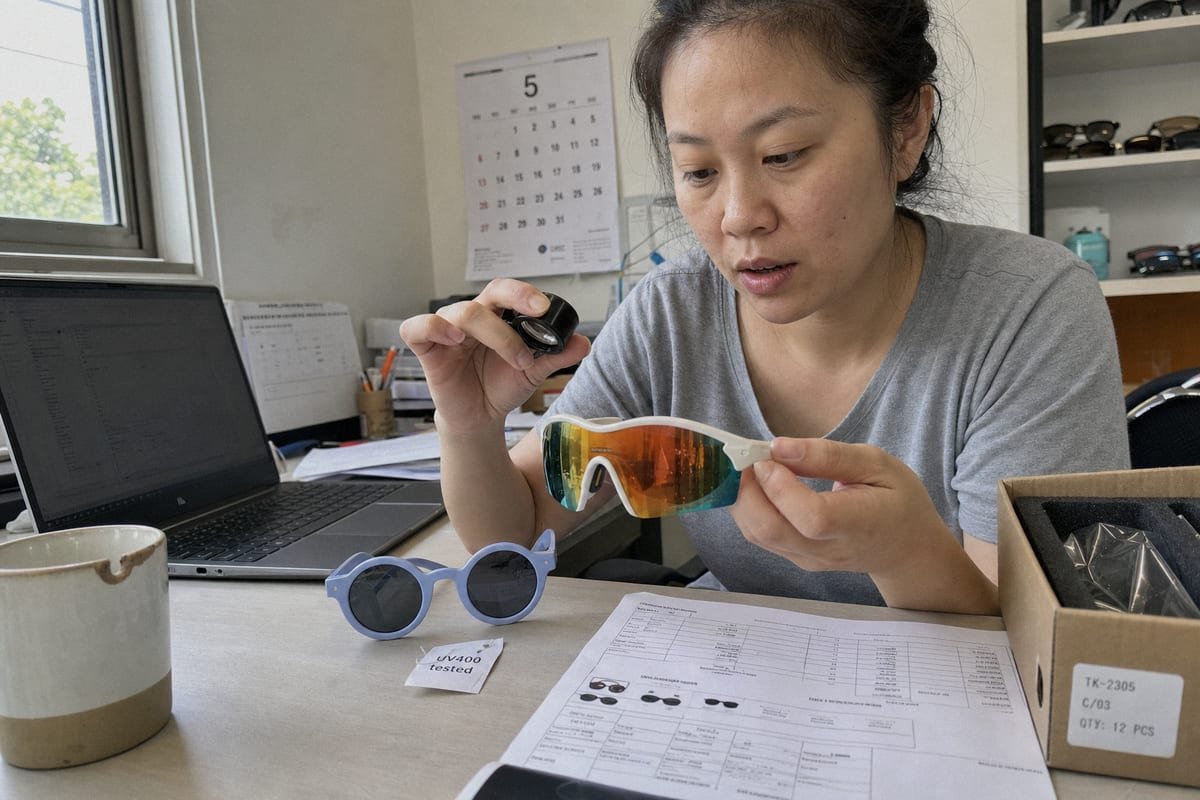
A buyer from Australia once asked me why two lenses with identical tints tested so differently on our UV meter. That moment sums up this entire topic: tint tells you nothing about protection.
Look for lenses labeled UV400 or "blocks 100% of UVA and UVB rays." UV400 protection filters all ultraviolet light up to 400 nanometers, covering the full UV spectrum that causes photokeratitis. Lens darkness, color, and price do not indicate UV protection at all.
Children's eyes need stronger protection than adult eyes, not weaker. A child's est plus clair que celui d'un adulte, 2 is clearer than an adult's, so it filters UV less effectively. More radiation reaches the retina, which is why retinal health in childhood deserves serious attention. Children also spend more time outdoors. Some estimates suggest kids receive around three times the annual sun exposure of adults, and a large share of lifetime UV exposure happens before age 18.
UV400 vs. UV380: Not All Labels Are Equal
Here is a nuance many buyers miss. Some lenses only protect up to 380 nanometers. That sounds close to 400, but the 380–400 nm band still carries UV energy that contributes to ocular sun damage over time. When we specify lenses at our factory, we require UV400 as the baseline for every children's style, whether it is a pastel toddler frame or a sport shield.
| Label | Protection Range | Good Enough for Kids? |
|---|---|---|
| UV400 | Bloque les UV jusqu'à 400 nm | Yes — the recommended standard |
| 100% UVA/UVB | Full UVA and UVB blocking | Yes — equivalent to UV400 |
| UV380 | Blocks UV up to 380 nm | Partial — leaves a gap |
| "UV Protection" (unspecified) | Inconnu | No — demand test data |
| Tinted, no UV claim | Often none | No — potentially harmful |
Why Polarization Is Not UV Protection
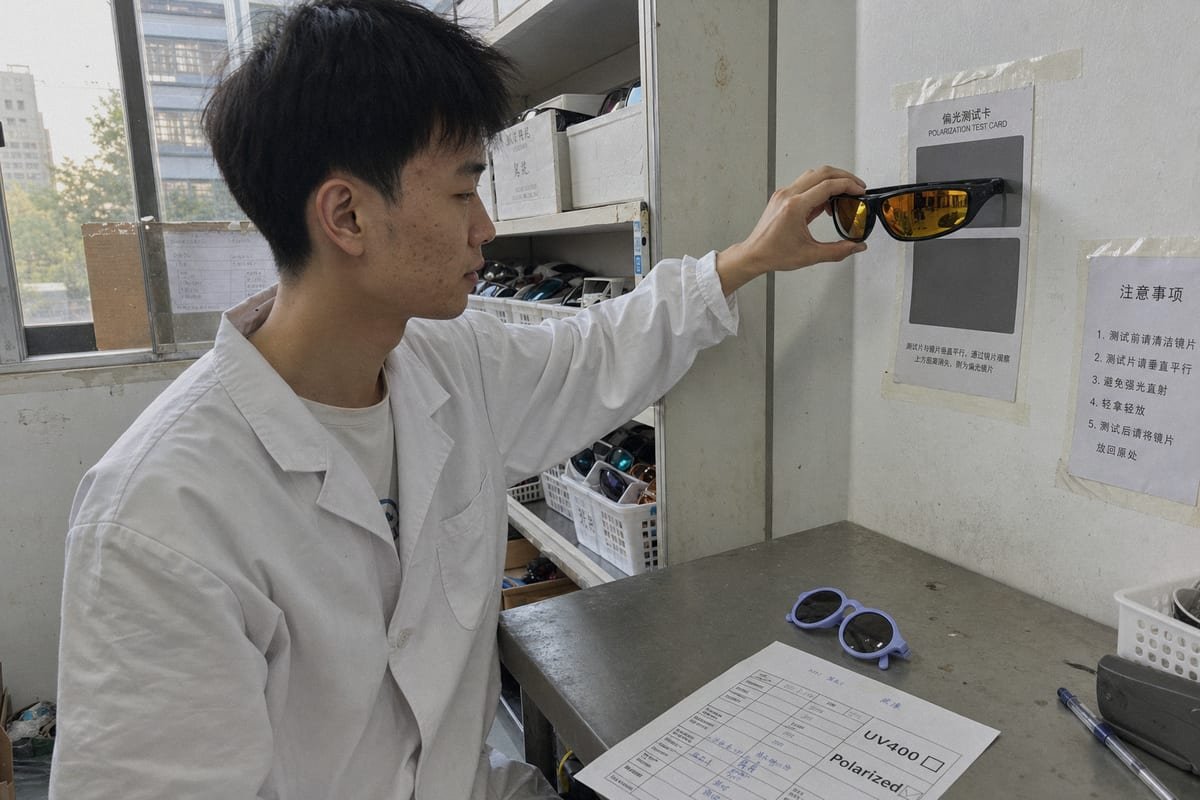
Les verres polarisés cut glare from water, sand, and roads. That improves comfort and visibility, and we offer polarized options for many of our styles. But polarization is a separate function. A polarized lens without protection UV400 still lets UVA and UVB rays through. Always check both claims independently.
One more point: UV protection matters year-round. Snow reflects up to 80% of UV rays, and clouds do not block UV effectively. Corneal inflammation 3 from reflected UV can happen on an overcast ski trip just as easily as at a summer beach.
Can Cheap Sunglasses Actually Harm My Child's Eyes Instead of Protecting Them?
During a factory visit a few years ago, a European importer showed me a competitor's toy sunglasses he had bought at a market. We put them under our UV tester. The lenses blocked almost nothing.
Yes. Cheap dark lenses without genuine UV filtering cause the pupil to dilate behind the tint, allowing more UVA and UVB rays to reach the retina than wearing no sunglasses at all. Toy sunglasses without verified UV400 protection create a false sense of safety.
This is the most important myth to bust in the entire children's eyewear category. The pupil is the eye's natural defense. In bright light, it constricts and limits how much radiation enters. Put a dark, non-UV lens in front of a child's eye, and the pupil relaxes and opens wide. If that lens does not filter UV, the eye now receives a larger dose of exactly the radiation that causes photokeratitis and long-term ocular sun damage.
The Hidden Risks Beyond the Lens
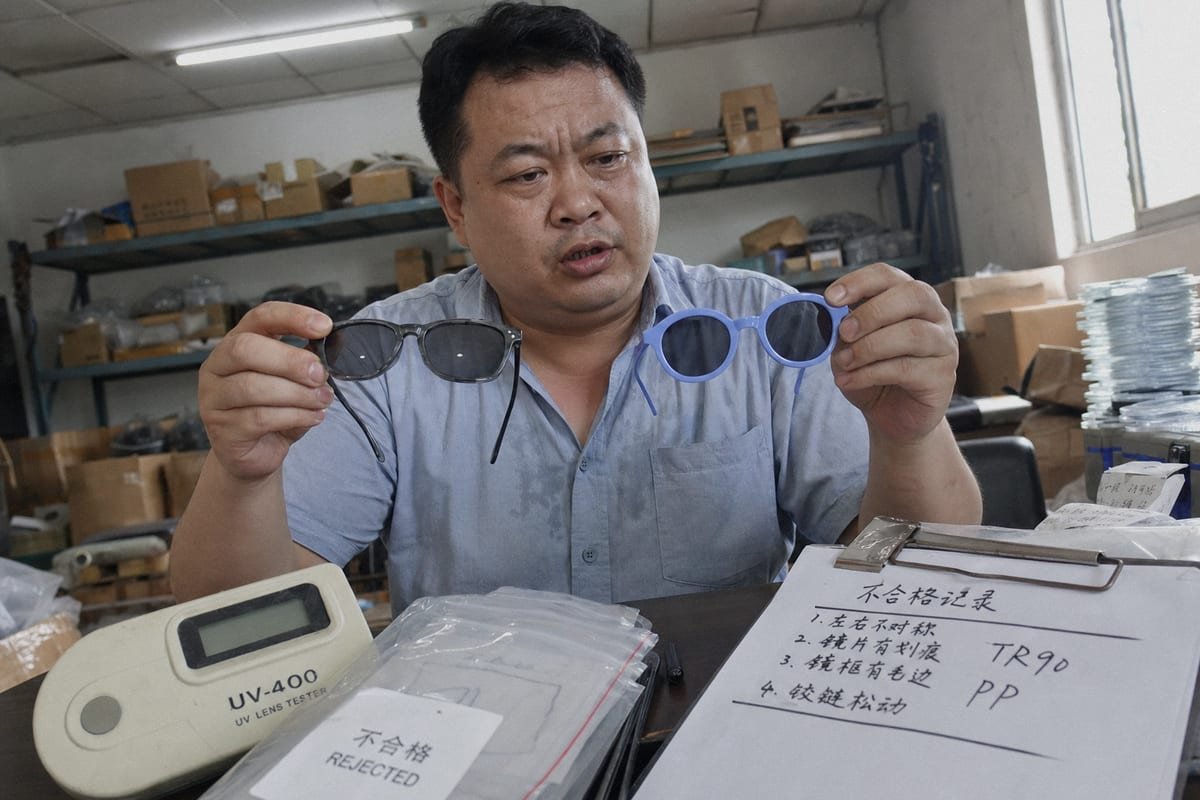
Cheap sunglasses fail in more ways than UV performance. In our fifteen years of making children's eyewear, we have seen the same recurring problems in low-cost imports:
- No impact resistance. Brittle lenses can shatter into sharp fragments when a child falls or gets hit by a ball. Les verres en polycarbonate 4, by contrast, resist impact and carry inherent UV protection.
- Unsafe materials. Some low-grade plastics contain restricted substances that should never touch a child's skin for hours a day.
- Poor optical quality. Warped, distorted lenses can cause headaches and eye strain in a child’s developing visual system.
- Weak construction. Loose hinge screws and sharp edges become pinch and scratch hazards.
- Coating degradation. Cheap UV coatings can degrade with heat, such as when sunglasses sit on a hot car dashboard, quietly losing effectiveness.
Short-Term Symptoms Parents Should Recognize
Eye sunburn is a real, painful acute injury to the cornea. Typical signs include burning, redness, tearing, light sensitivity, and a gritty feeling, usually appearing hours after exposure. Most cases resolve within a few days, but repeated corneal inflammation in childhood is exactly what quality eyewear should prevent. If symptoms persist, a pediatric ophthalmologist should evaluate the child.
For brands sourcing kids' sunglasses, the lesson is simple. A product that looks protective but is not protective is a liability, not a bargain.
How Do I Know if a Frame Material Is Safe and Comfortable Enough for All-Day Wear?
Flexibility testing is the part of our workshop I enjoy showing visitors most. We bend TR90 frames with TPEE temples nearly flat, and they spring back. That resilience is what all-day wear on a child's face demands.
A safe kids' frame should be lightweight, flexible, and made from skin-friendly, environmentally tested material such as TR90 or TPEE. It should bend without snapping, have no sharp edges or pinch points, and stay comfortable on the nose and ears for hours of active play.
Comfort is not a luxury feature in children's eyewear. It is a protection feature. If sunglasses pinch, slide, or feel heavy, a child takes them off. Protection that sits in a backpack prevents nothing. This is why we design almost exclusively around flexible materials, and why fit and wearability sit at the center of every new style we develop.
Comparing Common Frame Materials for Kids
| Matériel | Flexibilité | Poids | Break Risk | All-Day Comfort |
|---|---|---|---|---|
| TR90 | High — bends and recovers | Très léger | Très faible | Excellent |
| TPEE | Very high — rubber-like flex | Très léger | Extremely low | Excellent for toddlers |
| Standard PC/plastic | Low — rigid | Léger | Moderate, can snap | Bon, mais points de contrainte des charnières |
| Métal | Low, adjustable | Peut se fissurer ou se déformer | Low, but bends out of shape | Fair — pressure points |
| Cheap ABS/toy plastic | Very low — brittle | Léger | Élevé | Mémoire de forme |
TR90 is a thermoplastic known for its memory flexibility and low weight. TPEE goes even further, offering a soft, almost rubberized feel that survives twisting, sitting, and stepping — the everyday abuse of toddler life. Our most popular construction pairs a TR90 front with TPEE temples, combining structural stability with gentle, flexible arms behind the ears.
Fit Features That Improve Protection
Frame geometry affects UV performance directly. Research shows that shape, size, and fit strongly influence how much UV reaches the eye. Roughly 20% of UV can enter from the periphery, so wraparound frames and larger lens coverage meaningfully reduce side exposure. For sport styles, a shield lens with a snug curve gives near-goggle coverage. For everyday styles, look for:
- Lenses large enough to cover the full orbital area
- Temples that curve to hold the frame close to the face
- A nose fit that keeps the top gap small
- Rubberized temple tips that stop slipping during play
A good frame keeps UV out from the front and limits what sneaks in around the edges.
Which Certifications Should I Verify Before Sourcing Kids' Sunglasses From a Manufacturer?
Documentation questions are usually the first thing serious buyers send us, often before they ask about price. In our experience exporting to twenty-plus countries, the paperwork conversation reveals a supplier's professionalism faster than any sample does.
Verify UV400 test reports, regional sunglass standards (ANSI Z80.3 for the US, EN ISO 12312-1 with CE marking for Europe, AS/NZS 1067 for Australia), plus children's product safety compliance such as CPSIA or EN 71 where applicable, including impact resistance and restricted-substance testing.
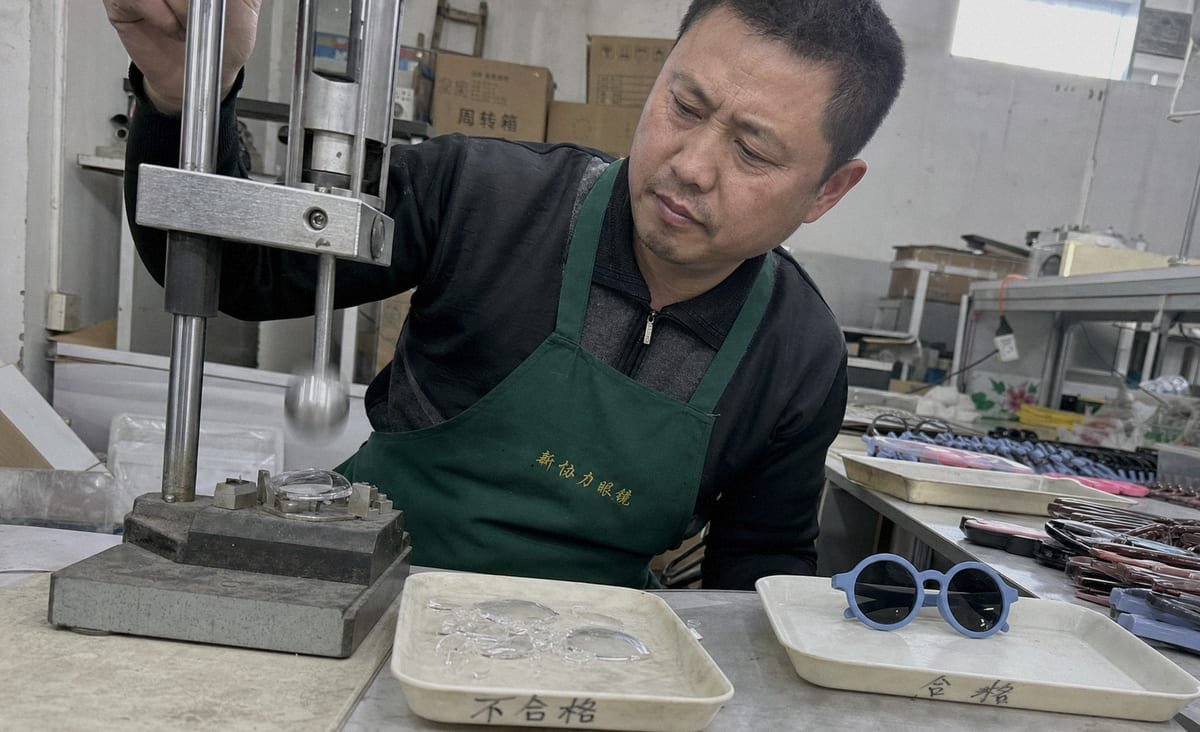
Certifications exist because "UV protection" printed on a hang tag is just ink. Test reports from accredited labs turn a marketing claim into a verifiable fact. When brands come to us to develop OEM or ODM styles, we walk them through exactly which documents their destination market requires, because a shipment held at customs helps no one.
The Core Standards by Market
| Marché | Norme clé | Ce qu'elle couvre |
|---|---|---|
| États-Unis | ANSI Z80.3 5 | UV transmittance, optical quality, impact resistance |
| United States (kids) | exigences CPSIA | Lead, phthalates, children's product safety |
| Union européenne | EN ISO 12312-1 + CE | UV filtering categories, mechanical safety |
| Australie / NZ | AS/NZS 1067 | Lens categories, UV performance (mandatory) |
| Approuvé dans le monde entier | JIS T 7333 | Sunglass optical and UV requirements |
ANSI Z80.3 standards matter even for casual styles sold in the US, because they define how UV transmittance and lens quality are measured. In Europe, sunglasses are regulated as des équipements de protection individuelle 6, so the CE mark and an EN ISO 12312-1 test report are non-negotiable. Australia treats sunglass compliance as mandatory law, not voluntary guidance.
Questions to Ask Any Supplier
- Can you provide a recent third-party UV400 test report for this exact lens?
- Which lab issued your ANSI Z80.3 or EN ISO 12312-1 reports, and when?
- Do your frame materials have restricted-substance test data for children's products?
- How do you verify résistance aux chocs 7 on polycarbonate lenses?
- Do you retest when lens suppliers or coating processes change?
That last question separates factories from traders. At our 5S-managed workshop, incoming lens batches are checked against specification before assembly, because a certificate from last year does not guarantee this month's production. A reliable partner treats compliance as a process, not a one-time document.
Conclusion
Kids' sunglasses prevent eye sunburn effectively — but only genuine UV400 lenses in safe, well-fitting frames. Verify test reports, choose flexible materials, and partner with a factory that proves its claims.
Notes de bas de page
1. Background on photokeratitis, the medical term for UV-induced eye sunburn discussed throughout. ↩︎
2. Explains eye anatomy referenced when comparing children’s versus adult UV filtration ability. ↩︎
3. Replaced 403 error with a highly authoritative medical guide on photokeratitis (corneal sunburn) from the American Academy of Ophthalmology. ↩︎
4.
Plus d'articles que vous pourriez aimer

Vous recherchez un partenaire fiable en lunetterie pour enfants ?
Explorez plus de 800 styles prêts et un support OEM/ODM complet adapté à votre marque.
Contactez-nous English
  Español de México
  Deutsch
  Français
  日本語
日本語  العربية
  Português do Brasil