子供用サングラスは目の日焼け防止にどれくらい効果があるか?
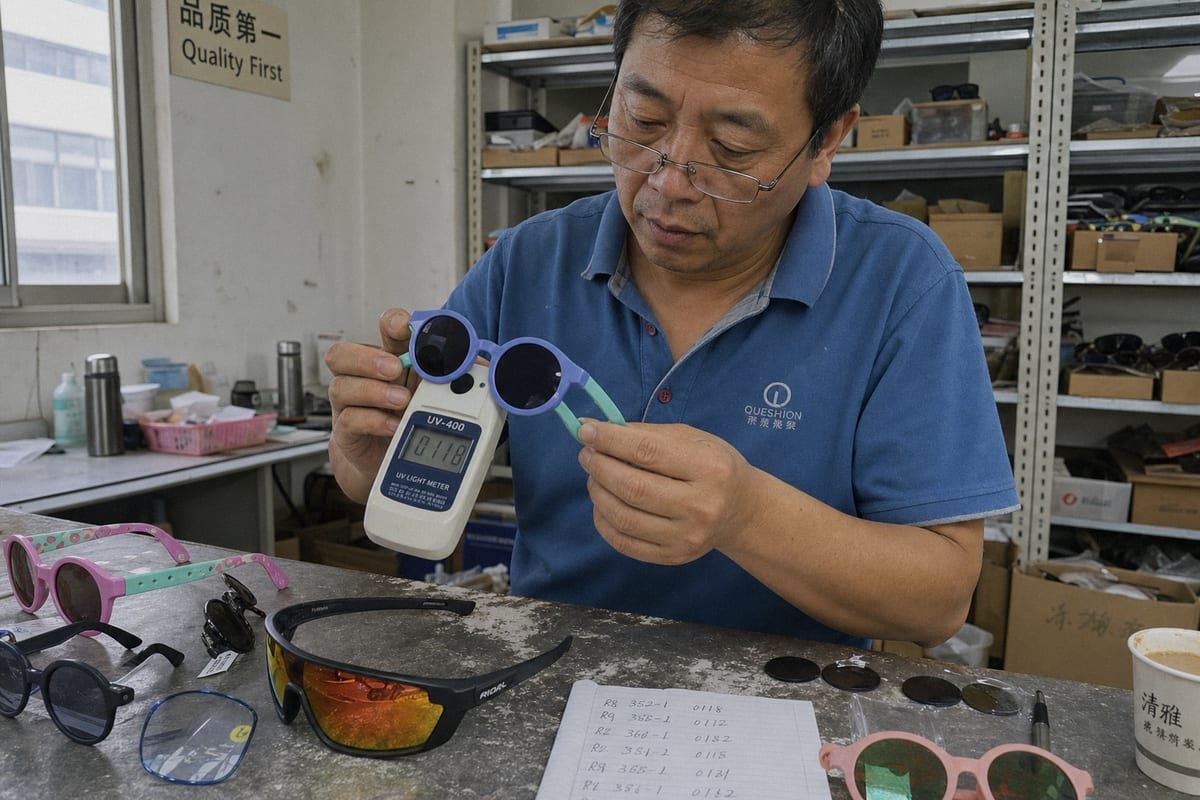
子供用サングラスは、 目の日焼け 1 レンズが実際にUVを遮断する場合にのみ防ぎます。台州の生産ラインでは、暗く見えてもほとんど何もフィルターしないレンズを数え切れないほどテストしました。.
子供用サングラスは、UVAおよびUVB光線の100%を遮断し、UV400保護を備え、側面の露出を制限するのに十分なほど密着している場合、目の日焼け(光角膜炎)を防ぐのに非常に効果的です。暗い色合いだけでは保護になりません。検証済みのUVカットレンズと適切なカバレッジが保護します。.
したがって、本当の問題はサングラスが機能するかどうかではありません。どのサングラスが機能するかです。レンズの基準からフレームの安全性、認証まで、実際に重要なことについて説明します。.
子供用サングラスはどのUVカットレベルを選べばよいですか?
オーストラリアのバイヤーから、同じような色合いの2つのレンズがUVメーターでなぜこれほど異なる結果を示したのか尋ねられたことがあります。その瞬間がこのトピック全体を要約しています。色合いは保護について何も教えてくれません。.
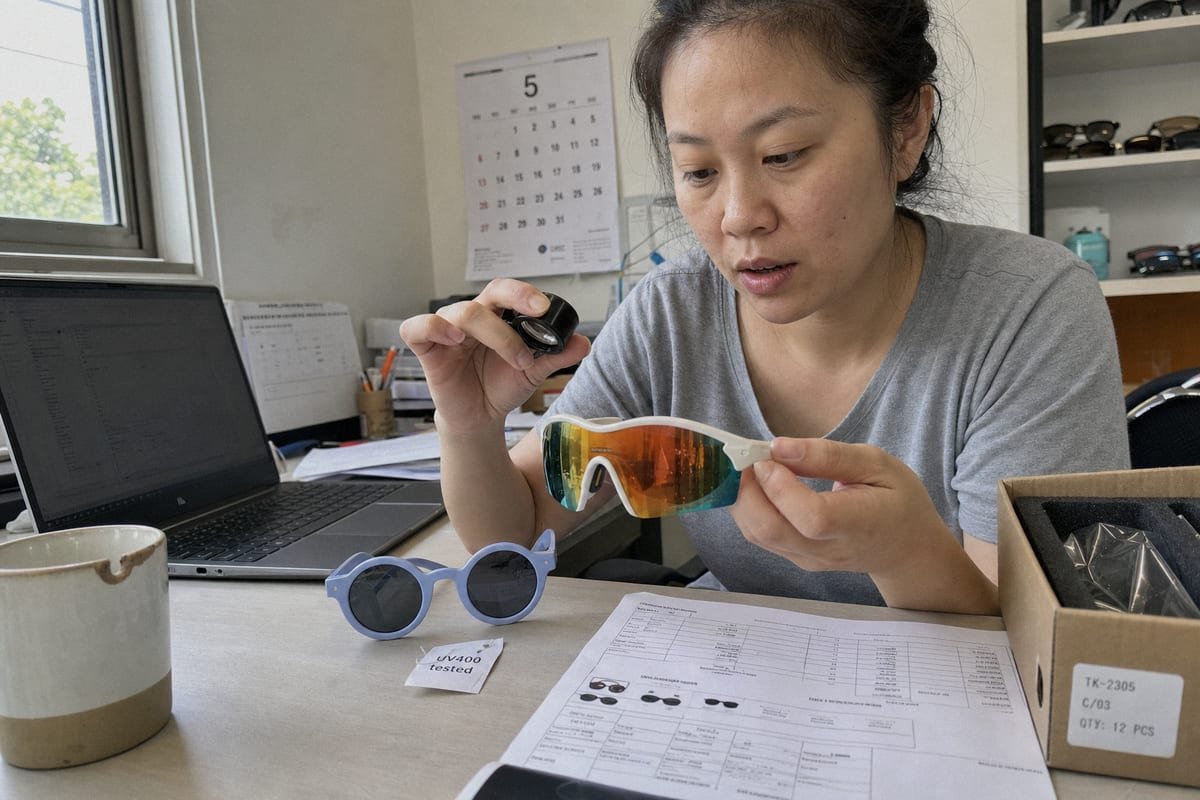
UV400または「UVAおよびUVB光線の100%を遮断」と表示されたレンズを探してください。UV400保護は、光角膜炎を引き起こすUVスペクトル全体をカバーする、最大400ナノメートルのすべての紫外線をフィルターします。レンズの暗さ、色、価格はUV保護を全く示しません。.
子供の目は大人よりも強い保護が必要です。子供の 水晶体 2 は大人よりも透明なので、UVを効果的にフィルターしません。網膜に到達する放射線量が増えるため、子供時代の網膜の健康は真剣な注意が必要です。子供は屋外で過ごす時間も長いです。いくつかの推定によると、子供は大人よりも年間約3倍の太陽光線にさらされており、生涯のUV曝露の大部分は18歳未満で発生します。.
UV400対UV380:すべてのラベルが同じではありません
多くのバイヤーが見落としがちなニュアンスです。一部のレンズは380ナノメートルまでしか保護しません。それは400に近いように聞こえますが、380〜400 nmの帯域にはまだUVエネルギーが含まれており、時間の経過とともに眼の太陽光線による損傷に寄与します。当社の工場でレンズを指定する際には、パステルカラーの幼児用フレームであっても、スポーツシールドであっても、すべての子供用スタイルでUV400を基本として要求しています。.
| ラベル | 保護範囲 | 子供には十分ですか? |
|---|---|---|
| UV400 | 400 nmまでのUVをブロックします | はい—推奨される基準 |
| 100% UVA/UVB | 完全なUVAおよびUVB遮断 | はい—UV400と同等 |
| UV380 | 最大380 nmまでのUVを遮断 | 部分的—ギャップが残る |
| "「UV保護」(未指定) | 不明 | いいえ—テストデータを要求する |
| 色付き、UV表示なし | 多くの場合なし | いいえ—潜在的に有害 |
偏光がUV保護ではない理由
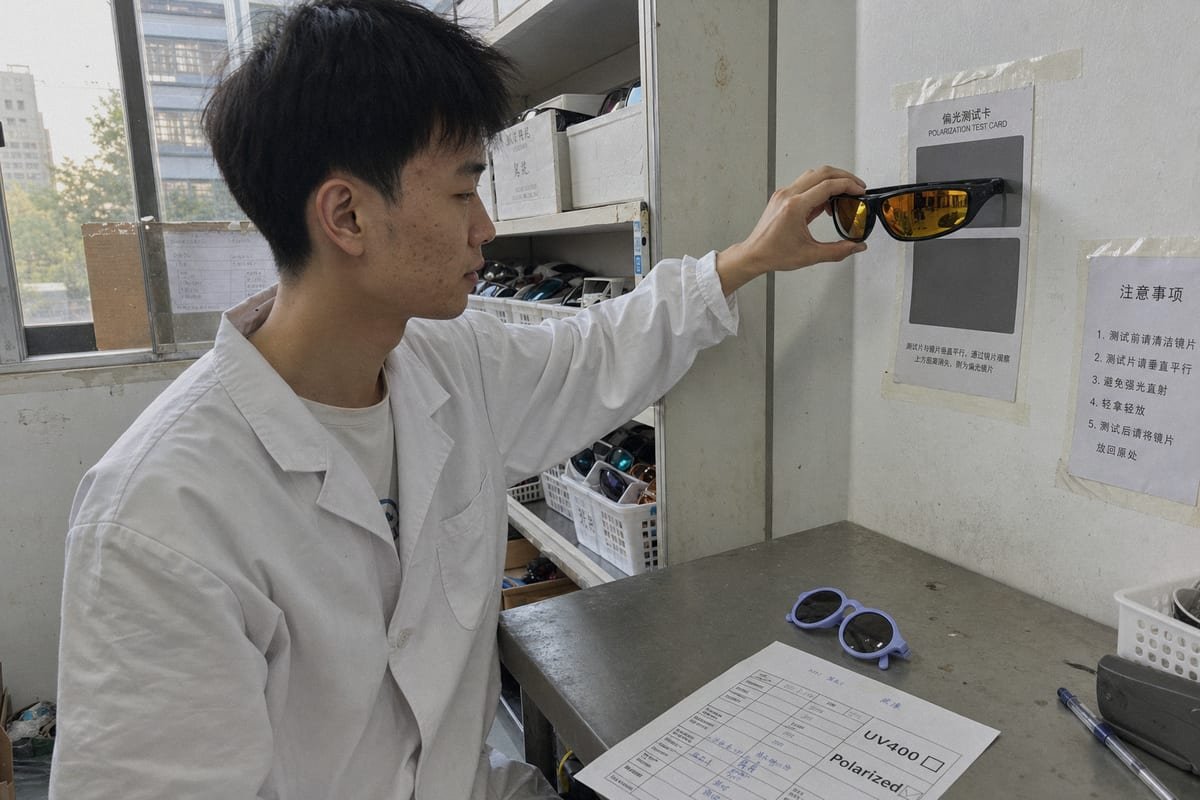
偏光レンズ 水、砂、道路からのまぶしさをカットします。これにより、快適さと視認性が向上し、多くのスタイルで偏光オプションを提供しています。しかし、偏光は別の機能です。UVカットなしの偏光レンズは UV400保護 まだUVAおよびUVB光線を通します。常に両方の主張を個別に確認してください。.
もう1つの点:UV保護は年間を通じて重要です。雪は最大80%のUV光線を反射し、雲はUVを効果的にブロックしません。. 反射したUVによる角膜の炎症は、夏のビーチだけでなく、曇りのスキー旅行でも簡単に発生する可能性があります。 3 UV400レンズは最大400ナノメートルの紫外線放射を遮断し、光角膜炎に関連するUVAおよびUVBスペクトル全体をカバーします。.
安物のサングラスは、子供の目を守るどころか、傷つける可能性があるのでしょうか?
これは、子供用アイウェアのカテゴリー全体で最も重要な神話を打ち破る必要があります。瞳孔は目の自然な防御です。明るい光では、収縮して放射線の侵入量を制限します。子供の目の前に暗い非UVレンズを置くと、瞳孔がリラックスして大きく開きます。そのレンズがUVをフィルターしない場合、目は光角膜炎や長期的な眼の太陽光線による損傷を引き起こす放射線のより大きな線量を受け取ることになります。.
はい。本物のUVカット機能のない安価なダークレンズは、レンズの色合いの後ろで瞳孔を散大させ、サングラスを全くかけない場合よりも多くのUVAおよびUVB線を網膜に到達させます。検証されたUV400保護機能のない子供用サングラスは、誤った安心感を生み出します。.
レンズを超えた隠れたリスク.
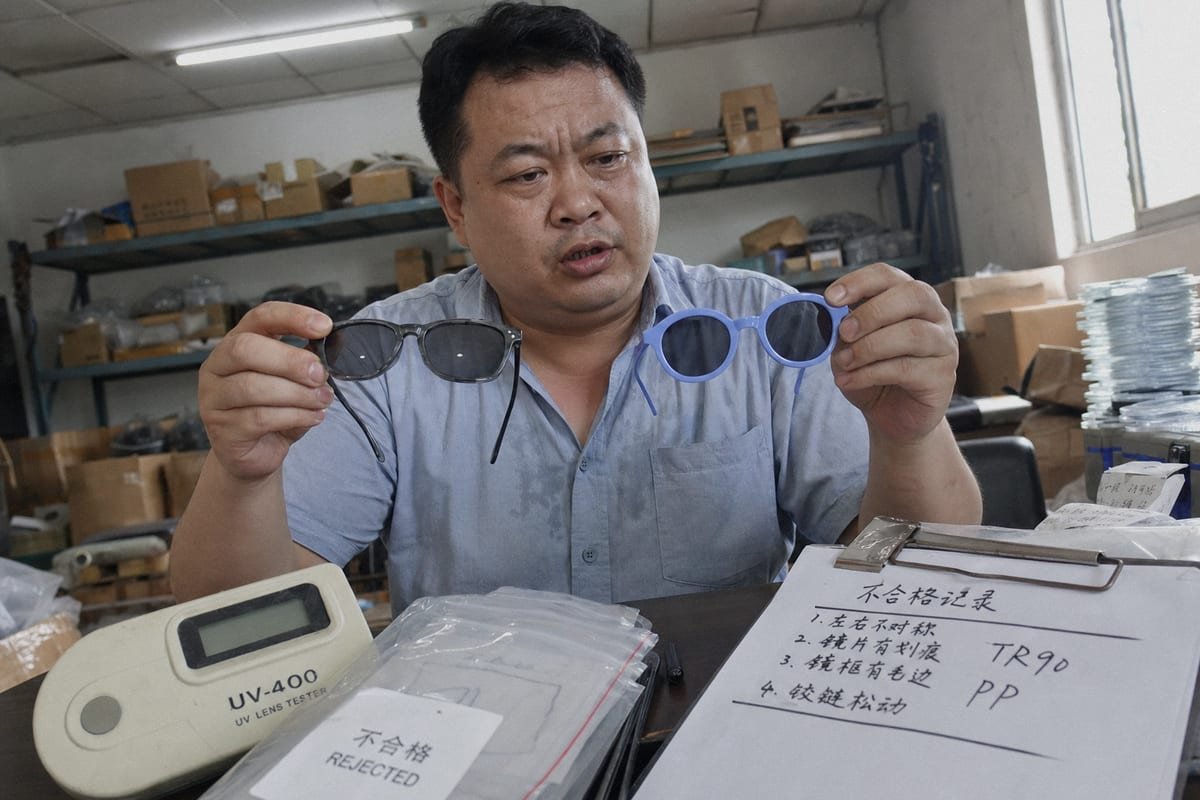
安価なサングラスは、UV性能以外にも多くの点で失敗します。子供用アイウェアを15年間製造してきた中で、低価格の輸入品には同じ繰り返し問題が見られます。
耐衝撃性なし。
- 子供が転んだり、ボールに当たったりすると、もろいレンズが鋭利な破片に砕ける可能性があります。. 対照的に、耐衝撃性があり、固有のUV保護を備えています。. ポリカーボネートレンズ 4, 安全でない素材。.
- 一部の低グレードのプラスチックには、子供の肌に長時間触れるべきではない制限物質が含まれています。. 光学品質が低い。.
- 歪んだ、ゆがんだレンズは、頭痛や目の疲れを引き起こす可能性があります。. 歪んだ、ゆがんだレンズは頭痛や眼精疲労を引き起こす可能性があります a child’s developing visual system.
- Weak construction. Loose hinge screws and sharp edges become pinch and scratch hazards.
- Coating degradation. Cheap UV coatings can degrade with heat, such as when sunglasses sit on a hot car dashboard, quietly losing effectiveness.
Short-Term Symptoms Parents Should Recognize
Eye sunburn is a real, painful acute injury to the cornea. Typical signs include burning, redness, tearing, light sensitivity, and a gritty feeling, usually appearing hours after exposure. Most cases resolve within a few days, but repeated corneal inflammation in childhood is exactly what quality eyewear should prevent. If symptoms persist, a pediatric ophthalmologist should evaluate the child.
For brands sourcing kids' sunglasses, the lesson is simple. A product that looks protective but is not protective is a liability, not a bargain.
フレーム素材が一日中かけても安全で快適かどうかを知るにはどうすればよいですか?
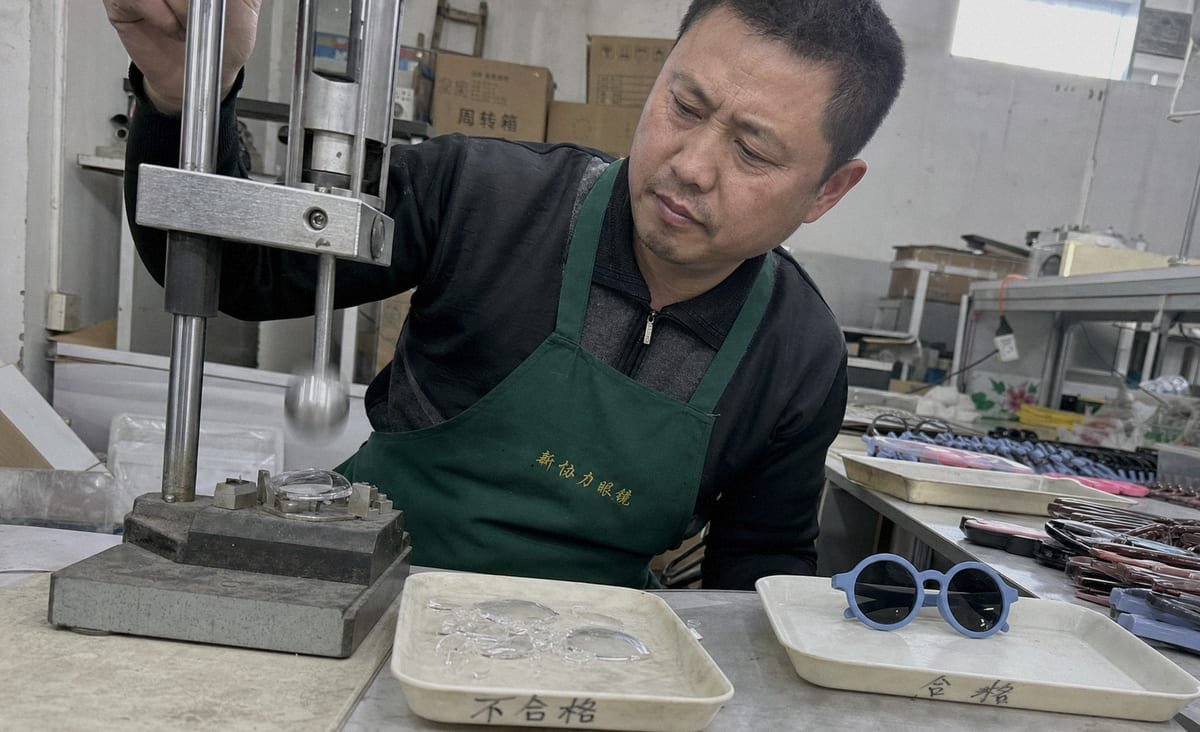
Flexibility testing is the part of our workshop I enjoy showing visitors most. We bend TR90 frames with TPEE temples nearly flat, and they spring back. That resilience is what all-day wear on a child's face demands.
安全な子供用フレームは、軽量で柔軟性があり、TR90やTPEEなどの肌に優しく、環境テスト済みの素材で作られている必要があります。折れることなく曲がり、鋭利なエッジや挟む箇所がなく、何時間もアクティブに遊んでも鼻や耳に快適にフィットする必要があります。.
Comfort is not a luxury feature in children's eyewear. It is a protection feature. If sunglasses pinch, slide, or feel heavy, a child takes them off. Protection that sits in a backpack prevents nothing. This is why we design almost exclusively around flexible materials, and why fit and wearability sit at the center of every new style we develop.
Comparing Common Frame Materials for Kids
| 素材 | 柔軟性 | 中程度から重い | Break Risk | All-Day Comfort |
|---|---|---|---|---|
| TR90 | ハイ — 曲げても元に戻ります | 非常に軽い | 非常に低い | 素晴らしい |
| TPEE | Very high — rubber-like flex | 非常に軽い | Extremely low | Excellent for toddlers |
| 標準的なPC/プラスチック | 低い — 硬い | 軽い | Moderate, can snap | 普通 |
| 金属 | Low, adjustable | より重い | Low, but bends out of shape | Fair — pressure points |
| Cheap ABS/toy plastic | Very low — brittle | 軽い | 高い | 悪い |
TR90 is a thermoplastic known for its memory flexibility and low weight. TPEE goes even further, offering a soft, almost rubberized feel that survives twisting, sitting, and stepping — the everyday abuse of toddler life. Our most popular construction pairs a TR90 front with TPEE temples, combining structural stability with gentle, flexible arms behind the ears.
Fit Features That Improve Protection
Frame geometry affects UV performance directly. Research shows that shape, size, and fit strongly influence how much UV reaches the eye. Roughly 20% of UV can enter from the periphery, so wraparound frames and larger lens coverage meaningfully reduce side exposure. For sport styles, a shield lens with a snug curve gives near-goggle coverage. For everyday styles, look for:
- Lenses large enough to cover the full orbital area
- Temples that curve to hold the frame close to the face
- A nose fit that keeps the top gap small
- Rubberized temple tips that stop slipping during play
A good frame keeps UV out from the front and limits what sneaks in around the edges.
メーカーから子供用サングラスを調達する前に、どの認証を確認すべきですか?
Documentation questions are usually the first thing serious buyers send us, often before they ask about price. In our experience exporting to twenty-plus countries, the paperwork conversation reveals a supplier's professionalism faster than any sample does.
UV400テストレポート、地域別サングラス規格(米国向けANSI Z80.3、欧州向けCEマーキング付きEN ISO 12312-1、オーストラリア向けAS/NZS 1067)、および該当する場合は子供向け製品安全コンプライアンス(CPSIAまたはEN 71など)の検証。これには耐衝撃性および制限物質試験が含まれます。.
Certifications exist because "UV protection" printed on a hang tag is just ink. Test reports from accredited labs turn a marketing claim into a verifiable fact. When brands come to us to develop OEM or ODM styles, we walk them through exactly which documents their destination market requires, because a shipment held at customs helps no one.
The Core Standards by Market
| 市場 | 主要な基準 | 対象範囲 |
|---|---|---|
| アメリカ合衆国 | ANSI Z80.3 5 | UV transmittance, optical quality, impact resistance |
| United States (kids) | CPSIA | 鉛、フタル酸エステル、子供向け製品の安全性 |
| 欧州連合 | EN ISO 12312-1 + CE | UV filtering categories, mechanical safety |
| オーストラリア / ニュージーランド | AS/NZS 1067 | Lens categories, UV performance (mandatory) |
| 日本 | JIS T 7333 | Sunglass optical and UV requirements |
ANSI Z80.3 standards matter even for casual styles sold in the US, because they define how UV transmittance and lens quality are measured. In Europe, sunglasses are regulated as 個人用保護具 6, so the CE mark and an EN ISO 12312-1 test report are non-negotiable. Australia treats sunglass compliance as mandatory law, not voluntary guidance.
Questions to Ask Any Supplier
- Can you provide a recent third-party UV400 test report for this exact lens?
- Which lab issued your ANSI Z80.3 or EN ISO 12312-1 reports, and when?
- Do your frame materials have restricted-substance test data for children's products?
- How do you verify 耐衝撃性 7 on polycarbonate lenses?
- Do you retest when lens suppliers or coating processes change?
That last question separates factories from traders. At our 5S-managed workshop, incoming lens batches are checked against specification before assembly, because a certificate from last year does not guarantee this month's production. A reliable partner treats compliance as a process, not a one-time document.
結論
Kids' sunglasses prevent eye sunburn effectively — but only genuine UV400 lenses in safe, well-fitting frames. Verify test reports, choose flexible materials, and partner with a factory that proves its claims.
脚注
1. Background on photokeratitis, the medical term for UV-induced eye sunburn discussed throughout. ↩︎
2. Explains eye anatomy referenced when comparing children’s versus adult UV filtration ability. ↩︎
3. Replaced 403 error with a highly authoritative medical guide on photokeratitis (corneal sunburn) from the American Academy of Ophthalmology. ↩︎
4.

 English
  Español de México
  Deutsch
  Français
  日本語
日本語  العربية
  Português do Brasil