How to Consolidate Kids Sunglasses for Multiple Customers in One Container With Separate Documents?
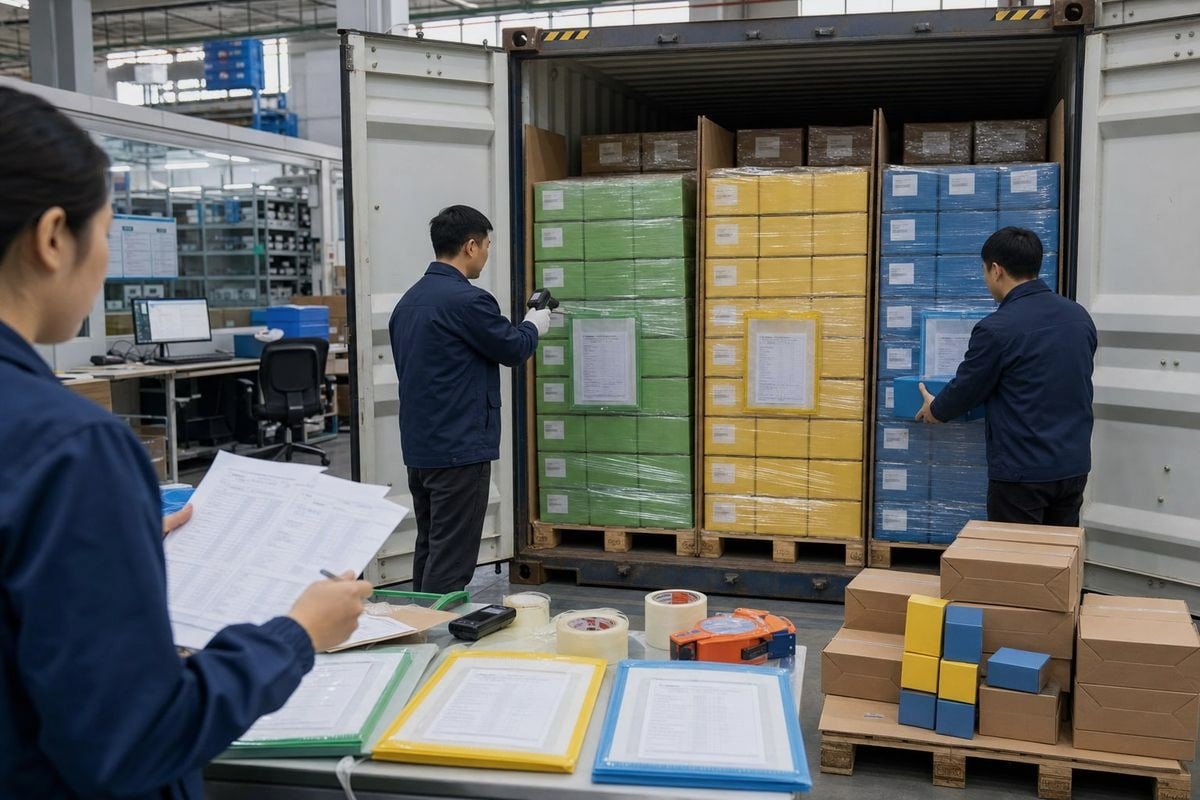
Learning how to consolidate kids sunglasses for multiple customers in one container almost went wrong for one of our importers. Their forwarder mixed two brands’ paperwork, and customs held everything for eleven days. At our Taizhou factory, we now treat document separation as seriously as lens quality — because one mixed-up commercial invoice can freeze an entire container of perfectly good eyewear.
To consolidate kids sunglasses for multiple customers in one container, use a buyer’s consolidation model: one Master Bill of Lading covers the container, while each customer receives a separate House Bill of Lading, commercial invoice, packing list, and safety certificates, with orders physically segregated in labeled inner cartons.
That is the short answer. But the details decide whether you save money or create chaos. Below, I will walk through the packing method, the document sets, the branding logistics, and the customs strategy we use with our own B2B buyers.
How Can I Combine Multiple Customer Orders Into One Container Without Mixing Up Their Products?
A few seasons ago, our 5S-managed workshop packed orders for three different European kids' brands into one 20-foot container. Two of those brands had nearly identical powder-blue round frames. Physical segregation saved us.
Combine multiple customer orders in one container by packing each order in dedicated, clearly labeled inner cartons, using color-coded carton markings, a master packing list mapping every carton to its owner, and physical dividers between customer lots so nothing gets sorted incorrectly at deconsolidation.
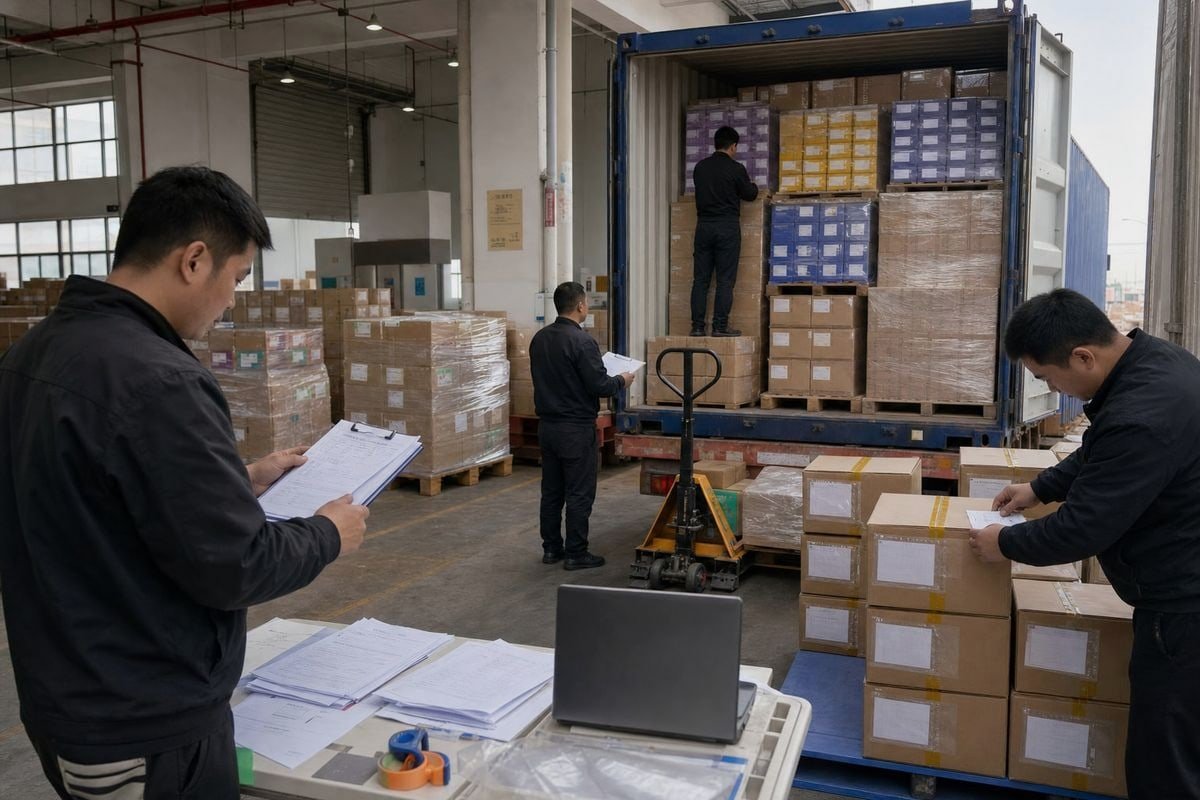
The core principle is simple: the container is a transport vehicle, not a merged order. Each customer's goods must stay identifiable from our loading dock in Taizhou all the way to the deconsolidation point. This is how groupage cargo works everywhere in the world, and kids' eyewear is no exception.
Treat the Container as Zones, Not a Pile
We divide the container into physical zones, one per customer. Each zone gets loaded in sequence, and we photograph each zone before loading the next. If a dispute ever arises, those photos settle it fast. For smaller volumes moving as LCL shipping 1, the same logic applies inside your allocated space — your freight forwarder will thank you for it.
Carton Marking That Actually Works
Here is the marking system we apply to every consolidated shipment:
| Marking Element | UV-Transmissionsbericht (akkreditiertes Labor) | . Beispiel |
|---|---|---|
| Customer code | Identifies the owner of the carton | "CUST-A" printed on two sides |
| Color band | Fast visual sorting at destination | Blue tape = Brand A, green = Brand B |
| Carton number | Cross-references the master packing list | "CTN 14 of 36" |
| PO number | Links the carton to the purchase order | "PO-2024-0087" |
| Care marks | Protects fragile lenses | "Fragile — This Side Up" |
The Master Cross-Reference
We also prepare one master packing list for the whole container. It maps every carton number to a customer, a PO, a SKU list, and a quantity. One copy travels with the shipment. One copy goes to the forwarder. One copy goes to each customer, filtered to show only their own cartons. That last detail matters — customers should never see each other's pricing or volumes.
Because most of our styles come from our library of roughly 800 existing designs, different brands sometimes order the same base frame in different colorways. Segregation by carton, not by SKU appearance, is the only safe method. Frames can look identical; cartons never should.
What Documents Do I Need to Keep Separate for Each Customer When Consolidating a Shipment?
One trade-off we weigh on every consolidated shipment is paperwork volume versus clarity. More documents feel like more work upfront, but merged paperwork always costs more later — in customs delays, tax confusion, and awkward conversations between competing brands.
Keep a separate House Bill of Lading, commercial invoice, packing list, Children's Product Certificate, and impact-resistance test report for each customer, while the freight forwarder holds one Master Bill of Lading for the container; never merge invoices across different buyers.
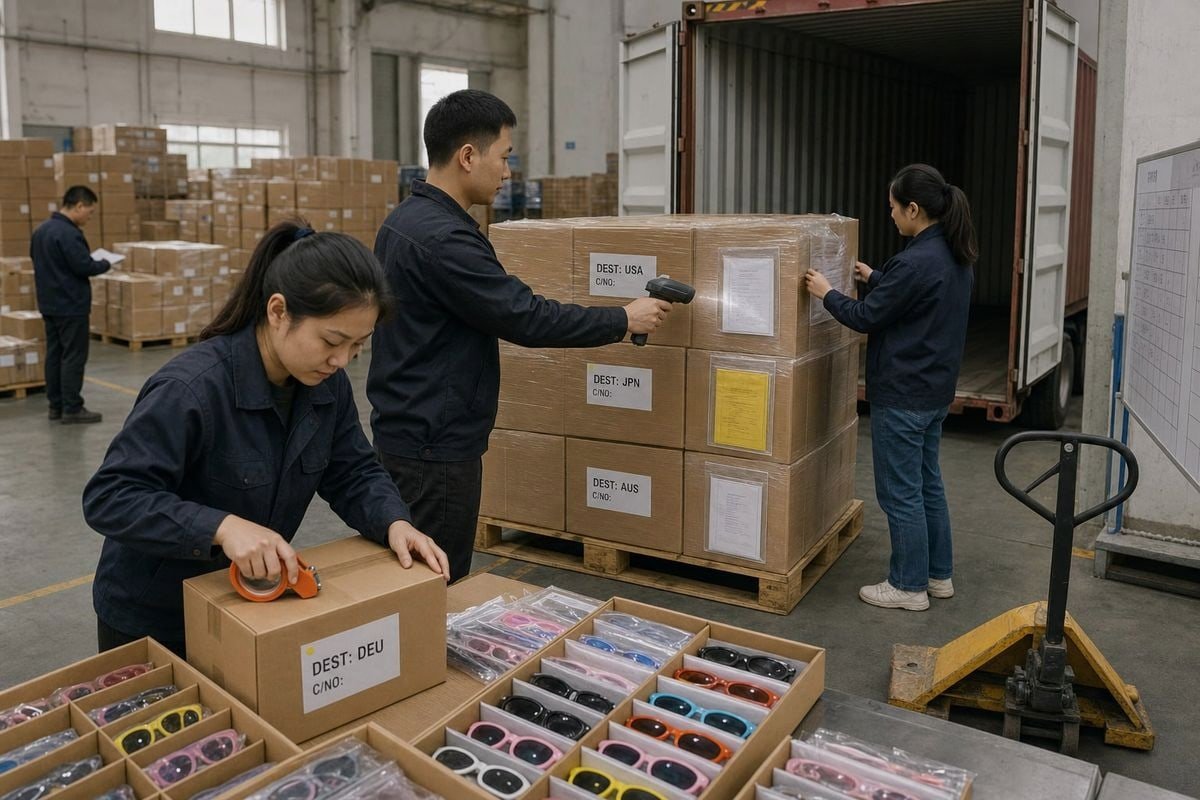
The document architecture for a consolidated shipment has two layers. The forwarder layer covers the container as a whole. The customer layer covers each individual buyer. Confusing the two layers is the single most common mistake we see from first-time importers.
The Two-Layer Document Structure
| Schicht | Dokument | Who Holds It | Covers |
|---|---|---|---|
| Container level | Master Bill of Lading 2 | Freight forwarder | The whole container |
| Container level | Master packing list | Forwarder + shipper | All cartons, all customers |
| Customer level | House Bill of Lading | Each customer | Only that customer's cargo |
| Customer level | Commercial invoice | Each customer | Only that customer's goods and prices |
| Customer level | Customer packing list | Each customer | Only that customer's cartons |
| Customer level | Safety certificates | Each customer | That customer's specific products |
Safety Documents Are Not Optional
Kids' sunglasses carry real compliance obligations. For the US market, each customer needs product-specific certificates showing conformity with CPSIA-Sicherheitsstandards 3, plus impact-resistance testing for the lenses. For Europe, CE-related documentation 4 and UV protection claims must match the exact SKUs in that customer's cartons. We prepare these packets per customer, per order — not one generic file for the container. When we run UV400 5 or polarized lens batches for different brands, each brand's test paperwork references their own lot numbers.
Split Shipment Documentation
If part of a customer's order ships now and part ships later, split shipment documentation must clearly state which quantities travel under which House Bill of Lading. Vague paperwork here creates duplicate-declaration problems at customs. We list partial quantities explicitly on each invoice and mark the balance as "to follow" with a projected date.
Finally, keep a transaction log. Every carton, every document, every customer, one spreadsheet. When a customs broker calls with a question, you answer in minutes instead of days.
Can My Manufacturer Handle Different Packaging and Labeling Requirements for Each Brand in the Same Container?
A procurement manager from Australia once asked me this exact question on a video call, half expecting the answer to be no. Our production line runs multiple brand packouts every week, so the honest answer is: a capable factory should say yes without hesitation.
Yes — an experienced OEM/ODM factory can run separate packaging, logos, hangtags, inserts, and retail-ready presentation for each brand in the same container, as long as each brand's packout is produced, quality-checked, and cartonized as an isolated batch before consolidation.
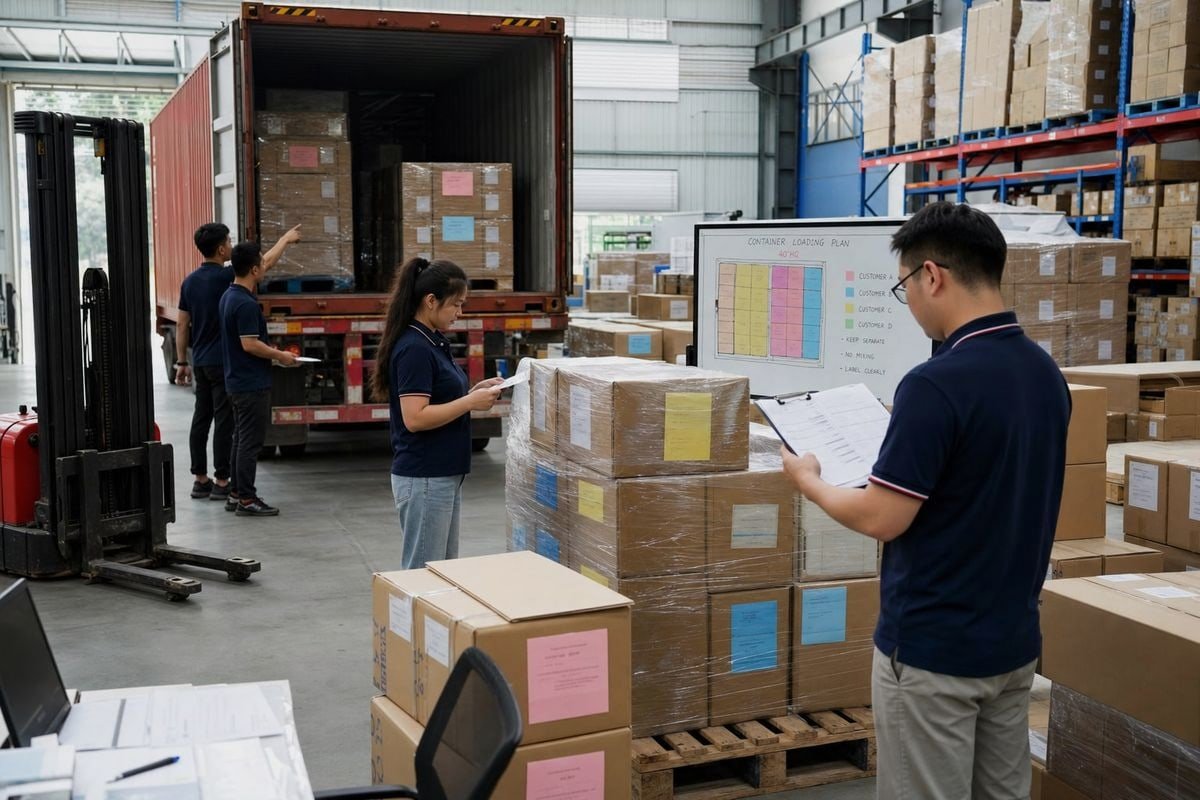
The key is batch discipline. At our factory, each brand's order is a closed loop: its own work order, its own printed packaging materials, its own QC checklist, and its own sealed cartons. Only after a batch is finished and verified does it move to the consolidation staging area. We never run two brands' packouts on the same bench at the same time. That single rule prevents almost every mix-up.
What Can Differ Between Brands in One Container
- Custom logo printing on temples or lenses
- Brand-specific pouches, cases, and cleaning cloths
- Different retail boxes, hangtags, and barcode labels
- Different lens specs — one brand may want polarized, another standard UV400
- Different inner packaging counts (6-pack, 12-pack, display-ready trays)
- Language-specific warning labels and age-grading text
How We Keep Brand Batches Isolated
Our process follows a fixed sequence, and I would expect any serious supplier to do something similar:
- Confirm each brand's artwork and packaging spec in writing before production.
- Print and receive all branded materials, inspected against approved samples.
- Assemble and pack one brand fully, then clear the line under 5S rules 6.
- Run QC on that brand's finished cartons, including label scans.
- Seal, mark, and stage cartons in that brand's container zone.
- Repeat for the next brand, then load in zone order.
One more practical point: because brands can pick from our existing style library, two customers in the same container often order the same base frame — say, a soft matte two-tone round frame for toddlers, or a wraparound sports shield with a mirrored gradient lens. The frames may be identical off the mold, but the moment branding is applied, they become different products with different barcodes and different compliance labels. Batch isolation is what keeps them that way.
How Do I Avoid Customs or Delivery Delays When Shipping Consolidated Orders to Different Destinations?
The hardest lesson we learned in fifteen years of exporting kids' eyewear came from a shipment where one customer's missing test report held up two other customers' goods. Since then, we pre-check every document set before the container closes.
Avoid delays by verifying every customer's documents before loading, using correct HS Code classification per product type, clearing the container once at a Container Freight Station, then deconsolidating and dispatching each order under its own House Bill of Lading with matched final-mile labels.
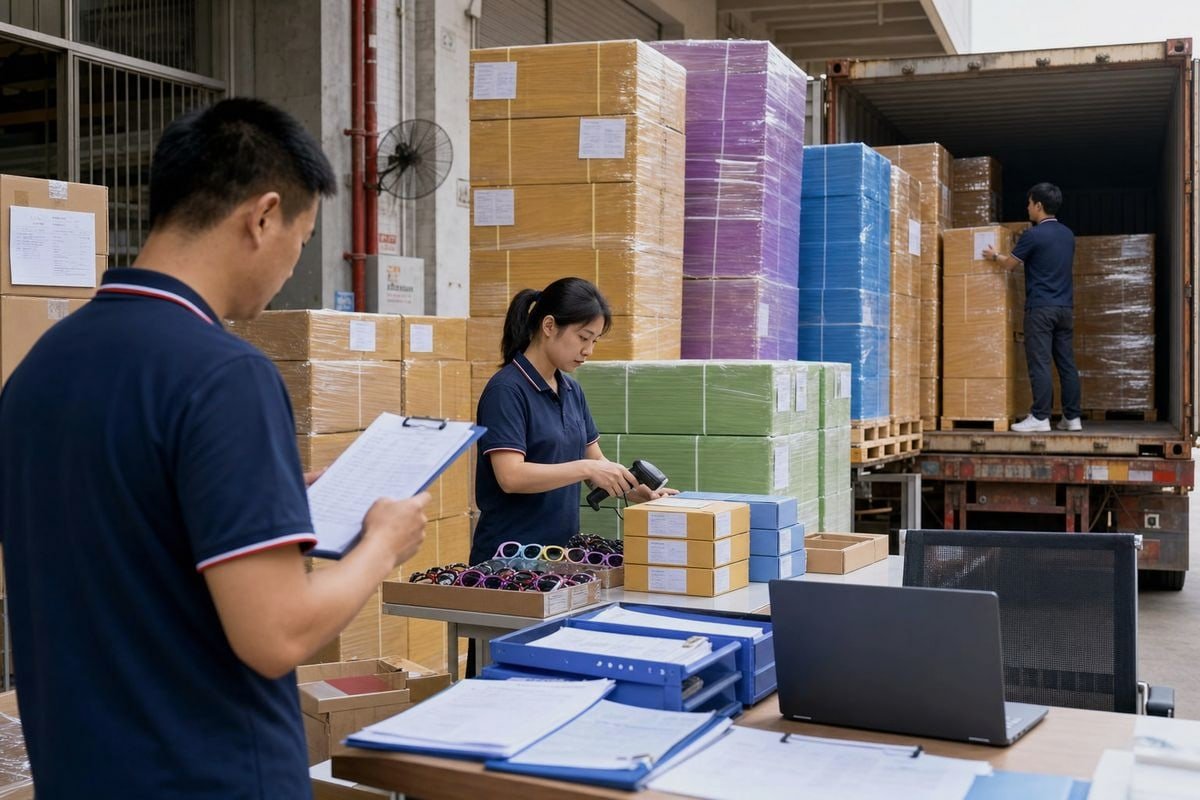
Delays in consolidated shipments almost always trace back to one of four causes: incomplete documents, wrong classification, mismatched quantities, or a weak deconsolidation plan. Each one is preventable.
The Four Delay Risks and Their Fixes
| Delay Risk | What Goes Wrong | Prevention |
|---|---|---|
| Incomplete safety files | One customer's missing certificate holds the whole container | Pre-shipment document audit for every customer |
| Wrong HS Code classification 7 | Sunglasses declared under an incorrect code trigger inspection | Classify by product type and confirm with the customs broker |
| Quantity mismatch | Invoice, packing list, and physical count disagree | Three-way reconciliation before sealing the container |
| Poor deconsolidation plan | Cartons cannot be sorted to the right final-mile carrier | CFS booking plus color-coded carton marks and pre-printed labels |
One Clearance, Then Split
For a single destination country, the smoothest flow is one customs clearance for the container, then physical splitting at a Container-Güterstation 8. Each customer's House Bill of Lading and invoice supports their portion. If your customers sit in different countries, the picture changes: the container should route to a regional hub first, and each onward leg becomes its own export with its own paperwork. In that case, a good freight forwarding partner is not optional — they structure the routing, handle transshipment documents, and keep each customer's clearance independent.
The Weakest-Link Rule
Remember that a consolidated container clears at the speed of its slowest document set. We tell every buyer joining a shared container: your paperwork discipline protects your neighbors, and theirs protects you. Before any container leaves our factory, we confirm each customer's invoice values, certificate references, and label compliance line by line. It takes an extra afternoon. It has saved weeks.
Schlussfolgerung
Consolidating kids sunglasses for multiple customers in one container works when you separate documents rigorously, segregate cartons physically, and plan deconsolidation early. Done right, everyone saves money — and nobody's shipment gets stuck.
Fußnoten
1. Explains the less-than-container-load freight concept mentioned for smaller volumes. ↩︎
2. Defines the core shipping document referenced throughout the consolidation process. ↩︎
3. Official source for US children’s product safety compliance mentioned in the article. ↩︎
4. Official EU source explaining CE marking compliance for products sold in Europe. ↩︎
5. FDA guidance on UV protection standards relevant to sunglasses lens claims. ↩︎
6. Background on the workplace organization methodology referenced in factory quality process. ↩︎
7. Government trade resource explaining harmonized system codes used for customs classification. ↩︎
Weitere Artikel, die Ihnen gefallen könnten

August 2026
Sollte die Fabrik die Verpackung und Kennzeichnung von Kinder-Sonnenbrillen übernehmen oder einen bestimmten Lieferanten nutzen?
August 2026
Eigenes Lager vs. Direktlieferung durch den Lieferanten: Was senkt die Retourenkosten für Marken von Kinder-Sonnenbrillen?

August 2026
Direkt zum Lagerhafen oder Lagerung in Übersee: Was spart mehr bei den Versandkosten für Kinder-Sonnenbrillen?
Auf der Suche nach einem zuverlässigen Partner für Kinderbrillen?
Entdecken Sie über 800 sofort verfügbare Modelle und umfassenden OEM/ODM-Support, der auf Ihre Marke zugeschnitten ist.
Kontakt aufnehmen English
  Español de México
  Deutsch
  Français
  日本語
日本語  العربية
  Português do Brasil