How to Balance Style Variety vs Stock Depth When Buying Kids’ Optical Frames?

Balancing style variety vs stock depth when buying kids’ optical frames is the question I hear most often on our factory floor in Taizhou, and getting it wrong costs real money.
The best balance for kids’ optical frames is a curated mix: 15–25 distinct styles for variety, with 60–70% of your budget concentrated in deep stock of 5–8 proven durable bestsellers. Order broad but shallow first, then reorder depth once sell-through data reveals your winners.
That short answer hides a lot of decisions. Below, I break down each one. I will show you how first orders, testing, catalog selection, and reorders all fit together.
How do I decide how many styles versus how much depth per style to order first?
Last spring, a first-time buyer from Australia asked us to quote 30 styles at 20 pieces each. We talked her down to 18 styles — and she thanked us six months later.
For a first order, choose 15–25 styles and keep depth shallow at 20–50 pieces per style, split across 2–3 colorways and two sizes. Reserve roughly 30% of your budget for fast reorders once sell-through analysis shows which frames actually move.
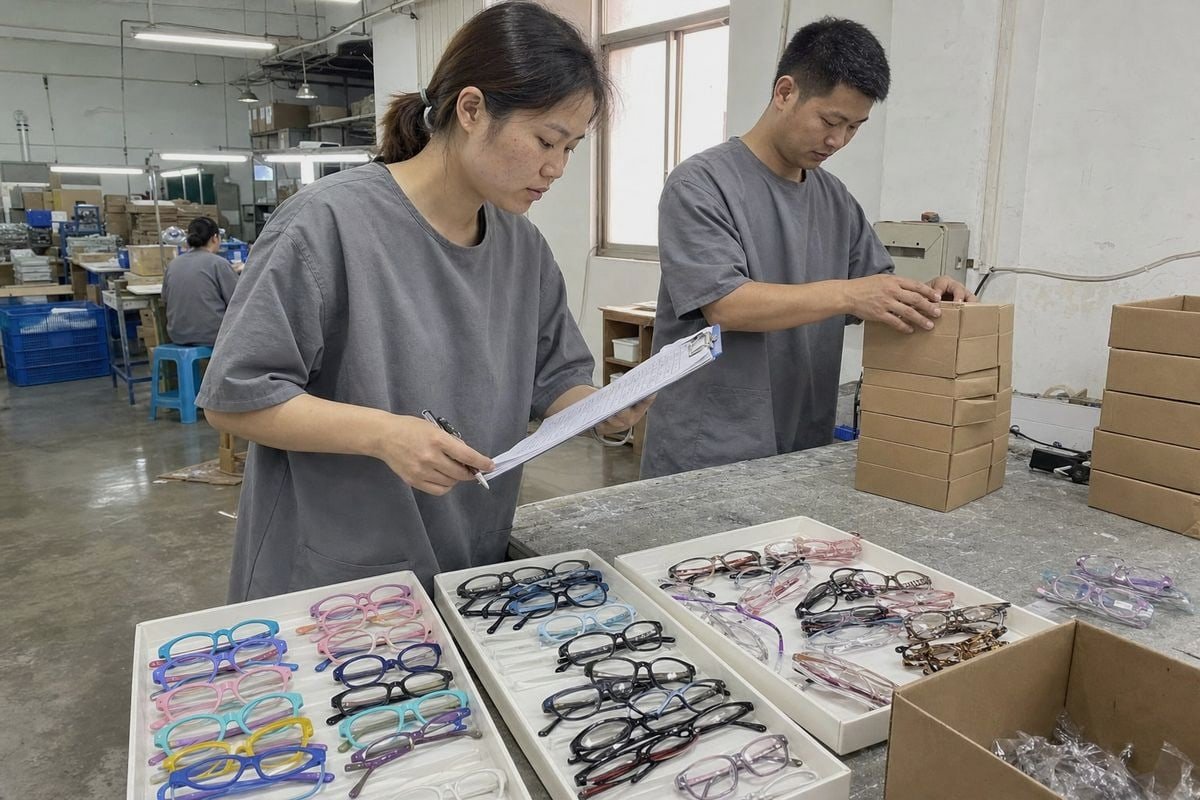
The first order is not really an inventory order. It is a market test. In our experience exporting to buyers in 20+ countries, the brands that succeed treat the first purchase as data collection, not stockpiling. So the goal is simple: cover enough of the style spectrum to learn what your customers want, without tying up cash in guesses.
Think in categories, not individual frames
Do not pick 20 frames that all look alike. Pick across categories. A balanced kids' assortment usually spans rugged toddler frames, everyday grade-school basics, and style-forward tween designs. Pediatric eyewear trends move fast at the tween end and slowly at the toddler end. That matters for depth. Slow-moving categories can carry deeper stock safely. Trend-led categories cannot.
Here is a starting split we recommend to new wholesale eyewear purchasing clients:
| Kategorie | Share of styles | Depth per style | Warum |
|---|---|---|---|
| Rugged toddler frames (TPEE/flexible) | 25% | Deeper (40–50 pcs) | Stable demand, high replacement rate |
| Grade-school everyday basics (TR90) | 40% | Deepest (50+ pcs) | Your volume core; kids break these often |
| Style-forward tween frames | 25% | Shallow (20–30 pcs) | Trend risk; test before committing |
| Niche or seasonal styles | 10% | Minimal (20 pcs) | Pure experiments |
Match depth to replacement behavior
Children are harder on eyewear than adults. Parents often need a fast replacement pair or a backup pair. That behavior pushes depth toward durable frame materials and functional basics, not fashion pieces. If a frame is likely to be re-bought after a playground accident, it deserves deeper stock. If it is a one-time fashion choice, it does not.
Also, watch your Umschlagsrate des Lagerbestands 1 from day one. Optical retail guidance suggests turning stock 3–4 times per year. If a style will not plausibly turn at that pace, cut its depth before you order, not after.
Can I test new kids' frame designs without overcommitting my inventory budget?
The trade-off we weigh with every ODM client is the same: new designs excite retail buyers, but every untested SKU is capital at risk. There are proven ways to soften that risk.
Yes. Test new designs using low minimum-order quantities from a factory's existing catalog, limit each test style to 2–3 core colorways, use virtual try-on or pre-order signals to gauge demand, and cap experimental styles at 10–15% of your total inventory budget.
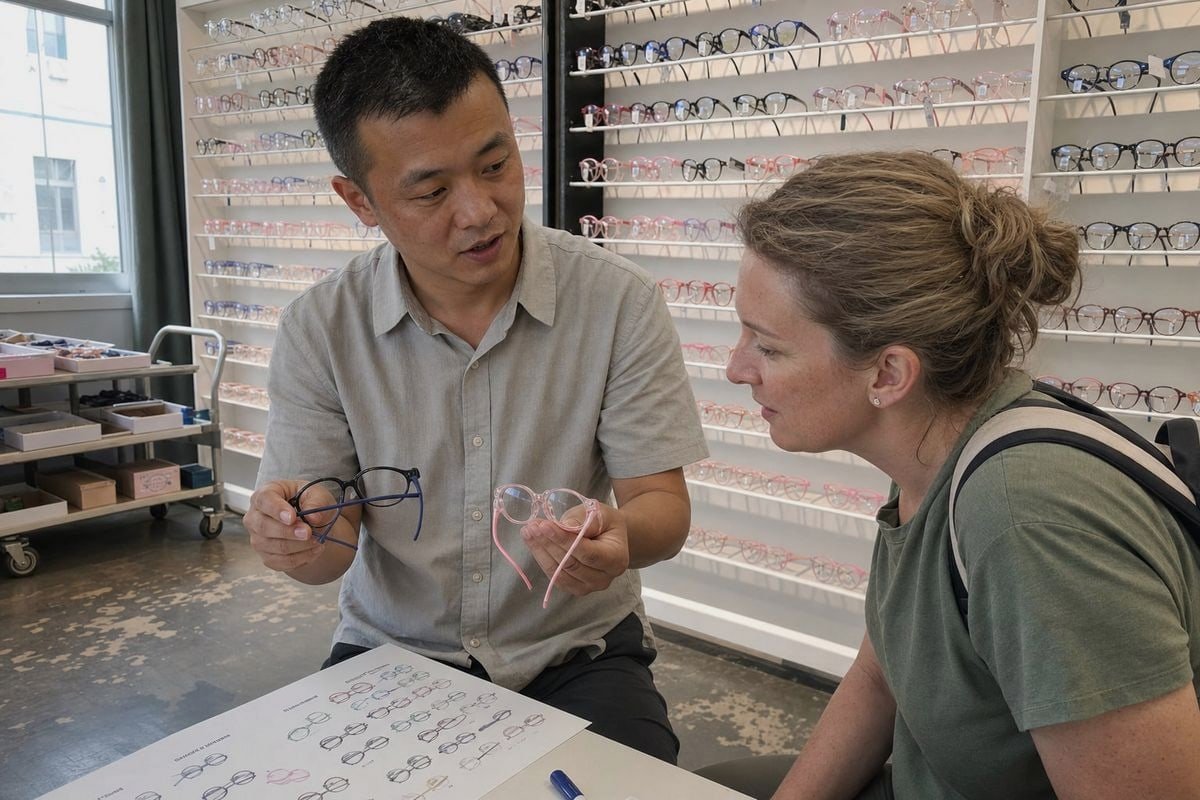
Testing is where most new kids' eyewear brands either build momentum or burn cash. The good news is that you do not need custom molds to test a design direction. Our factory keeps around 800 existing styles precisely so brands can trial shapes, materials, and color stories with lower risk. A new brand can pick ten catalog styles, add its own logo and packaging, and read the market — all without a single tooling invoice.
Practical low-risk testing tactics
- Start from existing molds. Custom tooling can wait until a shape has proven itself. Catalog styles let you launch in weeks, not months, and keep MOQs manageable.
- Limit colorways. Stock 2–3 core neutrals per test style. Too many trend colors creates decision paralysis 2 for parents and leaves you overstocked in the slow movers. Add bold color pops only to your proven silhouettes.
- Use a Core-Plus-Digital approach. Keep physical stock deep in high-velocity basics, and let virtual try-on tools or website pre-orders showcase extended variety. Online shoppers want to browse widely; you do not have to warehouse everything they browse.
- Set a hard experiment budget. Cap new-design spend at 10–15% of the total buy. When a test wins, it graduates into your core with real depth behind it.
- Test materials, not just shapes. We have seen eco-conscious parents respond strongly to bio-based and recycled materials. That makes the variety segment a smart place to trial sustainable options before scaling them.
One lesson from our 15 years in eyewear: buyers rarely regret testing too carefully. They often regret committing 500 pieces to a style nobody had validated. Shallow tests plus disciplined graduation rules protect you from both mistakes — missing a trend and drowning in one.
How do I choose which styles from a factory's existing catalog fit my brand best?
When a Japanese baby-brand buyer visited our 5S-verwalteten Werkstatt 3, she filtered our catalog with three questions before ever discussing price. Her method was smart, and I now recommend it to everyone.
Filter a factory catalog by fit first, safety second, and aesthetics third. Shortlist styles matching your target ages' bridge widths and temple lengths, require flexible impact-safe materials, then select shapes and colors that mirror your brand's visual identity and your local demographics.
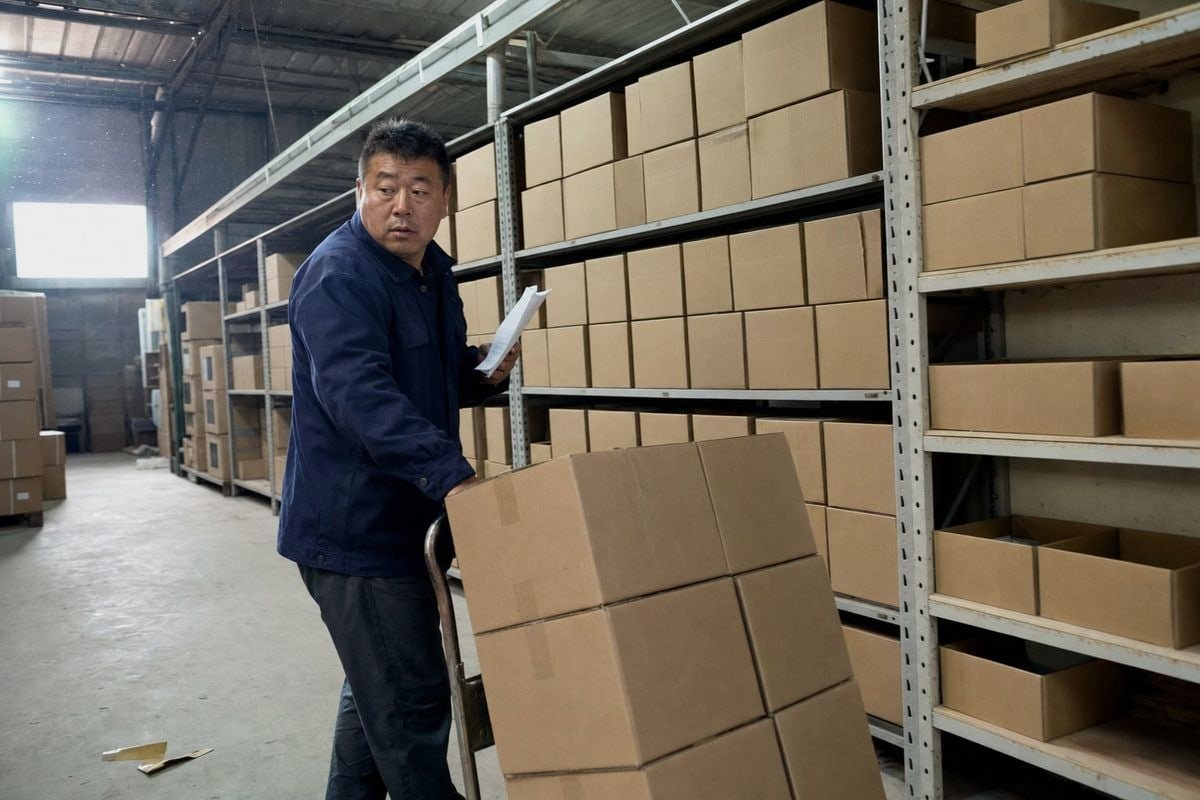
A catalog of 800 styles is only useful if you have a filter. Without one, buyers pick what looks nice on screen and end up with frames that do not fit their actual customers' faces. So work through the filters in strict order.
Filter 1: Fit and sizing before style
Frame sizing for children is not scaled-down adult sizing. A three-year-old's bridge 4 is flatter and wider relative to the face. Temple lengths change fast between ages four and ten. Prioritize ergonomic fit — bridge width and temple length — over aesthetic variety, and align your size ratio with your real customer base, not a generic chart.
| Age group | Typical lens width | Key fit feature to demand |
|---|---|---|
| 1–3 Jahre | 38–42 mm | Soft flexible bridge, head strap option |
| 4–7 years | 42–46 mm | Silicone ear hooks, flexible spring hinges 5 |
| 8–12 years | 45–50 mm | Adjustable temples, lightweight TR90 build |
| Myopia-management wearers | Variiert | Deep vertical lens height, stable fit, ~15 g or less |
That last row matters more each year. Frames engineered for myopia-management lenses 6 need enough vertical depth and a stable, non-slipping fit to keep the therapeutic optical zone in front of the pupil. If your market includes these lenses, shortlist accordingly.
Filter 2: Materials and safety
Insist on durable frame materials with genuine flexibility. Our TR90 fronts with TPEE temples exist because rigid frames snap on active kids. Look for flexible spring hinges or hingeless flex designs, rounded edges, and lightweight builds. For younger children, avoid nose pads; their noses are still developing and pads shift out of alignment.
Filter 3: Brand aesthetics
Only now choose looks. Mini-me styles that echo adult trends satisfy parents, while playful color accents win the child. Pick silhouettes that photograph consistently together, because your frame board and website should read as one brand, not a random assortment.
What's the right reorder strategy so I don't run out of my best-selling frames?
A hard lesson from our production planning: a European distributor once let a bestselling flexible frame sell out during September. The lost back-to-school weeks hurt more than any overstock ever had.
Reorder when a bestseller drops below 6–8 weeks of stock, using rolling sell-through analysis by style, size, and color. Place larger reorders 8–10 weeks before back-to-school season, and keep 5–8 core styles on permanent never-out-of-stock status.
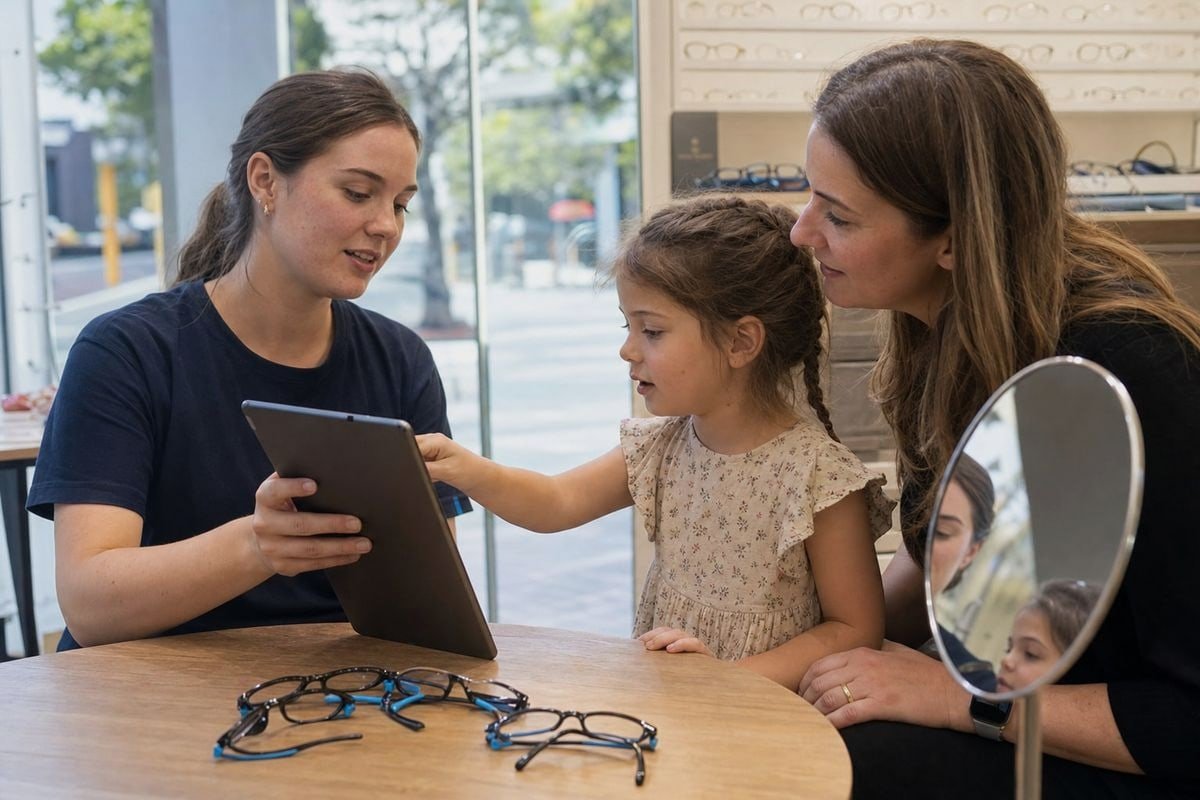
Reordering is where stock depth earns its keep. Variety got the customer in the door; depth keeps your best frames on the board when the customer returns for a replacement pair. And with kids, they will return — glasses get sat on, thrown in bags, and lost at the pool.
Build a simple reorder system
You do not need enterprise software. You need three habits:
- Track sell-through weekly. Compare units sold against units stocked, per style, per size, per color. This sell-through analysis 7 is the heart of optical SKU optimization. It tells you which frames deserve depth and which are quietly dying on the board.
- Set reorder triggers, not reorder dates. When cover falls below your lead time plus a safety buffer, order. With our standard production lead times, most clients trigger reorders at 6–8 weeks of remaining cover.
- Review the board quarterly. Good frame board management means every slot fights for its place. Cut styles below a healthy inventory turnover rate — aim for 3–4 turns per year — and reinvest that cash into depth on winners.
Plan around the seasonal curve
Back-to-school optical sales are the highest-volume window in pediatric eyewear. Scale depth ahead of it, not during it. A frame that stocks out in September cannot be rescued by an October delivery.
| Zeitplanung | Aktion |
|---|---|
| 8–10 weeks before back-to-school | Place deep reorders on all core styles and replacement-driven basics |
| During peak season | Monitor daily; expedite only true bestsellers |
| Post-season | Run sell-through analysis; retire laggards; refresh variety segment |
| Ongoing | Keep 5–8 core styles never-out-of-stock in all sizes |
One more depth-saver: some buyers adopt a modular approach, holding reserves of interchangeable temples and bridge parts to fine-tune fit on-site without inflating full-frame counts. It is not right for every brand, but it stretches depth further where it fits.
Schlussfolgerung
Balancing style variety vs stock depth is a discipline, not a guess: test broadly, filter by fit, then pour depth into proven winners before every back-to-school peak.
Fußnoten
1. Authoritative Wikipedia entry defining inventory turnover and its business significance. ↩︎
2. Explains the psychological phenomenon where excessive choices can lead to consumer inaction. ↩︎
3. Official government resource from the EPA explaining the 5S methodology for workplace organization. ↩︎
4. Offers professional guidance on children’s vision care and the importance of properly fitted eyewear. ↩︎
5. Provides detailed information on the technical components and construction of modern eyeglass frames. ↩︎
6. Provides medical context on specialized lenses that require specific frame dimensions for effective treatment. ↩︎
7. Defines the retail calculation used to determine the percentage of inventory sold relative to stock. ↩︎
Weitere Artikel, die Ihnen gefallen könnten
August 2026
Bio-Based vs Regular Cellulose Acetate: What's the Difference for Kids' Frames?

August 2026
How Recyclable Are Kids' Optical Frame Materials, and What Eco-Friendly Alternatives Exist?
August 2026
Bleichen Kinderbrillengestelle im Lager aus oder altern sie, und wie kontrolliert man die Lagerbedingungen?
Auf der Suche nach einem zuverlässigen Partner für Kinderbrillen?
Entdecken Sie über 800 sofort verfügbare Modelle und umfassenden OEM/ODM-Support, der auf Ihre Marke zugeschnitten ist.
Kontakt aufnehmen English
  Español de México
  Deutsch
  Français
  日本語
日本語  العربية
  Português do Brasil