How to Ask Suppliers to Reserve Fast-Reorder Capacity for Best-Selling Kids Optical Frames?
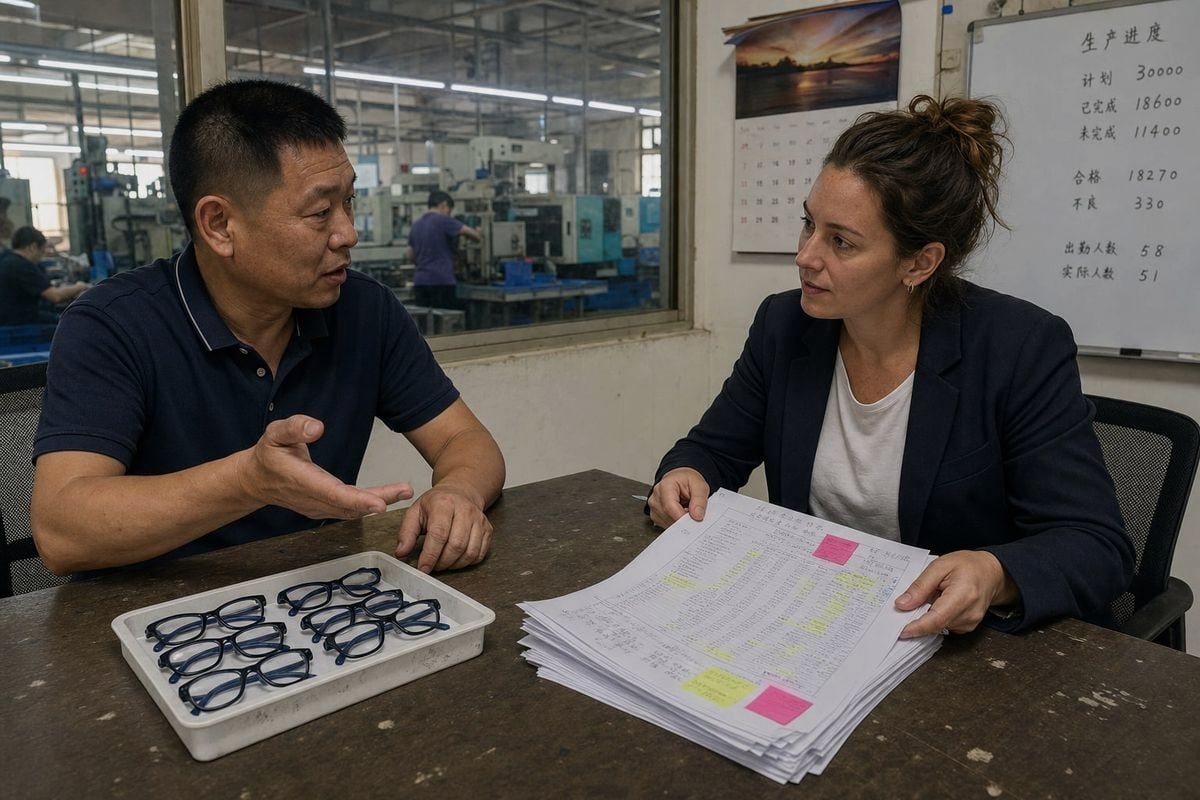
Securing fast-reorder capacity for best-selling kids optical frames 1 is a question our Taizhou production team hears constantly. Stockouts on a proven frame quietly bleed sales every single week.
To reserve fast-reorder capacity for best-selling kids optical frames, present suppliers with proven sell-through data, a rolling forecast, and a defined volume commitment. Then request a specific service level: reserved production slots, allocated raw materials, and a guaranteed replenishment lead time for your top SKUs.
That is the short answer. Below, I will walk through how to make this request credible, what lead times to expect, how to pick the right factory, and what MOQs are realistic.
How can I secure priority production slots without paying for full mold ownership?
Last spring, a buyer in Australia asked me to hold weekly line time for two flexible TR90-Rahmen 2 — without buying molds. We said yes, because she made the request easy to grant.
You can secure priority production slots without owning molds by choosing from a supplier's existing style library, committing to a rolling forecast, and offering tiered volume commitments or partial prepayment. Suppliers reserve capacity for predictable, low-friction buyers, not necessarily for those who fund tooling.
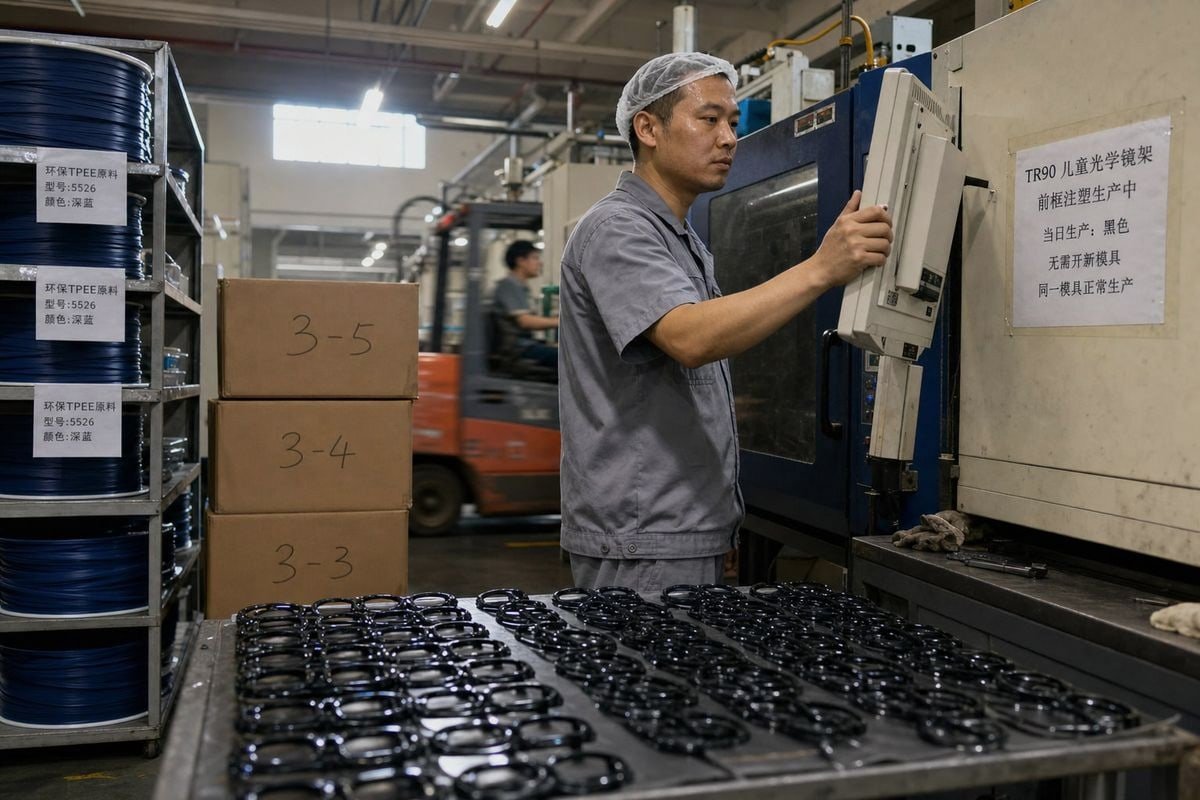
Many buyers assume mold ownership is the only ticket to priority treatment. In our experience, that is a misconception. What a factory actually protects when it reserves production capacity is its own risk. If you remove the risk, you can win the priority without the tooling invoice.
Why existing styles change the negotiation
Our factory keeps around 800 existing styles that buyers can customize with their own colors, logos, and packaging. When a buyer builds their bestseller on an open mold like this, the reservation conversation becomes much simpler. The mold is already running. The materials — TR90 fronts, TPEE temples 3 — are already in our purchasing cycle. Reserving a replenishment lane for that SKU costs us far less than holding capacity for a fully custom tool. That is why we can often agree to it in exchange for forecast visibility rather than tooling fees.
What to trade instead of mold money
Suppliers respond to specific commitments, not vague urgency. Offer things that reduce uncertainty on the factory side:
| What you offer | What it does for the supplier | What you can ask for in return |
|---|---|---|
| Rolling 3-month forecast, updated monthly | Lets them plan materials and line time | A reserved weekly or monthly production window |
| Commit-to-buy window on the next reorder | Removes cancellation risk | Pre-purchased raw material allocation |
| Partial prepayment on replenishment POs | Protects cash flow | Priority scheduling over spot orders |
| Tiered annual volume commitment | Justifies dedicated capacity | A written replenishment lead-time target |
The key phrase to use is simple: "If we can show predictable sell-through, can you reserve a defined replenishment lane for our top kids frames?" That framing turns a favor into a shared planning decision. In my experience, factories say yes to planners and hesitate with panicked buyers, even when the panicked buyer spends more.
What lead time should I expect if I want fast-reorder capacity for my top-selling frames?
There is a trade-off we weigh on every reservation request: the tighter the promised lead time, the more safety stock of components we must hold. Buyers should understand both sides of that equation.
With reserved capacity, expect replenishment lead times of roughly 15–25 days for repeat orders of existing kids optical frames, versus 35–60 days for standard reorders. Speed depends on pre-allocated materials, confirmed colors and logos, and whether shipping is by air or sea.
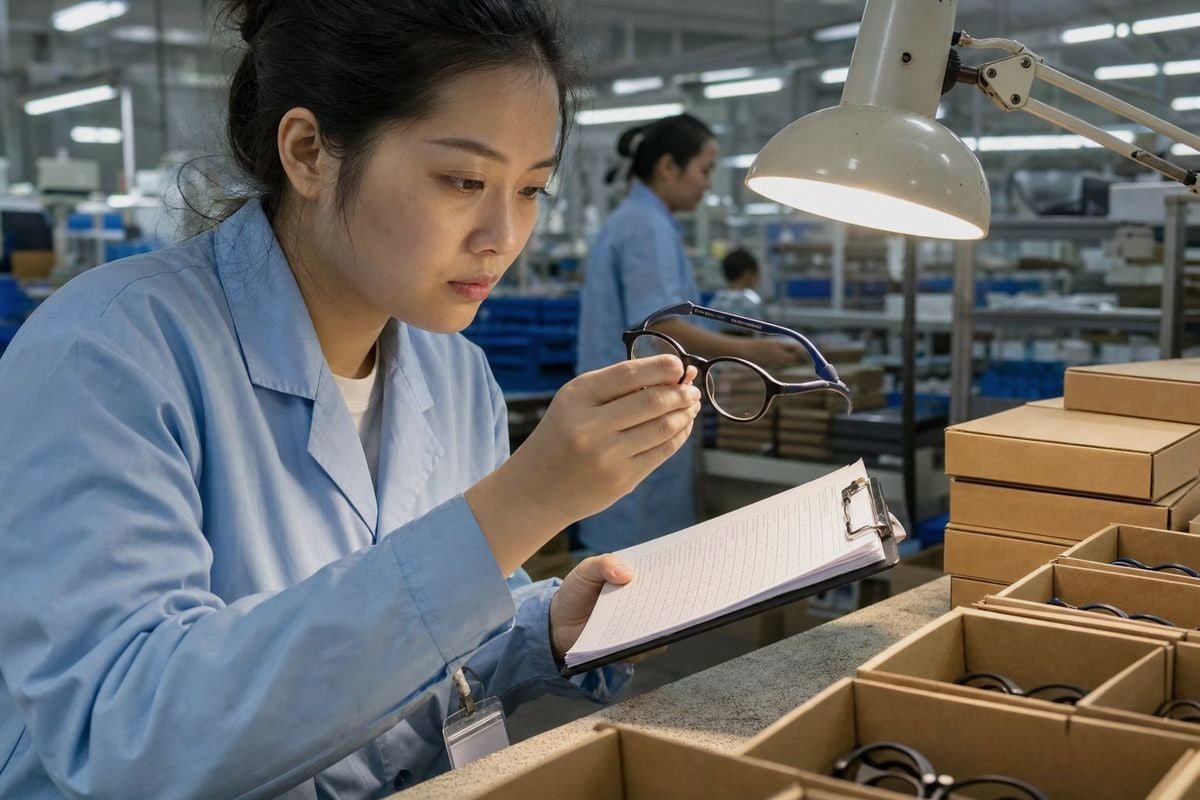
Lead times feel like a single number, but they are really a chain of stages. When we quote a replenishment date from our Taizhou workshop, we are adding up material sourcing, injection and assembly, lens fitting, quality control, packaging, and freight. If you want to negotiate faster reorders, you need to know which stage you are actually compressing.
Break the lead time into stages
| Phase | Standard reorder | With reserved fast-reorder capacity |
|---|---|---|
| Raw material sourcing (TR90, TPEE, lenses) | 7–14 Tage | 0–3 days (materials pre-allocated) |
| Production scheduling queue | 5–15 days | 0–2 days (slot already reserved) |
| Injection, assembly, temple fitting | 7–12 days | 7–10 days |
| Quality control and packaging | 3–5 days | 2–4 days |
| Ready-to-ship total | 22–46 days | 9–19 days |
The biggest wins come from the first two rows. Production itself cannot be rushed much without hurting quality — flexible temple assembly and hinge testing on children's eyewear take the time they take. But the queue and the material wait are negotiable. That is exactly what a reservation buys you.
Define fast in writing
One lesson I have learned over fifteen years of exporting: never leave the word fast undefined. Put a number in the agreement. A workable service level agreement 5 clause looks like this: "Replenishment orders for the three designated SKUs, up to X units per month, ship within Y working days of PO confirmation." Add buffer days on your side for shipping variability and inbound QC. Children's frames see need-driven, replacement-heavy demand, so a few days of buffer protects your in-stock promise without inflating inventory.
How do I choose the right kids' optical frame factory for reliable repeat orders?
A Japanese brand once switched to us after their previous vendor delivered a reorder in a slightly different pink. For repeat orders, consistency matters more than the first sample ever does.
Choose a factory with genuine flexible-material expertise, a deep existing style library, documented QC processes, and a track record of on-time replenishment. Evaluate them on repeat-order color consistency, communication speed, and willingness to sign lead-time commitments — not on first-sample quality alone.

Reliable repeat orders are a different test than a good first order. Almost any factory can produce one nice batch. Fewer can reproduce the same translucent pink acetate tone, the same TPEE temple flexibility, and the same packaging standard on the fifth reorder, twelve months later. When buyers visit our workshop, I encourage them to evaluate us on that repeatability, because it is where vendor relationships are really won or lost.
A practical evaluation checklist
Score candidate factories on these points before you commit your bestseller to them:
- Material expertise. Ask what happens to a TR90 or TPEE frame when a child bends the temples backward. A real kids' specialist will demonstrate it, not dodge it.
- Existing style depth. A large open-mold library means your fast-reorder request rides on tooling that is already active. It also supports a test-and-restock model: order small, validate demand, then reorder the winners quickly.
- Color and batch consistency. Request production records or retained samples from previous reorders of the same SKU. Compare batches side by side.
- QC discipline. Look for structured inspection at incoming materials, in-process assembly, and final packing. A 5S-managed workshop is a good visible signal.
- Communication protocol. You need a named contact, response within one working day, and proactive alerts when anything slips. Ambiguity causes more delays than machines do.
- Willingness to commit. The decisive test: will they put a replenishment lead time in writing? Factories confident in their production capacity will. Traders reselling someone else's capacity usually will not.
Consider a tiered supplier strategy
For supply chain resilience, many of our long-term buyers designate a primary, highly responsive factory for their critical fast-reorder SKUs, and keep a secondary source for slower, larger-volume programs. That structure protects your best sellers while keeping negotiating leverage healthy. Direct visibility helps too — even simple shared spreadsheets showing our material stock and schedule status have prevented more stockouts for buyers than any contract clause.
What minimum order quantities are realistic when negotiating reorder priority with a supplier?
Early in my career, I quoted a rigid single MOQ to a small European chain and lost the account. Since then, our team structures MOQs around the buyer's reorder rhythm instead.
Realistic MOQs for prioritized reorders of existing kids optical frame styles typically run 300–500 pieces per style for custom colors and logos, dropping to 100–300 pieces per replenishment order once capacity is reserved and materials are pre-allocated under a volume agreement.
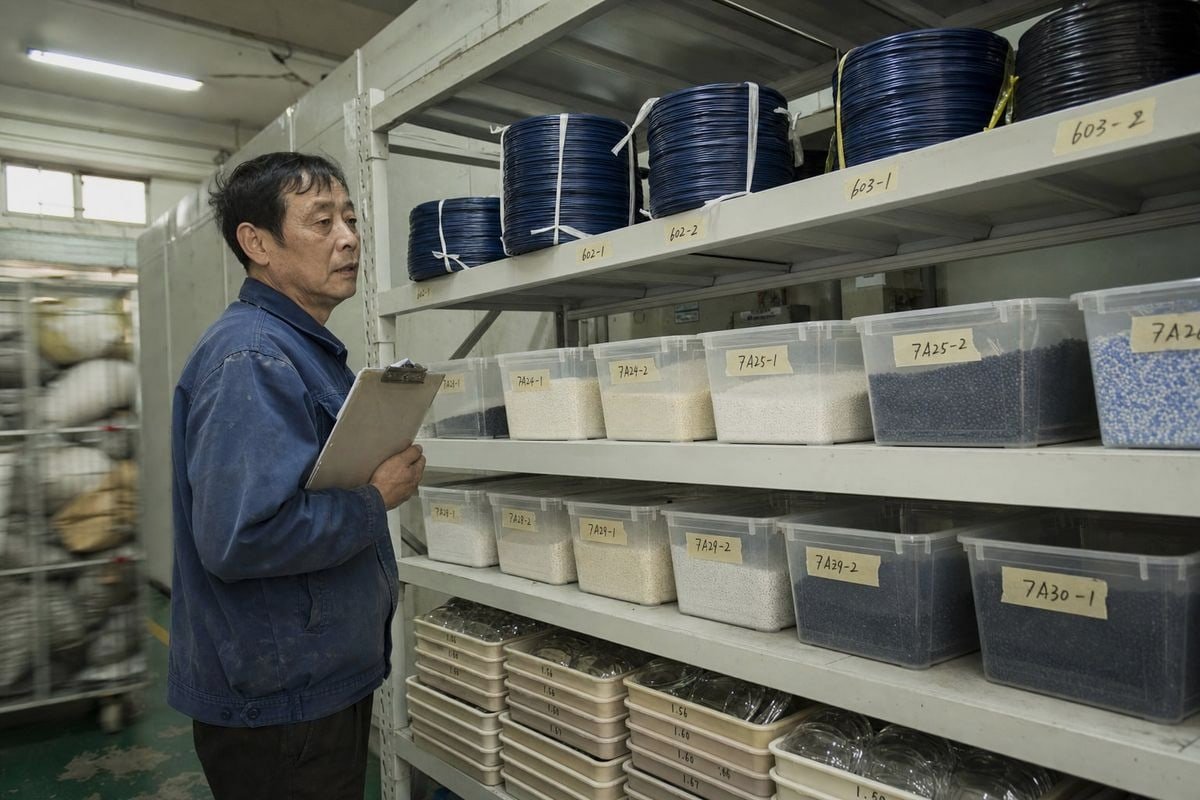
The minimum order quantity conversation changes completely once a reservation exists. A first order must cover setup, color matching, and material purchasing for an unknown relationship. A replenishment order under a reserved lane covers none of that — the colors are approved, the logo plates exist, and the TPEE and TR90 material is already allocated. So the honest answer is that MOQ is not one number. It is a ladder.
Typical MOQ tiers under a reservation agreement
| Bestellart | Typical MOQ per style | Why it works at this level |
|---|---|---|
| First custom order (new colors, logo, packaging) | 300–500 Stück | Covers color matching, printing plates, packaging setup |
| Standard reorder, no reservation | 300+ pcs | Materials purchased per order; full queue applies |
| Replenishment order under reserved capacity | 100–300 pcs | Materials pre-allocated; setup already amortized |
| Emergency top-up within agreed SLA | 100–200 pcs | Priced with a modest premium; pulls from safety stock |
Balance MOQ against cash flow and demand fragmentation
Kids frames fragment across sizes and colors — a glossy black frame with navy TPEE temples may fly while its red twin sits. Overstocking every variant is expensive, which is exactly why smaller, faster reorders beat one giant PO. Use basic demand forecasting 6 to set your reorder point: units sold per week over the last 8–12 weeks, times your total replenishment lead time, plus safety stock. Bring that math to the negotiation. When a buyer shows me sell-through percentages, backorder history, and a color-mix breakdown by velocity, I can defend a lower per-order MOQ internally, because the annual volume picture justifies the reserved lane. Vague promises of big future orders do not move MOQs. Data does. Strong inventory management on your side is the strongest MOQ argument you own.
Schlussfolgerung
Stockouts on proven kids frames cost real sales. Bring data, commit to volume, define lead times in writing, and your supplier will gladly reserve fast-reorder capacity for your bestsellers.
Fußnoten
1. Provides market size, trends, and growth forecasts for children’s eyewear. ↩︎
2. Provides a comprehensive definition and properties of TR90 frame material in eyewear. ↩︎
3. Explains TPEE material and compares it to TR90 in the context of kids’ sunglasses frames, which is highly relevant to the original context. ↩︎
4. Offers a clear and comprehensive definition of a rolling forecast, its benefits, and how it works. ↩︎
5. Defines service level agreements and their importance in vendor contracts. ↩︎
6. Defines demand forecasting and outlines its methods and importance in business strategy. ↩︎
Weitere Artikel, die Ihnen gefallen könnten
August 2026
Bio-Based vs Regular Cellulose Acetate: What's the Difference for Kids' Frames?

August 2026
How Recyclable Are Kids' Optical Frame Materials, and What Eco-Friendly Alternatives Exist?
August 2026
Bleichen Kinderbrillengestelle im Lager aus oder altern sie, und wie kontrolliert man die Lagerbedingungen?
Auf der Suche nach einem zuverlässigen Partner für Kinderbrillen?
Entdecken Sie über 800 sofort verfügbare Modelle und umfassenden OEM/ODM-Support, der auf Ihre Marke zugeschnitten ist.
Kontakt aufnehmen English
  Español de México
  Deutsch
  Français
  日本語
日本語  العربية
  Português do Brasil