How Should I Allocate Color Quantity Ratios for a First Kids Optical Frames Order?

Choosing color quantity ratios for a first kids optical frames order stumps almost every new buyer I meet through our Taizhou factory optimal color variations 1. Guess wrong, and dead stock piles up fast.
Allocate roughly 65% of your first kids optical frames order to core colors like black, navy, tortoise, and clear, 25% to bright child-appeal shades like blue, pink, and red, and 10% to trend or seasonal test colors. Adjust ratios after your first sell-through data.
That formula is a starting point, not a law. Below, I break down how to adapt it to your market, your age bands, and your risk tolerance.
How Many Colors Should I Include in My First Kids Optical Frames Order?
Our sample room in Taizhou holds around 800 existing styles, and buyers often want to stock a dozen colorways at once. In my experience, that usually backfires on a first order.
Include 4 to 6 colors per frame style in a first kids optical frames order. This range gives children real choice, keeps optical inventory management simple, and lets you hit minimum order quantities without spreading your budget across colors that may never sell.
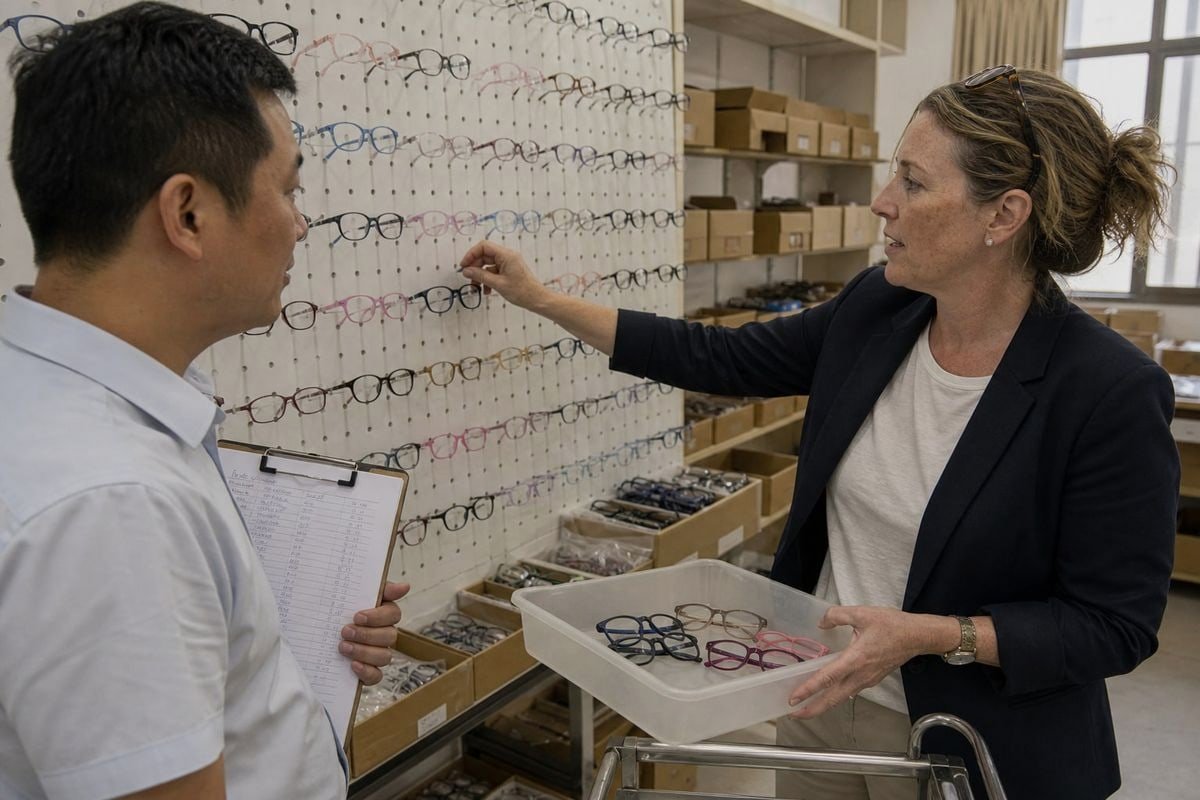
Wholesale catalogs are deceptive. When we send a color card, it might show ten or twelve options for one TR90-Rahmen 2. That does not mean you should stock all twelve. A catalog exists to serve many markets at once. Your first order only needs to serve yours.
Here is the trade-off I walk buyers through. More colors mean better shelf appeal and more child preference in eyewear coverage. But more colors also mean smaller depth per color, which raises your reorder risk. If a color sells out in two weeks and you only bought ten units, you have lost sales while waiting on a restock. Fewer colors with deeper stock protect your cash flow and your delivery reliability.
A Simple Sizing Guide by Order Volume
| Total First Order | Recommended Colors per Style | Depth per Color |
|---|---|---|
| 100–200 frames | 3–4 colors | 25–50 units |
| 300–500 frames | 4–6 colors | 50–100 Stück |
| 600–1,000 frames | 5–7 colors | 85–200 units |
One more point matters. Minimum order quantities per colorway exist because dyeing TPEE and TR90 material in small batches is inefficient. If you push for eight colors on a small order, you either pay more per unit or compromise on quality control. Four to six colors keeps your per-color volume healthy, your pricing sane, and your assortment focused. Start narrow. Widen only after the eyewear purchasing data tells you which color families your customers actually buy.
What Color Ratio Works Best When I Don't Have Sales Data Yet?
A distributor in Australia once asked me to guess her best-sellers before her launch. I told her honestly: without eyewear purchasing data, we plan for risk control first and excitement second.
Without sales data, use a 65/25/10 split: 65% core neutrals such as black, navy, grey, tortoise, and clear; 25% bright child-appeal colors such as blue, pink, red, and teal; and 10% experimental shades such as translucent, two-tone, or seasonal colors.
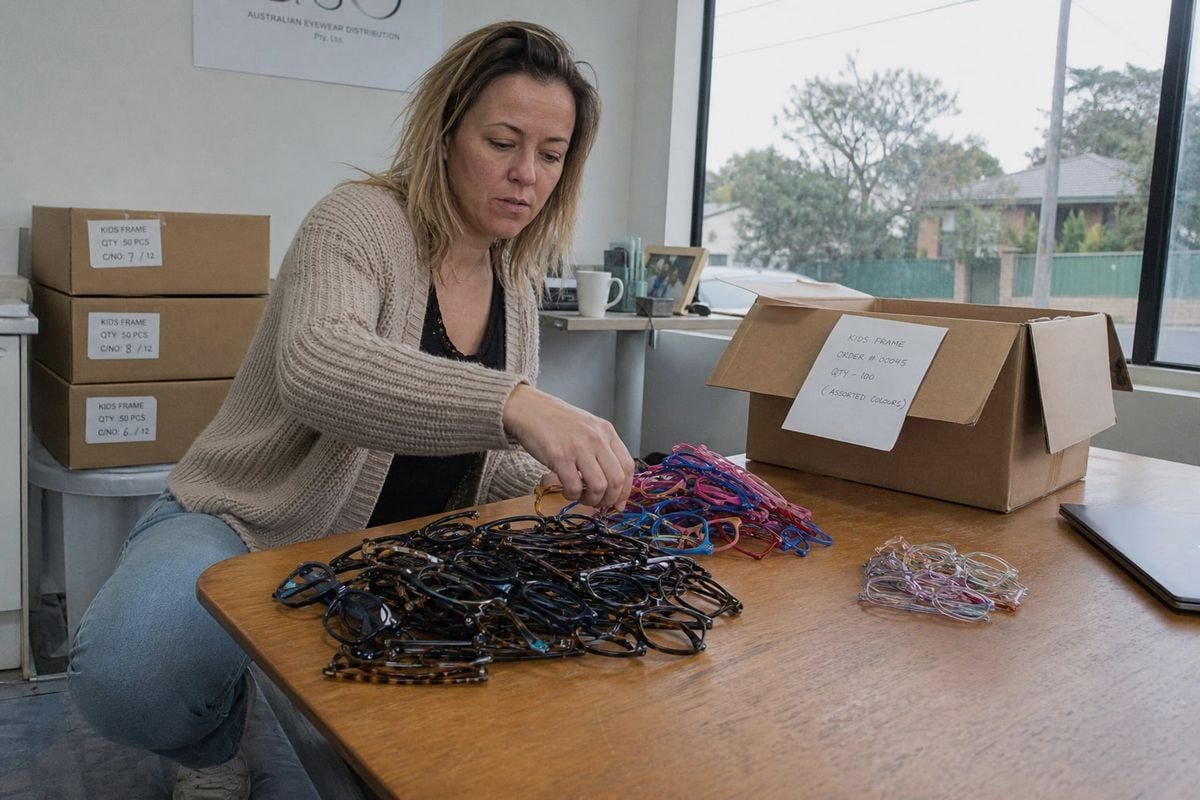
Why does this split work when you have no history? Because it balances two forces that research and dispensing practice both confirm. Studies on color psychology in children show kids respond to brighter, warmer, more saturated colors within a comfortable range. Warm hues like red, orange, and yellow tend to perform slightly better in attention studies. At the same time, the parent approves the purchase, and parents want everyday wearability, school acceptability, and easy outfit matching. Core colors satisfy the parent. Brights satisfy the child. The small test slice lets you learn without betting real money on children's eyewear trends that may not stick.
Three Ratio Models to Choose From
| Model | Core Colors | Brights | Test Colors | Am besten geeignet für |
|---|---|---|---|---|
| Conservative retail | 70% | 20% | 10% | Independent opticians, uniform-heavy markets |
| Balanced starter | 65% | 25% | 10% | Most first-time buyers |
| Fashion-forward | 50% | 35% | 15% | Online kids brands, trend-driven markets |
Some buyers push back here. They argue that if a child loves the color, the child actually wears the glasses, so inventory should lean hard into brights. I understand the logic, and compliance matters. But fit, comfort, and durability come first in pediatric eyewear 3 — a beautiful neon frame that pinches or slips helps nobody. Color should optimize acceptance after the functional basics are met. The 65/25/10 split respects both truths. It gives every child a color they can love while keeping most of your capital in colors with proven, evergreen demand. Once your first sell-through period ends, let the numbers move the ratio.
Should I Order Equal Quantities for Each Color, or Weight Toward Best-Sellers?
Fifteen years of packing export cartons has taught our team one clear lesson: buyers who split quantities evenly across five colors almost always come back with three winners and two problems.
Do not order equal quantities. Weight your order toward proven core colors at roughly double the depth of accent colors. Equal splits treat unproven shades like best-selling frame colors, which guarantees overstock in your weakest colorway and stockouts in your strongest.

Equal splits feel fair and simple. That is exactly why they fail. Demand for frame colors is never flat. In nearly every market we ship to, black and navy outsell any single bright shade, often by a wide margin. If you buy 20 units each of five colors, you will likely sell through black in weeks and sit on lime green for a year.
A Worked Example for a 100-Frame Order
Take one of our popular constructions — a TR90 front with flexible TPEE temples, like our black frame with two-tone navy temples and silicone ear hooks. Here is how I would weight a single style across five colors:
| Color | Rolle | Units | Share |
|---|---|---|---|
| Glossy black / navy temples | Core | 30 | 30% |
| Navy blue | Core | 25 | 25% |
| Tortoise or crystal clear | Core | 15 | 15% |
| Translucent blush pink | Bright accent | 20 | 20% |
| Teal or red two-tone | Test | 10 | 10% |
Notice the logic. Core colors get depth because they carry the least risk and the steadiest turn. The translucent pink — a jelly-like acetate look that photographs beautifully for e-commerce — gets meaningful but smaller depth. The test color gets just enough units to generate a signal without hurting you if it flops.
There is a counterargument worth addressing. Some buyers say weighting toward safe colors makes the shelf look boring. My answer: display and depth are different decisions. Show all five colors with equal prominence on the shelf or product page. Just do not stock them at equal depth behind the scenes. Presentation drives desire; weighted inventory protects margin. This is basic optical inventory management 4, and it is where flexible frame materials with proven colorways give you a reliable backbone to build around.
How Do I Balance Boy, Girl, and Unisex Color Options in My First Order?
A European baby-brand buyer surprised me two seasons ago by cutting every strictly gendered colorway from her draft order. Her reasoning changed how I now advise first-time buyers.
Build your first order around 50–60% unisex colors like black, navy, grey, clear, and tortoise, then add 20–25% traditionally girl-leaning shades and 15–20% boy-leaning shades as accents. Unisex depth sells across your whole customer base and cuts leftover-stock risk.
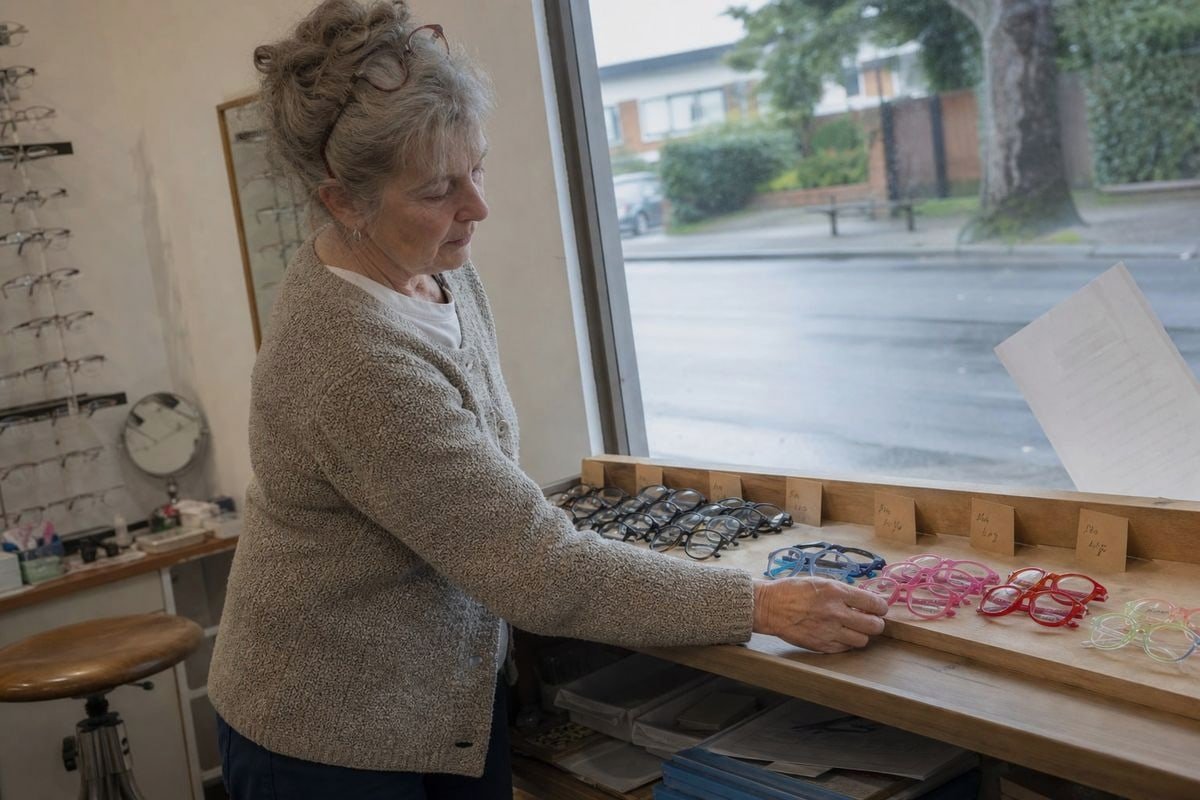
The old model split kids glasses into a rigid boys' wall and girls' wall. That model quietly punishes your inventory. A pink frame that only girls consider serves perhaps half your walk-in traffic. A navy frame serves nearly all of it. So every unit of deep, unisex stock works harder than every unit of narrowly gendered stock. This is why modern children's eyewear trends lean toward gender-neutral assortments with optional accent colors, and why we develop most of our TR90 and TPEE colorways to read as unisex first.
That said, gendered accents still sell, and pretending otherwise loses revenue. Our translucent blush-pink cat-eye style is a consistent performer with school-age girls, and bold sporty blue-black combinations pull strongly with boys. The mistake is not stocking them. The mistake is stocking them as deeply as your cores.
Layer Gender Strategy Onto Age-Specific Frame Styles
Age changes the balance. For toddlers, parents dominate the choice and durability of the kids glasses materials matters most, so keep colors simple, cheerful, and mostly unisex. Primary school children express color identity strongly, so this band can carry your widest accent range — this is where pinks, purples, teals, and bright reds earn their space. Tweens drift toward adult tastes: matte finishes, subtle two-tone acetates, and darker neutrals scaled down from grown-up frames. Weight tween colorways almost entirely toward sophisticated unisex tones.
One practical rule ties it together: never let a single highly gendered color exceed 10% of total units on a first order unless your local market data clearly demands it. Keep the core versus trend colors discipline running through your gender strategy too, and your second order will practically write itself.
Schlussfolgerung
Getting the first order wrong means capital frozen in unwanted colors. Start with 4–6 colors at a 65/25/10 split, weight cores double, keep unisex depth dominant, then let sell-through data refine every reorder.
Fußnoten
1. Original URL was HTTP 404 and anchor text was a poor fit for the original content. New URL discusses developing optimal color variations for products, which aligns with allocating color quantity ratios. ↩︎
2. Details properties and benefits of TR90 material for eyewear, including durability and comfort. ↩︎
3. Original URL was HTTP 404. Replaced with an authoritative .org source on glasses fitting for children. ↩︎
4. Provides a practical guide to managing optical shop inventory, including metrics and workflow. ↩︎
Weitere Artikel, die Ihnen gefallen könnten

August 2026
Bio-Based vs Regular Cellulose Acetate: What's the Difference for Kids' Frames?

August 2026
How Recyclable Are Kids' Optical Frame Materials, and What Eco-Friendly Alternatives Exist?
August 2026
Bleichen Kinderbrillengestelle im Lager aus oder altern sie, und wie kontrolliert man die Lagerbedingungen?
Auf der Suche nach einem zuverlässigen Partner für Kinderbrillen?
Entdecken Sie über 800 sofort verfügbare Modelle und umfassenden OEM/ODM-Support, der auf Ihre Marke zugeschnitten ist.
Kontakt aufnehmen English
  Español de México
  Deutsch
  Français
  日本語
日本語  العربية
  Português do Brasil