China vs Southeast Asia: Which Is Best for Sourcing Kids’ Sunglasses?
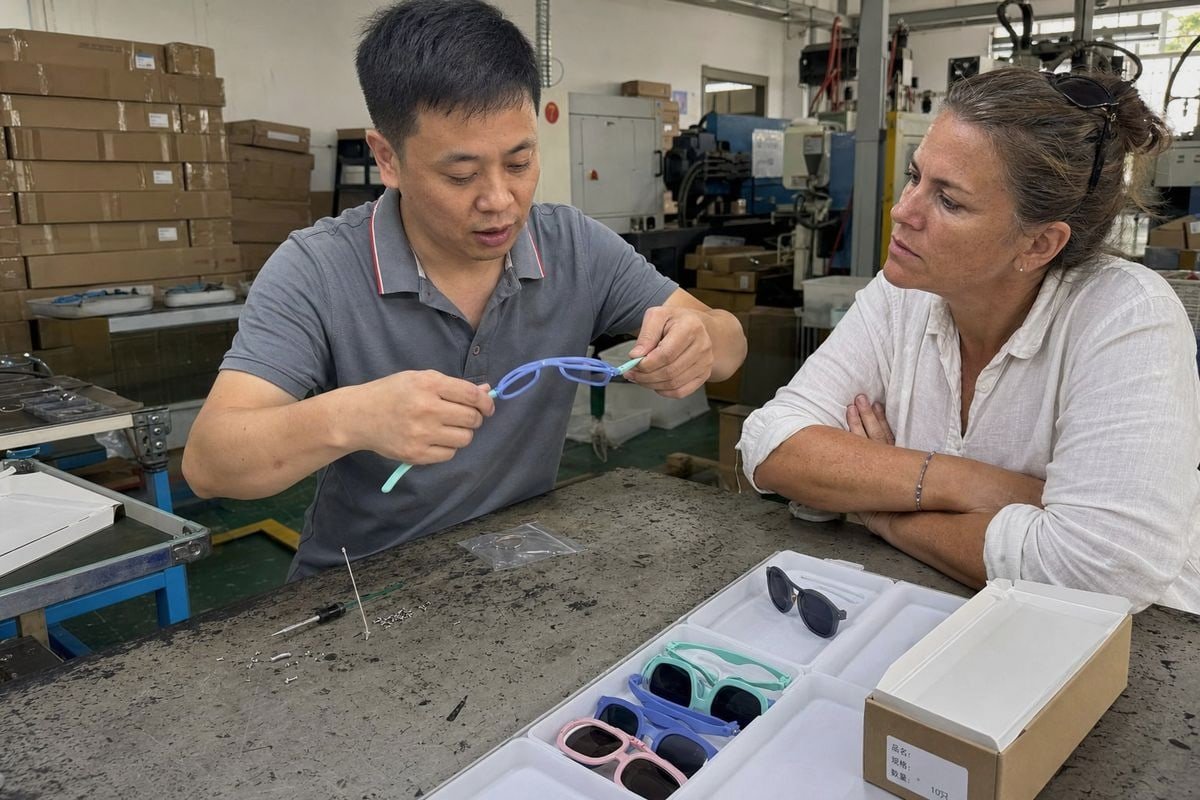
Sourcing kids’ sunglasses from the wrong region can quietly kill a brand REACH compliance requirements 1. I’ve watched buyers visit our Taizhou factory after failed orders elsewhere — broken hinges, missing test reports, blown launch dates. The stakes with children’s products are simply higher, and one bad container can erase a season’s margin. The good news: once you match the region to your product stage, the decision becomes surprisingly clear.
China is the stronger choice for sourcing kids’ sunglasses when you need complex designs, fast sampling, TPEE/TR90 material expertise, and tight compliance documentation. Southeast Asia works better for simple, high-volume repeat styles and tariff diversification. Most successful brands prototype in China and consider diversifying only after designs stabilize.
That answer needs unpacking. Kids’ eyewear is not generic fashion — safety, testing, and traceability change the math. Let’s compare both regions across quality, cost, speed, and support.
How do I compare product quality and material expertise between Chinese and Southeast Asian kids' sunglasses factories?
A buyer from Australia once handed me a competitor's frame and asked me to snap it. It bent flat and sprang back — that's what fifteen years of flexible-material work in our workshop looks like.
Chinese factories lead in material expertise for children's eyewear, especially flexible TPEE and TR90 frames, precision molding, and component-level traceability. Southeast Asian factories deliver acceptable quality on basic injection-molded styles, but China's mature industrial clusters offer deeper skills for safety-critical, child-specific construction and finishing.
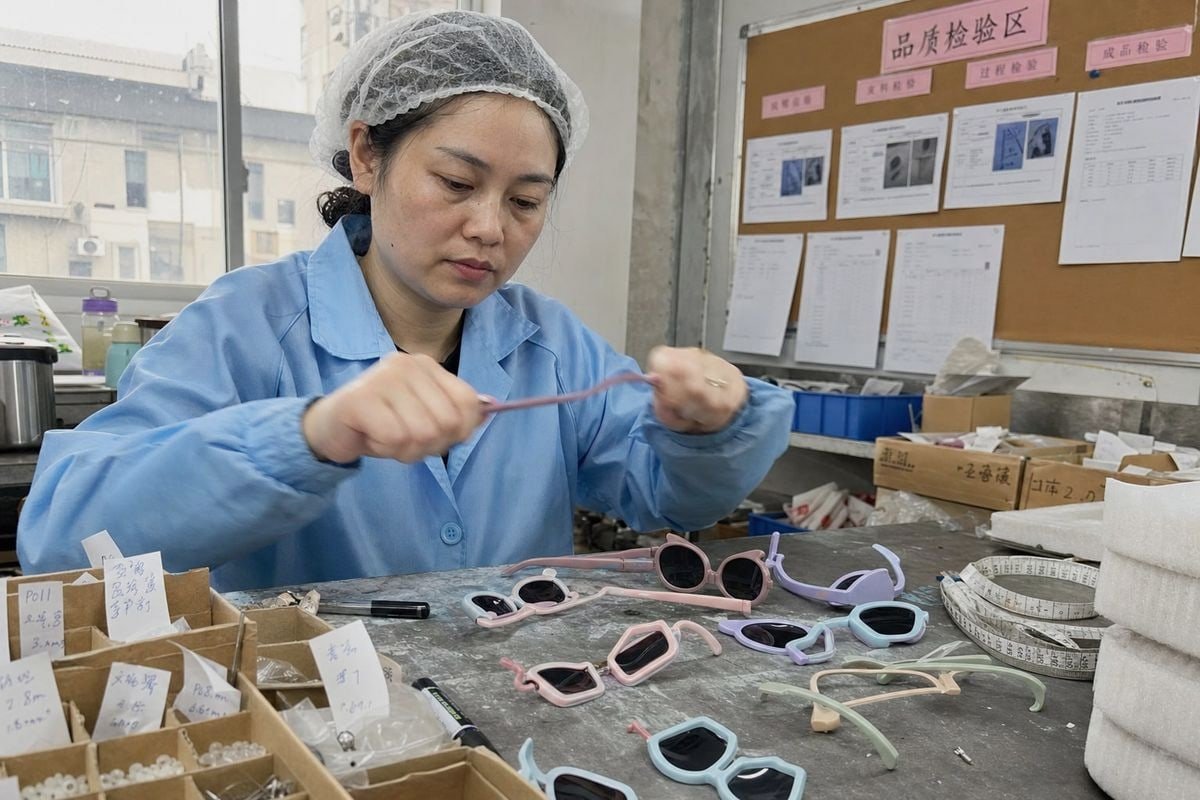
Quality in children's sunglasses starts with materials, not looks. A frame that sits on a child's face must survive twisting, chewing, dropping, and sitting-on. That's why the industry is pivoting toward TPEE as the technical gold standard for unbreakable, chew-safe frames — and China currently holds a clear production lead in that material. On our own lines, we pair TR90 fronts with TPEE flexible frames and temples precisely because the combination bends without snapping and stays comfortable on small nose bridges.
Where each region's strengths actually lie
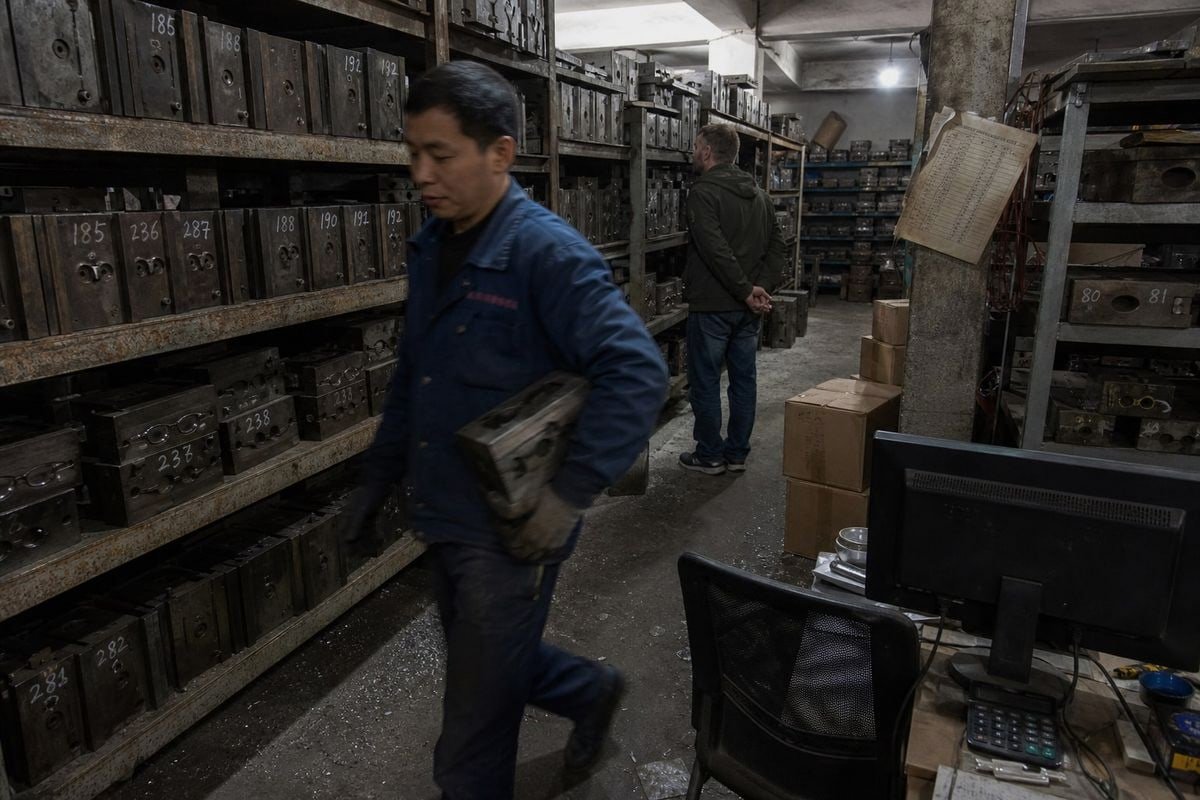
Southeast Asia can absolutely mold a basic polycarbonate frame well. Vietnam in particular handles simple TR90 injection work 2 at scale. But complexity is where the gap opens. Spring hinges sized for children, soft-touch overmolding, hinge-less sensory-friendly designs for neuro-inclusive product lines — these need high-precision tooling that is currently only scalable in China's top-tier clusters like Wenzhou and Taizhou.
| Quality Factor | China | Southeast Asia |
|---|---|---|
| TPEE / flexible material expertise | Deep, mature | Begrenzt |
| Basic injection-molded frames | Ausgezeichnet | Gut |
| Child-safe lens options (UV400, polarized) | Wide availability | Narrower supply |
| Component traceability & test reports | Well-established | Varies by factory |
| Complex hinges & overmolding | Strong | Emerging |
| Finishing consistency at volume | Hoch | Good (Thailand strongest) |
Compliance is part of quality
For kids' products, documentation is quality. A serious supplier should show recent CPSIA compliance reports 3, REACH test results, and material certificates for every component — frame, nose pads, temple tips, hinges, screws, and coatings. We keep these on file for our export customers because a missing certificate can hold a shipment at customs longer than any production delay. When you run a factory audit in either region, ask for component-level paperwork first. It tells you more than a showroom tour ever will.
What should I know about MOQs and startup costs when sourcing kids' sunglasses from China versus Southeast Asia?
New brands often arrive at our booth assuming every custom frame needs a five-figure mold investment. Then we walk them through our catalog of roughly 800 existing styles, and the math changes completely.
China typically offers lower effective startup costs for kids' sunglasses because large style libraries let brands launch without new molds, and Minimum Order Quantity terms are flexible across thousands of suppliers. Southeast Asia offers lower labor costs per unit but usually demands higher volumes and more limited existing tooling.
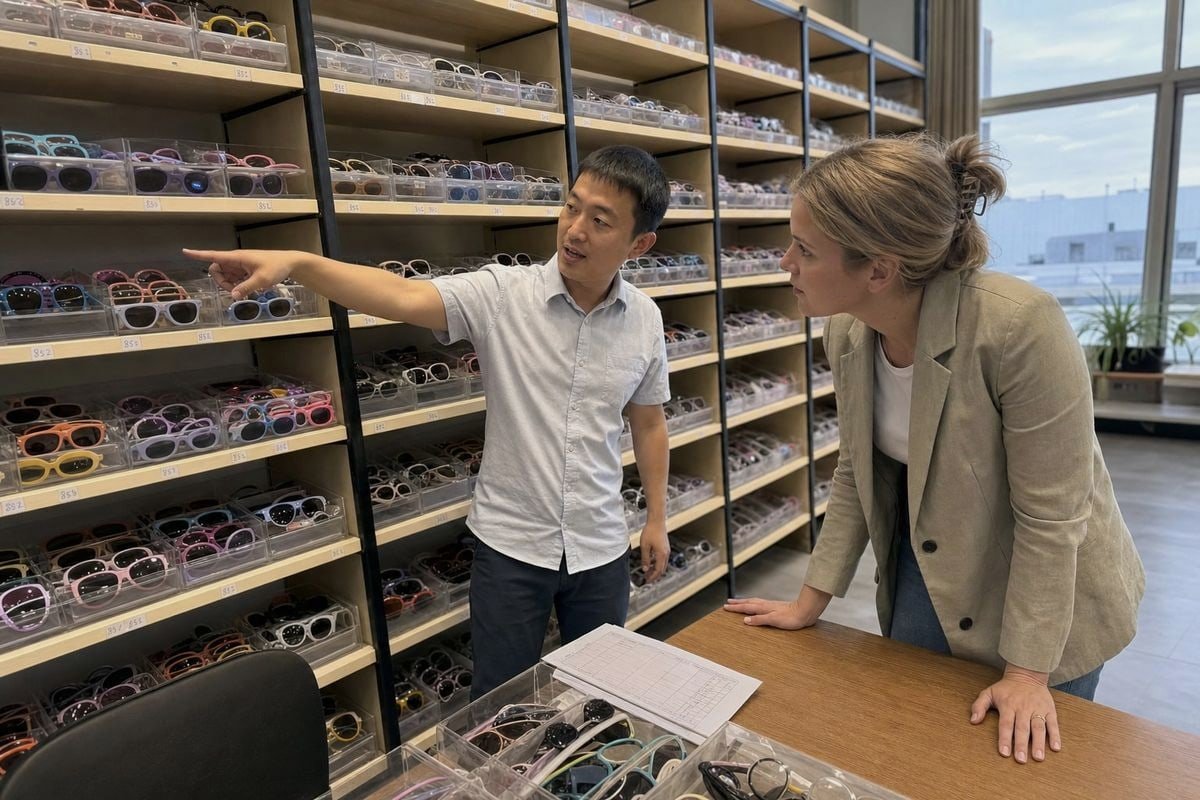
Startup cost is not just unit price. It is tooling, sampling, certification, and the minimum cash you must commit before you know if a style sells. This is where the two regions genuinely diverge.
The hidden math behind "cheap" units
Vietnam offers the biggest labor cost advantage for high-volume, simple injection-molded sunglasses. But that advantage only materializes at scale. If a factory quotes you a lower unit price with a 10,000-piece Minimum Order Quantity per color, a startup testing four colorways is locked into 40,000 units of unproven inventory. In China, the depth of the supplier base means you can often negotiate MOQs of 300–1,200 pieces per style, especially when you build on existing tooling rather than opening new molds.
| Kostenelement | China | Southeast Asia |
|---|---|---|
| Typical MOQ (custom color on existing style) | Lower, negotiable | Higher, less flexible |
| New mold investment | Optional (large style libraries) | Often required |
| Labor cost per unit | Mäßig | Lower (Vietnam lowest) |
| Sampling cost & availability | Low, fast | Moderate, slower |
| Import duties into US/EU | Higher tariff exposure | Often lower |
| Compliance testing setup (CPSIA, REACH) | Established labs, routine | Possible but less routine |
Duties change the picture — but not for everyone
Import duties are the strongest financial argument for Southeast Asia. US and EU tariff exposure on Chinese-origin eyewear has pushed many retailers toward a "China + 1 4" strategy. Some supply chains now even run a "finish-to-order" model: blank frames produced in China, with final dyeing and assembly done in Southeast Asian free-trade zones to legally optimize origin labeling. My honest advice to smaller brands: model the full landed cost. For orders under a container load, flexible MOQs and zero mold spend in China usually outweigh the duty savings elsewhere.
How do lead times and supply chain reliability differ between China and Southeast Asia for children's eyewear orders?
Last spring, a European kids' brand asked us to turn a 2D sketch of a wraparound sport shield — mirrored gradient lens, contoured temples — into a physical sample before their trade show. We shipped it in under a week.
China delivers faster lead times for children's eyewear, with prototypes in three to five days and bulk production in 30–45 days, thanks to one-stop component clusters. Southeast Asia typically runs longer because hinges, lenses, and coatings are often imported, adding weeks and single-point supply risks.
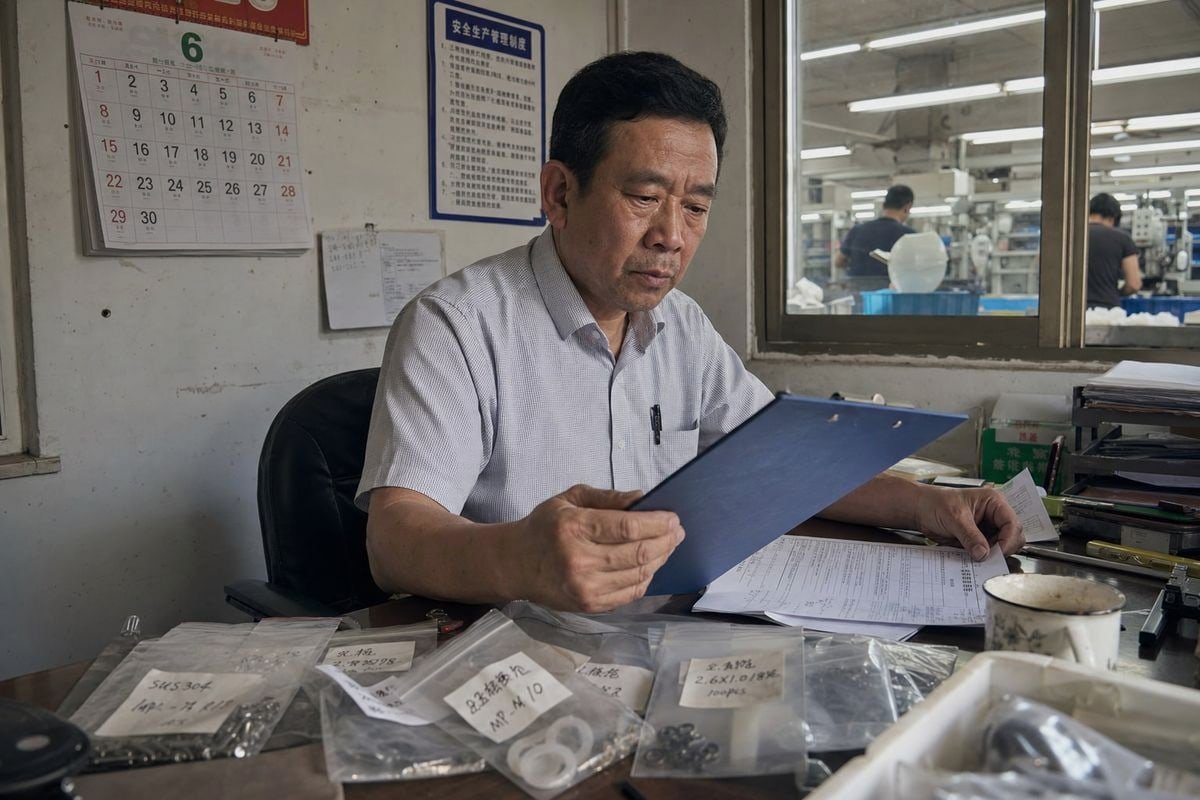
Speed in eyewear comes from proximity. In clusters like Wenzhou and Taizhou, every component — child-safe polycarbonate lenses, polarized lenses, specialized small-size hinges, screws, coatings, packaging — sits within a short drive. When our production line needs a revised hinge, we get it in days, not weeks. That integration is why China remains the global leader in rapid prototyping, converting sketches into 3D samples in as little as three to five days.
A typical timeline, compared
- Sampling: China, 3–7 days for existing styles or modified tooling; Southeast Asia, often 2–4 weeks because tooling depth is thinner.
- Pre-production approval and lab testing: similar in both regions, though established Chinese labs process CPSIA and UV400 protection verification faster because the workflows are routine.
- Bulk production: 30–45 days in China for typical kids' orders; comparable machine time in Southeast Asia, but component imports frequently add 2–3 weeks.
- QC and shipping: China's port density gives more sailing options; Southeast Asian ports are improving but offer fewer direct routes for smaller shipments.
Reliability is more than speed
Reliability means predictable reorders. Here Southeast Asia has a real argument: supply chain diversification. Relying on one country concentrates risk, and buyers burned by past disruptions now want a second region on standby. Thailand stands out as the steadier Southeast Asian option, with more stable infrastructure 5 and better quality-control consistency than Vietnam. The pragmatic model many of our long-term customers follow: develop and launch in China, keep the design stable for two seasons, then evaluate whether a second production base makes sense for core repeat SKUs. Diversification works best when your specs are already frozen.
Which region offers better OEM/ODM support and communication for my kids' sunglasses brand, China or Southeast Asia?
The trade-off I weigh most often with buyers is this: how much of the product do you want to shape yourself? Your answer decides which region can actually serve you.
China offers substantially stronger OEM/ODM support for kids' sunglasses brands: custom colors, logos, lens treatments, retail-ready packaging, and experienced English-speaking export teams. Southeast Asian factories handle straightforward OEM replication well, but deep co-development, fast design iteration, and full branding services remain concentrated in Chinese factories.
ODM is where a factory stops being a vendor and becomes a development partner. On our side, that means helping a baby-product brand choose between a matte two-tone round frame in soft periwinkle and mint — playful, safe, rounded for toddlers — versus a bold mirrored sport shield for active older kids. Those are different materials, different lens specs, different packaging stories. A factory that only quotes prices cannot have that conversation.
What full-service support actually includes
| OEM/ODM Capability | China (mature clusters) | Southeast Asia (typical) |
|---|---|---|
| Custom colors & Pantone matching | Standard service | Available, slower |
| Logo printing & branded temples | Standard service | Basic options |
| Lens customization (UV400, polarized, mirrored gradient) | Wide range | Limited range |
| Retail-ready packaging & accessories | Full in-house or local sourcing | Often outsourced |
| Digital 3D assets for virtual try-on | Emerging at advanced factories | Selten |
| English-speaking dedicated sales support | Üblich | Varies widely |
Advanced Chinese manufacturers now go further, offering high-fidelity "digital twin" 3D assets alongside physical samples, so brands can launch AR virtual try-on marketing before inventory even ships. That level of co-development simply isn't part of the standard offer in emerging hubs yet.
Communication and compliance paperwork
Communication quality decides whether small problems stay small. Fifteen years of exporting to more than twenty countries taught our team to over-communicate: photos at each QC checkpoint, pre-shipment inspection reports 6, and clear answers on FDA-Registrierungsanforderungen 7 for US-bound eyewear. To be fair to the pro–Southeast Asia view: Thai factories serving mid-to-high-end OEM projects can communicate very professionally, and if your product is a locked, simple design, that may be enough. But if your brand plans seasonal capsules, new colorways, or safety-driven design changes, the depth of Chinese ODM teams — and their fluency with children's compliance documentation — is hard to replicate elsewhere.
Schlussfolgerung
Choosing wrong costs seasons, not just dollars. My recommendation after fifteen years: develop and differentiate kids' sunglasses in China; consider Southeast Asia only for stable, high-volume repeat styles.
Fußnoten
1. Official European Commission portal explaining REACH regulation and chemical safety requirements for the EU market. ↩︎
2. Official product page for Grilamid TR90, the industry-standard material for high-quality eyewear. ↩︎
3. Official US government site explaining safety requirements for children’s products. ↩︎
4. Business strategy for diversifying manufacturing away from total reliance on China. ↩︎
5. Global authority providing data and insights on the importance of infrastructure for trade. ↩︎
6. Overview of the quality control process used to verify goods before they are exported. ↩︎
7. Official US FDA guidance on medical device registration, which includes sunglasses. ↩︎
Weitere Artikel, die Ihnen gefallen könnten
August 2026
Sollte die Fabrik die Verpackung und Kennzeichnung von Kinder-Sonnenbrillen übernehmen oder einen bestimmten Lieferanten nutzen?
August 2026
Eigenes Lager vs. Direktlieferung durch den Lieferanten: Was senkt die Retourenkosten für Marken von Kinder-Sonnenbrillen?
August 2026
Direkt zum Lagerhafen oder Lagerung in Übersee: Was spart mehr bei den Versandkosten für Kinder-Sonnenbrillen?
Auf der Suche nach einem zuverlässigen Partner für Kinderbrillen?
Entdecken Sie über 800 sofort verfügbare Modelle und umfassenden OEM/ODM-Support, der auf Ihre Marke zugeschnitten ist.
Kontakt aufnehmen English
  Español de México
  Deutsch
  Français
  日本語
日本語  العربية
  Português do Brasil