Brauche ich meinen eigenen AS/NZS 1067.1 Prüfbericht für Kinder-Sonnenbrillen?
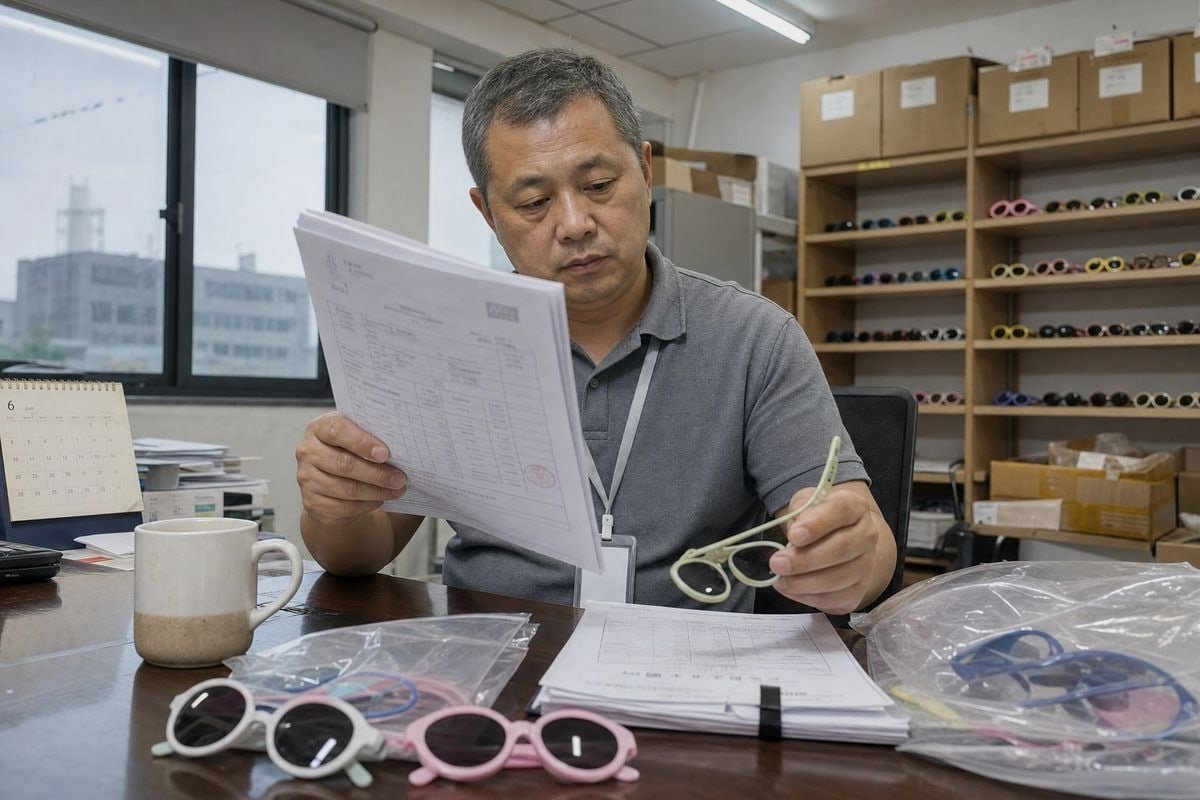
Käufer fragen mich fast wöchentlich nach dem AS/NZS 1067.1 Prüfbericht für Kinder-Sonnenbrillen. Ein fehlendes Dokument kann Ihre Sendung am australischen Zoll festhalten, daher nimmt unsere Fabrik dies ernst.
Sie benötigen nicht immer einen Bericht in Ihrem eigenen Namen, aber Sie müssen gültige, produktspezifische Nachweise darüber haben, dass Ihr exaktes Kinder-Sonnenbrillenmodell AS/NZS 1067.1 erfüllt. Wenn Sie eine Eigenmarke führen, Materialien ändern oder die Fabrik wechseln, wird dringend empfohlen, Ihren eigenen akkreditierten Laborprüfbericht zu erhalten.
Diese kurze Antwort verbirgt viele Details. Lassen Sie mich Ihnen erklären, wann ein Lieferantenbericht funktioniert, wann er fehlschlägt und wie Sie Ihre Marke schützen können.
Kann ich mich auf die bestehende AS/NZS 1067.1-Zertifizierung meines Lieferanten verlassen, anstatt meine eigene Marke zu testen?
Ein australischer Käufer schickte mir einmal den Prüfbericht eines Konkurrenten und fragte, ob er einen ähnlichen Stil aus unserem 800-Modellkatalog "abdeckt". Ich musste nein sagen – und hier ist der Grund.
Sie können sich auf einen Lieferantenbericht nur dann verlassen, wenn er mit Ihrer genauen SKU übereinstimmt: gleiches Linsenmaterial, Tönung, LinsenKategorie, Rahmenkonstruktion und Fabrik. Wenn Sie unter Ihrer eigenen Marke verkaufen, sollte der Bericht durch ein Autorisierungsschreiben gestützt oder in Ihrem Markennamen neu ausgestellt werden.
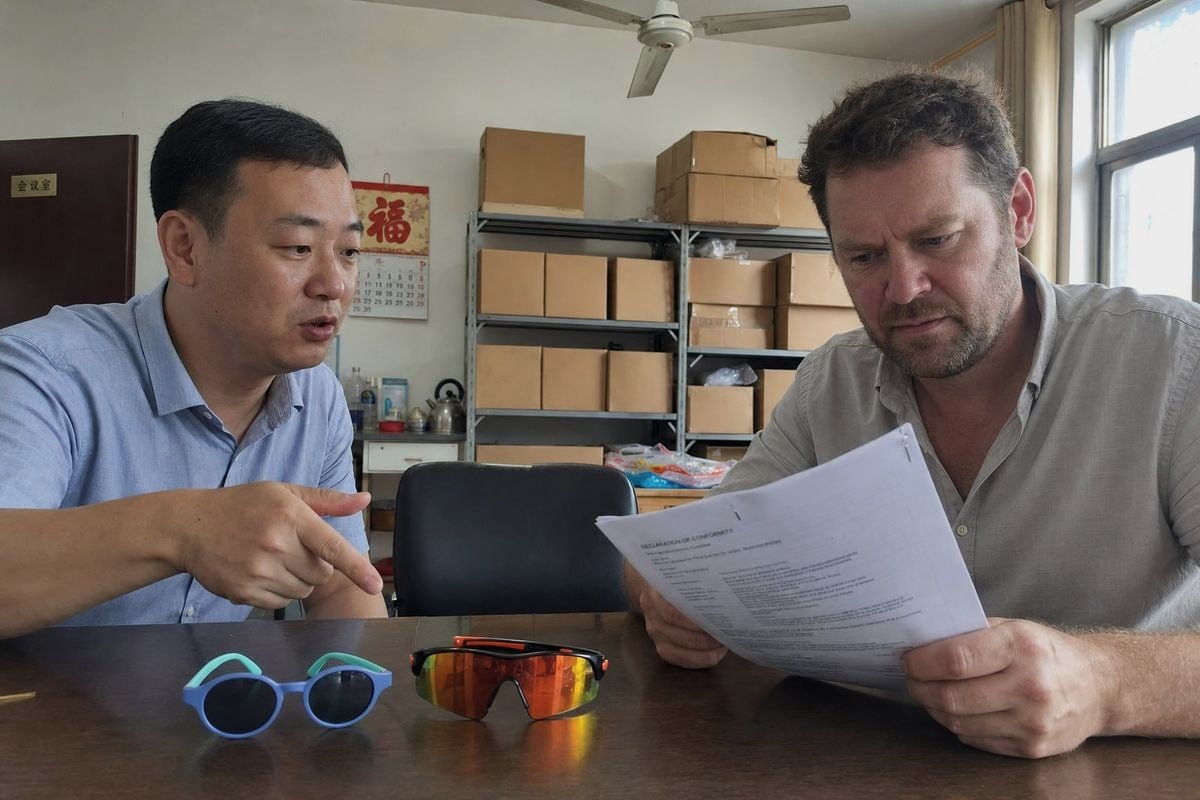
Das Kernproblem ist, dass AS/NZS 1067.1 ein Verbraucherschutzstandard, ist, keine Fabrikzertifizierung. Es gibt keine "zertifizierte Fabrik" nach diesem Standard. Die Konformität bezieht sich auf das spezifische Produkt, das auf dem australischen Markt in Verkehr gebracht wird. Nach dem australischen Verbraucherrecht 1, liegt die Produkthaftung bei Ihnen – dem lokalen Importeur oder Einzelhändler – nicht beim ausländischen Hersteller. Die ACCC 2 wird "mein Lieferant sagte, es sei in Ordnung" nicht als Verteidigung akzeptieren.
Wann ein Lieferantenbericht normalerweise akzeptabel ist
Nach unserer Erfahrung im Export von Kinderbrillen in über 20 Länder kann ein Laborprüfbericht des Lieferanten als Ihr Konformitätsnachweis dienen, wenn alle folgenden Bedingungen erfüllt sind:
- Der Bericht nennt das genaue Modell, das Linsenmaterial und die Tönung, die Sie kaufen.
- Der Bericht wurde von einem NATA-akkreditierten Labor oder einem ILAC-anerkannten Äquivalent ausgestellt.
- Der Bericht ist aktuell und spiegelt die aktuelle Produktionsversion wider.
- Der Lieferant stellt eine Konformitätserklärung des Lieferanten aus, die den Bericht mit Ihrer Bestellung verknüpft.
- Sie besitzen die ursprüngliche digitale Laborakte, keine gescannte oder bearbeitete PDF-Datei.
Dieser letzte Punkt ist wichtiger, als die Leute denken. Große E-Commerce-Plattformen scannen jetzt die Metadaten von PDF-Berichten, um geänderte Daten oder ausgetauschte Markennamen zu erkennen. Ein "geliehener" Bericht kann sofort zur Entfernung Ihres Eintrags führen.
Wann ein Lieferantenbericht Sie im Stich lässt
| Situation | Ist der alte Bericht gültig? | Was Sie tun sollten |
|---|---|---|
| Gleiches Modell, gleiche Charge, Händlervereinbarung | Normalerweise ja | Bericht + Erklärung aufbewahren |
| Eigenmarke unter Ihrem eigenen Namen | Oft abgelehnt | Holen Sie sich eine Autorisierungs- oder Neuausstellungsbescheinigung |
| Geänderte Linsentönung, Beschichtung oder Kategorie | Nein | Testen Sie die neue Konfiguration neu |
| Neues Rahmenmaterial oder neue Fabrik | Nein | Vollständige Neuprüfung erforderlich |
| Bericht getestet nach nur ISO 12312-1 3 Neuprüfung nach AS/NZS 1067.1 (400nm UV) | Nein | Ein häufiger Einwand, den ich höre, ist: "Die Fabrik hat bereits einen Bericht, also bin ich abgedeckt." Die bessere Ansicht ist, dass ein Bericht nur dann ein nützlicher Nachweis ist, wenn er produktspezifisch und aktuell ist. Wenn wir kundenspezifische Farbvarianten entwickeln oder TPEE-Bügellösungen für einen Kunden austauschen, weisen wir immer darauf hin, dass die Änderung frühere Testdaten ungültig machen kann – weil sie es kann. |
Nach dem australischen Verbraucherrecht liegt die rechtliche Verantwortung für die Konformität von Sonnenbrillen beim lokalen Importeur oder Einzelhändler.
Was kostet es mich, die AS/NZS 1067.1-Prüfung für die Sonnenbrillen meiner Kinder durchführen zu lassen?
Cost is the trade-off I discuss most often with new brands. Testing feels like an expense, but our clients who skipped it once and had stock rejected never skip it again.
Erwarten Sie grob AUD $400–$1.500 pro Modell für die akkreditierte Prüfung nach AS/NZS 1067.1, abhängig vom Labor, der Bearbeitungsgeschwindigkeit und davon, wie viele Glas- oder Gestellvarianten Sie prüfen. Jede unterschiedliche Glaskategorie, Tönung oder Materialkombination zählt im Allgemeinen als separater Prüfgegenstand.
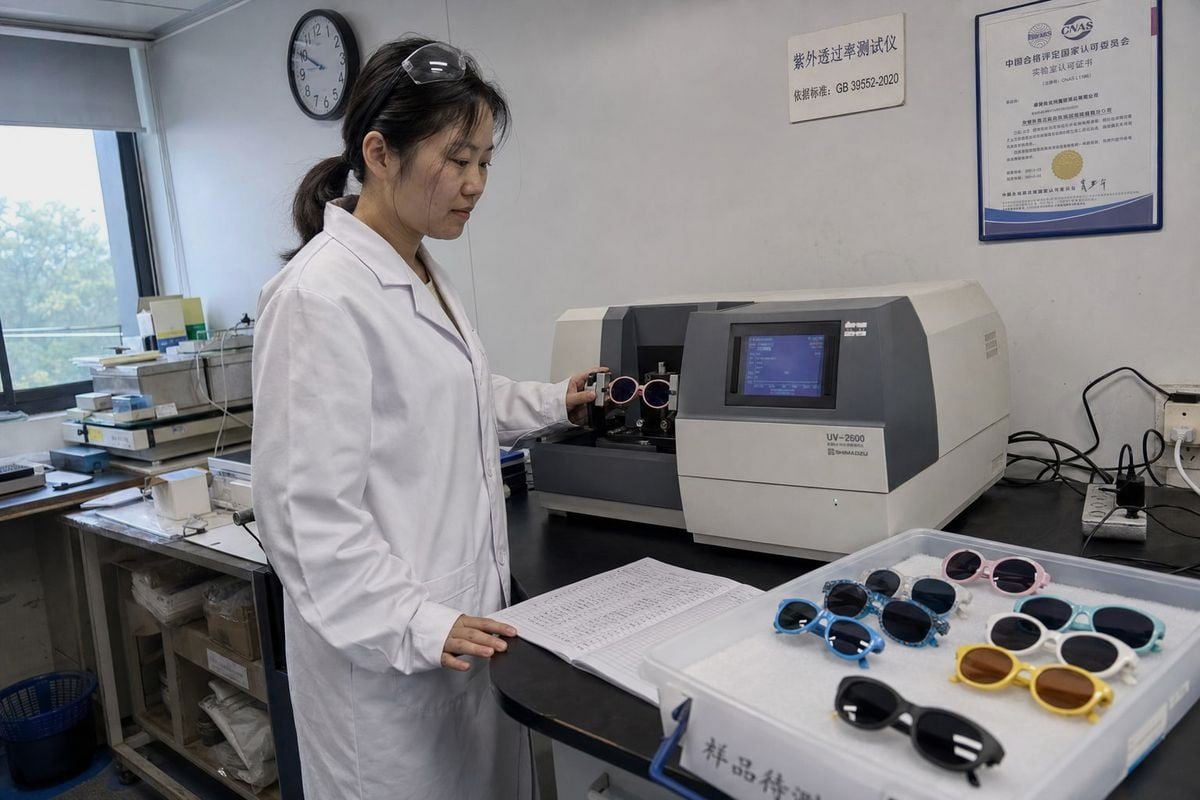
Product safety testing for sunglasses is not one single measurement. The lab runs a package of checks tied to specific sections of the standard, and each check adds to the invoice. When we prepare samples for clients, we send several units per model, because transmittance testing and mechanical construction testing may consume different samples.
What the Lab Actually Checks
Accredited labs such as ARPANSA 4 test children's sunglasses (not toy sunglasses) against sections covering:
- Construction and frame quality.
- Filter material and lens quality.
- Transmittance and lens category classification (categories 0–4).
- General transmittance and UV-Schutz 5 requirements up to 400nm.
- Eye coverage and field of view — with distinct coverage-area measurements for children's models.
That fifth point is why generic adult data cannot simply be applied to a kids' frame. Children's sunglasses have their own coverage geometry in testing. A shrunken adult wraparound and a purpose-designed kids' frame are not interchangeable in a lab test report.
Typical Cost Drivers
| Cost factor | Impact on your budget | How to manage it |
|---|---|---|
| Number of lens variants | Each tint/category may need its own test | Launch with fewer lens options first |
| Lab accreditation (NATA/ILAC) | Accredited labs cost more but reports hold up | Never use non-accredited "cheap" labs |
| Rush turnaround | Can add 30–50% to fees | Plan testing into your production timeline |
| Retesting new batches | ARPANSA recommends testing each imported batch | Negotiate batch consistency controls with your factory |
| Additional chemical checks | Phthalates 6 and lead verification for kids' products | Ask your factory for material declarations upfront |
One more nuance: the ACCC's growing focus on children's products means many buyers now add chemical migration checks on top of the optical standard, especially for newer bio-acetate or "eco-friendly" materials. Because we work in TPEE and TR90 — materials chosen specifically for child safety and flexibility — we supply material documentation that makes those add-on checks smoother.
Wie wähle ich einen Hersteller, der meinen AS/NZS 1067.1-Konformitätsprozess unterstützen kann?
Fifteen years in eyewear taught our team a hard lesson: the cheapest quote usually hides the biggest compliance gap. A factory that cannot document its lenses will cost you far more later.
Wählen Sie einen Hersteller, der Original-akkreditierte Laborberichte, Chargenrückverfolgbarkeit, konsistente Linsenbeschaffung, korrekte Kennzeichnung der Linsenkategorie und OEM-Supportdokumente wie ein Autorisierungsschreiben anbietet. Fabriken, die Erfahrung mit dem Import von Sonnenbrillen nach Australien haben, werden die 400-nm-UV-Regel bereits verstehen.
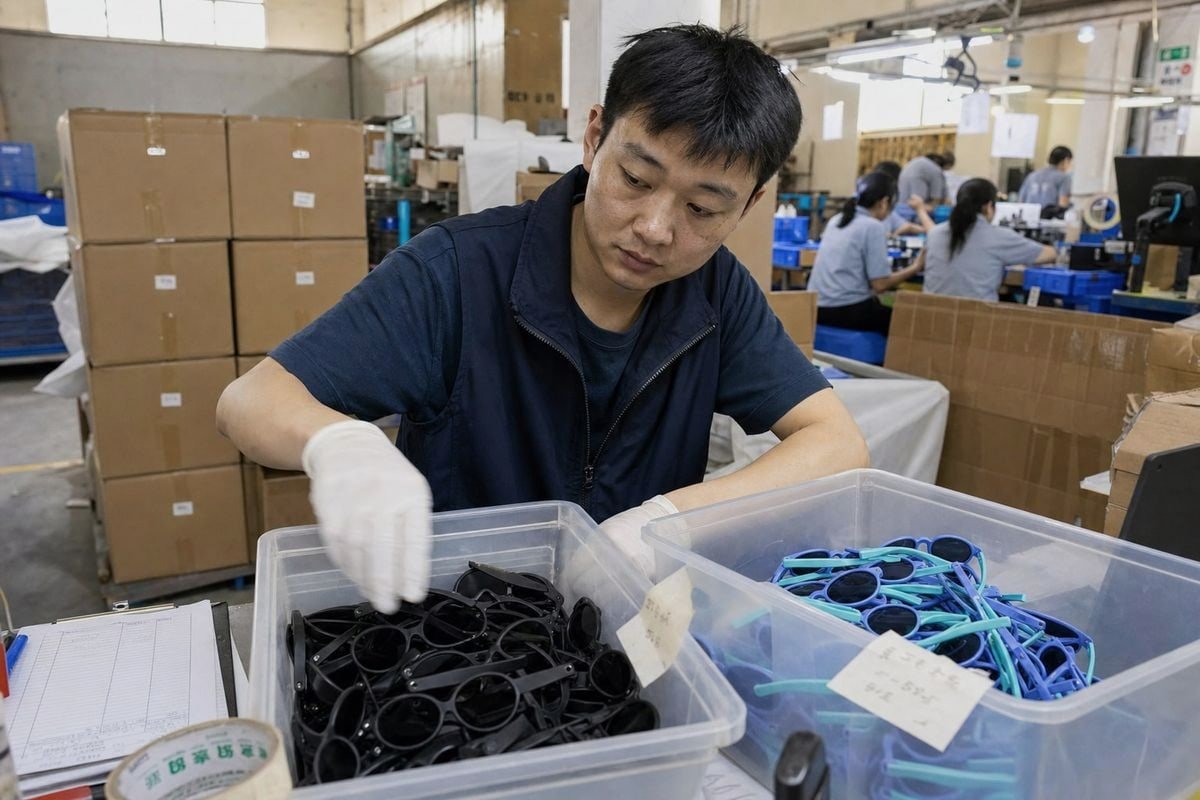
The mandatory safety standard covers performance, construction, and labelling together. So your manufacturer touches every part of your compliance trail — not just the lens. Here is how I suggest you evaluate a partner before placing kids' sunglasses on sale in Australia.
Questions to Ask Before You Order
- Can you show an original digital lab test report for this exact model, issued by a NATA or ILAC-recognized lab?
- Do you test to AS/NZS 1067.1 with UV protection to 400nm, or only to ISO 12312-1 (380nm)? The European report alone is legally insufficient for Australia.
- How do you control batch consistency so my second shipment matches the tested golden sample?
- Will you provide a supplier declaration of conformity and a Letter of Authorization for my private label?
- Can you apply the mandatory labelling — supplier identification, lens category (0–4), and warnings such as "not suitable for driving" — on retail-ready packaging?
Why Batch Consistency Matters as Much as the First Report
A golden-sample report proves the design can comply. It does not prove your shipment does. Lens suppliers change, resin batches vary, and tint dips drift. In our 5S-managed workshop, we lock lens suppliers per SKU and record batch numbers, because ARPANSA explicitly recommends testing for each batch of glasses imported. If your factory cannot link a production batch to a test result, your documentation has a hole in it.
For toddler styles, there is one more overlap that adult-focused reports often miss: sunglasses intended for children under 36 months should also be reviewed against small-parts choking protocols. We design our under-3 styles with this in mind — flexible one-piece TPEE constructions with minimal detachable hardware — precisely so this cross-check is easier for our clients.
Was passiert, wenn ich Kinder-Sonnenbrillen in Australien ohne einen gültigen AS/NZS 1067.1 Bericht verkaufe?
Early in my export career, a distributor told me a rival had labelled real sunglasses as "toy sunglasses" to dodge testing. That shortcut ended with a forced recall — and a destroyed brand.
Der Verkauf nicht konformer Kinder-Sonnenbrillen in Australien setzt Sie der Durchsetzung durch die ACCC, Geldstrafen, obligatorischen Rückrufen, beschlagnahmten Waren am Zoll, der Streichung von Marktplätzen und der persönlichen Produkthaftung aus, wenn die Augen eines Kindes geschädigt werden. Der Sicherheitsstandard ist gesetzlich vorgeschrieben, daher ist die Einhaltung für die betreffenden Produkte nicht optional.
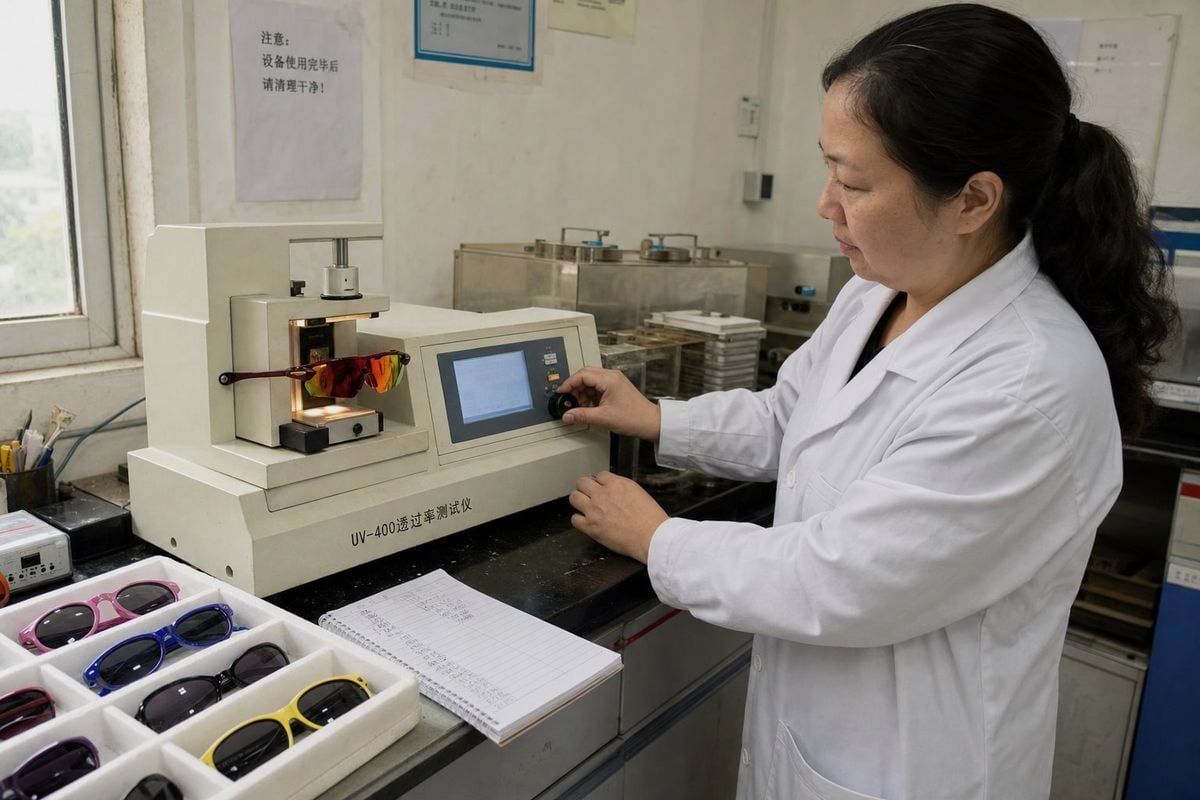
Since AS/NZS 1067.1 (as varied) was declared a safety standard for sunglasses and fashion spectacles, ACCC compliance checks have real teeth. Let me break down the practical risk layers, because they hit you at different stages of your business.
The Risk Ladder
| Phase | What can go wrong | Typical consequence |
|---|---|---|
| Import | Customs queries missing or mismatched documentation | Shipment held, tested, or destroyed at your cost |
| Listing | Marketplace audits detect invalid or edited reports | Listing removed; seller account suspended |
| Retail | ACCC market surveillance finds labelling or lens category failures | Fines, enforceable undertakings, mandatory recall |
| Post-sale | A child suffers eye damage from a non-compliant lens | Product liability 7 claims against you, not the factory |
The Toy Classification Trap
Some sellers assume they can market real sunglasses as "toy sunglasses" to escape the optical standard. This backfires twice. First, genuine toy sunglasses must meet rigorous toy safety standards for physical hazards and toxicity — a different, often stricter compliance path. Second, if the product is clearly worn for sun protection, regulators will treat it as sunglasses anyway. ARPANSA itself distinguishes children's sunglasses from toy sunglasses in its testing scope. There is no loophole here, only a choice between two rule sets.
Labelling Failures Count Too
Even with perfect lenses, you can still be non-compliant. Every pair must carry supplier identification, the correct lens category marking from 0 to 4, and required usage warnings. When we prepare retail-ready packaging for clients' brands, the swing tag and lens category label are part of our QC checklist for exactly this reason. A dark category-3 kids' lens with no category marking fails the mandatory standard just as surely as a lens that leaks UV.
Schlussfolgerung
Skipping product-specific evidence risks fines, recalls, and lost trust. Hold a current, accredited, SKU-matched report — your own if you private-label — and partner with a factory that documents everything.
Fußnoten
1. Explains legal framework establishing importer/retailer liability referenced in article. ↩︎
2. Official regulator enforcing sunglasses safety standard compliance mentioned throughout. ↩︎
3. Accessible Wikipedia summary of the international ISO 12312-1 sunglasses safety standard. ↩︎
4. Australian radiation protection agency that tests and defines children’s sunglasses standards. ↩︎
5. WHO reference on UV radiation health risks underlying the 400nm protection requirement. ↩︎
6. EPA resource on chemical safety concerns for phthalates in children’s products. ↩︎
Weitere Artikel, die Ihnen gefallen könnten
August 2026
Sollte die Fabrik die Verpackung und Kennzeichnung von Kinder-Sonnenbrillen übernehmen oder einen bestimmten Lieferanten nutzen?
August 2026
Eigenes Lager vs. Direktlieferung durch den Lieferanten: Was senkt die Retourenkosten für Marken von Kinder-Sonnenbrillen?
August 2026
Direkt zum Lagerhafen oder Lagerung in Übersee: Was spart mehr bei den Versandkosten für Kinder-Sonnenbrillen?
Auf der Suche nach einem zuverlässigen Partner für Kinderbrillen?
Entdecken Sie über 800 sofort verfügbare Modelle und umfassenden OEM/ODM-Support, der auf Ihre Marke zugeschnitten ist.
Kontakt aufnehmen English
  Español de México
  Deutsch
  Français
  日本語
日本語  العربية
  Português do Brasil