Do I Need My Own AS/NZS 1067.1 Test Report for Kids’ Sunglasses?
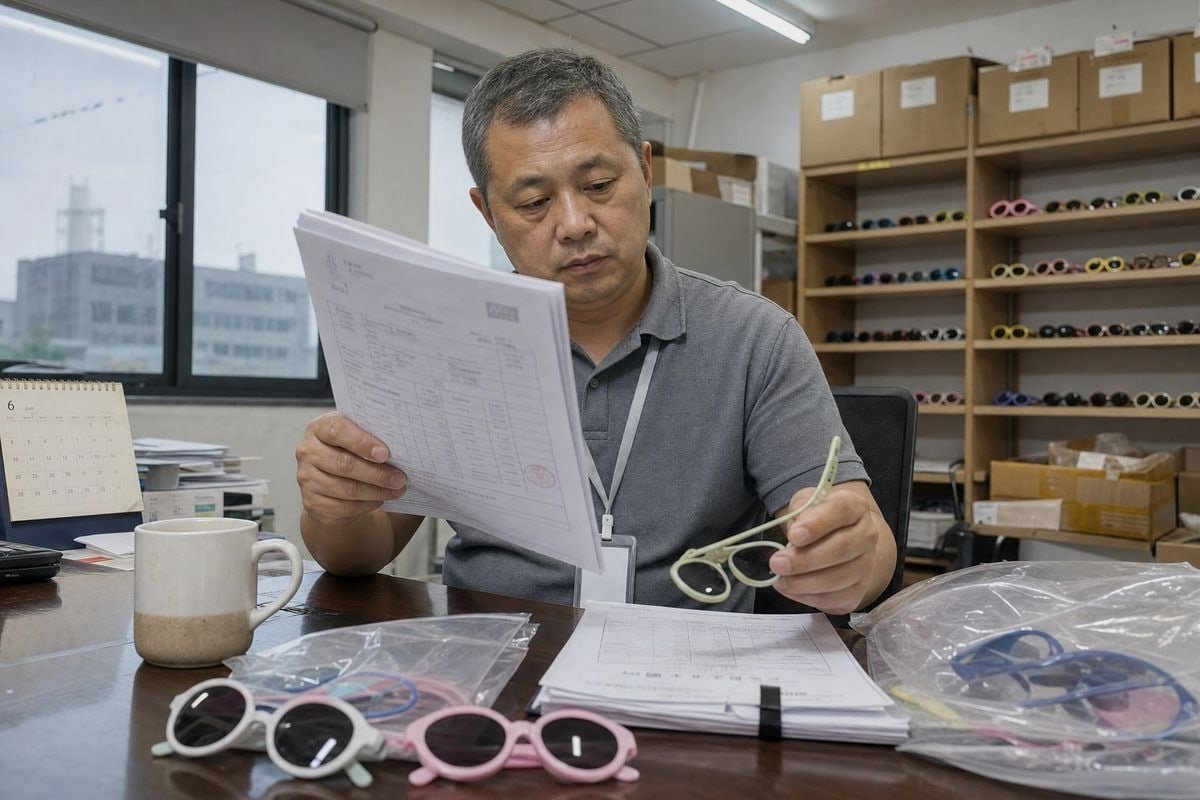
Buyers ask me about the AS/NZS 1067.1 test report for kids’ sunglasses almost weekly. One missing document can strand your shipment at Australian customs, so our factory takes this seriously.
You do not always need a report in your own name, but you must hold valid, product-specific evidence that your exact kids’ sunglasses model meets AS/NZS 1067.1. If you private-label, change materials, or switch factories, obtaining your own accredited lab test report is strongly recommended.
That short answer hides a lot of detail. Let me walk you through when a supplier’s report works, when it fails, and how to protect your brand.
Can I Rely on My Supplier's Existing AS/NZS 1067.1 Certification Instead of Testing My Own Brand?
An Australian buyer once sent me a competitor's test report and asked if it "covered" a similar style from our 800-model catalog. I had to say no — and here is why.
You can rely on a supplier's report only if it matches your exact SKU: same lens material, tint, lens category, frame construction, and factory. If you sell under your own brand, the report should be supported by a Letter of Authorization or re-issued in your brand's name.
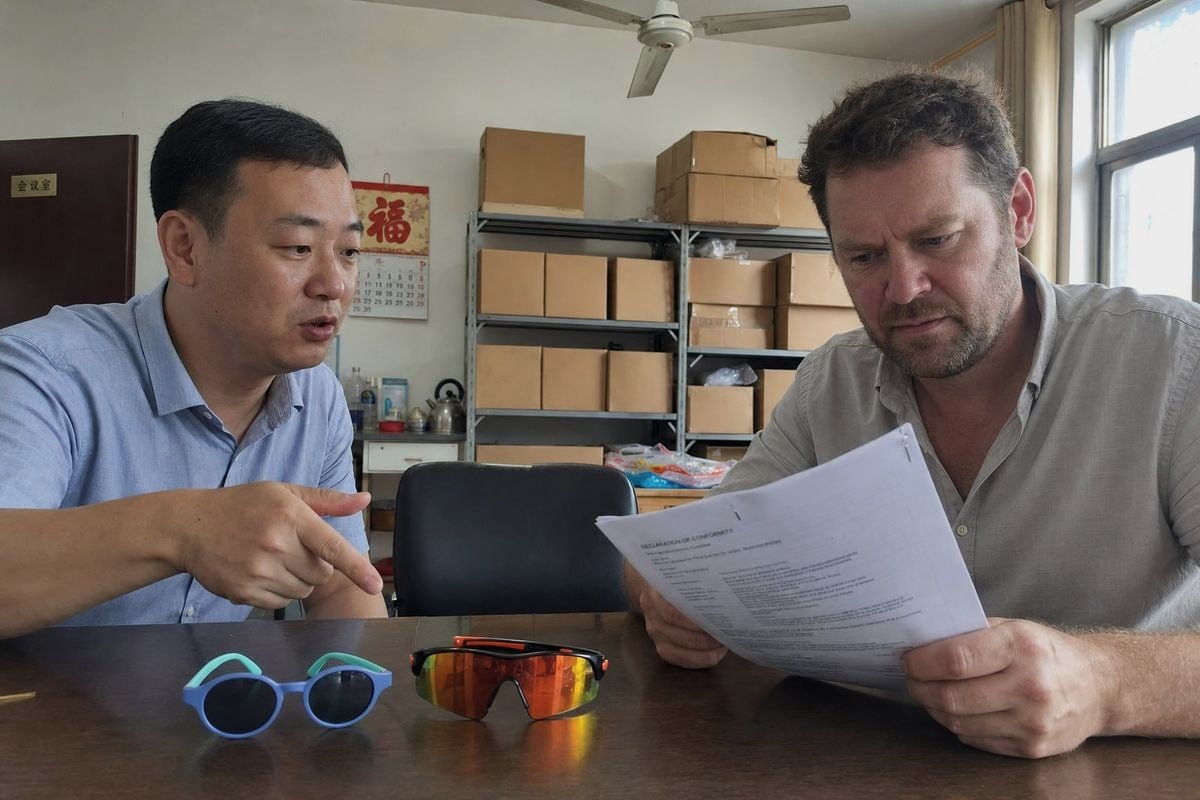
The core issue is that AS/NZS 1067.1 is a Consumer Goods Safety Standard, not a factory certificate. There is no such thing as a "certified factory" under this standard. Compliance attaches to the specific product placed on the Australian market. Under Australian Consumer Law 1, product liability sits with you — the local importer or retailer — not with the overseas manufacturer. The ACCC 2 will not accept "my supplier said it was fine" as a defense.
When a Supplier Report Is Usually Acceptable
In our experience exporting children's eyewear to 20+ countries, a supplier’s lab test report can serve as your compliance evidence when all of the following are true:
- The report names the exact model, lens material, and tint you are buying.
- The report was issued by a NATA-accredited lab or an ILAC-recognized equivalent.
- The report is recent and reflects the current production version.
- The supplier provides a supplier declaration of conformity linking the report to your purchase order.
- You hold the original digital lab file, not a scanned or edited PDF.
That last point matters more than people think. Major e-commerce platforms now scan the metadata of PDF reports to detect altered dates or swapped brand names. A "borrowed" report can get your listing removed instantly.
When a Supplier Report Fails You
| Situation | Is the old report valid? | What you should do |
|---|---|---|
| Same model, same batch, reseller arrangement | Usually yes | Keep report + declaration on file |
| Private-label under your own brand | Often rejected | Get a Letter of Authorization or re-issued report |
| Changed lens tint, coating, or category | No | Retest the new configuration |
| New frame material or new factory | No | Full retest required |
| Report tested to norme ISO 12312-1 3 only | No | Retest to AS/NZS 1067.1 (400nm UV) |
A common objection I hear is: "The factory already has a report, so I'm covered." The better view is that a report is only useful evidence if it is product-specific and current. When we develop custom colorways or swap TPEE temple designs for a client, we always flag that the change may invalidate previous test data — because it can.
What Does It Cost Me to Get AS/NZS 1067.1 Testing Done for My Kids' Sunglasses?
Cost is the trade-off I discuss most often with new brands. Testing feels like an expense, but our clients who skipped it once and had stock rejected never skip it again.
Expect roughly AUD $400–$1,500 per model for accredited AS/NZS 1067.1 testing, depending on the lab, turnaround speed, and how many lens or frame variants you test. Each distinct lens category, tint, or material combination generally counts as a separate test item.
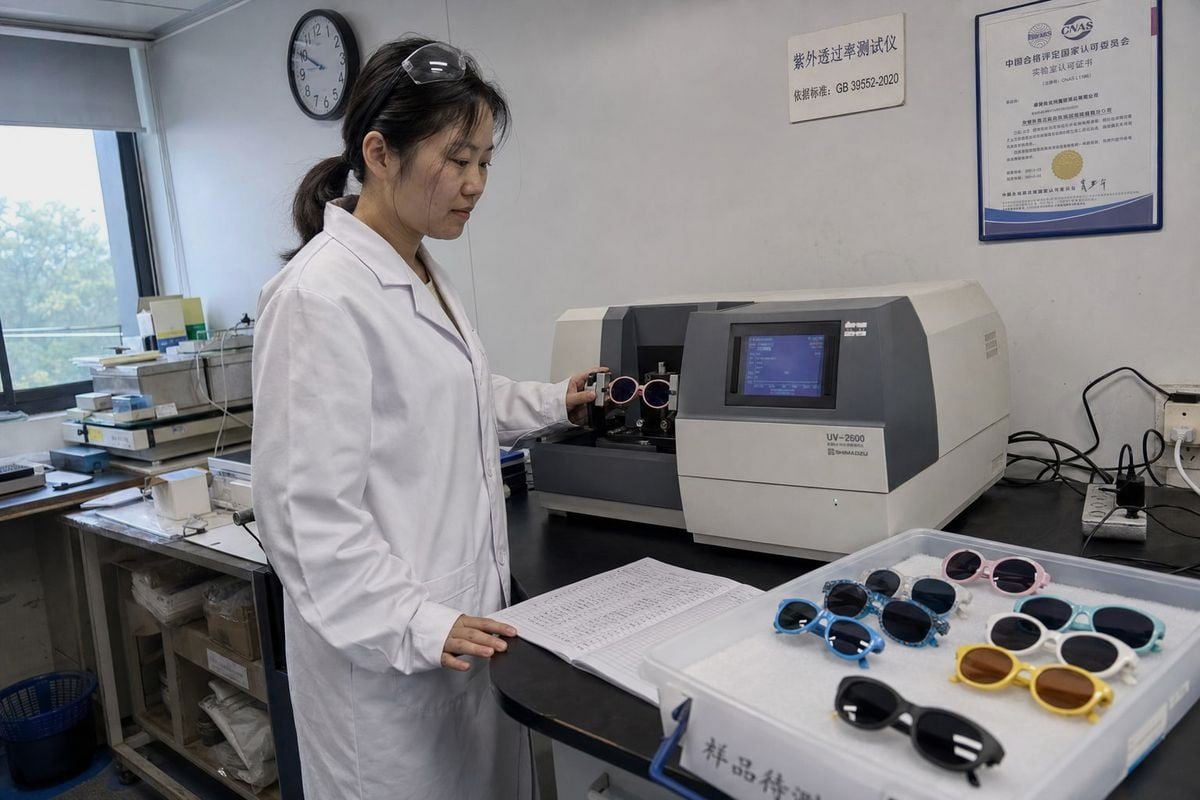
Product safety testing for sunglasses is not one single measurement. The lab runs a package of checks tied to specific sections of the standard, and each check adds to the invoice. When we prepare samples for clients, we send several units per model, because transmittance testing and mechanical construction testing may consume different samples.
What the Lab Actually Checks
Accredited labs such as ARPANSA 4 test children's sunglasses (not toy sunglasses) against sections covering:
- Construction and frame quality.
- Filter material and lens quality.
- Transmittance and lens category classification (categories 0–4).
- General transmittance and UV protection 5 requirements up to 400nm.
- Eye coverage and field of view — with distinct coverage-area measurements for children's models.
That fifth point is why generic adult data cannot simply be applied to a kids' frame. Children's sunglasses have their own coverage geometry in testing. A shrunken adult wraparound and a purpose-designed kids' frame are not interchangeable in a lab test report.
Typical Cost Drivers
| Cost factor | Impact on your budget | How to manage it |
|---|---|---|
| Number of lens variants | Each tint/category may need its own test | Launch with fewer lens options first |
| Lab accreditation (NATA/ILAC) | Accredited labs cost more but reports hold up | Never use non-accredited "cheap" labs |
| Rush turnaround | Can add 30–50% to fees | Plan testing into your production timeline |
| Retesting new batches | ARPANSA recommends testing each imported batch | Negotiate batch consistency controls with your factory |
| Additional chemical checks | Phthalates 6 and lead verification for kids' products | Ask your factory for material declarations upfront |
One more nuance: the ACCC's growing focus on children's products means many buyers now add chemical migration checks on top of the optical standard, especially for newer bio-acetate or "eco-friendly" materials. Because we work in TPEE and TR90 — materials chosen specifically for child safety and flexibility — we supply material documentation that makes those add-on checks smoother.
How Do I Choose a Manufacturer That Can Support My AS/NZS 1067.1 Compliance Process?
Fifteen years in eyewear taught our team a hard lesson: the cheapest quote usually hides the biggest compliance gap. A factory that cannot document its lenses will cost you far more later.
Choose a manufacturer that provides original accredited lab reports, batch-level traceability, consistent lens sourcing, correct lens category labelling, and OEM support documents like a Letter of Authorization. Factories experienced with importing sunglasses into Australia will already understand the 400nm UV rule.
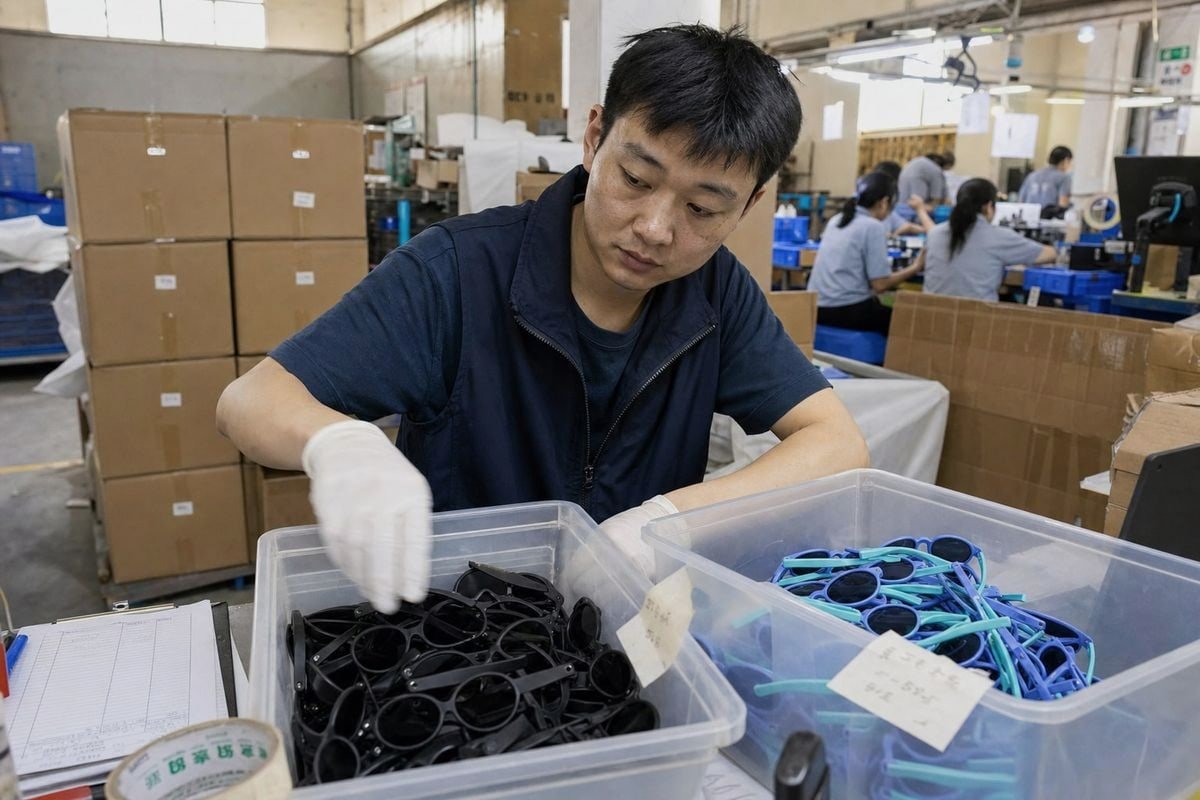
The mandatory safety standard covers performance, construction, and labelling together. So your manufacturer touches every part of your compliance trail — not just the lens. Here is how I suggest you evaluate a partner before placing kids' sunglasses on sale in Australia.
Questions to Ask Before You Order
- Can you show an original digital lab test report for this exact model, issued by a NATA or ILAC-recognized lab?
- Do you test to AS/NZS 1067.1 with UV protection to 400nm, or only to ISO 12312-1 (380nm)? The European report alone is legally insufficient for Australia.
- How do you control batch consistency so my second shipment matches the tested golden sample?
- Will you provide a supplier declaration of conformity and a Letter of Authorization for my private label?
- Can you apply the mandatory labelling — supplier identification, lens category (0–4), and warnings such as "not suitable for driving" — on retail-ready packaging?
Why Batch Consistency Matters as Much as the First Report
A golden-sample report proves the design can comply. It does not prove your shipment does. Lens suppliers change, resin batches vary, and tint dips drift. In our 5S-managed workshop, we lock lens suppliers per SKU and record batch numbers, because ARPANSA explicitly recommends testing for each batch of glasses imported. If your factory cannot link a production batch to a test result, your documentation has a hole in it.
For toddler styles, there is one more overlap that adult-focused reports often miss: sunglasses intended for children under 36 months should also be reviewed against small-parts choking protocols. We design our under-3 styles with this in mind — flexible one-piece TPEE constructions with minimal detachable hardware — precisely so this cross-check is easier for our clients.
What Happens If I Sell Kids' Sunglasses in Australia Without a Valid AS/NZS 1067.1 Report?
Early in my export career, a distributor told me a rival had labelled real sunglasses as "toy sunglasses" to dodge testing. That shortcut ended with a forced recall — and a destroyed brand.
Selling non-compliant kids' sunglasses in Australia exposes you to ACCC enforcement, fines, mandatory recalls, seized stock at customs, marketplace delisting, and personal product liability if a child's eyes are harmed. The safety standard is legally mandatory, so compliance is not optional for products in scope.
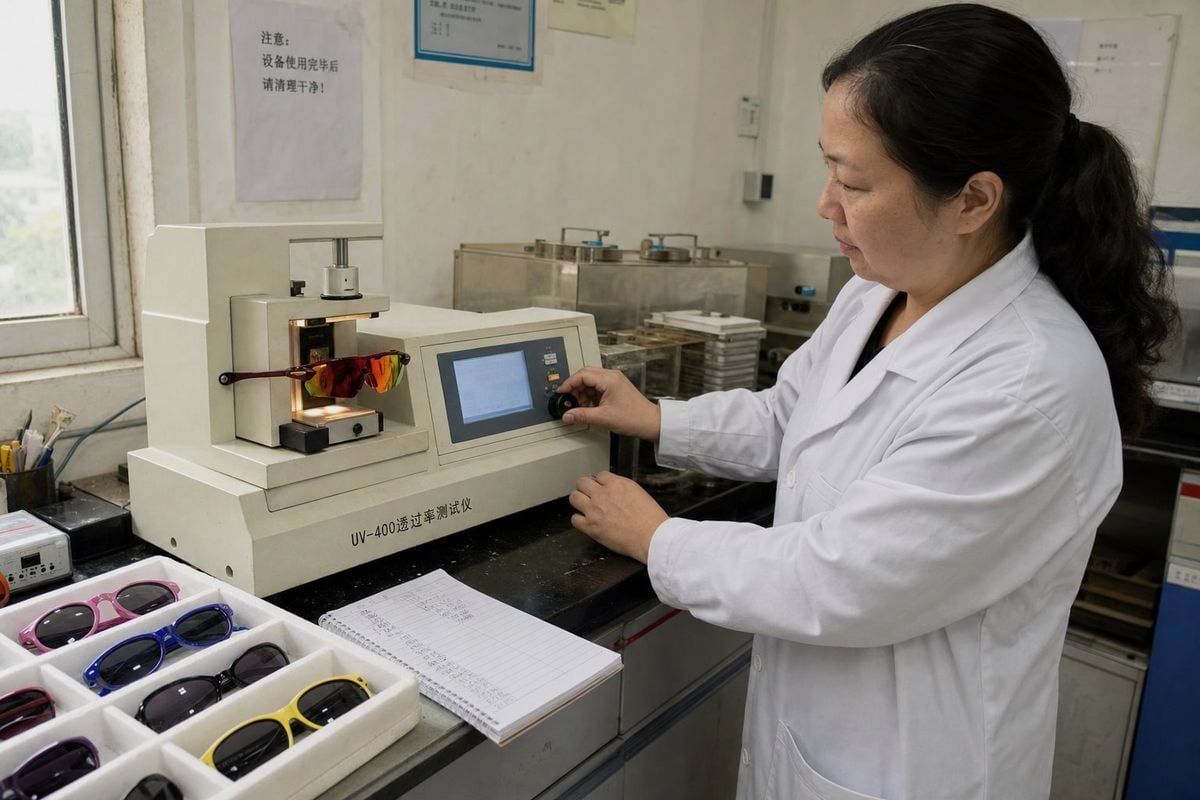
Since AS/NZS 1067.1 (as varied) was declared a safety standard for sunglasses and fashion spectacles, ACCC compliance checks have real teeth. Let me break down the practical risk layers, because they hit you at different stages of your business.
The Risk Ladder
| Étape | What can go wrong | Typical consequence |
|---|---|---|
| Import | Customs queries missing or mismatched documentation | Shipment held, tested, or destroyed at your cost |
| Listing | Marketplace audits detect invalid or edited reports | Listing removed; seller account suspended |
| Retail | ACCC market surveillance finds labelling or lens category failures | Fines, enforceable undertakings, mandatory recall |
| Post-sale | A child suffers eye damage from a non-compliant lens | Product liability 7 claims against you, not the factory |
The Toy Classification Trap
Some sellers assume they can market real sunglasses as "toy sunglasses" to escape the optical standard. This backfires twice. First, genuine toy sunglasses must meet rigorous toy safety standards for physical hazards and toxicity — a different, often stricter compliance path. Second, if the product is clearly worn for sun protection, regulators will treat it as sunglasses anyway. ARPANSA itself distinguishes children's sunglasses from toy sunglasses in its testing scope. There is no loophole here, only a choice between two rule sets.
Labelling Failures Count Too
Even with perfect lenses, you can still be non-compliant. Every pair must carry supplier identification, the correct lens category marking from 0 to 4, and required usage warnings. When we prepare retail-ready packaging for clients' brands, the swing tag and lens category label are part of our QC checklist for exactly this reason. A dark category-3 kids' lens with no category marking fails the mandatory standard just as surely as a lens that leaks UV.
Conclusion
Skipping product-specific evidence risks fines, recalls, and lost trust. Hold a current, accredited, SKU-matched report — your own if you private-label — and partner with a factory that documents everything.
Notes de bas de page
1. Explains legal framework establishing importer/retailer liability referenced in article. ↩︎
2. Official regulator enforcing sunglasses safety standard compliance mentioned throughout. ↩︎
3. Accessible Wikipedia summary of the international ISO 12312-1 sunglasses safety standard. ↩︎
4. Australian radiation protection agency that tests and defines children’s sunglasses standards. ↩︎
5. WHO reference on UV radiation health risks underlying the 400nm protection requirement. ↩︎
6. EPA resource on chemical safety concerns for phthalates in children’s products. ↩︎
Plus d'articles que vous pourriez aimer
1 août 2026
L'usine doit-elle gérer l'emballage et l'étiquetage des lunettes pour enfants, ou utiliser un fournisseur désigné ?
1 août 2026
Entrepôt propre vs. exécution directe par le fournisseur : lequel réduit les coûts de retour pour les marques de lunettes pour enfants ?
1 août 2026
Entrepôt direct au port ou staging outre-mer : lequel permet d'économiser le plus sur l'expédition des lunettes pour enfants ?
Vous recherchez un partenaire fiable en lunetterie pour enfants ?
Explorez plus de 800 styles prêts et un support OEM/ODM complet adapté à votre marque.
Contactez-nous English
  Español de México
  Deutsch
  Français
  日本語
日本語  العربية
  Português do Brasil