Can You Bend Warped Kids’ Optical Frames Yourself, or Visit a Store?
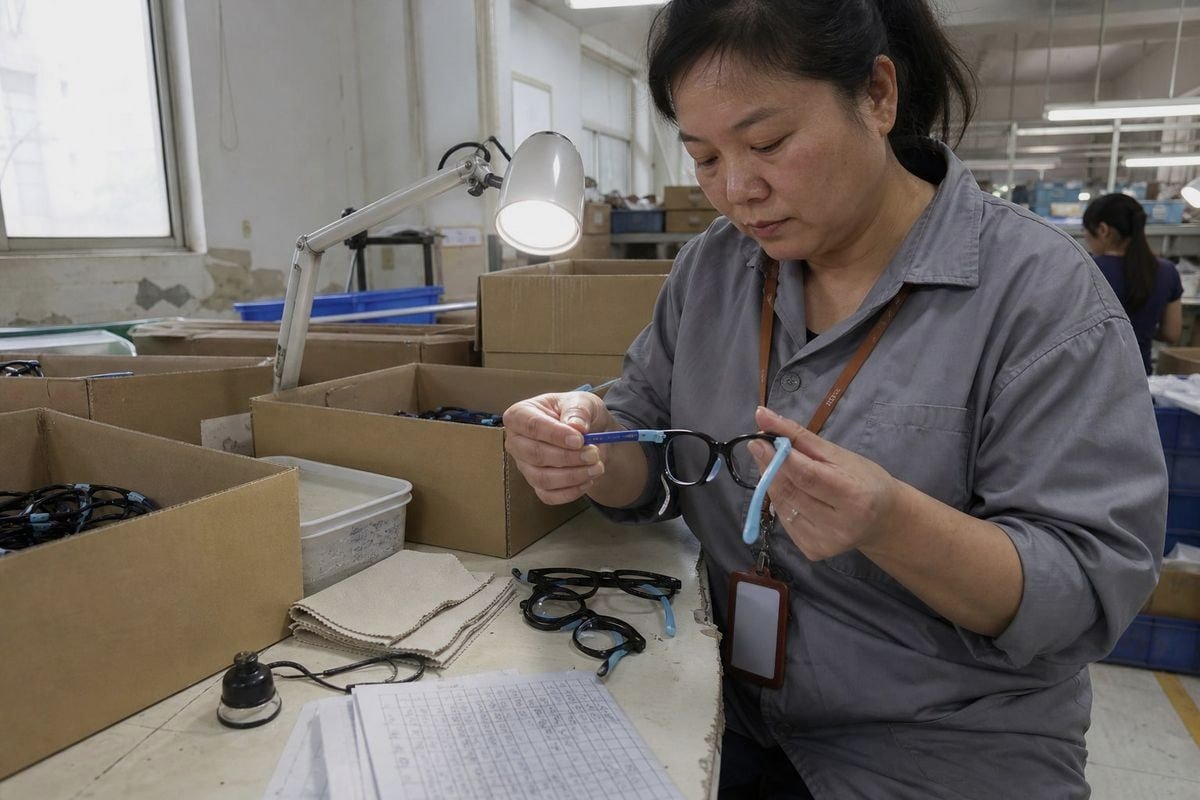
Warped kids’ optical frames land on our QC benches in Taizhou every week as returned samples. Parents force them straight, frames snap, kids stop wearing glasses, and vision correction quietly fails.
You can bend warped kids’ optical frames yourself only for minor misalignments, using gentle pressure and warm water on plastic frames. For sharp bends, brittle materials, cracked hinges, or frames under warranty, visit an optical store where opticians use controlled heat and calibrated tools.
That is the short answer. But the real skill is knowing which situation you are facing. Let me walk you through both paths, based on what we see in production and in the field.
How do I safely fix my kids' warped optical frames without breaking them?
During a factory audit 1 last spring, a buyer from Australia asked me to demonstrate reshaping a TR90 sample by hand. The temple flexed, held its new curve, and sprang nothing loose — but only because I moved in tiny increments.
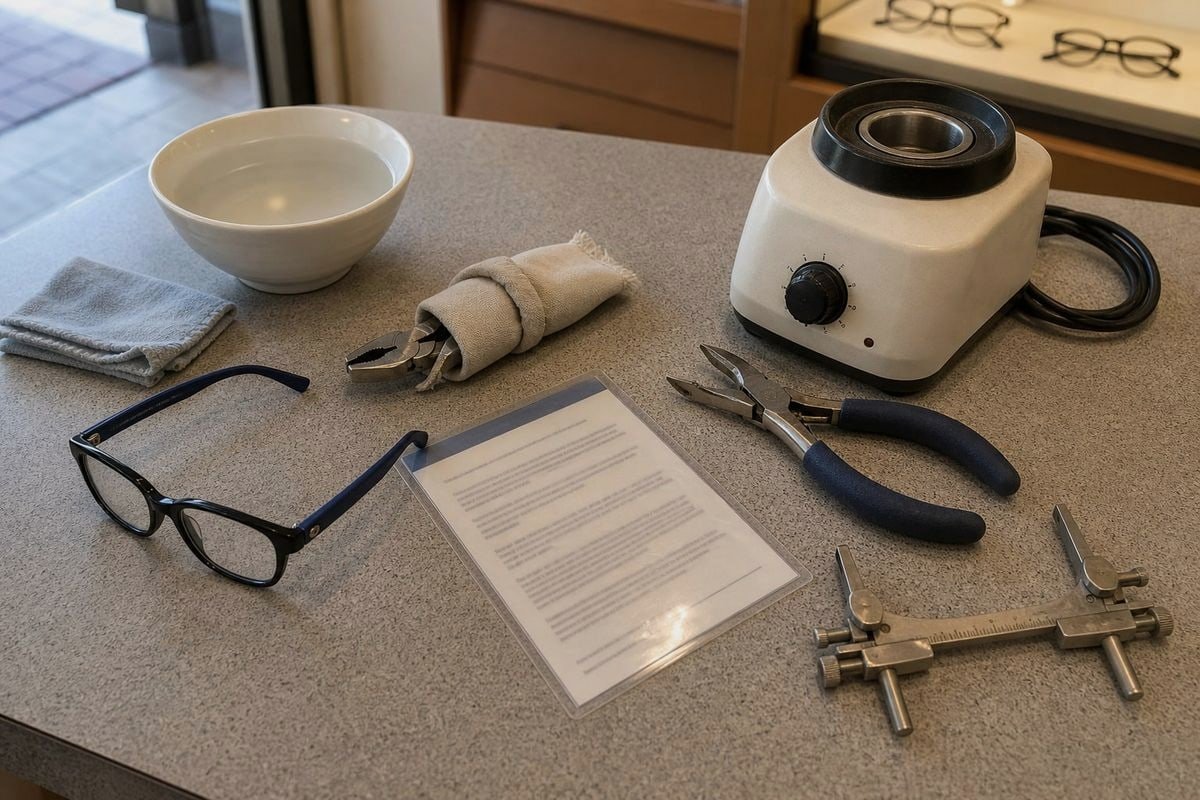
Fix minor warping by warming plastic frames in warm water for 30–60 seconds, then bending in very small increments while checking symmetry on a flat surface. For metal frames, use padded optical pliers with slow, steady pressure, and stop immediately if you see stress whitening or cracks.

The number one mistake we see is cold bending. Plastic and acetate frames must be warmed first, or they can "cold snap" without warning. Metal frames tolerate small manual adjustments, but only with gradual pressure and never near solder points or hinges.
A safe step-by-step home method
- Lay the glasses upside down on a flat table. Check which temple lifts off the surface. That tells you where the warp is.
- For plastic or acetate frames, run warm (not boiling) tap water over the bent area for 30–60 seconds. Acetate frame heating softens the material just enough to move it.
- Bend a tiny amount — a few degrees at most. Re-check on the flat surface. Repeat.
- For metal frames, wrap the jaws of small pliers in cloth, or use proper optical pliers. Grip close to the bend, not at the hinge.
- For metal frames with pads, adjusting nose pads inward or outward often fixes a crooked fit without touching the frame front at all.
- Check bent temple tips last. They control how the glasses hook behind the ears, and small corrections there solve most slipping problems.
When to stop immediately
| Warning sign | What it means | Next step |
|---|---|---|
| White stress marks on plastic | Material is about to crack | Stop; go to a store |
| Lenses shifting in the frame | Frame groove is deforming | Stop; risk of lens stress fractures |
| Sharp angle bend | Forcing it back can snap it | Optician only |
| Creaking hinge or loose screw | Possible spring hinge repair needed | Professional tools required |
| Visible crack anywhere | Structural failure has started | Replace or professional repair |
If any of these appear, the safest home fix is no fix at all.
Should I trust an at-home fix or take my child's frames to an optical store?
One trade-off we discuss constantly with our B2B buyers is repairability versus replaceability. When a distributor in Japan builds an after-sales policy, we always advise them to point parents toward professional frame alignment for anything beyond a mild tweak.
Trust an at-home fix only for slight crookedness or loose temple tips. Take frames to an optical store when the bend is severe, the frame is brittle or expensive, lenses have premium coatings, or warranty coverage applies. Most retailers offer free or low-cost realignments.
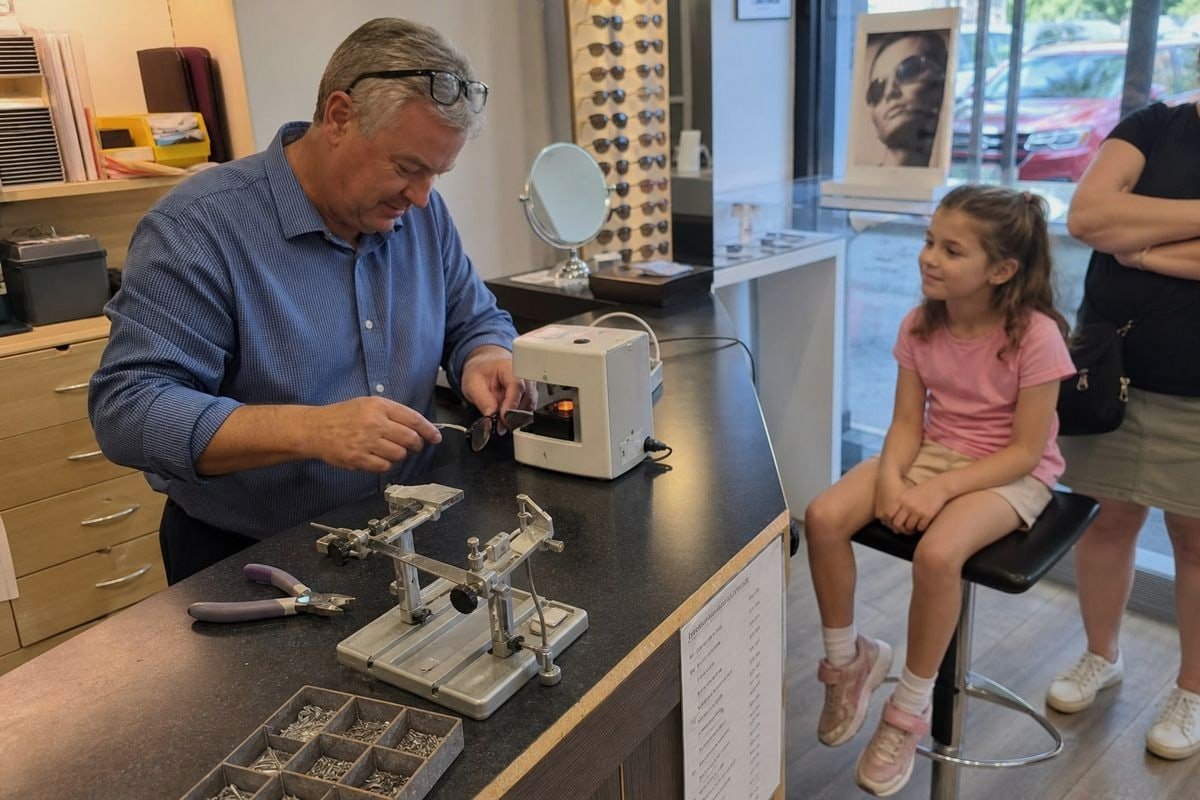
Here is the honest cost-benefit picture. An optician adjustment service is often complimentary or very cheap, and it carries almost zero risk. A DIY attempt costs nothing upfront, but a failed one can cost you the entire frame — and sometimes the lenses too.
DIY versus optical store: the decision table
| Faktor | At-home fix | Optical store |
|---|---|---|
| Severity | Minor tilt or slip only | Any sharp or complex bend |
| Tools | Warm water, cloth, household pliers | Frame warmers, optical pliers, alignment gauges |
| Lens safety | Risk of scratched coatings and stress | Lenses checked and re-centered over pupils |
| Kosten | Free, but total loss if it snaps | Often free or a few dollars |
| Frame warranty coverage | DIY bending or gluing can void it | Warranty stays intact |
| Fit verification | Guesswork on a wriggling child | Checked live against the child's face |
Two points deserve extra weight. First, warranties. Bending, gluing, or taping a frame yourself can immediately void manufacturer warranties 2 and breakage protection plans. If the glasses are less than a year old, call the store before touching anything.
Second, lens alignment. Opticians use calibrated tools to keep the lenses perfectly centered over your child's pupils. This matters more than most parents realize. Even a minor DIY tilt can misalign the optical corridor in modern digital lenses, causing subtle eye strain and headaches that children struggle to describe. A child who says "my glasses feel weird" may actually be describing an optical problem, not a comfort problem.
Tape and glue deserve a final warning. They are temporary at best, they can damage lens coatings, and adhesives can irritate a child's sensitive skin. We never recommend them, even as a stopgap.
Why do my kids' optical frames warp so easily in the first place?
A lesson we learned early in our fifteen years of making children's eyewear: kids do not mistreat glasses maliciously — they simply live at full speed. Our drop tests and flex tests exist because playground reality is brutal.
Kids' optical frames warp because children pull them off with one hand, sleep on them, leave them in hot cars, and stuff them into bags without cases. Repeated stress fatigues the material, while heat softens plastics, letting frames gradually twist out of alignment.
Understanding the causes helps you prevent the next warp instead of just fixing this one. Let me break the main culprits down.
The four biggest warping causes
One-handed removal. When a child yanks glasses off by a single temple, all the force loads onto one hinge. Over weeks, the temple splays outward and the frame front twists. This is the single most common cause we see in returned warranty samples.
Heat exposure. A dashboard in summer can exceed the softening point of many frame plastics. The frame slowly relaxes into whatever position it was left in. Cheap plastics deform at lower temperatures than quality TR90.
Sleeping and sitting on them. Naps with glasses on, or glasses left on a couch cushion, apply broad slow pressure. Flexible frames often recover; rigid ones take a permanent set.
Material fatigue. Here is the part parents underestimate. Repeatedly bending frames back into shape at home causes microscopic material fatigue. Each correction weakens the structure a little more, significantly increasing the likelihood of a sudden snap during active play. A frame that has been "fixed" five times is not the same frame it was on day one. That is also why we tell our brand customers to treat repeated warping as a replacement signal, not a repair loop.
Brittle, worn, or low-grade metal is even less forgiving. It can snap on the second or third correction, especially near solder joints. Memory metal frames are the exception — they are engineered to spring back — but standard alloy frames are not.
Can I prevent warping issues by choosing more flexible frame materials like TR90?
When we developed our TR90 kids optical frames with TPEE temples, the design brief was blunt: survive a seven-year-old for a full school year. Material choice was ninety percent of the answer.
Yes. Flexible materials like TR90 and TPEE dramatically reduce warping because they bend under stress and spring back to their molded shape. Combined with spring hinges and soft silicone temple tips, they absorb the twisting forces that permanently deform rigid acetate or standard metal frames.
Material is the biggest lever you control at purchase time. At our factory we work daily with TPEE and TR90 precisely because flexible plastic eyewear handles the twisting, dropping, and yanking of childhood far better than rigid alternatives.
How the main frame materials compare
| Material | Flexibilität | Warp resistance | Home adjustability | Sie handhaben |
|---|---|---|---|---|
| TR90 | Hoch, federt zurück | Ausgezeichnet | Limited — holds molded shape | Active kids, daily wear |
| TPEE (temples) | Very high, rubber-like | Ausgezeichnet | Rarely needed | Toddlers, sports |
| Acetate | Low when cold | Mäßig | Good with acetate frame heating | Style-focused older kids |
| Standard metal | Low–moderate | Poor with abuse | Good with optical pliers | Careful wearers |
| Memory metal frames | Extreme, shape-recovering | Outstanding | Rarely needed | Rough handling |
| 3D-printed polyamide | Mäßig | Gut | Poor at home | Custom fits |
A few nuances matter here. TR90's shape memory 3 is a double-edged sword: it resists warping beautifully, but it also resists deliberate reshaping, so major fit changes still belong at an optical store. Similarly, modern 3D-printed polyamide frames have their own shape memory that often requires specific industrial temperature settings for permanent reshaping — a hair dryer will not do it, and uneven household heat can cause crazing, the micro-cracks that ruin premium anti-reflective and blue-light coatings.
Design features multiply the material advantage. On our children's frames we pair TR90 fronts with soft rubberized silicone temple tips and curved ear hooks, so the frame grips gently instead of relying on tight pressure that invites bending. Spring hinges flex outward when a child pulls the glasses off one-handed, absorbing the exact force that warps standard hinges. For brands building a kids' line, we consistently recommend this combination: flexible front, flexible temples, spring or wrap-around hinge, secure ear grip. Across roughly 800 existing styles in our catalog, the flexible-material designs generate by far the fewest fit complaints from our buyers in over 20 countries.
Schlussfolgerung
Warped kids' optical frames are fixable — the question is by whom. Guess wrong and you lose the frame; choose wisely and your child keeps clear, comfortable vision.
Here is the summary I give every parent and every buyer who asks. Minor warping — a slight tilt, a loose temple tip, nose pads sitting unevenly — is a reasonable DIY job if you warm plastic frames first, move in tiny increments, and check symmetry constantly. Anything beyond that — sharp bends, cracks, stress whitening, shifted lenses, or frames still under warranty coverage — belongs at an optical store, where professional frame alignment is fast, cheap, and safe for both the frame and the lens coatings. And the smartest fix of all happens before the warp: choosing flexible materials like TR90 and TPEE, spring hinges, and secure silicone temple tips. In our fifteen years of building children's eyewear in Taizhou, that combination has prevented more broken frames than any repair technique ever will. If you are a brand or importer developing a kids' eyewear line and want frames engineered to survive real childhood, our team at OKAY EYEWEAR is always happy to talk.
Fußnoten
1. ISO 19011 provides the standard guidelines for auditing management systems, relevant to the mentioned factory audit. ↩︎
2. The FTC provides legal guidance on federal warranty laws, which govern manufacturer warranties mentioned in the article. ↩︎
3. Shape-memory alloys and polymers are the technical basis for materials that return to their original form. ↩︎
Weitere Artikel, die Ihnen gefallen könnten

August 2026
Bio-Based vs Regular Cellulose Acetate: What's the Difference for Kids' Frames?

August 2026
How Recyclable Are Kids' Optical Frame Materials, and What Eco-Friendly Alternatives Exist?

August 2026
Bleichen Kinderbrillengestelle im Lager aus oder altern sie, und wie kontrolliert man die Lagerbedingungen?
Auf der Suche nach einem zuverlässigen Partner für Kinderbrillen?
Entdecken Sie über 800 sofort verfügbare Modelle und umfassenden OEM/ODM-Support, der auf Ihre Marke zugeschnitten ist.
Kontakt aufnehmen English
  Español de México
  Deutsch
  Français
  日本語
日本語  العربية
  Português do Brasil