How to Verify Blue Light-Blocking Rate Claims in Kids’ Eyewear?

Verifying blue light-blocking rate claims in kids’ eyewear is harder than most buyers expect. On our production line in Taizhou, I have seen samples arrive with numbers nobody could actually prove. A wrong number on your packaging can trigger returns, complaints, and even regulatory trouble in your home market. The fix is knowing exactly which documents, tests, and questions separate real filtration from marketing noise.
To verify blue light-blocking rate claims in kids’ eyewear, request an independent spectral transmittance report showing the exact wavelength range tested, confirm it matches the lens you are buying, check compliance with standards like ANSI Z80.3, and use home tests only as a rough screening tool.
Below, I will walk through the standards to demand, the certificate traps to avoid, how lens construction changes real performance, and the red flags that should stop a bulk order.
What Testing Standards Should I Ask My Supplier to Prove Blue Light Blocking Claims?
During a recent audit at our 5S-managed workshop, a European buyer asked me a simple question: which document actually proves a blocking percentage? The answer surprised him.
Ask your supplier for a spectral transmittance report produced by spectrometer analysis, covering the 400–455 nm blue band, plus compliance references to optical standards such as ANSI Z80.3 (USA), EN ISO 12312-1 (Europe), or AS/NZS 1067.1 (Australia) for the exact lens supplied.
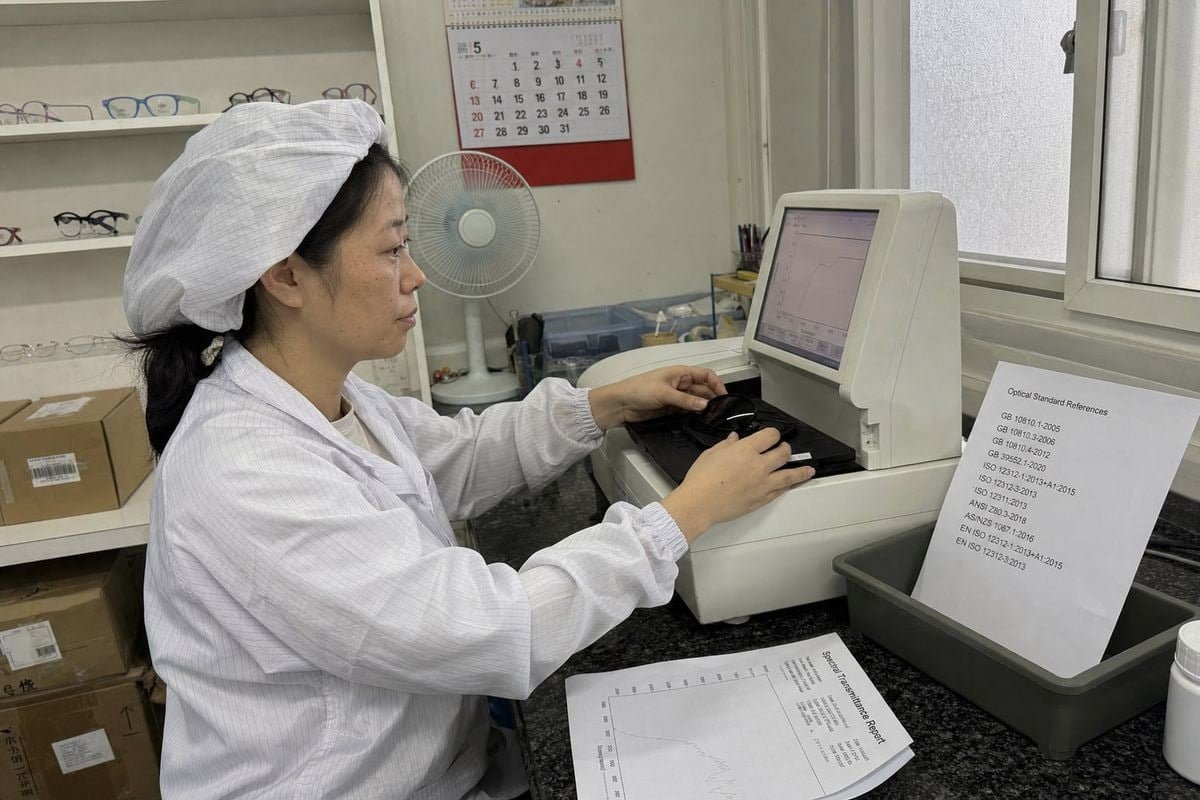
The single most important document is the spectral transmittance report. This report comes from spectrometer analysis 1 of the actual lens. It shows a lens transmittance curve: how much light passes through at every wavelength, measured in nanometers. If the report says the lens transmits 60% at 450nm, the blocking rate at that point is 40%. Simple math, but only possible when the graph is clearly labeled.
Here is the problem I raise with new buyers all the time. A claim like "blocks 40% of blue light" means nothing on its own. Blue light within the HEV light spectrum 2 runs roughly from 400 to 500 nm. A lens can block 80% at 410 nm and almost nothing at 450nm. Both lenses could legally claim "blocks blue light." That is why 450nm wavelength filtration data matters so much for kids: it is close to the peak emission of most LED-backlit tablets and school laptops.
The documents worth requesting
| Document | What it proves | Priority |
|---|---|---|
| Spectral transmittance report | Exact blocking % per wavelength | Essential |
| ANSI Z80.3 / EN ISO 12312-1 / AS/NZS 1067.1 reference | General optical safety compliance | Essential |
| Photopic transmittance value | Lens is not too dark for daily wear | High |
| Batch-level lab audit | Consistency across production runs | High |
| UV400 test data | UV protection (separate from blue light) | High |
Questions that reveal a serious supplier
Ask what wavelength band was measured. Ask whether the test covered the frame-and-lens combination you are ordering. Ask for the report date. When we prepare quotations for our TR90 kids optical frames, we attach the lens data for that exact lens batch, because a two-year-old report on a different lens tells you nothing about your shipment.
Can I Trust Blue Light Certificates Without Independent Lab Verification?
A distributor once forwarded me a competitor's certificate and asked why our quote included extra testing costs. When I looked closely, the certificate had no lab name and no test method listed.
No. A certificate without independent lab verification is only a supplier's self-declaration. Trust requires third-party lab certification naming an accredited laboratory, a stated test method, a recent date, and confirmation the tested sample matches your ordered lens and batch.
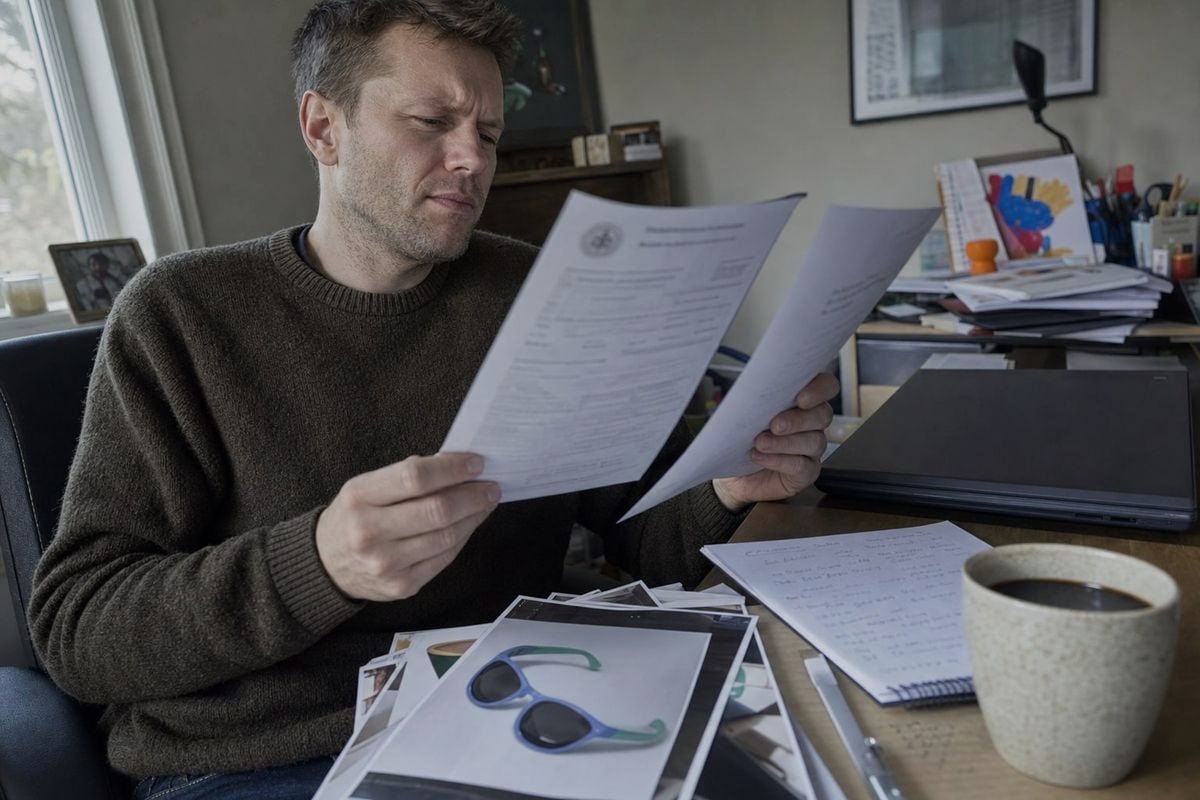
Certificates float around this industry freely. Some are real. Some are copied from other factories. Some are genuine but describe a completely different lens than the one being shipped. In fifteen years of making children's eyewear, I have learned to treat every certificate as a claim to be checked, not proof by itself.
There are three verification levels, and buyers should know exactly which one they are looking at:
- Marketing claim only. A percentage printed on packaging or a website. Least trustworthy. No evidence behind the number.
- Home visual test. A screening tool. It can show that some filtering exists, but never the exact rate.
- Independent spectrophotometer report. The gold standard. A lens transmittance curve 3 from an accredited lab, tied to your product.
How to check a certificate is real
Look for the laboratory's name 4 and accreditation number. Search the lab online and confirm it exists. Some labs let you verify a report number directly. Then confirm the sample description matches your lens: same material, same coating, same tint. Finally, check the date. Lens formulations change. A report older than the current production run may not reflect what ships to you.
Why batch-level audits beat a single master certificate
One "master" certificate from years ago cannot guarantee consistency across mass production. Coating thickness drifts. Material suppliers change. That is why we support batch-level third-party lab certification when brand customers request it, especially for children's product markets like Australia and Japan where import scrutiny is strict. If a supplier refuses to share any report, treat that as an inability to substantiate the claim, not as a minor inconvenience.
What Lens Coating or Material Differences Affect Actual Blue Light Blocking Performance?
The trade-off we weigh most often in development is durability versus optics. Children throw glasses in backpacks, sit on them, and chew the temples. Lens construction has to survive all of it.
Blue light performance depends on whether filtration is substrate-integrated into the lens material or applied as a surface coating. Substrate-based lenses keep blocking even when scratched, while coatings can wear off. Tint depth, anti-reflective layers, and photopic transmittance also change real-world results.
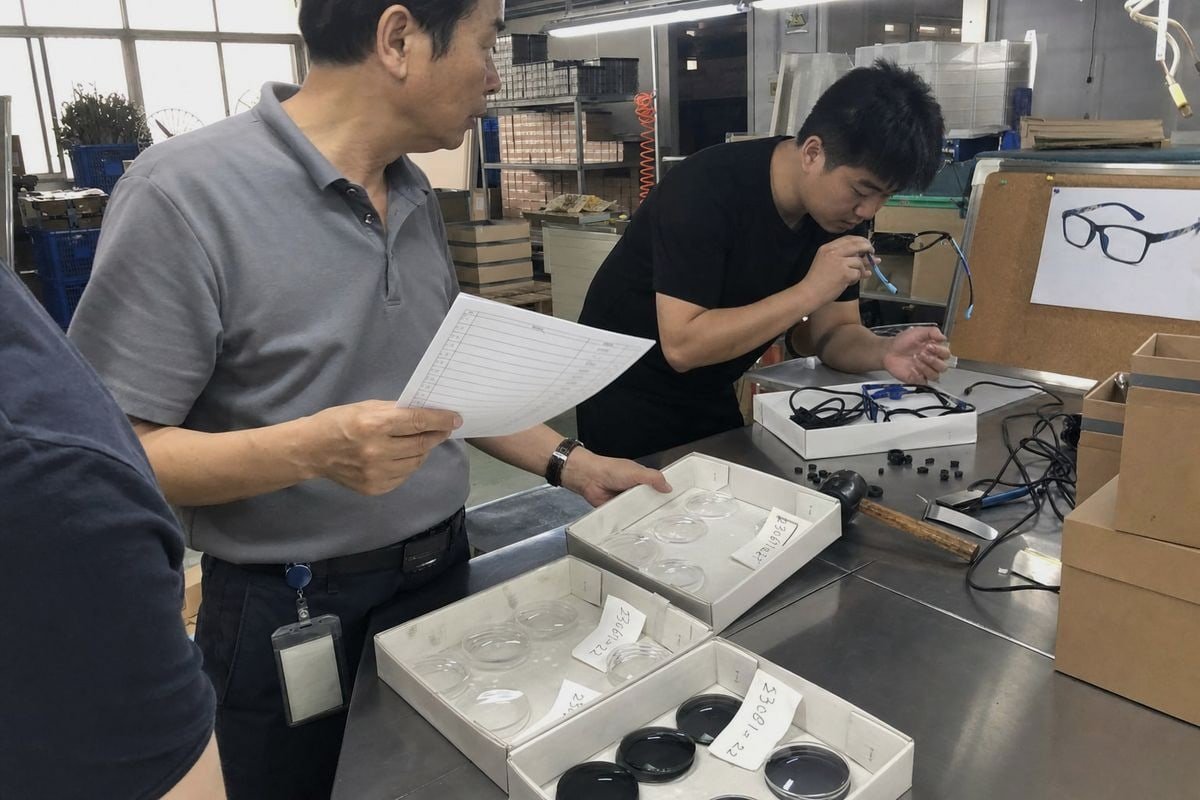
There are two main ways to make a lens filter blue light. The first is a reflective surface coating, often visible as a blue or purple sheen. The second is substrate-integrated absorption, where the filtering pigment is baked into the lens monomer itself. For adult office glasses, either can work. For kids, we strongly favor substrate-integrated lenses. A coating can scratch off with the rough handling children give their frames. When the coating goes, the protection goes with it, but the packaging claim stays.
Coating vs. substrate at a glance
| Factor | Surface coating | Substrate-integrated |
|---|---|---|
| Durability under kid use | Lower; can scratch and degrade | High; blocking is in the material |
| Visual appearance | Clearer, blue-purple reflection | Often slight yellow tint |
| Typical blocking at 450nm | Modest, often under 20–30% | Can reach higher, stable rates |
| Consistency over lifespan | Declines with wear | Stable |
| Best fit | Light adult screen use | Children's daily eyewear |
The tint and brightness balance
Physics imposes an honest rule: a completely clear lens rarely blocks more than 20–30% of blue light. Stronger 450nm wavelength filtration usually brings a visible yellow or amber tint. That is not automatically bad, but for children it must be balanced against normal color perception. This is where the photopic transmittance value matters. If the blocking rate is so aggressive that overall brightness drops sharply, a child's pupils dilate and light sensitivity can increase. When we develop lens options for our TR90 frames with TPEE temples, we check photopic transmittance alongside blue light data, because a lens a child refuses to wear protects nothing.
One more nuance: an anti-reflective coating 5 on the back surface reduces glare but does not by itself block blue light. Buyers sometimes confuse the two. Glare reduction helps digital eye strain comfort; it is not blue light filtration.
How Do I Spot Misleading Blue Light Marketing Claims Before Placing a Bulk Order?
A lesson I learned early in exporting: the most confident-sounding claims often have the thinnest paperwork behind them. One sample kit we reviewed years ago claimed "100% blocking" on a water-clear lens. Physically impossible.
Spot misleading claims by checking for a percentage with no wavelength range, "100% blocking" on clear lenses, reliance on before-and-after photos, bundled blue-light pen kits that emit violet light, UV language disguised as blue light data, and refusal to share any lab report.
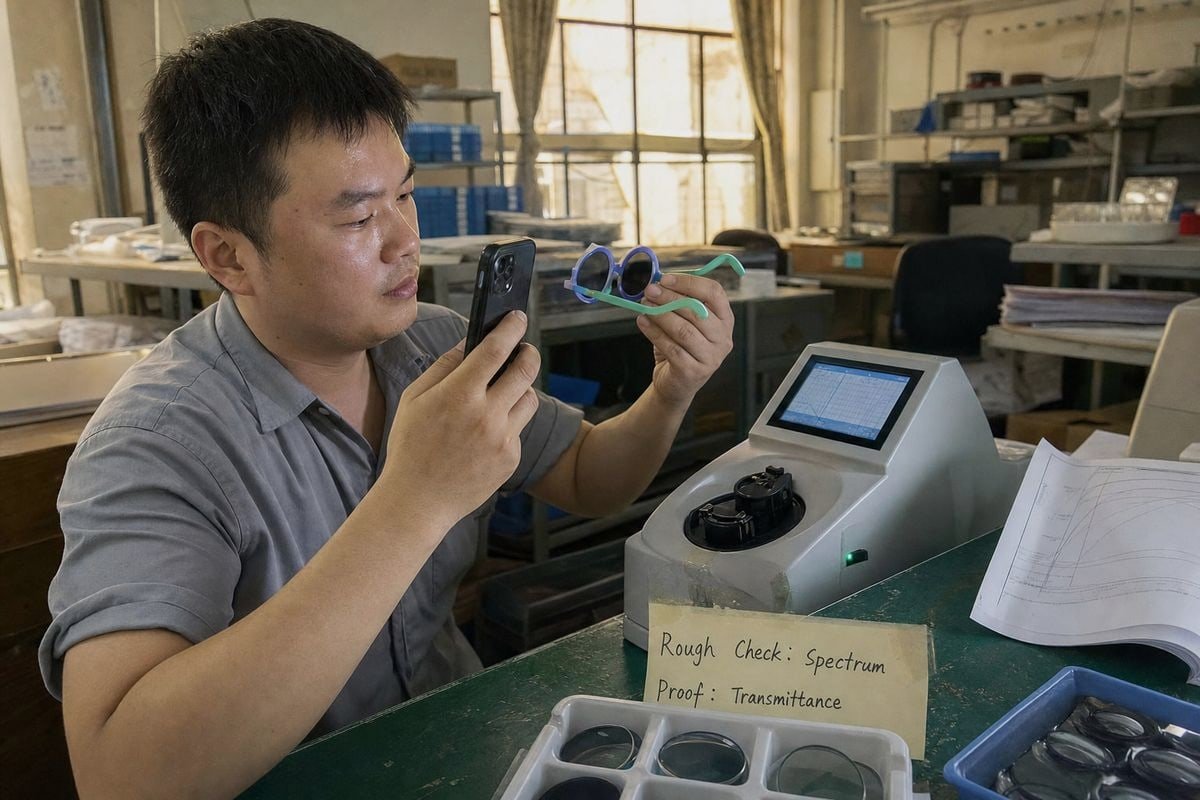
Before any bulk order, run every claim through a structured filter. The question is never just "does it block blue light?" It is: how much light, at which wavelengths, measured how, and by whom?
Red flags versus what to demand instead
| Red flag | Why it misleads | What to demand instead |
|---|---|---|
| Percentage with no nanometer range | Number could apply to any narrow band | Blocking data at 400–455 nm, especially 450nm |
| "100% blue light blocking" on clear lenses | Physically impossible without heavy tint | Realistic figures with a transmittance graph |
| Blue-light "test pen" in the box | Pens often emit violet/UV, not screen wavelengths | Independent spectrometer analysis |
| Only before/after photos | Camera settings and lighting distort results | Dated third-party lab certification |
| UV400 language presented as blue light proof | UV and HEV blue light are different claims | Separate reports for UV and blue light |
| Sleep-benefit promises for daytime kids' glasses | Melatonin suppression 6 research targets evening use | Claims scoped to actual use case |
Home tests: useful, but only as a screening tool
You can do a reflection test by tilting the lens toward a light. A blue-purple sheen suggests a filtering coating exists. You can view an on-screen RGB color chart and see if blue squares dim through the lens. You can shine a blue LED through the lens onto white paper. These checks catch obvious fakes. But tint, ambient light, screen brightness, and anti-reflective coating effects can all fool your eyes. None of these tests measures a percentage. Never let a home demo substitute for a lens transmittance curve.
Keep the health framing honest
Some marketing leans hard on circadian rhythm disruption 7 and sleep science. The research on melatonin suppression mostly concerns evening light exposure in the 400–455 nm band. Daytime classroom glasses are a different use case than adult sleep glasses. When we help brand customers write packaging copy for our kids' ranges, we push them toward measured, defensible language. Overclaiming feels good at launch and hurts badly at the first regulator inquiry or viral customer complaint.
Conclusion
Vague percentages put your brand at risk. Demand spectral transmittance reports, third-party lab certification, and substrate-integrated lenses. Verify the wavelength, the method, and the lab — then order with confidence.
Footnotes
1. Academic explanation of how spectrometers measure the interaction of light with materials. ↩︎
2. Defines the high-energy visible light range that blue light-blocking lenses aim to filter. ↩︎
3. Peer-reviewed NIH study explaining spectral transmittance measurements and curves for protective eyewear lenses. ↩︎
4. Information on the international cooperation for laboratory accreditation and technical competence. ↩︎
5. Detailed explanation of how thin-film coatings reduce reflections on optical surfaces. ↩︎
6. Harvard Medical School resource on how blue light exposure affects hormone production.
More Articles You Might Like

Looking for a Reliable Kids Eyewear Partner?
Explore 800+ ready styles and full OEM/ODM support tailored to your brand.
Get in Touch English
  Español de México
  Deutsch
  Français
  日本語
日本語  العربية
  Português do Brasil