What Is TR90 Material and Its Benefits in Kids Sunglasses Frames?
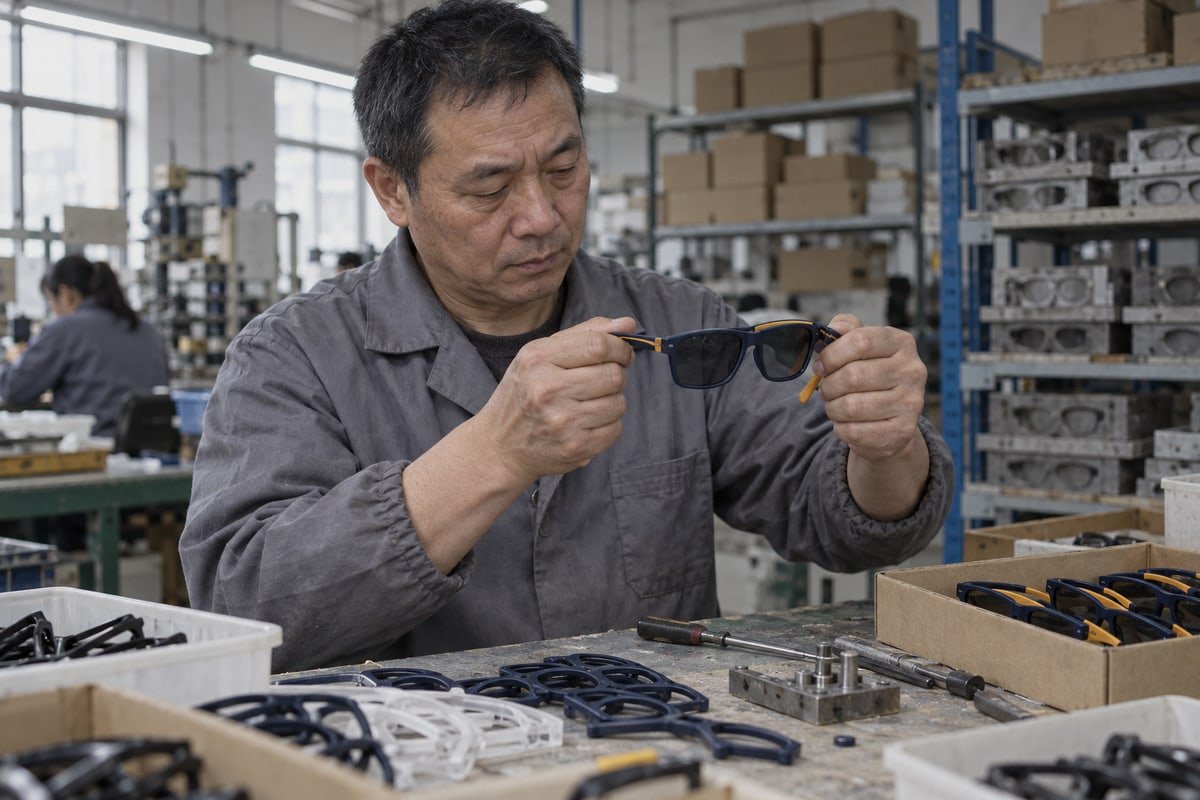
TR90 material comes up in every kids sunglasses inquiry our Taizhou factory receives, yet many buyers treat it as generic plastic, then wonder why frames snap and returns pile up.
TR90 material is Grilamid TR90, a lightweight thermoplastic polyamide made with Swiss technology. In kids sunglasses frames it delivers shape memory, impact resistance, hypoallergenic comfort, and heat and chemical stability, so frames bend without breaking, weigh very little, and survive active daily wear.
That short answer covers the chemistry. The rest of this article covers what it means for a children’s eyewear line. I will explain why TR90 is safe on a child’s face, how it compares to TPEE and other frame materials, what to check when you source it, and whether it really holds up on the playground.
Why Is TR90 Material Safe and Comfortable for My Kids' Sunglasses Line?
Last season a QC inspector on our line twisted a navy TR90 front hard during a routine flex check, and it sprang straight back with no stress whitening.
TR90 is safe and comfortable for kids because it is a hypoallergenic, BPA-free, nickel-free polyamide with a density near 1.00 g/cm³. Frames weigh roughly half of acetate, flex instead of snapping, resist sunscreen and sweat, and stay stable in heat and cold.
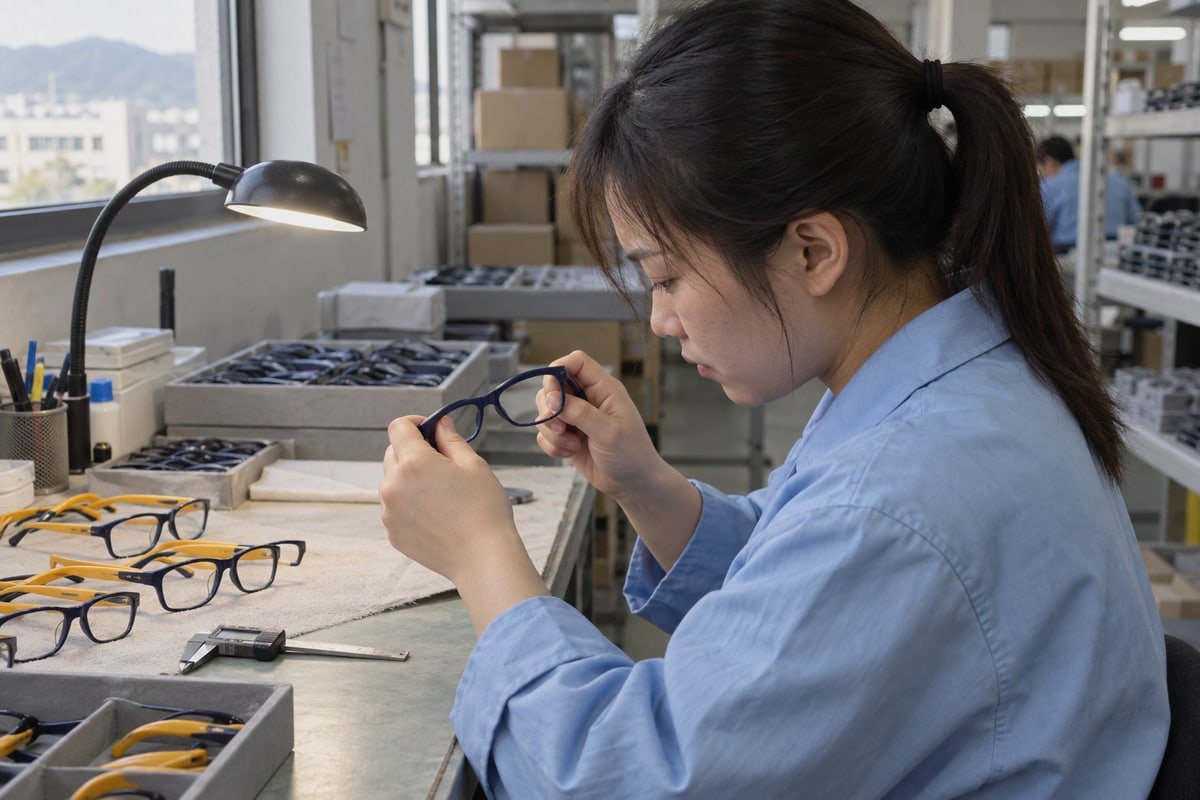
That flex test is not a party trick. It shows the three things parents actually care about: the frame will not hurt, will not break into sharp pieces, and will not irritate skin. Let me break each one down.
Lightweight eyewear and a developing nose bridge
Grilamid TR90 has a density of about 1.00 g/cm³ on manufacturer data sheets. In practice, that makes a TR90 front roughly 50% lighter than a comparable acetate front and around 30–35% lighter than polycarbonate in frame applications. Why does this matter so much for children? A child's nasal bridge 1 is still soft cartilage. Chronic pressure from a heavy frame can leave marks, cause headaches, and make the child pull the sunglasses off. Lightweight eyewear simply stays on longer. In our experience, the difference between a frame a child tolerates and a frame a child forgets they are wearing often comes down to a few grams.
Hypoallergenic properties and BPA-free materials
TR90 is an optical grade nylon. It contains no nickel, so it avoids the contact dermatitis 2 some children get from metal frames. It is also produced as a BPA-free material, which matters because toddlers chew temple tips. We treat this as a baseline requirement, not a bonus. The skin-friendly material is one reason our buyers in Japan and Europe ask for TR90 by name.
Heat, cold, sunscreen, and insect repellent
Technical sheets put the heat deflection temperature 3 of TR90 between 115°C and 135°C depending on test conditions. A pair left on a car dashboard in summer will not warp. In freezing weather the material does not turn brittle. It also has good chemical and stress-crack resistance, so DEET in insect repellent and oxybenzone in sunscreen do not make the surface tacky. Finally, the polymer absorbs very little moisture. That keeps the fit stable in humid climates and gives bacteria less to work with in hinge crevices.
| Property | Typical value or behavior | Why it matters for children |
|---|---|---|
| Density | ~1.00 g/cm³ | Less pressure on nose and ears |
| Heat deflection temperature | 115–135°C | Survives hot cars and beach bags |
| Tensile modulus | ~1600 MPa | Stiff enough to hold lenses, flexible enough to bend |
| Impact behavior | No break in standard Charpy testing | Frame does not shatter into fragments |
| Moisture absorption | Very low | Stable fit, fewer hygiene issues |
| Allergen profile | Nickel-free, BPA-free | Suitable for sensitive skin and chewing |
One honest caveat: comfort depends on design, not material alone. Bridge geometry, temple curve, and lens weight all matter. TR90 gives you a great starting point. It does not replace good fitting work.
How Does TR90 Compare to TPEE and Other Frame Materials for Children's Eyewear?
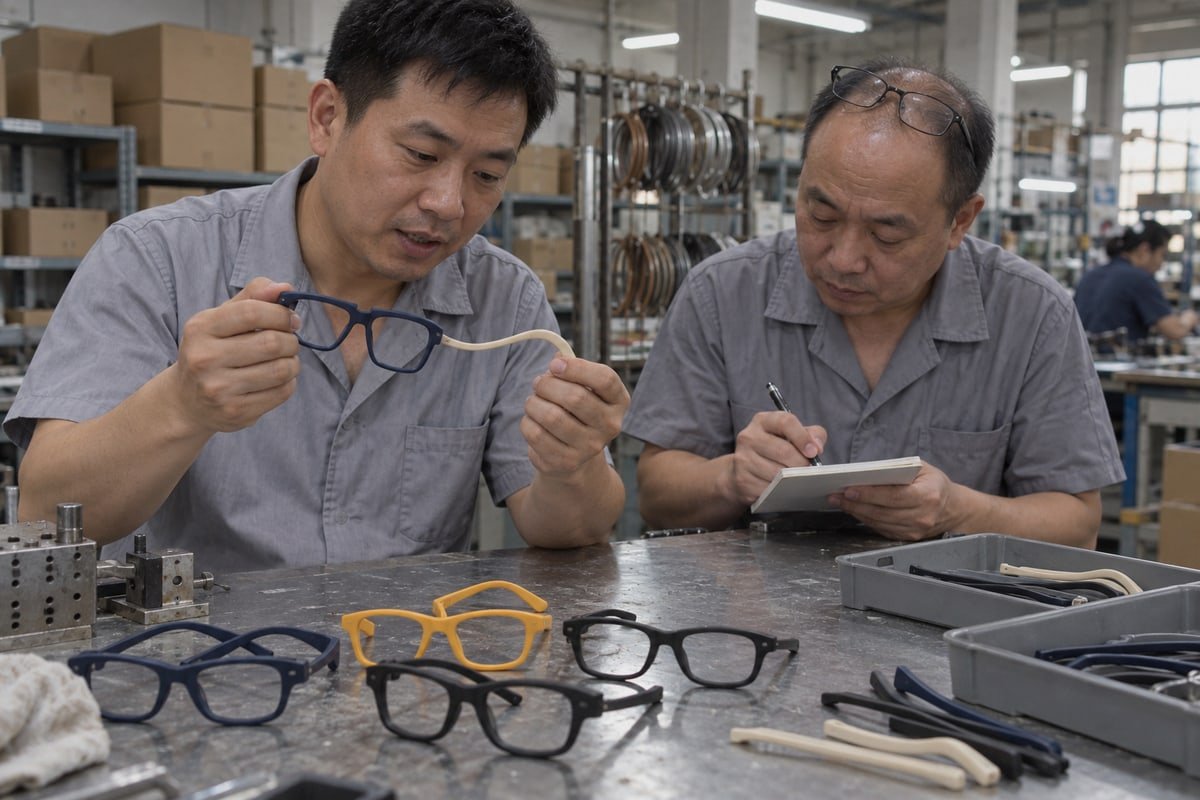
Every week we weigh the same trade-off for a new style: a rigid TR90 front that holds lenses precisely, or a softer TPEE temple that bends almost flat.
TR90 is lighter and more flexible than acetate and metal, and lighter than polycarbonate frames. TPEE is softer and more rubbery, better for infants and temple tips, while TR90 holds lens shape better. Many kids sunglasses combine a TR90 front with TPEE temples.
Here is the comparison at a glance before I go into the details.
| Material | Weight | Flexibility | Feel | Best for | Main drawback |
|---|---|---|---|---|---|
| TR90 | Very light | High, springs back | Smooth, slightly firm | Ages 3–12, sport and daily wear | Hard to heat-adjust |
| TPEE | Very light | Extremely high, bends flat | Soft, rubbery | Babies, toddlers, temple tips | Less rigid lens retention |
| Acetate | Heavier | Low, can crack | Premium, glossy | Fashion looks, older kids | Heavy, brittle when cold |
| Metal | Medium | Low, bends permanently | Cool, thin | Slim optical styles | Nickel risk, sharp if broken |
| Polycarbonate frame | Light | Moderate | Hard | Budget sport frames | Less memory, can stress-whiten |
TR90 vs TPEE
Both are flexible, environmentally friendly thermoplastics, and both sit at the center of what we produce. The difference is stiffness. TPEE is a thermoplastic polyester elastomer. It feels like a firm rubber band. You can fold a TPEE baby frame in half and it recovers. TR90 is a thermoplastic polyamide. It flexes, but it also holds a lens groove tightly and keeps the front from twisting out of alignment. That is why our most popular construction is a TR90 front with TPEE temples. The front stays optically stable. The temples wrap gently behind small ears and survive being pulled off sideways.
TR90 vs acetate and metal
Buyers sometimes push back here. Acetate gives richer, layered colors and a premium look. Metal allows a slimmer profile and can be bent to fit. Both points are fair. But for children, the trade-off cuts the other way. Acetate is roughly twice the weight and can crack in the cold. Metal bends permanently when sat on and can expose sharp ends. TR90 answers the color objection with integrated coloring, where pigment runs through the whole resin, so a deep scratch does not reveal a different color underneath. It answers the adjustability objection by not needing much adjustment. A well-sized TR90 kids frame returns to its molded shape on its own.
TR90 vs polycarbonate
Polycarbonate is an excellent lens material. As a frame material it is harder and less forgiving. TR90 is lighter in frame applications and shows true memory behavior, while polycarbonate frames can whiten at stress points after repeated bending.
What Should I Look for When Sourcing TR90 Kids Sunglasses from a Manufacturer?
A procurement manager from an Australian kids brand once asked me a blunt question on a video call: how could she tell our TR90 from cheap lookalikes?
When sourcing TR90 kids sunglasses, look for confirmed Grilamid TR90 resin, integrated coloring, UV400 or polarized lenses, secure hinges, child-sized bridges, a real factory with documented QC, existing molds to avoid tooling cost, and full OEM support for logos, colors, and retail-ready packaging.
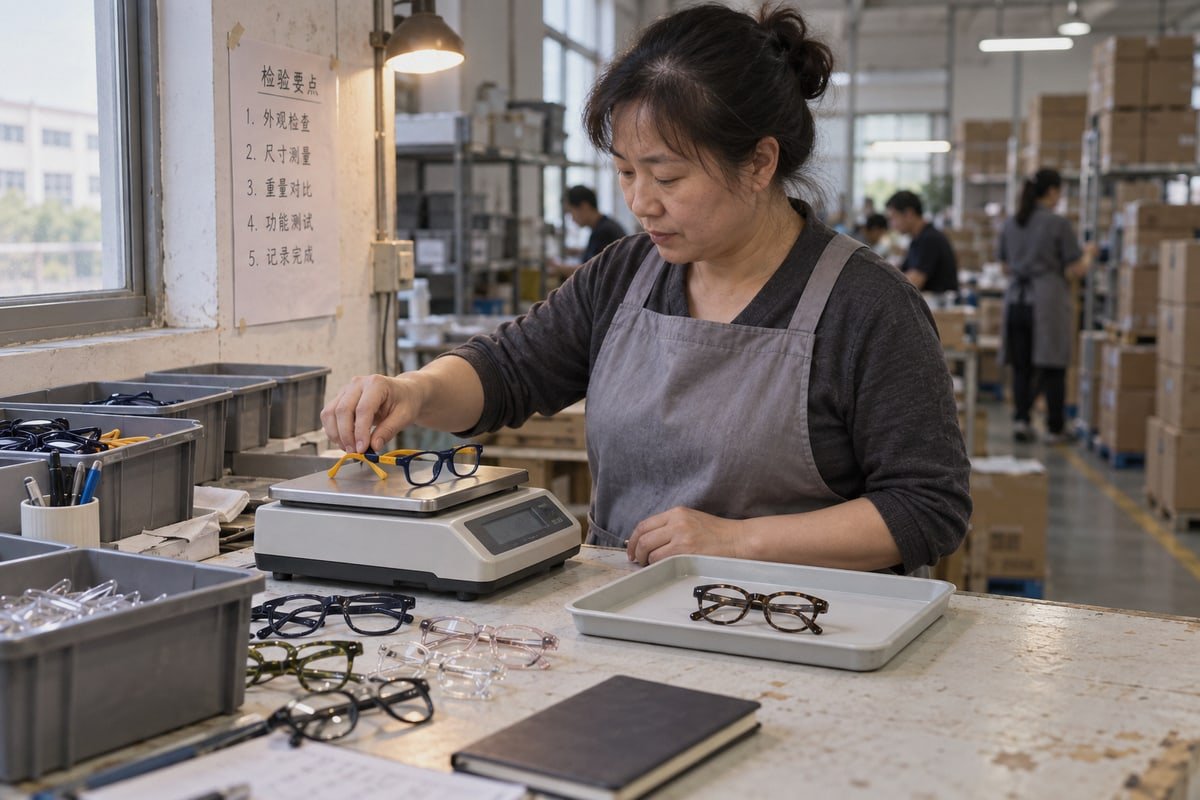
I gave her a short checklist, and I will share the expanded version here. Follow these steps in order and you will filter out most of the risk before you place a first order.
Step 1: Verify the material, not the label
Ask the supplier which resin grade they use and where it comes from. A genuine supplier will name the polyamide grade without hesitation. Then run three quick physical checks on the sample. Bend the temple back gently; it should return without a white crease. Scratch an inconspicuous spot; integrated coloring means the same color shows underneath. Weigh the frame; a child's TR90 front should feel almost weightless in your palm. The phrase "not all TR90 is identical" is true, so treat samples, not spec sheets, as your evidence.
Step 2: Check the lens and fit before the frame
Frame material gets the attention, but lenses do the protecting. Confirm UV400 lenses 4 at minimum, and ask about polarized options for glare-heavy markets like beaches and snow. Then check fit. A great TR90 frame on a bridge that is too wide will slide down a four-year-old's nose. We keep separate size tiers for toddlers, preschoolers, and school-age children for exactly this reason.
Step 3: Assess the factory behind the frame
This is where the Australian buyer's question really pointed. Ask whether you are talking to a factory or a trading company. Our workshop in Taizhou runs about 120 workers under 5S management with 15 years of eyewear experience, and buyers are welcome to see it. Ask how many existing styles are available. Our catalog holds around 800 open styles, which lets a new brand launch a collection without paying for private molds and test the market at lower risk. Finally, ask what OEM/ODM support is included. Custom colors, temple logos, lens tints, packaging, and cases should all be on the table, with quality control that is documented rather than promised.
| What to check | Why it matters | How to verify |
|---|---|---|
| Resin grade | Real TR90 versus generic nylon | Ask for grade name; run flex and scratch tests |
| Integrated coloring | Scratches stay invisible | Scratch a hidden spot on the sample |
| Lens standard | Eye protection is the real purpose | Request UV400 or polarized confirmation |
| Bridge and temple sizing | Fit decides whether kids keep them on | Ask for size tiers by age |
| Hinge quality | Loose hinges cause most returns | Open and close 50 times; check for play |
| Factory status | Consistency and communication | Video tour, worker count, workshop system |
| Existing style library | Launch without mold investment | Ask for the open-style catalog |
| OEM/ODM scope | Retail-ready branded product | Request a packaging and logo mock-up |
Can TR90 Frames Help Me Offer Durable, Flexible Sunglasses for Active Children?
One lesson stuck with us after years of shipping to 20-plus countries: a sunglass frame for a seven-year-old must survive being sat on, not just worn.
Yes. TR90 frames give active children durable, flexible sunglasses because the flexible memory polymer bends and springs back, resists impact without shattering into sharp pieces, tolerates heat deflection temperatures of 115°C to 135°C, and sheds sweat and moisture, so frames keep fit through sports and playground use.
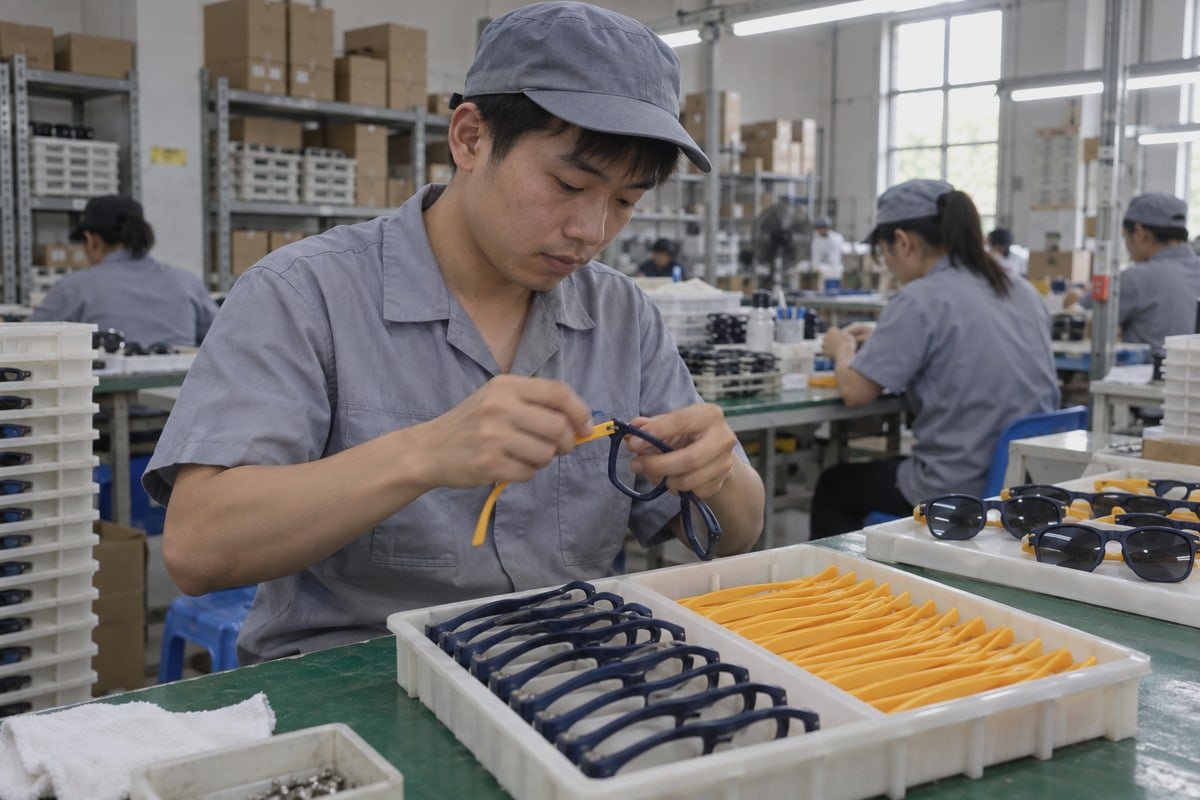
Active children treat sunglasses as tools, toys, and occasionally as seat cushions. TR90 was not designed for children specifically, but its property profile lines up almost perfectly with what children do to eyewear.
Shape memory in plain language
Picture a plastic ruler. Bend it a little and it returns. Bend it too far and it snaps or stays bent. TR90 pushes that "too far" point much further out. Industry sources call it memory plastic or plastic titanium for this reason. The technical basis is high flexural fatigue strength 5, meaning the material can go through many bending cycles without weakening. A tensile modulus around 1600 MPa puts it in a sweet spot: stiff enough to hold a lens, soft enough to give way when a child yanks a temple sideways.
Impact-resistant frames and shatterproof construction
Standard Charpy impact tests on TR90 report no break under tested conditions. In real terms, a frame that takes a football to the face deforms and recovers rather than splintering. This shatterproof construction is a safety benefit as much as a durability one. I want to be careful with language, though. Some retail pages call TR90 "virtually unbreakable." No frame is. Thin sections, poor hinge riveting, or the wrong lens can still fail. Impact-resistant frames reduce risk; they do not remove it.
Design choices that multiply durability
Material is the foundation, and design builds on it. Our matte navy wraparound sport style uses a curved TR90 front so the lenses sit close and the temples grip behind the ears during running. Our two-tone wayfarer pairs a glossy TR90 front with softer temples that flex outward when pulled. Rounded edges on our black oval frame remove sharp corners for faceplants. Each choice adds durability on top of what the thermoplastic polyamide already provides.
| Real-world stress | How a TR90 frame responds |
|---|---|
| Sat on in a car seat | Flexes flat, springs back |
| Pulled off by one temple | Temple bends outward, no hinge crack |
| Left on a hot dashboard | Holds shape below heat deflection range |
| Sweat and sunscreen all day | Low moisture uptake, no tacky surface |
| Dropped on concrete | Absorbs impact, does not shatter |
For brands with sustainability goals, bio-based TR90 variants derived from castor oil are also emerging, offering a lower-carbon path without giving up the memory behavior.
Conclusion
Kids break sunglasses, and returns hurt brands. TR90 material fixes that with light, flexible, safe frames. Pair it with UV400 lenses and proper sizing, and you have a product parents trust.
Interested in sourcing the products mentioned in this article? See details and request a quote here:
Footnotes
1. Anatomical reference for the part of the nose that supports eyewear, particularly sensitive in developing children. ↩︎
2. Scientific resource detailing the causes and symptoms of contact dermatitis related to material sensitivities. ↩︎
3. International standard for determining the temperature of deflection under load for plastic materials. ↩︎
4. Federal agency providing standards for UV radiation protection in eyewear and other products. ↩︎
5. Official manufacturer site for Grilamid TR90, providing technical specifications and material properties. ↩︎
More Articles You Might Like
Looking for a Reliable Kids Eyewear Partner?
Explore 800+ ready styles and full OEM/ODM support tailored to your brand.
Get in Touch English
  Español de México
  Deutsch
  Français
  日本語
日本語  العربية
  Português do Brasil