What Is the Ideal Weight Range for Kids’ Sunglasses (in Grams)?
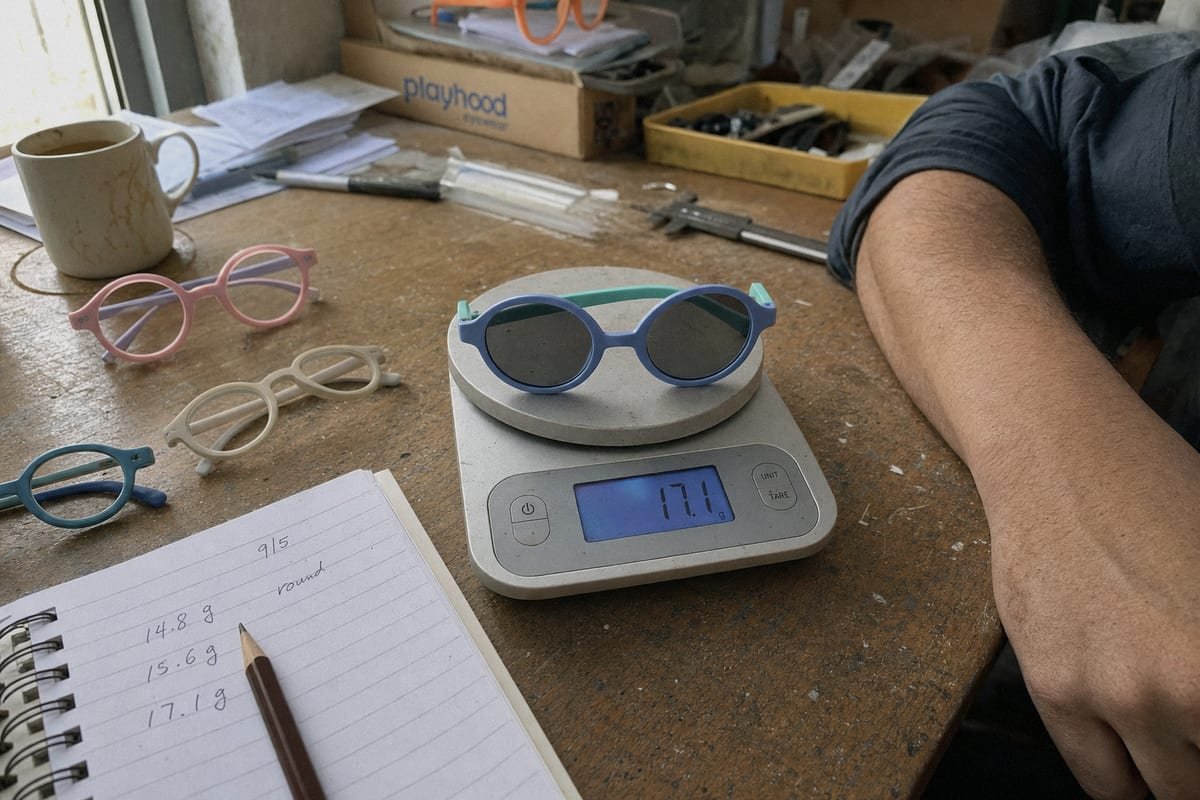
The ideal weight range for kids’ sunglasses is a question buyers ask our factory constantly. Get it wrong, and children simply pull the glasses off — killing sell-through and reviews.
The ideal weight range for kids’ sunglasses is 10–20 grams, with under 20 grams as the safest practical benchmark. Infants and toddlers do best under 15 grams, while older children ages 7–12 can comfortably wear frames up to about 25–28 grams.
That short answer hides a lot of nuance. Age, material, lens type, and fit all shift the target. Let me break it down the way I explain it to our B2B buyers.
What Is the Average Weight Range for Kids' Sunglasses by Age Group?
Last month, a procurement manager from Australia asked me why our toddler frames weigh 16 grams while our junior sport styles weigh 24. The answer comes down to age-based facial development, which our design team studies closely.
Kids' sunglasses average 12–15 grams for ages 0–3, 15–20 grams for ages 4–6, and 20–28 grams for ages 7–12. Younger children need lighter frames because their nasal bridge is underdeveloped and cannot support heavier eyewear without slipping or discomfort.
There is no single magic number. A pair that feels weightless on a ten-year-old can feel like a brick on a two-year-old. So we always start with age-based targets, then adjust for the style and use case.
Weight Targets by Age Group
Here is the reference table we share with brands during product development:
| Age Group | Ideal Weight | Upper Limit | Key Design Notes |
|---|---|---|---|
| Infants & toddlers (0–3) | Under 15g | ~18g | Soft TPEE flexible frames, adjustable head straps, wide flat nose bridge |
| Preschool (4–6) | 15–20g | ~22g | Flexible temples, integrated nose pads, rounded lens shapes |
| School age (7–12) | 20–25g | ~28g | TR90 frames, larger lenses, sport styling acceptable |
| Sensory-sensitive kids (any age) | 12–15g | ~18g | Minimal contact points, smooth matte finishes, no pressure spots |
A few points deserve extra attention. First, toddler eyewear sizing and weight go hand in hand. A frame scaled down for a small face naturally sheds grams, but the material still matters. Second, sensory-sensitive children have a lower tolerance threshold. For these kids, we target 12–15 grams because tactile overstimulation causes immediate rejection, no matter how cute the frame looks. One of our pastel round styles — a periwinkle-blue frame with mint temples — lands at roughly 17 grams, which is why it performs well in the preschool segment.
Third, exceeding 30 grams in children's eyewear is where problems reliably start. The frame slips during play, leaves indentations on the nose, and the child takes it off. If the sunglasses come off, the UV400 protection 1 they were bought for does nothing.
Why Sport Styles Can Weigh Slightly More
Youth sport wraparounds are the one exception. A 24–26 gram shield-style frame with wraparound coverage actually benefits from a little extra mass. The added inertia and fuller temple contact "seat" the frame so it does not bounce during running or cycling. Weight distribution matters here as much as total grams — a front-heavy frame slides down the moment a child leans forward.
How Do TPEE and TR90 Materials Help Me Reduce Frame Weight Without Sacrificing Durability?
Fifteen years of running eyewear production lines has taught our team one hard truth: cheap lightweight plastic snaps, and cheap durable plastic weighs too much. TPEE and TR90 solved that trade-off for us.
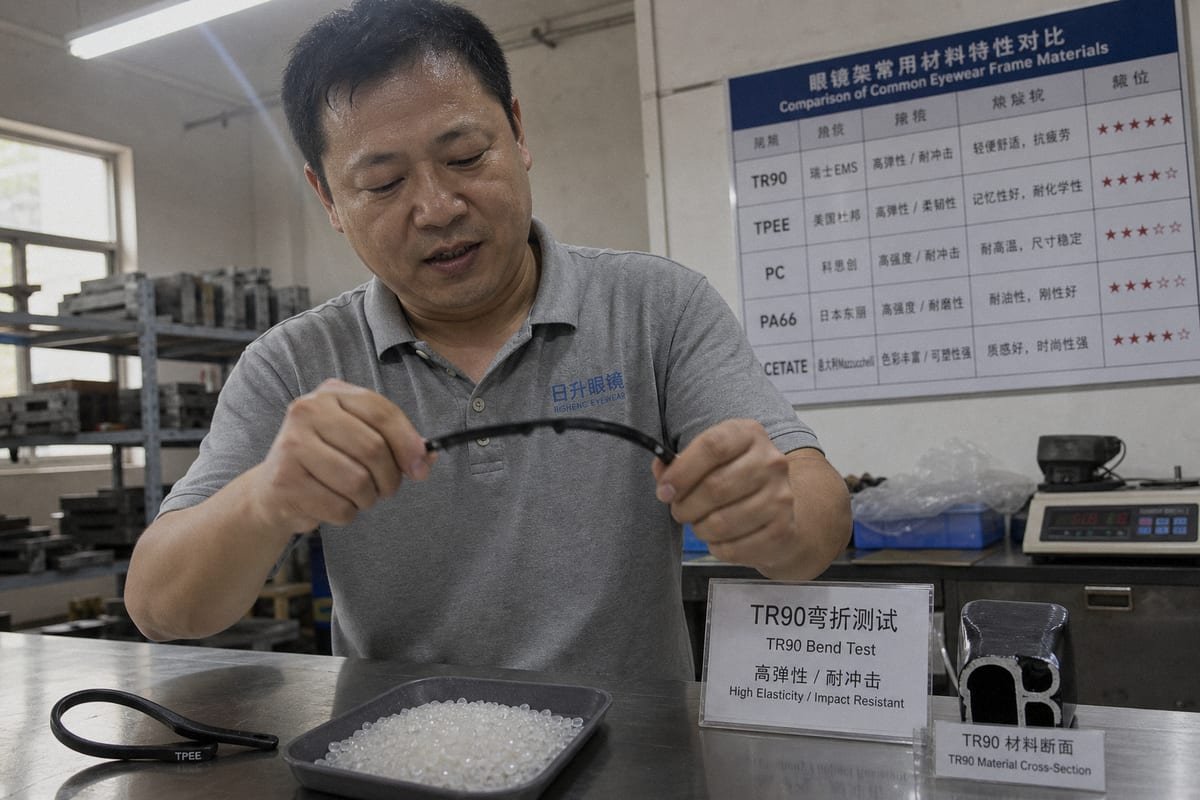
TPEE and TR90 are low-density thermoplastics that combine light weight with high flexibility and impact resistance. TR90 frames typically weigh 30–40% less than acetate equivalents, while TPEE temples bend fully without breaking, letting kids' sunglasses stay under 20 grams yet survive rough handling.
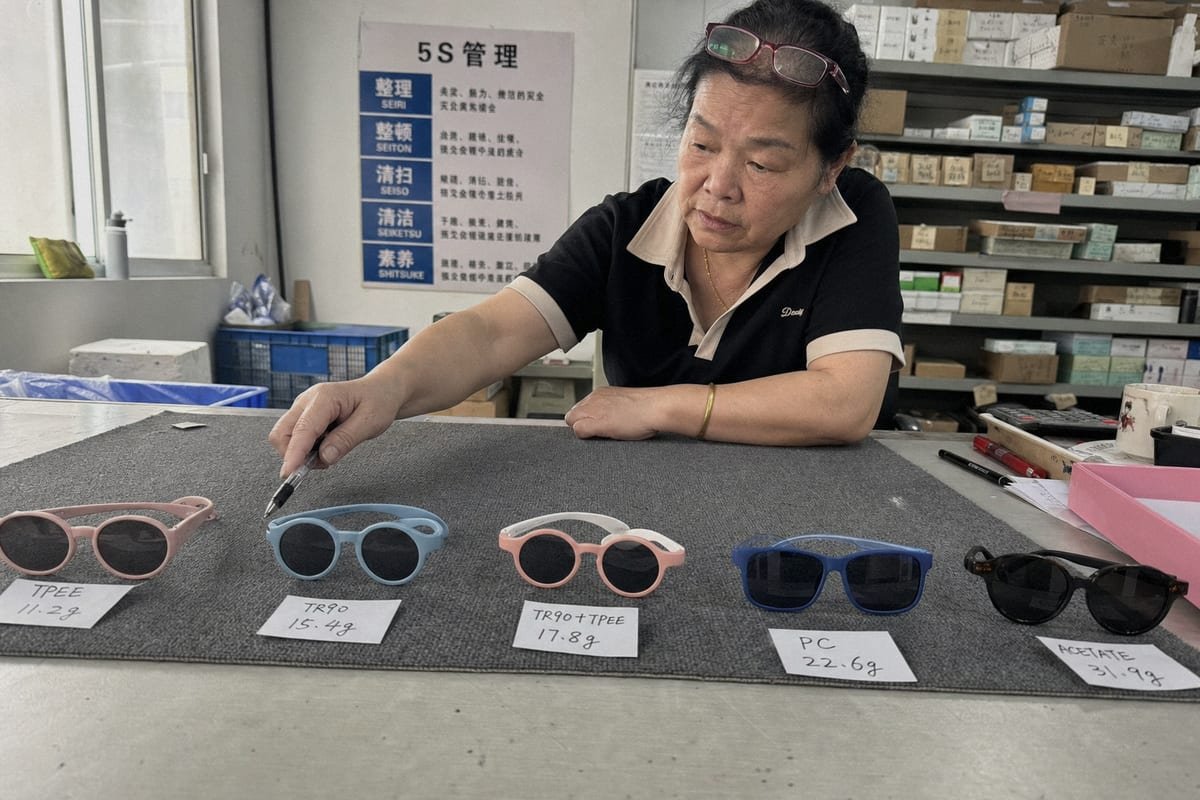
Material choice is the single biggest driver of frame weight. Before you look at any supplier's design, ask what the frame is molded from. Here is how the common options compare in practice.
Material Comparison for Children's Frames
| Material | Density | Flexibility | Typical Kids' Frame Weight | Best Use |
|---|---|---|---|---|
| TPEE flexible frames | Very low | Extreme — twists and returns | 12–18g | Babies, toddlers, sensory-sensitive kids |
| TR90 thermoplastic 3 | Low | High — memory flex | 15–22g | Preschool and school-age frames |
| TR90 + TPEE temples | Low | High front, extreme temples | 14–20g | Active kids needing durable hinges |
| Standard injection plastic | Medium | Low — can crack | 20–30g | Budget sunglasses (not recommended) |
| Acetate | High | Low | 28–40g | Fashion frames, older kids only |
TR90 thermoplastic is a nylon-based memory material. It flexes under stress and springs back to shape, which is exactly what happens when a child sits on their sunglasses or stuffs them in a backpack. TPEE goes further. It is a thermoplastic polyester elastomer, soft enough that a temple arm can fold flat against the frame without whitening or cracking. Our most popular construction pairs a TR90 front — which holds lens geometry precisely — with TPEE temples that absorb every twist a child inflicts.
The lens matters too. We fit polycarbonate lenses 4 as standard because they weigh far less than glass or CR-39 5 and offer the impact resistance active play demands. A polycarbonate lens pair typically saves several grams versus alternatives, and both our UV400 and polarized lens technology options are available in polycarbonate.
One nuance worth noting: emerging bio-based acetates and recycled ocean plastics are trending, but they carry higher density than TR90. When brands request eco-materials, our engineers thin the frame cross-sections to keep the finished pair under the 25-gram comfort benchmark. That takes real tooling expertise — it is not just a material swap.
Why Does Lightweight Design Matter So Much for My Younger Customers' Comfort and Safety?
A Japanese baby-brand buyer once told me her previous supplier's sunglasses had a 40% return rate — not for defects, but because toddlers refused to wear them. That conversation shaped how our design team now thinks about weight.
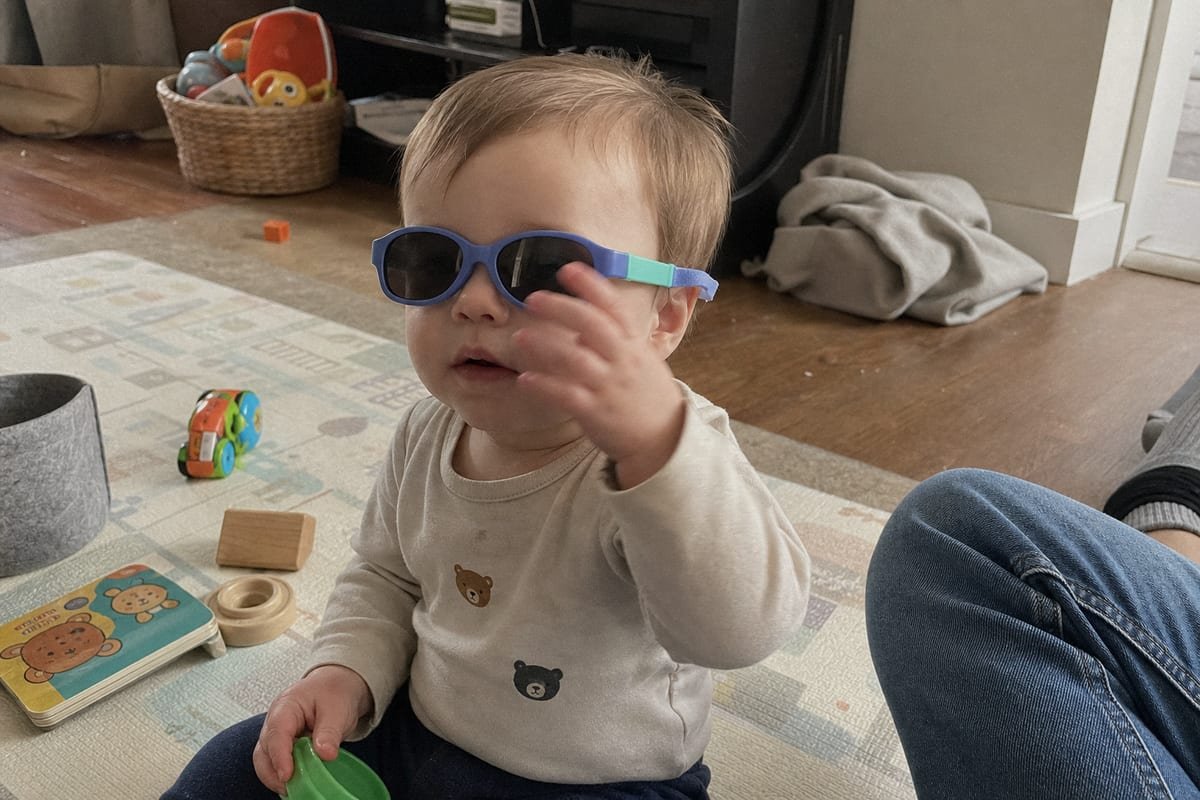
Lightweight design determines whether a child actually keeps sunglasses on. Frames over 30 grams cause nasal bridge pressure, slipping, and rejection, which removes UV protection entirely. Lighter frames improve wear compliance, reduce sensory load, and stay stable during active play.
Sunglasses only protect eyes while they are on the face. That sounds obvious, but it reframes the whole weight discussion. The real metric is not grams — it is wear time.
The Compliance Chain
Think of it as a simple chain of cause and effect:
- Heavy frame presses on the soft, underdeveloped nasal bridge.
- Pressure creates red marks and discomfort within minutes.
- Discomfort makes the child tug, push, and fidget with the frame.
- Fidgeting turns into removal — often within the first ten minutes outdoors.
- Removal means zero UV400 protection during peak sun exposure.
Every gram you save weakens a link in that chain. Nasal bridge comfort is the first battleground because children's noses lack the defined bridge adults have. A frame that grips an adult nose simply slides down a child's face. That is why our toddler styles use wide, flat, integrated nose pads and why many of our baby styles ship with adjustable head straps that transfer weight off the nose entirely.
Safety follows comfort. A slipping frame sits crooked, so the lenses no longer cover the eyes properly and stray light enters from above. Worse, a child running with sliding sunglasses will grab at them mid-stride — a genuine fall hazard on playgrounds. Lightweight frame materials paired with rubberized temple grips keep the eyewear planted so hands stay free.
There is also the sensory angle, which more of our European buyers now ask about. Neurodivergent children and kids with tactile sensitivities register frame weight as constant stimulation. For this group, we target 12–15 grams with smooth matte finishes and minimal contact points. One caveat I always add: weight alone does not guarantee comfort. A 14-gram frame with a badly shaped bridge still hurts. Fit geometry, temple pressure, and weight distribution matter just as much as the number on the scale.
How Can I Verify a Supplier's Weight Claims Before Placing a Bulk Order?
We once weighed a competitor's "18-gram" sample a buyer brought to our Taizhou showroom. It read 26.4 grams. That moment convinced me every buyer needs a simple verification routine before committing to a container.
Verify weight claims by requesting physical samples and weighing them on a 0.1-gram digital scale, checking at least three units for consistency. Confirm whether the claimed weight includes lenses, test balance on a small nose bridge, and compare results against the spec sheet before ordering.

Weight claims are easy to inflate — or rather, deflate — on a spec sheet. Some suppliers quote frame-only weight without lenses. Others weigh a size-down prototype that never reaches production. A disciplined check takes fifteen minutes and can save an entire failed launch.
A Five-Step Verification Process
- Request three or more physical samples, not one. A single sample can be cherry-picked. Three units reveal batch consistency.
- Weigh each on a jewelry-grade digital scale with 0.1-gram precision. Kitchen scales rounding to whole grams hide meaningful variance.
- Confirm what the number includes. Ask directly: does the quoted weight include polycarbonate lenses, nose pads, and any strap attachments? Frame-only figures can understate real weight by 4–8 grams.
- Check unit-to-unit variance. Well-controlled injection molding 6 should hold samples within about ±0.5 grams of each other. Wider spread signals loose process control.
- Test balance and wear, not just mass. Rest the frame on a finger at the bridge. A front-heavy pair will slide on a child even at 18 grams.
Red Flags Versus Good Signs
| What You Observe | What It Tells You |
|---|---|
| Spec sheet weight matches scale within 0.5g | Honest documentation and stable tooling |
| Samples vary by 2g or more between units | Poor injection process control — expect QC issues at scale |
| Supplier cannot say if weight includes lenses | Spec sheet was likely written by sales, not engineering |
| Supplier shares material certificates for TR90/TPEE | Genuine material sourcing, not generic plastic relabeled |
| Weight drops when you request "the same frame, lighter" overnight | The material was likely swapped, which changes impact resistance |
One more tip from our own QC floor: weigh samples again from the pre-shipment inspection batch, not just the development samples. Material substitution between sampling and mass production is one of the oldest games in low-cost sourcing. A supplier confident in its process — with documented 5S workshop management 7 and consistent tooling — will welcome that check rather than resist it. We put frame weight on our inspection checklist for exactly this reason, and we encourage buyers to hold us to it.
Conclusion
Heavy sunglasses get abandoned, and abandoned sunglasses protect nothing. Target 10–20 grams, choose TR90 or TPEE, verify with a scale, and your kids' line will actually stay on faces.
Footnotes
1. Background reference on UV protection standards relevant to children’s eyewear safety. ↩︎
2. Authoritative NIH source explaining nasal bridge anatomy and its common flat appearance in infants. ↩︎
3. Defines thermoplastic materials like TR90 discussed as frame construction options. ↩︎
4. Explains material properties of polycarbonate used for impact-resistant children’s lenses. ↩︎
5. Background on CR-39 lens material compared against polycarbonate for children’s eyewear. ↩︎
6. Background on manufacturing process referenced for frame production consistency. ↩︎
7. Explains the 5S methodology mentioned as a quality control practice in manufacturing. ↩︎
More Articles You Might Like


Looking for a Reliable Kids Eyewear Partner?
Explore 800+ ready styles and full OEM/ODM support tailored to your brand.
Get in Touch English
  Español de México
  Deutsch
  Français
  日本語
日本語  العربية
  Português do Brasil