子供用サングラスのパッケージデザインはどのようなコンプライアンス要件を満たすべきか?
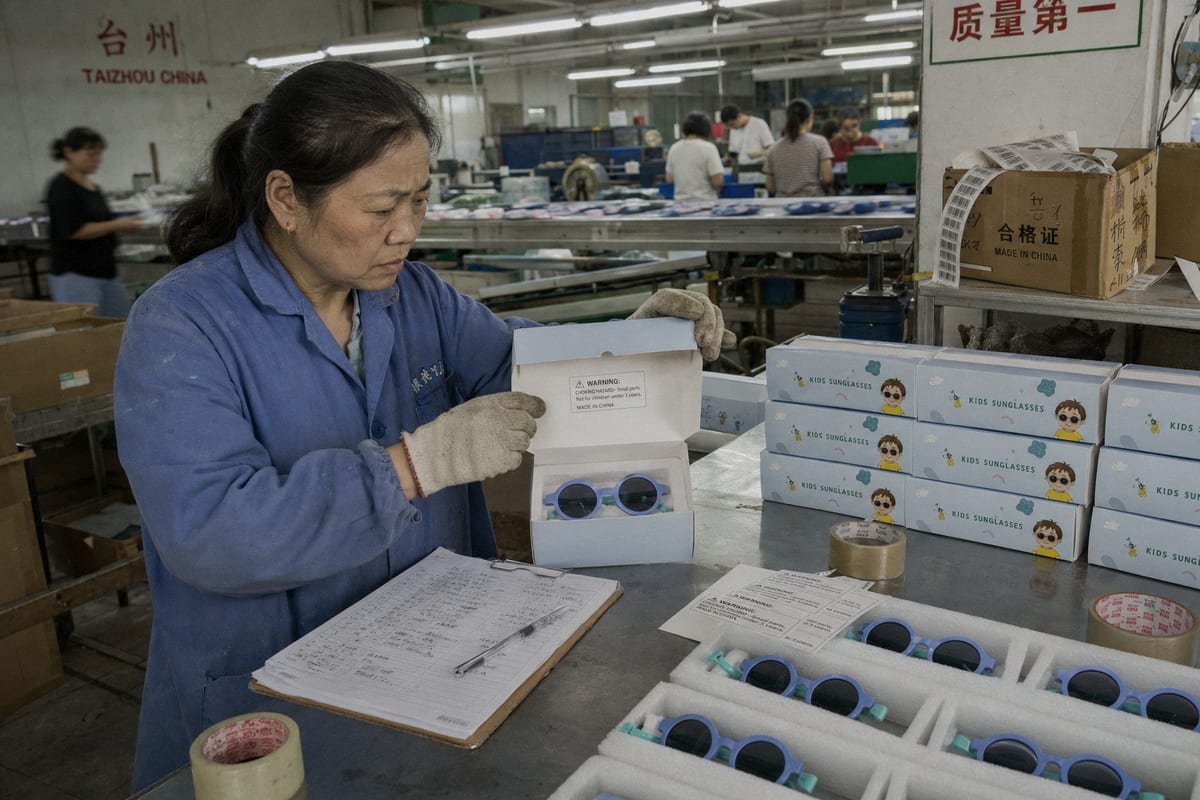
子供用サングラスのパッケージデザインのコンプライアンスは、美しいブランドがつまずくのを見てきたところです。台州の生産ラインでは、警告ラベルが1つ欠けていたために、コンテナ1台分の出荷が遅れたことがあります。その苦痛は回避可能です。.
子供用サングラスのパッケージには、安全認証マーク(CE、FDA関連のラベリング)、ロット追跡ラベル、年齢区分表示、誤飲の危険性に関する警告、UV400保護ラベリング、レンズカテゴリー情報、原産国マーク、リサイクルシンボルを記載する必要があります。要件は市場によって異なるため、パッケージのアートワークは、各販売国の子供向け製品の規則に対して検証する必要があります。.
子供用アイウェアのパッケージは、単なるブランディングではありません。規制当局はそれをコンプライアンスチェーンの一部として扱います。以下に、市場ごとにアートワークに実際に必要なものを解説します。.
子供用サングラスのパッケージラベルで確認すべき安全認証は何ですか?
ヨーロッパのバイヤーが、コンプライアンスマークが全くないゴージャスな箱のモックアップを送ってきたことがあります。ンスマーク 1それ。私たちのチームは印刷前にそれを指摘しました。そのレビューが彼女のローンチを救いました。認証マークが第一、デザインが第二です。.
EU向けのCEマーク、英国向けのUKCAマーク、該当する場合はISO 12312-1規格またはAS/NZS試験への参照、UV400保護表示、およびレンズの子供向け製品証明書やFDA耐衝撃性準拠などの米国要件をサポートする表示が、子供用サングラスのパッケージに必要です。.
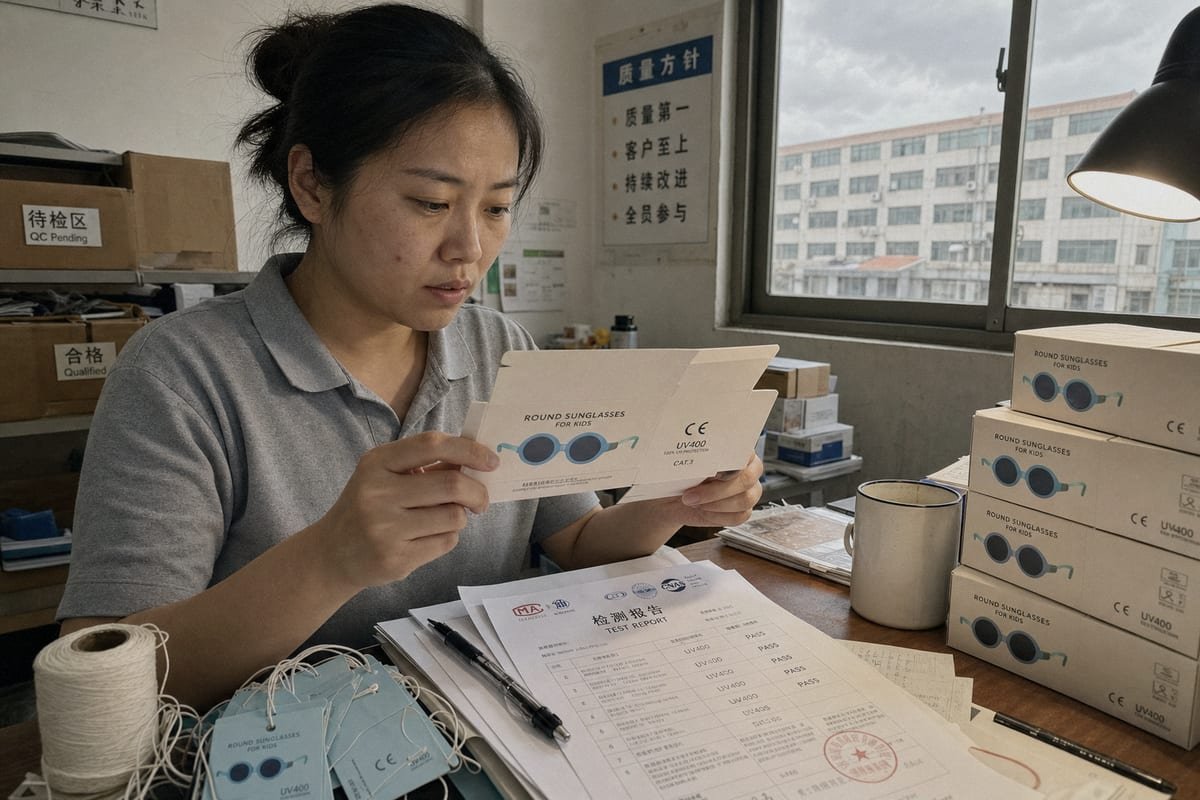
認証マークは、税関職員、小売業者、保護者に、パッケージの背後にある製品がテスト済みであることを伝えます。子供用アイウェアを15年間製造してきた中で、各マークには独自の配置規則があり、一部の法域ではパッケージが製品上のマーキングの代わりになることができることを学びました。.
市場別のコアマーク
| マークまたは参照 | 市場 | それが示すもの | 配置に関する注意 |
|---|---|---|---|
| CEマーク | EU | サングラスはPPE規制要件を満たしています | フレーム、パッケージ、またはラベルに表示する必要があり、視認性、判読性、および耐擦消性がなければなりません。 |
| UKCAマーク | イギリス | ブレグジット後の英国適合性 | CEと同様の配置の柔軟性 |
| ISO 12312-1規格 | グローバル参照 | レンズフィルターカテゴリーと光学安全性 | 通常、パッケージまたはインサートに記載されます |
| CPC参照 | アメリカ | 、またはCPCは、中心となる文書です。米国法では、輸入者または国内製造者が発行する必要がありますが、CPSC認定検査機関からの合格テスト結果に基づいている必要があります。サプライヤーの自己申告に基づいて有効なCPCを発行することはできません。 2 第三者テスト後に存在します | 証明書は出荷時に添付され、パッケージはトレーサビリティをサポートします |
| UV400保護ラベリング | グローバル | レンズは最大400nmの波長をブロックします | 通常はハングタグ、ステッカー、または印刷されたパネル |
CEマークに特別な注意が必要な理由
CEマーキングの要件は、判読性に関して厳格です。マークは、スケーリングされたときに最小限のプロポーションを維持する必要があります。デザイナーがCEロゴを装飾的なフッターに縮小したアートワークを見たことがありますが、それは検査に合格しません。フランスのガイダンスでは、必要なマーキングをフレーム、パッケージ、ラベル、またはそれらの組み合わせに配置することが許可されており、デザイナーにある程度の余地を与えています。しかし、マークが隠されたり、歪められたり、背景に対して消えるような低コントラストの色で印刷されたりしてはなりません。.
UVクレームはテストレポートと一致する必要があります
UV400または 偏光レンズオプション 3, を提供する場合、パッケージのクレームは実際のレンズテストデータと常に一致させます。マーケティング言語がラボレポートを上回らないようにしてください。箱にUV400と記載されている場合、 テクニカルファイル 4 がそれを証明する必要があります。子供向け製品でUV性能を過剰に主張することは、規制当局の注目を集める最も早い方法の1つです。.
国際的な子供向け製品規制を満たすパッケージを確実に保証するにはどうすればよいですか?
私たちが最も頻繁に比較検討するのは、棚での魅力と規制上のスペースのトレードオフです。当社のOEMパッケージチームは、ブランドグラフィックが入る前に、アートワーク上のコンプライアンスゾーンをブロックアウトします。これは一貫して機能する唯一のワークフローです。.
最も厳しいターゲット市場から始め、すべての必須要素をアートワークにマッピングし、次にCPSIAやREACHなどの化学物質制限に対して梱包材を検証します。印刷ファイルの承認前に、第三者試験報告書、米国向け児童製品証明書、およびEPR登録を確認してください。.
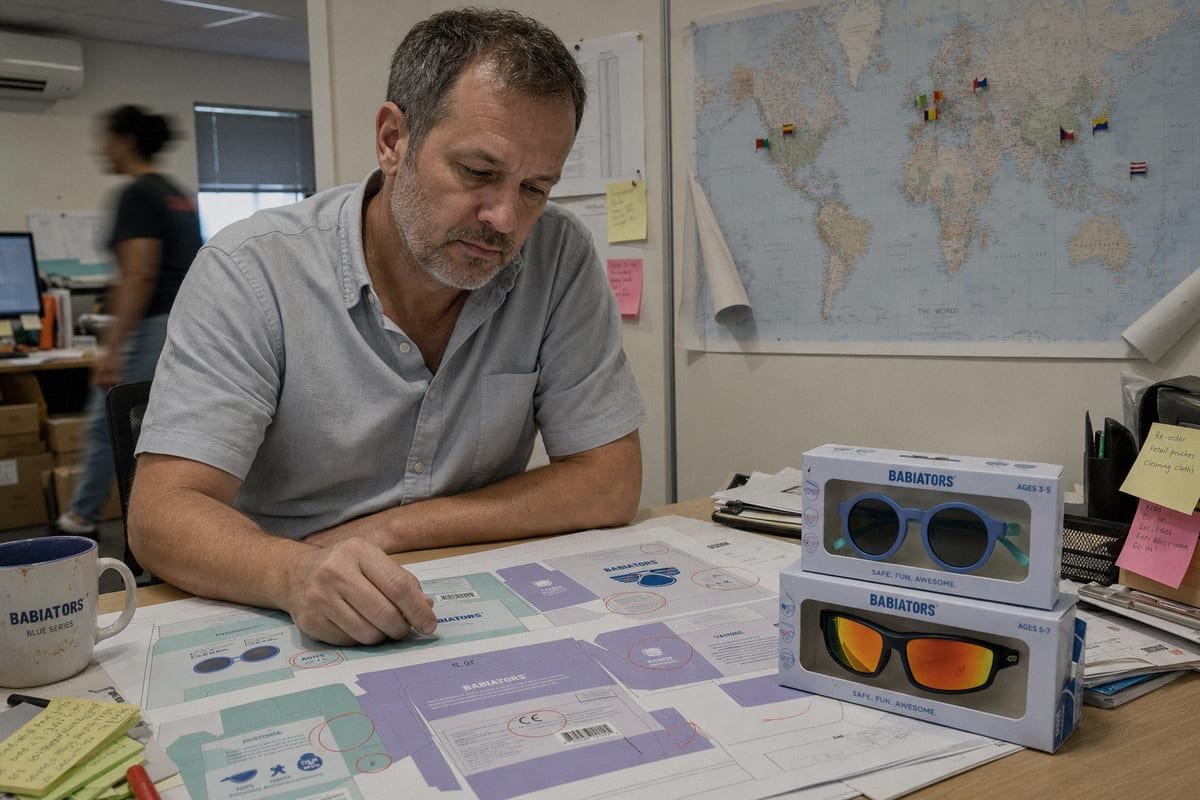
国際的なコンプライアンスは階層的です。パッケージに表示される製品規則、パッケージ素材自体に関する規則、そしてアイテムが子供向け製品として法的に認められるかどうかを決定するプレゼンテーション規則があります。.
レイヤー1:ボックス上に存在する製品規則
米国では、, CPSIAコンプライアンス 5 がほとんどの義務を推進しています。主に12歳以下の子供を対象とした製品は、子供向け製品とみなされます。これにより、 第三者機関によるCPSC認定ラボでのテスト, 、子供向け製品証明書(CPC)、および追跡ラベルがトリガーされます。. コーティング中の鉛は90 ppm未満、基材中の鉛は100 ppm未満 6 applies to accessible components, and your packaging often carries the traceability data that connects the retail unit back to those test reports. Separately, FDA medical device registration matters because sunglasses are regulated as medical devices; sunglasses are exempt from 510(k) submission, but establishment registration, device listing, and impact-resistant lens rules under 21 CFR 801.410 still apply.
Layer Two: The Packaging Material Itself
| 要件 | Region | 確認内容 |
|---|---|---|
| Heavy metal limits (lead, cadmium, mercury, hexavalent chromium) | EU | Packaging component test reports |
| CPSIA chemical limits | アメリカ | Inks, coatings, and any child-accessible packaging parts |
| EPR registration and reporting | EU / UK | Producer registration, recycling fees, symbols like Triman in France |
| Recyclability marking | Various | Correct local recycling symbols per market |
Layer Three: Presentation Decides Classification
Here is the nuance many brands miss. The CPSC considers how a product is represented in its packaging, display, promotion, and advertising when deciding whether it is a children's product. Cartoon characters, pastel palettes, and small sizing on the box all signal a children's item. You cannot design a playful kids' box and then argue the product is general-purpose eyewear. When we help buyers with retail-ready packaging, we assume children's product rules apply in full and design accordingly.
A Practical Verification Sequence
- List every destination market before artwork begins.
- Pull the mandatory label elements for the strictest market.
- Reserve space for those elements on the dieline first.
- Confirm material and ink compliance with your packaging supplier.
- Cross-check final artwork against test reports and the technical file.
- Get a pre-shipment compliance review before mass printing.
子供用眼鏡のパッケージに表示が義務付けられている警告ラベルと年齢情報は何ですか?
Early in my export career, a shipment of our flexible TPEE frames needed a last-minute hangtag reprint because the age grading statement was missing. Since then, warnings and age information get checked twice at our 5S-managed workshop before packing.
子供用アイウェアのパッケージには通常、年齢制限表示、小さな部品が存在する場合は誤飲の危険性に関する警告ラベル、製造者、場所、日付、ロット番号を含むロット追跡ラベル、レンズカテゴリーおよび運転には不向きなどの使用上の注意、そして輸入品の場合は原産国表示が必要です。.
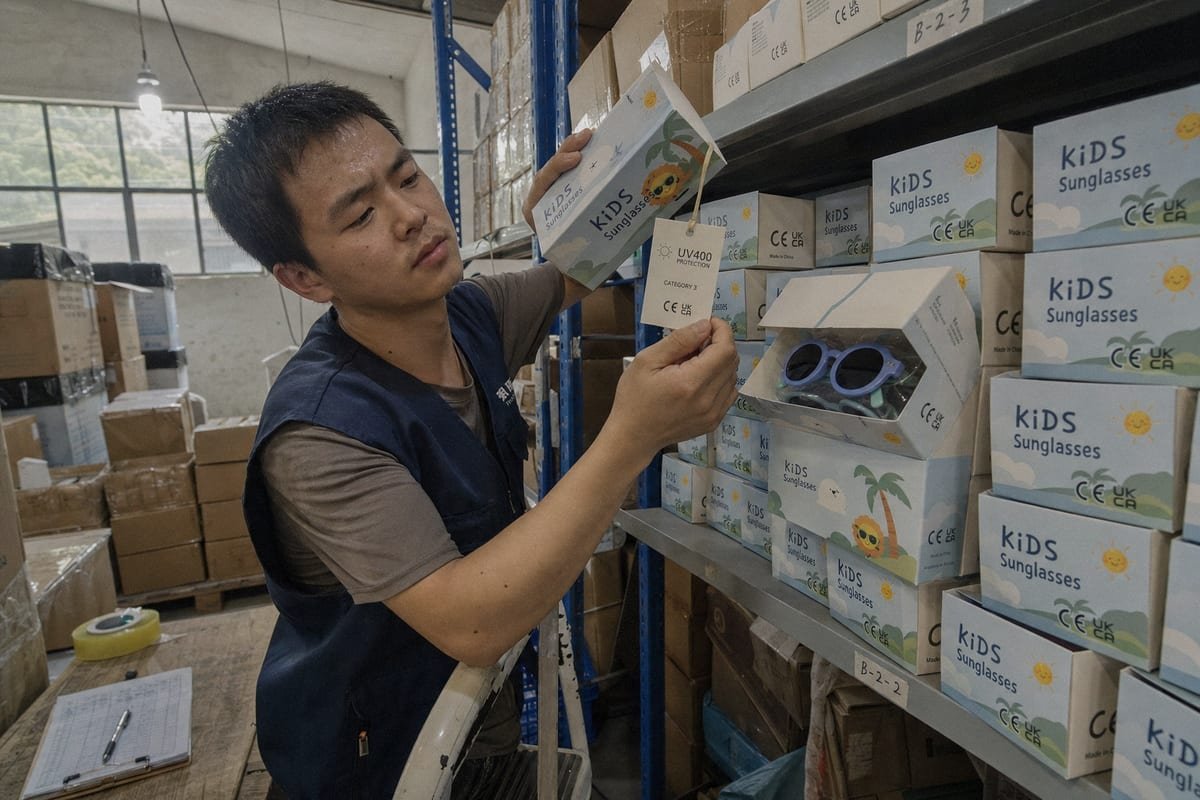
Warnings and age information do two jobs. They protect children, and they protect your brand from recalls and liability. Let me break down each required element.
Age Grading Statements
An age grading statement tells the buyer, the retailer, and the regulator which children the product suits. For sunglasses, this usually reads as an intended age range, such as ages 3 and up. The statement must match reality. Our pastel round frames sized for toddlers cannot carry a vague all-ages claim, because sizing and design clearly target young children. Misleading age claims are a common and avoidable mistake.
Choking Hazard and Small Parts Warnings
Sunglasses contain small components — hinge screws, nose pads, decorative parts. If any accessible part could detach and fit a small-parts cylinder, choking hazard warning labels 7 become relevant, especially for products marketed to younger age bands. Even where a formal warning is not mandated, we advise buyers to assess detachment risk. Our TR90 frames with TPEE temples are engineered to flex rather than snap, which reduces breakage into small pieces, but the packaging assessment still has to happen.
Batch Tracking Labels
| Tracking Element | 目的 |
|---|---|
| Manufacturer or importer name | Identifies who is responsible |
| Production location | Locates the factory of origin |
| Date of manufacture | Narrows recall scope by time |
| Batch or run number | Enables precise, rapid recalls |
The CPSC expects tracking information on both the product and its packaging, where practicable. On small kids' frames, the packaging often carries the fuller tracking detail while the frame carries an abbreviated mark.
Lens and Usage Warnings
Several jurisdictions require the lens category on packaging, and some — including markets following ASEAN-style rules — require warnings such as not suitable for driving and road use where the lens category demands it. Australia and New Zealand mandate category and warning labeling at the point of sale under their children's sunglasses standards. One universal rule: never let a price sticker or promotional over-label cover a required marking.
A procurement manager from Australia recently asked me this exact question during a video call about our 800-style catalog. My honest answer: a good factory partner should carry much of this load, but the importer keeps legal responsibility.
はい — 経験豊富なOEMメーカーは、テストレポート、技術文書、正しいレンズカテゴリデータ、準拠したアートワークテンプレート、追跡ラベルシステム、および米国、EU、英国、オーストラリア向けの市場固有のガイダンスを提供できます。輸入者は法的に責任を負うため、実際の輸出コンプライアンス経験を持つ工場を選択してください。.
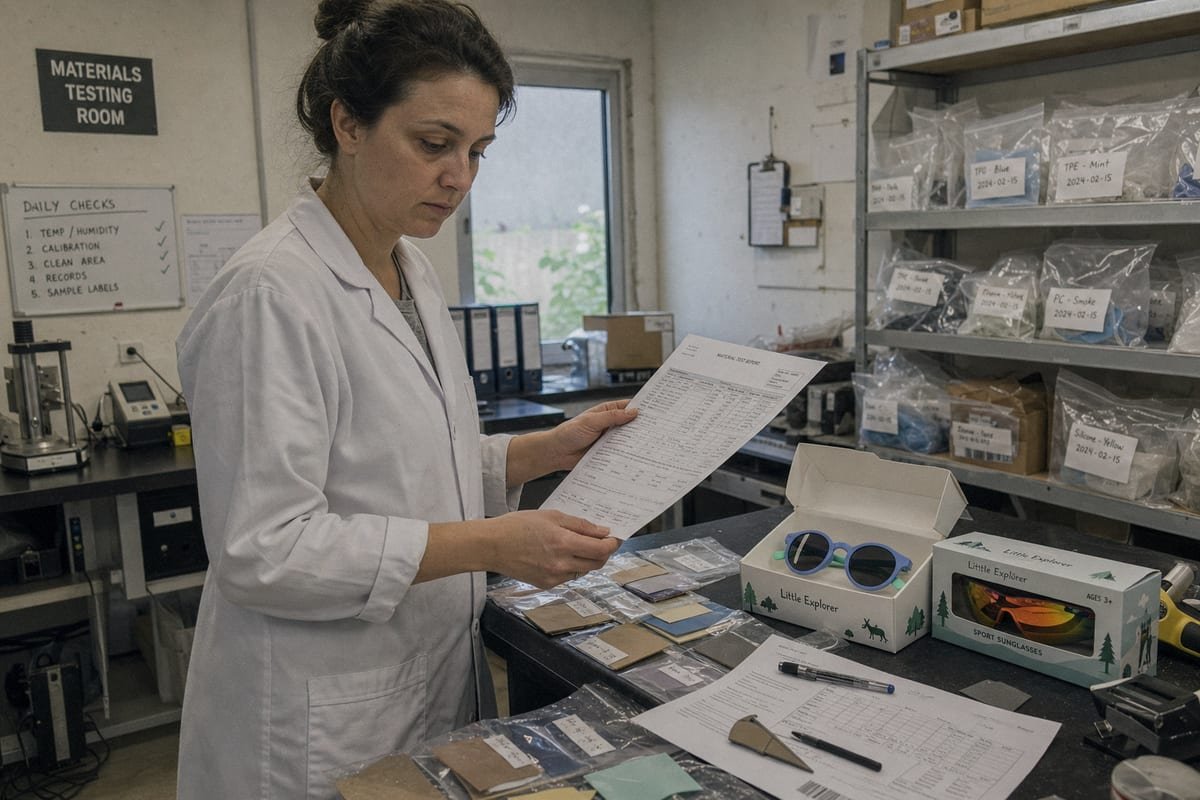
Compliance is a shared project between brand and factory. Here is how the responsibilities realistically split, based on our experience shipping children's eyewear to buyers in more than 20 countries.
What a Capable Factory Should Provide
First, documentation. Your manufacturer should maintain a technical file: product descriptions, applicable standards, risk assessments, third-party test reports, declarations of conformity, labeling samples, and instructions. When our clients sell into the EU, we align packaging artwork with that technical file so nothing on the box contradicts the paperwork.
Second, testing coordination. For the U.S., the factory should arrange lead and phthalates testing and lens impact testing at accepted labs, and support the CPC process. For the EU and UK, testing against ISO 12312-1 standards and PPE requirements should be routine, not a surprise request.
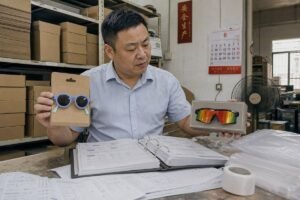
Third, artwork review. Full OEM/ODM support means more than printing your logo. Our packaging team pre-blocks zones for the CE mark, age grading, batch tracking labels, and recycling symbols before brand graphics are placed. This compliance-first layout workflow prevents the classic failure: beautiful packaging with no room left for mandatory marks.
What Stays on the Brand's Side
You own market registration duties — FDA establishment registration 8 and device listing for the U.S. importer of record, EPR packaging registrations in the EU and UK, and any local recycling fee reporting. You also own final claims. If your marketing adds a UV or polarization claim beyond the test data, that risk is yours.
Questions to Ask Before You Commit
- Can you share recent third-party test reports for children’s sunglasses?
- How do you apply batch tracking labels to product and packaging?
- Have you shipped children's eyewear to my specific market before?
- Will your team review my packaging artwork against compliance requirements?
- How do you handle non-conforming batches during QC?
A factory that answers these confidently — with documents, not promises — is a partner. One that hesitates is a risk you will pay for later.
結論
Non-compliant packaging can block shipments, trigger recalls, and damage trust. Map required marks first, verify materials, and partner with a factory that treats compliance as part of design.
脚注
1. Authoritative EU guide on CE marking requirements and placement for products sold in the European Economic Area. ↩︎
2. CPSC guidance on the Children’s Product Certificate (CPC) required for all children’s products imported into the U.S. ↩︎
3. Technical overview of how polarized lenses work to reduce glare and improve visual safety. ↩︎
4. Official EU business portal for technical documentation and CE compliance. ↩︎
5. Official CPSC resource explaining the Consumer Product Safety Improvement Act requirements for children’s products in the U.S. ↩︎
6. CPSC rules regarding mandatory third-party testing for lead and phthalates in children’s products. ↩︎
7. Reference for understanding choking hazards and the safety standards used to protect children from small product parts. ↩︎

 English
  Español de México
  Deutsch
  Français
  日本語
日本語  العربية
  Português do Brasil