What Lighting Conditions Suit Kids Sunglasses Lens Categories 0-4?
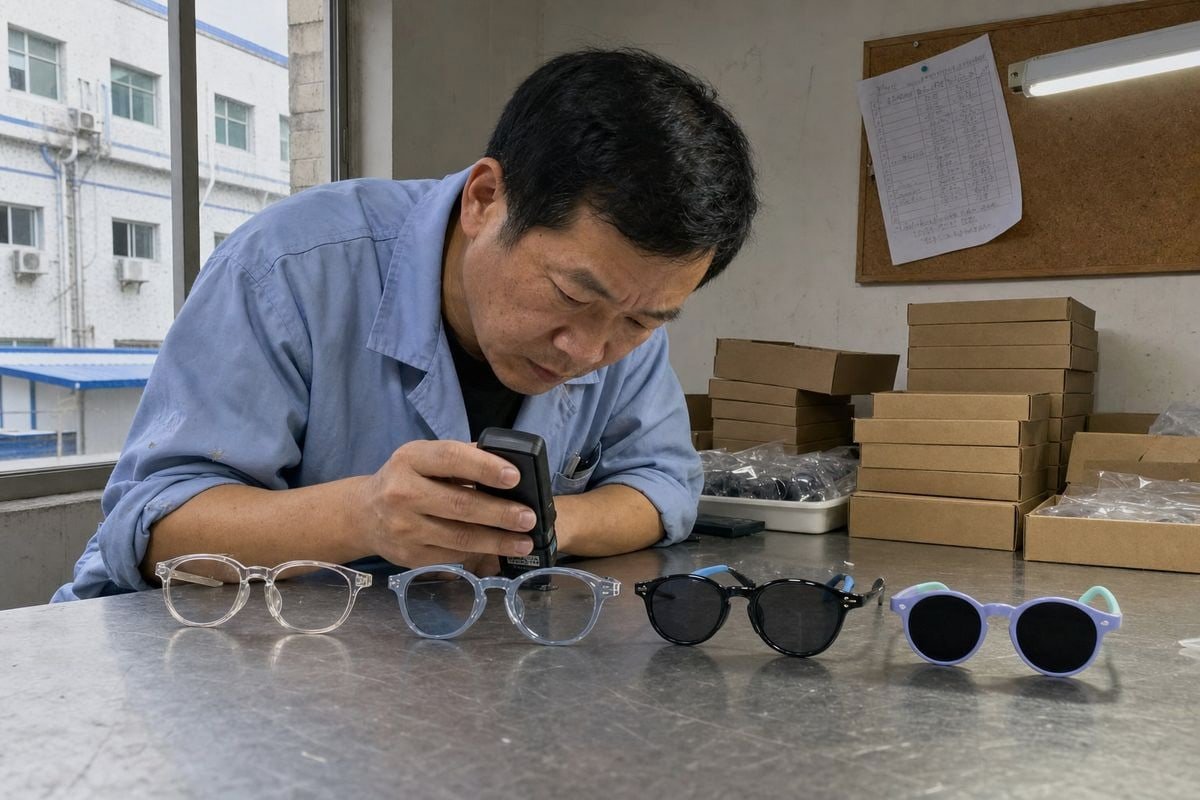
Kids sunglasses lens categories 0-4 confuse many buyers who visit our Taizhou factory. Choose wrong, and children squint in glare or stumble in shade — a real product-return risk.
Kids sunglasses lens categories 0-4 match lighting by darkness: Category 0 suits indoor or very low light, Category 1 fits cloudy days, Category 2 handles moderate sun, Category 3 works for bright sunlight, and Category 4 is reserved for extreme glare like snow or high altitude.
The category number tells you how much light the lens blocks. It does not tell you about UV protection. Let me walk you through how we help brands get both right.
How do I match lens categories 0-4 to different outdoor lighting conditions for my kids' sunglasses line?
Last spring, a Scandinavian buyer asked our team why her Category 3 samples felt "too dark" for Nordic autumn light. That conversation turned into a full category-mapping session.
Match lens categories to light intensity, not weather labels: Category 0 for indoor use, Category 1 for overcast weather conditions, Category 2 for moderate everyday sun, Category 3 for intense sunlight exposure at beaches and parks, and Category 4 only for extreme mountain or snow glare.
The system behind the categories is simple once you understand one term: Visible Light Transmission 1, or VLT. It is the percentage of visible light that passes through the lens and reaches the eye. Lower VLT means a darker lens. The ISO 12312-1 standard uses these VLT bands to define categories, so the numbers are consistent across markets.
The Full Category-to-Light Map
Here is the reference table we share with every new client during sampling:
| Categoria | VLT Range | Lighting Condition | Typical Kids' Use Case |
|---|---|---|---|
| 0 | 80–100% | Indoor, very low light | Fashion frames, protective clear lenses |
| 1 | 43–80% | Cloudy, dawn, dusk, weak sun | School commutes on grey mornings |
| 2 | 18–43% | Moderate sunlight, partial cloud | Everyday playground and park wear |
| 3 | 8–18% | Bright, full sun | Beach days, summer holidays, sports |
| 4 | 3–8% | Extreme glare, snow, glaciers | High altitude glare, snowfields only |
In our fifteen years of building children's eyewear, Category 3 has been the volume leader by far. It suits most sunny climates our clients sell into — Australia, Southern Europe, the Middle East. But the important nuance is this: darker is not automatically better. A Category 3 lens on an overcast Hamburg morning makes a child's world dim and flat. Some SERP research even points to a "shadow blindness" effect, where very dark lenses slow a child’s eye adaptation when running from bright sun into deep shade, which raises trip hazards on playgrounds.
So we always ask buyers one question first: what light will the child actually be in? The answer drives the category, and the category drives the lens spec we mold. On our production line, we pair each category with polycarbonate lens material 2 as standard, because impact resistance matters just as much as tint when a lens sits on a child's face.
What lens category should I choose if my brand's sunglasses are designed for everyday cloudy or low-light wear?
One trade-off we weigh constantly in product development is comfort versus coverage. For low-light collections, pushing tint too dark solves nothing and creates new problems.
Choose Category 1 lenses for everyday cloudy or low-light wear. With 43–80% Visible Light Transmission, they cut mild glare while keeping vision bright and natural. Category 0 works for indoor or near-dark conditions, but neither substitutes for Category 3 in strong sun.
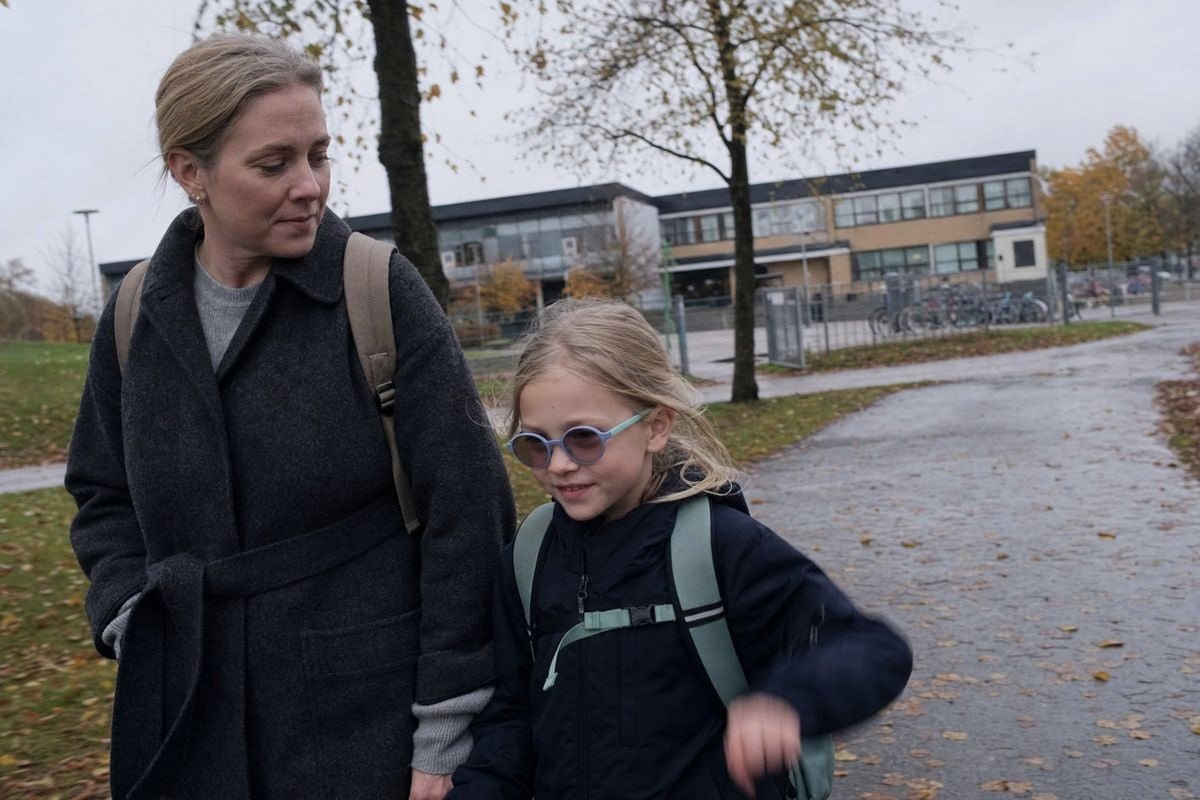
Buyers from Northern Europe, the UK, and Japan raise this need most often. Their end customers face long stretches of overcast weather conditions, and a standard Category 3 lens simply blocks too much light for a grey school-run morning. Children end up pushing the sunglasses onto their foreheads, and parents conclude the product "doesn't work."
Why Category 1 Wins for Grey-Sky Markets
Category 1 keeps 43–80% of visible light coming through. That is enough tint to soften diffuse glare bouncing off wet pavement or bright cloud cover, but not so much that a child loses contrast in shade. Vision stays comfortable, and the child actually keeps the glasses on. That last point matters more than any spec sheet — compliance is the real battle with kids' eyewear.
A common objection we hear: "Isn't Category 1 just a fashion tint?" It is a fair concern, and the research does flag it. Category 1 should never be positioned as a substitute for proper sunglasses in bright conditions. Our answer is to separate the two claims clearly. The tint level handles comfort in low light. UV400 protection handles eye safety — and we build UV400 filtering 4 into Category 1 lenses just as we do for Category 3. A lightly tinted lens with a certified UV filter protects a child's eyes properly even on cloudy days, when UV rays still penetrate cloud cover.
Where Category 0 Fits
Category 0 lenses transmit 80–100% of light. In our catalog, they appear mostly in optical-style frames — like our glossy black TR90 frame with flexible two-tone temples — used as demonstration lenses or blue-light and protective eyewear. They offer very limited glare reduction, so we advise brands to market them as indoor or protective products, never as sunglasses.
Can I offer multiple lens categories within one frame style to suit different climates my customers sell into?
A distributor serving both Dubai and Copenhagen once asked us this exact question during a factory visit. The answer shaped how we now structure our 800-style catalog.
Yes, one frame style can carry multiple lens categories. Factories mold the same frame — for example, a round TR90 frame — then fit Category 1, 2, or 3 lenses per order. This lets brands serve different climates without new mold investment or separate SKU development.
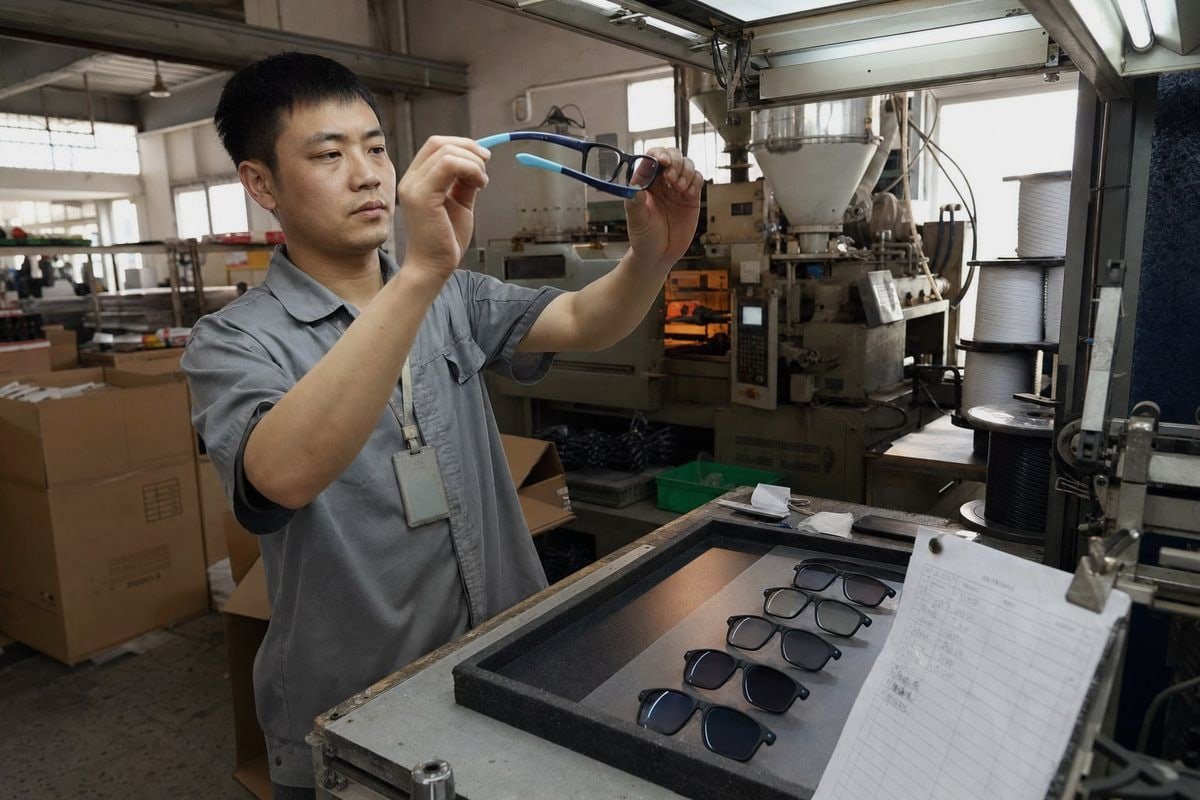
This is one of the most cost-efficient decisions a growing brand can make. Tooling a new frame mold is a real investment. Swapping the lens spec inside an existing frame is not. At our workshop, the pastel round frame you may have seen in our samples — periwinkle-blue rim, mint-green temples — ships with dark grey Category 3 lenses by default, but the same frame accepts Category 2 or polarized lens variants with no tooling change.
How a Multi-Category Program Works in Practice
- Pick the frame platform. Choose a proven style from our existing catalog, so there is no mold cost.
- Define the lens matrix. Decide which categories serve which markets — for instance, Category 2 for Japan, Category 3 for Australia.
- Add lens upgrades where they earn margin. Lentes polarizadas 5 reduce reflected glare from water and asphalt, a strong upsell for beach and outdoor lines.
- Differentiate the packaging. We print category and UV information on retail-ready packaging so each variant is clearly labeled at shelf.
A Simple Climate-to-Category Matrix
| Target Market Climate | Recommended Category | Optional Upgrade |
|---|---|---|
| Northern Europe, UK, Japan | Category 1–2 | Photochromic or Category 2 backup |
| Central Europe, temperate zones | Category 2–3 | Polarized Category 3 |
| Australia, Mediterranean, Middle East | Categoria 3 | Polarized lenses for water glare |
| Alpine, ski, high-altitude retail | Category 4 (sport frames) | Wraparound shield designs |
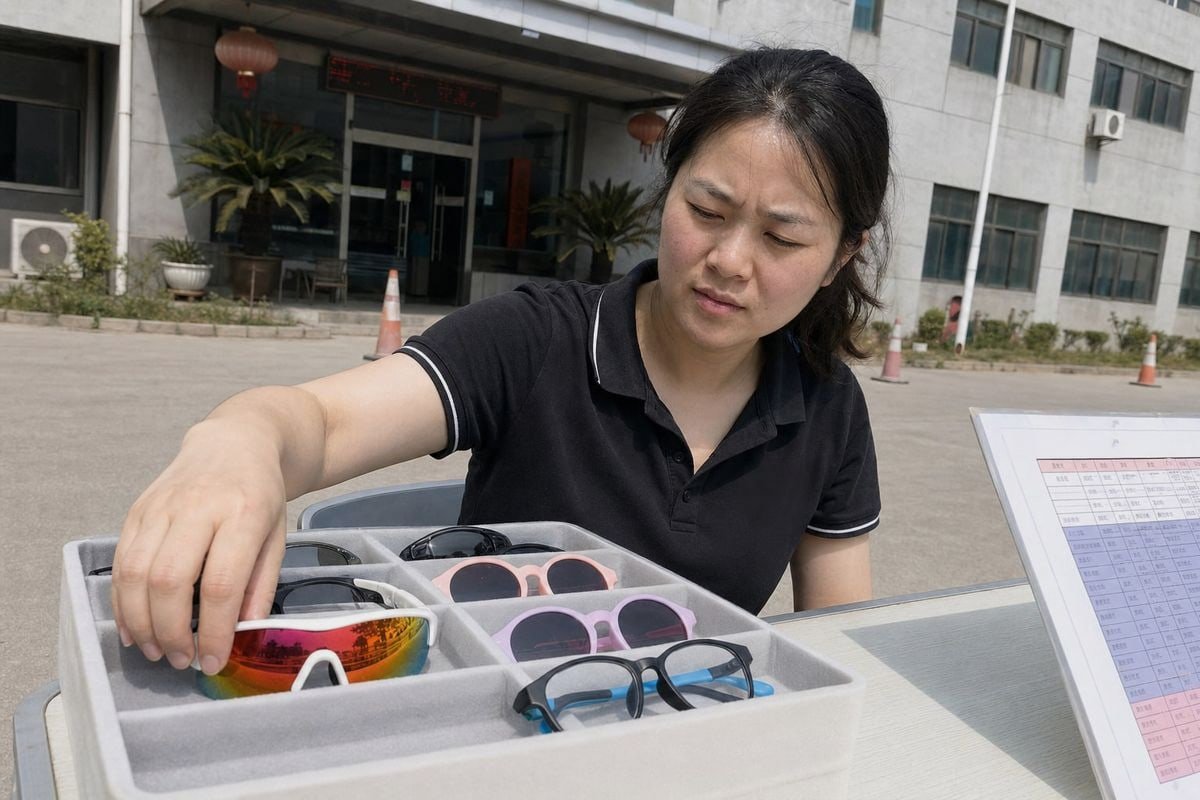
One caution from our side: keep Category 4 out of general lifestyle frames. It belongs in dedicated sport formats — like our white wraparound shield style with the mirrored gradient lens — where the wide coverage suits skiing and glacier conditions. Mixing a 3–8% VLT lens into a casual everyday frame invites misuse, and eye safety standards exist precisely to prevent that. Clear labeling by category, which we handle during OEM packaging, keeps every variant honest.
How do I explain lens category differences to my customers so they choose the right sunglasses for their child's needs?
Early on, we learned a hard lesson: shipping perfect product is not enough if retail staff cannot explain it. Confused parents return good sunglasses.
Explain categories with a simple light-level analogy: Category 1 is for grey days, Category 2 for everyday sun, Category 3 for bright holidays, Category 4 for snow and mountains only. Then stress that UV400 protection is separate from tint and must always be present.
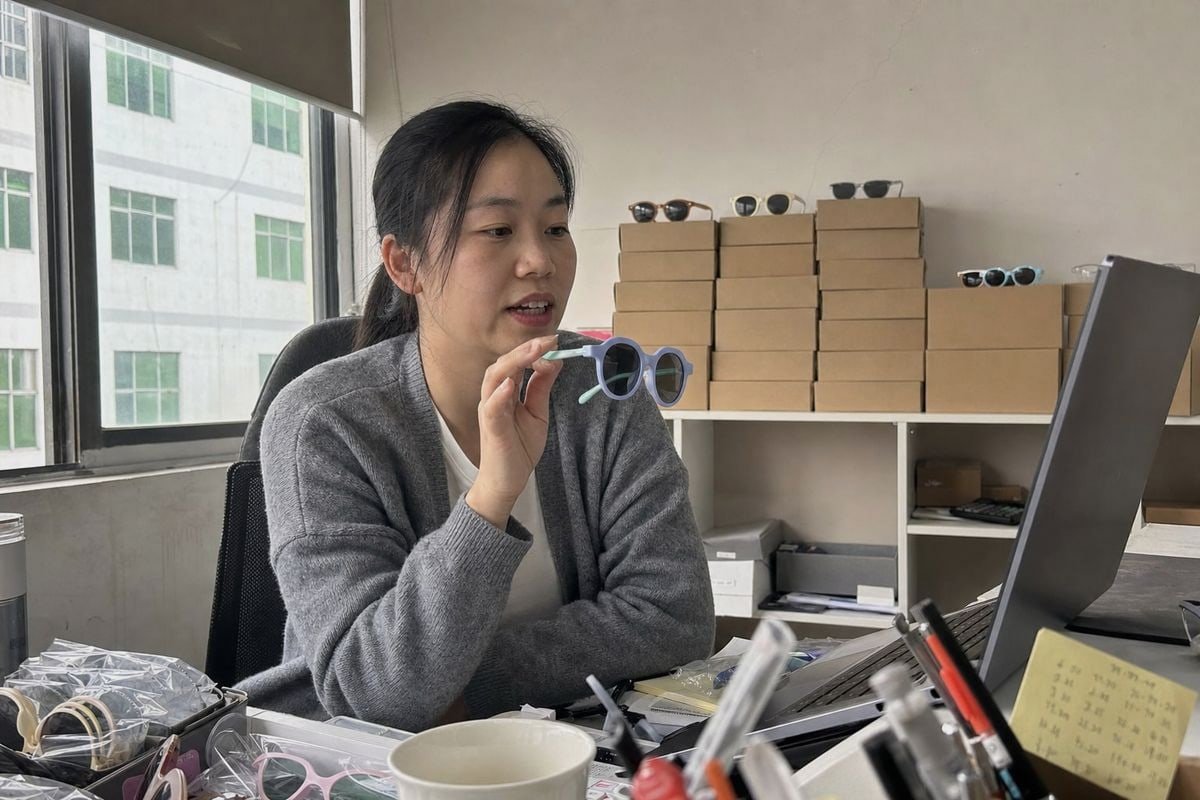
Parents do not think in VLT percentages. They think in situations: the school run, the beach week, the ski trip. So the education material we help our OEM clients build always translates specs into scenarios. When we develop retail-ready packaging and hang tags for a brand, we push for scenario language on the front and technical detail on the back.
A Parent-Facing Cheat Sheet That Works
| If the child is… | Recommend | Por quê |
|---|---|---|
| Walking to school under grey skies | Categoria 1 | Bright vision, mild glare relief, full UV filter |
| Playing outside on a normal sunny day | Category 2–3 | Balanced tint for moderate to strong sun |
| On a beach or summer holiday | Category 3, ideally polarized | Cuts intense sunlight exposure and water glare |
| Skiing or hiking at high altitude | Category 4 sport style | Handles extreme high altitude glare from snow |
| Driving with parents at dusk | Never Category 4 | Category 4 driving restrictions apply — too dark for road use |
Three Talking Points to Train Into Retail Staff
First, tint darkness and UV protection are different things. A dark lens without a certified UV filter is worse than no sunglasses, because the pupil dilates behind the dark lens and admits more UV radiation. Every lens we produce carries UV400 protection regardless of category, and that claim belongs on the packaging.
Second, darker is not better for late afternoons. There is emerging discussion that heavy Category 3 use in low evening light may interfere with the blue-light wavelengths tied to a child's circadian rhythm 6. The practical takeaway is simple: sunglasses come off when the light drops.
Third, lens quality matters as much as category. Cheap heavily tinted lenses can suffer from chromatic aberration 7 that causes headaches and visual fatigue in developing eyes. This is why we prefer in-mass tinting over surface coatings for Category 3 kids' lenses — a deep scratch on a coated lens can create hot spots of unfiltered light, while in-mass tint keeps protection uniform through the lens body.
Conclusão
Match kids sunglasses lens categories 0-4 to real light levels, verify UV400 separately, and offer climate-appropriate variants. We help brands build exactly that — safely, flexibly, and retail-ready.
Notas de rodapé
1. Authoritative Wikipedia entry explaining ISO 12312-1 filter categories and VLT percentages. ↩︎
2. High-authority medical source explaining the safety and impact resistance of polycarbonate for children. ↩︎
3. EPA sun safety resource explains UV radiation exposure risks addressed by proper eyewear. ↩︎
4. Expert medical guidance from the American Academy of Ophthalmology on UV protection standards. ↩︎
5. Background on how polarized lenses reduce reflected glare from water and pavement. ↩︎
6. Explains the biological cycle affected by blue-light exposure discussed in the article. ↩︎
7. Defines the optical distortion linked to cheap heavily tinted lenses. ↩︎
Mais Artigos que Você Pode Gostar


Procurando um Parceiro Confiável em Óculos Infantis?
Explore mais de 800 estilos prontos e suporte completo OEM/ODM adaptado à sua marca.
Entre em Contato English
  Español de México
  Deutsch
  Français
  日本語
日本語  العربية
  Português do Brasil