Why Do Kids’ Eyewear Lenses Use Polycarbonate—How Much Safer Than Resin?
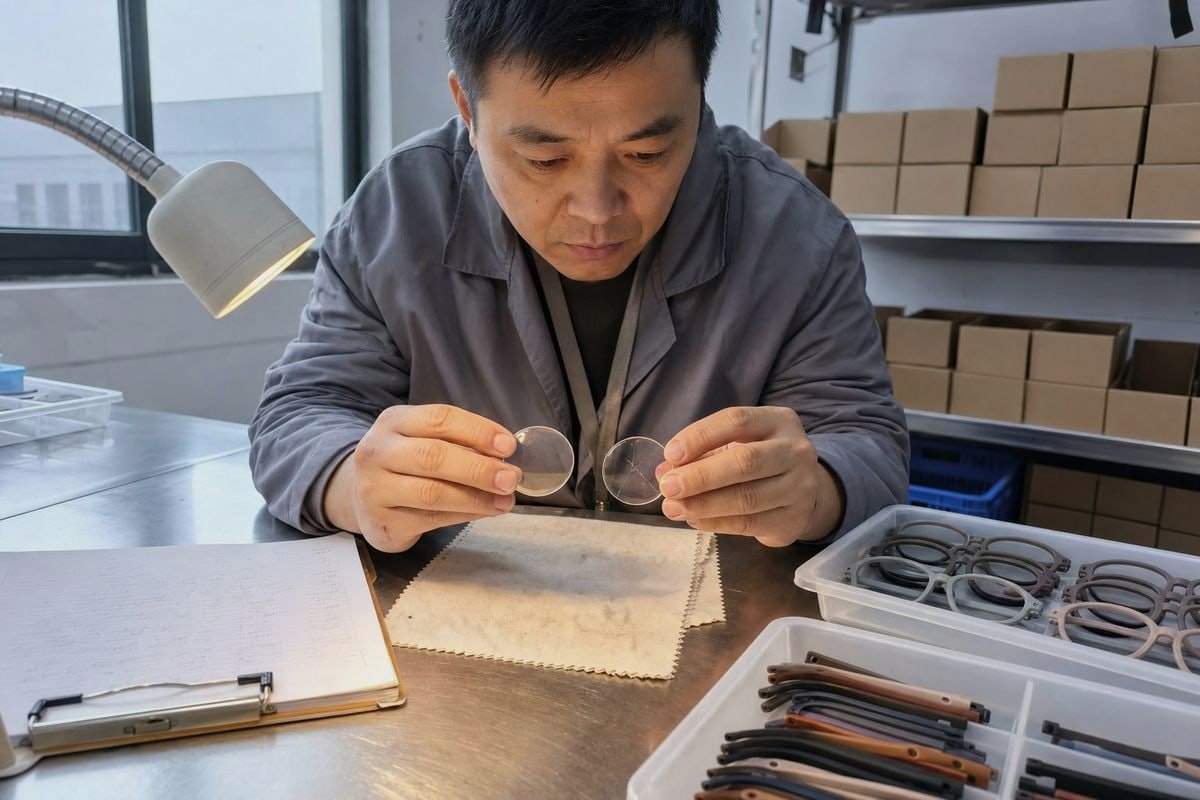
Polycarbonate lenses dominate kids’ eyewear for one reason: children break things. On our production line in Taizhou, we see what happens when buyers underestimate that—returns, complaints, and worse, injured little customers.
Kids’ eyewear uses polycarbonate lenses because they are roughly 10 times more impact-resistant than standard resin (CR-39) lenses, flex instead of shattering on impact, block 100% of UVA/UVB rays natively, and weigh 20–30% less—making them the safety-first default for active children.
That is the short answer. Below, I will unpack the material science, the numbers, and the commercial decisions behind it, so you can make an informed call for your own product line.
What Makes Polycarbonate Lenses Safer for My Kids' Eyewear Line Than Resin?
A few years back, we drop-tested two identical TR90 kids' frames in our workshop—one fitted with CR-39 resin lenses, one with polycarbonate. The resin lens cracked on the third drop. The polycarbonate lens survived every attempt.
Polycarbonate is safer than resin because it is a flexible thermoplastic that absorbs impact energy by bending, while resin (CR-39) is a brittle thermoset that cracks and can splinter into sharp fragments. This makes polycarbonate about 10 times more impact-resistant in real-world falls and collisions.
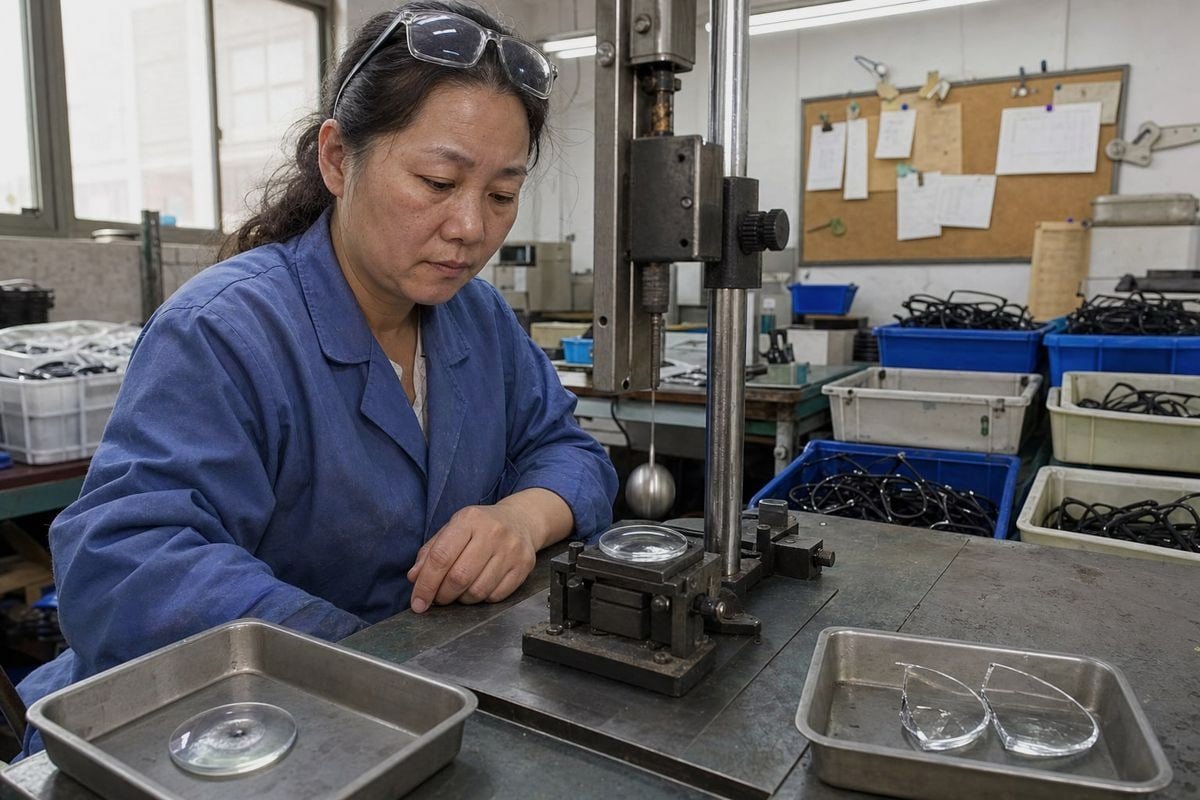
Let me break down what is actually happening inside these two materials, because the difference is not a coating or a treatment. It is baked into the chemistry itself.
Two Materials, Two Failure Modes
"Resin" in eyewear usually means CR-39 plastic lenses 1—a thermoset material that is cured hard and stays hard. When a ball, an elbow, or a playground surface hits a CR-39 lens, the material deflects the force. If the force exceeds its limit, it fails suddenly and can produce sharp shards near the eye. That is the real danger for children.
Polycarbonate behaves completely differently. It is a thermoplastic that acts like a kinetic energy absorber. On impact, the molecular structure flexes and spreads the shock across the whole lens instead of concentrating it at one point. The result is essentially shatterproof lenses, which is why the same base material is used in safety goggles and riot shields.
There is a cold-weather bonus too. Resin becomes more brittle in freezing temperatures, while polycarbonate keeps its flexibility. For buyers serving ski-market or Northern European retailers, that matters more than most spec sheets admit.
Side-by-Side Safety Comparison
| Fator de Segurança | Polycarbonate | CR-39 Resin |
|---|---|---|
| Resistência ao impacto | ~10x higher than resin | Baseline; can crack on hard falls |
| Failure behavior | Flexes, dents, stays intact | Cracks; risk of sharp fragments |
| Cold-weather performance | Stays flexible and tough | Becomes more brittle |
| Rimless/drilled frames | Handles drill points safely | Prone to cracking at drill holes |
| proteção UV 2 | 100% UVA/UVB built in | Requires added UV coating |
One more scenario worth naming: eye care professionals consistently recommend polycarbonate for monocular children 3—kids with only one functional eye—precisely because the lens acts as a fail-safe barrier against total vision loss. That single use case tells you everything about how the optical industry rates this material's protective value.
How Do I Explain the Impact Resistance Difference to My Retail Buyers?
A procurement manager from an Australian kids' brand once asked me on a video call: "Ten times stronger—is that marketing or measurable?" I appreciated the skepticism. Numbers only help your retail buyers if you can explain where they come from.
Explain it in three tiers: polycarbonate passes drop-ball impact tests that resin often fails, exceeds baseline FDA impact requirements by a wide margin, and meets sports-protective standards like ASTM F803 that resin lenses cannot satisfy. Frame it as tested performance, not marketing language.

When we prepare sales materials for our B2B customers, we avoid vague claims like "super strong." Retail buyers in Europe and Japan want traceable logic. Here is a simple framework you can borrow.
Tier 1: The Baseline Test
Every prescription lens sold in the US must pass a basic drop-ball impact test. Standard resin lenses pass this at typical thickness—barely. Polycarbonate is widely described as exceeding those minimum impact-resistance requirements 4 by more than 40 times. Present that figure carefully; it is a material-level benchmark, not a promise about injury statistics. But it shows the margin of safety is enormous, not incremental.
Tier 2: The 10x Benchmark
The most repeated and defensible number across optical industry sources is that polycarbonate offers roughly 10 times the impact resistance of standard CR-39 plastic lenses. This is the figure I suggest putting on your retail sell sheets, because it is consistent and easy to grasp.
Tier 3: Sports and Protective Standards
Eye safety for sports is where the gap becomes absolute. ASTM F803 standards for sports protective eyewear 5 effectively require lens materials that will not shatter on high-velocity impact. Polycarbonate qualifies. Standard resin does not. If your range includes anything positioned for playground, cycling, or ball sports, this is your strongest talking point.
A Buyer-Ready Talking Script
- Start with the failure mode: "Resin cracks; polycarbonate flexes."
- Anchor with the number: "About 10 times more impact-resistant."
- Close with the standard: "It's the material sports safety standards are built around."
- Address the trade-off honestly: "It scratches more easily, so we apply a scratch-resistant coating on every lens."
That last point matters. In fifteen years of exporting kids' eyewear, I have learned that buyers trust suppliers who volunteer the downsides. Polycarbonate is softer than resin and more prone to scratching—and it can suffer "crazing" (microscopic surface cracks) if cleaned with alcohol-based solvents. Include cleaning-care instructions in your retail packaging. It protects the lens, and it protects your brand's return rate.
Can I Still Get UV400 and Optical Clarity with Polycarbonate Lenses?
One trade-off we weigh constantly when developing new lens options is optics versus toughness. Buyers sometimes assume that choosing the safest material means accepting cloudy vision or weak sun protection. The reality is much more favorable.
Yes. Polycarbonate blocks 100% of UVA and UVB rays within the material itself—no extra coating needed—so it meets UV400 requirements natively. Its optical clarity is very good for everyday wear, and its 1.59 refractive index allows thinner, lighter lenses than standard resin.
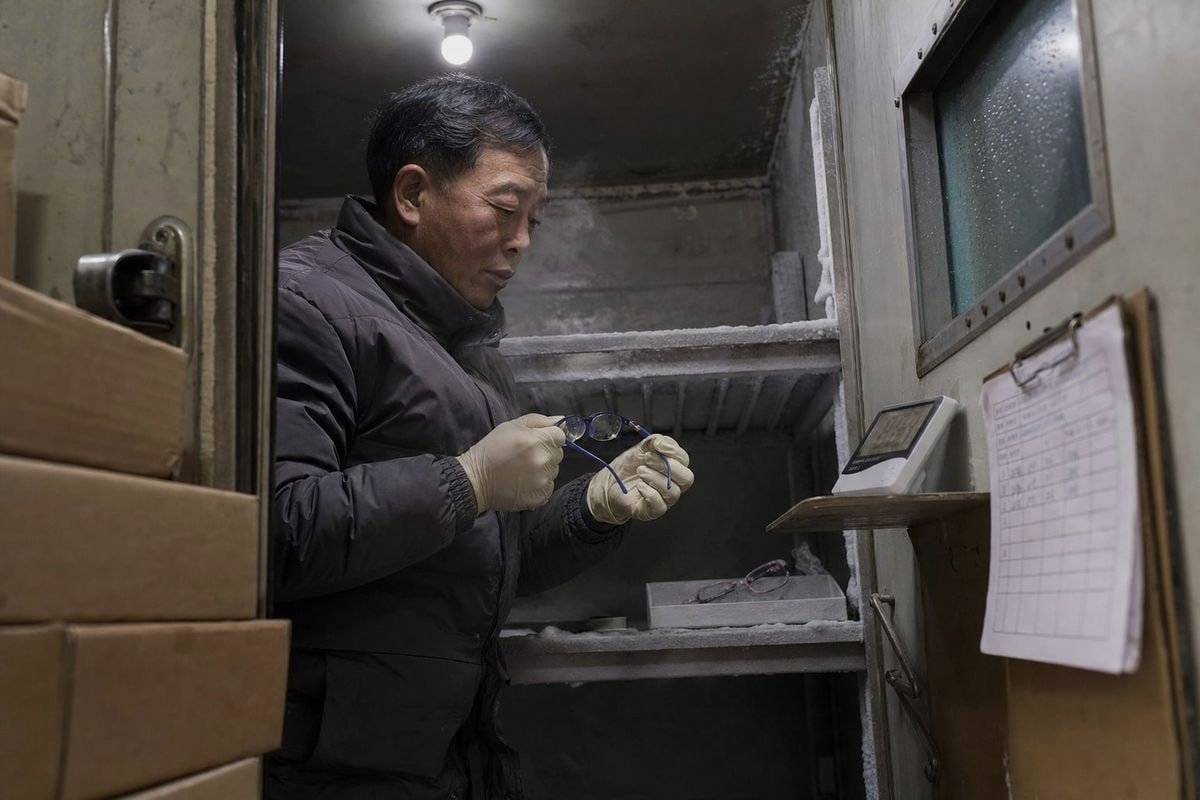
Let me address both halves of the question separately, because they involve different considerations.
UV Protection: Built In, Not Sprayed On
With CR-39 plastic lenses, UV protection is an additional treatment applied to the lens. If that coating is skipped, thin, or poorly applied, the lens lets UV through. With polycarbonate, UV protection is an inherent property of the material. Every polycarbonate lens—clear, tinted, or mirrored—filters UVA and UVB by default. For children's eyes, which admit more UV than adult eyes because their lenses are clearer, this built-in reliability is a genuine product advantage. When we fit UV400 or polarized lenses into our kids' sunglass ranges, the polycarbonate base means protection does not depend on one coating step going right.
Optical Clarity: Honest Expectations
Here is the balanced truth. Polycarbonate has slightly more chromatic aberration 6 than CR-39 or Trivex, meaning very high prescriptions may show minor color fringing at the lens edge. For children's typical prescriptions and for plano sunglass lenses, this is not noticeable in practice. Where clarity is the buyer's top priority, Trivex lenses are the premium alternative—similar impact resistance, marginally better optics, slightly lighter, and higher cost.
| Optical Property | Polycarbonate | CR-39 Resin | Trivex |
|---|---|---|---|
| Refractive index | 1.59 (high-index) | 1.498 | 1.53 |
| proteção UV | 100% built in | Coating required | 100% built in |
| Clarity (Abbe value) | Bom | Muito bom | Muito bom |
| Peso | Muito leve | Heaviest of the three | Lightest |
| Relative cost | Moderado | Lowest | Highest |
The High-Index Bonus
Because polycarbonate sits in high-index lenses 7 territory at 1.59, nearsighted prescriptions come out 20–30% thinner and lighter than resin equivalents. Thin, slim lens edges mean lighter frames on small noses—and glasses that stay on a child's face instead of sliding off. Comfort drives compliance, and compliance is what parents actually pay for.
Should I Offer Both Polycarbonate and Resin Options in My Product Range?
A lesson I learned early in our export business: giving buyers every possible option is not always helpful. One European distributor asked us to quote both lens types across a whole collection, then spent weeks confused about which SKU to promote. Clarity in your range sells better than breadth.
For children's eyewear, make polycarbonate your default and skip resin for kids' SKUs. Offer Trivex as a premium upgrade for optical clarity, and reserve CR-39 resin only for adult lines or budget adult sunglasses where impact risk is lower.
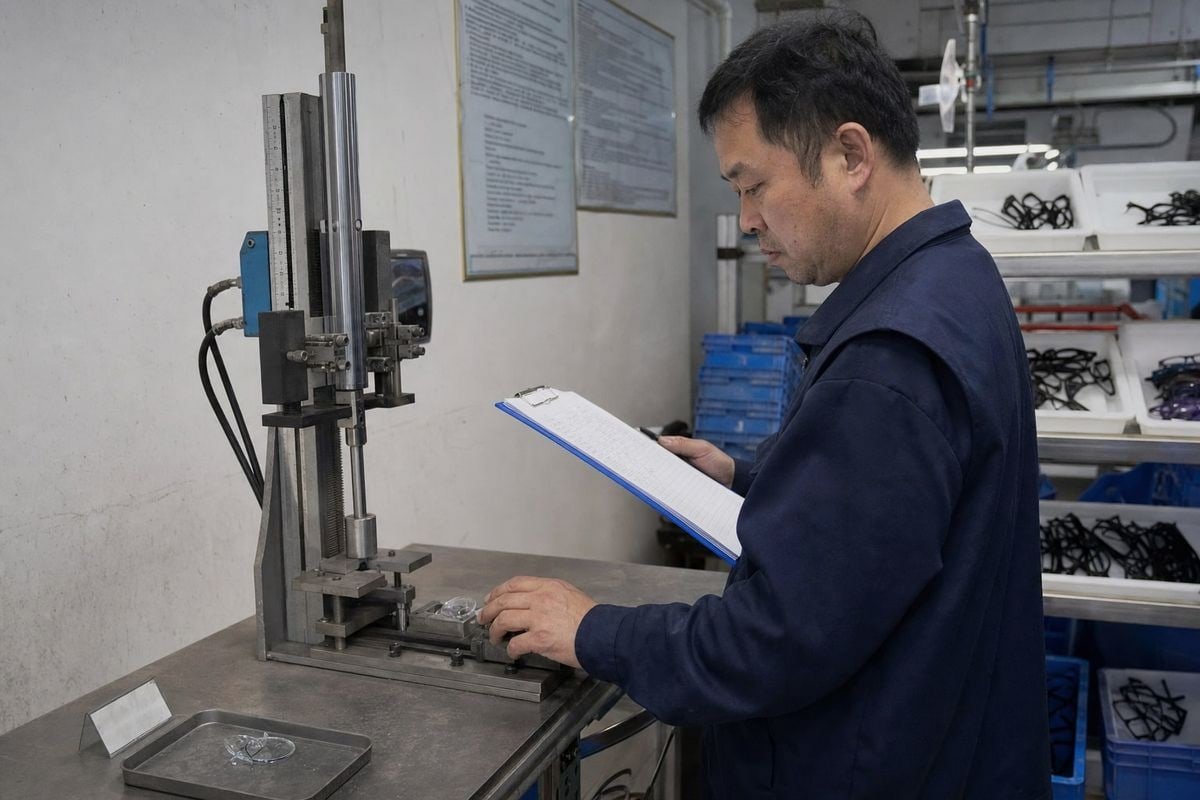
Here is the reasoning behind that recommendation, structured the way I would present it to a product development manager.
Match the Material to the Wearer, Not the Price List
Children fall, wrestle, throw bags with glasses inside them, and sit on their frames. The dominant risk in kids' eyewear is not optical performance—it is impact-related eye injury and product breakage. That means the deciding question for a kids' line is not "which lens is clearest?" but "which lens is least likely to break in real life?" Resin loses that contest every time. Offering a cheaper resin option in a children's collection creates a race to the bottom that undermines your safety positioning—and safety positioning is exactly what parents in Australia, Japan, and Europe are paying a premium for.
A Practical Range Structure
| Product Tier | Lens Recommendation | Frame Pairing | Target Buyer Story |
|---|---|---|---|
| Core kids' optical | Polycarbonate + scratch-resistant coating | TR90 frames with flexible TPEE temples | Safe everyday default |
| Kids' sunglasses | Polycarbonate UV400 or polarized | Flexible TPEE, soft rounded edges | Beach, outdoor, travel |
| Sports/active kids | Polycarbonate shield or wrap lens | Wraparound sport frame | Playground and eye safety for sports |
| Premium upgrade | Trivex lenses | Lightweight TR90 | Clarity-focused parents, higher prescriptions |
| Adult crossover | CR-39 resin acceptable | Standard adult frames | Budget-conscious adult lines |
Where the Frame Meets the Lens
The lens is only half the safety story. A shatterproof lens in a rigid, sharp-edged frame is a half-finished product. This is why we pair polycarbonate lenses with flexible TR90 frames and soft TPEE temples across our roughly 800 existing styles—the whole system needs to bend with the child, not against them. Polycarbonate's superior tensile strength 8 also makes it the only sensible choice if any of your designs are rimless or semi-rimless, since resin tends to crack at the drill points. For buyers launching a first kids' collection, starting from proven frame-and-lens combinations—rather than tooling new molds—keeps risk low while you test the market.
Conclusão
Polycarbonate wins on impact resistance, built-in UV protection, and weight; its only real trade-off is scratching, solved by coatings. For kids' eyewear, it is the right default—choose it deliberately.
Notas de rodapé
1. Technical background on the allyl diglycol carbonate polymer commonly used for standard resin lenses. ↩︎
2. Authoritative overview of ultraviolet protection standards and its specific application in optical lenses. ↩︎
3. Medical definition and safety considerations for children with vision in only one eye. ↩︎
4. Official FDA regulation detailing the impact resistance requirements for all prescription eyewear lenses. ↩︎
Mais Artigos que Você Pode Gostar
Procurando um Parceiro Confiável em Óculos Infantis?
Explore mais de 800 estilos prontos e suporte completo OEM/ODM adaptado à sua marca.
Entre em Contato English
  Español de México
  Deutsch
  Français
  日本語
日本語  العربية
  Português do Brasil