O Que Significam os Números de Categoria de Lentes (0–4) para Óculos de Sol Infantis?
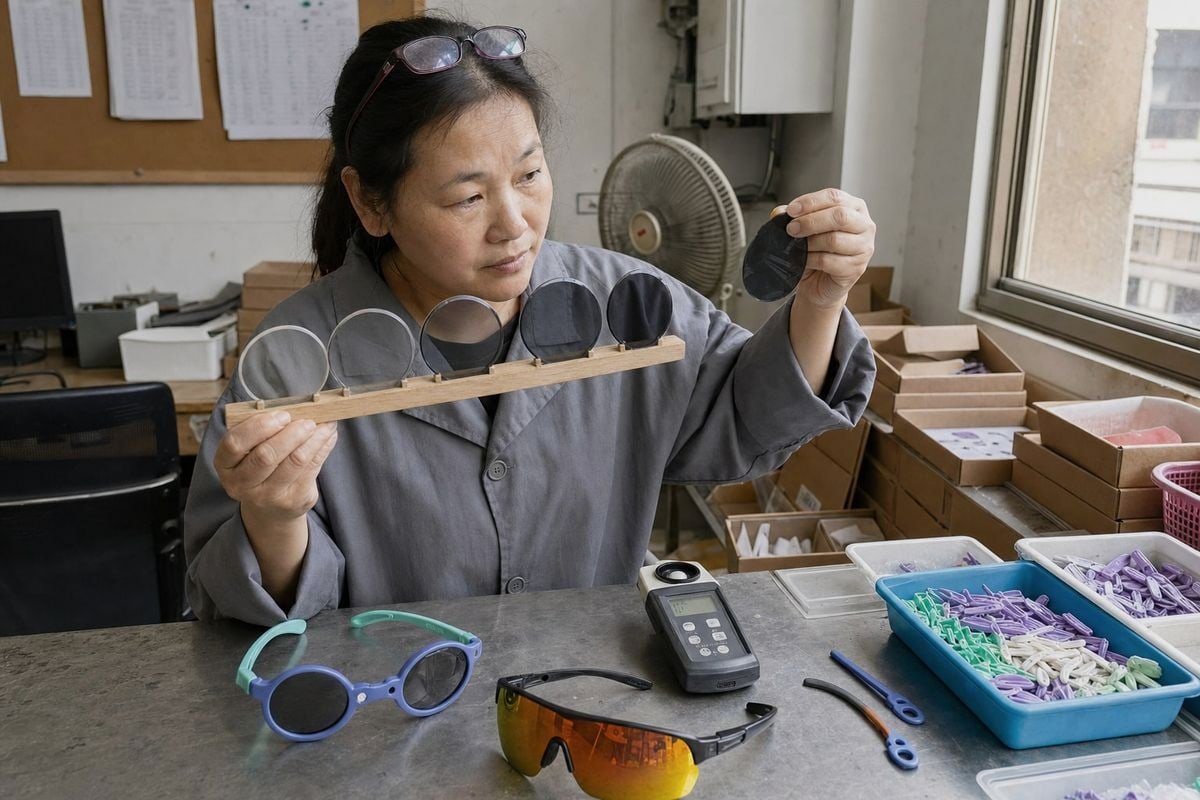
Os números de categoria de lentes confundem muitos compradores que visitam nossa fábrica em Taizhou ANSI Z80.3 1. Escolha errado, e os óculos de sol dos seus filhos falharão nas auditorias de varejo, frustrarão os pais e estagnarão os reabastecimentos. Deixe-me esclarecer isso.
Os números de categoria de lentes 0–4 em óculos de sol infantis indicam a Transmissão de Luz Visível — quanta luz passa pela lente. A Categoria 0 é quase transparente (80–100% VLT); a Categoria 4 é muito escura (3–8% VLT). O número descreve a escuridão da tonalidade, não a proteção UV, que deve ser verificada separadamente como UV400.
Essa resposta curta cobre o básico. Mas se você está construindo uma linha de óculos infantis, precisa de mais detalhes. Deixe-me guiá-lo por como lidamos com essa questão com compradores toda semana.
Que categoria de lente devo escolher para o clima e o caso de uso da marca de óculos de sol dos meus filhos?
Uma compradora de Brisbane me perguntou uma vez por que suas amostras de Categoria 1 pareciam "muito claras" durante os testes na praia. Nossa equipe explicou a resposta em uma palavra: clima. A tonalidade deve corresponder ao sol.
Escolha a Categoria 3 (8–18% VLT) para mercados brilhantes e ensolarados como Austrália, Sul da Europa ou destinos de praia. Escolha a Categoria 2 (18–43% VLT) para climas temperados e uso diário. Reserve a Categoria 4 apenas para neve ou altitudes elevadas, e evite as Categorias 0–1 como óculos de sol principais.
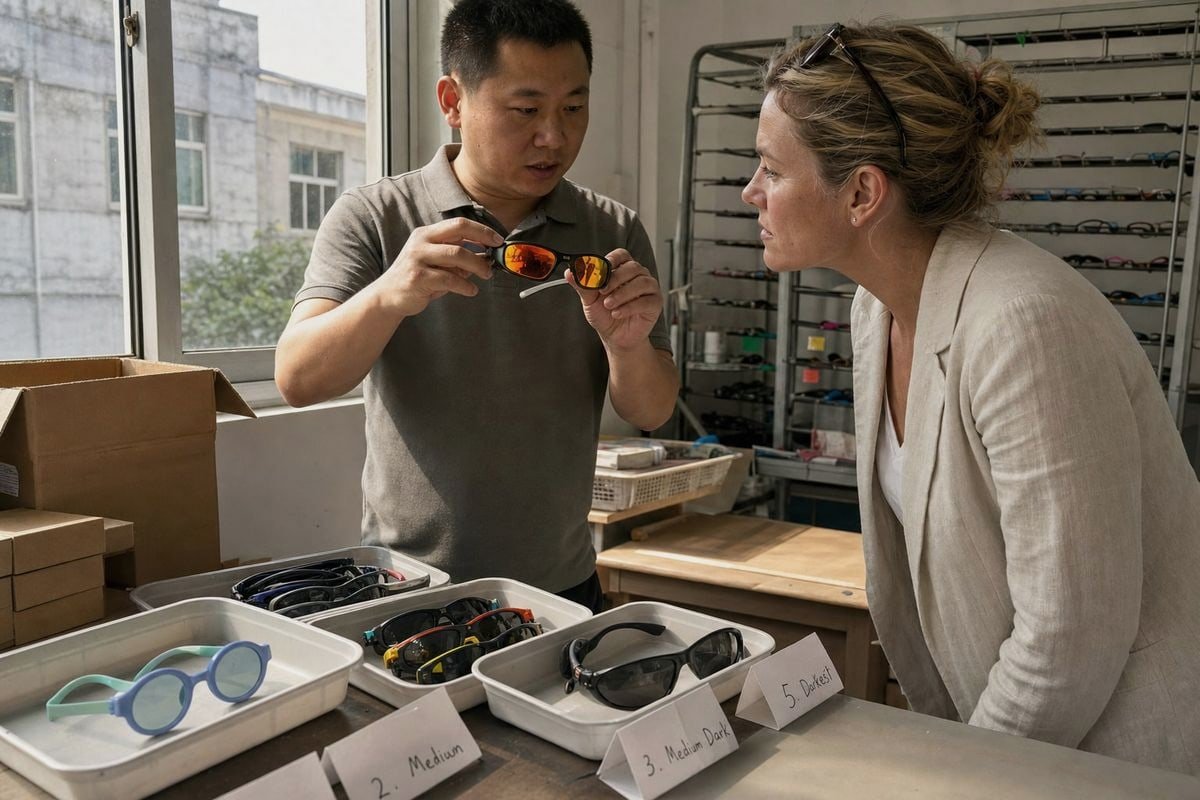
O sistema de categorias vem das Norma ISO 12312-1 2 e normas europeias semelhantes. Ele classifica as lentes por Transmissão de Luz Visível 3, que é a porcentagem de luz visível que chega ao olho. Uma porcentagem menor significa uma lente mais escura e maior redução do brilho. Aqui está a escala completa como a aplicamos na produção:
| Categoria | Faixa de VLT | Melhor Uso para Crianças | Não Recomendado Para |
|---|---|---|---|
| 0 | 80–100% | Uso interno, moda, conforto sensorial | Qualquer exposição real ao sol |
| 1 | 43–80% | Dias nublados, pouca luz | Brincadeiras externas intensas |
| 2 | 18–43% | Uso diário, clima misto | Brilho intenso na praia ou na neve |
| 3 | 8–18% | Sol forte, praia, parquinho | Crepúsculo, transições internas |
| 4 | 3–8% | Campos de neve, geleiras, proteção em altitudes elevadas | Dirigir, uso diário, ciclismo |
Combine a Categoria com o Mercado, Não com a Tendência
Em nossos quinze anos de fabricação de óculos infantis, vimos um padrão claro. Marcas que vendem para a Austrália, o Oriente Médio ou a Europa Mediterrânea quase sempre optam pela Categoria 3. Marcas no Norte da Europa, Japão ou Canadá frequentemente dividem suas linhas entre a Categoria 2 e a Categoria 3.
Por que isso importa tanto para as crianças? A saúde ocular das crianças é mais frágil do que a dos adultos. As crianças também se recusam a usar coisas que parecem erradas. Uma lente muito escura para um pátio de escola nublado é retirada e guardada em uma mochila. Uma lente muito clara em uma praia ensolarada faz a criança apertar os olhos. De qualquer forma, o pai culpa sua marca.
Pense na Atividade, Também
O clima é metade da equação. A atividade é a outra metade. Água e areia refletem a luz para cima, então os estilos de praia se beneficiam de uma tonalidade mais escura e, às vezes, lentes polarizadas. O uso de carrinhos de bebê e o uso casual na cidade ficam confortáveis na Categoria 2. Óculos de esqui e óculos de sol alpinos justificam a Categoria 4, mas isso é um nicho, não uma linha infantil principal.
Como faço para combinar categorias de lentes com proteção UV400 ao adquirir de um fabricante?
Durante uma auditoria de controle de qualidade no ano passado, nossa equipe de inspeção rejeitou um lote de amostras de lentes de origem externa. A tonalidade parecia perfeita. A filtragem UV não atendeu às especificações. Essa distinção é tudo.
A categoria da lente e a proteção UV400 são especificações independentes. A categoria mede a escuridão do tom visível; UV400 mede o bloqueio de raios ultravioleta de até 400 nanômetros. Ao adquirir, exija confirmação por escrito de UV400 em todas as lentes, em todos os níveis de categoria, e verifique com relatórios de teste de espectrofotômetro.

Este é o ponto mais mal compreendido na aquisição de óculos infantis. Muitos compradores de primeira viagem assumem que uma lente mais escura bloqueia automaticamente mais UV. Não bloqueia. A tonalidade vem de corante ou revestimento. A filtragem UV vem do material da lente e seus aditivos absorventes de UV. Os dois são feitos em etapas separadas.
Aqui está o perigo. Uma lente escura sem filtragem UV adequada é pior do que nenhum óculos de sol. A tonalidade escura faz com que as pupilas da criança se dilatem. As pupilas dilatadas, então, permitem que mais radiação UV não filtrada atinja a retina. As crianças estão especialmente em risco porque suas lentes cristalinas jovens e transparentes transmitem mais UV para a parte de trás do olho do que as lentes adultas. É por isso que os padrões de segurança solar tratam a filtragem UV como não negociável.
O Que Perguntar ao Seu Fornecedor
Quando integramos um novo comprador, nós o incentivamos a solicitar três coisas. Primeiro, peça a especificação do material da lente. Usamos lentes de policarbonato 4 e opções semelhantes resistentes a impactos para crianças porque combinam absorção UV inerente com resistência a estilhaçamento. Segundo, peça dados de teste de transmissão UV, não apenas um adesivo "UV400". Terceiro, confirme contra qual padrão o produto é testado, como o padrão ISO 12312-1, AS/NZS 1067 5 para a Austrália, ou ANSI Z80.3 para os EUA.
Uma Matriz de Aquisição Simples
| Especificação | O que ele controla | Como Verificar |
|---|---|---|
| Categoria da lente (0–4) | Escuridão da tonalidade visível | Relatório de medição de VLT |
| UV400 | Bloqueio UVA/UVB até 400nm | Spectrophotometer test |
| Polarização | Reflected glare filtering | Polarization test card |
| Segurança contra impacto | Shatter resistance | Material spec + drop-ball test |
One more nuance from our production line: coatings matter. On darker lenses, an inner-surface anti-reflective coating helps stop stray UV from bouncing off the back of the lens into the eye. It is a small detail, but premium kids' brands increasingly specify it.
Posso oferecer várias opções de categoria de lentes dentro do mesmo estilo de armação para minha linha de produtos?
One trade-off we weigh constantly in development: variety versus complexity. The good news is that lens categories are one of the easiest variables to multiply without adding tooling cost.
Sim. O mesmo molde de armação pode conter diferentes categorias de lentes, tonalidades e revestimentos. Um único estilo pode ser enviado como Categoria 2 para linhas do dia a dia, Categoria 3 para linhas de praia e variantes polarizadas ou espelhadas para níveis premium — tudo isso sem novo investimento em moldes, já que apenas a lente muda.

This is where an existing style library becomes powerful. With around 800 styles already tooled at our factory, a buyer can take one proven TR90 frame with flexible TPEE temples and build a small family of SKUs around it. The frame stays identical. The lens does the segmentation work.
Consider how this plays out across a real range. A soft, rounded frame in periwinkle blue with mint temples works beautifully with solid dark gray Category 3 lenses for daily sun protection. A sporty wraparound shield style in glossy black or white pairs naturally with a mirrored gradient lens — orange-to-gold or a multicolor iridescent finish — which parents read as "performance" and kids read as "cool." Mirror coatings typically sit on Category 3 bases, since the reflective layer adds glare reduction on top of the tint.
A Practical Tiering Strategy
- Entry tier: Category 2 or 3 solid tint, UV400, standard packaging.
- Core tier: Category 3 with polarized lenses for water and beach use.
- Premium tier: Category 3 mirrored or gradient lenses with anti-reflective inner coating.
- Specialty tier: Category 4 for snow-destination retailers, clearly labeled as not for driving or everyday wear.
Where Photochromic Fits
Emerging photochromic technology 7 deserves a mention. These lenses shift dynamically, often between Category 0–1 indoors and Category 2–3 in bright sun. They solve the "wearability gap" — the moment a child removes dark glasses in mixed light and loses all protection. We position photochromic as a premium option because the lens cost is higher, but for travel-focused or outdoor-lifestyle brands, it is a genuine differentiator.
One caution from experience: do not over-segment. Three lens options per frame is usually the ceiling before inventory management becomes painful for a young brand.
Que informações sobre a categoria da lente devo incluir na embalagem e na rotulagem para atender às expectativas do comprador?
A lesson we learned early in our export journey: beautiful packaging that omits compliance information gets stopped by a distributor's compliance officer, not by a customs official. Labeling is a sales tool and a legal requirement at once.
Packaging for kids' sunglasses should state the lens category number (0–4), UV400 or "100% UVA/UVB" protection, the applicable standard such as ISO 12312-1 or EN ISO 12312-1, a CE mark for Europe, and a clear warning if Category 4 lenses are unsuitable for driving.
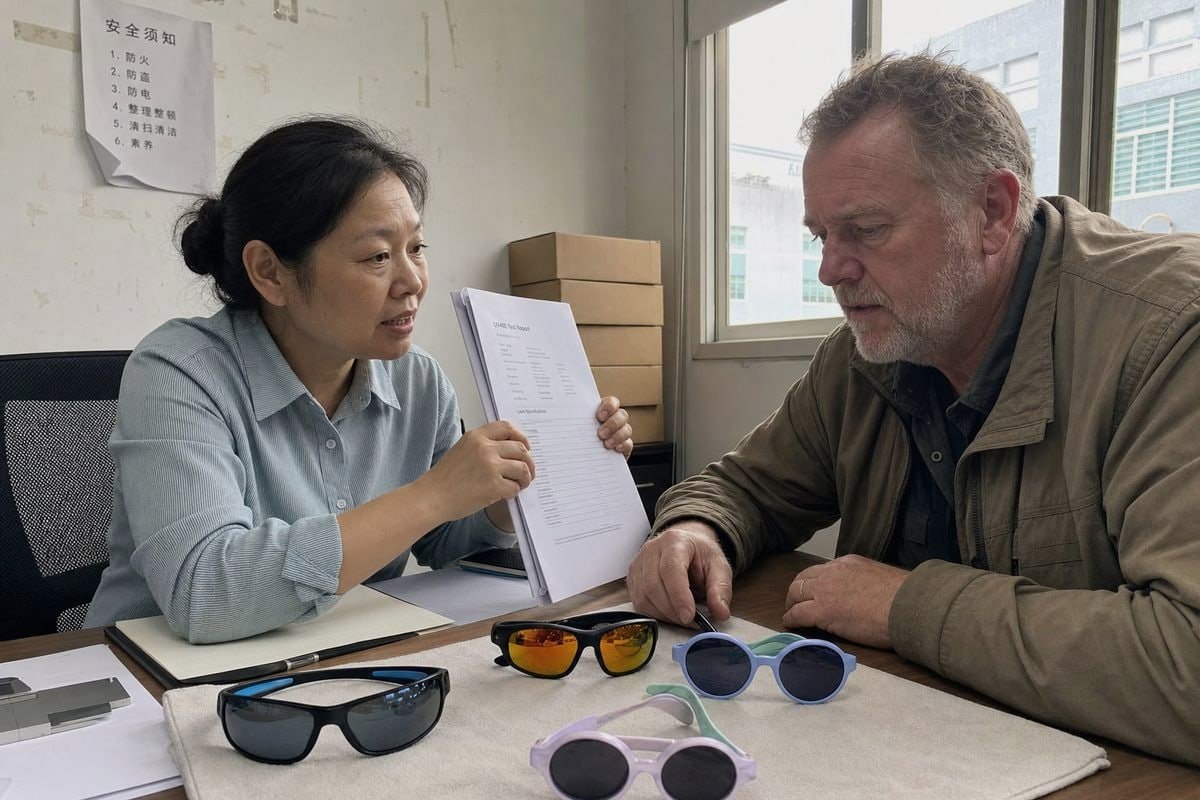
Different markets phrase their requirements differently, but the core information set is consistent. Here is the checklist we build into artwork approvals for OEM packaging projects:
| Elemento da Etiqueta | Required or Recommended | Notes for Kids' Lines |
|---|---|---|
| Lens category number | Required (EU/AU) | State it plainly, e.g., "Filter Category 3" |
| UV400 / 100% UV claim | Required by retailers | Must be backed by test reports |
| Referência padrão | Obrigatório | ISO 12312-1, EN ISO 12312-1, or AS/NZS 1067 |
| Marcação CE | Required (EU) | Sunglasses are Category I PPE in the EU |
| "Not suitable for driving" warning | Required for Category 4 | Also wise for heavily mirrored lenses |
| "Not for direct sun viewing" note | Recomendado | Protects against eclipse-viewing misuse |
| Age suitability and material info | Recomendado | Parents value TR90/TPEE flexibility claims |
Turn Compliance into Marketing
Here is the part many buyers miss. Category and UV information should not hide in small print. Parents actively search for it. A hang tag that says "Category 3 lens — filters 82–92% of visible light, blocks 100% of UV rays" educates the shopper and justifies a premium price. We often design a simple icon system for our OEM clients: a sun icon for category, a shield icon for UV400 protection, and a wave icon for polarized options.
Keep Documentation Behind the Label
Every claim on the box needs a paper trail. When we run private-label projects, we keep test reports, Declarations of Conformity, and material certificates filed by production lot. If a retailer in Germany or Australia audits your product two years later, that file protects your brand. Ask any supplier you work with to commit to the same discipline before you approve artwork.
Conclusão
Lens categories tell you darkness; UV400 tells you safety. Get both right, label them clearly, and your kids' sunglasses line earns parents' trust — and repeat orders.
Notas de rodapé
1. Wikipedia entry detailing the American national standard for nonprescription sunglasses. ↩︎
2. Wikipedia provides a stable, accessible overview of international eyewear standards including the ISO 12312-1:2022 update. ↩︎
3. Technical explanation of how light passes through materials like sunglass lenses. ↩︎
4. Material properties of polycarbonate used for impact-resistant children’s eyewear. ↩︎
5. Official Australian government safety standard for sunglasses and fashion spectacles. ↩︎
6. The American Academy of Ophthalmology is a premier medical authority for verifying UV400 and eye safety requirements. ↩︎
7. Medical overview of lenses that adjust tint based on UV exposure. ↩︎
Mais Artigos que Você Pode Gostar



Procurando um Parceiro Confiável em Óculos Infantis?
Explore mais de 800 estilos prontos e suporte completo OEM/ODM adaptado à sua marca.
Entre em Contato English
  Español de México
  Deutsch
  Français
  日本語
日本語  العربية
  Português do Brasil