What’s the Ideal Weight Range for Kids’ Optical Frames?
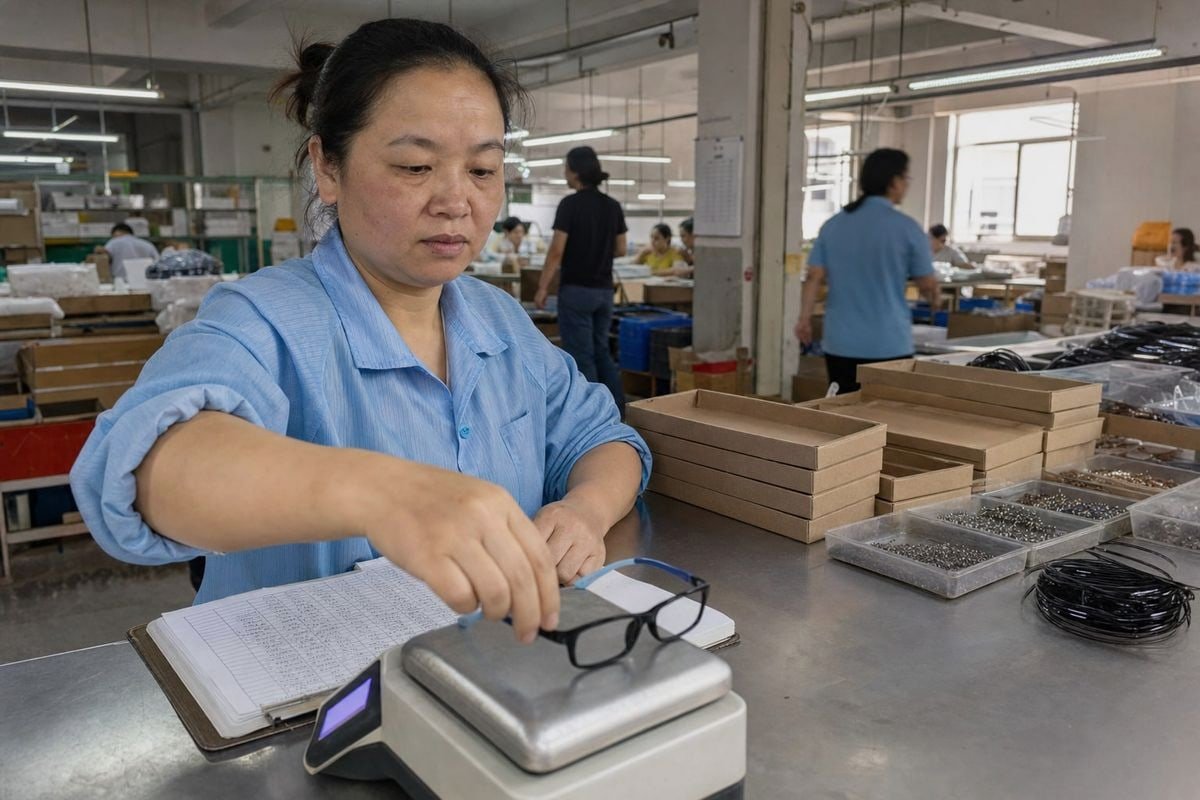
On our production line in Taizhou, kids’ optical frames get weighed before they ship. Why? Because a few extra grams can decide whether a child actually wears their glasses.
The ideal weight range for kids’ optical frames is 6–15 grams without lenses, with 15 grams or less being optimal and up to 18 grams still acceptable. Lighter frames improve all-day comfort, reduce slipping and pressure marks, and support better wearing compliance in children.
That is the short answer. But the full picture depends on your child’s age, face size, prescription, and frame material. Let me walk you through what really matters, gram by gram.
How do I know if my kids' optical frames are too heavy for daily wear?
A buyer from Australia once sent me a competitor's sample and asked why kids kept taking those glasses off. We put it on the scale: 26 grams. Case closed.
Kids' optical frames are too heavy if they exceed 20–25 grams, leave red pressure marks on the nose or behind the ears, slide down repeatedly, or cause the child to remove them within an hour. Frames should feel nearly weightless during all-day wear.
Children rarely say "these glasses are too heavy." Instead, they show it through behavior. Weight-driven non-compliance is the leading reason children remove their glasses, and frames over 20–25 grams often trigger what opticians call sensory fatigue — a constant, low-level irritation that a child cannot articulate but responds to by pushing the glasses off.
Warning signs parents can check at home
I tell our brand customers to teach parents this quick five-point check:
- Pressure marks. Look at the nose bridge and behind the ears after two hours of wear. Red indentations mean too much nose pad pressure or a frame that is too heavy for the child's soft cartilage.
- Constant slipping. Heavy frames slide down a child's flatter, less developed nasal bridge. If the child pushes glasses up more than a few times an hour, weight or bridge width and stability is the problem.
- Frequent removal. A child who takes glasses off during quiet activities like reading is signaling discomfort, not defiance.
- Cheek contact. The frame should never rest on the cheeks. Heavy frames sag onto them.
- Off-center eyes. The pupils should sit centered in the lenses. Slipping shifts the optical center, which matters enormously for amblyopia treatment, where micro-oscillations during activity can undermine therapy.
There is one nuance worth stating clearly: a heavier frame that fits perfectly can outperform an ultra-light frame that slides constantly. Fit and weight work together. But in our fifteen years making children's eyewear, I have never seen a 25-gram kids' frame that fits well enough to justify its weight.
What materials help keep children's optical frames lightweight without sacrificing durability?
When we developed our TR90 frames with TPEE temples, the design brief was blunt: survive a four-year-old, weigh almost nothing. Material choice decides both outcomes at once.
TR90 memory plastic, TPEE, medical-grade silicone, and beta-titanium offer the best strength-to-weight ratios for children's frames. TR90 and TPEE combine flexibility with 6–15 gram weights, while beta-titanium suits older children needing durable, ultra-light metal frames.
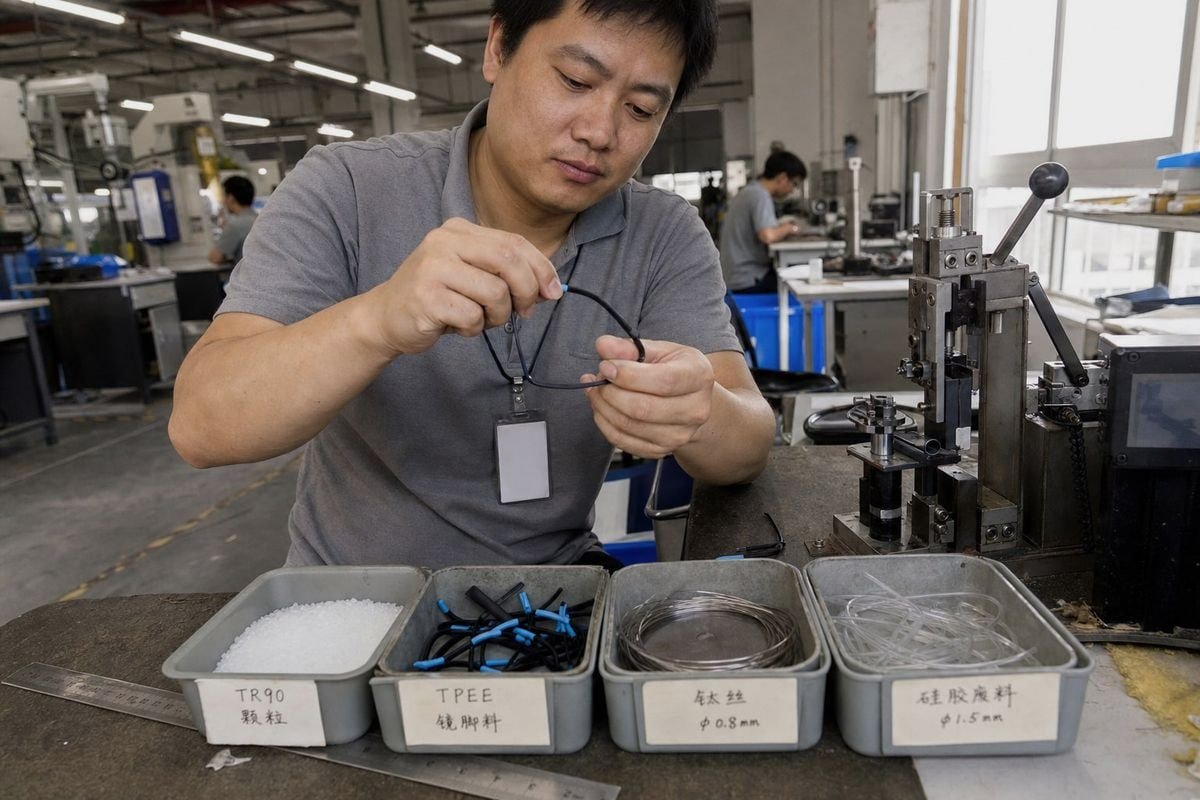
Material is the single biggest lever for weight reduction. It also determines flexibility, which is a safety issue — rigid frames snap and can create sharp edges near a child's eyes, while flexible materials 1 bend and recover. That is exactly why our factory built its expertise around TPEE and TR90 rather than traditional acetate.
How the main frame materials compare
| Material | Typical frame weight | Flexibilidade | Durabilidade | Melhor para |
|---|---|---|---|---|
| TR90 memory plastic | 6–12 g | Alto | Excelente | All ages; the workhorse of pediatric frames |
| TPEE | 6–10 g | Muito alto | Excelente | Babies, toddlers, active kids |
| Silicone de grau médico | 8–14 g | Muito alto | Muito bom | Under age five; soft skin contact |
| Beta-titanium | 8–15 g | Moderado | Excelente | School-age children and pre-teens |
| Standard acetate | 18–30 g | Baixo | Bom | Style-driven teen frames; too heavy for most young kids |
TR90 memory plastic deserves its reputation. It twists, gets sat on, and springs back. In our workshop we run repeated flex tests on temple hinges 2, and TR90 fronts paired with TPEE temples consistently outlast rigid alternatives while staying under 12 grams. One less obvious advantage: lightweight polymers regulate thermal mass better than metal, so the frame does not turn painfully cold on a Japanese winter morning or hot on an Australian beach. That reduces skin-contact irritability, which matters more for children than most buyers assume.
Titanium children's frames, especially beta-titanium, are a strong choice for older kids who want a slimmer, more grown-up look without giving up low weight. For under-fives, though, I always steer buyers toward soft flexible materials. Add-on features seal the deal: flexible spring hinges absorb rough handling, and adjustable silicone nose pads distribute load across a child's flat bridge with soft, multi-point contact instead of two hard pressure points.
How does frame weight affect comfort and long-term wear for young children?
A lesson we learned early: parents buy the glasses, but children decide whether they get worn. Every gram we remove is an argument the parent never has to have.
Frame weight directly determines wearing compliance, skin health, and visual outcomes. Lighter frames prevent pressure sores on soft nasal cartilage, keep lenses optically centered during play, avoid disrupting toddler balance, and allow comfortable eight-hour school-day wear without fatigue.
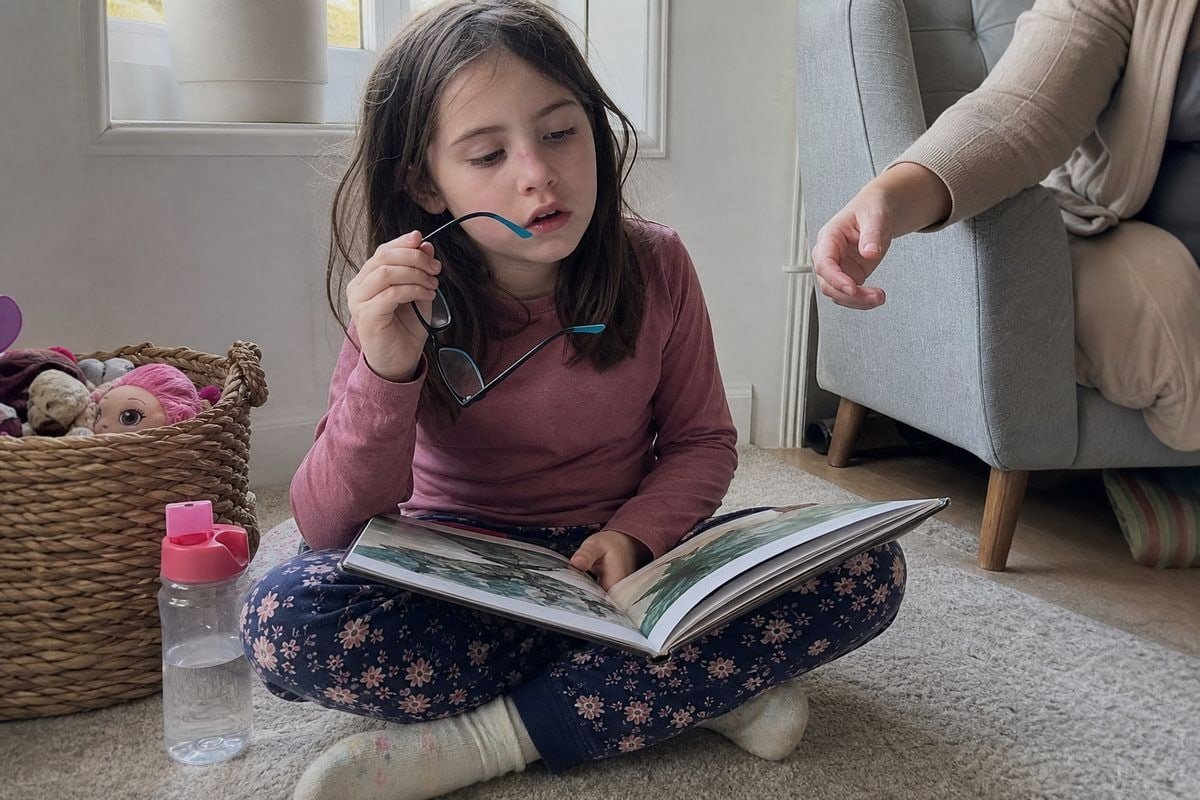
Children's anatomy is not miniature adult anatomy. Their nasal bridges are flatter and still developing, their skin is thinner, and their ear cartilage is softer. A weight that an adult would never notice concentrates on tiny contact points and creates genuine discomfort within hours. That is the physical reality behind pediatric eyewear fit.
Weight effects at different ages
The consequences of excess weight change as children grow:
- Babies and toddlers. This surprised even some of our optical-company customers: for toddlers in the walking-learning phase, excessive frame weight can subtly shift the head's center of gravity and affect balance and gait stabilization. That is why our baby styles prioritize the lightest, softest, most flexible builds, often with wraparound temples instead of standard arms.
- Preschool and early school age. Comfort still rules, but durability rises in importance because of active play. Lightweight flexible frames with secure ear hooks are the sweet spot.
- School-age children. They wear glasses through eight-hour school days. Even mild weight fatigue accumulates, and heavy frames sliding down the nose shift the pupil away from the lens's optical center — a real problem for myopia-control and amblyopia therapy, where alignment drives treatment success.
- Teens. They tolerate more structured, adult-like styles, but long school days and sports still reward low weight.
Two special cases deserve mention. First, one pediatric myopia-management guideline 3 for ages 6–18 explicitly recommends frames under 15 grams as optimal, allowing up to 18 grams — so with specialized lenses, ideal weight becomes a lens-system requirement, not a style preference. Second, ultra-lightweight frames are a prerequisite for children with hearing loss who wear behind-the-ear hearing aids 4: the temple and the device must share the same narrow space without mechanical crowding or skin erosion. We have supplied slim-temple lightweight styles for exactly this bimodal use case.
What weight range should I look for when sourcing optical frames from a manufacturer?
Procurement managers who visit our 5S-managed workshop often ask for one number to put in their spec sheet. I give them a range instead, tied to age group and lens plan.
When sourcing, specify a frame weight of 6–12 grams for toddler and preschool frames and 10–15 grams for school-age styles, with 18 grams as the absolute ceiling. Always request per-style frame weight in grams on the manufacturer's spec sheet.
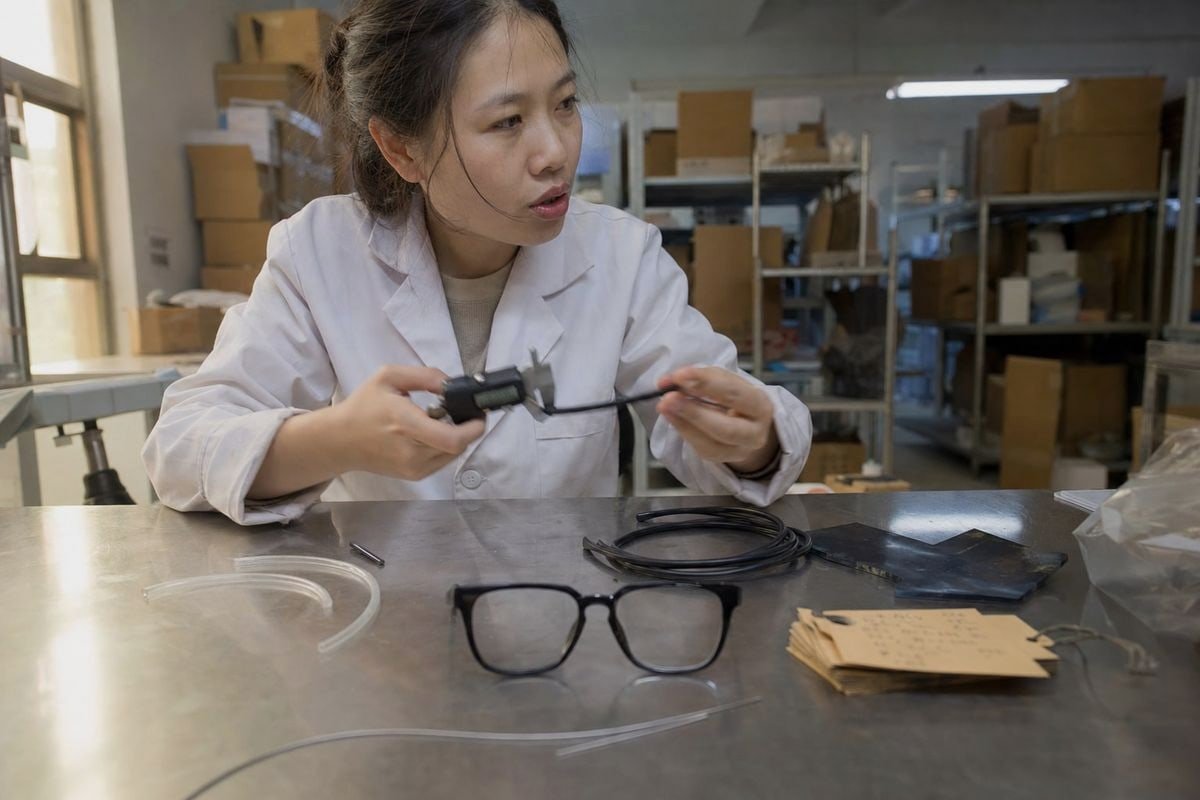
Frame weight in grams should appear on every quotation you receive. If a supplier cannot state it per style, that tells you something about their quality control. At our factory, weight tolerance checks are part of the standard QC pass, because a mold or material inconsistency shows up on the scale before it shows up in returns.
Recommended sourcing targets by age group
| Faixa etária | Target frame weight | Typical lens width | Material priority |
|---|---|---|---|
| Bebês e crianças pequenas (0–4) | 6–10 g | Low 40s mm | TPEE, silicone; maximum flexibility |
| Pré-escolares (4–6) | 8–12 g | Mid 40s mm | TR90 with TPEE temples |
| School age (6–12) | 10–15 g | High 40s mm | TR90; beta-titanium optional |
| Teens (12+) | 12–18 g | Low 50s mm | TR90, titanium, light acetate |
Frame weight versus total glasses weight
Do not stop at the frame. Lenses often double the total weight on the child's face, so lens compatibility belongs in your spec:
| Lens factor | Sourcing guidance |
|---|---|
| Material da lente | Specify polycarbonate lens weight or Trivex — thinner, lighter, and impact-resistant versus standard plastic |
| High prescriptions | Choose smaller frame diameters and high-index materials to control "weight creep" at the lens edges |
| Myopia-control lenses | Match the lens supplier's frame-weight target, often under 15 g |
Beyond weight, your checklist should cover a stable bridge design, correct temple length by age, flexible spring hinges, adjustable silicone nose pads or a molded saddle bridge, and retail-ready packaging. One practical advantage I always point out to new brands: sourcing from an existing catalog — ours holds roughly 800 styles — lets you test market response across several weight classes and age fits without investing in custom molds. Once you know what sells, full OEM/ODM customization of colors, logos, and lenses turns the winning style into your own.
Conclusão
Heavy frames get abandoned in backpacks; light ones get worn. Aim for 6–15 grams, choose flexible materials, verify fit — and your kids' eyewear line earns trust.
Across fifteen years of building children's eyewear, the pattern has never changed: comfort drives compliance, and weight drives comfort. Start with the 15-gram benchmark, adjust for age and lens system, and demand exact frame weight in grams from every supplier. If you are developing a children's optical line and want to compare TR90 and TPEE samples on a real scale before committing, our team is glad to send styles across the weight range so you can feel the difference yourself.
Notas de rodapé
1. Authoritative medical source from the American Academy of Ophthalmology discussing flexible and durable eyeglass frame materials. ↩︎
2. General reference for eyeglass components, including temple hinges, which are critical for frame durability and fit. ↩︎
3. Clinical overview of myopia management from the American Optometric Association, supporting the article’s weight recommendations. ↩︎
4. Authoritative FDA resource on hearing aids, relevant for children requiring lightweight frames that accommodate behind-the-ear medical devices. ↩︎
Mais Artigos que Você Pode Gostar

5 de agosto de 2026
Acetato de Celulose Bio-Baseado vs. Regular: Qual a Diferença para Armações Infantis?

5 de agosto de 2026
Quão Recicláveis São os Materiais de Armações Ópticas Infantis e Quais Alternativas Ecológicas Existem?

5 de agosto de 2026
As Armações Ópticas Infantis Branqueiam ou Envelhecem em Armazenamento e Como Controlar as Condições do Armazém?
Procurando um Parceiro Confiável em Óculos Infantis?
Explore mais de 800 estilos prontos e suporte completo OEM/ODM adaptado à sua marca.
Entre em Contato English
  Español de México
  Deutsch
  Français
  日本語
日本語  العربية
  Português do Brasil