Are TR90, Acetate, or Titanium Best for Kids’ Optical Frames by Age?
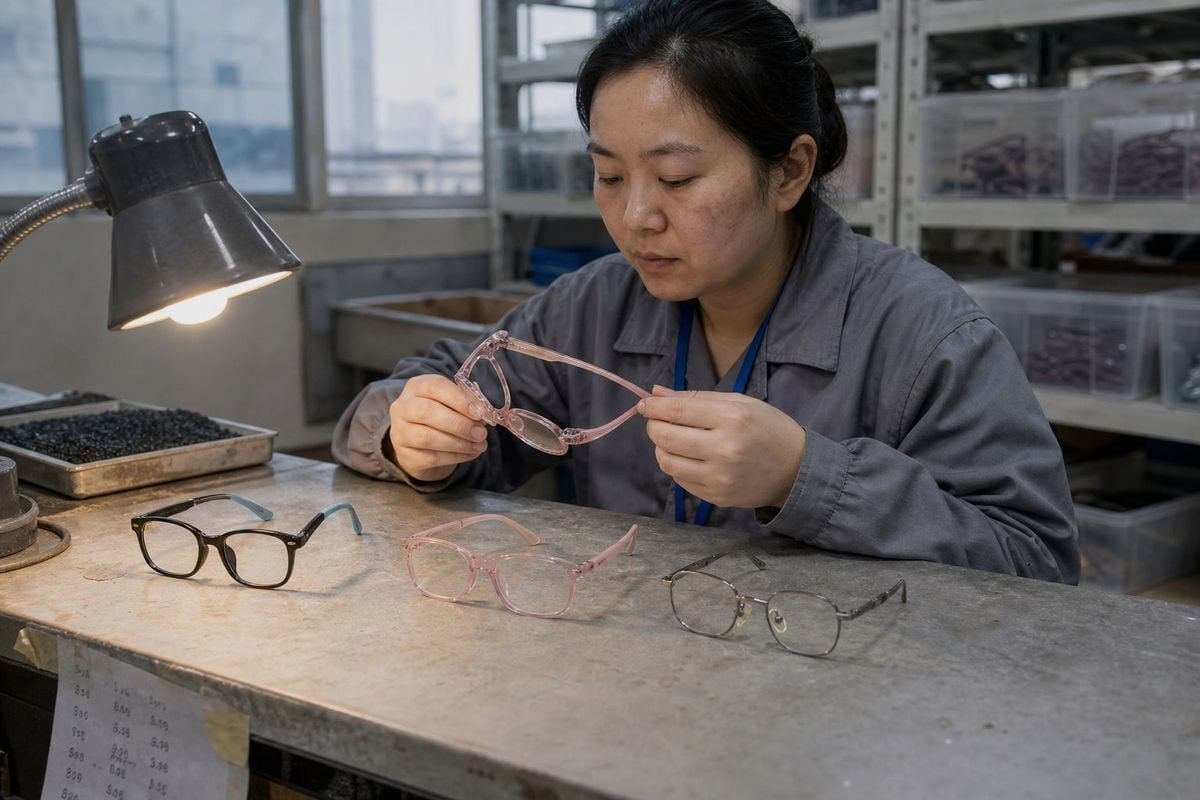
Choosing between TR90, acetate, or titanium for kids’ optical frames confuses many buyers I meet. Pick wrong, and returns pile up. On our production line, we see why daily.
TR90 is the best all-around material for kids’ optical frames aged roughly 2–12 because it is lightweight, flexible, and impact-resistant. Acetate suits style-focused tweens and teens, while titanium is best for older children needing hypoallergenic, premium, ultra-light frames.
That is the short answer. But age, activity level, and your brand’s positioning change the math. Let me walk you through how we advise buyers to decide, section by section.
How do I choose the safest frame material for toddlers versus teenagers?
A procurement manager from Australia once asked me to quote the same acetate frame in three kids' sizes. I stopped her. A toddler and a fourteen-year-old should not wear the same material, and here is why.
For toddlers and preschoolers, choose soft, flexible materials like TR90 or silicone-tipped frames that bend without snapping. For teenagers, safety shifts toward fit and skin compatibility, so acetate or hypoallergenic titanium becomes appropriate because older kids handle glasses with far more care.
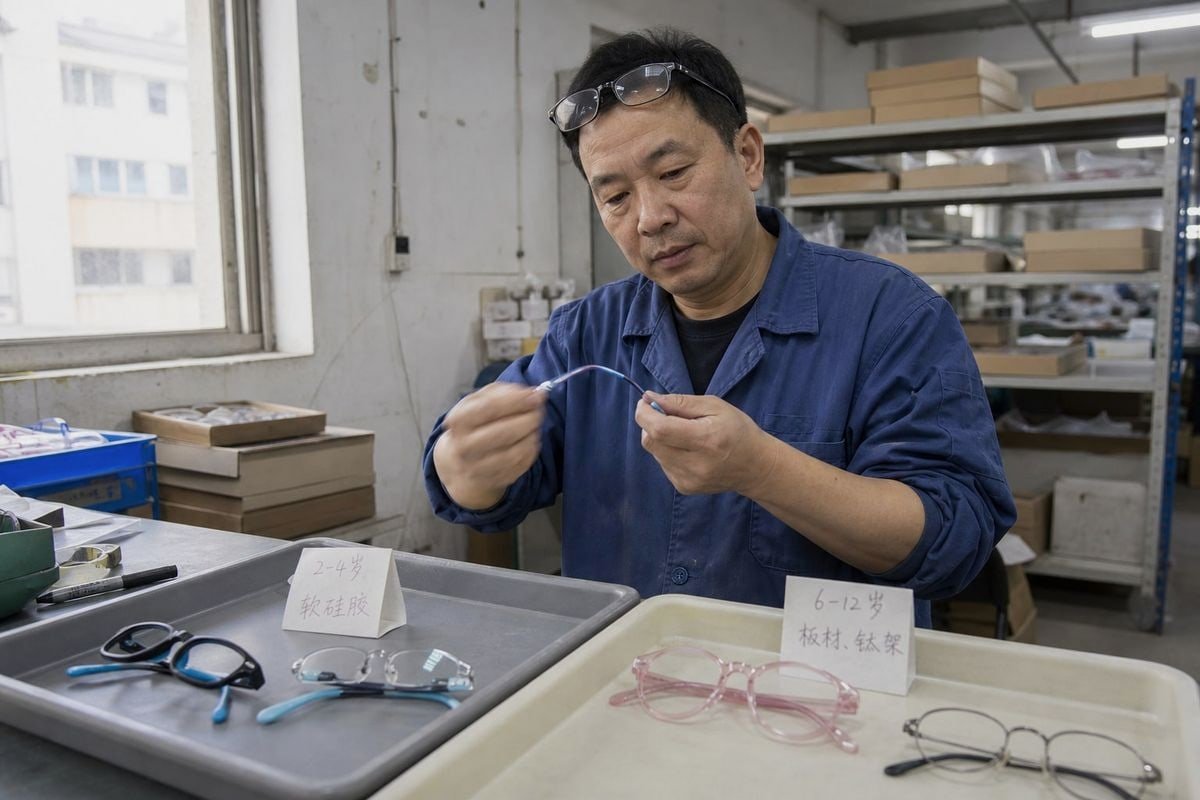
Safety means different things at different ages. For a two-year-old, the danger is a frame that snaps into sharp edges, or a rigid temple that presses into soft tissue during a fall. For a teenager, the risk is more about long-term comfort, skin irritation, and lenses staying properly centered. At our factory in Taizhou, we build most of our toddler styles in TR90 with TPEE temples for exactly this reason: the whole frame flexes, twists, and returns to shape.
A quick age-by-age breakdown
- Ages 2–4: Prioritize flexibility and replaceability. TR90 works well, but for children who mouth or aggressively twist frames, softer options like silicone or TPEE temples are even safer. This is also where the emerging bio-acetate trend matters, since it replaces traditional phthalate plasticizers with plant-based alternatives — a real concern for parents worried about chemical leaching during oral exploration.
- Ages 5–8: This is the strongest TR90 zone. School and playground abuse demand maximum impact resistance.
- Ages 9–12: TR90 still leads for frame durability, but acetate starts to compete when kids want a more grown-up look.
- Ages 13+: Acetate and titanium take over as style, refined bridge fit, and identity begin to matter more than bounce-back toughness.
One more safety layer: hinges. Metal frames concentrate stress at hinges and bridges, which is why we spec spring hinges or fully flexible temples on nearly every frame we build for children under ten.
Why does TR90 outperform acetate and titanium for active young kids?
The trade-off we weigh most often when developing a new kids' style is stiffness versus survival. A stiffer frame holds adjustment better, but a young child will drop, sit on, and yank their glasses weekly. Survival usually wins.
TR90 outperforms acetate and titanium for active young kids because it is a memory plastic that bends and snaps back instead of breaking. It is roughly 50% lighter than standard acetate, resists impacts, and avoids the hinge and bridge stress points that fail on metal frames.
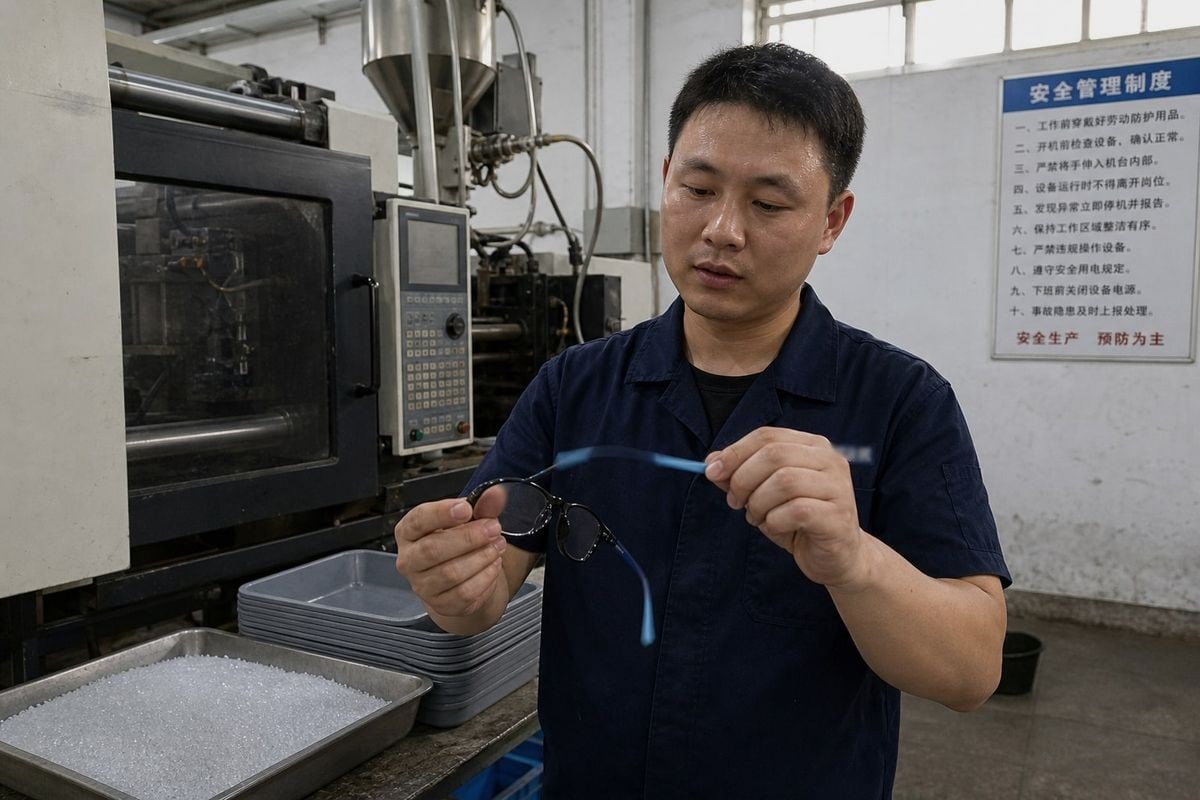
TR90 is a thermoplastic often called memory plastic. Twist a well-made TR90 temple 1 90 degrees and it returns to its original shape. Try that with acetato de celulose 2 and you get a crack; try it with a titanium temple and you get a permanent bend or a sheared hinge. For an active lifestyle — sports, playground games, rough backpack storage — that forgiveness is the whole story.
Weight matters more than most buyers expect. In pediatric optometry, wearer compliance 3 drops fast when frames slip or press on the nose. Because TR90 is about half the weight of standard acetate, kids simply keep the glasses on. Less slippage also means the optical center stays where it should.
Design advantages you only get with injection molding
Injection-molded TR90 lets us build a saddle bridge 4, which spreads weight evenly across a child's undeveloped nasal bridge. Traditional acetate frames usually use keyhole bridges, which concentrate pressure on two small contact points. For children under eight, the saddle bridge fit is noticeably more comfortable, and we see it in lower complaint rates from our brand customers.
There is one more advantage buyers in colder markets should know: cold-weather resilience. Acetate can become brittle and snap in sub-zero temperatures during winter outdoor play. TR90 keeps its flexibility. For our customers in Northern Europe and Japan, that single property has decided more than one material spec.
What durability and flexibility differences should I expect between these three materials?
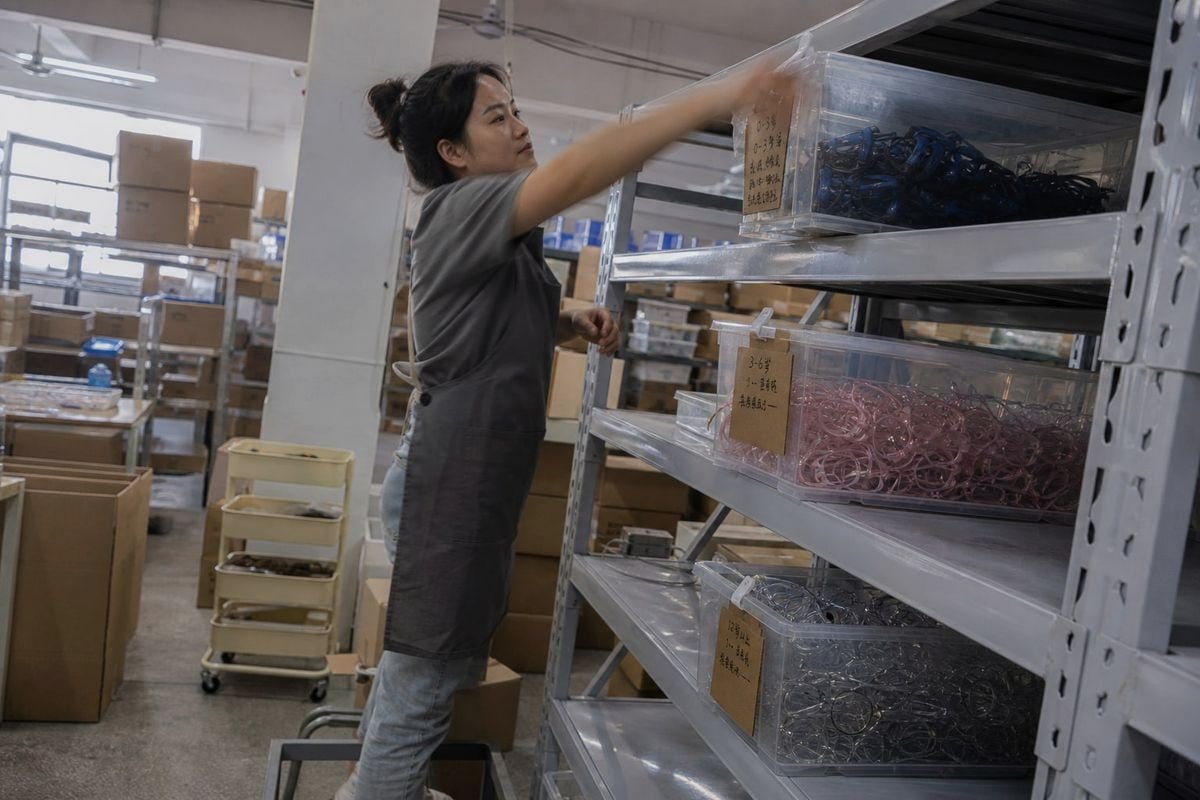
Our QC team runs a simple bench test on every new kids' style: temples flexed outward past 90 degrees, hundreds of cycles, then a drop test onto hard flooring. Fifteen years of that routine has taught us exactly where each material gives up.
Expect TR90 to flex furthest and survive drops best, acetate to hold adjustments well but crack under sharp impacts or cold, and titanium to resist corrosion and fatigue for years while remaining vulnerable at hinges. TR90 and titanium are hardest to repair; acetate is easiest to adjust.
Here is the side-by-side view we share with buyers during sampling:
| Propriedade | TR90 | Cellulose Acetate | Titanium |
|---|---|---|---|
| Flexibilidade | Excellent — memory return | Baixo — racha sob torção | Moderate (beta titanium better) |
| Resistência ao impacto | Excelente | Justo | Good, but hinge stress points |
| Approx. weight (kids' frame) | 8–10 g | 22–25 g | 9–12 g pure; 13–15 g beta |
| Cold-weather behavior | Stays flexible | Can turn brittle, may snap | Estável |
| Corrosion resistance | Excelente | Bom | Excelente |
| Optician adjustability | Limited — fixed wrap fit | Excelente | Excelente |
| Dobradiça de pino padrão | Difícil | Easiest | Difficult, costly |
Two nuances deserve honesty. First, adjustability: acetate and titanium give opticians real room to fine-tune temples and bridge fit, sometimes with adjustable nose pads on titanium. TR90 often relies on a fixed wrap fit that cannot be reshaped much, which is why our TR90 designs come in multiple bridge widths instead. Second, precision: titanium's rigid structural integrity actually matters for high-tech myopia management lenses such as D.I.M.S. or H.A.L.T. designs, which need consistent, precise lens centration to work. A frame that flexes constantly can compromise that. So for a myopia-control product line aimed at older kids, titanium's stiffness stops being a weakness and becomes a feature.
What this means for return rates
Retail data reflects the same pattern: TR90 kids' frames show lower return rates than acetate, mostly because everyday drops that crack acetate leave TR90 untouched. Acetate's repair-friendliness partly offsets this — a cracked temple is often fixable — but for e-commerce brands without an optician network, TR90's lower breakage risk is worth more than acetate's fixability.
How do I decide which material fits my brand's budget and target age group?
A lesson I learned early in exporting: the cheapest frame is not the cheapest choice. One European importer chose bargain acetate for a 4–7 age range, and warranty replacements erased the margin savings within two seasons.
Match material to your target age and price tier: TR90 for budget-to-mid lines serving ages 2–12, acetate for mid-to-upper style-driven lines for ages 9 and up, and titanium for premium hypoallergenic lines targeting ages 10+. Factor replacement risk into cost, not just unit price.

For B2B buyers, this is really a positioning decision. Here is the matrix we use in development meetings with brand customers:
| Brand scenario | Best material | Why it fits |
|---|---|---|
| Value or entry line, ages 2–8 | TR90 (with TPEE temples for youngest) | Low unit cost, high frame durability, fewest returns |
| Sports or outdoor kids' brand | TR90 | Impact resistance, lightweight comfort, secure wrap fit |
| Fashion-forward tween line, ages 9–14 | Acetate or bio-acetate | Rich color depth, patterns, premium hand feel |
| Sensitive-skin or premium line, ages 10+ | Titanium | Hypoallergenic properties, corrosion resistance, ultra-light |
| Myopia-management program | Titanium or rigid TR90 hybrid | Stable centration for specialty lenses |
| Eco-positioned baby/toddler brand | Bio-acetate or TPEE | Plant-based plasticizers, safe for mouthing |
Budget reality check
TR90 sits at the friendly end of the cost curve, titanium at the premium end, and acetate in the middle to upper-middle depending on design complexity. But calculate total cost of ownership: unit price plus breakage rate plus warranty handling. TR90's forgiveness usually makes it the lowest true cost for young age groups.
Lowering your launch risk
You do not need custom molds to test a material strategy. From our catalog of roughly 800 existing styles, a new brand can pick a TR90 core range plus a small acetate capsule for older kids, apply custom colors, logos, and retail-ready packaging, and validate demand before investing in tooling. That is how most of our long-term partners in our 20+ export markets started.
Conclusão
Pick by age, not by hype: TR90 for young and active kids, acetate for style-driven tweens, titanium for premium sensitive-skin needs. Get this right, and returns stop eating your margin.
Notas de rodapé
1. Official site of the manufacturer of Grilamid TR 90, the industry standard for TR90 frames. ↩︎
2. Authoritative encyclopedia entry defining the material and its specific application in eyeglass frames. ↩︎
3. Clinical resources from the American Academy of Ophthalmology regarding pediatric vision care and frame selection. ↩︎
4. National database for biomedical research covering facial anatomy and material biocompatibility for medical devices. ↩︎
Mais Artigos que Você Pode Gostar

Procurando um Parceiro Confiável em Óculos Infantis?
Explore mais de 800 estilos prontos e suporte completo OEM/ODM adaptado à sua marca.
Entre em Contato English
  Español de México
  Deutsch
  Français
  日本語
日本語  العربية
  Português do Brasil