Do Kids Optical Frames Whiten or Age in Storage, and How to Control Warehouse Conditions?
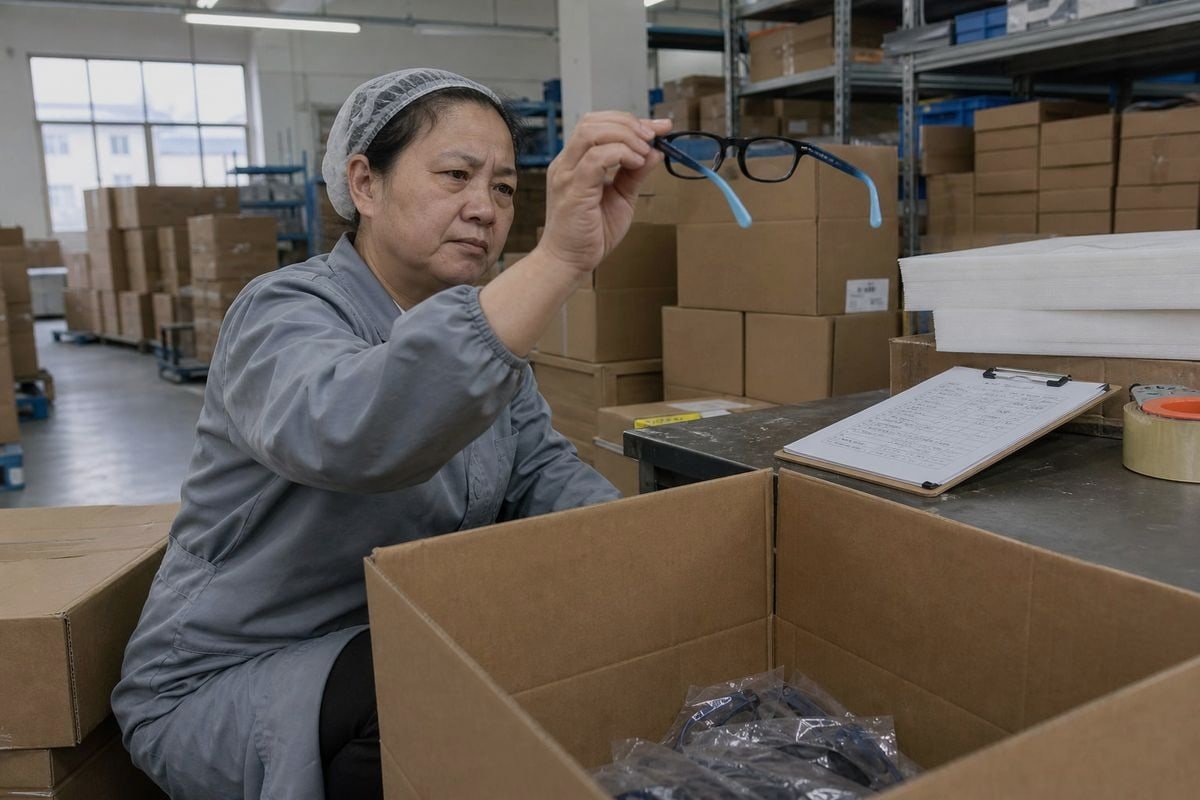
[Kids optical frames can whiten or age in storage](https://okayeyewear.com/kids-sunglasses-yellow-age-storage-control-conditions-do/), and I have seen it happen. Our factory in Taizhou has opened return cartons where frames looked years older than their production date.
Yes, kids optical frames can whiten or age in storage, but the environment causes it, not time itself. Heat above 30°C, humidity over 50% RH, UV light, and trapped chemicals drive oxidation and plasticizer migration. Keep frames at 15–25°C, 30–50% RH, dark, and ventilated to prevent it.
Let me break this down for you. I will cover why it happens, how to set warehouse controls, which packaging works, and [how to pick a manufacturer whose materials hold up](https://okayeyewear.com/how-choose-kids-optical-frame-materials-china-that-resist-disinfectant-whitening/).
What Causes TR90 and TPEE Frames to Whiten or Age During Long-Term Storage?
A buyer in Australia once sent me photos of hazy temple tips after nine months in a coastal warehouse. That conversation taught me more about storage chemistry than any datasheet ever did.
TR90 and TPEE frames whiten or age from four main drivers: UV degradation from sunlight or fluorescent lighting, heat above 30°C causing thermal stress, humidity above 50% RH triggering moisture absorption and surface bloom, and chemical exposure from solvents, outgassing, or leftover skin oils on samples.

The first thing to understand is that "whitening" and "aging" are related but different. Whitening is the symptom you see. It shows up as a chalky film, haze, or loss of gloss. Aging is the chemical process behind it. That process includes oxidation, plasticizer migration, and coating breakdown. A frame can look white because it is aging chemically, even if it has not cracked or broken yet.
How Each Material Behaves in Storage
Different frame materials fail in different ways. Here is what our lab checks have shown over 15 years of making children's eyewear:
| Material | Main Storage Risk | Visible Symptom | Reversible? |
|---|---|---|---|
| TR90 (nylon-based) | Heat warping, UV degradation | Yellowing, dullness, stress whitening at flex points | Rarely |
| TPEE templados | Oil bleeding, dust adhesion | Surface haze that mimics whitening | Often, with correct cleaning |
| Cellulose acetate | Cellulose acetate blooming, vinegar syndrome | Chalky white bloom, sour smell | No, once bloom sets in |
| Clear/translucent frames | Photo-oxidation | Yellow tint, cloudiness | Não |
Cellulose acetate blooming deserves special attention. When plasticizer migration occurs, the softening agents 1 inside the acetate move to the surface. There they react with oxygen, sweat acids, and UV light. The result is a white, chalky layer that wiping cannot remove. Worse, sealed acetate stock can outgas acetic acid in enclosed cartons. This is called vinegar syndrome, and it creates a self-accelerating acidic microclimate that can damage an entire batch.
TR90 resists this better because it is a thermoplastic nylon, not a cellulose material. But it is not immune. High heat softens it, and repeated thermal cycles above 30°C can erase its shape memory. UV exposure still fades pigments and yellows clear versions. Silicone and TPEE tips on "unbreakable" kids' frames can also show oil bleeding, where silicone oil migrates to the surface. It looks like whitening, but it needs a specific non-polar cleaning protocol rather than soap and water.
How Can I Set Up Warehouse Temperature and Humidity Controls to Protect My Optical Frame Inventory?
There is a real trade-off I weigh with every buyer: full climate control costs money, but one whitened container of stock costs far more. Our 5S-managed workshop runs on that logic.
Keep your eyewear inventory storage at a stable 15–25°C and 30–50% relative humidity, away from direct sunlight and UV-heavy lighting. Avoid thermal swings above 30°C, use dehumidifiers or silica gel packets in humid climates, and monitor conditions continuously rather than checking once per season.
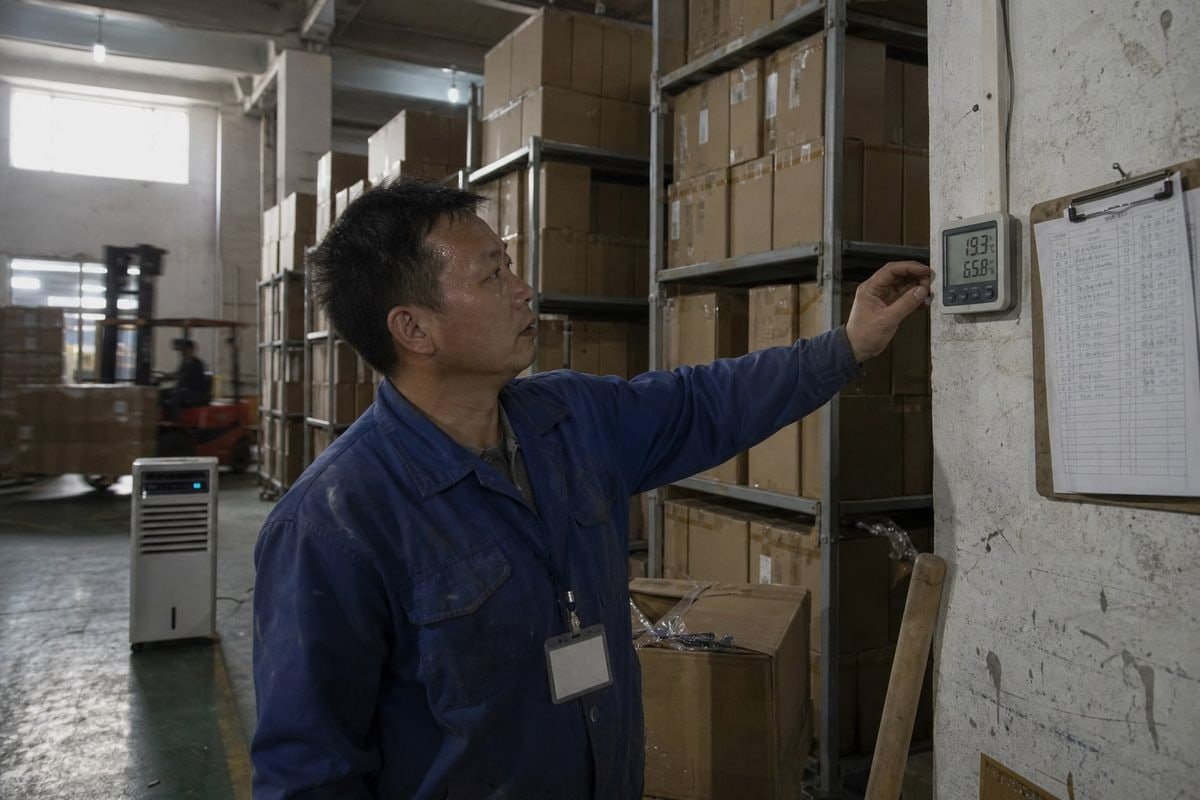
Relative humidity control is the single biggest lever you have. Humidity above 50% RH is the primary catalyst for chalky white residue on stored plastic frames. Moisture absorption also softens material structure over time and encourages mold around hinges and hidden crevices. If your warehouse sits in a humid coastal region, a commercial dehumidifier pays for itself quickly.
Recommended Warehouse Targets
| Condition | Safe Target | Danger Zone | Control Method |
|---|---|---|---|
| Temperature | 15–25°C (59–77°F) | Above 30°C or big daily swings | Temperature-controlled warehousing, avoid rooftop or loading-door zones |
| Relative humidity | 30–50% RH (40–45% for bio-acetate) | Above 50% RH | Dehumidifiers, silica gel packets, hygrometers |
| Leve | Dark or opaque storage | Direct sun, unfiltered fluorescent tubes | Closed shelving, UV-filtered lighting |
| Air quality | Ventilated, solvent-free | Near cleaners, glues, fuel fumes | Airflow planning, separate chemical storage |
A few practical notes from our own export experience. First, watch bio-acetate closely if your range includes it. Bio-acetate absorbs more moisture than traditional acetate, so it needs stricter humidity controls, ideally 40–45% RH. Second, do not forget your lighting. UV degradation comes not only from sunlight but also from warehouse fluorescent lighting 2, which causes photo-oxidation, yellows clear frames, and fades vibrant kids' pigments. Third, ventilation matters in bulk storage. Consistent airflow prevents outgassed chemicals from accumulating inside stacked cartons, where they would otherwise accelerate material breakdown.
Monitor at the Pallet Level, Not the Room Level
One insight that surprises many buyers: warehouse averages lie. A room can read 22°C while a pallet next to a sunlit wall sits at 35°C. Micro-climate monitoring with IoT-enabled environmental sensors at the pallet level can identify these localized hot spots before chemical degradation becomes visible. Even a few inexpensive data loggers spread across your racking beat a single thermostat on the office wall.
Which Packaging and Storage Methods Help Me Prevent Discoloration Before Frames Reach Retail Shelves?
When we developed retail-ready packaging for a Japanese kids' brand, their procurement manager asked one sharp question: will the box protect the frame for eighteen months, not just during shipping? That reframed how we design packaging.
Prevent discoloration by packing each frame clean and fully dry in an individual sleeve or hard case, adding silica gel packets to master cartons, using opaque or UV-blocking packaging, and choosing moisture-barrier or VCI bags for high-value backstock. Then rotate stock first-in, first-out with periodic inspections.

Packaging is your last line of defense, and it works in layers. Each layer solves a different problem. Here is the sequence I recommend to our B2B customers:
- Clean before packing. Any showroom sample or handled frame carries skin oils, sweat, and sometimes sunscreen residue. These acids accelerate oxidation during storage. Clean with mild soap and water, never alcohol on acetate, and dry completely before sealing.
- Individual protection first. A soft sleeve or hard case per frame prevents frame-on-frame abrasion and blocks dust that traps moisture against the surface.
- Moisture control inside the carton. Silica gel packets in every master carton absorb humidity swings during transit and long-term eyewear inventory storage.
- Light blocking. Opaque boxes or bins stop UV degradation from both windows and warehouse lights.
- Oxidation barriers for backstock. For high-value inventory sitting six months or longer, oxygen-scavenging or moisture-barrier primary packaging, such as VCI bags, can effectively halt oxidation entirely.
- Physical layout. Store frames in padded trays or dividers on stable shelving. Never leave them loose in bins, because pressure points bend temples and stressed areas whiten fastest.
Surface Haze vs. True Aging: A Quick Diagnostic
Before you write off stock, check whether the problem is cleanable. Some haze wipes off; true bloom does not.
| Teste | Cleanable Haze | True Oxidation or Bloom |
|---|---|---|
| Wipe with microfiber | Improves or disappears | Returns or does not change |
| Wash with mild soap | Gloss restored | Chalkiness remains |
| Location of whiteness | Even film, surface dust pattern | Concentrated at flex points, hinges, temple bends |
| Smell inside carton | Neutral | Sour, vinegar-like (acetate outgassing) |
If your check reveals a vinegar smell, isolate that carton immediately. Vinegar syndrome spreads acidic vapor to neighboring stock in enclosed spaces. Finally, schedule quarterly spot checks of stored inventory. Early haze, warping, or residue caught at month three is manageable. Caught at month twelve, it is often permanent, and material brittleness may already have set in.
How Do I Choose a Manufacturer Whose Materials Resist Yellowing and Aging Over Time?
Early in my career at our Taizhou factory, we lost a European customer's trust over a batch of temple tips that dulled on their shelf. Fixing our raw-material sourcing after that failure shaped how we run production today.
Choose a manufacturer that uses virgin TR90 and TPEE with UV stabilizers, controls its own production environment, offers accelerated aging or UV test evidence, packs with moisture protection as standard, and can explain exactly how its materials resist plasticizer migration and photo-oxidation over multi-year timelines.
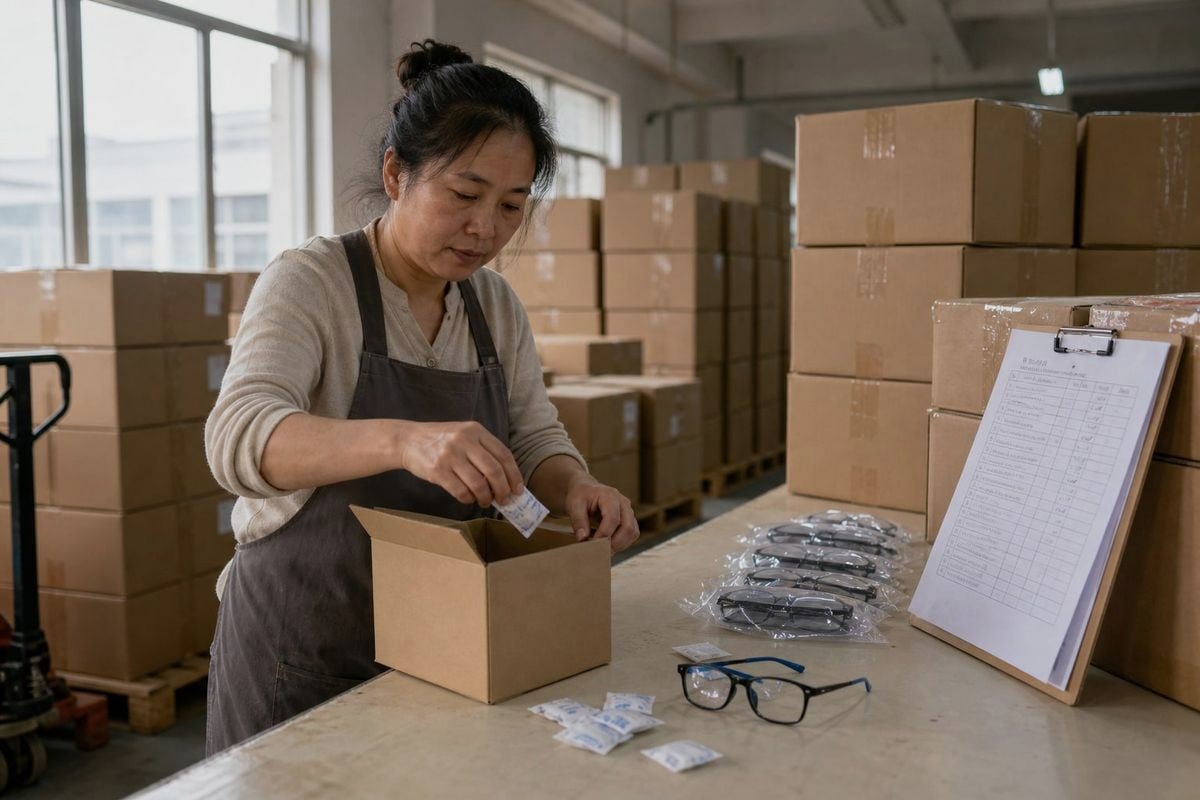
Some suppliers will imply that whitening is simply inevitable, especially on clear frames, so you should not hold them responsible for it. I disagree with that framing, and you should too. Yes, no plastic lasts forever, and clear frames can eventually yellow from UV, sweat, and air chemicals. But the speed of aging is heavily influenced by material grade, additives, and factory storage before the goods even ship. A frame molded from virgin nylon with proper UV stabilizers, stored in a dry 5S workshop, and packed with desiccant will look fresh years after a cheap recycled-resin equivalent has hazed over. Aging cannot always be stopped, but a good manufacturer substantially delays it.
Questions to Ask Before You Order
I encourage buyers to put these questions to any supplier, including us:
- What resin grade do you use? Recycled or filled TR90 develops material brittleness and stress whitening far sooner than virgin resin. Ask for the raw-material source.
- Do you add UV stabilizers? These additives slow photo-oxidation in clear and pastel frames, which matter most in kids' candy-colored designs like translucent pink acetate-look styles.
- How do you store finished goods before shipment? Frames can start aging in a hot factory warehouse before you ever receive them. Zyl frame oxidation and bloom often begin at origin, not at destination. Ask about the factory's own temperature-controlled warehousing practices.
- Can you show aging test results? Accelerated UV and heat-cycle testing on production samples is a reasonable request from any serious factory.
- What packaging is standard? Desiccant, individual sleeves, and opaque cartons should not be an upsell.
There is also a portfolio advantage worth mentioning. Because we maintain around 800 existing styles across TR90 frames and TPEE temples, buyers can select proven material-color combinations that have already survived real shelf life in 20+ markets. You avoid gambling a new mold investment on an untested resin recipe. And with full OEM/ODM support, we adapt colors, logos, lenses, and packaging while keeping the material system that we know resists yellowing.
Conclusão
Kids optical frames do not simply get old; they age faster when storage is too hot, humid, bright, or compressed. Control your warehouse, choose materials wisely, and whitening becomes preventable.
Notas de rodapé
1. Authoritative NCBI article explaining plasticizer migration and chemical characteristics of softening agents. ↩︎
2. Detailed Wikipedia entry explaining UV radiation emissions from fluorescent lighting sources. ↩︎
Mais Artigos que Você Pode Gostar

5 de agosto de 2026
Acetato de Celulose Bio-Baseado vs. Regular: Qual a Diferença para Armações Infantis?

5 de agosto de 2026
Quão Recicláveis São os Materiais de Armações Ópticas Infantis e Quais Alternativas Ecológicas Existem?

5 de agosto de 2026
How to Prevent Deformation and Crush Damage in Kids Optical Frames During Shipping?
Procurando um Parceiro Confiável em Óculos Infantis?
Explore mais de 800 estilos prontos e suporte completo OEM/ODM adaptado à sua marca.
Entre em Contato English
  Español de México
  Deutsch
  Français
  日本語
日本語  العربية
  Português do Brasil