Can a Kids Optical Frames Supplier’s Online Training Reach All Store Locations?
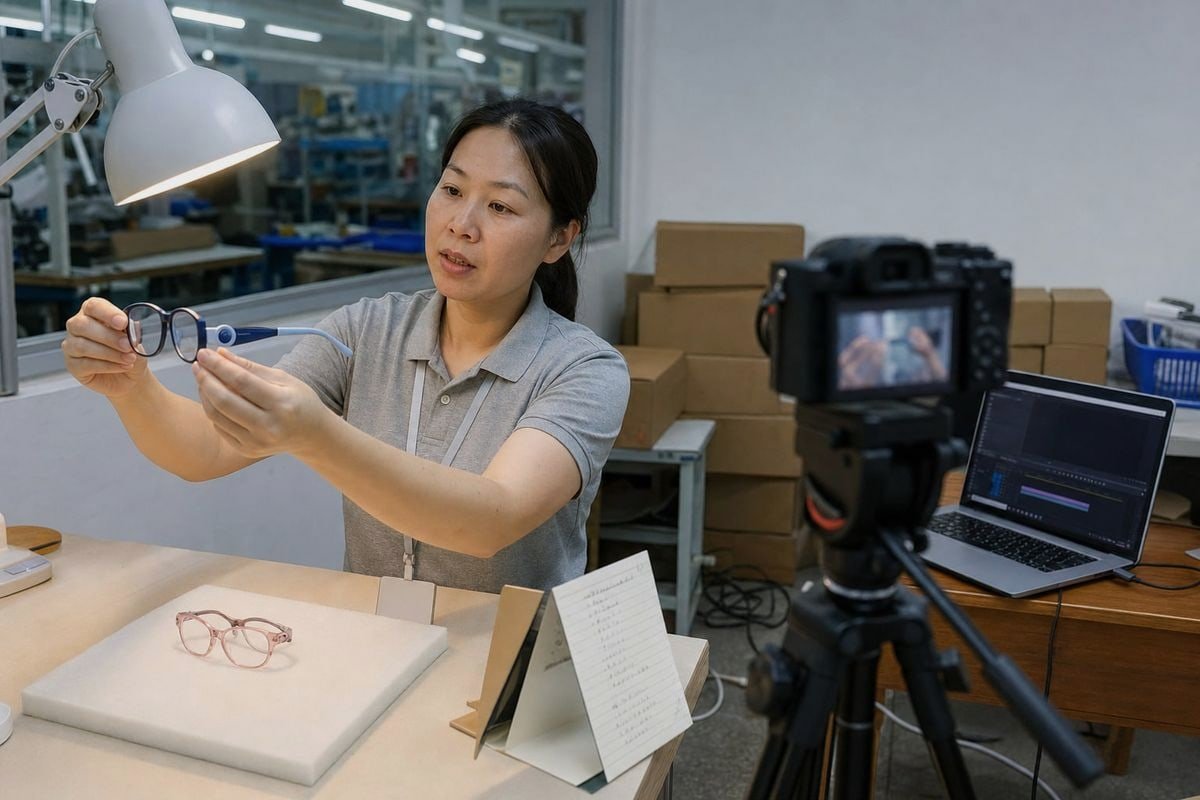
Buyers ask me this often: can a kids optical frames supplier’s online training truly reach every store? When our factory in Taizhou started supporting retail partners, we discovered the honest answer. Untrained staff quietly kill sell-through. Parents ask about TR90 flexibility 1, staff hesitate, and the sale walks out the door. The fix is structured online training — done properly.
Yes, a kids optical frames supplier’s online training can reach all store locations technically, since cloud platforms deliver identical content everywhere. But true reach requires manager enforcement, protected training time, hands-on fit practice, and completion tracking — otherwise remote stores receive access without gaining real competence.
That distinction between access and competence matters. Below, I break down how to train dispersed teams, what to demand from a supplier’s program, and how to keep standards consistent long after the modules end.
How can I train all my store staff on kids optical frames without visiting every location?
A distributor in Australia once told me his eleven stores each explained our TPEE temples differently — some even wrongly. That conversation changed how we build our own training materials for partners.
Train dispersed staff through a centralized B2B e-learning platform with short video modules, digital frame catalogs, fit checklists, and quizzes. Assign a local champion per store, require tracked completion, and reinforce with live video coaching so every location learns identical standards without travel.
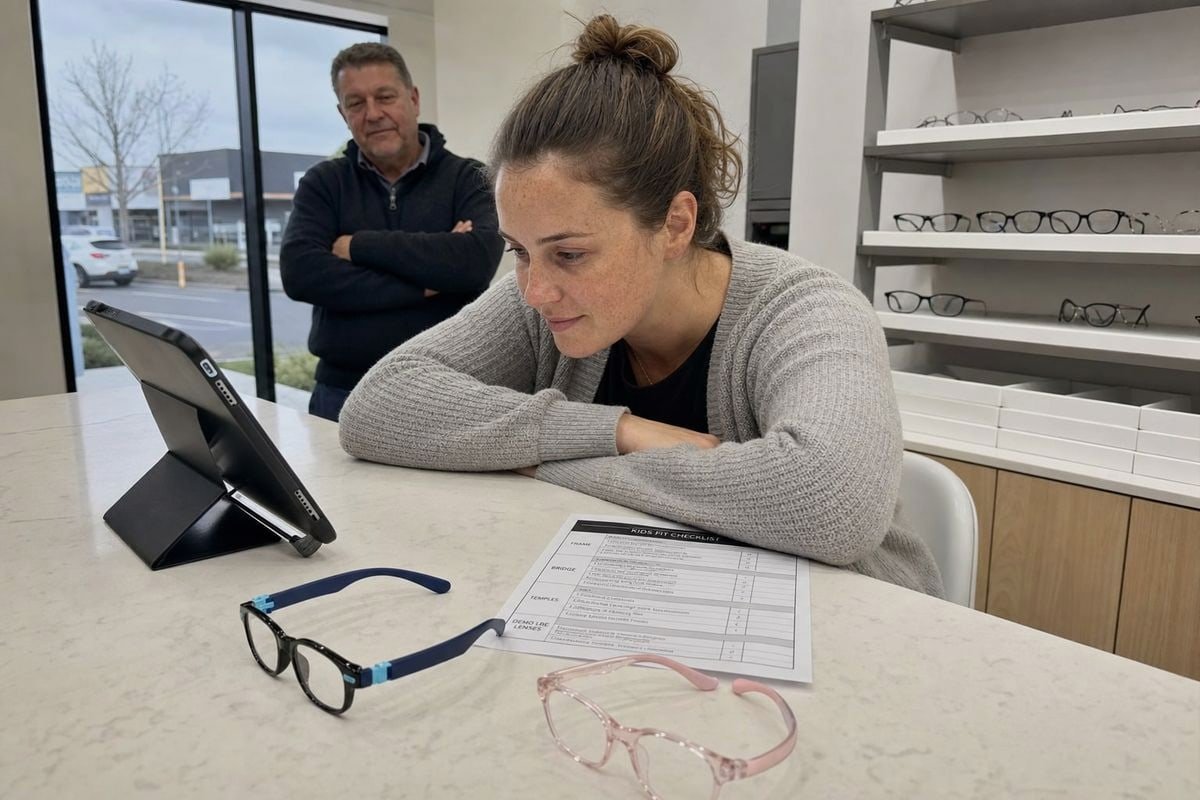
The core problem is not distance. It is variation. When every store invents its own explanation of children's eyewear fit standards 2, your brand message fragments. Online delivery solves the distribution problem instantly. One recorded module reaches store one and store fifty at the same moment, with the same wording, the same demonstrations, and the same safety claims.
Build a repeatable delivery system
In our experience supporting importers across 20+ countries, the suppliers who succeed treat training like a supply chain 3 — structured, scheduled, and measured. Here is the delivery stack we recommend to our B2B partners:
| Camada | Tool | Propósito |
|---|---|---|
| Core content | Short video modules (3–7 min) | Product knowledge, materials, sizing |
| Reference | Digital frame catalogs + spec sheets | Consistent pricing and product data across stores |
| Practice | Fit checklists and role-play scripts | Pediatric dispensing techniques on the floor |
| Verification | Quizzes with pass thresholds | Confirm understanding, not just viewing |
| Reinforcement | Monthly live video Q&A | Fix local misunderstandings fast |
Reduce onboarding time in high-turnover stores
Optical retail staff onboarding is where online training earns its keep. New hires in high-turnover environments can complete the same structured path in their first week, instead of waiting months for a regional trainer to visit. Remote employee training scalability means store twelve gets the same quality of onboarding as your flagship. The message stays uniform. The travel budget stays untouched.
What should I look for in a supplier's online training program before I commit?
There is a trade-off I weigh constantly when building partner materials: depth versus completion. A ninety-minute masterclass sounds impressive, but busy floor staff never finish it. Short, verified modules win.
Look for kids-specific content covering sizing, materials, and parent communication; tracked completion with per-store dashboards; interactive elements like quizzes and scenarios; regular content updates matching new collections; and live support access. Avoid programs that are only static PDFs or generic adult-frame content.

Not all supplier training is equal. Some of it is a PDF dressed up as a program. Before you commit purchase orders across a multi-store network, audit the training the way you would audit a factory. We invite buyers to do exactly that with us, because a supplier who invests in your staff is signaling a long-term partnership, not a one-off transaction.
The evaluation checklist
Use this scorecard when comparing suppliers:
| Criterion | Weak program | Strong program |
|---|---|---|
| Content focus | Generic adult frames | Pediatric-specific: bridge fit, temple comfort, durability |
| Format | Static PDF library | Video, virtual product demonstrations, branching scenarios |
| Tracking | Nenhuma | Per-store dashboards, completion and quiz reports |
| Access | Email attachments | Wholesale portal access with role-based paths |
| Updates | One-time delivery | Refreshed with each new collection |
| Support | No contact | Named trainer, live Q&A, response within days |
Ask about pediatric behavioral content
Children's frames are not shrunken adult frames, and the selling conversation is different too. Strong programs include modules on managing dispensing anxiety in children 4 and coaching first-time wearers' parents. When we developed our own partner materials around our TR90 and TPEE lines, we learned that staff wanted scripts for nervous parents more than they wanted material data sheets. Ask any prospective supplier whether their program covers that human side. Also confirm the platform supports continuing education for opticians 5 where relevant, since teams respect training that carries professional weight. Finally, check whether training can be filtered to the frames each store actually stocks — hyper-local customization keeps modules relevant instead of theoretical.
Can virtual training really teach my team how to fit and explain TR90 or TPEE frames correctly?
During a video call last year, I bent one of our TPEE temples nearly flat against the camera. The buyer's staff gasped, then immediately understood the material story better than any spec sheet had taught them.
Virtual training teaches the knowledge side of TR90 and TPEE fitting very well — material properties, sizing rules, and parent-facing explanations. Physical adjustment skill still needs hands-on practice, so pair online modules with sample kits and supervised in-store repetition for complete competence.
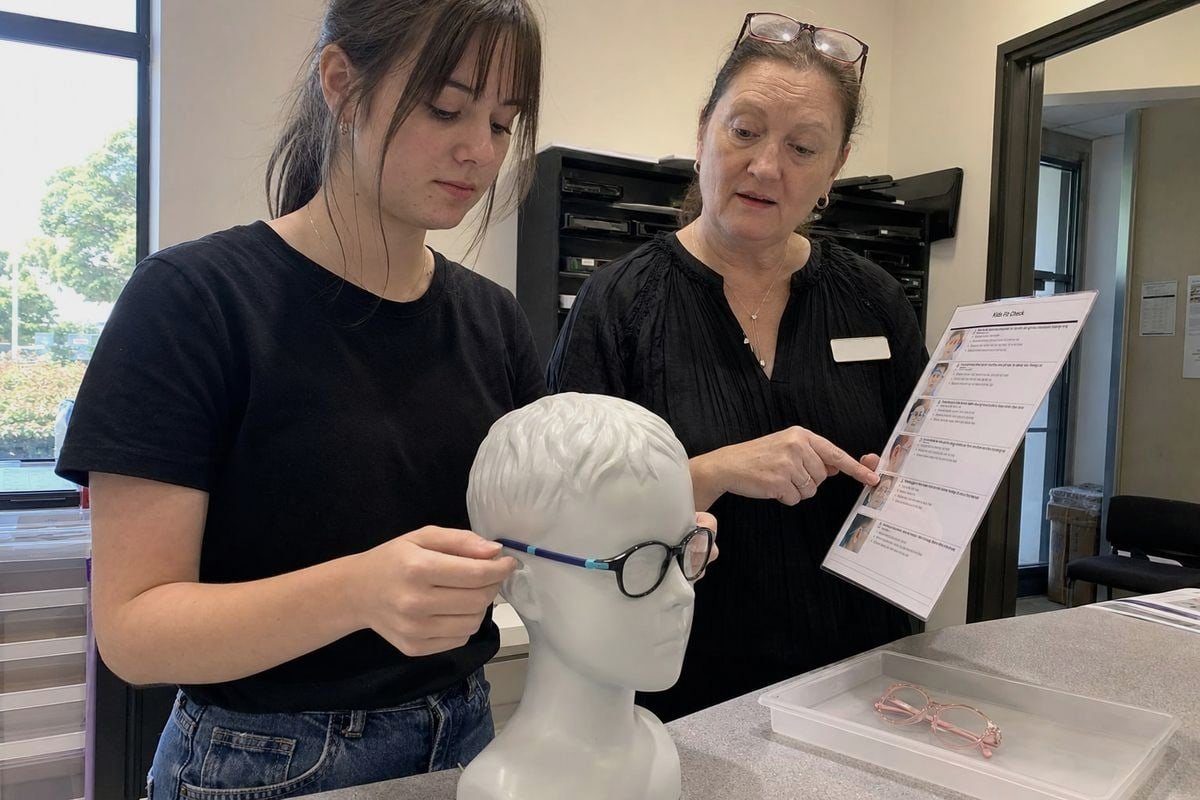
Let me be honest about the limits, because this is where a buyer objection deserves a straight answer. A completed module does not prove an employee can physically adjust a frame on a wriggling four-year-old. Completion is coverage; it is not capability. But that does not mean virtual training fails here — it means you design around the gap.
What transfers well online
Material knowledge transfers almost perfectly through video. Our engineers have found that a thirty-second flex demonstration of a TR90 frame with TPEE temples communicates more than a page of text. Virtual product demonstrations can show memory recovery after bending, weight comparison against acetate, and hinge behavior in slow motion — angles a live trainer in a busy store cannot easily show.
Sizing rules also transfer well. Staff can learn lens width, bridge width, and temple length standards 6, and how to check that a child's eyes center in the lens and the bridge sits without pressure. These children's eyewear fit standards are visual and rule-based, which suits screen learning.
What needs hands-on reinforcement
Pediatric dispensing techniques involving touch — adjusting ear hooks, checking silicone grip points, judging temple pressure — need real frames in real hands. The workable solution is a hybrid loop:
- Staff complete the online module and pass the quiz.
- The store receives a physical sample kit from the supplier.
- Staff practice adjustments on samples, guided by the module's checklist.
- A manager or senior optician observes and signs off.
- Emerging tools like remote over-the-shoulder video coaching let a master optician guide a junior through a tricky adjustment in real time.
We ship sample kits alongside training access for exactly this reason. The screen teaches the why; the sample teaches the hands.
How do I make sure my franchise or multi-location staff stay consistent after online training ends?
A lesson we learned the slow way: training energy fades in about six weeks. One European partner completed our full program enthusiastically, then three months later, mystery calls revealed two stores had drifted back to old scripts entirely.
Maintain consistency with quarterly refresher micro-modules, per-store performance dashboards, manager-led weekly floor checks, mystery-shopper audits, and recertification tied to new collections. Treat training as a continuous operating rhythm within multi-unit retail management, not a one-time launch event.
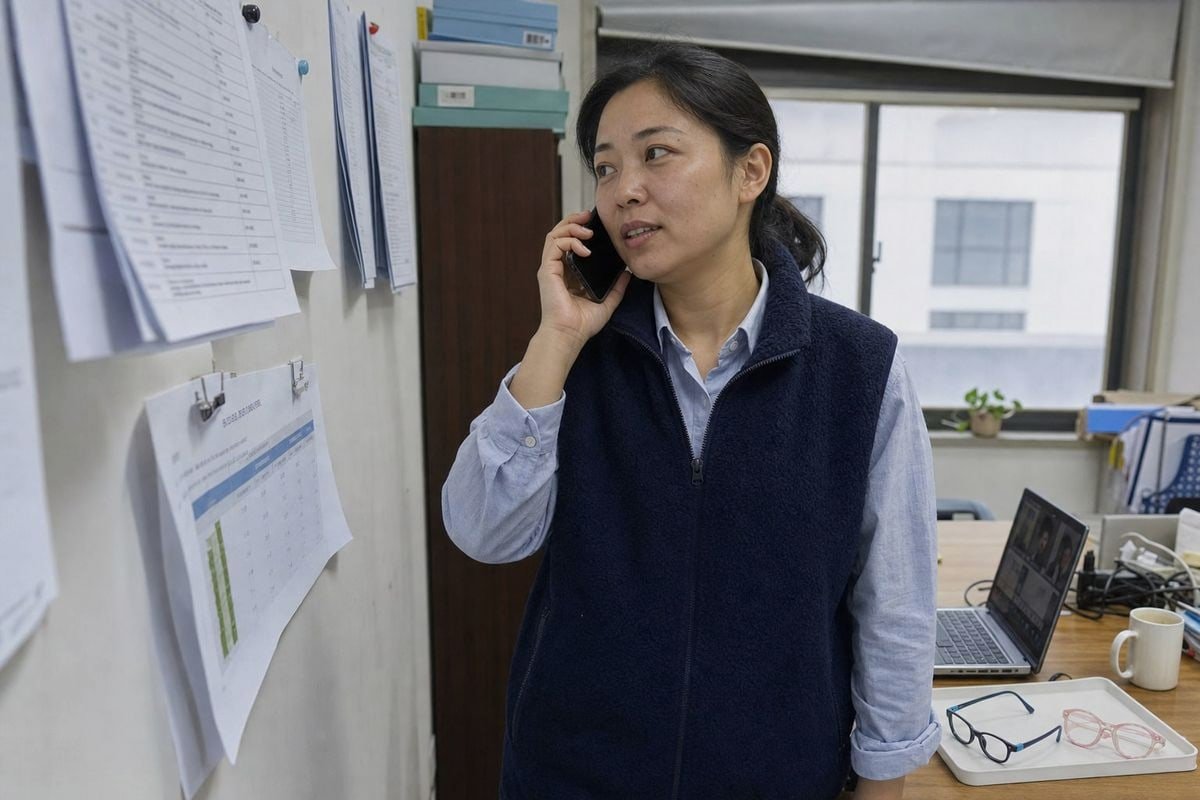
Consistency after training is an operations problem, not a content problem. The kids eyewear market is projected to grow from roughly USD 12.3 billion in 2024 to over USD 20 billion by 2032, which means new competitors, new staff, and constant drift pressure. Franchise networks feel this hardest, because each location has its own manager, culture, and habits.
Build a reinforcement rhythm
Multi-unit retail management works on rhythms, and training should follow the same logic:
| Cadence | Activity | Owner |
|---|---|---|
| Weekly | 5-minute floor check: one fit demo, one parent script | Store manager |
| Monthly | Micro-module (new style, seasonal talking point) | Supplier / HQ |
| Quarterly | Recertification quiz + dashboard review by store | HQ training lead |
| Per collection | Updated modules matched to new stock | Supplier |
| Twice yearly | Mystery-shopper or audit visit | Franchise operations |
Use data to target weak stores, not blanket everyone
Automated tracking through B2B e-learning platforms shows you which stores lag on completion or fail quizzes. Target coaching there. Blanket retraining wastes strong stores' time and breeds resentment. Some networks also use small instant rewards for staff who complete new product modules during quiet hours — a light-touch incentive that keeps momentum without heavy cost.
Keep the supplier in the loop
When we onboard a new multi-location buyer, we schedule refresher content around their reorder cycle, so training arrives with the stock it describes. Staff learn the exact frames on their shelves, not last season's range. That single alignment step does more for consistency than any poster or memo.
Conclusão
Online training reaches every store's screen; only enforcement, hands-on practice, and refresher rhythms reach every store's floor. Choose a kids optical frames supplier who invests in both — that partnership protects your brand everywhere.
Notas de rodapé
1. Authoritative manufacturer site explaining the properties of the TR90 material mentioned in the article. ↩︎
2. Professional clinical guidance on the specific standards for fitting spectacles to pediatric patients. ↩︎
3. Overview of supply chain management principles, relevant to the article’s comparison of training to a supply chain. ↩︎
4. Authoritative resource from the American Optometric Association regarding specialized care and dispensing for children. ↩︎
5. Official site for the National Academy of Opticianry providing professional education and certification resources. ↩︎
6. Wikipedia entry covering eyeglass frame components and standard sizing measurements including temple length. ↩︎
Mais Artigos que Você Pode Gostar

5 de agosto de 2026
Acetato de Celulose Bio-Baseado vs. Regular: Qual a Diferença para Armações Infantis?

5 de agosto de 2026
Quão Recicláveis São os Materiais de Armações Ópticas Infantis e Quais Alternativas Ecológicas Existem?

5 de agosto de 2026
As Armações Ópticas Infantis Branqueiam ou Envelhecem em Armazenamento e Como Controlar as Condições do Armazém?
Procurando um Parceiro Confiável em Óculos Infantis?
Explore mais de 800 estilos prontos e suporte completo OEM/ODM adaptado à sua marca.
Entre em Contato English
  Español de México
  Deutsch
  Français
  日本語
日本語  العربية
  Português do Brasil