Kids Sunglasses with TR90 & TPEE Frames: PC, Nylon, or Acrylic Lenses?
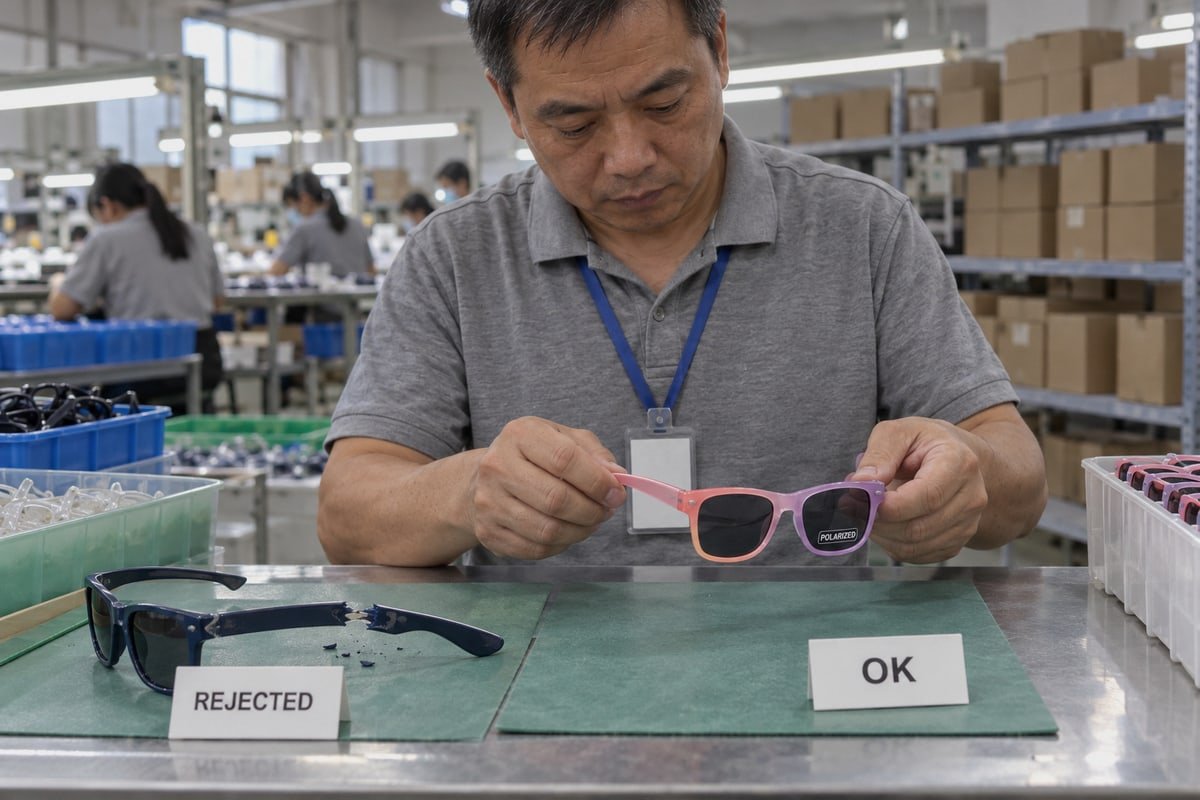
Buyers often show our sales team kids sunglasses with TR90 and TPEE frames from other suppliers that snapped or shattered. That risk is exactly why our workshop pairs materials carefully.
Kids sunglasses with TR90 and TPEE frames work best with polycarbonate lenses. PC lenses offer high impact resistance and block 100% of UVA and UVB rays. Nylon lenses are a premium upgrade with sharper optical clarity, while acrylic lenses are a budget option that can shatter and suit only fashion-first use.
The frame and the lens solve two different problems. The frame handles bending, sitting, and dropping. The lens handles sunlight and impact. Below, I walk through both choices, then explain how we combine them and what to check before you place an OEM order.
How do I choose between TR90 and TPEE frames for kids' sunglasses that need to be both flexible and safe?
During a bend test on our Taizhou line, a TR90 front twisted flat and sprang back, while a TPEE sample folded softly without any spring. Both passed. Both feel different.
Choose TPEE frames for babies and toddlers who need soft, rubber-like, hingeless unbreakable sunglasses. Choose TR90 frames for older children and juniors who need lightweight shape memory, crisp styling, and long-term surface stability. Both are flexible and safe; age and activity decide which fits better.
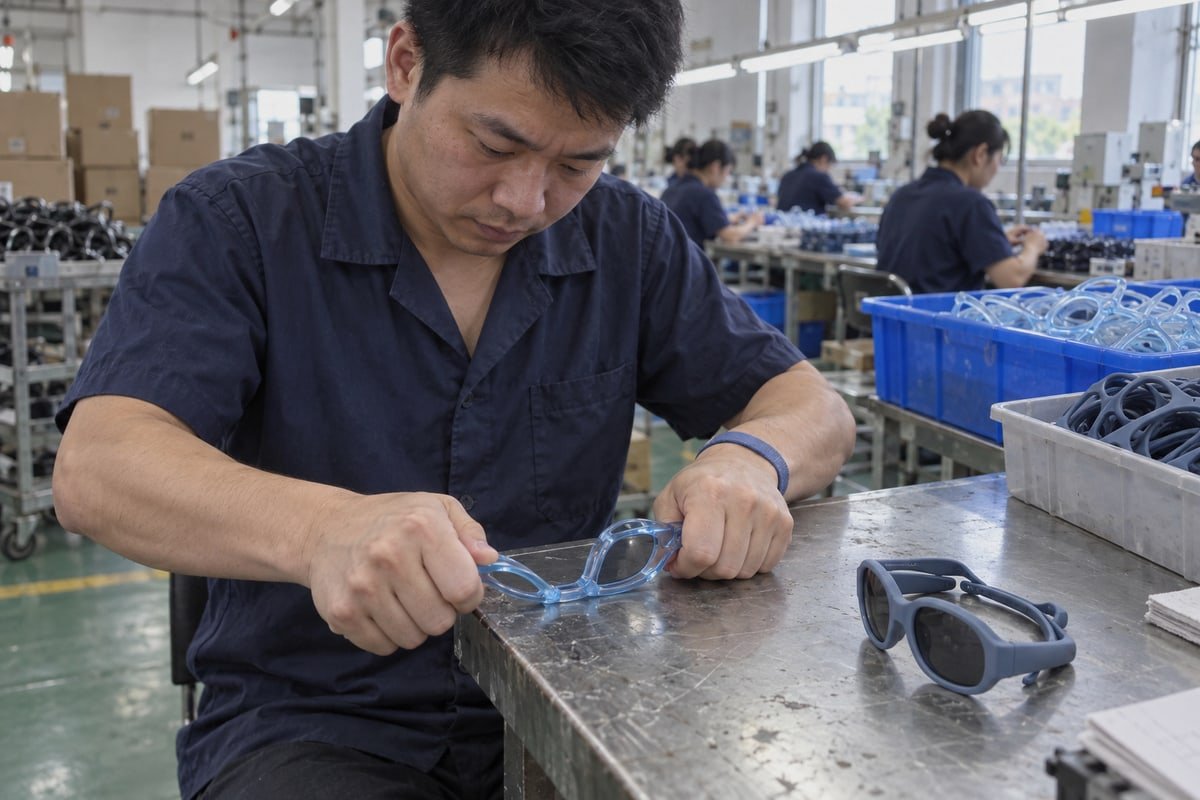
The two materials share one goal. They both belong to the family of flexible frame technology built for small, active faces. But they get there by different routes, and those routes matter when you pick a style for a specific age group.
What TR90 does well
TR90 is a nylon-based thermoplastic polyamide. Its signature trait is shape memory. You can bend a TR90 front almost flat, and it returns to its original form without cracking. It is also very light. Light frames matter more for children than adults, because a heavy frame causes nose-slide on a small, developing nose bridge. When the glasses slide, the lenses sit out of alignment and the child pushes them up all day or takes them off.
TR90 also keeps its surface well. It resists skin oils and heat 1, so a frame worn every day through a hot summer stays smooth rather than turning sticky. Our translucent gradient fronts, like the coral-to-lavender wayfarer in our catalog, depend on that clean surface to keep their glossy look.
What TPEE does well
TPEE is a thermoplastic elastomer. Think of it as a hybrid between rubber and plastic. It feels soft in the hand and folds instead of springing. That softness is why the industry treats TPEE as the standard for truly unbreakable sunglasses 2 aimed at toddlers. Many TPEE designs are molded as hingeless monoblocks. There are no screws and no tiny metal parts, which removes a choking hazard for infants.
TPEE has one known weakness. It is more prone to plasticizer migration 3 than TR90. Over long exposure to sweat and heat, a lower-grade TPEE surface can become slightly tacky. We manage this with material grade selection and finish control, but it is a real difference buyers should understand.
| Feature | TR90 frame | TPEE frame |
|---|---|---|
| Feel | Firm, springs back | Soft, folds and recovers |
| Best age group | Older kids and juniors | Babies and toddlers |
| Hinge | Usually needs a hinge | Often hingeless monoblock |
| Weight | Very light | Light |
| Surface stability | Excellent against skin oils and heat | Can soften or turn tacky over time |
| Styling | Crisp shapes, translucent and gradient colors | Rounded, chunky, candy colors |
The objection: do older kids even need this?
Some buyers tell me their teen range should use acetate for a more grown-up look. That is a fair point. Older children who are careful with their glasses can wear acetate. But I would still ask two questions. Does the child play sport? Does the child share a bag with a water bottle and a lunch box? If yes to either, TR90 gives you the styling range plus the durability. In our experience, the teen who breaks a frame does not blame the material. The parent blames the brand.
Both materials are chosen from environmentally friendly, BPA-free grades in our workshop. Both give you hypoallergenic frames that sit against skin all day without irritation.
Which lens material—polycarbonate, nylon, or acrylic—offers the best UV and impact protection for children?
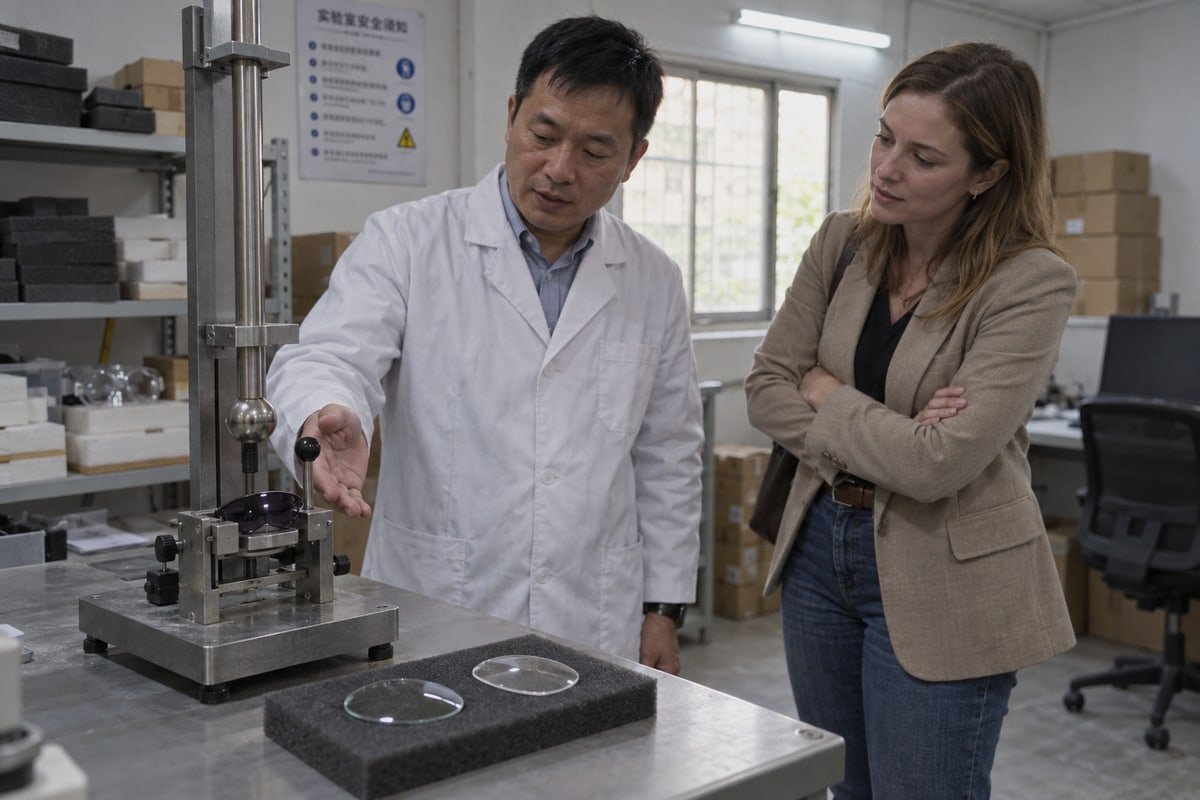
A procurement manager from Australia once asked me why our quote listed PC lenses when a cheaper acrylic version existed. I answered with a drop test, not a price sheet.
Polycarbonate lenses give children the best combination of UV and impact protection. PC is shatter-resistant and blocks 100% of UVA and UVB rays. Nylon lenses match that safety with higher optical clarity at a higher cost, while acrylic lenses offer poor impact resistance and can break into sharp fragments.
Here is the quick view before the detail.
| Lens material | Impact resistance | UV protection | Optical clarity | Weight | Cost | Best use |
|---|---|---|---|---|---|---|
| Polycarbonate (PC) | Very high, shatter-resistant | Blocks 100% UVA/UVB by nature | Good, Abbe value around 30 | Light | Medium | Default for kids and sports |
| Nylon | Very high | Full UV with coating or tint | Excellent, Abbe value around 52 | Lighter than PC | Higher | Premium kids' sports and optical programs |
| Acrylic | Low, can shatter into sharp pieces | Depends entirely on coating | Fair | Light | Lowest | Toy-grade or fashion-only lines |
Why PC is the default in our factory
Polycarbonate is the lens you see in most serious kids' eyewear for one reason. It does not shatter. A child falls face-first on a playground, and the lens dents or scratches instead of splitting. PC is also the material most linked with impact-resistance standards 4 such as ANSI Z87.1 in the US and EN 166 in Europe. Those are safety eyewear standards, not sunglass standards, but they tell you which material engineers trust when eyes are at stake.
PC also blocks UV by nature. The material itself absorbs UVA and UVB. That means UV400 protection 5 does not depend on a thin coating that might wear off.
Where nylon wins
Nylon lenses share PC's toughness but add clearer optics. The Abbe value is the key number. PC sits around 30, nylon around 52. A higher Abbe value means less chromatic aberration 6, so the child sees less rainbow fringing at the edge of the lens. For sensitive young eyes, that reduces strain during long outdoor wear. Nylon is also lighter than PC. When a brand asks us for a premium sports line, nylon is the upgrade we recommend.
Where acrylic falls short
Acrylic appears in wholesale catalogs because it is cheap and easy to tint. A buyer may argue it is fine for a fashion line that children wear at the beach. I understand the margin pressure. But acrylic can crack under a modest impact and break into sharp fragments. For a product that sits millimeters from a child's eye, I do not think the saving is worth the exposure. If you need a lower-cost lens, TAC polarized lenses on a TPEE or TR90 frame are a safer middle path.
Tint is not protection
Category 3 lenses are the standard dark tint for bright daylight. But darkness controls glare, not UV. A dark acrylic lens without a proper UV filter can make the pupil open wider and let more UV in. Every lens we ship is tested for UV400 protection separately from its tint. Polarized lenses add glare reduction on water and snow. A scratch-resistant coating extends the life of PC, which is the softer of the two safe materials.
Can I mix TR90 frames with TPEE temples to get better comfort and durability for active kids?
Every hybrid frame we design forces one trade-off: a stiffer TR90 front holds the lens securely, but a soft TPEE temple must still grip the ear without pinching.
Yes. Mixing a TR90 front with TPEE temples is a proven approach for active kids. The TR90 front keeps lenses stable and holds shape after bending, while soft TPEE temples flex around the ears, reduce pressure points, and survive twisting. The combination improves comfort and durability without adding weight.
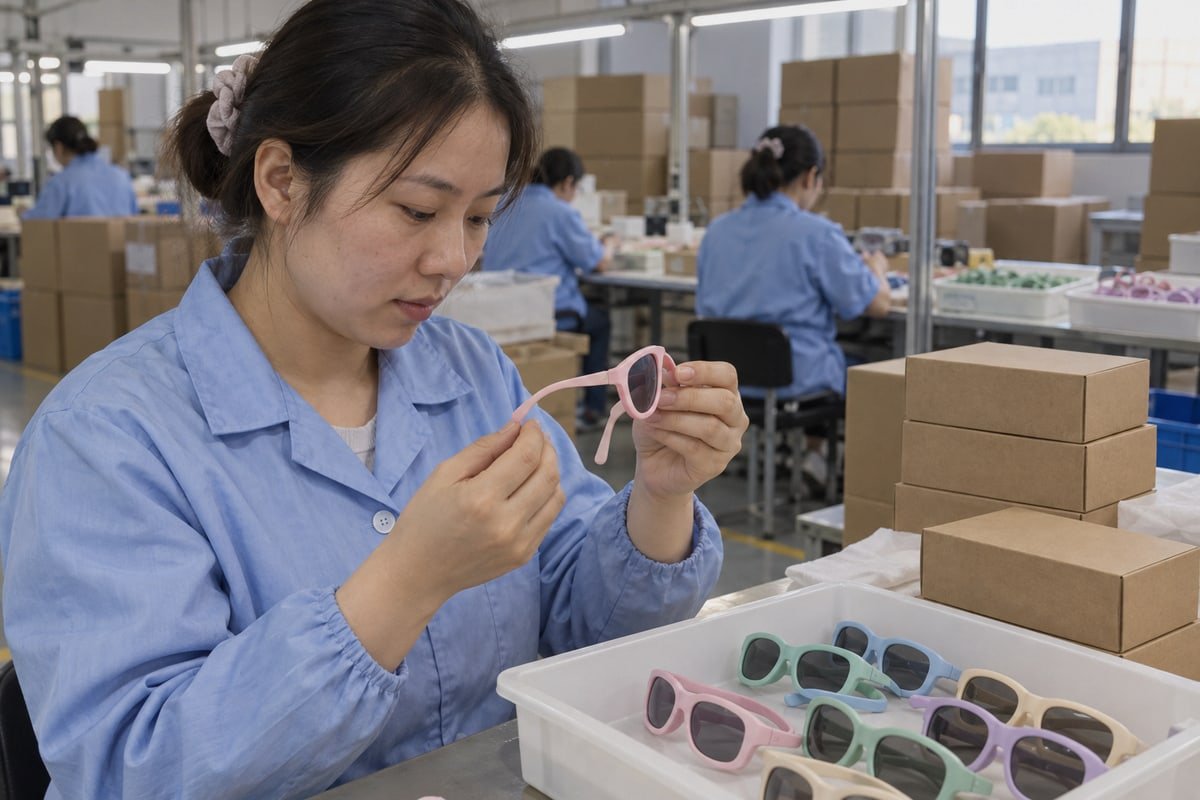
This hybrid is one of the most requested constructions in our catalog, and it is not a marketing gimmick. Each material sits where its strengths matter most. The lens rim needs rigidity so the lens does not pop out on impact. The temples need softness because they touch skin, bend behind ears, and get grabbed by small hands when the glasses come off.
How we build the hybrid, step by step
- Mold the TR90 front. The front is molded with the lens groove sized for the exact PC or nylon lens thickness. TR90 grips the lens firmly, so the lens stays put during a fall.
- Cold-glaze the lenses. TR90 must never go into a standard optical heat pan. Heat can shrink the material or destroy its memory properties permanently. Our technicians press lenses in at room temperature with the correct groove tolerance.
- Mold the TPEE temples. The temples are molded in a solid matte color that contrasts with a translucent front, like our sky-blue crystal front paired with pastel blue temples.
- Join the two parts. We use a simple, low-profile hinge with parts secured so nothing works loose over time. For toddler styles we move to a hingeless design instead.
- Test the assembly. Temples are flexed outward repeatedly, and the whole frame is twisted, to confirm the joint between the firm front and the soft temple does not become the weak point.
Comfort benefits parents notice
The soft temple tip is the part a parent feels when they check the fit. TPEE spreads pressure along the ear instead of concentrating it at one spot. Combined with a light TR90 front, the glasses stay in place with less clamping force. Less clamping force means less nose-slide and fewer red marks after a long day outside.
Durability in real life
Kids' glasses are sat on, stuffed into backpacks, and pulled off by the temple with one hand. That one-handed pull is what kills rigid frames at the hinge. A TPEE temple simply gives way and comes back. The TR90 front takes the sitting and the drops. Together they cover both failure modes.
One caution: the hybrid still needs the right TPEE grade. Because the temple contacts skin and sweat, plasticizer migration would show up there first. We specify grades that stay dry to the touch, and we keep the surface finish consistent with the front so the frame looks like one product, not two parts bolted together.
What should I look for when sourcing an OEM factory for custom TR90 or TPEE kids' sunglasses?
Fifteen years in eyewear taught our team one lesson: a material name on a quotation means little until you see the workshop, the pellets, and the test reports behind it.
Look for a real factory that can name its exact material grade, such as Grilamid TR90, show UV400 and impact test reports, prove CPSIA and EN compliance, offer existing styles to reduce mold risk, and provide full OEM/ODM support for colors, logos, lenses, and retail-ready packaging.
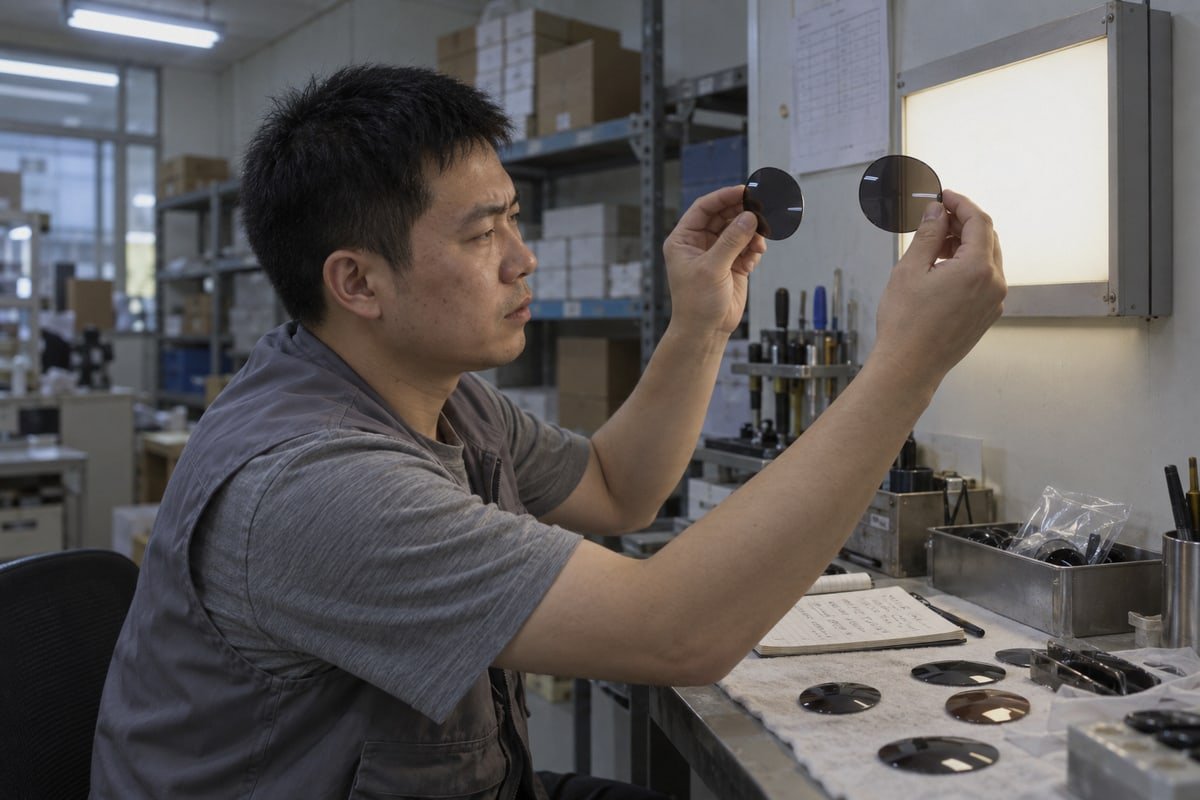
Sourcing kids sunglasses with TR90 and TPEE frames is different from sourcing adult fashion frames. The end user cannot judge quality for themselves. The parent trusts your brand, and your brand trusts the factory. That chain only holds if you verify a few specific things.
Marketing language versus material reality
Supplier listings use broad words: TR90, nylon, TPEE, flexible, unbreakable. The quality behind those words varies with formulation, finish, hinge design, and lens coating. The single most useful habit is to ask for the exact grade. Specifying Grilamid TR90 by name, rather than accepting a generic TR90 label, tells you whether the factory knows what it is buying. Ask the same about TPEE and about the PC lens supplier. A factory that hesitates here is usually a trading company passing along someone else's description.
A practical checklist
| What to check | Why it matters | What a good answer looks like |
|---|---|---|
| Material grade | Generic labels hide quality gaps | Named grade, such as Grilamid TR90, plus BPA-free and hypoallergenic confirmation |
| UV400 protection reports | Tint does not equal UV blocking | Test report per lens color, not one report for the whole range |
| Impact resistance | Kids fall and drop glasses | PC or nylon lenses, drop and flex testing described in detail |
| Regulatory testing | Children's products face strict rules | Support for CPSIA compliance in the US and EN testing in Europe, with reports from recognized labs |
| Existing style library | Molds are expensive and slow | A deep catalog you can customize without new tooling |
| OEM/ODM depth | You need a branded product, not a blank | Custom colors, logos, lens options, packaging, and accessories |
| Factory reality | Trading companies cannot control QC | Worker count, workshop management, and a factory visit or live video |
Why existing styles lower your risk
Our catalog holds about 800 existing styles. A new brand can pick a TR90 front, choose TPEE temple colors, add polarized or UV400 lenses, and print a logo without investing in molds. That lets you test three or four styles in a small run, see what sells in your market, and then decide whether a fully custom mold is worth it. Importers in Japan and Europe often start this way and move to custom tooling in the second season.
Full OEM/ODM support and consistent QC
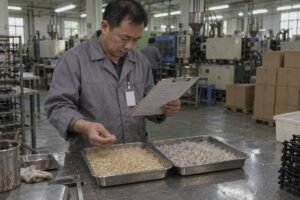
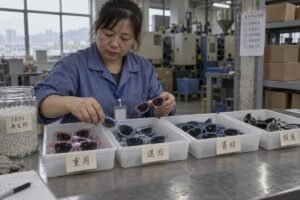
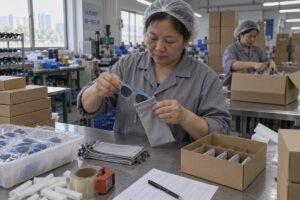
Custom color is where most kids' eyewear projects go wrong. A translucent gradient front, like our coral-to-lavender wayfarer, needs color control at the pellet stage and again at molding. Our 5S-managed workshop with around 120 workers runs inspection at molding, at lens assembly, and at final packing. We also handle packaging design, cases, cleaning cloths, and hang tags so the product arrives retail-ready.
The last thing I would check is communication. Ask a technical question and watch how long the answer takes and how specific it is. A long-term partner explains trade-offs. A low-price supplier only quotes.
Conclusion
Broken frames and lenses cost brands trust. Pair TR90 or TPEE frames with PC lenses, upgrade to nylon when budget allows, and source from a factory that proves its materials.
Interested in sourcing the products mentioned in this article? See details and request a quote here:
Footnotes
1. ISO standards define the testing protocols for material resistance to environmental stressors like heat and oils. ↩︎
2. Wikipedia provides a comprehensive overview of the design and durability standards for various types of sunglasses. ↩︎
3. Peer-reviewed NCBI article detailing the mechanisms and safety implications of plasticizer migration in plastic products. ↩︎
4. ANSI establishes the primary safety requirements and testing methods for impact resistance in protective eyewear. ↩︎
5. The CDC offers authoritative guidance on the importance of UV protection for maintaining long-term ocular health. ↩︎
6. The Abbe number is a critical scientific measure used to quantify chromatic aberration in optical materials. ↩︎
More Articles You Might Like
Looking for a Reliable Kids Eyewear Partner?
Explore 800+ ready styles and full OEM/ODM support tailored to your brand.
Get in Touch English
  Español de México
  Deutsch
  Français
  日本語
日本語  العربية
  Português do Brasil