カスタムキッズサングラスのモールド開発における生産リードタイムはどのくらいですか?
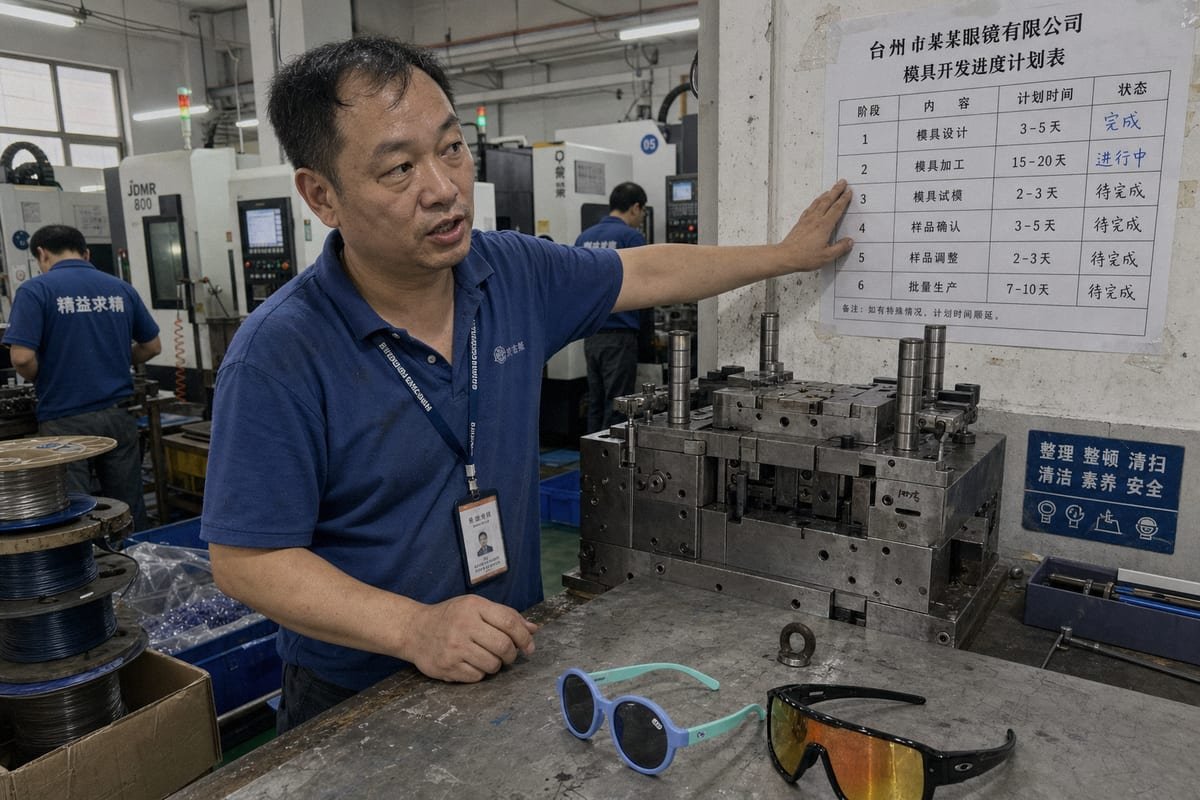
バイヤーはカスタムキッズサングラスのモールド開発における生産リードタイムについてよく尋ねてきます。見積もりを逃すと、発売シーズンが過ぎてしまいます。当社の工場ではこの痛みを繰り返し見てきましたので、実際の数字をお伝えします。.
カスタム子供用サングラスの金型開発は、通常、デザイン確定から量産まで45〜90日かかります。金型および治工具の段階だけでも通常20〜45日、サンプリングに7〜15日、量産に30〜50日が必要です。複雑なデザインの場合は3〜6ヶ月かかることもあります。.
その範囲は広いので、内訳を説明します。この記事では、各段階、何が遅延の原因となるか、そしてそれに対応する方法を説明します。.
新しいキッズサングラスのスタイルを発売する際に、金型開発の時間を短縮するにはどうすればよいですか?
昨年の春、あるヨーロッパのベビーブランドが夏の小売シーズン前に厳しい締め切りを持って当社に来ました。モールドを急ぐのではなく、回避可能な遅延をすべて取り除くことで、数週間でタイムラインを圧縮しました。.
最初の段階で完全な技術仕様書を提出し、CADデザインを迅速に承認し、TR90やTPEEなどの実績のある素材を選択し、3Dプリントされたプロトタイプを使用して早期のフィードバックを得て、修正ラウンドを制限し、社内で金型を管理する垂直統合型の工場と協力することで、金型開発時間を短縮できます。.
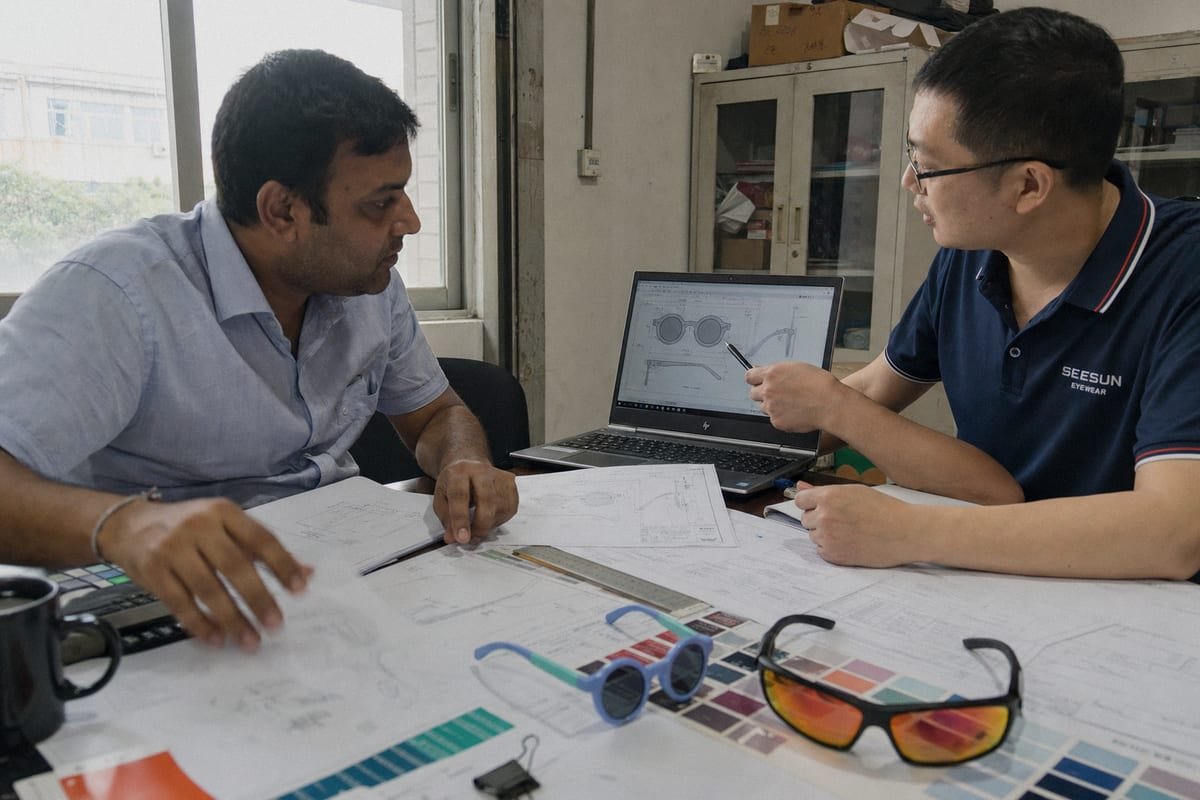
最も遅いステップが全体のスケジュールを左右します。したがって、目標は1つの段階をスピードアップすることではありません。目標は、段階間のデッドタイムをなくすことです。当社の経験では、 OEMアイウェア製造プロジェクト for brands in 20+ countries, most delays come from waiting — waiting for design approval, waiting for sample feedback, waiting for a revised drawing.
完全なテックパックから始める
完全なテックパックは、他のどの単一のアクションよりも多くの時間を節約します。それには、 3D CADファイル 1 または参照フレーム、対象年齢グループの正確な寸法、レンズ仕様、ヒンジタイプ、カラーコード、ロゴの配置を含める必要があります。エンジニアが完全なパッケージを受け取ると、, 技術図面 2 は3〜5日かかります。情報が少しずつ入ってくると、同じステップに3週間かかることがあります。.
鋼材切断前にラピッドプロトタイピングを使用する
鋼材を切断する前に、3DプリントまたはCNC加工されたサンプルを製造することがよくあります。このプロトタイピングとサンプリングのステップは、最初に7〜15日追加されますが、後で高価なモールド修正サイクルを防ぎます。プリントされたプロトタイプを変更するには1日かかります。硬化された工具を変更するには2週間以上かかります。.
迅速に対応し、改訂を制限する
迅速なバイヤーがどのように異なるかを示す簡単な比較を次に示します。
| ステップ | 迅速なバイヤー | 遅いバイヤー |
|---|---|---|
| CAD設計承認 | 1〜2日 | 1–2 weeks |
| サンプルフィードバック | Consolidated in one email | 複数の散在するコメント |
| 改訂ラウンド | 1 round | 3+ rounds |
| 材料決定 | 工具前にロック | プロジェクトの途中で変更 |
| 全体で節約された時間 | 最大3〜4週間 | ベースライン |
最後に、タイミングが重要です。オフシーズン、夏のラッシュ前にプロジェクトを予約すると、モールドが他の20個の工具の後ろにキューイングされなくなります。.
子供用眼鏡のカスタム金型を注文する際のリードタイムに影響を与える要因は何ですか?
当社のラインでの1つのプロジェクトは、この教訓を明確に教えてくれました。紙の上では似ているように見える2つのフレームでも、詳細を調べると、完全に異なる工具のタイムラインを持つ可能性があります。.
リードタイムは、フレームの複雑さ、素材の選択、金型の種類、工場の作業負荷、サンプリングラウンド、および安全テストによって異なります。シンプルな単色TR90フレームは最も速く仕上がります。デュアルカラー射出成形、一体型フレキシブルヒンジ、季節的な工場の混雑、CPSIAまたはEN71コンプライアンス検証は、それぞれ2〜4週間追加される可能性があります。.
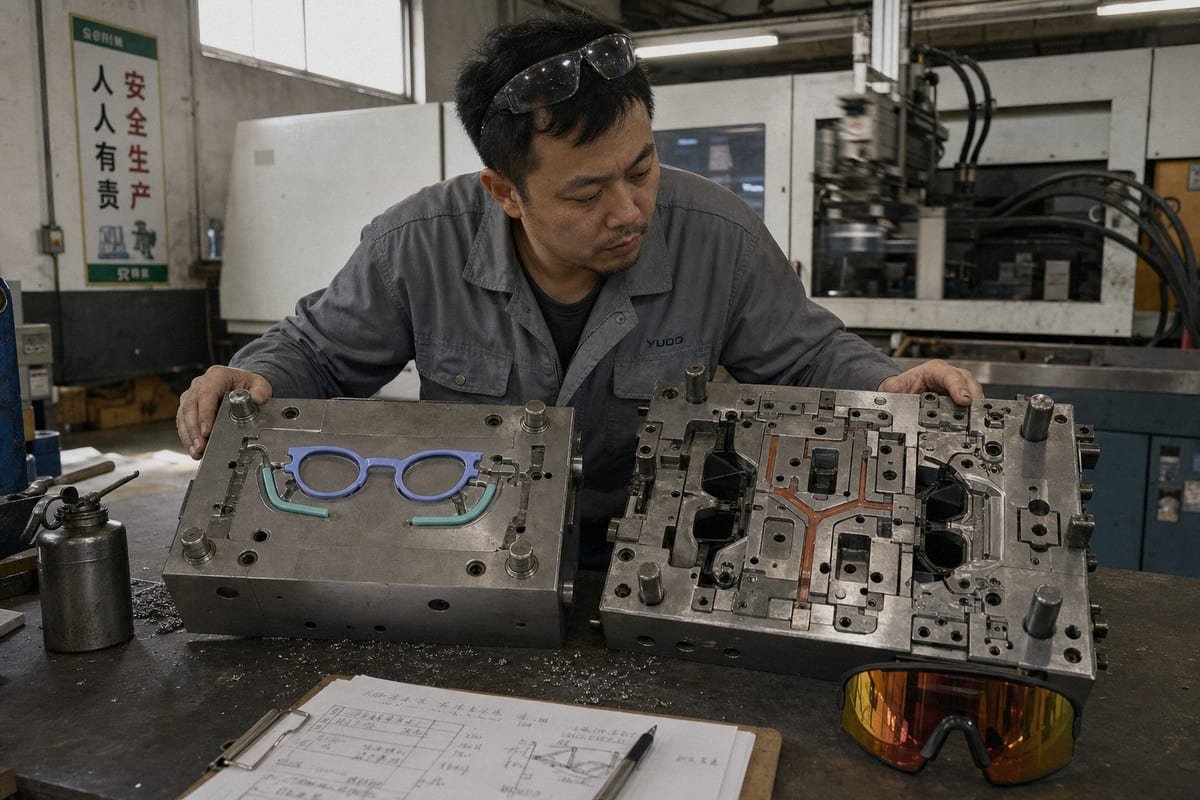
サプライヤーの見積もりにはこれらの変数が隠されていることが多いため、各要因を詳しく説明させてください。.
設計の複雑さ
当社が製造するパステル調のツートンカラーのキッズラウンドスタイルのような、丸みを帯びたワンピースフレームは、比較的単純な工具を使用します。角張ったブロウバー、セグメント化されたヒンジ、ゴム引きのテンプルチップを備えたラップアラウンドスポーツシールドには、より多くのキャビティの詳細とより多くの試写が必要です。デュアルカラーインジェクション(オーバーモールド)が最大の乗数です。2色モールドは、実質的に同期した2つの工具であるため、それ自体で最大2ヶ月かかる場合があります。.
材料の選択
射出成形プロセスは、ポリマーによって異なる動作をします。TR90素材は、 標準ポリカーボネート 3, とは異なる流れと収縮をするため、モールドには特定の冷却チャネル構成が必要です。当社が 柔軟な子供用テンプル 4, に使用するTPEEは、完成した部品を柔らかくかつ寸法安定に保つために、慎重なゲート設計が必要です。子供用フレームは小さいため、大人用フレームでは目立たない収縮エラーが、幼児の顔ではフィットの問題になります。一部の工場では、設計中にAI駆動のモールドフロー解析を実行して、鋼材を切断する前に収縮を予測し、その後のモールド修正サイクルを削減しています。.
子供向け製品のコンプライアンスとテスト
Children's eyewear is regulated more strictly than adult fashion frames. A golden sample from the final mold 5 typically goes to a lab for CPSIA安全基準 6 or EN71 verification. Plan a 10–14 day buffer for this before mass production begins.
Factory Schedule and Season
| 要因 | Typical Impact on Lead Time |
|---|---|
| Simple single-color frame | Baseline: 20–30 days tooling |
| Dual-color overmolding | +20–30 days |
| Integrated flexible hinge | +1–2 weeks |
| Peak season / holiday congestion | +2–3 weeks |
| Compliance lab testing | +10–14 days |
| Imported components (special lenses) | +1–3 weeks |
Chinese New Year and pre-summer peak season in manufacturing hubs regularly add two to three weeks of queue time. If your supplier quotes an aggressive timeline during these windows, ask how they will actually deliver it.
既存の金型を選ぶべきか、それともブランドのために新しいカスタム金型に投資すべきか?
A procurement manager from Australia once asked me this exact question during a video call. My honest answer surprised her: for a first launch, I usually recommend against a new mold.
既存の金型を選択してください。新しいブランドを立ち上げるとき、市場をテストするとき、またはスピードが必要な場合です。色のカスタマイズ、レンズ、ロゴ、パッケージングは、依然としてブランド製品を作成します。新しいカスタム金型への投資は、需要が証明され、真にユニークで保護されたデザインが必要な場合にのみ行ってください。.
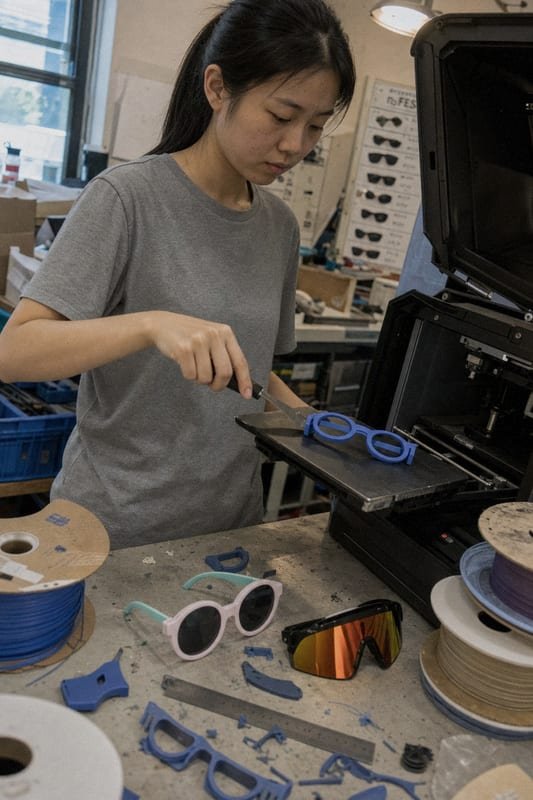
This is not a sales pitch for one option. It is a risk calculation, and I have watched buyers get it both right and wrong.
The Case for Existing Molds
Our factory maintains roughly 800 existing styles. A buyer can pick a proven frame shape, then customize colors, UV400 or 偏光レンズ 7, temple logos, and retail-ready packaging. The result looks fully branded on the shelf. Lead time drops dramatically because tooling fabrication is already done. You skip mold cost entirely, and the fit has already been validated on real children's faces across many production runs.
The Case for a New Custom Mold
A new mold makes sense when your design is genuinely distinctive — a signature silhouette, a patented hinge, or a shape tied to your brand identity. It also protects you: a mold you paid for is typically exclusive to you. But it demands upfront investment, a 45–90 day development window, and enough order volume to amortize the tooling cost.
Side-by-Side Comparison
| Consideration | Existing Mold + Customization | 新しいカスタム金型 |
|---|---|---|
| Lead time to bulk goods | 30~45日 | 45–90+ days |
| Tooling investment | アクティブな子供のための安全性 | Significant upfront cost |
| Design exclusivity | Shared shape, unique branding | Fully exclusive |
| Market-testing risk | 低 | 高い |
| Fit validation | Already proven | Needs pilot run testing |
| に最適 | New brands, importers, promo buyers | 3,000〜5,000個以上 |
A Practical Middle Path
Many of our long-term partners do both, in sequence. They launch with existing molds, learn which shapes and colors sell, and then invest in custom tooling for their best performer. Some factories also use modular mold bases, where only the cavity inserts are customized. This approach can reduce development time by up to 30% when a brand launches multiple sizes for different age groups.
金型開発のタイムラインに合わせて生産スケジュールをどのように計画すればよいですか?
Every year, a few buyers contact us in March hoping to have custom-molded sunglasses in stores by June. The math rarely works, and I would rather explain why now than apologize later.
発売日から逆算してください。金型開発と製造に45〜90日、コンプライアンステストに10〜14日、航空便または船便の輸送に5〜40日を確保してください。実際には、小売発売の5〜7ヶ月前に完全にカスタムされたプロジェクトを開始してください。.
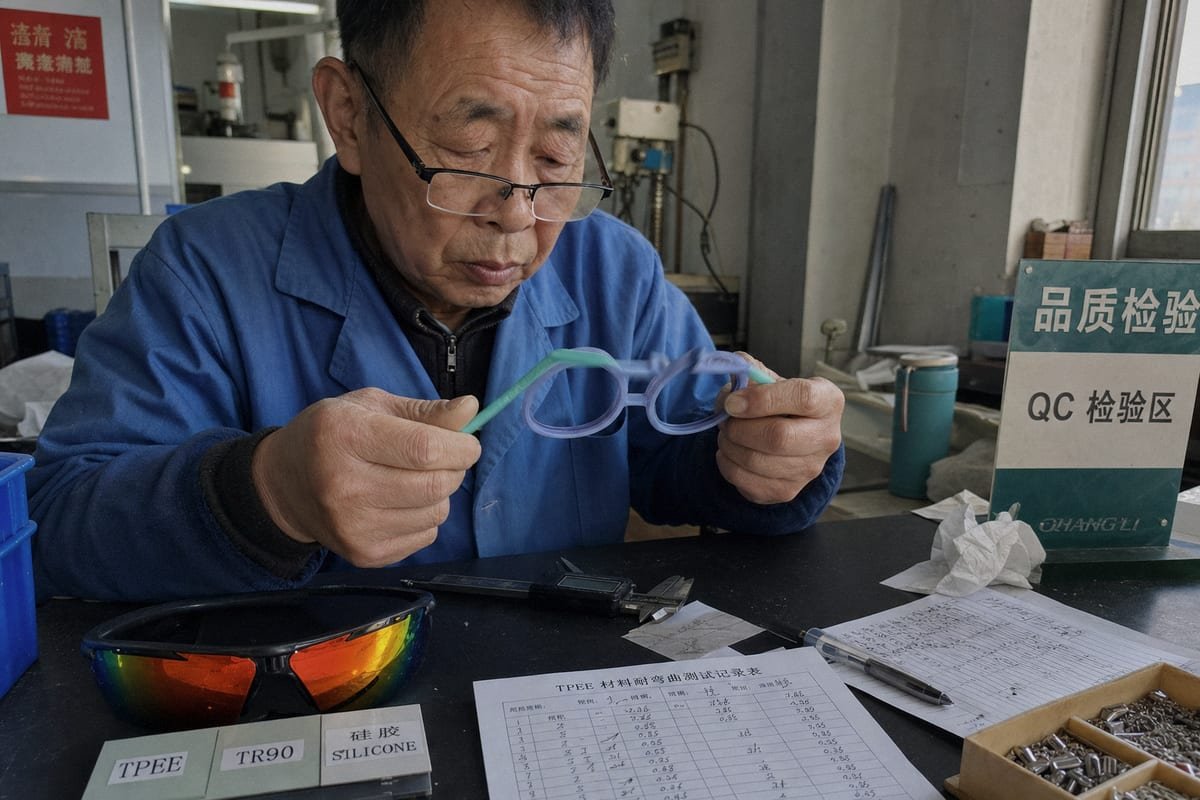
Planning backward is the only reliable method. So let me walk through the stages the way we schedule them on our own production line.
The Stage-by-Stage Timeline
- Design and CAD approval — 3–7 days. Technical drawings are prepared and confirmed. Your speed of CAD design approval directly sets the pace here.
- Prototyping and sampling — 7–15 days. 3D-printed or machined samples verify shape and fit before tooling begins.
- Tooling fabrication — 20–45 days. The steel mold is machined, polished, and assembled. Complex two-color tools sit at the long end.
- First off-tool samples and pilot run testing — 7–14 days. We shoot trial parts, check dimensions, test hinge strength, and confirm the fit on the target age group. Any mold modification cycle adds 7–20 days here.
- Golden sample and lab verification — 10–14 days. CPSIA or EN71 testing runs on parts from the final mold.
- Mass production timeline — 30–50 days. Injection, lens cutting, assembly, quality control, and packing.
- Shipping — 5–7 days by air, 25–40 days by sea. Freight is always separate from the manufacturing quote.
Build In Buffers, Not Hope
Add a two-week buffer for revisions and a further two to three weeks if your schedule crosses Chinese New Year or peak season. One real-world rush case I know of squeezed fully custom-molded sunglasses into a 35-day delivery window — and even the supplier admitted it sat at the edge of what was physically possible. Do not build your business plan on the edge case.
Also, read supplier quotes carefully. When a factory says 30 days, ask exactly what that covers. Some quotes include only tooling. Others include tooling plus sampling. Very few include compliance testing, packaging, and freight. Aligning definitions upfront prevents the most common scheduling disaster: two parties agreeing on a number while meaning different things.
結論
Custom mold development is slow because every stage depends on the last. Plan 45–90 days minimum, add buffers, or launch faster with existing molds — then invest in tooling once demand is proven.
脚注
1. Technical definition of the digital design files required for mold development. ↩︎
2. International standards for technical drawings in engineering and manufacturing. ↩︎
3. Technical properties of the common thermoplastic used in eyewear manufacturing. ↩︎
4. Official site for Hytrel TPEE, a material commonly used for flexible eyewear components. ↩︎
5. General engineering overview of the molding process and mold types. ↩︎
6. Authoritative Wikipedia entry providing a reliable, accessible overview of the federal safety statute. ↩︎
<span id="footnote
 English
  Español de México
  Deutsch
  Français
  日本語
日本語  العربية
  Português do Brasil