How to Verify Kids’ Sunglasses Labeling Meets Optical Industry Standards?
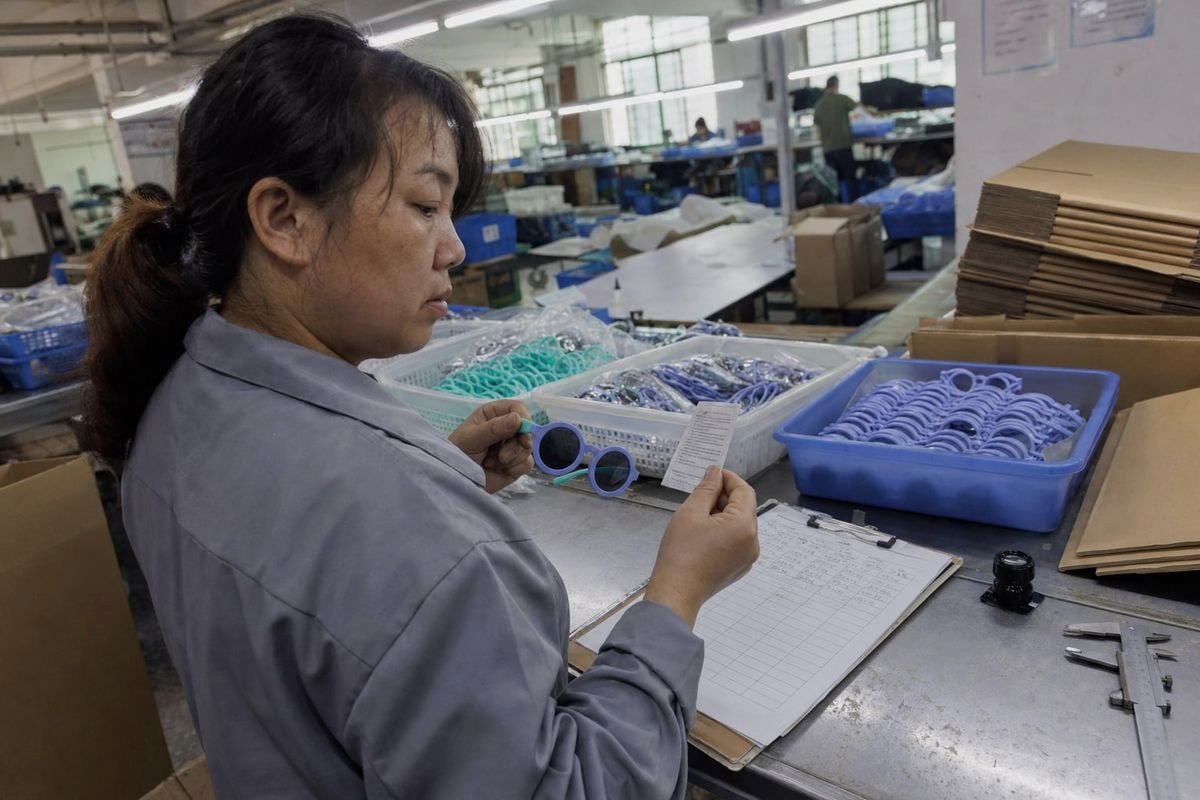
Kids’ sunglasses labeling questions land in my inbox weekly. Buyers send us samples with impressive “UV400” stickers, then ask our factory team one thing: is any of this actually verified?
To verify kids’ sunglasses labeling meets optical industry standards, check for the legal conformity mark for your target market, the manufacturer’s identity, the lens filter category, a UV400 or 100% UVA/UVB claim, required usage warnings, and a reference to the applicable standard such as ISO 12312-1 or ANSI Z80.3.
That checklist sounds simple. The hard part is knowing which rules apply in which market, and how to prove each claim. Let me walk you through it step by step.
What labeling and certification standards should I check before importing kids' sunglasses?
A buyer from Australia once returned a sample to our Taizhou factory because the swing tag showed a lens category description written for the EU market. That mistake taught us both something: there is no single global rulebook.
Before importing kids' sunglasses, verify the standard for your specific market: CE marking under ISO 12312-1 for the EU, UKCA for the UK, ANSI Z80.3 and FDA impact resistance rules for the US, the mandatory sunglasses standard in Australia, and BSMI verification for Taiwan.

The biggest mistake I see new brands make is treating "kids' sunglasses standards" as one global rule set. It is not. A product can be fully compliant in Germany and technically mislabeled in Sydney. So the first job is to map your target markets against the standards that govern each one.
The main standards by region
Here is the comparison table we share with new customers before we quote any private-label project:
| Market | Key standard / rule | Required mark | Notable labeling duty |
|---|---|---|---|
| EU | ISO 12312-1 1 (PPE Regulation) | CE marking | Filter category, manufacturer identity, driving suitability |
| UK | ISO 12312-1 equivalent | UKCA | Same core items as EU, UK-specific mark |
| USA | ANSI Z80.3 + 21 CFR 801.410 | FDA registration/listing | Impact resistance certification, CPSIA items for children |
| Australia | Mandatory sunglasses standard | Compliance labeling | Lens category number, warnings, supplier identity |
| Taiwan | BSMI inspection scheme | BSMI verification mark | Registration number, UV400 and filter classification on packaging |
Notice how the compliance route 2 differs. In Europe, sunglasses are personal protective equipment, so CE marking requirements 3 apply and the label should trace back to ISO 12312-1 compliance. In the US, the logic is device-based: sunglasses lenses must be certified as impact resistant, and children's products add a second layer of consumer-safety rules. Australia runs a mandatory standard with clear label content demands, including the lens category number and any required warning statements.
Some consumer sites will tell you UV400 protection is the whole story. It is not. UV filtration is one property. Optical standards also cover visible light transmission, refractive quality, distortion, and impact resistance testing 4. Verify the framework first, then the claims within it.
How can I confirm my supplier's UV400 and safety claims are backed by real test reports?
In our 15 years making children's eyewear, the most uncomfortable conversations happen when a buyer asks a supplier for the lab report behind a UV400 sticker — and gets silence. That silence tells you everything.
Ask your supplier for a third-party lab test report that names the exact standard tested, the model number, the test date, and the lab's accreditation. Cross-check the report against your samples, and confirm UV transmittance, visible light transmission, and impact resistance results appear in the data.

A printed "UV400" claim costs nothing. Real verification costs a lab fee and a few weeks. So treat every claim as unproven until you see the paper behind it. Here is the process we recommend to our B2B customers, and it is the same process we follow internally before releasing any of our roughly 800 existing styles for export.
A five-step verification process
- Request the full report, not a certificate summary. A one-page "certificate of conformity" without test data is a marketing document. The real report lists measured UVA and UVB rays transmittance, usually as a percentage across wavelengths up to 400 nanometers.
- Match the report to your product. Check that the model number, lens material, and lens color in the report match the sample in your hand. Reports for a different SKU prove nothing about yours.
- Verify the lab. Reputable reports come from accredited third-party laboratories. Look up the lab's accreditation number. A report from an unknown in-house lab carries less weight with customs and retailers.
- Check the standard cited. The report should reference ISO 12312-1, ANSI Z80.3 standards, or the Australian standard — whichever matches your market. A generic "UV test" with no named standard is a red flag.
- Confirm impact resistance for the US. For American orders, ask specifically for drop-ball or equivalent impact resistance testing evidence, because FDA rules require lenses to be certified as impact resistant. Polycarbonate lens safety performance usually passes this comfortably, but you still need the documentation.
One nuance worth stating plainly: lens darkness tells you nothing about UV filtration. A nearly clear lens can block 100% of UV, and a very dark lens can fail. Even an optician's photometer check 5, useful as a spot check, does not replace batch-level lab data. For children's products in the US, that data also feeds the Children's Product Certificate, which some brands now link to via a QR code on packaging for batch-level transparency.
What specific information needs to appear on the label and packaging to meet regulations in my target market?
Packaging artwork is where deals get delayed. Our design team once reworked a European client's hang tag three times because the filter category and the crossed-out car symbol kept getting dropped by their graphic designer for "aesthetic reasons."
A compliant kids' sunglasses label must show the manufacturer or supplier identity, the lens filter category number and description, UV protection claims, usage suitability including driving warnings where required, a reference to the applicable standard, and — for US children's products — a CPSIA tracking label.
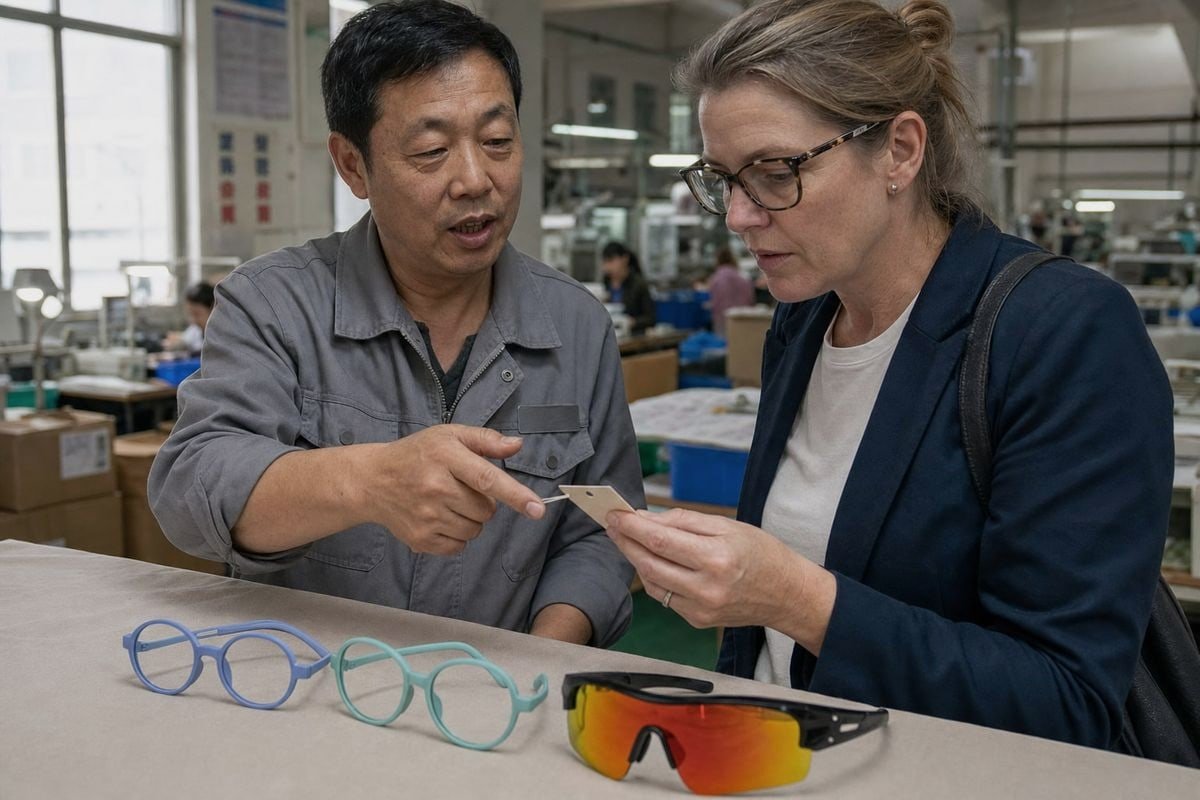
Think of the label as a legal document shrunk onto a hang tag. Each element serves a purpose: traceability, safe use, or proof of conformity. Miss one, and a market surveillance officer or a retail buyer's QA team can reject the whole shipment.
The core label elements, item by item
| Label element | What it looks like | Why regulators require it |
|---|---|---|
| Manufacturer/supplier identity | Company name and address | Traceability and recall accountability |
| Lens/filter category | Number 0–4 plus description | Tells users what light conditions suit the lens |
| UV claim | "UV400" or "100% UVA/UVB" | Communicates the core protective function |
| Usage warnings | Crossed-out car symbol, "not for direct sun viewing" | Prevents unsafe use, e.g., night driving with dark lenses |
| Standard reference | e.g., ISO 12312-1:2022 | Anchors claims to a testable benchmark |
| Conformity mark | CE, UKCA, or BSMI mark | Legal permission to place on that market |
| CPSIA tracking label (US) | Batch, date, production location | Enables batch-specific recalls for children's products |
Filter category deserves special attention for kids' lines. Filter category 3 is the common choice for bright outdoor conditions, and it is what we fit on most of our sport wraparound styles with mirrored gradient lenses 6. Category 4 is too dark for road use and must carry the driving warning. For our flexible TPEE frames aimed at toddlers, we also advise clients to add material safety statements 7 on packaging, since young children chew on temple arms — a real-world behavior standard labels do not cover but retail buyers increasingly ask about.
Language matters too. Australia expects clear, legible English labeling. The EU may require warnings in the language of each member state where the product sells. Plan artwork space for this early, not after printing.
How do I work with my manufacturer to keep labeling compliant across different countries?
Trade-offs come up constantly on multi-market orders. One of our European importers wanted a single universal package for five countries; we had to show them why one smart artwork template beats one lazy universal label.
Work with your manufacturer by agreeing on market-specific labeling requirements at the quotation stage, sharing your target-country checklist, requesting pre-production artwork approval, verifying test reports per market, and building a document pack — test data, declarations, certificates — that travels with every shipment.

Compliance is a shared job, but the brand owner carries the legal responsibility in most markets. So your manufacturer should act as your execution partner, not your regulatory adviser of last resort. In our OEM/ODM projects, labeling is locked in before molds, colors, or logos are finalized — because retrofitting a hang tag after mass production is expensive and slow.
A practical division of responsibilities
| Task | Brand/importer | Manufacturer |
|---|---|---|
| Identify target-market standards | Leads | Advises from export experience |
| Arrange third-party lab testing | Approves and pays or co-funds | Prepares samples, coordinates labs |
| Artwork with marks and warnings | Approves final files | Drafts, prints, applies |
| Conformity documents (DoC, CPC) | Signs and holds | Supplies supporting test data |
| Batch traceability records | Audits | Maintains production records |
A few habits make this partnership work in practice. First, send your manufacturer a written labeling checklist per country before sampling. We keep such checklists updated for our customers across 20+ countries, and they prevent most artwork rework. Second, approve a physical pre-production sample with the actual printed tag, insert, and box — not just a PDF. Third, ask how packaging variants are managed on the line; our 5S-managed workshop separates market-specific packaging by order to avoid mix-ups when one style ships to three regions. Fourth, revisit compliance annually. Standards get revised, and a reference to an outdated version of ISO 12312-1 compliance on your tag can trigger questions at customs.
Finally, think beyond minimum compliance. Polarized lens benefits, neutral-density color accuracy for developing eyes, and food-grade soft materials are not always legally required — but stating them accurately and verifiably on packaging builds retailer trust and shelf appeal.
Conclusion
Unverified labels put children's eyes and your brand at risk. Verify the mark, the manufacturer identity, the filter category, the UV data, and the market-specific warnings — with real documents behind every claim.
Footnotes
1. The official ISO page for the international standard governing sunglasses for general use. ↩︎
2. General overview of regulatory compliance and its importance in international trade. ↩︎
3. Official EU Commission page for Personal Protective Equipment (PPE) regulations. ↩︎
4. FDA regulation specifying the mandatory impact resistance testing for all eyeglass lenses sold in the US. ↩︎
5. Scientific explanation of how photometers measure light intensity and transmission. ↩︎
6. Technical description of different sunglass lens types, including mirrored and gradient options. ↩︎
7. CPSC guidance on safety standards and labeling for children’s products and toys. ↩︎
More Articles You Might Like

August 1, 2026
Should Factory Handle Kids Sunglasses Packaging & Labeling, or Use a Designated Supplier?

August 1, 2026
Own Warehouse vs Supplier Direct Fulfillment: Which Cuts Return Costs for Kids Sunglasses Brands?

August 1, 2026
Direct-to-Port Warehouse or Overseas Staging: Which Saves More on Kids Sunglasses Shipping?
Looking for a Reliable Kids Eyewear Partner?
Explore 800+ ready styles and full OEM/ODM support tailored to your brand.
Get in Touch English
  Español de México
  Deutsch
  Français
  日本語
日本語  العربية
  Português do Brasil