How to Request Age & Face-Shape Size Charts for Kids’ Sunglasses from Suppliers?

On our production line in Taizhou, I have seen buyers order kids’ sunglasses by age label alone — and then face returns because a kids’ sunglasses size chart was never requested properly.
To request age and face-shape size charts for kids’ sunglasses, ask your supplier for a chart combining age bands with lens width, bridge width, temple length, and total frame width in millimeters, plus face-shape fit notes and tolerance data for each SKU.
That is the short answer. Below, I will walk you through exactly what to ask for, why it matters, and how to use the data once you have it.
What information should I include when requesting a kids' sunglasses size chart from my supplier?
A buyer from Australia once emailed us asking simply for "sizes for toddlers." Our sales team had to send three follow-up questions before we could quote accurately. Vague requests waste everyone's time.
Include the target age ranges, the four core frame dimensions — lens width, bridge width, temple length, and total frame width — the measurement unit, face-shape fit notes, material flexibility details, and whether measurements refer to the frame front only or the full assembled frame.
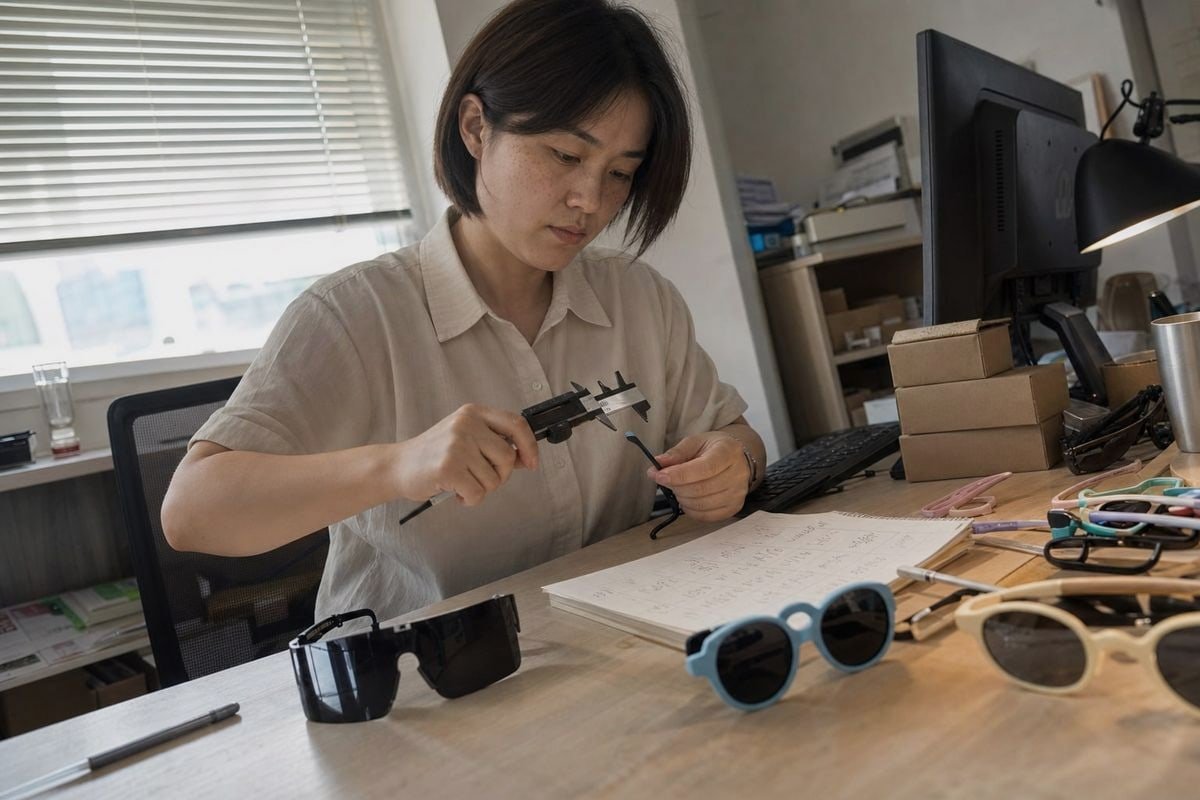
A good request saves weeks of back-and-forth. In my experience exporting to 20+ countries, the buyers who get accurate quotes fastest are the ones who name exact frame dimensions 1 from the first email. Here is what your request should cover.
The Big Three, plus one
Every serious eyewear supplier can measure and report these four numbers. eyewear supply chain 2 Ask for them per SKU, not per collection:
| Measurement | What it means | Why it matters for kids |
|---|---|---|
| Lens width | Horizontal width of one lens | Controls eye coverage and UV400 protection area |
| Bridge width (DBL) | Gap between the two lenses | Children have flatter nasal bridges; a poor bridge causes slipping |
| Temple length | Hinge to temple tip | Arms must reach behind small ears without digging in |
| Total frame width | Outer temple-to-temple at the hinges | Prevents pinching at the sides of the head |
Beyond the numbers
Numbers alone do not tell the whole story. Also request:
- Age band mapping. Ask which age range each SKU targets, such as 0–2, 3–5, or 6–10 years, aligned with standard developmental stages.
- Measurement definitions. Confirm the unit is millimeters. Confirm whether "width" means the frame front only or includes wraparound curvature.
- Fit notes. Phrases like "snug fit for toddlers" or "growth room for school age" help you interpret raw specs.
- Material data. Flexible materials such as TPEE and TR90 change how forgiving a size is. A rigid frame at 118 mm width fits differently than a TPEE flexible frame at the same width.
- A product specification sheet. Ask for a downloadable, printable version. You will reuse it on product pages, in customer support, and in your own retail size guides.
When we prepare quotations at our factory, we attach this data automatically for our ~800 existing styles. If a supplier cannot produce it quickly, that tells you something about their engineering discipline.
How do I match age ranges to face-shape measurements when sourcing children's eyewear?
There is a trade-off I weigh in every new mold project: make a frame narrow enough to stay put on a toddler, or wide enough to last through a growth spurt. You cannot fully have both, so the age-to-measurement mapping must be honest.
Match age ranges to measurements by using published age-to-lens-width benchmarks — roughly 35–37 mm for infants up to 47–52 mm for teens — then adjust for face width, bridge fit, and face shape, treating measurements as the standard and age as the starting point.
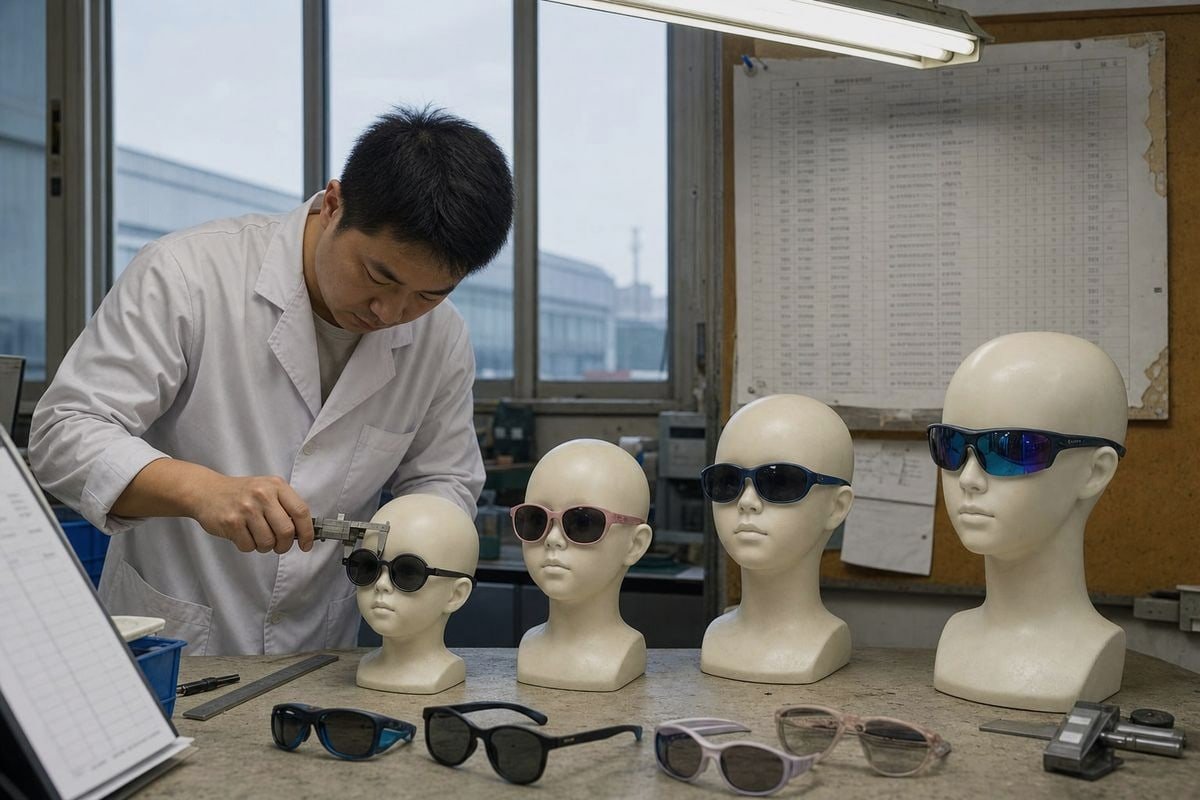
Age is a rough proxy for head size. Two five-year-olds can have very different face widths, bridge heights, and pupillary distances. So the smart sourcing method starts with age benchmarks, then refines with real measurements.
Standard age-to-measurement benchmarks
Here is a consolidated reference table we share with new buyers. It combines commonly published sizing ranges across the kids' eyewear industry:
| Age range | Lens width | Bridge width | Temple length |
|---|---|---|---|
| 0–2 years | 35–42 mm | 14–16 mm | 110–115 mm |
| 2–5 years | 40–45 mm | 15–16 mm | 115–125 mm |
| 5–8 years | 44–48 mm | 16–17 mm | 120–130 mm |
| 8–12 years | 46–50 mm | 16–18 mm | 125–135 mm |
| Teens | 49–52 mm | 16–18 mm | 130 mm+ |
Notice the overlap between bands. That overlap is where measurement-based sourcing beats age-only sourcing.
Where face shape fits in
For adults, face-shape advice 3 drives style selection — angular frames for round faces, rounded frames for square faces. For children, I recommend a simpler translation. Face shape becomes three practical checks:
- Frame width vs face width. The frame should not extend far past the cheeks or press at the temples.
- Lens coverage. Round and heart-shaped young faces usually suit rounder lenses; the lens should cover the eye area fully for UV protection without touching eyebrows or cheeks.
- Bridge stability. Flatter or lower nasal bridges — common in young children and in some regional markets — need a lower, wider bridge design to prevent constant slipping.
If your customers' children already own well-fitting glasses, compare those frame dimensions directly against the supplier chart. That single step catches most sizing mismatches before an order is placed. And if you sell prescription-ready frames, ask for the pupillary distance range each frame supports, so lenses align with a child's developing optical center.
Can I request custom size charts based on my target market's children's facial data?
A Japanese baby-brand client taught me this lesson years ago. Their first samples — sized on European benchmarks — slid down every test child's nose. We rebuilt the bridge geometry, and their reorder rate proved the point.
Yes. Reputable OEM/ODM suppliers can build custom size charts around your market's facial data, adjusting bridge width, bridge height, temple length, and frame curvature — for example, low-bridge or Asian-fit variants — before tooling or when adapting existing molds.
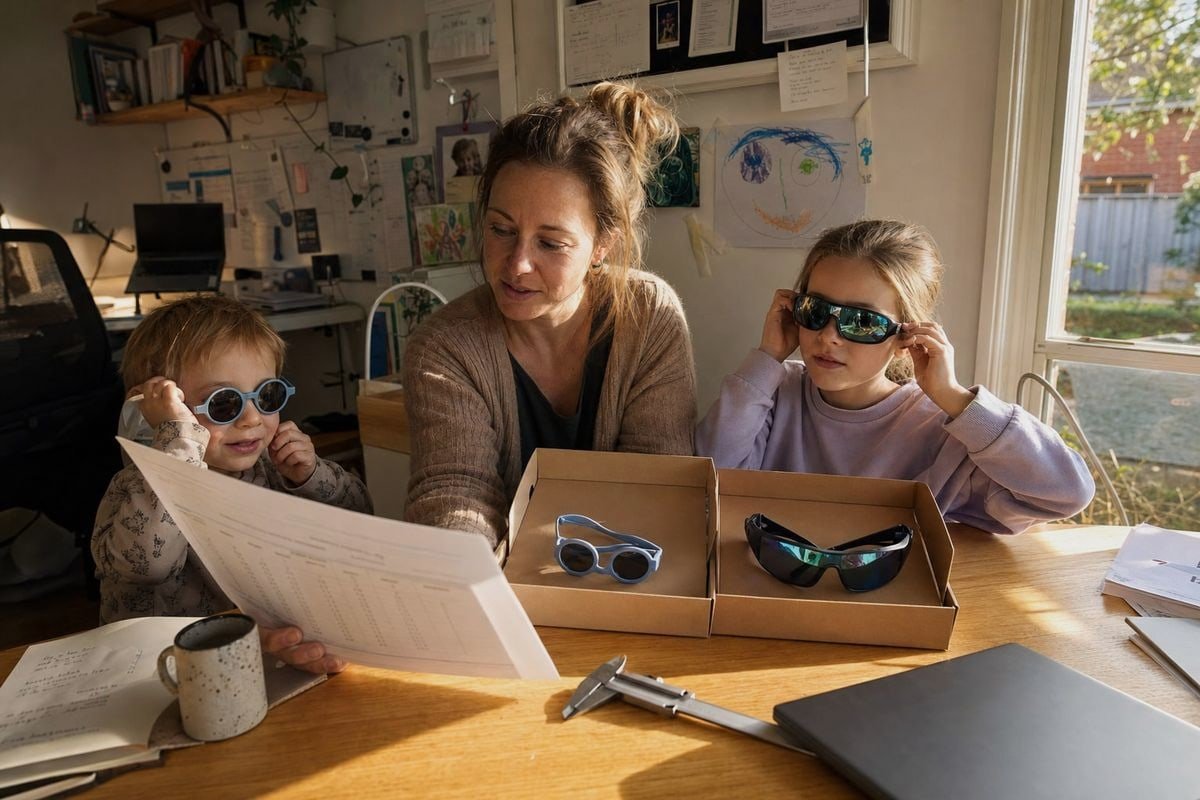
Regional fit is one of the most underused levers in wholesale eyewear sourcing. Children's facial morphology varies by market, and a "Global Fit" frame rarely fits globally. Here is how to approach a custom request.
What you can realistically customize
Not every adjustment requires a new mold. In our OEM/ODM projects, we sort requests into three effort levels:
| Customization | Typical effort | New mold needed? |
|---|---|---|
| Colors, logos, lens tints, packaging | Low | No |
| Nose pad shape, temple length, temple tips | Medium | Sometimes partial tooling |
| Bridge height, frame curvature, full geometry | High | Usually yes |
This is why our ~800 existing styles matter for new brands. You can often find a style whose frame dimensions already match your market's data, then apply private label manufacturing 4 — custom colors, logos, UV400 or polarized lenses, and retail-ready packaging — without heavy mold investment. You test the market at lower risk, then invest in custom tooling once sales justify it.
How to supply your market's facial data
You do not need a full anthropometric study. Useful inputs include:
- Average face width across the temples for your target age bands.
- Notes on bridge structure — for example, whether your market needs low-bridge or unifit designs.
- Measurements from best-selling competitor frames in your market.
- Photos or fit feedback from real wear tests with local children.
Also ask about digital assets. Some buyers now request 3D CAD or STL files 5 to power virtual try-on tools on their e-commerce sites. Ask early whether your supplier can share these, and under what confidentiality terms. Finally, request a sizing tolerance report — a commitment that mass-production batches stay within a tight deviation, such as ±0.5 mm, of the approved chart. Consistent eyewear fit standards across batches are what separate a manufacturing partner from a low-price supplier.
What should I ask my supplier to confirm proper fit and safety across different age groups?
During a 5S audit 6 of our workshop last year, I watched our QC team flex a batch of TR90 kids frames with TPEE temples through repeated twist tests. Fit and safety are not separate topics — a frame that fits badly gets treated roughly, and a fragile frame fails a child fast.
Ask your supplier to confirm material safety and flexibility, UV400 protection, hinge and small-part security, batch-level dimensional tolerance, and age-specific fit checks — no pinching, no slipping, full eye coverage — documented in test reports and a clear specification sheet.
Fit questions and safety questions overlap heavily for children's eyewear. I suggest structuring your supplier conversation as a checklist, split by topic.
Material and construction questions
- What material is the frame and temple? Ask specifically about TPEE and TR90, which bend without snapping — critical when a toddler sits on their sunglasses.
- Are materials environmentally friendly and free of harmful substances relevant to your market's regulations?
- How are hinges secured? Small screws and detachable parts are a hazard for babies and toddlers.
- What lens standard applies? Confirm UV400 protection is genuine and documented, not just printed on the tag.
Fit verification by age group
Ask your supplier to confirm, for each age band you sell:
- Babies and toddlers (0–2): flexible frame, no rigid pressure points, snug wraparound fit, ideally strap-compatible.
- Preschoolers (2–5): stable bridge fit, temple tips that grip without digging in, drop-test durability.
- School age (5–10): slight growth room in total frame width, impact resistance for active play.
- Tweens and teens (10+): near-adult frame dimensions with youthful styling, plus the same lens standards.
Documentation to demand
Before you approve production, request the approved sample's measured specs, the batch tolerance commitment industry standards 7, and photos of real fit on age-appropriate models where available. Ask how deviations are handled — a professional factory will tell you its rework and replacement policy without hesitation. Clear documentation up front is what keeps your customer returns low later.
Conclusion
Request age bands plus exact frame dimensions, use face shape as a secondary cue, and demand documented tolerances and safety data. Do that, and your kids' sunglasses orders will fit — and sell.
Footnotes
1. Authoritative source for optical frame construction. ↩︎
2. Authoritative Wikipedia entry for supply chain concepts. ↩︎
3. Categorization of human face shapes used in aesthetics and eyewear selection. ↩︎
4. Explains the business model of customizing manufacturer designs with unique branding and specifications. ↩︎
5. Standard reference for the STL file format. ↩︎
6. Overview of the lean manufacturing methodology used to maintain quality and efficiency in production facilities. ↩︎
7. Authoritative overview of global sunglasses standards. ↩︎
More Articles You Might Like



Looking for a Reliable Kids Eyewear Partner?
Explore 800+ ready styles and full OEM/ODM support tailored to your brand.
Get in Touch English
  Español de México
  Deutsch
  Français
  日本語
日本語  العربية
  Português do Brasil