How to Organize Kids Sunglasses Lens Grades and UV Protection for Opticians?
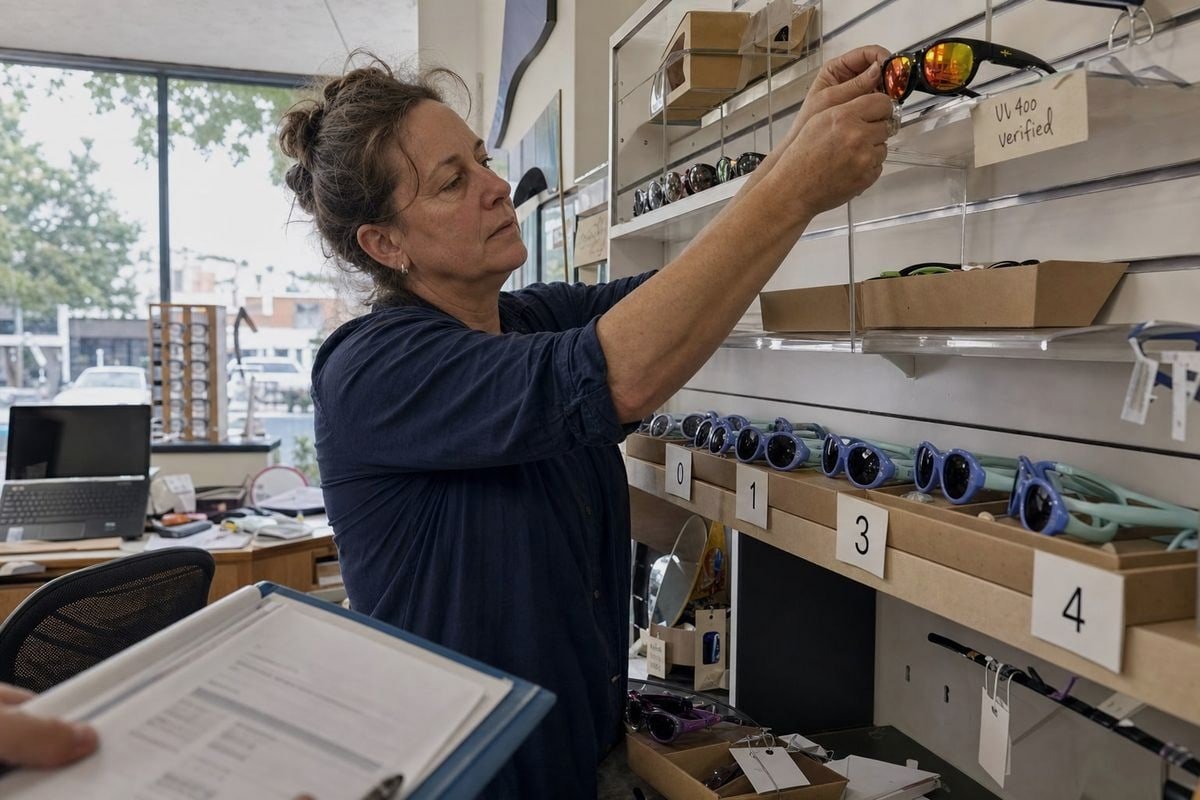
Organizing kids sunglasses lens grades and UV protection confuses many optical buyers. I see it constantly when new optician clients visit our Taizhou factory floor.
Opticians should organize kids sunglasses by UV protection standard first, then by lens category. Stock only UV400 or 100% UVA/UVB certified frames, then sort by ISO 12312-1 categories 0–4, intended use, and age-based fit to guide parents accurately.
The problem is simple. Tint darkness does not equal UV safety. Yet many stores still merchandise by color and brand. That creates real risk for children’s eyes and real liability for your practice. Let me walk you through the system we recommend to our optical partners, based on fifteen years of building kids eyewear.
What UV Protection Standards Should I Follow When Sourcing Kids Sunglasses for My Optical Store?
A buyer from Australia once asked me why two identical-looking dark lenses tested completely differently on a UV meter. That question sits at the heart of safe sourcing, and I never forget it.
Follow UV400 as your baseline standard, meaning lenses block UVA and UVB rays up to 400 nanometers. Require compliance with ISO 12312-1, and look for CE or UKCA marks. Never accept tint darkness alone as proof of UV protection.
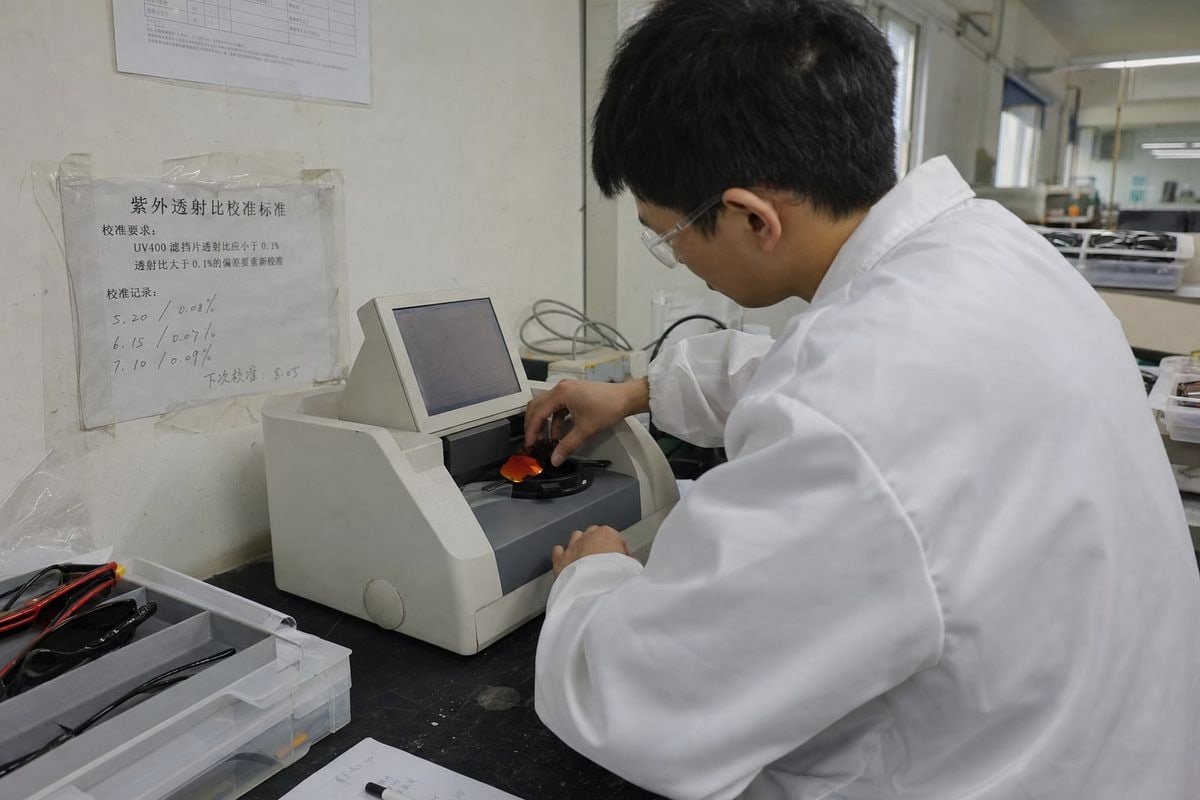
UV protection is the non-negotiable part of your stock system. Everything else is situational. In our export experience across more than twenty countries, the markets with the strictest buyers — Europe, Japan, Australia — all converge on the same core requirement: full-spectrum blocking of UVA and UVB rays 1 up to 400 nm, verified against ISO 12312-1 2 standards.
The Marks That Actually Matter
When you audit a supplier or an existing product line, check for these labels on the frame, lens, or packaging:
| Mark | What It Tells You | Is It Enough Alone? |
|---|---|---|
| UV400 | Blocks wavelengths up to 400 nm | Yes, if verified |
| 100% UVA/UVB | Full ultraviolet blocking | Yes, if verified |
| CE / UKCA | Conformity with EU/UK requirements | No — check category too |
| ISO 12312-1 | Meets the sunglasses filter standard | Strongest combined signal |
| Category number (C0–C4) | Visible light transmission only | No — says nothing about UV |
Here is a nuance worth raising with your team. A CE mark 3 shows conformity, but it does not tell you which lens category the product carries or whether it suits a child. Some buyers assume any CE-marked pair is automatically ideal for kids. It is not. You still need the correct UV labeling and the right tint category for the intended use.
Children deserve extra caution here. Their crystalline lenses 4 transmit more UV to the retina than adult eyes do. A dark lens without genuine UV filtration is arguably worse than no lens, because the pupil dilates behind the tint and lets more unfiltered radiation in. That is why our factory tests lenses against transmission specs before assembly, not after. Ask your supplier when they test — the answer reveals a lot about their process.
How Do I Explain Lens Grades and Categories to Parents Buying Sunglasses for Their Children?
There is a phrase I coach our optical clients to use at the counter, and it works: category means darkness, the UV mark means protection. Parents grasp it in seconds.
Explain that lens categories 0–4 describe visible light transmission, not UV safety. Tell parents to check for UV400 or 100% UV labels first, then choose Category 3 for everyday outdoor play, Category 2 for moderate light, and Category 4 only for extreme glare.
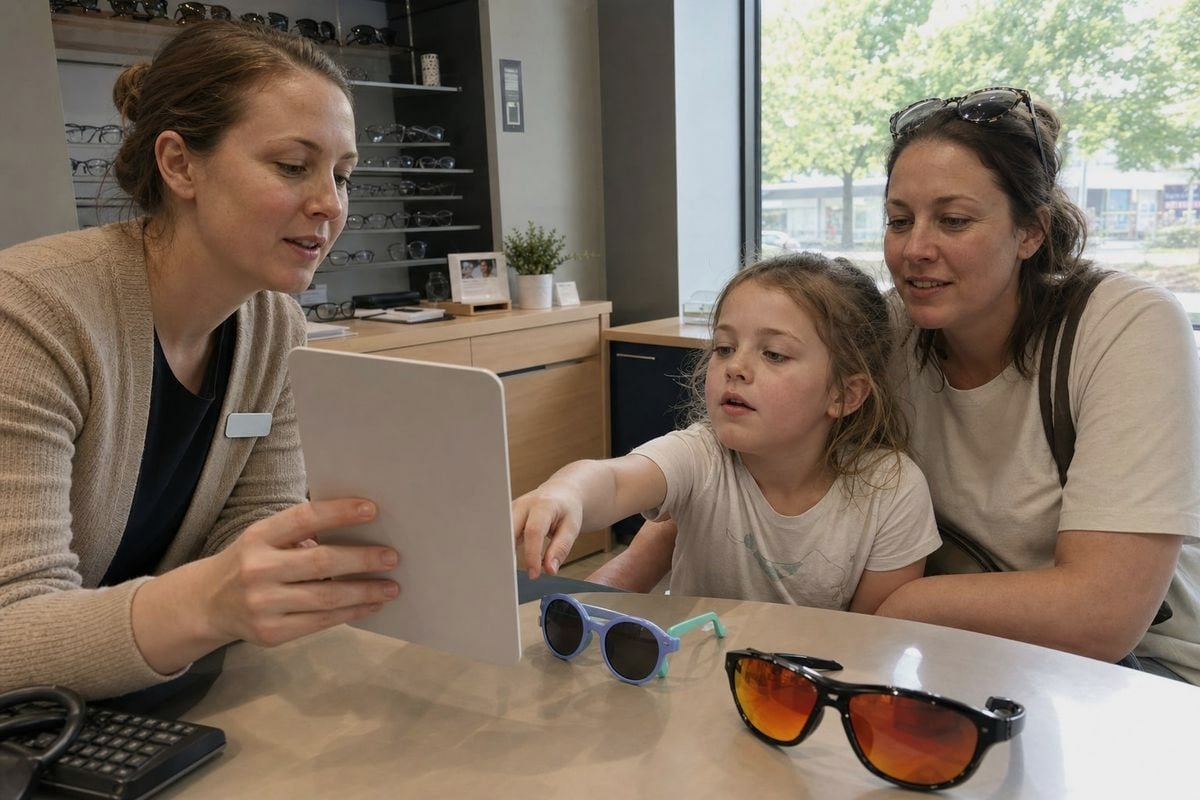
Lens tint categories are where most parent conversations go wrong. Parents often believe darker is safer. Your job is gentle ocular health education, and a simple table on the counter does most of the work for you.
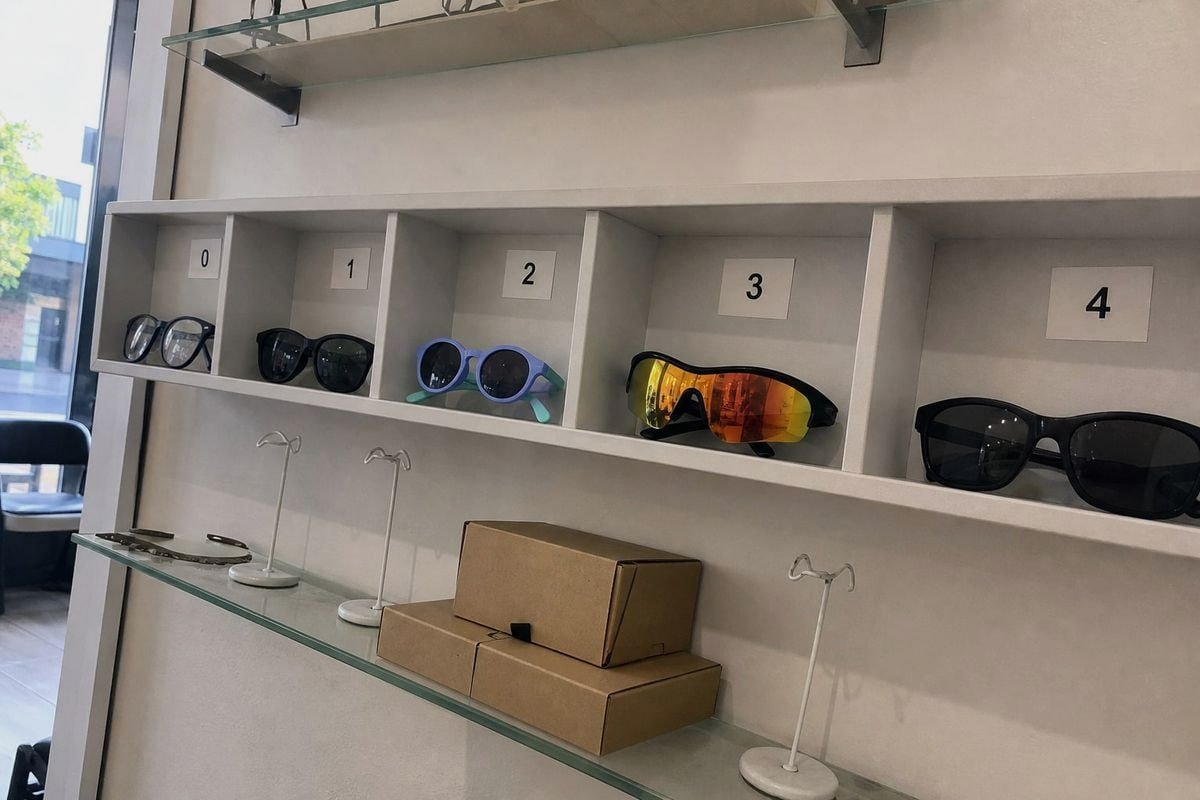
The Five Categories in Plain English
| Category | Visible Light Transmission | Best Use for Kids | Sold as Sun Protection? |
|---|---|---|---|
| 0 | 80–100% | Indoor, fashion only | No |
| 1 | 43–80% | Overcast, light glare | No |
| 2 | 18–43% | Moderate sun, everyday cloudy-bright days | Yes, with UV400 |
| 3 | 8–18% | Bright sun, outdoor play, holidays | Yes — the default choice |
| 4 | 3–8% | Snow, high altitude, open water | Special use only |
Category 3 is the mainstream recommendation for children in everyday bright conditions. It cuts roughly 82–92% of visible light, which is comfortable without impairing a child's vision. Category 4 blocks even more, but it can hamper visibility in normal daylight, so it belongs in a separate "extreme conditions" slot in your display — beach holidays, ski trips, glacier hikes.
One point of tension you may have read: some consumer sources claim Category 1 lenses contain no UV protection at all. The standard-based framing is safer and more accurate. Category describes visible light transmission only. A Category 1 fashion lens can carry full UV400 protection, and a dark Category 3 lens can fail UV testing. Teach parents to separate the two questions completely.
A quick script for your staff: "The number tells you how dark it is. The UV400 label tells you how safe it is. For your child, we start with the safety label, then pick the darkness for how they'll use it." Parents respond well to this because it respects their intelligence without drowning them in optics jargon.
Which Lens Materials Offer the Best Balance of Safety and Clarity for Kids Optical Displays?
During a drop-test session in our QC room last year, we watched a polycarbonate 5 lens survive impacts that shattered a standard glass sample instantly. That demonstration convinced a hesitant European distributor faster than any datasheet could.
Polycarbonate and Trivex offer the best balance for kids, combining inherent UV-blocking, high impact resistance, and light weight. Pair them with flexible TR90 or TPEE frames. Basic CR-39 needs added UV coatings, and glass is too fragile for active children.
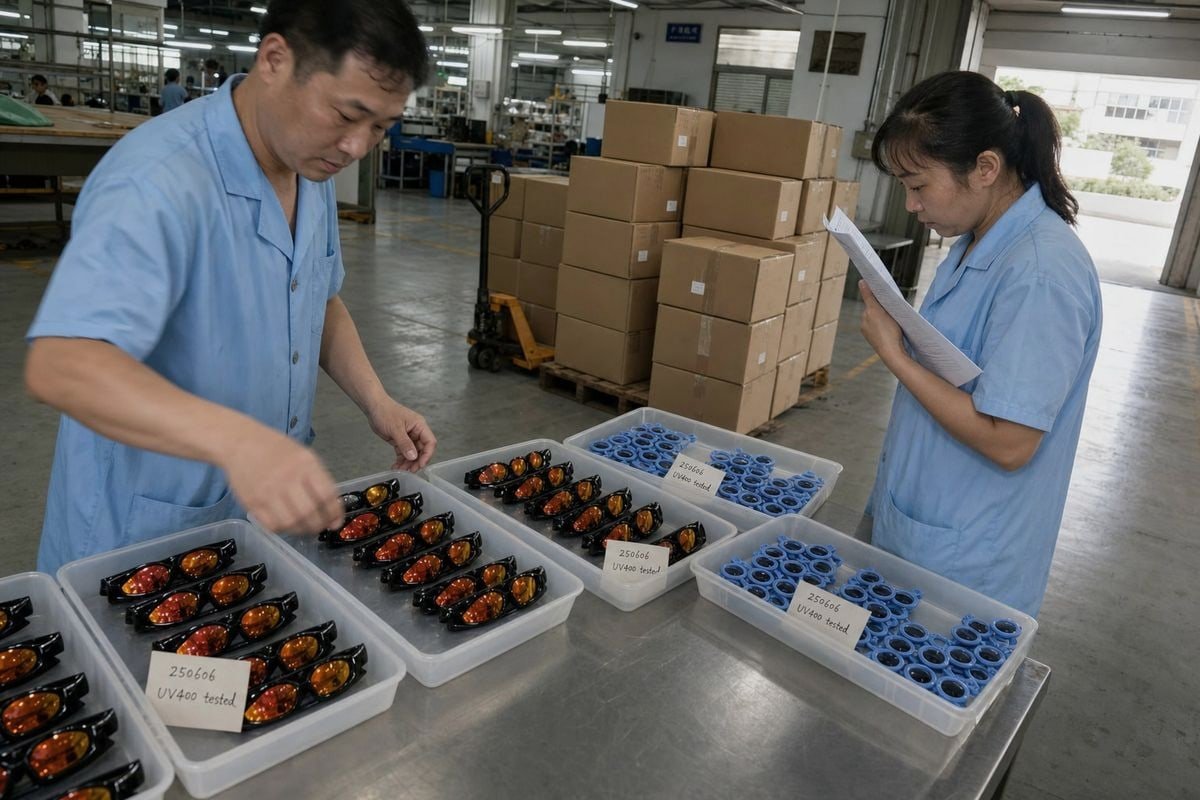
Material choice is where safety and clarity either work together or fight each other. In our production line, nearly all children's sun lenses are polycarbonate for one core reason: the polycarbonate material blocks UV inherently, throughout the lens substrate, not just in a surface coating that can scratch off. That matters for kids, who treat sunglasses roughly.
Comparing the Main Lens Options
| Material | UV Blocking | Impact Resistance | Weight | Notes for Kids Stock |
|---|---|---|---|---|
| Polycarbonate | Inherent, full | Excellent | Very light | The workhorse for children |
| Trivex 6 | Inherent, full | Excellent | Very light | Slightly better optics, higher cost |
| CR-39 | Requires coating | Moderate | Light | Verify UV treatment before stocking |
| Glass | Varies | Poor | Heavy | Avoid for active children |
Clarity deserves equal attention. A safe lens that distorts vision will end up in a drawer. We pay attention to tint chemistry here. Gray lenses keep colors neutral, which suits everyday wear. Amber and brown tints boost contrast, which helps in sports and variable light. Some of our optical clients also ask about blue light protection 7 for lenses kids wear in mixed indoor-outdoor settings; it is a reasonable secondary feature, but it should never replace the UV400 requirement.
Frames complete the safety picture. Our engineers build most kids frames in TR90 with TPEE temples, because those flexible materials bend under stress instead of snapping into sharp fragments. For infants and toddlers, full TPEE construction adds another layer of softness. When you build your display, group by age-appropriate frame material as well as lens grade — TPEE-heavy styles for the youngest wearers, TR90 for school-age children. Wraparound shapes, like the shield styles we produce for sporty kids, add side coverage that reduces peripheral light leakage. UV can still reach the eye from the sides of a flat frame, so fit and coverage are clinical features, not just comfort features.
How Can I Work With a Manufacturer to Ensure Consistent UV400 Quality Across My Kids Sunglasses Range?
One lesson fifteen years in eyewear has taught our team: consistency is a process, not a promise. Any factory can send a good sample. The real question is what arrives in container number five.
Choose a factory partner that tests UV transmission at incoming material inspection and final QC, provides spectral test reports per batch, holds ISO 12312-1 documentation, and offers consistent lens sourcing across reorders. Put UV400 tolerance requirements into your written specification.
Working with a manufacturer on UV consistency comes down to a repeatable verification loop. At our 5S-managed workshop in Taizhou, we run this loop for every optical client, and I recommend you demand something similar from any supplier you evaluate.
A Practical Five-Step Quality Loop
- Write UV400 into the specification. Do not rely on a verbal agreement. State the standard, the acceptable transmission tolerance, and the required compliance marks in your purchase order.
- Verify at material intake. Ask whether the factory tests lens blanks on arrival. We check incoming polycarbonate lenses before they ever reach assembly, because catching a bad batch early costs almost nothing.
- Request batch-level test reports. A spectral transmission report per production run gives you documented proof for your own records and for parents who ask. Some of our clients even link QR codes on hang tags to these lens reports — a strong trust signal at retail.
- Approve a golden sample. Lock the lens supplier, tint formula, and category grade against a sealed reference sample. Reorders get compared to it, so drift is caught before shipment.
- Audit periodically. Whether by third-party inspection or a factory visit, verify the process is still running as agreed.
There is a commercial angle here too. Because we hold around 800 existing styles, new optical brands can build a full UV400-verified range — everyday Category 3 rounds, sporty shield wraps, Category 4 holiday styles — without investing in molds. Full OEM/ODM support then layers on your branding: custom colors, logos, lens options including polarized lenses, and retail-ready packaging. When your entire kids wall shares one verified UV standard, staff training gets easier, shelf tags get simpler ("UV400 + Cat 3 = everyday outdoor play"), and parents stop guessing.
Clear communication matters as much as testing. A supplier who answers technical questions slowly before the order will answer them even more slowly after. Judge responsiveness during sampling — it predicts everything.
Conclusion
Sort by UV400 first, lens category second, use case third. Verify materials, demand batch testing, and educate parents simply. That system protects children's eyes and your store's reputation.
Footnotes
1. Background on ultraviolet radiation spectrum relevant to UV400 lens protection. ↩︎
2. Official ISO standard reference for sunglasses filter and UV protection requirements. ↩︎
3. Official EU source explaining conformity marking referenced for eyewear compliance. ↩︎
4. Background on eye anatomy explaining why children’s eyes need extra UV caution. ↩︎
5. Explains the polymer material used for impact-resistant, UV-blocking children’s lenses. ↩︎
6. Reference explaining this alternative lightweight, impact-resistant lens material for kids eyewear. ↩︎
7. Expert medical guidance from the American Academy of Ophthalmology regarding blue light and eye safety. ↩︎
More Articles You Might Like
August 1, 2026
Should Factory Handle Kids Sunglasses Packaging & Labeling, or Use a Designated Supplier?

August 1, 2026
Own Warehouse vs Supplier Direct Fulfillment: Which Cuts Return Costs for Kids Sunglasses Brands?

August 1, 2026
Direct-to-Port Warehouse or Overseas Staging: Which Saves More on Kids Sunglasses Shipping?
Looking for a Reliable Kids Eyewear Partner?
Explore 800+ ready styles and full OEM/ODM support tailored to your brand.
Get in Touch English
  Español de México
  Deutsch
  Français
  日本語
日本語  العربية
  Português do Brasil