How Do Lens Shape and Rim Depth Limit Prescription Range in Kids’ Frames?
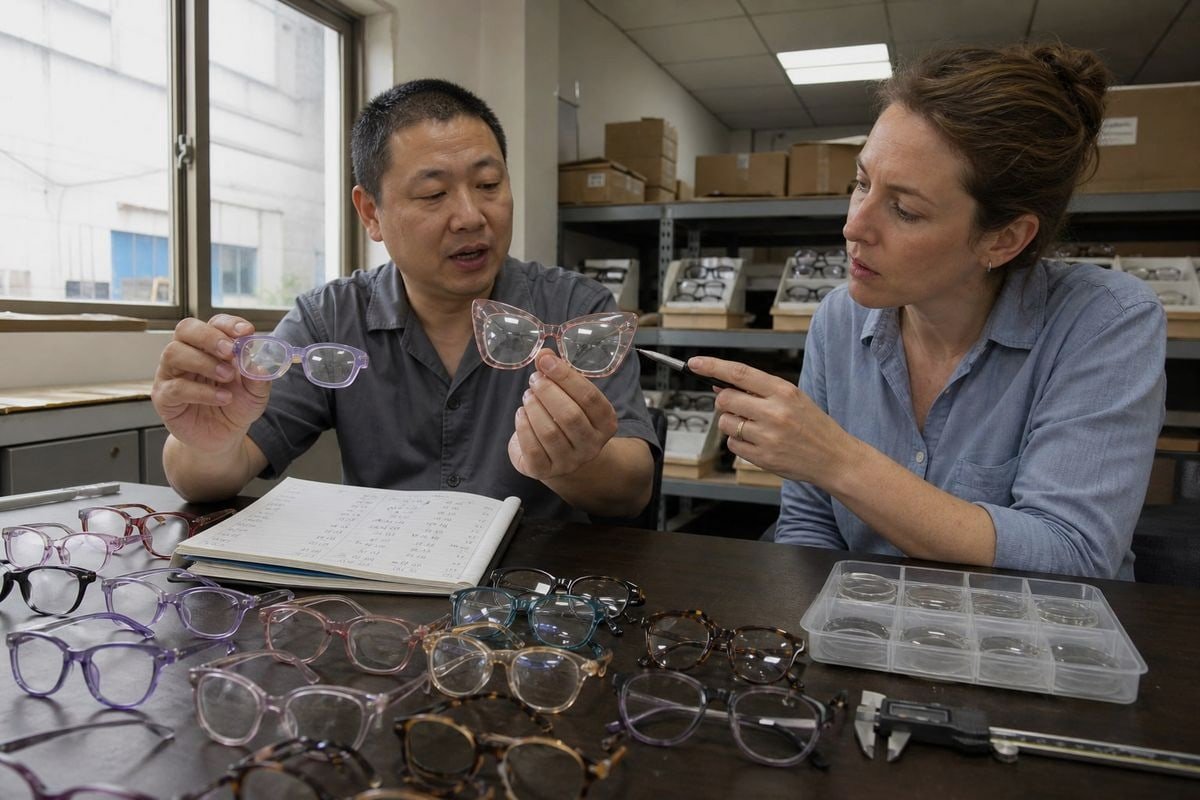
Lens shape and rim depth in kids’ frames decide whether a strong prescription is even wearable. I’ve watched buyers on our production line learn this lesson the expensive way — after the lab rejects a beautiful frame.
Lens shape and rim depth limit prescription range because larger, angular shapes force lens decentration and bigger blank sizes, increasing lens edge thickness and weight, while shallow rims cannot hide or hold thick high diopter prescriptions. Compact, well-centered, full-rim frames support the widest usable prescription range for children.
This is not just an optics-lab problem. It affects which frames your brand should stock, how you spec them, and what you should ask your factory. Let me walk through each part.
How do I know which lens shapes support higher prescription strengths without distortion?
During a sampling review last year, a European buyer asked me why her optician partners rejected an oversized cat-eye kids' style. The answer sat in the geometry, not the styling.
Round and oval shapes support the highest minus prescriptions because they remove thick corner material and keep the pupil near the optical center. Compact rectangular shapes suit strong plus prescriptions if lens height stays modest. Smaller, well-centered shapes always widen the usable prescription range.
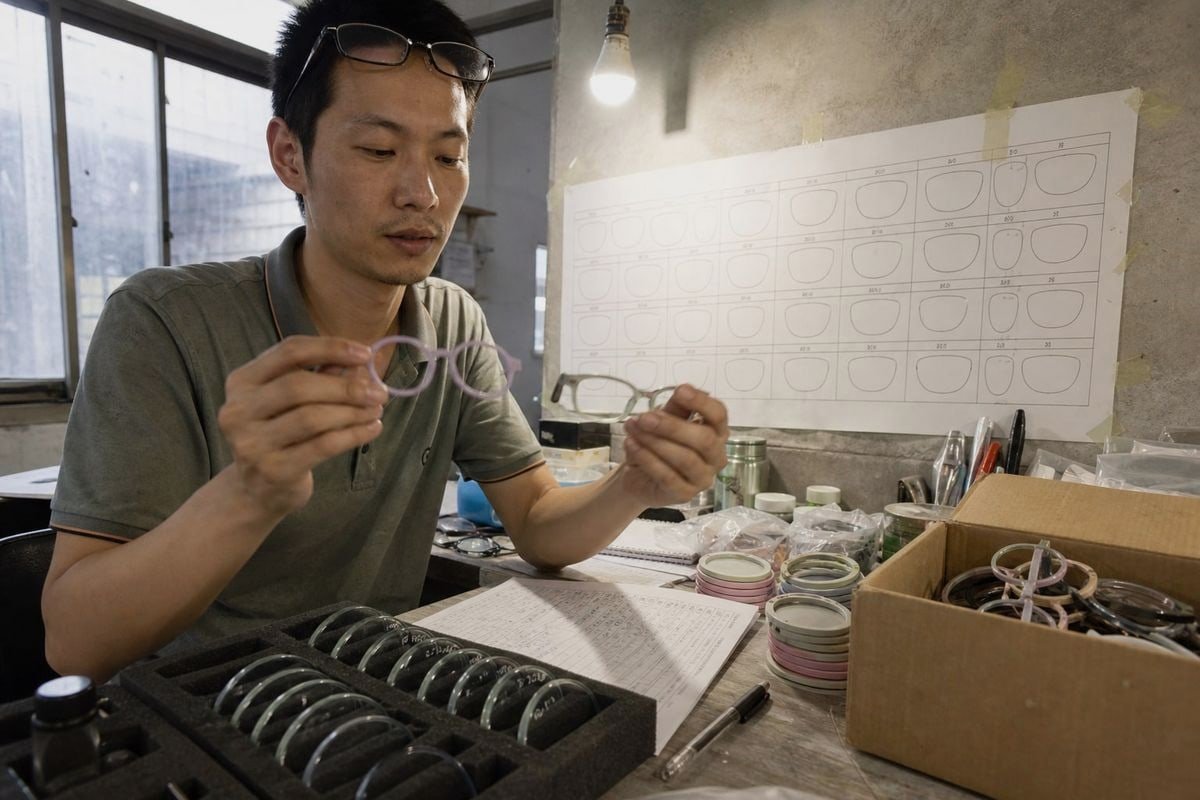
The core rule is simple. The lab starts from a round lens blank. The farther your frame shape pushes lens material away from the child's pupil, the thicker and heavier the finished lens becomes. Shape decides how much of that blank survives — and where the thickness ends up.
Minus versus plus: thickness lives in different places
Minus lens 1es for myopia are thickest at the edges. Rectangular and angular shapes keep the corners, which is exactly where a minus lens is thickest. Round and oval shapes cut those corners away, so they minimize lens edge thickness for high-minus kids.
Plus lenses for hyperopia are thickest at the center. Here, a compact rectangular or oval shape can actually work better than a tall round one, because extra lens height increases center thickness and weight. So "round is always best" is a myth. The accurate rule is: match the shape to the sign of the prescription and control the effective diameter.
| Lens shape | Best for | Watch out for |
|---|---|---|
| Round | High minus (myopia) | Can add center bulk on strong plus |
| Oval | High minus and moderate plus | Very forgiving all-rounder |
| Compact rectangle | Strong plus (hyperopia) | Corners add edge thickness on minus |
| Oversized / cat-eye / angular | Low prescriptions only | Forces decentration; corners get thick |
| Wrap / high base curve | Non-prescription sun styles | Steep curves cause peripheral distortion and prismatic effects |
One more distortion factor: larger shapes increase peripheral aberrations, so a child with a strong prescription sees more blur near the lens edges. Keeping the shape compact keeps vision crisp across more of the lens.
Why does rim depth matter when I'm sourcing frames for high-index lenses?
Our QC team once flagged a thin-rimmed metal sample that "splayed" open when the buyer's lab fitted -6.00 test lenses. The rim simply could not contain the edge.
Rim depth matters because deeper, fuller rims physically hold and visually mask lens edge thickness, protect the bevel, and prevent frame splay. Even with high index lenses reducing thickness, a shallow rim exposes the edge and narrows the prescription range a frame can safely carry.

Rim depth does two separate jobs, and buyers often conflate them. First, it does mechanical work: a deep groove grips the lens bevel securely, which matters when the lens edge is thicker than the rim itself. If the edge-to-rim ratio is wrong, the frame can splay or lose shape over time — a real durability failure for active kids. Second, it does cosmetic work: a fuller rim profile hides the protruding edge of a high diopter prescription, which directly affects whether a child will actually wear the glasses and whether parents are satisfied.
Rim depth and lens material interact
Here is a detail many sourcing managers miss. Pediatric lenses are usually polycarbonate lenses, chosen for impact safety. But polycarbonate has a lower refractive index than premium high index lenses, so the same prescription comes out thicker. That means the physical rim depth of your frame often dictates the maximum power it can hold in the safe pediatric material — before anyone upgrades to high-index.
| Rim style | Edge masking | Max practical Rx range | Kids' suitability |
|---|---|---|---|
| Full-rim, deep profile (acetate/TR90 look) | Excellent | Widest | Best for strong prescriptions |
| Full-rim, thin metal | Limited | Moderate | OK for low-to-mid powers |
| Semi-rimless | Poor — edge exposed below | Narrow | Not recommended for high Rx |
| Rimless | None — full edge exposed | Very narrow | Rarely suitable for children |
One nuance worth stating honestly: rim depth improves appearance and edge protection, but it does not remove the underlying optical constraint. A deep rim hides thickness; it does not make the lens thinner. And for strong plus lenses, the sagittal depth can push the lens center toward the child's eyelashes, so rim depth must pair with a bridge design that gives adequate clearance.
Can I still offer flexible TR90 or TPEE frames for kids who need strong prescriptions?
Flexibility is our specialty, so I weigh this trade-off constantly: a frame soft enough to survive playground abuse must still be rigid enough at the rim to grip a heavy lens.
Yes. TR90 and TPEE frames can carry strong prescriptions if the design uses a compact eye size, a full rim with sufficient groove depth, and reinforced rim geometry. Flexibility should live in the temples and bridge, while the eyewire stays dimensionally stable around the lens.
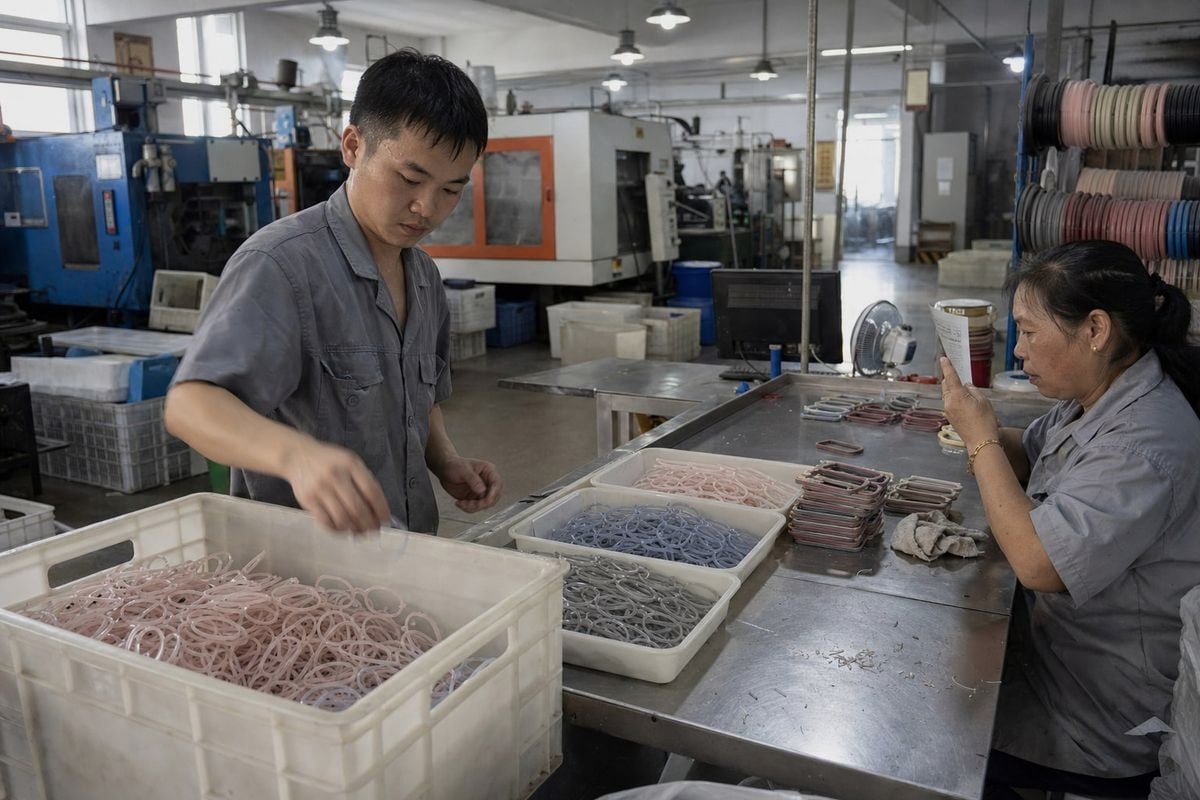
Some buyers assume flexible materials automatically disqualify a frame from high-power work. In our fifteen years making TR90 kids optical frames — often TR90 fronts with soft TPEE temples — we have found the opposite, provided the design respects three principles.
Where flexibility helps, and where it must stop
First, put the flex where the abuse happens. Children pull glasses off with one hand, sleep on them, and bend them in bags. Flexible temples and soft silicone tips absorb that abuse without transferring stress to the lens. The rim itself, however, should hold its dimensions. A well-engineered TR90 eyewire with a proper bevel groove holds a thick minus lens far better than a thin metal rim of the same weight.
Second, weight matters more for kids. A -5.00 lens in polycarbonate is already heavier than parents expect. Pairing it with lightweight TR90 instead of thick acetate frames 2 keeps the total weight on a small nose bearable. This is a genuine advantage of flexible materials, not a compromise.
Third, mind the edge-to-rim ratio. If the finished lens edge stands proud of a flexible rim, repeated flexing can loosen the lens seat. On our high-Rx-capable styles, we specify deeper grooves and slightly thicker rim walls around the temporal corners, where minus lenses are thickest. It is also worth noting the emerging direction here: 3D-printed pediatric eyewear now allows variable-thickness rims reinforced only at a prescription's thickest points, and that same logic — reinforce where the lens is thick — can be built into molded TR90 designs today.
For B2B buyers, the practical takeaway is this: do not choose between flexibility and prescription capability. Specify both, and confirm the rim engineering supports it.
What should I ask my manufacturer before choosing a frame style for a wider prescription range?
A procurement manager from Australia once sent me a one-line spec: "compact kids optical frame, mixed Rx range." We spent two calls turning that line into measurable numbers — and the resulting style is still reordered today.
Ask for the frame PD (lens width plus bridge width), groove depth and rim wall thickness, effective diameter per shape, base curve compatibility, and lens-shape drawings for myopia-management lens checks. Then confirm the frame PD stays within roughly 8 mm of your target children's pupillary distance.

The single most useful number is frame PD versus patient PD. Pediatric fitting guidance says each eye should sit only 3–4 mm off-center in the frame, and that frame size plus bridge size should stay within about 8 mm of the child's pupillary distance. Every extra millimeter of lens decentration adds thickness, because the lab must cut the prescription off-center to restore optical center 3 alignment with the pupil. This is why oversized kids' frames fail high prescriptions before shape even enters the discussion.
The questions that separate a style catalog from an optical spec
| Question to ask | Why it limits or widens Rx range |
|---|---|
| What is the frame PD (eye size + DBL)? | Determines decentration against the child's pupillary distance |
| What is the effective diameter of each shape? | Sets the minimum blank size, hence thickness and weight |
| How deep is the bevel groove, and how thick is the rim wall? | Caps the lens edge thickness the frame can hold and hide |
| What base curve does the frame front assume? | High-base wrap fronts distort high prescriptions |
| Can you supply shape files or tracings? | Labs need them to verify myopia-control lens zones fit |
| Is the bridge adjustable or offered in sizes? | Affects vertex clearance for high-plus sagittal depth |
Two points deserve extra attention. First, if your market includes myopia management, remember that DIMS and HALT lenses carry peripheral treatment zones; a shape that is too small, or a rim depth that clips those zones during edging, quietly destroys the lens's therapeutic function. Share your lens supplier's minimum fitting dimensions with your frame factory early. Second, resist the assumption that a wide catalog means every style suits every power. When buyers browse our roughly 800 existing styles, we routinely flag which frames handle high diopter prescriptions and which are styled for low-Rx or plano sun use. A factory that cannot make that distinction for you is guessing.
Conclusion
Frame choice is an optical decision, not just a style call. Shape, rim depth, and frame PD set your real prescription range — so spec them deliberately with your factory.
Footnotes
1. NIH resource explaining myopia and the optical characteristics of corrective lenses. ↩︎
2. Technical background on cellulose acetate, a primary material used in high-quality eyewear frames. ↩︎
3. Detailed explanation of eyeglass prescription parameters and the role of optical centering. ↩︎
More Articles You Might Like



Looking for a Reliable Kids Eyewear Partner?
Explore 800+ ready styles and full OEM/ODM support tailored to your brand.
Get in Touch English
  Español de México
  Deutsch
  Français
  日本語
日本語  العربية
  Português do Brasil