How to Choose Between Polarized and Non-Polarized Kids Sunglasses?

Choosing between polarized and non-polarized kids sunglasses confuses many buyers who visit our Taizhou factory. Pick wrong, and you overpay for features your market ignores—or underdeliver on protection.
Choose polarized kids sunglasses for high-glare markets like beach, snow, and water sports, and non-polarized UV400 lenses for everyday wear and toddler lines. Both block UVA and UVB rays equally; polarization only adds glare reduction, so match lens type to your customers’ activities and price point.
That is the short answer. But the details matter when you are building a real product line. Let me walk you through each question, one at a time.
What Are the Real Benefits of Polarized Lenses for My Kids' Sunglasses Brand?
Last spring, a buyer from Australia asked our team why her beach-focused line kept getting reviews about squinting children. We swapped her order to polarized lenses 1, and the complaints stopped.
Polarized lenses give your brand a premium selling point: they cut horizontal glare from water, snow, sand, and pavement, reduce squinting and eye strain, and improve color contrast and depth perception. They justify higher retail prices and stronger positioning in outdoor and sport-focused kids sunglasses collections.
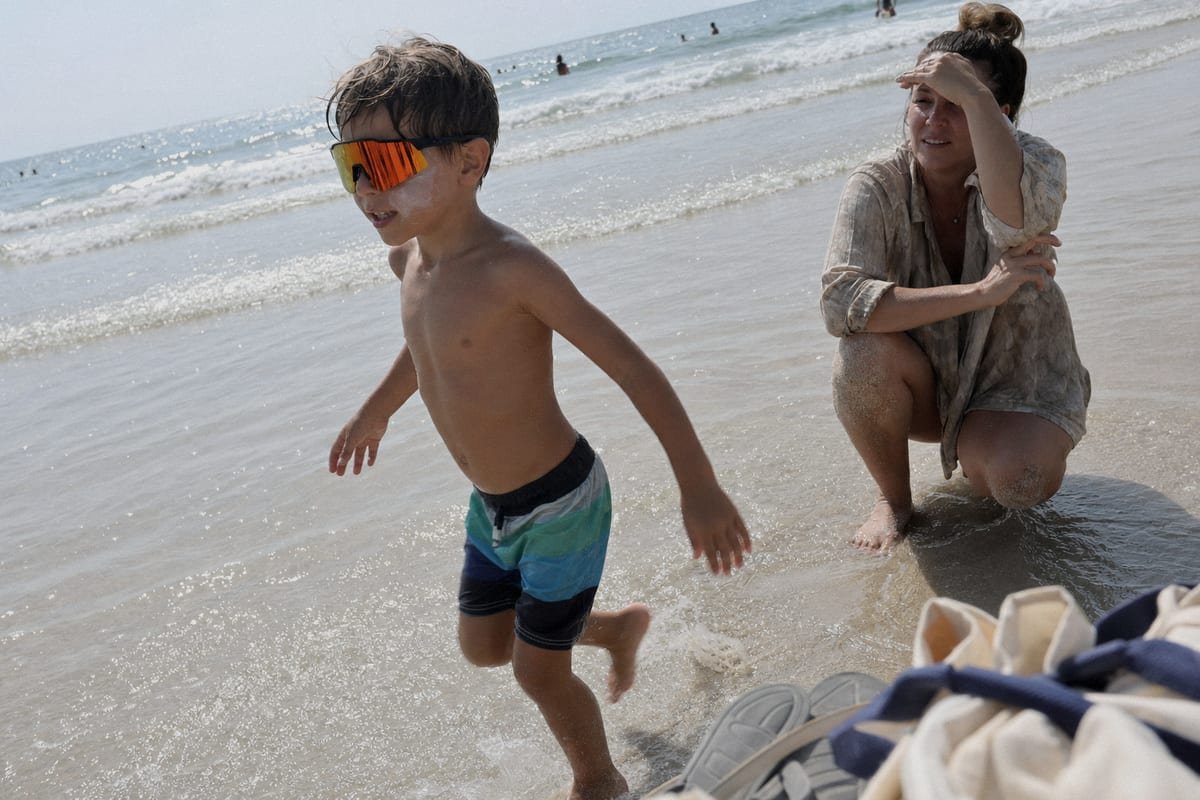
Polarized lenses contain a special vertical filter. Light bouncing off flat reflective surfaces—water, snow, wet roads—travels in a horizontal wave. The filter blocks that wave. The result is a calmer, clearer view for the child wearing the glasses.
For your brand, the benefits break down into three areas.
Comfort Benefits Parents Notice
Parents see the difference fast. A child at the beach stops squinting. A child on a ski slope stops rubbing their eyes. Less glare means less ocular fatigue 2 over a long outdoor day. Some parents of children with sensory sensitivities also tell retailers that polarized lenses act like a visual filter, softening the flicker of chaotic reflections.
Performance Benefits for Active Kids
Polarized optics improve color contrast and depth perception 3. For kids in outdoor sports—cycling, fishing, sailing—that can mean better reaction times and safer play. This is why our sport shield styles, like the wraparound models with mirrored orange-to-teal lenses, pair so well with polarized film.
Brand Benefits at Retail
| Brand Advantage | How Polarization Helps |
|---|---|
| Higher price point | Polarized is a recognized premium feature |
| Clear marketing story | "Cuts glare at the beach" is easy to explain |
| Sport line credibility | Matches performance frame designs |
| Differentiation | Separates you from novelty sunglasses |
One caution from our production floor: cheap polarized lenses use a laminated "sandwich" film that can delaminate and bubble. For active kids, we recommend in-mold polarized polycarbonate lenses 4. They cost slightly more but survive real childhood use. That durability protects your reviews and your reorder rate.
Do Non-Polarized Lenses Still Meet UV400 Safety Standards My Customers Expect?
A common worry comes up in nearly every first video call with new brand clients: will parents see non-polarized lenses as "lesser" protection? Our QC data tells a clearer story.
Yes. Non-polarized lenses fully meet UV400 standards when the lens material or coating is properly rated. UV400 protection blocks 100% of UVA and UVB rays and is completely independent of polarization. Polarization only manages glare; it adds zero extra UV safety.
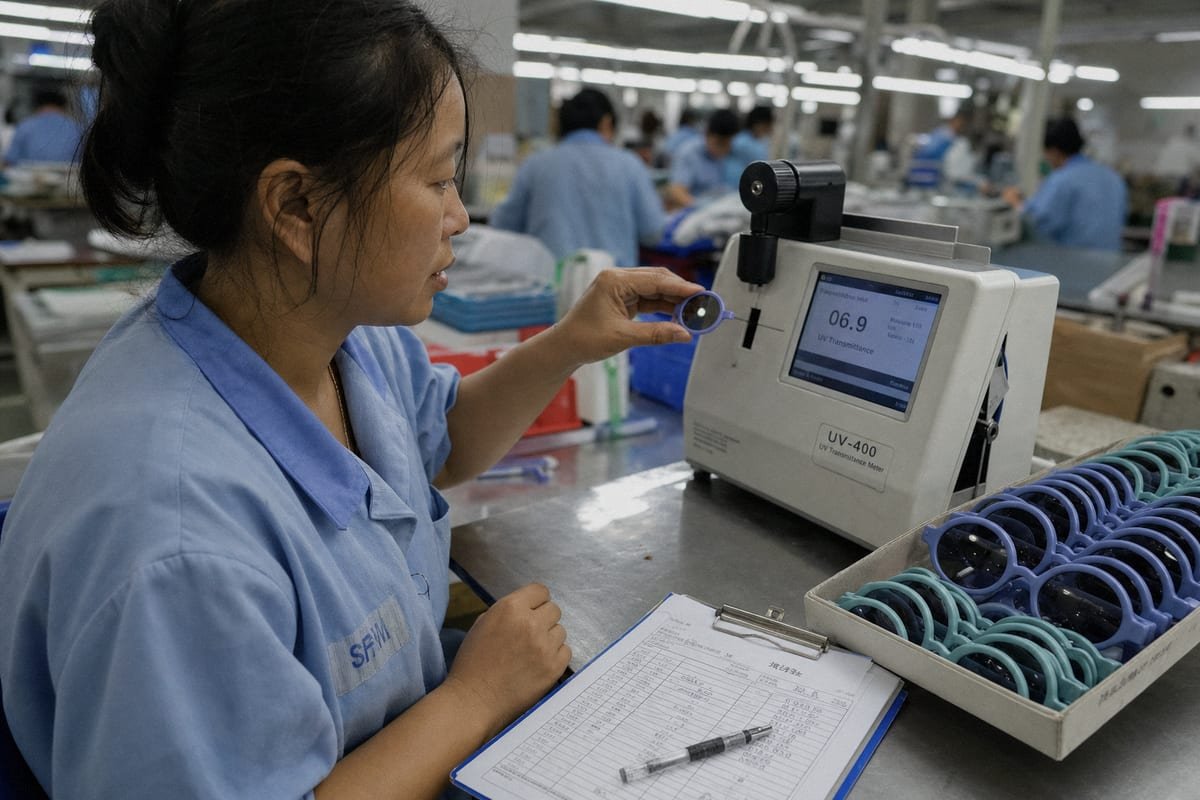
This is the single most important fact in the whole polarized-versus-non-polarized debate. UV protection lives in the lens material and its coating. Polarization lives in a separate filter layer. They are two different technologies doing two different jobs.
At our factory, every lens—polarized or not—must pass UV400 verification 6 before it goes into a frame. We test batches with a UV transmittance meter during incoming inspection. A non-polarized polycarbonate lens with a proper UV400 rating 7 blocks wavelengths up to 400 nanometers. That is full-spectrum protection for developing eyes.
Why Non-Polarized Often Wins for Everyday Lines
Non-polarized UV400 lenses have real practical advantages:
- LCD screen visibility stays natural. Polarized lenses can make tablets, car entertainment screens, and learning toys look dark or rainbow-streaked. Non-polarized lenses avoid this entirely.
- Vision looks natural for young children. Early walkers, roughly ages one to three, benefit from seeing glints on wet floors and puddles. Those specular highlights help a developing brain spot slippery surfaces.
- Lower cost, same safety. You protect the child's eyes without paying for glare reduction they may not need at the playground.
What Actually Determines Safety
| Safety Factor | Depends on Polarization? | What It Depends On |
|---|---|---|
| UVA/UVB blocking | No | UV400 lens rating |
| Impact resistance | No | Polycarbonate lens material |
| Frame safety | No | Flexible frames (TPEE/TR90) |
| Coverage | No | Frame size and wrap |
| Glare reduction | Yes | Polarizing filter |
Lens darkness is not a safety indicator either. A dark lens without UV protection is actually worse than no sunglasses, because it dilates the pupil and lets more UV in. This is why we push every client toward certified UV400 lenses first, and treat polarization as a feature decision, not a safety decision.
How Do I Decide Which Lens Type Fits My Target Market and Price Point?
Trade-offs like this cross my desk weekly. A Japanese baby brand and a European surf brand both order from us—but they never order the same lens. Their end customers live in different worlds.
Match lens type to your customer's dominant use case. Everyday, school, stroller, and toddler markets suit affordable non-polarized UV400 lenses. Beach, snow, boating, and sport markets justify polarized lenses at a 20–40% higher retail price. Segment by activity and age, not by assumptions about quality.

Start with one question: where will the child actually wear these sunglasses most days? Not the rarest use case—the most common one. Parents overbuy features constantly, but retailers who guide them well earn trust and repeat sales.
Segment by Age First
Age is the cleanest starting filter:
- Babies and toddlers (0–3): Non-polarized UV400 almost every time. The priorities here are flexible frames, soft materials, secure fit, and natural vision. Our TPEE frames with rounded, screwless construction dominate this segment for good reason.
- Preschool and early school age (3–7): Either type works. Choose based on climate and lifestyle. A brand selling in coastal Australia leans polarized; a brand selling city-focused everyday wear leans non-polarized.
- Older kids (7–12): Polarized becomes genuinely valuable for water sports, skiing, fishing, and cycling. This is where sport shield frames with mirrored polarized lenses earn their premium.
Then Segment by Environment and Price
| Target Market | Recommended Lens | Frame Style | Retail Positioning |
|---|---|---|---|
| Baby/toddler everyday | Non-polarized UV400 | Soft round TPEE, like our periwinkle-blue two-tone | Entry to mid |
| School and play | Non-polarized UV400 | TR90 with flexible temples | Mid |
| Beach and water | Polarized UV400 | Wrap coverage frames | Mid to premium |
| Snow and sport | Polarized UV400, mirrored | Shield lens sport frames | Premium |
Your margin math matters too. Polarized lenses raise your landed cost, but they raise perceived value more. In our experience exporting to twenty-plus countries, buyers who position polarized as a distinct "performance tier" rather than a default spec see healthier margins and less price resistance.
Also weigh the screen question. If your market includes long car trips with tablets, mention LCD screen visibility in your product copy. A non-polarized option answers that concern before parents even raise it.
Can I Offer Both Polarized and Non-Polarized Options Without Complicating My Product Line?
Years of ODM projects taught our team a hard lesson: complexity kills small brands—but the wrong kind of complexity. Adding a lens option is easy. Adding a new mold is not.
Yes, easily. Use shared frame molds and offer polarized lenses as a premium tier on select styles. Because polarization is a lens choice, not a frame change, you avoid new tooling costs, keep MOQs manageable, and create a clear good-better product ladder for retailers.

The key insight is that polarization lives in the lens, not the frame. The same TR90 frame with TPEE temples can carry a standard UV400 lens in one SKU and a polarized lens in another. Same mold. Same fit testing. Same impact resistance standards. Different price tag and story.
At our workshop, we run this exact structure for several clients. They select frames from our library of roughly 800 existing styles—no mold investment needed—then split their range into two tiers:
- Everyday tier: Non-polarized UV400, playful colorways, softer shapes. Think round matte frames in periwinkle and mint. Priced for volume.
- Adventure tier: Polarized UV400, often with mirrored coatings, sportier wraparound silhouettes in black or white. Priced for margin.
Keep the Line Simple With Three Rules
Rule one: limit polarized to your top sellers. Do not polarize everything. Pick two or three hero styles where glare reduction genuinely matters—usually your sport and beach frames.
Rule two: make the tiers visually distinct. Mirrored lens coatings signal "performance" instantly on the shelf. Parents should see the difference before reading the hangtag.
Rule three: unify everything else. Same packaging system, same UV400 claim, same flexible frames and safety story across both tiers. Only the glare-reduction feature and price change. This keeps your supply chain, QC checklist, and retail training simple.
One practical note on ordering: because both lens types fit the same frames, you can adjust the polarized-to-standard ratio between reorders based on real sales data. Test small, then scale what sells. That flexibility is exactly why we encourage new brands to launch from existing tooling before ever cutting a custom mold.
Conclusion
Neither lens type is universally better. UV400 protection is the non-negotiable baseline; polarization is a situational upgrade for glare-heavy environments. Match lens type to your market, tier your line, and both options can coexist profitably.
Footnotes
1. Background on the physics of light polarization behind the filter technology. ↩︎
2. National Eye Institute resource on protecting eyes from sun-related strain and glare. ↩︎
3. Background concept on how visual clarity affects depth perception in active kids. ↩︎
4. Explains polycarbonate material properties that make durable in-mold lenses possible. ↩︎
5. WHO explains UV radiation health risks that make lens UV protection essential. ↩︎
6. ISO 12312-1 sets the international testing standard for sunglasses UV protection. ↩︎
7. FDA guidance explains what a proper UV400 rating means for sunglasses safety. ↩︎
More Articles You Might Like



Looking for a Reliable Kids Eyewear Partner?
Explore 800+ ready styles and full OEM/ODM support tailored to your brand.
Get in Touch English
  Español de México
  Deutsch
  Français
  日本語
日本語  العربية
  Português do Brasil