How to Time Kids Sunglasses Orders With Your Annual Catalog Release?
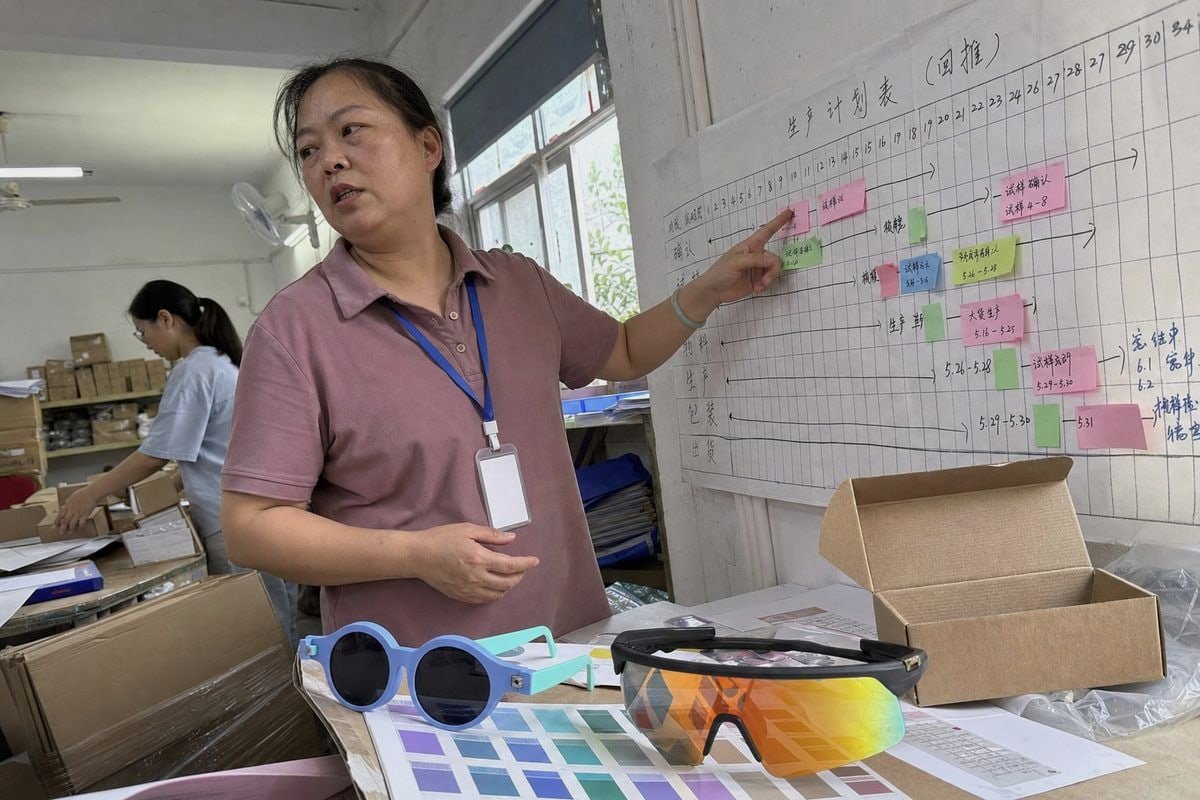
Timing kids sunglasses orders around an annual catalog release trips up even experienced buyers. On our production line, we see the same painful pattern every spring: a beautiful catalog goes out, families respond, and the sunglasses are still on the water. The catalog did its job. The supply chain did not. The fix is planning the order calendar backward from your launch date, and I will show you exactly how we help brands do it.
Time kids sunglasses orders by working backward from your catalog launch: start planning 6–9 months ahead, lock styles and place bulk orders 4–5 months out, allow 90 days for production plus shipping, and receive quality-checked stock at least 14 days before the catalog drops.
That is the short answer. The rest of this article breaks the timeline into practical stages. I will cover lead times, common delay points, flexible ordering tactics, and reorder planning.
How far in advance should I place my order to hit my catalog launch date?
A buyer from Australia once emailed me in March asking for summer stock by April. Our factory in Taizhou had to say no. That conversation shaped how I explain timelines now.
Place your bulk order 4–5 months before the catalog launch date. Custom kids sunglasses typically need 90 days of manufacturing lead time, plus 3–6 weeks of shipping, plus a 14-day buffer for receiving and quality checks before the catalog reaches customers.
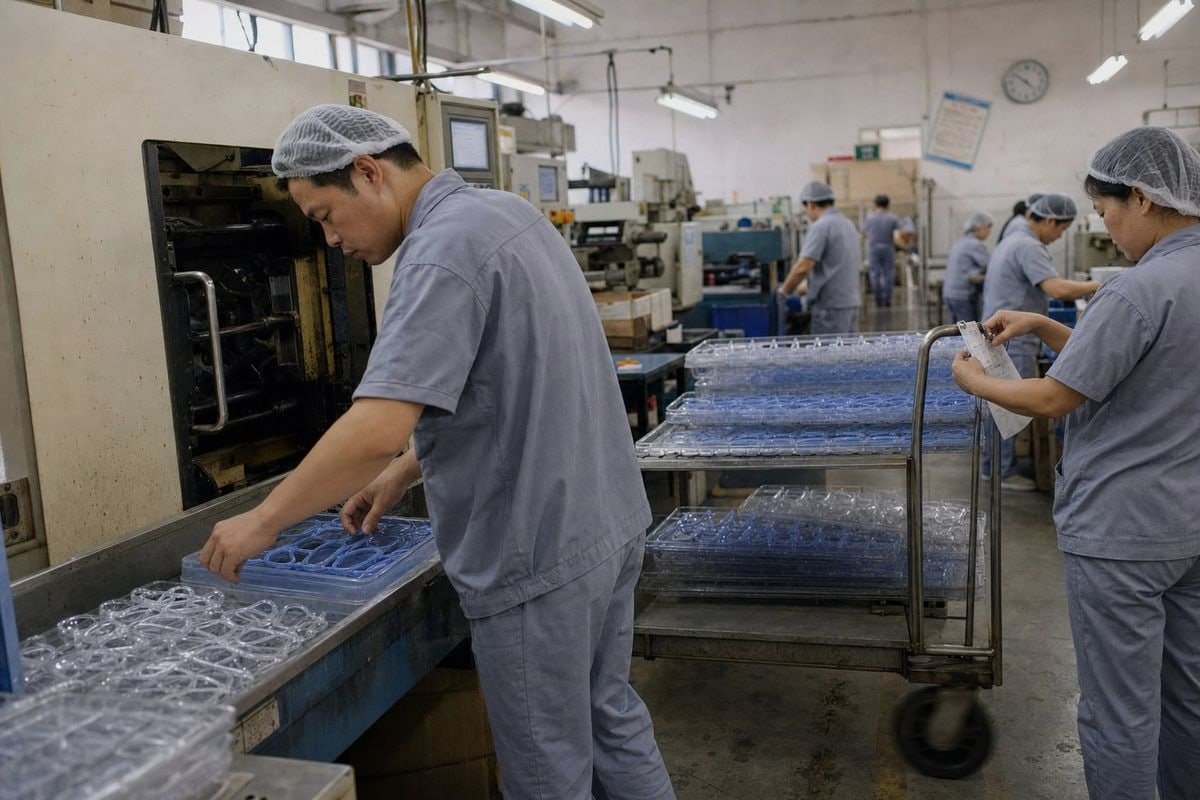
The cleanest way to plan is the 120-day reverse-engineering rule. You take your catalog's in-home date, subtract 14 days for receiving and inspection, then subtract shipping time, then subtract production time. Whatever date you land on is your true order deadline. It is almost always earlier than buyers expect.
In our experience exporting to 20+ countries, the full cycle looks longer than the order alone. Seasonal demand forecasting, style selection 1, sampling, and approvals all happen before the purchase order. That is why we tell partners to start conversations 6–9 months before a peak-season launch. Fashion wholesale calendars often begin trend review 12–14 months out, so 6–9 months is not conservative. It is standard.
A backward-planned calendar
Here is a sample timeline for a catalog dropping in early April to catch summer demand:
| Étape | Timing before launch | Ce qui se passe |
|---|---|---|
| Trend and assortment review | 8–9 months | Shortlist styles, review trade show schedules |
| Sampling and approvals | 6–7 months | Fit checks, lens and color samples |
| Bulk purchase order placed | 4–5 months | Production slot secured at factory |
| Production terminée | 2 months | QC inspection before shipment |
| Goods shipped | 6–8 weeks | Sea freight for most markets |
| Stock received and checked | 2 weeks | Inspect within the first 5–10 days |
| Catalog drops | Launch day | Inventory is live and sellable |
One more point matters. Spring and summer are the eyewear industry's busiest production window. Factories fill up. Placing wholesale procurement orders 2 at least six months ahead of the peak season secures factory priority and avoids rush fees. Late orders compete for capacity with everyone else who waited.
Which parts of the OEM process are most likely to delay my catalog timeline?
Sampling revisions are the delay our engineers see most often. One extra color round on a TR90 frame 4 can quietly consume three weeks. Buyers rarely budget for that.
The biggest OEM delay risks are sample revisions, custom color and mold approvals, third-party safety testing for children's products, peak-season factory congestion, and ocean freight variability. Each can add 1–4 weeks, so build buffers into every stage rather than trusting best-case estimates.

Not all delays are equal. Some are predictable and easy to buffer. Others are variable and need contingency planning. When we run OEM projects at our 5S-managed workshop, we group risks into three buckets.
Pre-production delays
Design finalization and sampling cause the most avoidable slippage. Every revision cycle means a new sample, international courier time, and buyer review. Custom Pantone color matching on flexible TPEE temples 5 takes longer than picking a stock color. New molds add weeks more. This is one reason we keep around 800 existing styles: choosing a proven frame removes the mold stage entirely.
Compliance and QC delays
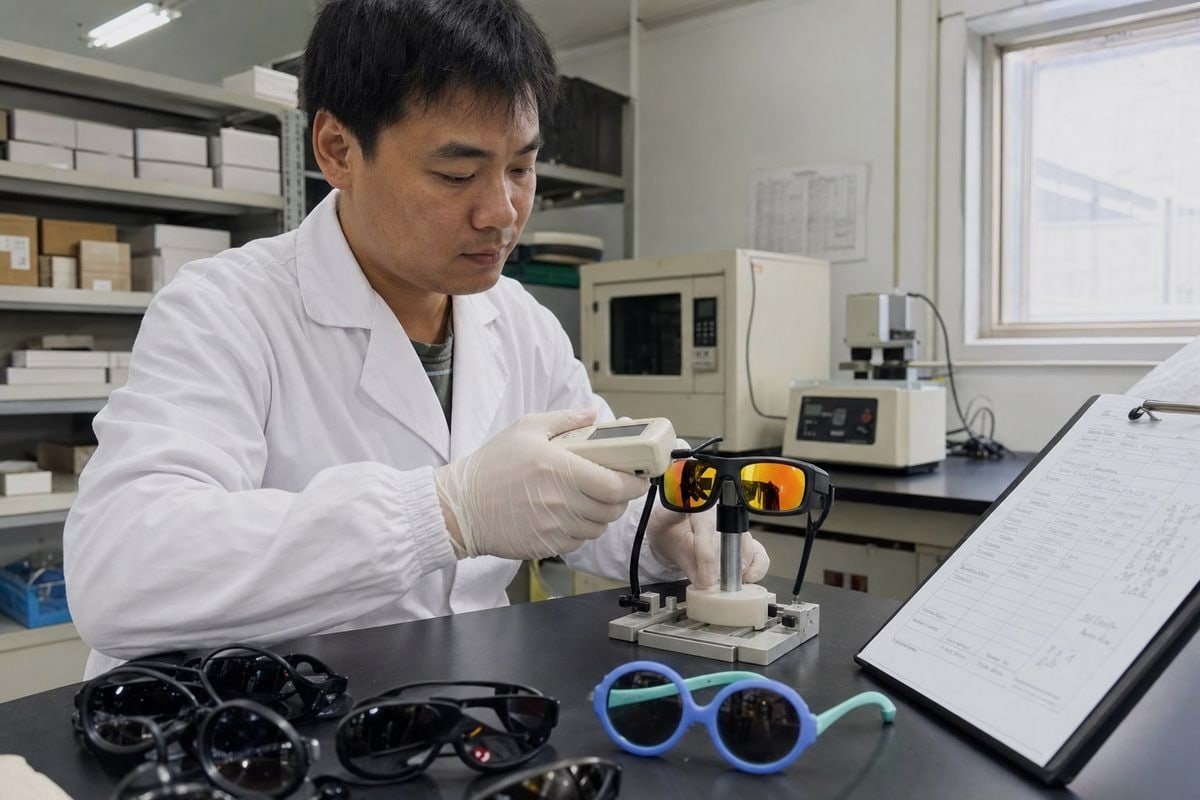
Children's eyewear carries stricter obligations than adult fashion accessories. Third-party safety testing for lead content and UV400 performance 6 is often mandatory for kids' products in your market. We advise building a 21-day compliance buffer into the timeline for this testing. Skipping it to save time is not an option for a children's brand. Add factory QC and pre-shipment inspection on top.
Logistics delays
Supply chain logistics remain the least controllable stage. Port congestion, vessel rollovers, and customs holds can add two to four weeks with no warning.
| Delay source | Typical added time | How to reduce it |
|---|---|---|
| Extra sample revision | 2–3 weeks per round | Approve fit and color in one detailed round |
| New custom mold | 4–8 semaines | Choose from existing styles instead |
| Safety and UV400 testing | Up to 21 days | Book the lab slot before production ends |
| Peak-season factory queue | 2–4 weeks | Order 6+ months before peak |
| Ocean freight disruption | 1–4 weeks | Add buffer weeks; consider partial air freight |
Can I lock in styles early and finalize colors or packaging closer to my release date?
Here is a trade-off I discuss with almost every brand: commit early and risk overbuying, or stay flexible and risk missing the catalog window. A staged commitment solves both.
Yes. You can confirm frame styles and reserve production capacity 5–6 months out, then finalize colors, logos, lenses, and packaging 3–4 months before launch. Frames and molds have the longest lead times; printing, lens coatings, and packaging are faster and can be decided later.
This staged approach works because different components sit at different points in the production sequence. The frame shape decides tooling and material. Those are slow. Color mixing, logo printing, lens options, and retail packaging happen later in the line. Those are faster. A smart product launch strategy exploits that gap.
When we develop projects with kids' brands in Europe and Japan, we usually structure commitments in three waves:
- Style lock. The buyer confirms frame silhouettes, sizes, and rough quantities. We reserve the production slot. For a sporty wraparound shield or a soft two-tone round frame, this defines the tooling and TR90 or TPEE material plan.
- Spec lock. Around 3–4 months out, the buyer finalizes frame colors, temple colors, lens tints or mirror gradients, polarized versus standard UV400 lenses, and logo placement.
- Packaging lock. Retail-ready packaging, pouches, cases, hang tags, and barcodes can often be confirmed last, since printing runs are quick relative to frame production.
There is a real objection here. Some buyers fear that locking styles early means betting on trends too soon. My honest answer: split your SKU planning. Lock evergreen shapes and classic colors early and deep. Keep trend-driven colorways in the later spec-lock wave, where you can still adjust based on early retailer feedback or a digital preview. Some brands even run a digital-first teaser and use engagement data to prune weak variants before the final production cutoff. Flexibility is not the enemy of early ordering. Unstructured flexibility is.
How do I plan reorders so I don't run out of stock after my catalog drives demand?
A distributor client once sold through their best-selling blue round frame three weeks after their catalog mailed. Their reorder arrived ten weeks later. That gap taught us both a lesson.
Plan reorders before the catalog launches, not after. Order core styles 15–20% above forecast, set reorder trigger points in your inventory system, pre-book a replenishment production slot with your factory, and use pre-order campaigns to bridge any gap while restock is in transit.

The hard truth is that a reorder faces the same manufacturing lead times as the first order. If your catalog performs well in week two, a reorder placed in week three still needs production plus shipping. Waiting for a stockout to trigger action guarantees a sales gap. So retail stock replenishment must be designed into the original plan.
Build a two-tier order structure
We recommend splitting the buy. Place a deep initial order on core, kid-friendly styles that sell every season. Place a lighter order on trend shapes. Then pre-arrange a smaller replenishment run with your factory for the winners. Because we hold material stock for our standard TR90 and TPEE styles, a pre-booked reorder moves much faster than a cold new order. Ask your supplier what a committed reorder slot shortens the cycle to, and get it in writing.
Use safety stock deliberately
Over-ordering core styles by around 15% serves two purposes. It covers demand spikes, and it funds a no-questions-asked replacement program. In the kids' market, replacing a snapped frame for free builds strong loyalty, and flexible TPEE frames already reduce breakage claims in the first place.
| Reorder tactic | When to set it up | Why it works |
|---|---|---|
| 15–20% safety stock on core SKUs | With the initial bulk order | Absorbs spikes and supports replacements |
| Reorder trigger points | Before launch, in your inventory management system | Real-time SKU tracking flags winners early |
| Pre-booked replenishment slot | At initial PO signing | Skips the factory queue on reorders |
| Pre-order campaigns | At catalog mailing | Captures demand while restock ships |
| Sell-through review at day 14 | Two weeks after launch | Data arrives in time to trigger the reorder |
Good inventory management across age tiers 7, frame colors, and lens variants tells you which SKUs to replenish. Bulk ordering cycles then repeat annually, and each year's sell-through data sharpens the next catalog's assortment.
Conclusion
Your catalog is the selling moment. Your kids sunglasses order is the supply-chain moment. Plan backward, order early, buffer every stage, and pre-book reorders — then the catalog delivers.
Notes de bas de page
1. Authoritative Wikipedia entry explaining retail assortment strategies and product selection processes. ↩︎
2. Provides an overview of professional purchasing and supply management processes for businesses. ↩︎
3. Authoritative Wikipedia entry defining lead time components in manufacturing and supply chains. ↩︎
Plus d'articles que vous pourriez aimer

1 août 2026
L'usine doit-elle gérer l'emballage et l'étiquetage des lunettes pour enfants, ou utiliser un fournisseur désigné ?

1 août 2026
Entrepôt propre vs. exécution directe par le fournisseur : lequel réduit les coûts de retour pour les marques de lunettes pour enfants ?

1 août 2026
Entrepôt direct au port ou staging outre-mer : lequel permet d'économiser le plus sur l'expédition des lunettes pour enfants ?
Vous recherchez un partenaire fiable en lunetterie pour enfants ?
Explorez plus de 800 styles prêts et un support OEM/ODM complet adapté à votre marque.
Contactez-nous English
  Español de México
  Deutsch
  Français
  日本語
日本語  العربية
  Português do Brasil