How to Assess if a Supplier’s Kids’ Sunglasses Lead Time Is Realistic?
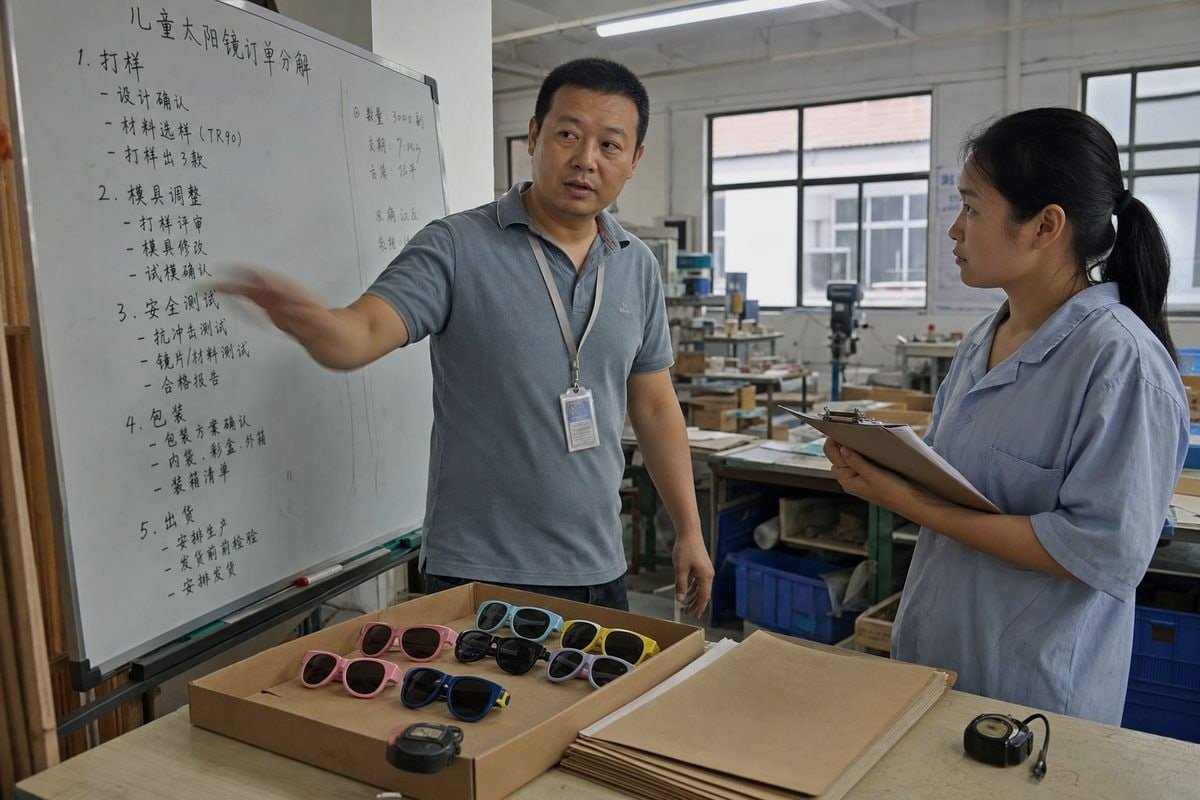
A supplier’s kids’ sunglasses lead time can make or break your launch. On our production line in Taizhou, I have watched buyers lose entire seasons because they trusted a single quoted number.
A supplier’s kids’ sunglasses lead time is realistic only when it is broken into defined stages, matches their recent delivery history, accounts for sampling, safety testing, and shipping, and includes buffer for holidays and material risk. Treat any single unverified number as a claim, not a fact.
That is the short answer. Below, I will walk you through what actually drives lead time, how to spot overpromising, what to ask, and how to protect your schedule.
What Factors Actually Influence a Realistic Lead Time for Kids' Sunglasses Production?
Last spring, a buyer asked me why her previous supplier quoted 20 days but delivered in 55. The answer sat in stages her supplier never mentioned during quoting.
A realistic lead time for kids' sunglasses depends on order type, sample approval rounds, raw material sourcing, mold or tooling needs, safety testing windows, factory capacity, quality control inspection, packing customization, and shipping mode. Stock orders may ship in days; custom OEM orders often need 30–60 days.
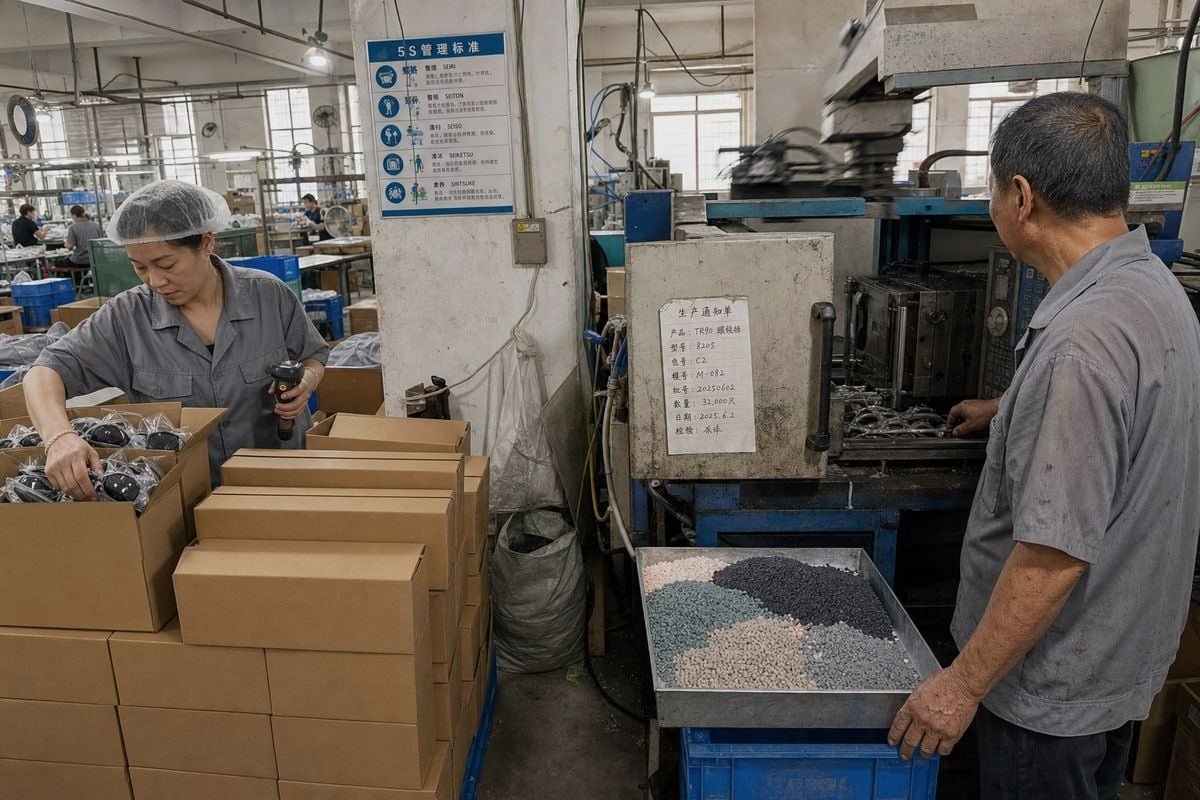
Lead time is not one clock. It is several clocks running one after another, and sometimes in parallel. In our workshop, we plan every children's order across distinct stages, because kids' eyewear carries extra steps that adult fashion sunglasses often skip.
Order Type Changes Everything
The single biggest driver is what you are actually buying. A plain wholesale stock style is fast. A private label order 1 with custom colors, logos, and retail packaging is slower. A full OEM design with new molds is slower still. I have seen suppliers advertise 3-day delivery for stock items and 10–15 days for light customization, while genuine bulk production commonly runs 30–60 days. Both numbers can be honest. The problem starts when a supplier quotes the stock number for a custom order.
| Order Type | Typical Realistic Range | Main Time Drivers |
|---|---|---|
| Stock prêt | 3–10 jours | Picking, packing, freight booking |
| Private label (existing style) | 15–30 days | Color matching, logo printing, packaging |
| Full OEM (new design) | 45–90+ days | Mold development, sampling, testing |
Kids-Specific Time Costs
Children's sunglasses need more scrutiny than adult styles. Safety standards compliance 2 for markets like the EU, Australia, and Japan requires documentation and sometimes lab testing, and regulatory lab backlogs can add weeks. Flexible materials like TPEE and TR90 3 have their own production cycle time: TPEE temples need controlled injection parameters, and non-toxic coatings need proper curing durations. Rushing these steps is exactly what a responsible factory refuses to do.
Materials, Capacity, and Season
Raw material sourcing 4 matters too. Our proximity to lens and hinge suppliers in Zhejiang shortens procurement, but a factory far from its supply chain may wait a week just for lens stock. Then add factory capacity: an order placed before peak season delays hit — or right before Nouvel An chinois 5 — behaves very differently from one placed in a quiet month. A realistic quote reflects the current queue, not an empty-factory fantasy.
How Can I Tell if a Supplier's Quoted Lead Time Is Too Good to Be True?
There is a trade-off I weigh every time I quote a delivery date: a shorter promise wins the order, but a broken promise loses the customer. Not every supplier resists that temptation.
A quoted lead time is likely too good to be true if it is faster than the supplier's own recent actual deliveries, comes as one headline number with no stage breakdown, ignores holidays and testing, or is paired with claims like we always deliver on time.
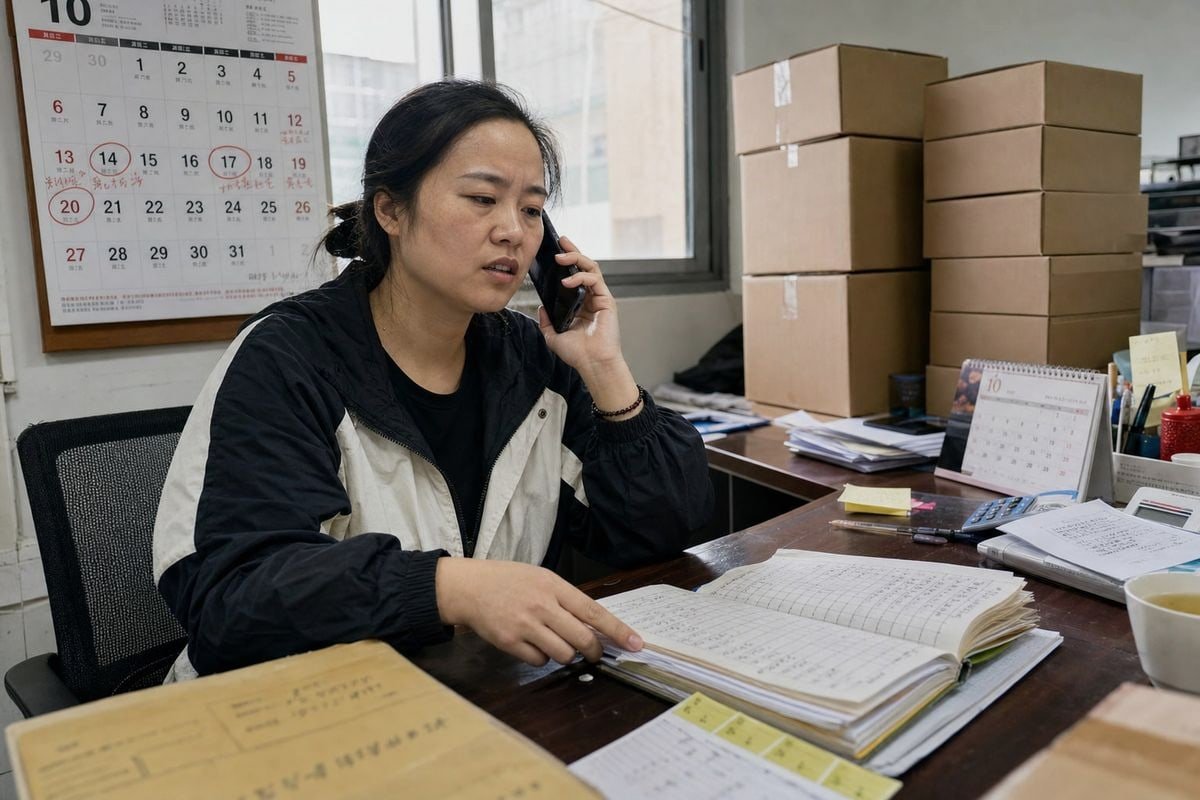
The core principle is simple: compare the quote against evidence, not against confidence. A quote is a sales document. Delivery history is an operational record. When the two disagree, believe the history.
Compare Quote Versus Actual Performance
Ask the supplier for promised-versus-actual dates on their last several similar orders. Then do the math yourself. A factory that averages 38 days on comparable kids' sunglasses orders but quotes you 25 days is not offering a better service. It is offering a better story. In our experience exporting to buyers in 20+ countries, honest factories quote close to their historical median and explain any improvement, such as a new injection line or a slot that just opened.
Watch Variability, Not Just Averages
An average hides risk. A supplier who usually ships in 30 days but slips to 45–60 days on one order in four is less reliable than one who ships in a steady 34 days. Ask about their on-time delivery rate and their spread, not just their typical speed. Stable beats fast when your retail launch date is fixed.
Classic Overpromising Red Flags
| Red Flag | Why It Matters |
|---|---|
| One number, no stage breakdown | The supplier has not actually planned your order |
| Cannot define what starts production | Deposit? File approval? Material booking? Vague start = vague finish |
| Quote faster than their own recent actuals | Optimism, not capacity |
| No mention of holidays, QC, or customs | Real calendars include real interruptions |
| "We always hit our lead times" | No factory always does; honest ones explain their last delay |
| No examples of similar kids' orders | Kids' eyewear has extra steps they may not know |
A supplier who volunteers a manufacturing bottleneck — "our lens coating line is booked until the 15th" — is usually more trustworthy than one who promises a frictionless miracle. Supply chain transparency is itself a signal of operational maturity.
What Questions Should I Ask a Supplier to Verify Their Lead Time Estimate?
A procurement manager from Australia once spent forty minutes on a call with me asking only lead-time questions. She placed the order the next day. Good questions build trust in both directions.
Ask the supplier to break the timeline into stages, define the exact event that starts mass production, show their current queue and recent late orders, provide compliance documents for children's eyewear, and explain their contingency plan for material shortages or holiday shutdowns.
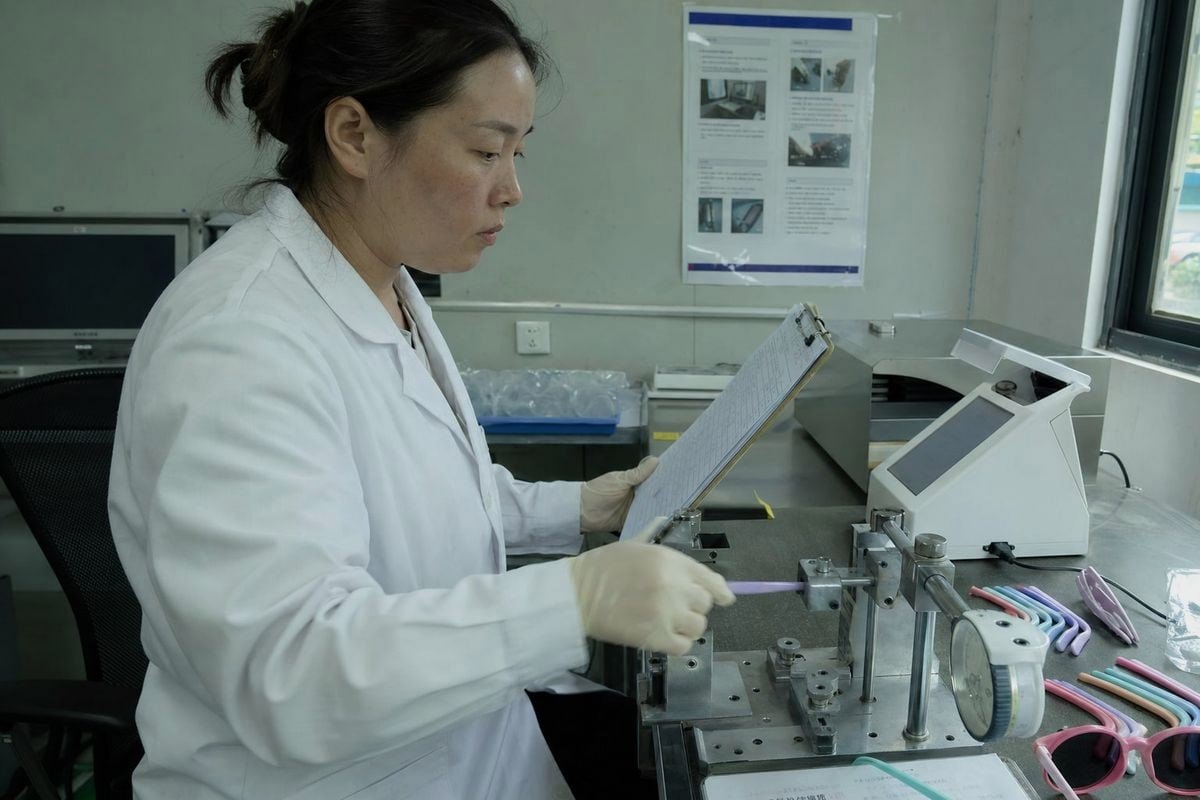
The goal of these questions is not to interrogate the supplier. It is to test whether the quoted number is grounded in real planning. A factory with an operationally real lead time answers quickly and specifically. A trader or an overpromiser stays vague and promotional.
The Stage Breakdown Question
Ask: "Can you break the lead time into sample production, sample approval process, material booking, mass production, quality control inspection, packing, and shipping?" When we quote an order for TR90 frames with TPEE temples, I can tell a buyer exactly how many days each stage takes and which stages overlap. If a supplier cannot do this, they have not planned your order — they have quoted a wish.
The Trigger Question
Ask: "What exact event starts mass production?" The answer reveals hidden assumptions. Some factories start the clock at order confirmation. Others start at deposit receipt, artwork approval, or material arrival. If the clock starts at "approved samples" and your sample round takes three weeks, your real lead time just grew by three weeks that were never in the quote.
The Evidence Questions
Request concrete proof rather than assurances:
- Production schedules from similar kids' sunglasses orders.
- Promised versus actual dates for recent shipments.
- Their current production queue and where your order would slot in.
- Their last three late orders and the root causes.
- Safety standards compliance documents 6 for your target market.
- Their plan for factory holidays, especially Chinese New Year.
- Whether molds and mold maintenance are in-house or outsourced.
That last question matters more than most buyers realize. Outsourced tooling means the factory's lead time depends on someone else's queue, which they cannot fully control.
How Do I Build Buffer Time Into My Order Schedule to Avoid Delivery Risks?
Years of shipping children's eyewear have taught me one lesson: the orders that arrive on time are not the ones with the fastest quotes. They are the ones planned with honest buffers.
Build buffer by adding 15–25% to the quoted production time, planning sampling and testing as separate blocks, ordering 4–6 weeks before hard deadlines, adjusting reorder points to worst-case lead times, and keeping a backup supplier or stock-style option for urgent replenishment.
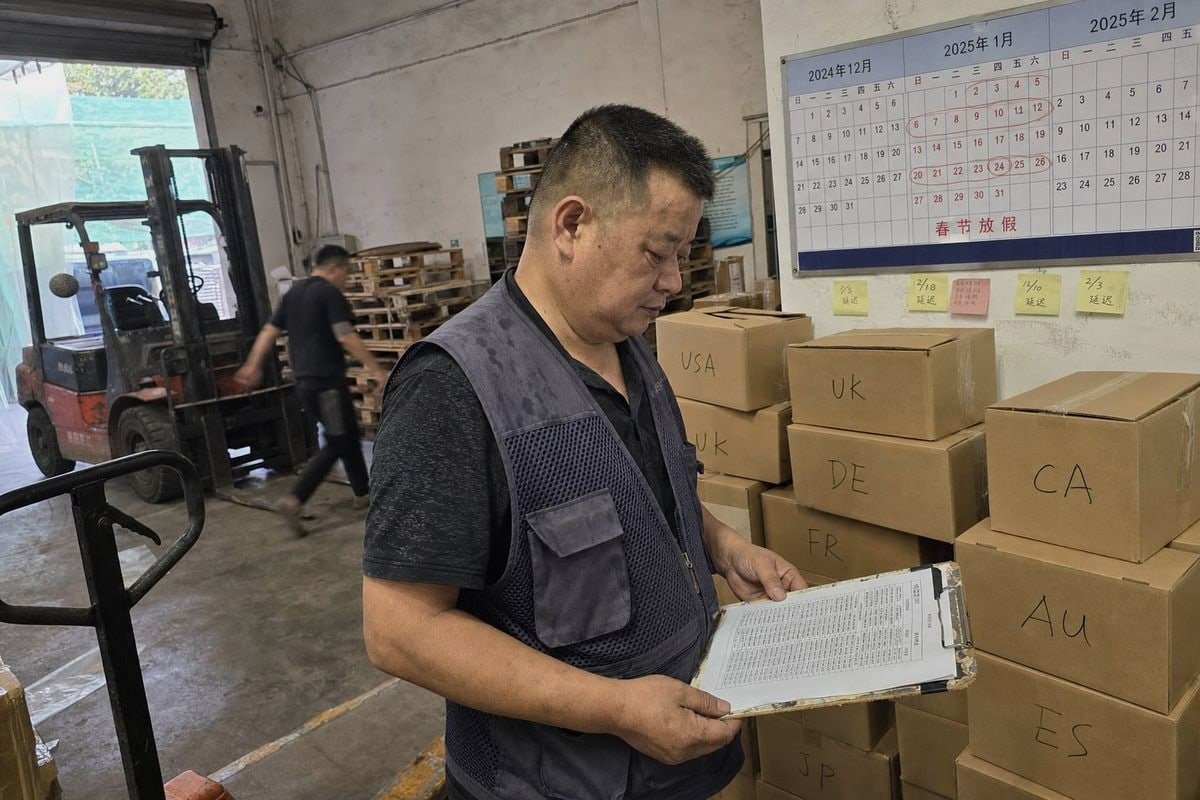
Buffer is not pessimism. It is the honest price of variability. Even the best factory faces occasional lens delays, lab backlogs, or port congestion. Your schedule should absorb normal turbulence without drama.
Size the Buffer to the Risk
Not all orders need the same cushion. A repeat order of an existing style with approved artwork carries little risk. A first order with new colors, custom packaging, and fresh compliance testing carries a lot. I usually advise our buyers to scale buffer accordingly.
| Order Scenario | Suggested Buffer on Quoted Time | Reason |
|---|---|---|
| Repeat order, existing style | 10–15% | Known process, approved files |
| First private label order | 20–25% | Sampling rounds, packaging setup |
| New OEM design with molds | 30%+ | Tooling, testing, unknowns |
| Any order crossing Chinese New Year | Add 3–4 weeks | Factory shutdown plus restart ramp-up |
Plan Sampling and Shipping as Separate Clocks
Treat the sample approval process as its own timeline with its own buffer. One revision round can add 10–14 days including courier time. Then, at the other end, work with your logistics and freight forwarding 7 partner early. Sea freight cutoffs, customs clearance, and receiving inspection all sit outside the factory's control, and each deserves its own margin.
Keep a Contingency Path
Adjust your reorder point using the supplier's worst recent lead time, not their best. And keep a fallback: one reason we maintain around 800 existing styles is that buyers facing an urgent gap can replenish from proven designs quickly instead of waiting on a full custom run. A backup path turns a delay from a crisis into an inconvenience.
Conclusion
A quoted lead time is a claim until you validate it. Break it into stages, check it against history, ask hard questions, and build honest buffers. Realistic beats fast — every season.
Notes de bas de page
1. Alibaba is a major platform explaining private label sourcing practices for global buyers. ↩︎
2. ISO develops international safety and quality standards relevant to children’s product compliance. ↩︎
3. Background on thermoplastic elastomer materials commonly used in flexible eyewear components. ↩︎
4. ITC provides guidance on international raw material sourcing and trade logistics for manufacturers. ↩︎
5. Background on the holiday causing widespread factory shutdowns that affect lead times. ↩︎
6. CPSC oversees safety compliance documentation requirements for children’s products sold in the US. ↩︎
7. Explains the role of freight forwarders in coordinating international shipping logistics. ↩︎
Plus d'articles que vous pourriez aimer

1 août 2026
L'usine doit-elle gérer l'emballage et l'étiquetage des lunettes pour enfants, ou utiliser un fournisseur désigné ?
1 août 2026
Entrepôt propre vs. exécution directe par le fournisseur : lequel réduit les coûts de retour pour les marques de lunettes pour enfants ?

1 août 2026
Entrepôt direct au port ou staging outre-mer : lequel permet d'économiser le plus sur l'expédition des lunettes pour enfants ?
Vous recherchez un partenaire fiable en lunetterie pour enfants ?
Explorez plus de 800 styles prêts et un support OEM/ODM complet adapté à votre marque.
Contactez-nous English
  Español de México
  Deutsch
  Français
  日本語
日本語  العربية
  Português do Brasil