How Do I Choose the Most Cost-Effective Order Quantity for Kids’ Sunglasses?
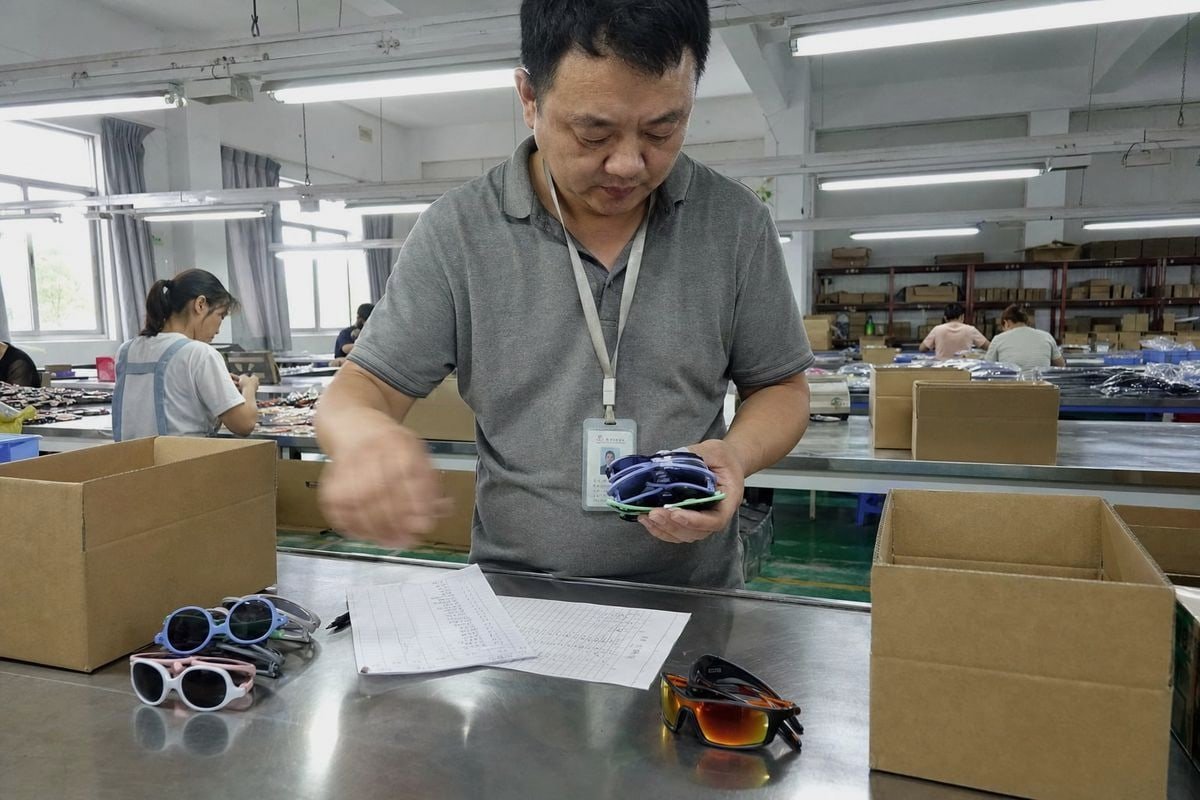
Finding the most cost-effective order quantity for kids’ sunglasses is a question I hear weekly at our Taizhou factory inventory turnover 1. Order too few, and your per-unit manufacturing cost eats your margin. Order too many, and unsold pastel frames sit in a warehouse while trends move on. After 15 years producing children’s eyewear, I’ve watched both mistakes drain promising brands.
The most cost-effective order quantity for kids’ sunglasses is the smallest volume that reaches an acceptable per-unit price while matching your realistic 60–90 day sell-through. Start at stock MOQs of 12–20 pieces per model, then move to higher bulk pricing tiers only after demand is proven.
That answer sounds simple. In practice, it depends on your MOQ options, your cash flow, and whether you customize. Let me walk you through each factor step by step.
What MOQ Should I Expect When Ordering Kids' Sunglasses from a Factory?
Last month, a first-time buyer from Australia asked me why our quotes changed so much between stock styles and logo orders. Her confusion is common, so let me explain how our production line actually sets these numbers.
Expect a Minimum Order Quantity (MOQ) of 12–20 pieces per color or model for stock kids' sunglasses, roughly 75–300 pieces for logo printing, and 600 or more pieces for full private-label customization. Samples are usually available as single pieces for testing quality and fit.
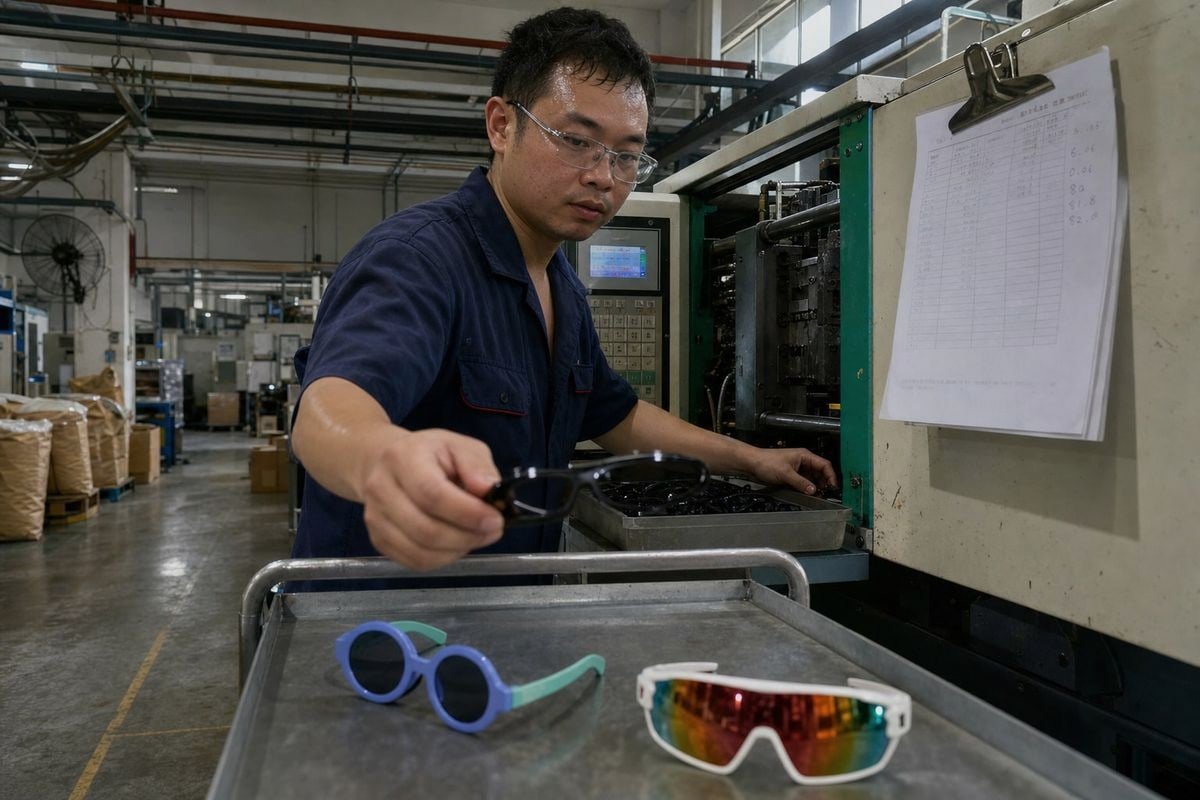
MOQ is not a random number a factory invents to annoy buyers. It reflects real setup costs. When we run a batch of montures TR90 2 with TPEE temples, we pay for material preparation, machine setup, color matching, and quality inspection whether we make 20 pairs or 2,000. Small stock orders are possible because the tooling already exists. Custom work needs new setups, so the minimums climb.
Typical MOQ Ranges Across the Market
Here is what wholesale eyewear suppliers commonly quote for children's sunglasses:
| Order Type | Typical MOQ | Why the Minimum Exists |
|---|---|---|
| Sample order | 1 piece | Quality, fit, and UV400 lens verification |
| Stock styles | 12–20 pcs per color/model | Frames and molds already exist |
| Logo printing | 75–300 pcs per model | Printing setup and plate costs |
| Private label / custom colors | 300–600+ pcs | Custom material runs and packaging |
| New custom mold | Often 1,000+ pcs | Mold investment must be amortized |
How Bulk Pricing Tiers Work
Factories reward volume because economies of scale 3 are real. A typical listing might step from around US$2.50 per pair at 15–1,199 pieces down to US$1.50 at 1,200 pieces or more. Some suppliers also add perks like free logo printing at around 200 pieces per order.
One more tactic worth knowing: many factories, ours included, accept mix-and-match MOQ terms. You can combine several colors or frame shapes within one material category to hit the minimum. This spreads your bet across multiple SKUs instead of gambling on a single style. For kids' products, where a periwinkle round frame might outsell a sport wraparound three to one in one market and flip completely in another, this flexibility matters a lot.
How Can I Balance Order Quantity with Cash Flow and Inventory Risk?
The hardest trade-off I discuss with buyers is this: the next pricing tier always looks tempting, but every extra carton ties up cash that a young brand may need for marketing, freight, or the next season's styles.
Balance order quantity against cash flow by calculating total landed cost per pair, targeting an inventory turnover of 3–4 times per year, and choosing the smallest order that still hits your target gross margin after realistic unsold-inventory assumptions.
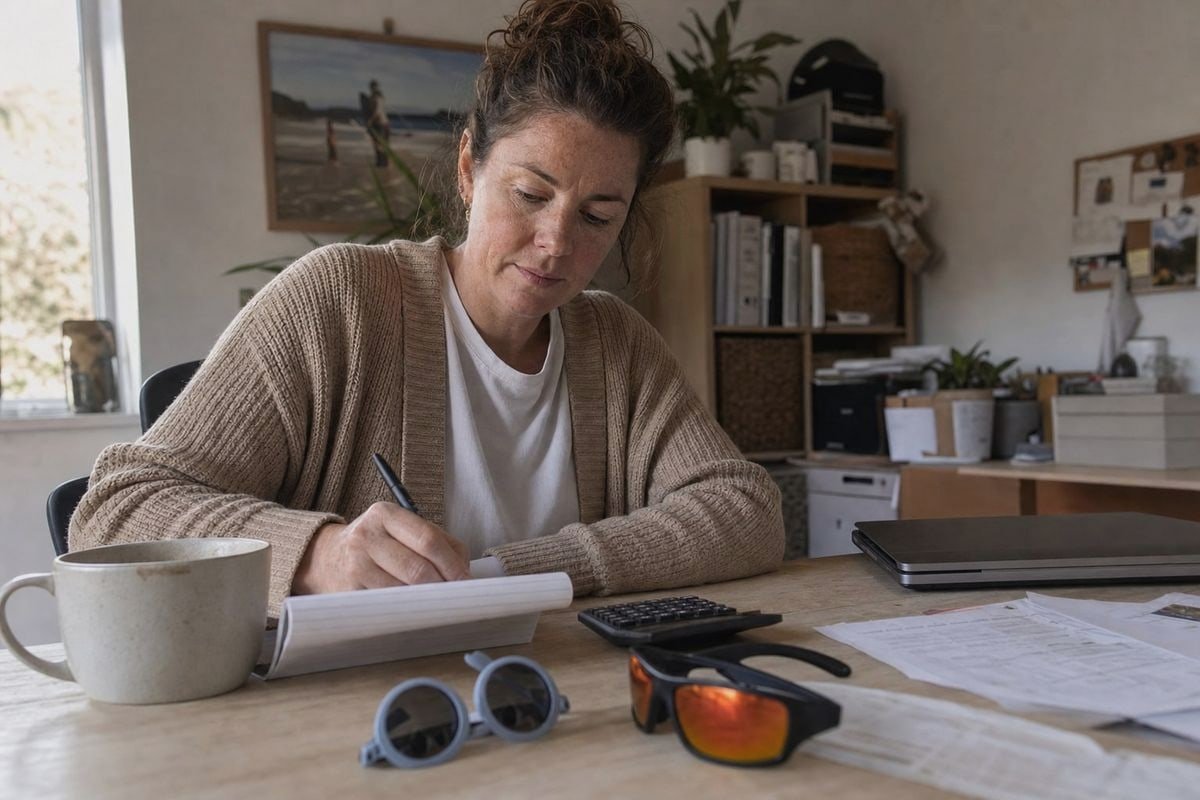
The cheapest unit price is not always the cheapest decision. Kids' sunglasses carry three cost layers, and only the first one appears on a factory quote.
The Three Cost Layers
- Per-unit product price. This is the factory quote at your chosen tier.
- Freight and shipping costs. Add customs duties, insurance, and packaging. Together these form your true landed cost per pair.
- Inventory carrying costs and markdown risk. Storage, capital tied up, and the discounts you take on styles that miss.
Ignore layer three and a "cheap" 1,200-piece order can quietly become the most expensive purchase you ever make. Children's eyewear is unusually sensitive here. Colors, character trends, and size fit shift fast. A basic commodity product forgives overbuying; a mint-green kids' frame from last summer often does not.
A Simple Landed-Cost Comparison
| Facteur | 200 pcs Order | 1,200 pcs Order |
|---|---|---|
| Unit price | ~$2.50 | ~$1.50 |
| Cash tied up | Bas | 3–4x higher |
| Landed cost per pair | Higher | Lower |
| Markdown risk if a style misses | Small, contained | Large, painful |
| Best when | Demand unproven | Demand validated |
La Economic Order Quantity (EOQ) formula 4 formalizes this. It balances the fixed cost of placing each order against the variable cost of holding stock. You do not need perfect math, though. A practical proxy works: estimate your realistic sell-through inside a 60–90 day window, and never order more than that window can absorb. Retail markups on kids' sunglasses typically run 3x–6x wholesale, so even modest orders can deliver strong profit margin optimization if sell-through stays healthy.
Two more levers help. First, some buyers time replenishment to seasonal sales forecasting 5, even checking regional UV-index outlooks, so an overcast summer does not leave them overstocked. Second, a few negotiate category-pivot terms, exchanging slow seasonal sunglasses for autumn optical or blue-light styles to keep capital liquid.
Should I Order from Existing Styles or Invest in a Custom Mold First?
We built our catalog of roughly 800 existing styles precisely because of one painful pattern I kept seeing: new brands sinking their launch budget into a custom mold before validating a single sale.
Order from existing styles first. Stock kids' sunglasses are economical at 12–20 units and let you test colors, fits, and markets with low risk. Invest in a custom mold only after proven sell-through justifies the tooling cost and the higher production minimums.
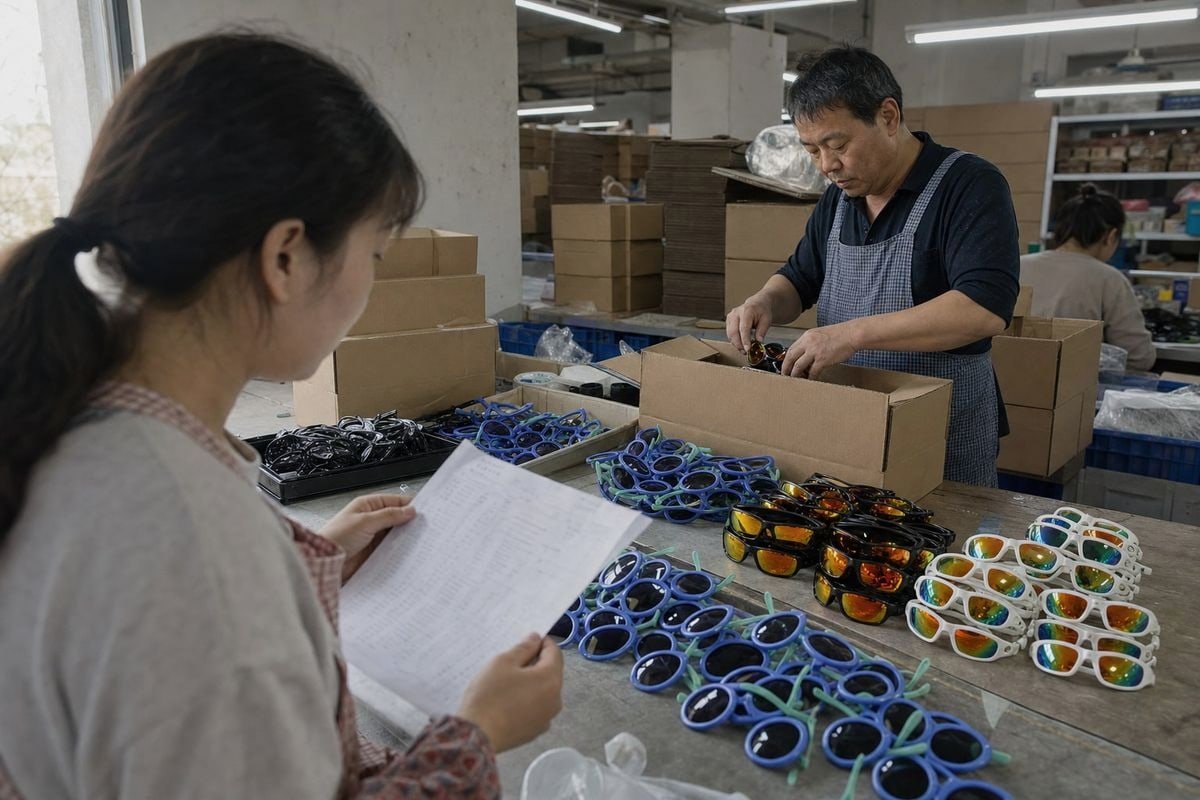
A custom mold is a real asset, but it is also a bet. Tooling for a new children's frame costs thousands of dollars before a single pair exists. Then the factory needs a large first run, often 1,000 pieces or more, to amortize that mold. If the frame shape misses with kids or parents, you own both the mold and the mountain of stock.
Existing styles flip that risk profile. From our catalog, a buyer can pick a sporty wraparound shield with a mirrored gradient lens, a pastel round retro frame, and a bold white performance style, order 20 pieces of each, and learn within one season which direction their market rewards. Custom logos, lens tints, and les emballages prêts pour la vente au détail can still be added at moderate MOQs, so the products feel branded without mold-level investment.
A Staged Path That Protects Your Capital
| Étape | What You Order | Typical Volume | What You Learn |
|---|---|---|---|
| 1. Sampling | Single samples | 1–5 pcs | Quality, UV400 protection, fit on real kids |
| 2. Market test | Mixed stock styles | 20–100 pcs | Which shapes and colors sell |
| 3. Branding | Logo printing, custom packaging | 200–600 pcs | Whether your brand adds margin |
| 4. Custom mold | Proprietary design | 1,000+ pcs | Full differentiation, defensible product |
There is one modern shortcut worth using before stage four. Shadow testing with 3D renders on social media lets you gauge reactions to a frame shape and colorway before any steel is cut. If a rendered design gets weak engagement, you just saved a mold investment.
One filter should apply at every stage: safety. Children's eyewear must offer 100% UVA/UVB protection with verres UV400 6 and impact-resistant materials, and it must meet the rules of your market, including CPSIA compliance standards 7 for the US. Novelty sunglasses without real protection are not a cheaper alternative; they are a liability. Helpfully, fixed testing and certification fees are amortized over volume, so the safety-adjusted per-unit cost actually improves as you scale responsibly.
How Do I Know When It's Time to Scale Up My Order Quantity?
A lesson I learned early in our export work: buyers who scale on data stay for years, while buyers who scale on optimism usually come back asking how to clear dead stock.
Scale up when a style sells through within 60–90 days at full price, reorders are consistent across at least two cycles, and the savings from the next bulk pricing tier exceed the cost of holding or discounting the additional units.
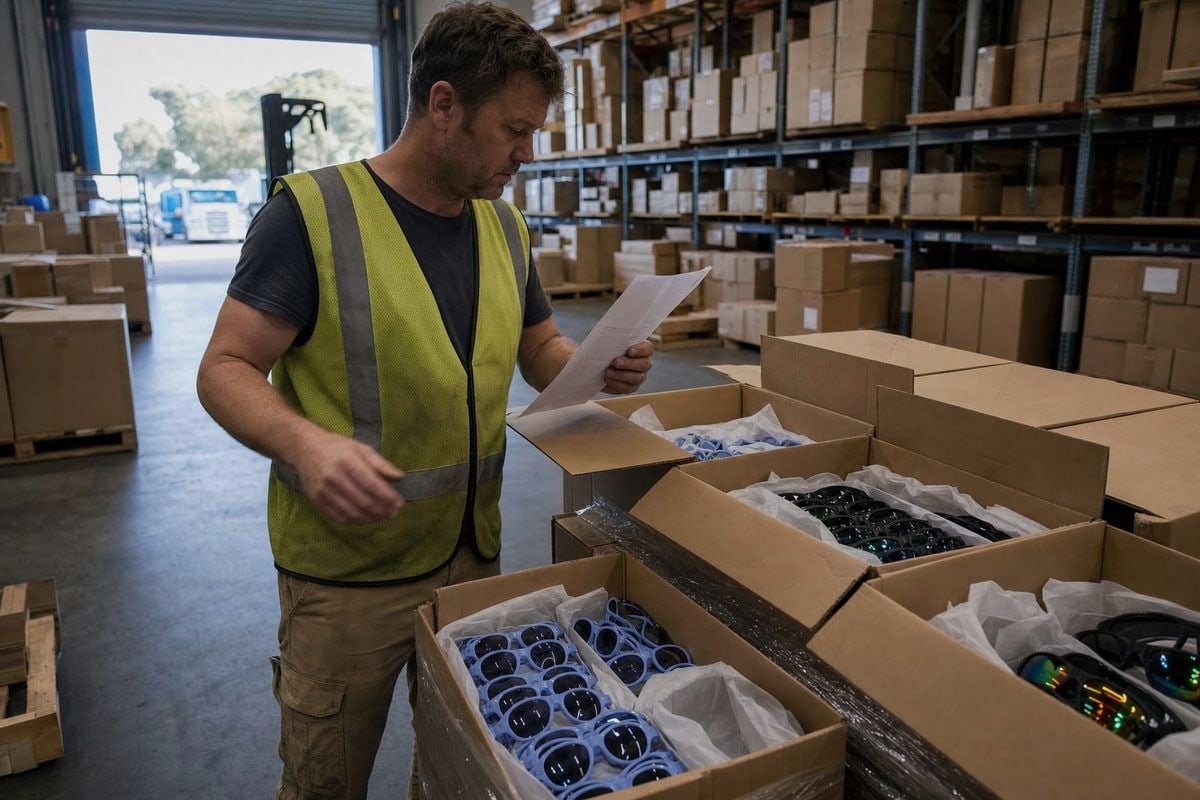
Scaling is not one decision. It is a repeatable check you run before every reorder. Here is the framework I share with our long-term partners.
A Five-Step Scale-Up Checklist
- Confirm sell-through speed. Did the style sell out, or nearly so, within your 60–90 day window without markdowns? One good season can be luck. Two consecutive cycles is a pattern.
- Calculate landed cost at each tier. Compare your current tier against the next one, including freight and shipping costs. Write down the actual per-pair saving.
- Price in the risk. Estimate what percentage of the larger order might not sell at full price. Multiply that by your markdown loss. If the risk cost exceeds the tier saving, do not scale yet.
- Check your cash position. A bigger order must not starve marketing or delay your next seasonal buy. Keep your inventory turning 3–4 times per year.
- Add a breakage buffer, not a hope buffer. Parents of children under eight often buy about 1.5 pairs per child per season because kids sit on, drop, and lose sunglasses. That replacement demand justifies modest extra volume on proven styles. Wishful thinking does not.
There is also a qualitative signal. When retailers start asking you for specific restocks by name, when your reorder emails arrive before we prompt them, demand has matured. That is the moment when moving from 200 pieces to 1,200 pieces, or from stock styles to a private-label program, stops being a gamble and starts being straightforward profit margin optimization. Durable flexible materials like TPEE and TR90 help here too, because low return rates make your sell-through data cleaner and your scaling decisions safer.
Conclusion
Overbuying kills margins faster than high unit prices do. Start small at stock MOQs, verify sell-through, then scale deliberately. The right quantity always matches your proven demand window.
Notes de bas de page
1. Authoritative Wikipedia entry providing a clear definition and calculation for inventory management. ↩︎
2. Scientific overview of the durable thermoplastic material commonly used in high-quality eyewear frames. ↩︎
3. Explains the fundamental economic principle where unit costs decrease as production volume increases. ↩︎
4. Defines the mathematical approach used to determine the ideal order volume for inventory management. ↩︎
5. Academic resource from Harvard Business Review regarding effective methods for predicting seasonal retail demand. ↩︎
6. High-authority medical guidance on UV protection from the American Academy of Ophthalmology. ↩︎
7. Stable and comprehensive overview of the federal safety regulations for children’s products. ↩︎
Plus d'articles que vous pourriez aimer

1 août 2026
L'usine doit-elle gérer l'emballage et l'étiquetage des lunettes pour enfants, ou utiliser un fournisseur désigné ?

1 août 2026
Entrepôt propre vs. exécution directe par le fournisseur : lequel réduit les coûts de retour pour les marques de lunettes pour enfants ?

1 août 2026
Entrepôt direct au port ou staging outre-mer : lequel permet d'économiser le plus sur l'expédition des lunettes pour enfants ?
Vous recherchez un partenaire fiable en lunetterie pour enfants ?
Explorez plus de 800 styles prêts et un support OEM/ODM complet adapté à votre marque.
Contactez-nous English
  Español de México
  Deutsch
  Français
  日本語
日本語  العربية
  Português do Brasil