How to Document Quality Claims for Kids Sunglasses Suppliers?
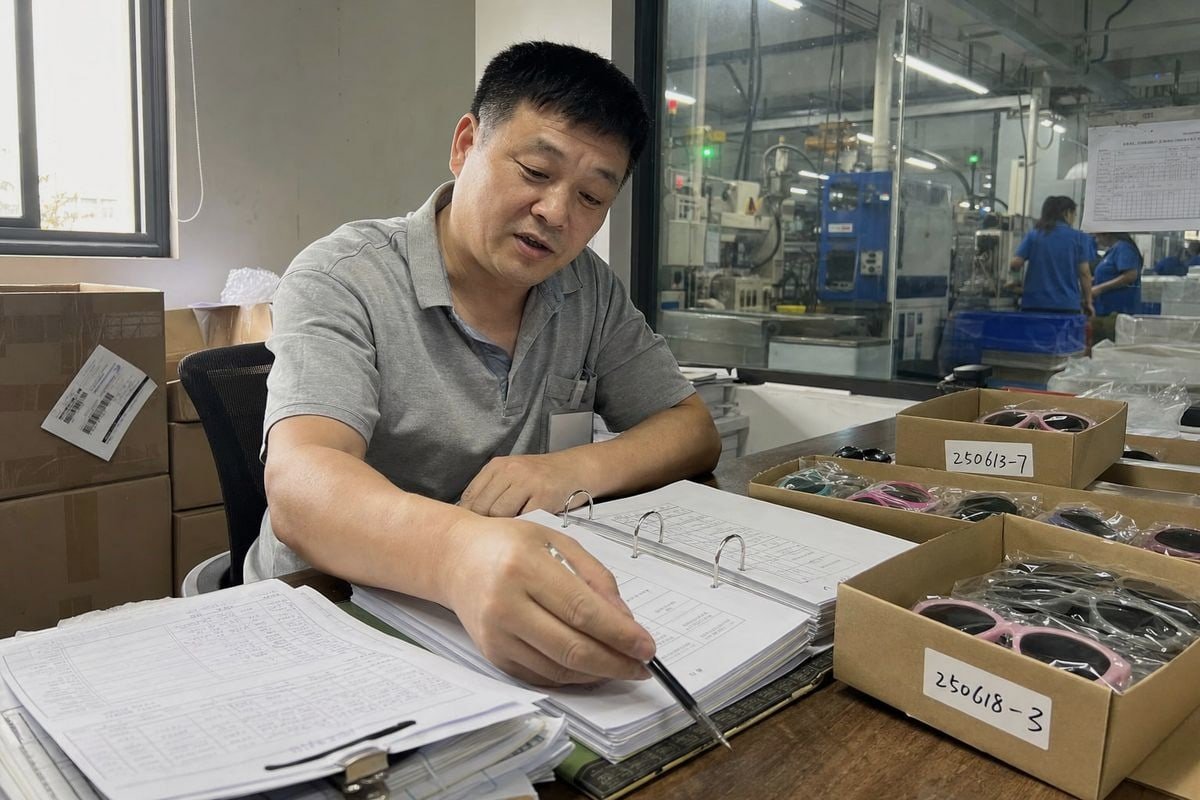
Documenting quality claims for kids sunglasses suppliers is where many buyers stumble. On our production line in Taizhou, I have seen orders delayed for weeks because a buyer accepted a vague “UV protected” promise, then customs asked for real evidence. No test report, no batch number, no traceability. The shipment sat. The launch date slipped. The fix is simple: tie every claim to a specific document before you order.
To document quality claims for kids sunglasses suppliers, request batch-specific test reports for UV400 and impact resistance, a signed Declaration of Conformity or Children’s Product Certificate, material safety declarations, label proofs, and traceability records. Map each claim to its exact evidence in a claim-by-claim matrix.
That sounds like a lot of paperwork. It is not, once you know what to ask for. In this guide, I will walk you through each document, why it matters, and how to check it.
What quality claims should I ask my kids sunglasses supplier to document?
A buyer from Australia once asked me a smart question during a factory visit: "Which of your claims can you actually prove on paper?" That question should be the starting point of every kids eyewear sourcing project, because a claim without a document is just marketing.
Ask your supplier to document five claim categories: UV protection (UV400 with numeric transmittance results), impact resistance and optical performance, material safety (REACH, phthalate-free, nickel release), frame durability and child fit, and correct marking and labeling. Each claim needs its own test evidence.
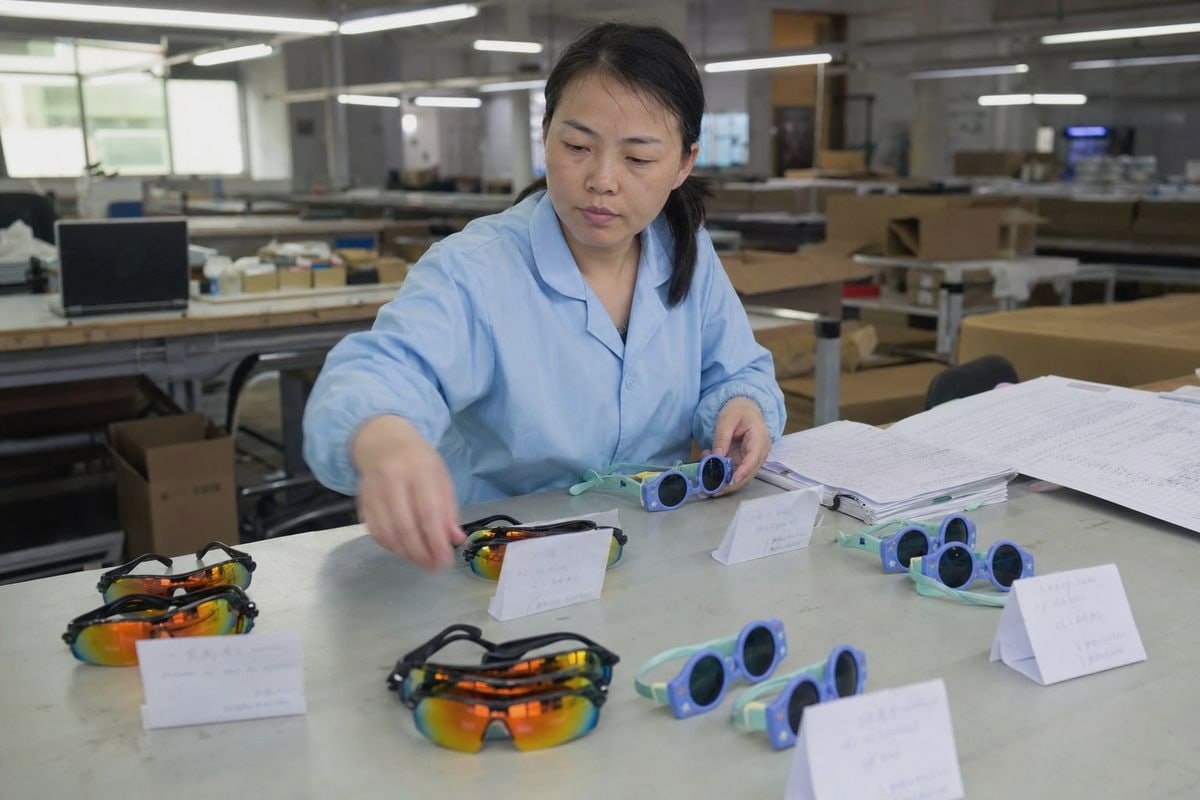
The key idea is that "quality" is not one claim. It is a bundle of separate claims, and each one needs separate proof. When we develop a new Monture TR90 1 with TPEE temples, we treat the lens claims, the material claims, and the construction claims as three different evidence files. You should do the same when you request documentation.
Separate marketing claims from substantiated claims
A marketing claim says "100% UV protection." A substantiated claim says "UV transmittance tested to EN ISO 12312-1, sample from batch X, report dated Y, issued by lab Z." Only the second version survives an audit, a customs hold, or a customer complaint. Whenever a supplier uses words like "UV400 2," "polarized," or "impact resistant," ask what test method sits behind the word.
The core claim categories
| Claim category | What the supplier claims | What documents prove it |
|---|---|---|
| Protection UV | UV400 / 100% UVA-UVB | UV transmittance test report with numeric results |
| Optical & impact safety | Category, optical power, impact resistance | Mechanical and optical test results to the standard |
| Sécurité des matériaux | Phthalate-free, BPA-free, REACH compliant | Restricted substance test reports, material declarations |
| Fit & durability | Flexible temples, hinge durability, robustness | Frame robustness and temperature stability data |
| Marking & labeling | CE/UKCA marks, warnings, importer details | Approved label artwork, packaging photos |
Kids sunglasses carry a higher documentation burden than adult fashion eyewear. Children handle products roughly, chew on temples, and cannot judge risk themselves. That is exactly why we chose flexible TPEE and TR90 materials for our children's ranges: the material choice itself becomes part of the safety claim, and it needs its own paper trail. Ask for a nomenclature 3 and a material disclosure, not just a finished-product report. If the supplier changes resin grades between batches without telling you, your old test report no longer covers your new stock.
Which certificates and test reports prove UV400 and impact safety compliance?
There is a trade-off I discuss with buyers on almost every project: test to one market's standard and save cost, or test to multiple standards and open more sales channels. The answer depends on where your kids sunglasses will actually be sold, because each region names different documents.
UV400 and impact safety are proven by third-party lab reports tested to EN ISO 12312-1 (EU) or ANSI Z80.3 (US), plus CPSIA testing and a Children's Product Certificate for US children's products. Reports must name the exact model, lens type, and batch.

Standards are the language of proof. A report that says "passed UV test" without naming a standard is nearly worthless. In our experience exporting to more than twenty countries, the document package that satisfies one market rarely satisfies another without adjustment, so I recommend building your file around your primary destination first.
Match the standard to the market
| Marché | Key standard / regulation | Core documents |
|---|---|---|
| UE | EN ISO 12312-1 (PPE Regulation) | Test report, technical file, signed Déclaration de conformité 4, CE marking proof |
| États-Unis | ANSI Z80.3, exigences CPSIA 5, sometimes ASTM F963 | CPSC-accepted lab report, Certificat de produit pour enfants 6, tracking label evidence |
| Royaume-Uni | Designated standards, UKCA | UKCA marking proof, UK Declaration of Conformity |
| Australie/Nouvelle-Zélande | AS/NZS 1067.1 | Test report with lens category, labeling evidence |
Note the US detail many buyers miss: children's sunglasses can fall under CPSIA as a children's product. That triggers third-party testing at a CPSC-accepted lab, a Children's Product Certificate issued by the importer, and permanent tracking labels on product and packaging. If your supplier has never heard of a CPC, treat that as a warning sign.
What a credible test report contains
A usable report includes six elements: the lab name and accreditation, the test standard and method, the exact model number and lens colorway, a sample photo, numeric results against pass limits, and a test date. For UV400 specifically, look for measured transmittance values below 400 nm, not just a "pass" stamp. For impact safety, look for the mechanical robustness results and, if you claim it, the specific impact test performed. When we prepare reports for our UV400 and polarized lens options, we always tie the report to the sample photo, because that link is what auditors check first.
Recognized labs like SGS, Intertek 7, and TÜV add credibility, but accreditation for the specific test matters more than the brand name on the letterhead.
How do I verify a supplier's quality claims before placing a bulk order?
Early in my fifteen years in eyewear, I learned a hard lesson watching a trading partner reuse one old test report across five different frame models. The report was real. The match to the product was not. Verification is not about whether documents exist; it is about whether they match your exact product.
Verify quality claims by matching every report to the exact SKU, lens color, and batch, confirming the lab's accreditation, checking test dates against your compliance window, comparing tested samples with approved production samples, and cross-checking label artwork against the report wording before releasing payment.
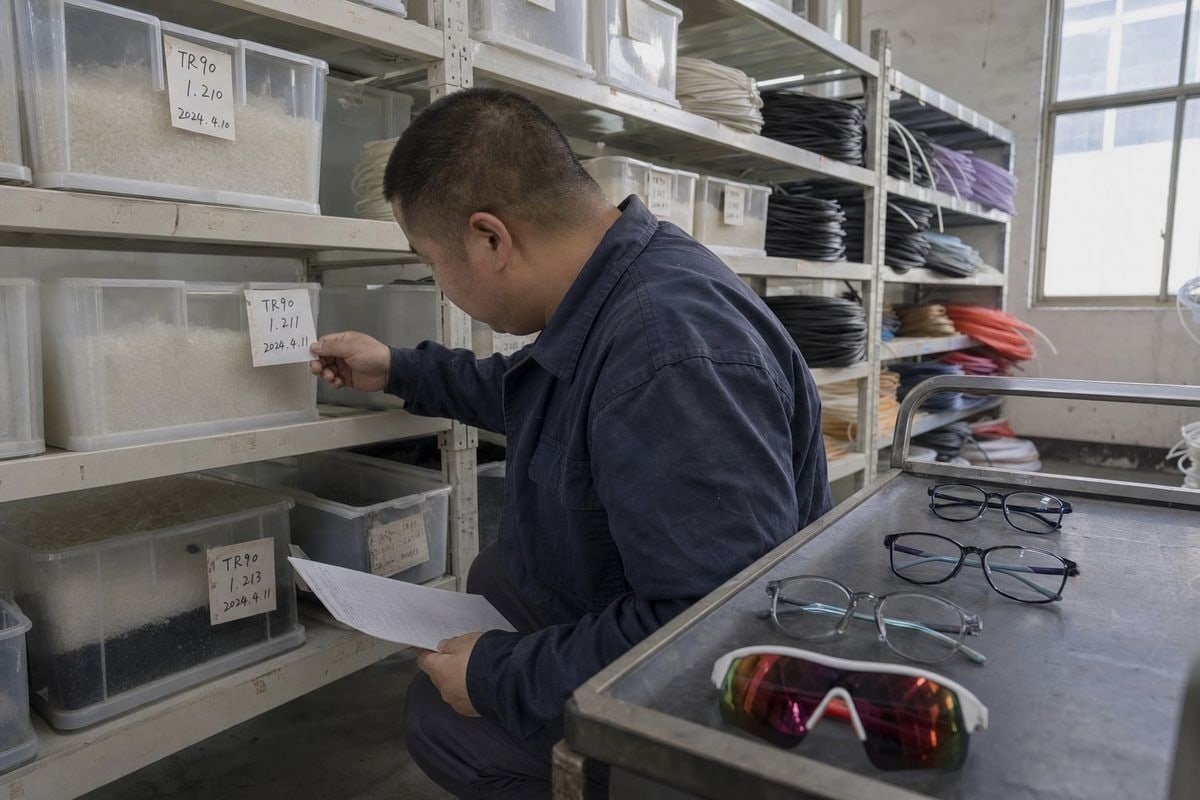
Think of verification as a matching exercise. You are connecting four things: the claim, the report, the sample, and the final labeled product. If any link in that chain breaks, the claim breaks with it.
Un processus de vérification en cinq étapes
- Check the identity match. Does the report name your exact model, colorway, and lens type? A gradient mirrored shield lens and a solid gray round lens are different products, even from the same factory.
- Check the lab and method. Is the lab accredited for that test? Does the method match your destination market's standard?
- Check the date and version. Is the report recent enough? Has the product been revised since testing? Material or coating changes invalidate old reports.
- Check the sample against production. Compare the report's sample photo with your golden sample and pre-shipment inspection photos.
- Check the artwork. Make sure the claims printed on the packaging do not exceed what the report actually proves.
Red flags in supplier paperwork
Watch for generic reports with no SKU or batch identification, certificates shown without the underlying test data, claims like "UV protected" with no numeric result, vague descriptions of the quality system with no records, and reports that describe a different frame material than the one quoted. When buyers audit our workshop, we expect them to ask for corrective action records 8 too; a factory with zero recorded nonconformities in fifteen years is hiding something, not achieving perfection. Also ask for pre-production samples and run your own spot checks. An independent UV transmittance check on a few pieces costs little and settles doubt fast. Digital certificate verification codes, where labs offer them, help you detect forged or recycled documents before money moves.
What documentation should I keep on file for customs and retail compliance?
A procurement manager in Europe once emailed me in a panic: her customs broker wanted the Declaration of Conformity within 48 hours, and she could not find it. We resent it in minutes because we keep revision-controlled files for every order. That habit should exist on the buyer's side too.
Keep on file the Declaration of Conformity or Children's Product Certificate, all test reports, the technical file with bill of materials, label and packaging proofs, batch traceability records, inspection reports, retained samples, and corrective action records. Retain files for at least the product's market life plus several years.

Customs officers and retail compliance teams ask different questions, but they draw from the same file. Customs wants to know the product is legal to import. Retailers want to know it is safe to sell and that you can trace it if something goes wrong. One well-organized file serves both.
Build a claim-by-claim matrix
The most practical format I recommend is a simple matrix linking each claim to its evidence. It turns a folder of PDFs into an audit-ready system.
| Claim on product/packaging | Evidence document | Batch link | Owner |
|---|---|---|---|
| protection UV400 | UV transmittance report, lab name, date | Batch code on temple/carton | Importer QA |
| Impact resistant | Mechanical test results, standard reference | Same batch code | Importer QA |
| Phthalate & BPA free | Restricted substance reports | Material lot records | Supplier + QA |
| Suitable for ages 3+ | Age grading rationale, warning label proof | Artwork revision number | Brand/legal |
| CE / UKCA compliant | Signed DoC, technical file reference | Model + batch | Importer |
Traceability is the thread that holds it together
Documents prove that a tested sample was safe. Traceability proves that your shipped stock is the same as the tested sample. Ask your supplier to apply batch codes on cartons and, where feasible, on the product, and to keep retained samples from each production run. On our side, our 5S-managed workshop keeps retained samples and inspection records per order for exactly this reason: when a buyer's retailer asks a question two years later, we can answer with evidence rather than memory. Keep your inspection reports and pre-shipment photos in the same file. If a recall or a customs query ever happens, the batch code is what lets you isolate the problem to one production run instead of your whole inventory.
Conclusion
Undocumented claims put your brand, your shipments, and children's eyes at risk. Document every claim with standard-specific reports, signed declarations, and batch traceability, and quality becomes provable, not promised.
Notes de bas de page
1. TR90 is a nylon-based polymer; background helps buyers understand the material’s properties.
Plus d'articles que vous pourriez aimer

Vous recherchez un partenaire fiable en lunetterie pour enfants ?
Explorez plus de 800 styles prêts et un support OEM/ODM complet adapté à votre marque.
Contactez-nous English
  Español de México
  Deutsch
  Français
  日本語
日本語  العربية
  Português do Brasil